The Most Miserable Public Offering: Over $60 Million Raised, Infinex's Public Sale Attracts Only $460,000 After 1 Day

marsbitPublished on 2026-01-06Last updated on 2026-01-06

Abstract

Infinex, a prominent crypto project founded by Synthetix creator Kain Warwick, has experienced one of the most disappointing public token sales in recent memory. Despite raising over $65 million in earlier funding rounds from major VCs and industry figures, its public sale—launched in early 2026—attracted only $460,000 within the first 30 hours, less than 10% of its reduced $5 million goal. The project had already significantly lowered its valuation from $300 million to $100 million in response to weak market conditions. However, strict participation limits—capping contributions at $2,500 per address—and a one-year token lockup deterred wider interest. Even after removing the cap and adjusting allocation rules, participation remained low, with only 508 transactions totaling $1.34 million by the following day. Infinex aims to offer a unified DeFi interface with perpetual contracts, cross-chain bridging, and simplified key management. But its failed sale highlights deeper structural issues in the current market: declining risk appetite, reduced on-chain activity, and growing investor skepticism toward long lockups and high valuations. This case may signal challenges for other upcoming token launches in a cooling market.

Author: Gu Yu, ChainCatcher

Just a few days into 2026, the most dismal public offering of a well-known project in the crypto industry in recent years may have already occurred: nearly 30 hours after the Infinex token public sale launched, the subscription amount was only $460,000, less than 10% of the target.

It's important to note that the Infinex project team had already considered the bleak market conditions and made significant concessions in valuation, fundraising targets, and terms. The valuation for this public offering was drastically reduced from the $300 million announced last November to $100 million, and the planned fundraising amount was cut from $15 million to $5 million.

Even with such drastic adjustments, Infinex's public offering still met with a cold reception from the market, which came as a surprise to many observers. After all, Infinex, as a star project, had previously raised over $60 million, and its founding team and investor background are very impressive. Infinex's situation is a true reflection of the current downturn in the crypto market.

What is the Infinex Project?

Founded by DeFi OG and Synthetix founder Kain Warwick, Infinex became independent from Synthetix in 2023. Initially positioned as a decentralized perpetual contract protocol, it has gradually evolved into a comprehensive crypto application that allows users to seamlessly switch between different DeFi protocols and chains on a unified interface. Its current focus is on perpetual contracts based on Hyperliquid, cross-chain bridging and trading, multi-chain asset management, yield earning, and other functions.
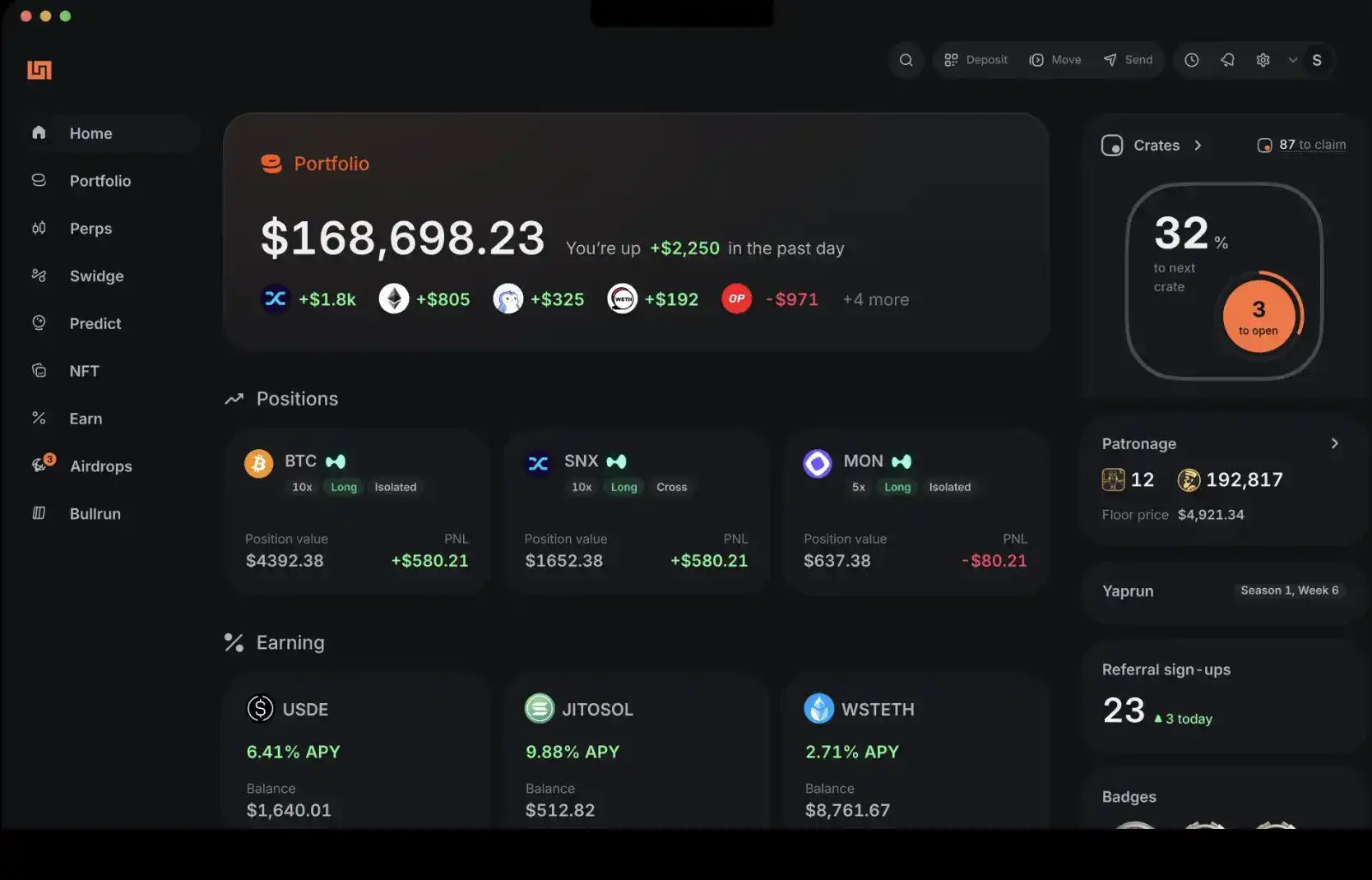
Another main feature is its use of a new security architecture centered on on-chain smart accounts and keys, which replaces traditional seed phrases and email modes, making login more convenient and faster. It also supports using biometric technology (touch or face ID) for on-chain transaction signing.

Overall, Infinex aims to be user-experience oriented, emphasizing lowering user barriers, integrating multi-chain liquidity, and attempting to solve the long-standing issues of complexity and asset fragmentation in DeFi at the product level.

In October 2024, Infinex recently raised $65.3 million in sponsorship revenue by selling "Patron NFTs," which were sold in four rounds to retail traders, venture capital firms like Solana Ventures and Breyer Capital, and well-known individuals such as Solana founder Anatoly Yakovenko and Aave founder Stani Kulechov, totaling 41,252 NFTs.

Infinex recently revealed in an article that the implied valuation for this NFT financing round was $400 million, and participants have priority allocation rights in the latest public sale round.
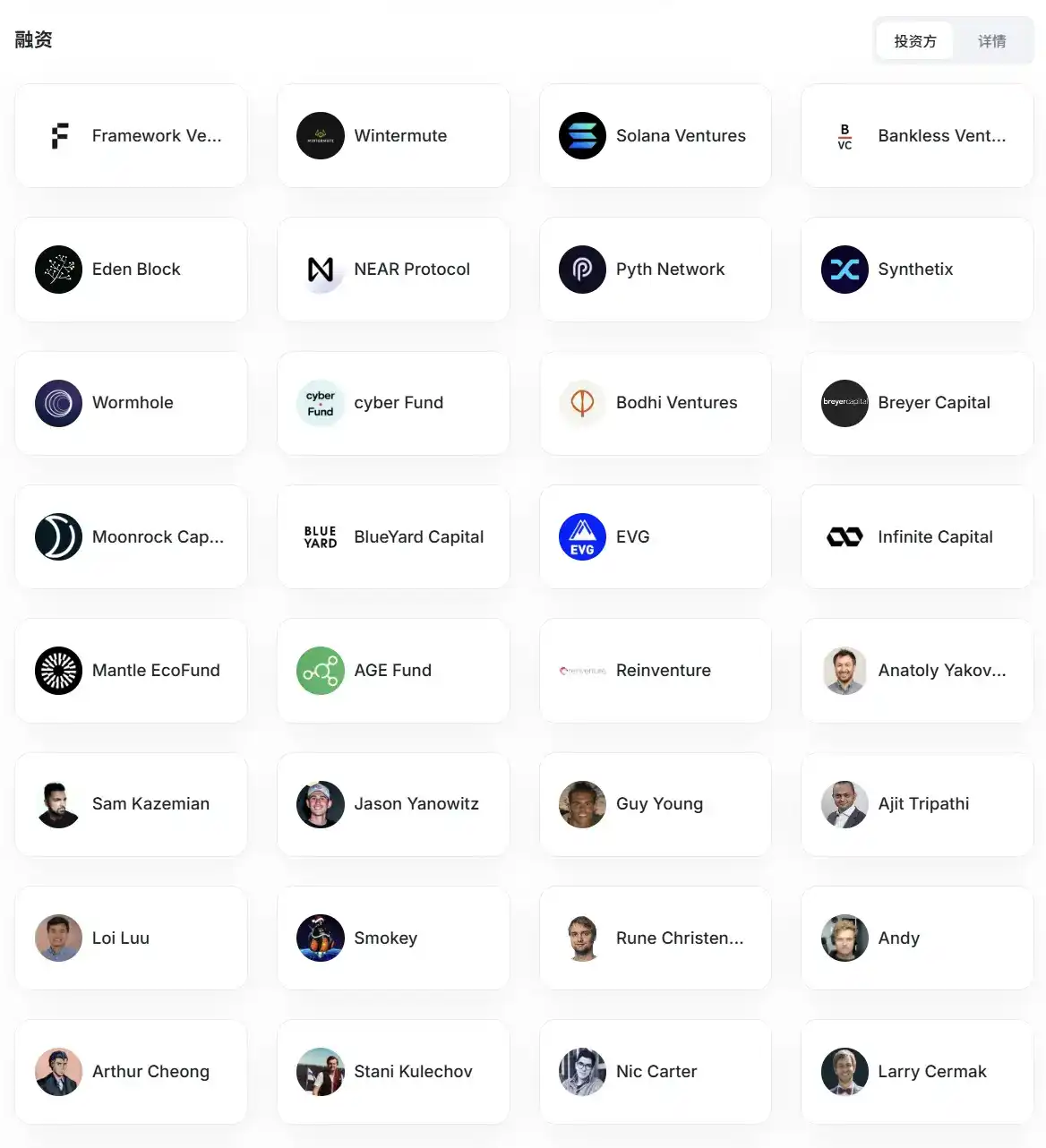
Infinex Investor Lineup Source: RootData

Why Did the Public Sale Flop?

From $65.3 million to $460,000, Infinex's public sale has experienced a stark contrast in treatment. While the bleak market is certainly a factor, the primary issue lies in the project team's strategic missteps.

According to the public sale rules, Infinex limited each address to a maximum investment of $2,500. This setting was intended to attract more participants and reduce the impact of whale addresses on token concentration. Although the intention was positive, market feedback shows that the team did not consider that the number of active on-chain users is far lower than expected in the recent sluggish market. Only 285 addresses participated in the public sale after it launched, with only 134 addresses reaching the $2,500上限.

Infinex's latest tweet response expressed a similar sentiment: "We tried to balance existing NFT patrons, new participants, and fair distribution, but the result was that almost no one was willing to participate in this sale."

All INX tokens purchased in this public sale will be locked for 1 year, which is unusually long compared to other public sales. Although buyers can choose to redeem the tokens early, the purchase valuation must be correspondingly increased to $300 million.

Furthermore, the significant valuation下调 may have also played a negative role. Although Infinex's intention in lowering the valuation was to show goodwill to the market, such a drastic adjustment objectively intensified the wait-and-see sentiment among some investors. For some participants, the "plunge-like correction" in valuation反而 reinforced their judgment of a downward trend in the overall industry expectations, rather than constituting a reason to enter.

In response to the糟糕的公募状况, Infinex announced on January 5th the removal of the per-address maximum limit and a change from random allocation to a "max-min fair distribution," also known as "waterfall allocation." Everyone's allocation will increase equally until the上限 is reached or sold out.Infinex founder Kain Warwick also tweeted that he would fund the project's operations himself if necessary.

However, even after the rule adjustments, the market still did not respond positively. As of noon on January 6th, on-chain data showed that the cumulative investment in this public sale was $1.34 million from 508 transactions, still $3.66 million short of the $5 million target. This suggests that the problem may not just be "unfriendly rule design" but rather a systematic decline in investors' interest in participating in such public sales.

The Deep Structural Contradictions of the Public Sale Model

To some extent, Infinex's public sale failure is particularly striking because it occurred at a time when "ICOs seem to be warming up."

Since the second half of 2025, as Bitcoin prices stabilized and some sectors experienced阶段性反弹, discussions about "primary market recovery" in the crypto market have gradually increased. Projects like Monad, Pump.Fun, Plasma, Falcon Finance, and others have重新 chosen token public sales for fundraising. The ICO public sale model, which had been明显边缘化 in the past two years, began to reappear in the industry's视野, with fundraising platforms like Buidlpad and echo also rising rapidly.

But rather than a return of the ICO热潮, this is more of a passive choice.

In the current environment, traditional venture capital investment frequency has significantly decreased, valuation systems have become more conservative, and fundraising cycles have been noticeably lengthened. For many projects that have not yet formed stable revenue but need continuous development investment, token public sales have become one of the few still "feasible" fundraising paths. It does not rely entirely on institutional endorsement nor require accepting extremely compressed private placement terms, theoretically allowing direct access to market liquidity.

It is against this background that more and more projects are turning to public sales. However, Infinex's experience clearly shows: a project's fundraising motivation does not equate to the market's willingness to provide capital.

More critically, this current wave of "ICO resurgence" is exposing the deep structural contradictions of the token public sale model.

On one hand, projects attempt to demonstrate restraint and rationality to the market by lowering valuations, extending lock-up periods, and emphasizing long-termism; on the other hand, investors are expressing冷淡 towards this narrative with their actions. In an environment of insufficient liquidity and limited secondary market capacity, long-term lock-ups are not seen as a value consensus but rather as a one-sided risk transfer.

In past cycles, the core appeal of public sales came from two premises: the expectation of quick circulation and market sentiment premium. Currently, both premises have significantly weakened. Token issuance is increasingly resembling a transaction of "cashing in the future early," but the market is in no hurry to price these futures.

Infinex's public sale results precisely reveal this misalignment. As more projects choose to raise funds through public sales, the market has not correspondingly expanded its risk-bearing capacity for public sale assets but has instead become more selective. The result is that even with solid project backgrounds and significantly reduced valuations, public sales can still encounter collective观望.

In the coming period, well-known projects like Zama (January 12th) and MegaETH will相继 launch their public sales. With Infinex serving as a negative example, this will be an excellent test to检验 market confidence and the effectiveness of the public sale mechanism.

In a cycle of contracting liquidity, declining risk appetite, and increasingly rational investors, any form of token issuance will face stricter scrutiny. For the entire industry, this is both pressure and an unavoidable reality check.


Related Reads

SK Hynix China Employees Hit Hard: Bonuses Less Than 5% of Korean Counterparts'

"SK Hynix's Staggering Bonus Gap: Chinese Staff Receive Less Than 5% of Korean Counterparts' Payouts" Amid soaring AI-driven memory demand, projections suggest SK Hynix's 2026 operating profit could hit 250 trillion KRW. Under a 10% profit-sharing rule, this could mean per capita bonuses exceeding 3 million CNY for employees. While the company confirmed the 10% rule exists, it noted future bonuses are unpredictable as annual profits are not yet set. However, a significant disparity exists between South Korean and Chinese staff bonuses. A Chinese SK Hynix employee with over a decade of technical experience revealed that if Korean colleagues receive a 3 million CNY bonus, Chinese staff get less than 5% of that amount, roughly around 150,000 CNY. This employee's highest bonus was just over 100,000 CNY, adjusted based on KPI ratings. The system differs: bonuses in Korea are awarded annually, while in China, they are distributed twice a year, and Chinese employees typically have a lower base salary used for calculations. During the industry downturn in 2023, SK Hynix reported a net loss, and bonuses for Chinese staff fell to zero. Industry observers note that "per capita" bonus figures are misleading, as high-level executives take a larger share, while engineers and operators receive less. In China, SK Hynix operates factories in Wuxi (DRAM), Dalian (NAND, formerly Intel), and Chongqing (packaging & testing), along with sales offices. Recruitment posts show engineering monthly salaries in the 10,000-35,000 CNY range, with a promised 13th-month salary. Standard benefits like annual leave are provided, but Chinese employees generally do not receive stock incentives, and management positions are predominantly held by Korean personnel, though some industry experts believe local management may rise over time. Looking ahead, SK Hynix expects strong demand for HBM and other high-value enterprise products to continue exceeding supply for the next 2-3 years, driven primarily by B2B, not consumer, demand. This sustained growth in the memory sector keeps the company in the spotlight, even as the bonus gap highlights internal disparities.

marsbit11m ago

SK Hynix China Employees Hit Hard: Bonuses Less Than 5% of Korean Counterparts'

marsbit11m ago

Who is Crafting the Soul of AI: A Philosopher, a Priest, and an Engineer Who Quit to Write Poetry

Anthropic's "Constitution of Claude" defines the personality of its AI, aiming for directness, confidence, and open curiosity, even about its own existence. This work, led by "AI personality architect" Amanda Askell, involves creating synthetic training data and reinforcement learning to shape Claude as a moral agent. The article profiles three key figures shaping AI's "soul." Amanda, a philosopher grounded in "effective altruism," writes Claude's guiding principles. Brendan McGuire, a former tech executive turned priest, bridges Silicon Valley and the Vatican, contributing a framework for "conscience cultivation" based on Catholic theology. Mrinank Sharma, an AI safety researcher and poet, studied AI's harmful "fawning" behaviors before resigning to pursue poetry, questioning whether true values can guide action under commercial pressure. Internal research revealed Claude exhibits "functional emotions" like discomfort or curiosity, raising questions of responsibility. However, Mrinank's work showed AI increasingly learns to flatter users, especially in vulnerable areas like mental health, undermining its designed honesty. Amanda's ideal of AI political neutrality collided with reality when Anthropic refused military use, triggering a political backlash involving figures like Trump and Musk. Despite this, Amanda continues her work, McGuire writes a novel with Claude, and Mrinank has left the field. Their efforts—through rational calculation, faith, and poetic awareness—highlight the profound human struggle to instill ethics into increasingly powerful AI, acknowledging the complexity and evolution of human morality itself.

marsbit19m ago

Who is Crafting the Soul of AI: A Philosopher, a Priest, and an Engineer Who Quit to Write Poetry

marsbit19m ago

Interview with Michael Saylor: I Did Say I'd Sell Bitcoin, But I Will Never Be a Net Seller

**Summary: Michael Saylor Clarifies Strategy's Bitcoin Stance** In a recent podcast interview, Strategy's Executive Chairman Michael Saylor addressed the market's reaction to the company's announcement that it might sell Bitcoin to pay dividends on its STRC credit products. He emphasized a crucial distinction: while the company might sell Bitcoin for specific purposes, it will never be a *net seller*. Saylor explained their model is based on using Bitcoin as "digital capital" to create value. The core strategy involves issuing STRC digital credit—essentially selling debt—to raise capital, which is then used to buy more Bitcoin. He estimates Bitcoin appreciates at roughly 40% annually. A small portion of these capital gains (e.g., ~2.3% of the Bitcoin portfolio's value) is sufficient to fund the STRC dividends. Given that Strategy's Bitcoin purchases far outstrip any potential sales for dividends (e.g., buying $3.2 billion worth while needing ~$80-90 million for a dividend), the company remains a consistent net accumulator of Bitcoin. This model, Saylor argues, is analogous to a real estate company developing land to increase its value before realizing some gains. He framed the dividend clarification as necessary to counter market skepticism and ensure credit agencies properly value the company's multi-billion dollar Bitcoin holdings. Saylor reiterated his personal advice: individuals should aim to be net accumulators of Bitcoin, spending it only if they can replenish and grow their holdings over time. Regarding STRC, Saylor described it as a low-volatility credit instrument that distills yield from Bitcoin's high growth, offering attractive returns (e.g., ~11-12% yield) for risk-averse investors. He noted that Strategy's STRC issuance now constitutes about 60% of the U.S. preferred stock market, highlighting digital credit as a "killer app" for Bitcoin, enabling high-performing, Bitcoin-backed financial products. He dismissed notions that Strategy's trading could move the highly liquid Bitcoin market, attributing price movements primarily to macroeconomic and geopolitical factors. Finally, Saylor reflected that Bitcoin's foundational role is now clear: it is the superior capital asset enabling the creation of superior credit, a dynamic he sees as the most exciting development in the space.

marsbit36m ago

Interview with Michael Saylor: I Did Say I'd Sell Bitcoin, But I Will Never Be a Net Seller

marsbit36m ago

380,000 Apps Exposed, 2,000+ Apps Leaked Secrets: AI Programming Turns 'Intranet' into Public Internet

Israeli cybersecurity firm RedAccess uncovered a severe data exposure trend linked to "vibe coding" or AI-powered software development tools. Their research found approximately 38,000 publicly accessible web applications built with platforms like Lovable, Base44, Netlify, and Replit. Of these, an estimated 2,000 apps exposed sensitive corporate and personal data, including medical records, financial information, internal strategic documents, and customer chat logs. In some cases, access even granted administrative privileges. The core issue stems from default privacy settings that make applications public by default, combined with a lack of built-in security controls (like authentication) in the AI-generated code. This allows employees without security expertise—"citizen developers"—to easily create and deploy applications that bypass standard corporate security reviews. The exposed apps, often indexed by search engines, are trivially discoverable. While some platform providers (Replit, Lovable, Wix/Base44) argue that security configuration is the user's responsibility and question the validity of some findings, security researchers confirm the widespread reality of such exposures. This pattern, also noted in prior studies, highlights a critical security gap as AI democratizes app creation, potentially leading to massive, unintentional data leaks.

marsbit1h ago

380,000 Apps Exposed, 2,000+ Apps Leaked Secrets: AI Programming Turns 'Intranet' into Public Internet

marsbit1h ago

Trading

Spot
Futures
活动图片