The Most Difficult Thing to Predict on Polymarket Is... When the POLY Airdrop Will Happen

Odaily星球日报Published on 2026-07-21Last updated on 2026-07-21

Abstract

During the recent World Cup, Polymarket saw record-breaking activity, with its "World Cup winner" market reaching $4.32 billion in volume, making it the platform's highest-volume single prediction event ever. Over the six-week tournament, football markets amassed $85 billion in nominal trading volume, cementing sports as a major growth driver. Capitalizing on this surge in traffic, Polymarket quietly increased fees for its sports markets in early July. The taker fee multiplier was raised from 0.03 to 0.05, effectively raising maximum costs per trade by nearly 70% and moving sports out of its lowest fee tier. This follows a broader trend of the platform gradually expanding fee structures across various market categories since the start of the year to boost revenue. However, community focus is increasingly shifting from trading volumes to the long-awaited POLY token airdrop. Despite a senior executive confirming in late 2025 that a token and airdrop were planned for after U.S. market re-entry, no timeline has been provided. Recent actions, like an affiliated account deleting a potentially suggestive tweet and official help pages stating "no airdrop or token generation event has been announced," have fueled speculation and frustration. The community is divided on the reasons for the delay. Some believe Polymarket is waiting for a more favorable regulatory window in the U.S., while others speculate that the platform's strong organic growth and rising fee revenue have reduced t...

Original | Odaily Planet Daily (@OdailyChina)

Author | Asher (@Asher_ 0210)

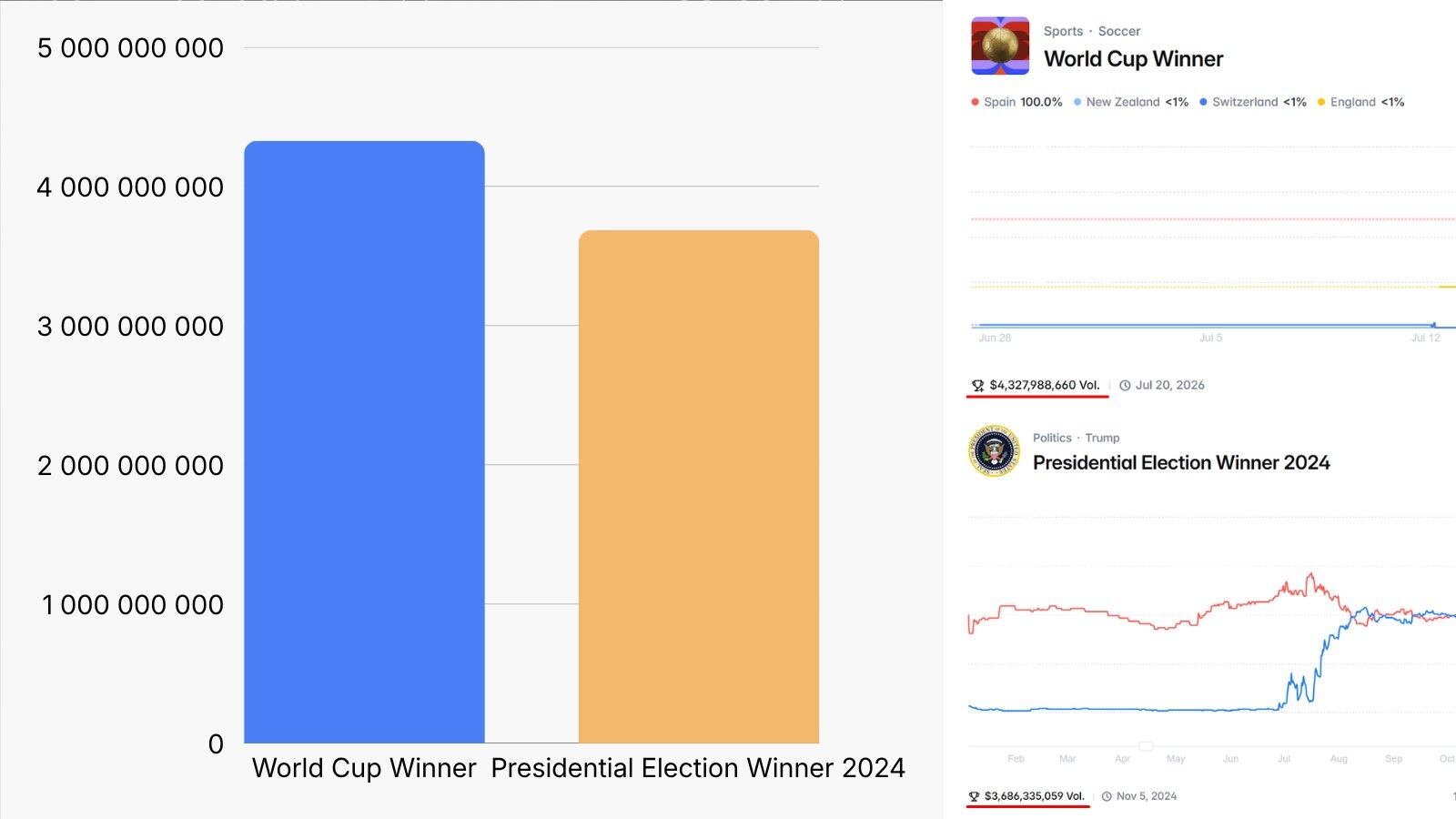
Yesterday, the "World Cup Champion" prediction market finally settled with a trading volume of $4.32 billion, surpassing the $3.686 billion volume for "2024 US Presidential Election Winner" to become the single highest-volume prediction event in Polymarket's history.
Furthermore, during the six weeks of the World Cup, the football category on Polymarket accumulated a nominal trading volume of $8.5 billion, which is 4 times the total volume of all other sports categories combined during the same period.

The 2024 US election brought Polymarket into the mainstream spotlight, and the 2026 World Cup pushed it into the higher-frequency sports market. With $8.5 billion in six weeks and $4.32 billion for a single market, Polymarket not only broke records but also found a traffic machine that operates even faster than election cycles.

Riding the World Cup Wave, Polymarket "Stealthily" Increased Fees for the Sports Category

On July 10th, towards the end of the World Cup, Polymarket raised the transaction fees for sports markets.

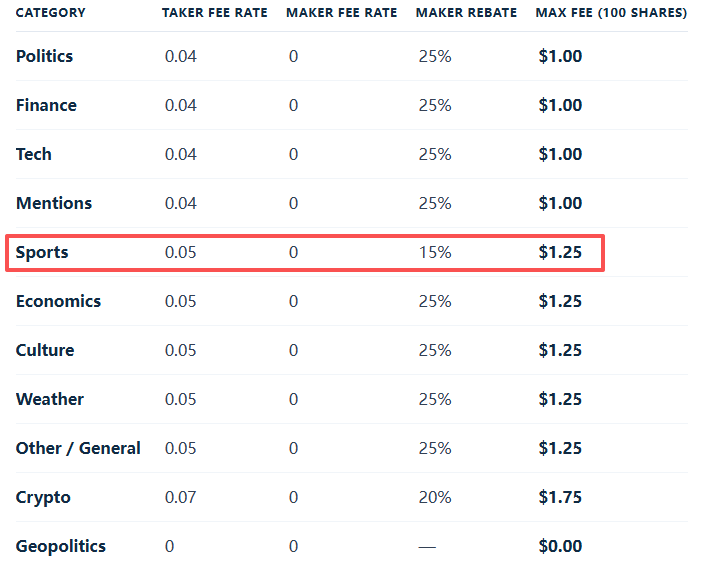
This change was not announced separately to regular users but appeared in the platform developer's Changelog. The Taker fee coefficient for the sports category was increased from 0.03 to 0.05; the Maker rebate ratio was reduced from 25% to 15%.

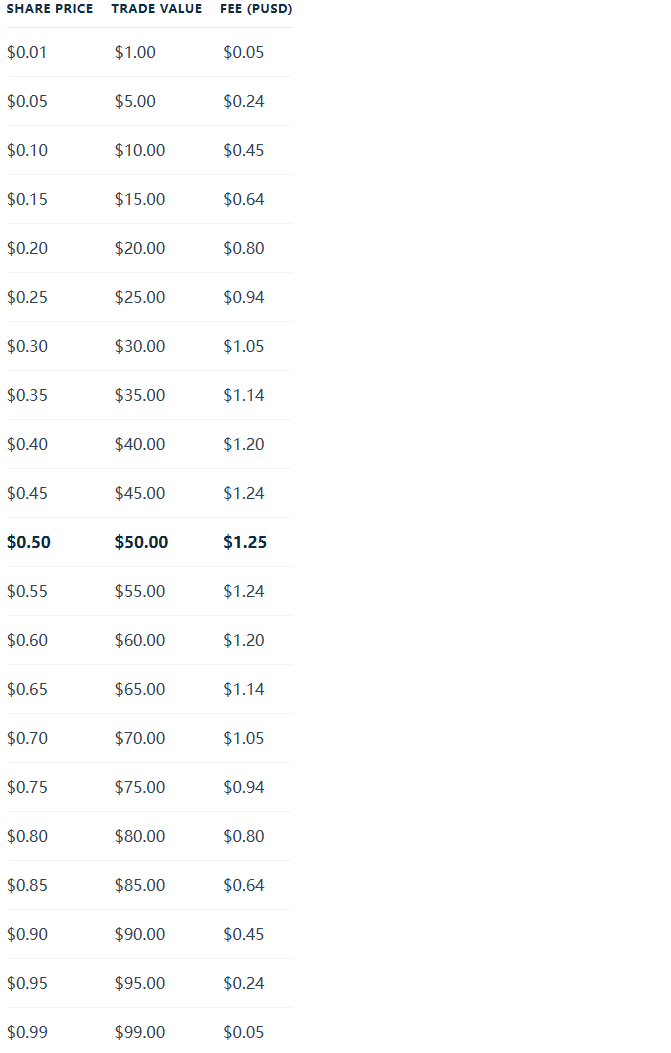
While the rate change from 0.03 to 0.05 seems small, the actual transaction cost increased by nearly 70%. Taking buying 100 shares of a sports event as an example, fees are highest when the share price is $0.5. Before the adjustment, users paid a maximum of $0.75; after the adjustment, the maximum fee rose to $1.25. As the share price approaches $0.01 or $0.99, the fees decrease symmetrically towards both ends, as shown in the table below.
Thus, the sports category also said goodbye to Polymarket's lowest fee tier. Previously, along with politics, finance, and tech, it belonged to the platform's lower-cost transaction categories. After the adjustment, the maximum fee per 100 shares rose to $1.25, placing it in the same tier as economy, culture, and weather, only lower than the cryptocurrency market's $1.75.
Looking back over the past six months, Polymarket's fee scope has been quietly expanding.

In January 2026, Polymarket first enabled Taker fees for the 15-minute cryptocurrency markets. In February, the fee scope expanded to some college basketball and Serie A markets. In March, all newly listed crypto markets began charging fees. After the launch of Fee Structure V2 at the end of March, categories like politics, finance, economy, culture, weather, and tech were gradually included.

For the platform, once user habits are established, increasing fees doesn't typically lead to large-scale user loss but allows the same trading volume to contribute more revenue.

The POLY Airdrop Controversy Reignites: How Much Longer Do Users Have to Wait?

Recently, the community discovered that Polymarket's official affiliated account, Polymarket Traders, deleted a tweet posted on May 13th. The original tweet had been interpreted by the community as a hint about a POLY airdrop. After the deletion, many users began revisiting the account's historical content, and discussions around "whether the airdrop plan has changed" heated up again.

The market is so sensitive because a Polymarket token launch is no longer baseless speculation. In October 2025, Polymarket's Chief Marketing Officer, Matthew Modabber, explicitly stated in a podcast: "There will be a token, and there will be an airdrop." He also mentioned that Polymarket's top priority at the time was returning to the US market, and the token plan would advance after US operations were established, praising Hyperliquid's token launch approach.

This statement once led the community to believe that POLY was only a matter of time. Since then, metrics like trading volume, market making scale, and active days have been considered by many users as potential airdrop weight factors. Even though the platform never announced snapshot times or distribution rules, users were willing to continue trading, waiting for the token plan to materialize.

The problem is that US operations are progressing, the high-traffic World Cup has ended, yet POLY still has no announced timeline. Observant users noticed that on Polymarket's official website, the help center section recently added a note stating the platform "has not announced any plans for an airdrop or token generation event" and warns users to beware of scams using airdrop claims. This doesn't mean POLY has been canceled, but for users who have waited a long time, the question is no longer *if* Polymarket will issue a token, but how much longer this "future" will be delayed.

Currently, the community has two main interpretations for the delay. One view is that Polymarket is waiting for a more suitable regulatory window. The platform is still expanding its US business, and a token launch/airdrop could bring additional regulatory complications. Deleting overly direct hints from affiliated accounts might also just be about tightening external communication before a formal plan is finalized.

The other view is that Polymarket no longer has an urgent need to issue a token and might become the next OpenSea. In the past, the platform might have relied on airdrop expectations to attract users, increase trading volume, and supplement liquidity. Now, Polymarket already boasts a massive user base and real revenue, with transaction fees steadily increasing. As the platform's reliance on a token diminishes, POLY's priority might naturally continue to be pushed back.

Previously, the community discussed *how* POLY would be airdropped and *if* trading volume would count towards weight. Now, the discussion has shifted to how much longer the wait will be and what the next hoped-for timeframe might be. The platform that lists countless prediction markets cannot seem to set a settlement date for its own airdrop.

Related Questions

QWhat major event set a new record for the highest single prediction market volume on Polymarket, and what was the volume?

AThe 2026 FIFA World Cup winner prediction market set the new record, completing settlement with a trading volume of $4.32 billion.

QHow did Polymarket change its fee structure for sports markets during the World Cup?

APolymarket increased the Taker fee coefficient for sports markets from 0.03 to 0.05 and decreased the Maker rebate from 25% to 15%, effectively raising transaction costs by nearly 70% in some cases.

QWhat official action caused renewed community concern about a potential POLY token airdrop?

AThe official-associated account 'Polymarket Traders' deleted a tweet from May 13th that the community had interpreted as a hint about the POLY airdrop, sparking discussions about whether the plans had changed.

QAccording to the article, what are the two main community theories for the delay of the POLY token?

A1. Polymarket is waiting for a more suitable regulatory compliance window as it expands its US operations. 2. Polymarket may no longer feel an urgent need to issue a token, as it now has substantial user base and real revenue, potentially becoming 'the next OpenSea' where the token's priority is lowered.

QWhat new disclaimer has appeared on Polymarket's website regarding an airdrop?

AA newly added notice in the help center states that the platform 'has not announced any airdrop or token generation event plans' and warns users to be vigilant against scams using the airdrop as a pretext.

Related Reads

Bank of America Quietly Positions: Could $6 Trillion in Bank Deposits Flow into Stablecoins?

Bank of America has quietly made leadership appointments to accelerate its digital asset strategy, sparking discussion about a potential large-scale migration of bank deposits to stablecoins. Reports highlighted the bank naming Sonali Theisen, Kevin Milsom, and Adam Dixon to lead its global digital asset and AI platform, focusing on stablecoins, tokenized deposits, custody, and crypto settlement. This move revived a claim that $6 trillion in bank deposits could flow into stablecoins, a figure originally cited by Bank of America's CEO Brian Moynihan in January. However, he conditioned this shift on stablecoins being allowed to pay interest—a feature not permitted under the current GENIUS Act. The legislation's final rules are delayed, pushing its effective date to January 2027. Major banks are not waiting. JPMorgan and Citigroup are already piloting tokenized deposit services, and a consortium including Bank of America is building a shared tokenized deposit network targeting a 2027 launch. While some, like Pacemakers.io's Alessandro Hatami, remain skeptical of rapid bank collaboration, data shows significant institutional adoption. Stablecoin settlement volume hit $33 trillion in 2025, and analysts project the market could surpass $1 trillion by 2026. Despite a recent dip in crypto prices and stablecoin supply, the institutional push for real-world use cases continues. The race is on for January 2027, when the GENIUS Act takes effect, potentially reshaping the competition between traditional finance and digital assets.

Foresight News19m ago

Bank of America Quietly Positions: Could $6 Trillion in Bank Deposits Flow into Stablecoins?

Foresight News19m ago

US Treasury Secretary Bement Claims: The US Will Soon Control 80% of Global Computing Power

U.S. Treasury Secretary Ben Sent proclaimed that America is poised to control 80% of the world's computing power, positioning compute dominance as a core pillar of U.S. economic strategy. Speaking on the Mike Rowe show, he stated the U.S. currently holds 50-60% of global compute share, with expectations to reach 80% soon. He framed this as a strategic competition the U.S. "cannot afford to lose," warning that a rival's lead would grant "unacceptable" strategic leverage, while asserting a current one-year AI lead. This high-level policy endorsement is seen as a direct boost for AI infrastructure investment, benefiting chipmakers like NVIDIA and cloud providers' capex cycles. Sent positioned AI compute, semiconductors, and quantum computing as three pillars of national economic strength and security. He defended AI's societal impact, citing historical tech shifts, and argued AI empowers small businesses without causing net job loss so far. He highlighted government efforts to deepen public-private AI cybersecurity cooperation. For investors, the statement signals sustained U.S. policy support for AI infrastructure. However, analysts urge caution, noting "compute share" lacks a standard public metric; the 80% figure is a forecast, not audited data. They recommend focusing on tangible indicators like physical capacity expansion and power infrastructure, with future semiconductor and cloud reports providing key verification data.

marsbit31m ago

US Treasury Secretary Bement Claims: The US Will Soon Control 80% of Global Computing Power

marsbit31m ago

Trading

Spot
活动图片