The Evolution of Latin America's Stablecoin Market: From Survival to Growth

marsbitPublished on 2025-12-11Last updated on 2025-12-11

Abstract

Latin America's stablecoin market is evolving from a survival tool into a growth engine, driven by hyperinflation, financial exclusion, and inefficient remittances. With Argentina's 178% inflation and Brazil's $300B crypto trading volume, stablecoins like USDT and USDC are becoming essential for value storage and daily transactions. The region is witnessing the rise of Crypto Neobanks, which leverage zero-fee networks (e.g., Tether’s Plasma) and DeFi yields to offer dollar-based accounts with higher returns, challenging traditional fintech giants like Nubank. Brazil leads in institutional adoption, with 90% of crypto flows in stablecoins, while Argentina shows retail-driven growth. Key trends include the emergence of local currency-pegged stablecoins, integration of yield-bearing assets, and regulatory divergence across countries. The market, valued at $1.5T in trading volume, presents a significant alpha opportunity, with Crypto Neobanks poised to capture market share by offering faster settlements, dollar-denominated accounts, and superior yields. The window for investment and innovation is narrow, with the next 12-18 months critical for dominance.

Author: @BlazingKevin_, the Researcher at Movemaker

Latin America is undergoing a financial infrastructure revolution forced by currency failure. This article provides a panoramic analysis of the region's stablecoin market based on macroeconomic data from 2024 to 2025, on-chain behavior analysis, and regulatory policy texts. The research finds that the Latin American market has moved beyond the early stage of passive dollarization and is undergoing a deep transformation towards Web3 financial infrastructure-ization.

At the macro level, Argentina's 178% inflation rate and Brazil's $300 billion crypto trading volume form the dual backdrop of stablecoins as both a survival tool and an efficiency tool. At the micro level, the market is breeding a new species—Crypto Neobank. Compared to traditional fintech giants like Nubank, Crypto Neobanks, utilizing zero-fee networks like Tether-supported Plasma and DeFi yields, are filling the vast vacuum between traditional banking and pure crypto speculation. This report points out that the next alpha opportunity in Latin America's crypto market lies in how Web3 infrastructure can leverage this $1.5 trillion trading volume to replicate and surpass the growth miracle of traditional fintech.

1. Macro Narrative Restructuring

To understand the uniqueness of the Latin American market, one must abandon the "technological innovation theory" perspective of North America or Europe. In Latin America, the explosion of stablecoins is an inevitable product of macroeconomic structural imbalances. The core drivers here are survival and efficiency, and the intervention of Web3 technology is transforming this passive survival need into an active financial upgrade.

1.1 Currency Failure and the Loss of Store of Value Function

Inflation is the strongest catalyst for the crypto-dollarization process in Latin America. Argentina and Venezuela are typical examples of this phenomenon.

Despite the Milei government's radical economic therapy, Argentina's annual inflation rate remained as high as 178% between 2024 and 2025, with the peso depreciating by 51.6% against the US dollar within 12 months. In this environment, stablecoins are no longer investment products but de facto units of account. On-chain data shows that stablecoins account for up to 61.8% of trading volume in Argentina, far exceeding the global average. The market's demand for stablecoins exhibits extremely high immediate price elasticity: whenever the exchange rate falls below key psychological barriers, monthly stablecoin purchases on exchanges surge to over $10 million.

In Venezuela, as the bolivar's value continues to evaporate, Tether has penetrated microeconomic activities such as supermarket shopping and real estate transactions. Data shows a strong negative correlation between the local fiat exchange rate and cryptocurrency reception volume, with stablecoins providing a parallel financial system immune to government monetary policy interference.

1.2 Banking Exclusion and the Financial Vacuum of 122 Million People

Besides fighting inflation, financial exclusion is another major pain point. In Latin America, 122 million adults (26% of the population) are unbanked. This massive group is excluded from the traditional banking system due to minimum balance requirements, cumbersome compliance documents, and geographical isolation.
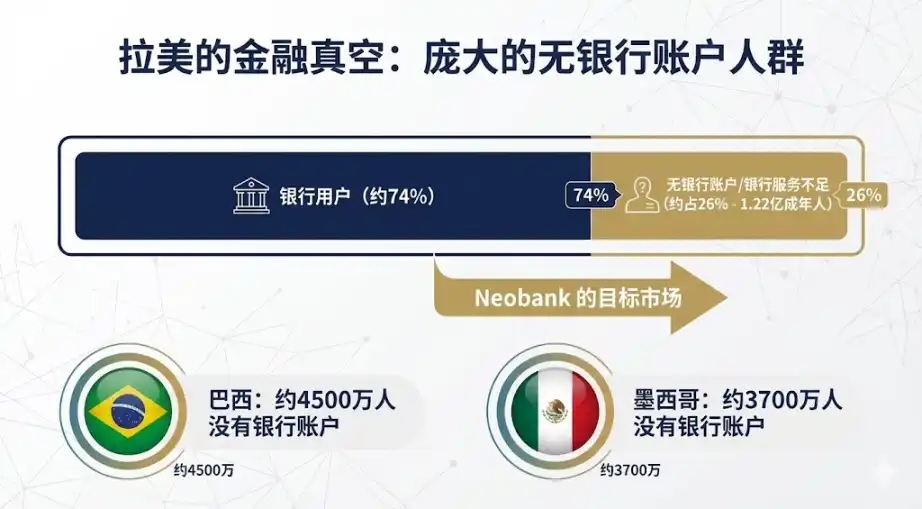
This is precisely the soil for the rise of new banks. Nubank's success proves this logic: through a branchless, low-fee mobile banking model, Nubank captured 122 million users within a decade, reaching a market capitalization of $70 billion and covering 60% of Brazil's adult population.

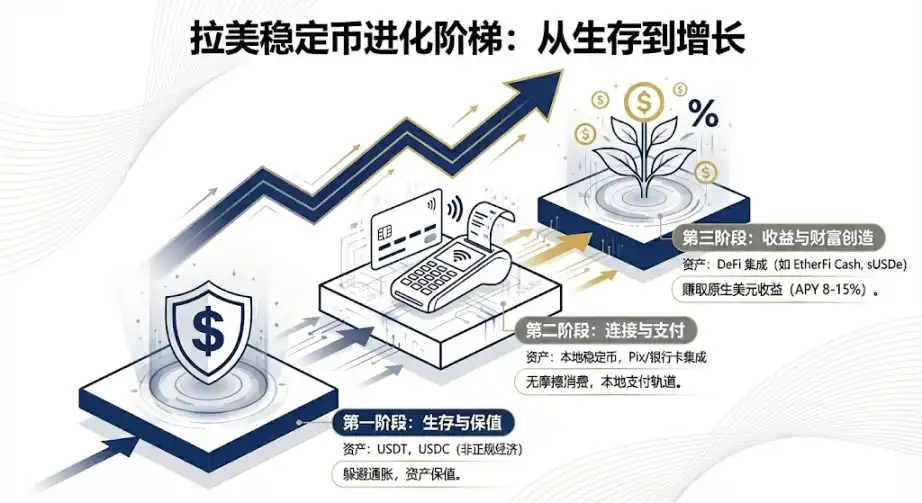
However, Crypto Neobanks are upgrading this logic for a second time. While Nubank solved the accessibility problem, the accounts are still denominated primarily in local fiat, and savings yields often underperform inflation. In contrast, Web3 neobanks can provide USD stablecoin-based accounts without needing a banking license, and through DeFi protocol integration, can offer 8% to 10% USD-denominated annualized yields, which is致命ly attractive to users in inflationary economies.

1.3 The Cost-Reduction and Efficiency Revolution in the Remittance Economy

Latin America is one of the world's largest remittance reception regions, receiving over $160 billion in remittances annually. Traditional cross-border remittances typically charge 5% to 6% in fees and take days to settle. This means nearly $10 billion in wealth is lost annually in the form of fees.

In the US-Mexico corridor, the world's largest single remittance channel, Bitso has processed over $6.5 billion in remittances, accounting for 10%. Blockchain-based cross-border transfers can reduce costs to $1 or even a few cents, shortening settlement time from 3-5 days to seconds. This hundredfold efficiency improvement constitutes a dimensional打击 against the traditional financial system.

2. Market Depth and On-Chain Behavior

Data from 2024 to 2025 indicates that the Latin American region has developed a unique Latin American model for cryptocurrency adoption: high-frequency, large-volume, and highly institutionalized.

2.1 Trading Volume and Growth Resilience

According to comprehensive data, between July 2022 and June 2025, the Latin American region recorded nearly $1.5 trillion in cryptocurrency trading volume, with a year-on-year growth of 42.5%. Notably, even during global market volatility, Latin America's growth baseline remained solid. In December 2024, the region's monthly trading volume soared to a record $87.7 billion. This indicates that the growth of the Latin American market is not merely beta收益 following the global bull market cycle but has an endogenous logic of rigid demand.

2.2 Brazil's Institutional Hegemony and Argentina's Retail Frenzy

Market structures vary significantly by country:

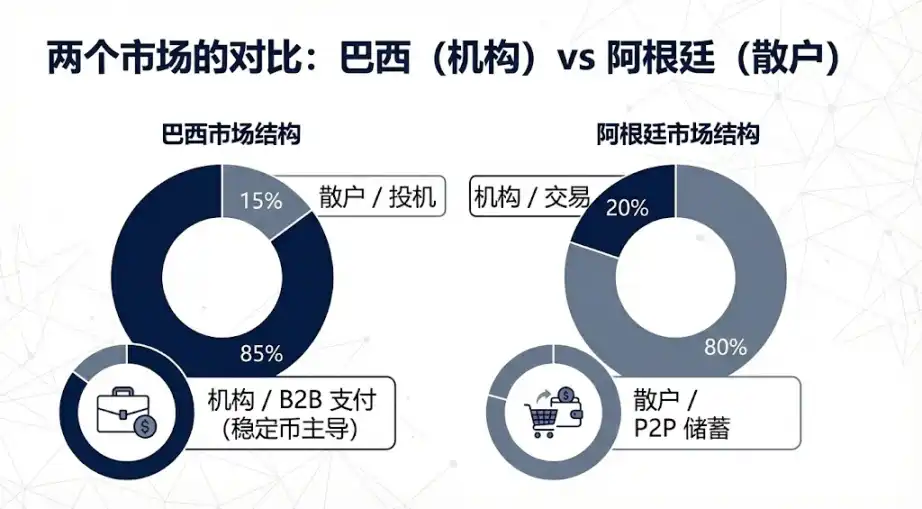
Brazil is the undisputed leader in the region, receiving approximately $318.8 billion in crypto assets, nearly one-third of the regional total. Stunning data from the Brazilian Central Bank shows that about 90% of the country's cryptocurrency fund flows are conducted through stablecoins. This extremely high比例 reveals the high degree of institutionalization in Brazil—stablecoins are primarily used for inter-enterprise payments, cross-border settlements, and liquidity transfers, rather than retail speculation.

Argentina ranks second with a trading volume of approximately $91.1 to $93.9 billion. Unlike Brazil, Argentina's growth comes mainly from the retail end, reflecting the general public's adoption of crypto dollarization as a daily lifestyle to combat inflation.
2.3 Platform Preference: The Dominance of Centralized Exchanges

Latin American users heavily rely on centralized exchanges. Data shows that about 68.7% of trading activity occurs on centralized exchanges, the second-highest proportion globally.

This phenomenon has important strategic significance for Web3 projects entering Latin America. "Borrowing a ship to go to sea" is the best strategy. Since local exchanges like Mercado Bitcoin and Bitso have compliant fiat channels and deep user trust, Crypto Neobanks should not try to directly compete with their fiat on-ramp/off-ramp business but should penetrate their vast user base through cooperation.

3. Asset Evolution

The Latin American market presents a landscape where globally universal stablecoins coexist with local innovative assets and is undergoing a generational leap from holding for保值 to holding for增值.

3.1 The Duopoly of Tether and USDC

With first-mover advantage and deep liquidity, Tether remains the hard currency in Latin American peer-to-peer markets and the informal economy. In the over-the-counter markets of Venezuela and Argentina, Tether is the absolute unit of account. Brazilian tax data also shows that Tether accounts for about two-thirds of declared trading volume. Its censorship resistance and普及度 make it the preferred choice for circumventing capital controls.

USDC is making inroads through compliance. Circle's partnerships with giants like Mercado Pago and Bitso have made it the preferred choice for institutional settlements. Bitso's report指出 that by the end of 2024, USDC had become the most purchased asset on its platform, accounting for 24%, surpassing Bitcoin.

3.2 The Bridging Role of Local Fiat Stablecoins

In 2024-2025, stablecoins pegged to local Latin American fiat currencies began to emerge, aiming to solve the friction between local payment systems and blockchain.

The launch of Meli Dólar by e-commerce giant Mercado Libre in Brazil was a milestone event. Through Mercado Pago, it is embedded in the daily shopping of tens of millions of users, used as a credit card cashback vehicle, significantly lowering the user barrier. Furthermore, Num Finance's issuance of peso and real-pegged stablecoins primarily serves cross-exchange arbitrage and enterprise-level DeFi operations, helping local businesses manage liquidity on-chain without bearing exchange rate risk.

3.3 Trend Mutation: Yield-Bearing Assets and DeFi Integration

This is the next alpha opportunity in the Latin American market. Traditional banks in Latin America typically offer very low interest rates on USD accounts. Web3 neobanks, by integrating DeFi protocols, are redefining savings.

Take EtherFi as an example. As a DeFi protocol, it leveraged its multi-billion dollar Total Value Locked (TVL) to launch a credit card product. Users can stake crypto assets to earn yield while spending with the card. This model allows users to consume through borrowing without selling assets, preserving upside exposure while solving liquidity issues.

In high-inflation countries, the native yield of 10% to 15% offered by synthetic dollar stablecoins like USDe is highly attractive. Compared to the real-denominated deposits offered by Nubank, a 10% USD-denominated annualized yield is a dimensional打击 against traditional savings products.
4. Divergent National Directions

The vastly different political and economic environments across Latin American countries lead to截然不同的 development paths for stablecoins.

4.1 Brazil: A Duet of Compliance and Innovation

Brazil is Latin America's most mature and compliant market. The Brazilian Central Bank's digital currency project, Drex, underwent a strategic shift in 2025, focusing instead on the wholesale端, leaving a huge retail market space for private stablecoins.

In the same year, Brazil implemented a unified crypto tax rate and clarified the foreign exchange regulatory status of stablecoins. While this increased costs, it also赋予 the industry legitimacy. The local innovation project Neobankless is a paradigm of this trend. Built on Solana, its front end completely abstracts blockchain complexity, directly integrating with Brazil's national payment system PIX. Users deposit reais, which are automatically converted into interest-bearing USDC in the backend. This "Web2 experience, Web3 backend" model directly challenges the user habits of traditional fintech.

4.2 Argentina: A Liberalization Testing Ground

The Virtual Asset Service Provider (VASP) registration system established by the Milei government, while adding compliance thresholds,实质上默许了 the monetary competitive status of USD stablecoins. The asset regularization plan further brought a large amount of gray market stablecoins to the surface.

Lemon Cash solved the "last mile" payment problem by issuing crypto debit cards. Users hold USDC to earn yield, converting to pesos only at the moment of swiping the card. This model is highly sticky in a high-inflation environment because it minimizes the time holding fiat currency.

4.3 Mexico and Venezuela: Polarization

Due to the "Fintech Law" and central bank restrictions, Mexico has formed a landscape where banks and crypto companies are segregated. Companies like Bitso have therefore vigorously developed business-to-business (B2B) operations, using stablecoins as an intermediate bridge to optimize US-Mexico cross-border fund transfers, bypassing the inefficiencies of the traditional banking system.

In Venezuela, against the backdrop of reinstated sanctions, Tether has even become a settlement tool for oil exports. Among the populace, Binance's peer-to-peer trading remains a lifeline for obtaining foreign exchange, with the market彻底 voting with its feet for private USD stablecoins over the failed official Petro coin.

5. From Traditional Finance to Crypto Neobank

The Latin American market is undergoing a critical turning point, evolving from traditional fintech to Crypto Neobank. This is not only a technological upgrade but also a generational leap in business models.

5.1 The Valuation Gap and Alpha Opportunity

Currently, Nubank has a market cap of approximately $70 billion, and Revolut is valued at $75 billion; they validate the commercial viability of digital banks in Latin America. In contrast, the entire Web3 neobank赛道 has a combined valuation of less than $5 billion, only 7% of Nubank's market cap.

This is a huge value洼地. If Crypto Neobanks can capture even 10% of Nubank's market share, utilizing a superior unit economics model, their valuation has the potential for a 10x to 30x increase.

5.2 Next-Generation Infrastructure: The Zero-Fee Revolution

One of the biggest obstacles to the widespread adoption of crypto payments is gas fees. Plasma and its flagship product Plasma One brought a breakthrough. As a blockchain officially supported by Tether, Plasma enables zero gas fees for Tether transfers. This removes the biggest psychological and economic barrier for users using cryptocurrency for payments.

The data showing Total Value Locked (TVL)突破 $5 billion within 20 days of launch proves that when infrastructure directly provides bank-level services, the inflow of funds is惊人. This vertically integrated model of "infrastructure + neobank" could become the mainstream in the future.

5.3 Dimensional打击 of the Business Model

Crypto Neobanks have a triple moat compared to traditional banks:

  • Settlement Speed: Reduced from 3-5 days with SWIFT to seconds on the blockchain.
  • Account Currency: Upgraded from depreciating local fiat to anti-inflation USD stablecoins.
  • Revenue Source: Shifted from earning存贷利差 to allowing users to share the native yield of DeFi protocols.
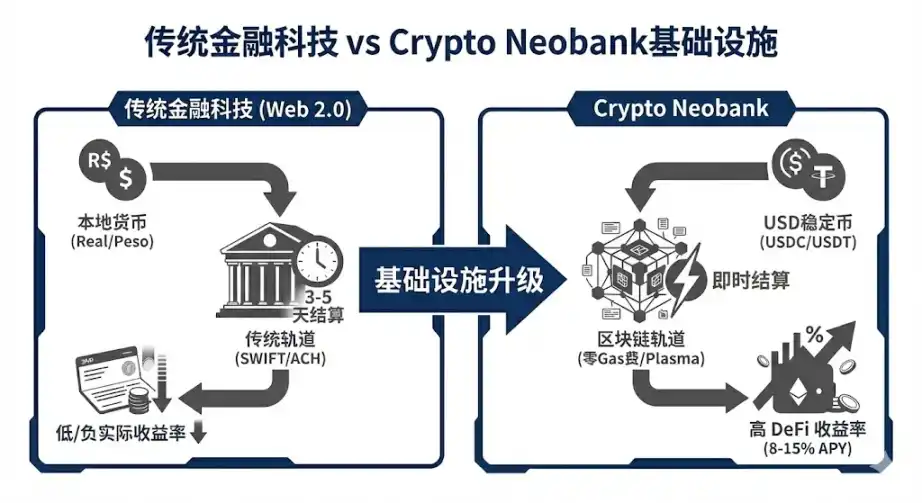
For Latin American users, this is not just a better experience but a rigid demand for asset保值.

6. Challenges, Strategies, and Endgame Predictions

6.1 Challenges and Breakout Strategies

Despite the bright prospects, events where banks关闭 crypto company accounts out of compliance fears still occur occasionally in Mexico and Colombia. Furthermore, Latin American regulation is highly fragmented, resulting in extremely high compliance costs for跨国 operations.

Targeting the Latin American market, Web3 projects need to follow a specific winner's playbook:

Brazil First: Given that Brazil accounts for 31% of Latin American crypto trading volume and has a完善的 payment system, it must be the primary battlefield.

Niche First: Don't try to be a bank for everyone from the start. The successful path is to first capture a细分 community and then扩散.

Viral Marketing: 90% of Nubank's growth came from word of mouth. Crypto Neobanks should leverage on-chain incentives to achieve low-cost裂变 in social networks like WhatsApp.

6.2 Market Predictions

Based on the above analysis, we make the following predictions for the short-to-medium term development of stablecoins:

Private Stablecoins Replacing CBDCs: Given the retreat of Brazil's Drex on the retail端, privately issued compliant stablecoins will de facto assume the role of digital fiat currency.

Mainstreaming of Yield-Bearing Assets: Stablecoins that do not generate interest may face competition from yield-bearing assets like tokenized US Treasuries. Latin American users will increasingly prefer to hold assets that are both anti-inflationary and yield-generating.

Market Stratification: The market will bifurcate into two camps: one highly compliant, bank-integrated whitelisted market, and another gradually shrinking but still existing gray peer-to-peer market.

Conclusion

Latin America's stablecoin market is the world's most cutting-edge laboratory for fintech. Here, stablecoins are not a nice-to-have technology but a must-have necessity. From the digital lifebuoy in the hands of Argentinians to the cross-border settlement tool in the hands of Brazilian financial giants, stablecoins are reshaping the financial arteries of this continent.

With the landing of regulatory frameworks in 2025 and the rise of the new species Crypto Neobank, Latin America is expected to become the first region in the world to achieve large-scale commercial adoption of stablecoins. For investors, the current window of opportunity is only 12 to 18 months. Whoever can leverage Web3 rails to replicate Nubank's user experience before 2026 will become the next hundred-billion-dollar giant. The race has already begun, and Latin America is the untapped gold mine.

Related Questions

QWhat are the two primary drivers behind the explosive growth of stablecoins in Latin America, according to the article?

AThe two primary drivers are survival (as a hedge against hyperinflation and currency devaluation) and efficiency (addressing financial exclusion and high remittance costs).

QHow does the market structure of Brazil differ from that of Argentina in terms of cryptocurrency adoption?

ABrazil's market is highly institutionalized, with about 90% of crypto flows in stablecoins used for corporate payments and cross-border settlements. Argentina's market is primarily retail-driven, with individuals using crypto for dollarization in daily life to combat inflation.

QWhat is a 'Crypto Neobank' and how does it differ from a traditional neobank like Nubank?

AA Crypto Neobank is a new type of financial institution that leverages Web3 infrastructure, offering dollar-based stablecoin accounts and integrating with DeFi protocols to provide high USD-denominated yields. Unlike traditional neobanks like Nubank, which primarily offer accounts in local fiat currencies with low savings rates, Crypto Neobanks do not require a banking license and offer superior returns that outpace inflation.

QWhat technological breakthrough does the article highlight as a key enabler for crypto payments, and which project exemplifies it?

AThe article highlights zero-fee transactions as a key technological enabler. The Plasma blockchain, specifically its flagship product Plasma One which is supported by Tether, exemplifies this breakthrough by enabling USDT transfers with no gas fees, removing a major barrier to crypto payment adoption.

QWhat is the article's prediction regarding the competition between private stablecoins and Central Bank Digital Currencies (CBDCs) in Latin America?

AThe article predicts that privately issued, compliant stablecoins will de facto assume the role of digital fiat currency in the retail space, as evidenced by the strategic retreat of Brazil's CBDC project, Drex, from the retail market.

Related Reads

Trading

Spot
Futures

Hot Articles

What is SONIC

Sonic: Pioneering the Future of Gaming in Web3 Introduction to Sonic In the ever-evolving landscape of Web3, the gaming industry stands out as one of the most dynamic and promising sectors. At the forefront of this revolution is Sonic, a project designed to amplify the gaming ecosystem on the Solana blockchain. Leveraging cutting-edge technology, Sonic aims to deliver an unparalleled gaming experience by efficiently processing millions of requests per second, ensuring that players enjoy seamless gameplay while maintaining low transaction costs. This article delves into the intricate details of Sonic, exploring its creators, funding sources, operational mechanics, and the timeline of significant events that have shaped its journey. What is Sonic? Sonic is an innovative layer-2 network that operates atop the Solana blockchain, specifically tailored to enhance the existing Solana gaming ecosystem. It accomplishes this through a customised, VM-agnostic game engine paired with a HyperGrid interpreter, facilitating sovereign game economies that roll up back to the Solana platform. The primary goals of Sonic include: Enhanced Gaming Experiences: Sonic is committed to offering lightning-fast on-chain gameplay, allowing players and developers to engage with games at previously unattainable speeds. Atomic Interoperability: This feature enables transactions to be executed within Sonic without the need to redeploy Solana programmes and accounts. This makes the process more efficient and directly benefits from Solana Layer1 services and liquidity. Seamless Deployment: Sonic allows developers to write for Ethereum Virtual Machine (EVM) based systems and execute them on Solana’s SVM infrastructure. This interoperability is crucial for attracting a broader range of dApps and decentralised applications to the platform. Support for Developers: By offering native composable gaming primitives and extensible data types - dining within the Entity-Component-System (ECS) framework - game creators can craft intricate business logic with ease. Overall, Sonic's unique approach not only caters to players but also provides an accessible and low-cost environment for developers to innovate and thrive. Creator of Sonic The information regarding the creator of Sonic is somewhat ambiguous. However, it is known that Sonic's SVM is owned by the company Mirror World. The absence of detailed information about the individuals behind Sonic reflects a common trend in several Web3 projects, where collective efforts and partnerships often overshadow individual contributions. Investors of Sonic Sonic has garnered considerable attention and support from various investors within the crypto and gaming sectors. Notably, the project raised an impressive $12 million during its Series A funding round. The round was led by BITKRAFT Ventures, with other notable investors including Galaxy, Okx Ventures, Interactive, Big Brain Holdings, and Mirana. This financial backing signifies the confidence that investment foundations have in Sonic’s potential to revolutionise the Web3 gaming landscape, further validating its innovative approaches and technologies. How Does Sonic Work? Sonic utilises the HyperGrid framework, a sophisticated parallel processing mechanism that enhances its scalability and customisability. Here are the core features that set Sonic apart: Lightning Speed at Low Costs: Sonic offers one of the fastest on-chain gaming experiences compared to other Layer-1 solutions, powered by the scalability of Solana’s virtual machine (SVM). Atomic Interoperability: Sonic enables transaction execution without redeployment of Solana programmes and accounts, effectively streamlining the interaction between users and the blockchain. EVM Compatibility: Developers can effortlessly migrate decentralised applications from EVM chains to the Solana environment using Sonic’s HyperGrid interpreter, increasing the accessibility and integration of various dApps. Ecosystem Support for Developers: By exposing native composable gaming primitives, Sonic facilitates a sandbox-like environment where developers can experiment and implement business logic, greatly enhancing the overall development experience. Monetisation Infrastructure: Sonic natively supports growth and monetisation efforts, providing frameworks for traffic generation, payments, and settlements, thereby ensuring that gaming projects are not only viable but also sustainable financially. Timeline of Sonic The evolution of Sonic has been marked by several key milestones. Below is a brief timeline highlighting critical events in the project's history: 2022: The Sonic cryptocurrency was officially launched, marking the beginning of its journey in the Web3 gaming arena. 2024: June: Sonic SVM successfully raised $12 million in a Series A funding round. This investment allowed Sonic to further develop its platform and expand its offerings. August: The launch of the Sonic Odyssey testnet provided users with the first opportunity to engage with the platform, offering interactive activities such as collecting rings—a nod to gaming nostalgia. October: SonicX, an innovative crypto game integrated with Solana, made its debut on TikTok, capturing the attention of over 120,000 users within a short span. This integration illustrated Sonic’s commitment to reaching a broader, global audience and showcased the potential of blockchain gaming. Key Points Sonic SVM is a revolutionary layer-2 network on Solana explicitly designed to enhance the GameFi landscape, demonstrating great potential for future development. HyperGrid Framework empowers Sonic by introducing horizontal scaling capabilities, ensuring that the network can handle the demands of Web3 gaming. Integration with Social Platforms: The successful launch of SonicX on TikTok displays Sonic’s strategy to leverage social media platforms to engage users, exponentially increasing the exposure and reach of its projects. Investment Confidence: The substantial funding from BITKRAFT Ventures, among others, emphasizes the robust backing Sonic has, paving the way for its ambitious future. In conclusion, Sonic encapsulates the essence of Web3 gaming innovation, striking a balance between cutting-edge technology, developer-centric tools, and community engagement. As the project continues to evolve, it is poised to redefine the gaming landscape, making it a notable entity for gamers and developers alike. As Sonic moves forward, it will undoubtedly attract greater interest and participation, solidifying its place within the broader narrative of blockchain gaming.

1.3k Total ViewsPublished 2024.04.04Updated 2024.12.03

What is SONIC

What is $S$

Understanding SPERO: A Comprehensive Overview Introduction to SPERO As the landscape of innovation continues to evolve, the emergence of web3 technologies and cryptocurrency projects plays a pivotal role in shaping the digital future. One project that has garnered attention in this dynamic field is SPERO, denoted as SPERO,$$s$. This article aims to gather and present detailed information about SPERO, to help enthusiasts and investors understand its foundations, objectives, and innovations within the web3 and crypto domains. What is SPERO,$$s$? SPERO,$$s$ is a unique project within the crypto space that seeks to leverage the principles of decentralisation and blockchain technology to create an ecosystem that promotes engagement, utility, and financial inclusion. The project is tailored to facilitate peer-to-peer interactions in new ways, providing users with innovative financial solutions and services. At its core, SPERO,$$s$ aims to empower individuals by providing tools and platforms that enhance user experience in the cryptocurrency space. This includes enabling more flexible transaction methods, fostering community-driven initiatives, and creating pathways for financial opportunities through decentralised applications (dApps). The underlying vision of SPERO,$$s$ revolves around inclusiveness, aiming to bridge gaps within traditional finance while harnessing the benefits of blockchain technology. Who is the Creator of SPERO,$$s$? The identity of the creator of SPERO,$$s$ remains somewhat obscure, as there are limited publicly available resources providing detailed background information on its founder(s). This lack of transparency can stem from the project's commitment to decentralisation—an ethos that many web3 projects share, prioritising collective contributions over individual recognition. By centring discussions around the community and its collective goals, SPERO,$$s$ embodies the essence of empowerment without singling out specific individuals. As such, understanding the ethos and mission of SPERO remains more important than identifying a singular creator. Who are the Investors of SPERO,$$s$? SPERO,$$s$ is supported by a diverse array of investors ranging from venture capitalists to angel investors dedicated to fostering innovation in the crypto sector. The focus of these investors generally aligns with SPERO's mission—prioritising projects that promise societal technological advancement, financial inclusivity, and decentralised governance. These investor foundations are typically interested in projects that not only offer innovative products but also contribute positively to the blockchain community and its ecosystems. The backing from these investors reinforces SPERO,$$s$ as a noteworthy contender in the rapidly evolving domain of crypto projects. How Does SPERO,$$s$ Work? SPERO,$$s$ employs a multi-faceted framework that distinguishes it from conventional cryptocurrency projects. Here are some of the key features that underline its uniqueness and innovation: Decentralised Governance: SPERO,$$s$ integrates decentralised governance models, empowering users to participate actively in decision-making processes regarding the project’s future. This approach fosters a sense of ownership and accountability among community members. Token Utility: SPERO,$$s$ utilises its own cryptocurrency token, designed to serve various functions within the ecosystem. These tokens enable transactions, rewards, and the facilitation of services offered on the platform, enhancing overall engagement and utility. Layered Architecture: The technical architecture of SPERO,$$s$ supports modularity and scalability, allowing for seamless integration of additional features and applications as the project evolves. This adaptability is paramount for sustaining relevance in the ever-changing crypto landscape. Community Engagement: The project emphasises community-driven initiatives, employing mechanisms that incentivise collaboration and feedback. By nurturing a strong community, SPERO,$$s$ can better address user needs and adapt to market trends. Focus on Inclusion: By offering low transaction fees and user-friendly interfaces, SPERO,$$s$ aims to attract a diverse user base, including individuals who may not previously have engaged in the crypto space. This commitment to inclusion aligns with its overarching mission of empowerment through accessibility. Timeline of SPERO,$$s$ Understanding a project's history provides crucial insights into its development trajectory and milestones. Below is a suggested timeline mapping significant events in the evolution of SPERO,$$s$: Conceptualisation and Ideation Phase: The initial ideas forming the basis of SPERO,$$s$ were conceived, aligning closely with the principles of decentralisation and community focus within the blockchain industry. Launch of Project Whitepaper: Following the conceptual phase, a comprehensive whitepaper detailing the vision, goals, and technological infrastructure of SPERO,$$s$ was released to garner community interest and feedback. Community Building and Early Engagements: Active outreach efforts were made to build a community of early adopters and potential investors, facilitating discussions around the project’s goals and garnering support. Token Generation Event: SPERO,$$s$ conducted a token generation event (TGE) to distribute its native tokens to early supporters and establish initial liquidity within the ecosystem. Launch of Initial dApp: The first decentralised application (dApp) associated with SPERO,$$s$ went live, allowing users to engage with the platform's core functionalities. Ongoing Development and Partnerships: Continuous updates and enhancements to the project's offerings, including strategic partnerships with other players in the blockchain space, have shaped SPERO,$$s$ into a competitive and evolving player in the crypto market. Conclusion SPERO,$$s$ stands as a testament to the potential of web3 and cryptocurrency to revolutionise financial systems and empower individuals. With a commitment to decentralised governance, community engagement, and innovatively designed functionalities, it paves the way toward a more inclusive financial landscape. As with any investment in the rapidly evolving crypto space, potential investors and users are encouraged to research thoroughly and engage thoughtfully with the ongoing developments within SPERO,$$s$. The project showcases the innovative spirit of the crypto industry, inviting further exploration into its myriad possibilities. While the journey of SPERO,$$s$ is still unfolding, its foundational principles may indeed influence the future of how we interact with technology, finance, and each other in interconnected digital ecosystems.

54 Total ViewsPublished 2024.12.17Updated 2024.12.17

What is $S$

What is AGENT S

Agent S: The Future of Autonomous Interaction in Web3 Introduction In the ever-evolving landscape of Web3 and cryptocurrency, innovations are constantly redefining how individuals interact with digital platforms. One such pioneering project, Agent S, promises to revolutionise human-computer interaction through its open agentic framework. By paving the way for autonomous interactions, Agent S aims to simplify complex tasks, offering transformative applications in artificial intelligence (AI). This detailed exploration will delve into the project's intricacies, its unique features, and the implications for the cryptocurrency domain. What is Agent S? Agent S stands as a groundbreaking open agentic framework, specifically designed to tackle three fundamental challenges in the automation of computer tasks: Acquiring Domain-Specific Knowledge: The framework intelligently learns from various external knowledge sources and internal experiences. This dual approach empowers it to build a rich repository of domain-specific knowledge, enhancing its performance in task execution. Planning Over Long Task Horizons: Agent S employs experience-augmented hierarchical planning, a strategic approach that facilitates efficient breakdown and execution of intricate tasks. This feature significantly enhances its ability to manage multiple subtasks efficiently and effectively. Handling Dynamic, Non-Uniform Interfaces: The project introduces the Agent-Computer Interface (ACI), an innovative solution that enhances the interaction between agents and users. Utilizing Multimodal Large Language Models (MLLMs), Agent S can navigate and manipulate diverse graphical user interfaces seamlessly. Through these pioneering features, Agent S provides a robust framework that addresses the complexities involved in automating human interaction with machines, setting the stage for myriad applications in AI and beyond. Who is the Creator of Agent S? While the concept of Agent S is fundamentally innovative, specific information about its creator remains elusive. The creator is currently unknown, which highlights either the nascent stage of the project or the strategic choice to keep founding members under wraps. Regardless of anonymity, the focus remains on the framework's capabilities and potential. Who are the Investors of Agent S? As Agent S is relatively new in the cryptographic ecosystem, detailed information regarding its investors and financial backers is not explicitly documented. The lack of publicly available insights into the investment foundations or organisations supporting the project raises questions about its funding structure and development roadmap. Understanding the backing is crucial for gauging the project's sustainability and potential market impact. How Does Agent S Work? At the core of Agent S lies cutting-edge technology that enables it to function effectively in diverse settings. Its operational model is built around several key features: Human-like Computer Interaction: The framework offers advanced AI planning, striving to make interactions with computers more intuitive. By mimicking human behaviour in tasks execution, it promises to elevate user experiences. Narrative Memory: Employed to leverage high-level experiences, Agent S utilises narrative memory to keep track of task histories, thereby enhancing its decision-making processes. Episodic Memory: This feature provides users with step-by-step guidance, allowing the framework to offer contextual support as tasks unfold. Support for OpenACI: With the ability to run locally, Agent S allows users to maintain control over their interactions and workflows, aligning with the decentralised ethos of Web3. Easy Integration with External APIs: Its versatility and compatibility with various AI platforms ensure that Agent S can fit seamlessly into existing technological ecosystems, making it an appealing choice for developers and organisations. These functionalities collectively contribute to Agent S's unique position within the crypto space, as it automates complex, multi-step tasks with minimal human intervention. As the project evolves, its potential applications in Web3 could redefine how digital interactions unfold. Timeline of Agent S The development and milestones of Agent S can be encapsulated in a timeline that highlights its significant events: September 27, 2024: The concept of Agent S was launched in a comprehensive research paper titled “An Open Agentic Framework that Uses Computers Like a Human,” showcasing the groundwork for the project. October 10, 2024: The research paper was made publicly available on arXiv, offering an in-depth exploration of the framework and its performance evaluation based on the OSWorld benchmark. October 12, 2024: A video presentation was released, providing a visual insight into the capabilities and features of Agent S, further engaging potential users and investors. These markers in the timeline not only illustrate the progress of Agent S but also indicate its commitment to transparency and community engagement. Key Points About Agent S As the Agent S framework continues to evolve, several key attributes stand out, underscoring its innovative nature and potential: Innovative Framework: Designed to provide an intuitive use of computers akin to human interaction, Agent S brings a novel approach to task automation. Autonomous Interaction: The ability to interact autonomously with computers through GUI signifies a leap towards more intelligent and efficient computing solutions. Complex Task Automation: With its robust methodology, it can automate complex, multi-step tasks, making processes faster and less error-prone. Continuous Improvement: The learning mechanisms enable Agent S to improve from past experiences, continually enhancing its performance and efficacy. Versatility: Its adaptability across different operating environments like OSWorld and WindowsAgentArena ensures that it can serve a broad range of applications. As Agent S positions itself in the Web3 and crypto landscape, its potential to enhance interaction capabilities and automate processes signifies a significant advancement in AI technologies. Through its innovative framework, Agent S exemplifies the future of digital interactions, promising a more seamless and efficient experience for users across various industries. Conclusion Agent S represents a bold leap forward in the marriage of AI and Web3, with the capacity to redefine how we interact with technology. While still in its early stages, the possibilities for its application are vast and compelling. Through its comprehensive framework addressing critical challenges, Agent S aims to bring autonomous interactions to the forefront of the digital experience. As we move deeper into the realms of cryptocurrency and decentralisation, projects like Agent S will undoubtedly play a crucial role in shaping the future of technology and human-computer collaboration.

574 Total ViewsPublished 2025.01.14Updated 2025.01.14

What is AGENT S

Discussions

Welcome to the HTX Community. Here, you can stay informed about the latest platform developments and gain access to professional market insights. Users' opinions on the price of S (S) are presented below.

活动图片