The Devoured Middle Ground: Will Web3's Endgame Become Just Another Wall Street Table?

marsbitPublished on 2026-01-09Last updated on 2026-01-09

Abstract

The article "The Devoured Middle Ground: Will Web3 End Up as Just Another Wall Street Table?" argues that the initial revolutionary vision of Web3—decentralizing finance and replacing traditional systems like Nasdaq with blockchain—is being overtaken by traditional finance (TradFi). A pivotal moment occurred on November 10, 2023, when CME's Bitcoin futures open interest surpassed Binance's, signaling a shift in liquidity and influence. The core issue is asymmetric "compliance cost": TradFi institutions (e.g., CME, BlackRock) can easily enter crypto by listing Bitcoin derivatives with minimal marginal cost, leveraging existing infrastructure, licenses, and regulatory relationships. In contrast, crypto-native firms face insurmountable barriers when attempting to tokenize traditional assets like stocks, due to prohibitive regulatory requirements, securities laws, and compliance risks—exemplified by FTX's failure. The approval of Bitcoin ETFs in 2024 accelerated this trend, enabling large institutional players (pension funds, hedge funds) to gain exposure without direct crypto custody concerns. Liquidity and pricing power are shifting from offshore, less-regulated exchanges to compliant TradFi venues. Crypto is being stripped of its ideological attributes and reduced to a pure, volatile financial asset within traditional portfolios. The conclusion is that Web3's financial layer, especially secondary trading, will likely be absorbed into TradFi, with blockchain remaining primar...

Author: Max.s

For a long time, many natives of the crypto world have been intoxicated by a grand narrative: Web3 will launch a revolution against Web2. By moving Nasdaq stocks onto the blockchain and replacing the NYSE's matching engine with smart contracts, they believe they can ultimately reshape global finance with RWA (Real World Assets).

Watching the constantly flickering K-line charts, we need to remember this date when looking back: November 10, 2023. On this day, due to strong market expectations for the approval of the first spot cryptocurrency ETF, institutional funds massively entered through compliant channels, causing a surge in open interest on CME and surpassing Binance.

CME data that day: Open interest reached approximately 111,100 BTC, with a notional value of about $4.08 billion (accounting for roughly 24.7% of the total network open interest at the time).

Binance data: Open interest was approximately 103,800 BTC, with a notional value of about $3.8 billion.

We must admit a harsh reality: This will be a one-sided devouring!

Look at the chart below
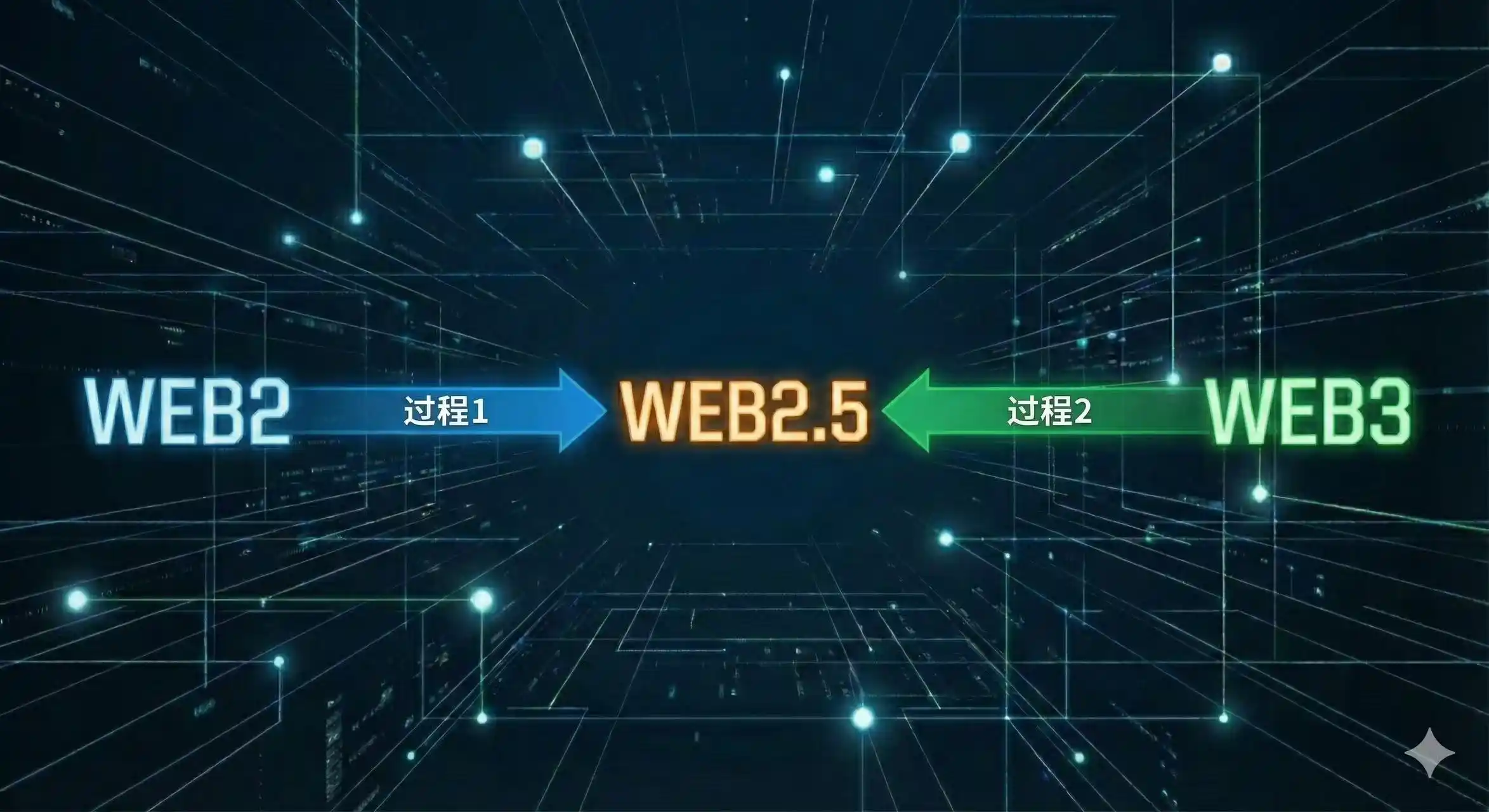
Process 1 in the chart represents the expansion of traditional finance (TradFi) into the crypto space, such as CME listing futures and BlackRock launching ETFs. Process 2 represents the penetration of crypto finance into traditional assets, such as tokenized U.S. stocks and RWA.

The current market gives a clear answer: Process 1 is advancing irresistibly, while Process 2 is struggling to make progress. The core of this difference lies not in technology, but in a "compliance cost"-induced dimensional打击 (dimensional strike/attack) on liquidity.

n

Why can Wall Street giants easily cut into the heart of the crypto circle, while we find it difficult to attack their城池 (strongholds/cities)?

Marginal cost in economics can explain everything.

For CME, CBOE (Chicago Board Options Exchange), EUREX (Eurex Exchange), or SGX (Singapore Exchange), the marginal cost of listing Bitcoin derivatives is almost zero.

These financial behemoths possess clearing licenses that have been operational for decades, extremely mature risk control models, and dedicated network lines connecting to the world's top hedge funds. For them, Bitcoin is just another ticker code after gold, crude oil, and soybeans. They don't need to rewrite underlying code, rehire compliance teams, or even re-educate clients. They just need to file a document with the CFTC (Commodity Futures Trading Commission), adjust some parameters, and a new, compliant market capable of carrying trillions in liquidity is born.

In contrast, look at Process 2. When crypto exchanges attempt to "tokenize U.S. stocks," they face an insurmountable chasm.

Remember FTX's once-proud equity tokens? That was not only one of the triggers for its downfall but also an original sin in the eyes of regulators. For a crypto-native platform to compliantly allow users to buy Tesla stock with USDT, it needs to obtain securities broker licenses, clearing licenses, resolve cross-jurisdictional securities law conflicts, and implement extremely complex KYC/AML processes. The compliance cost here is not linear; it's exponential.

For crypto-native enterprises, this is a war that was over before it even began. Traditional finance is not only inherently compliant; they are the rule-makers themselves.

Why is compliance cost so important? Because compliance directly determines safety, and safety determines the entry threshold for capital.

Retail investors in the crypto market often misunderstand the source of "liquidity." True liquidity doesn't come from the few thousand U in散户 (retail investors') hands; it comes from pension funds, endowment funds, sovereign wealth funds, and large market makers.

These behemoths face extremely strict Fiduciary Duty. This explains why the approval of the Bitcoin spot ETF in 2024 became a historic turning point.

Before the ETF, a traditional family office wanting to allocate Bitcoin had to go through extremely complex approvals: Who manages the private keys? What if the exchange explodes? How is auditing done? ETFs and CME futures perfectly solve this problem: no need to manage private keys, no need to trust offshore exchanges, everything is done within a U.S. stock account.

The record-high open interest in CME's Bitcoin futures is not driven by retail speculation, but by Wall Street institutions engaging in basis trading and risk hedging. Top high-frequency trading firms like Jump Trading and Jane Street have lower latency in CME's server rooms than on AWS.

As CBOE plans to re-enter the crypto derivatives market, and as SGX and EUREX begin laying out compliant derivatives channels in Asia and Europe, we see a clear trend: The pricing power of crypto assets is shifting from offshore, unregulated exchanges (like the early BitMEX, or some current offshore CEXs) to regulated traditional financial exchanges.

Just as crude oil futures don't require the owner to actually transport crude oil, future crypto finance won't require investors to actually use decentralized wallets.

In this process, cryptocurrency itself is stripped of its "currency" payment attributes, stripped of its "censorship-resistant" ideology, and refined into a pure, highly volatile financial instrument. It is packed into ETF capsules, bundled into futures contracts, and stuffed into traditional 60/40 asset allocation portfolios.

The conclusion seems inevitable: Web3 finance (especially the secondary market part) will most likely be integrated into Web2 finance, becoming a trading category within traditional finance.

This might sound unpleasant to crypto purists, but it is precisely a sign of the asset's maturity.

The future landscape might look like this: The underlying blockchain technology (Web3) will still be responsible for asset generation and title verification, like BTC mining. But in the vast financial superstructure of trading, clearing, and derivatives, the Web2 giants, with their low-cost compliance advantages, will still occupy the main seats at the table.

For investors, seeing this clearly is crucial. Where the liquidity is, the Alpha is. And right now, liquidity is irreversibly flowing back to those in suits.


Related Questions

QWhat was the significant event on November 10, 2023, that marked a shift in institutional crypto investment?

AOn November 10, 2023, due to strong expectations of the approval of the first cryptocurrency spot ETF, institutional funds massively entered through compliant channels, causing CME's open interest to surge and surpass Binance.

QWhy can traditional financial institutions like CME easily enter the crypto market, while crypto exchanges struggle to tokenize traditional assets?

ATraditional financial institutions have near-zero marginal costs due to existing licenses, mature risk models, and established networks, whereas crypto exchanges face exponentially high compliance costs, regulatory hurdles, and complex legal challenges when attempting to tokenize assets like stocks.

QWhat does the shift in Bitcoin's open interest from Binance to CME indicate about market dynamics?

AThe shift indicates that pricing power for crypto assets is moving from offshore, less regulated exchanges to regulated traditional financial exchanges, driven by institutional participation and compliance advantages.

QHow do Bitcoin ETFs and CME futures lower the barrier for traditional capital to enter the crypto market?

AThey eliminate the need for institutions to manage private keys, trust offshore exchanges, or handle complex audits, allowing seamless investment through traditional stock accounts and meeting strict fiduciary duties.

QWhat is the author's conclusion about the future relationship between Web3 and traditional finance?

AThe author concludes that Web3 financial markets, especially secondary trading, will likely be absorbed into traditional finance, becoming a regulated asset class, with blockchain underlying asset generation but traditional institutions dominating trading and derivatives.

Related Reads

Agent Race Ends, Super Workbench Takes Over

The era of fragmented AI agents is ending. Over the past month, China's tech giants—Tencent, Alibaba, and ByteDance—have simultaneously shifted strategy: instead of launching new, standalone AI agents, they are consolidating their various agent projects into unified "super workbenches." Tencent integrated its QClaw teams into WorkBuddy, a strategic product hailed as a potential third flagship after QQ and WeChat. Alibaba is merging its QoderWork, Wukong, and MuleRun agents into a new "Qianwen Office" platform under DingTalk's leadership. ByteDance rebranded its TRAE SOLO coding agent to TRAE Work, signaling a broader focus on workflow collaboration. This convergence marks a pivotal industry consensus. The initial exploration phase, where companies rapidly built numerous overlapping agents for different scenarios, proved costly and inefficient. With open-source tools eroding technical barriers, competition has shifted from agent creation to resource consolidation and cost control. Historically, platform wars are won not by creating more products, but by simplifying them—as seen with browsers unifying web access and super-apps consolidating services. Now, the "super workbench" aims to become the unified AI entry point for work. This reflects a deeper market realization: the primary audience for AI is no longer just programmers (a market in the tens of millions) but all knowledge workers (a market of billions). The real opportunity lies in augmenting everyday tasks—managing emails, documents, data, and meetings—across the entire workday. The core battleground is becoming control over the primary AI entry point that employees use daily. Tencent's WorkBuddy leverages WeChat and Tencent Docs; Alibaba's Qianwen Office taps into DingTalk's organizational data; ByteDance's TRAE Work integrates with Feishu's workflows. Whoever owns this "super workbench" gains strategic control over orchestrating enterprise data and APIs. This shift is redefining enterprise software. Traditional SaaS applications, valued for their user interfaces, will recede into the background. Their core functionalities will be exposed as standardized "Skills" or APIs for the super workbench's agents to invoke. Software value will shift from selling user seats to charging based on API calls and outcomes delivered. The evolution of agents is moving through clear stages: first as novel standalone products, then as consolidated primary work entry points, and finally as pervasive, invisible capabilities embedded into the digital fabric. The recent moves by major tech firms signal the transition from the first stage into the second, accelerating toward the third. In the end, the most successful agent technology may become invisible—like electricity or the HTTP protocol—a fundamental, unnamed infrastructure powering work itself.

marsbit8m ago

Agent Race Ends, Super Workbench Takes Over

marsbit8m ago

Michael Saylor: 110 Reasons to Oppose BIP-110

Michael Saylor presents 110 arguments against Bitcoin Improvement Proposal (BIP) 110, a soft fork aimed at restricting certain non-monetary data storage uses (like inscriptions) on the Bitcoin blockchain. He acknowledges the proponents' valid concerns—such as node costs, fee pressure, and preserving Bitcoin's monetary focus—but fundamentally disagrees with the proposed solution. Saylor argues that BIP 110 represents a dangerous precedent of using consensus rules to enforce value judgments on transaction validity, moving away from Bitcoin's core principles of neutrality and permissionless innovation. His key objections are organized into eleven categories: 1) It violates neutrality and hard consensus by banning currently valid transactions. 2) It fails to meet the high burden of proof required for a consensus change, lacking concrete data on the alleged crisis. 3) Its seven bundled technical restrictions are overly broad, targeting generic script functionalities and blocking future upgrade paths. 4) It sacrifices compatibility and future optionality by closing off designed upgrade hooks. 5) Its temporary rules add significant complexity (grandfathering, expiry states) without sufficient justification. 6) The economic and security impacts, particularly on miner revenue and fee markets, are uncertain and unmodeled. 7) Superior, market-based tools (fee markets, relay/mining policies) already exist to manage blockchain load. 8) It stifles innovation by creating a chilling effect for developers. 9) Its modified activation mechanism (55% threshold, forced signaling) is aggressive and risks network splits. 10) The precedent it sets—using consensus to suppress disliked but legal uses—is more dangerous than the problem it aims to solve. 11) A better path exists: improving measurements, refining resource-based policies, and allowing market forces to work. Saylor concludes that Bitcoin's strength lies in its neutral rules, open markets, and hard consensus. Changing these foundational elements to target specific use cases is an unnecessary and risky "iatrogenic" intervention. He advocates for guarding Bitcoin's neutrality rather than acting as its redeemer.

marsbit23m ago

Michael Saylor: 110 Reasons to Oppose BIP-110

marsbit23m ago

Trading

Spot
活动图片

