The Devoured Middle Ground: Will Web3's Endgame Become Just Another Wall Street Table?

marsbitPublished on 2026-01-09Last updated on 2026-01-09

Abstract

The article "The Devoured Middle Ground: Will Web3 End Up as Just Another Wall Street Table?" argues that the initial revolutionary vision of Web3—decentralizing finance and replacing traditional systems like Nasdaq with blockchain—is being overtaken by traditional finance (TradFi). A pivotal moment occurred on November 10, 2023, when CME's Bitcoin futures open interest surpassed Binance's, signaling a shift in liquidity and influence. The core issue is asymmetric "compliance cost": TradFi institutions (e.g., CME, BlackRock) can easily enter crypto by listing Bitcoin derivatives with minimal marginal cost, leveraging existing infrastructure, licenses, and regulatory relationships. In contrast, crypto-native firms face insurmountable barriers when attempting to tokenize traditional assets like stocks, due to prohibitive regulatory requirements, securities laws, and compliance risks—exemplified by FTX's failure. The approval of Bitcoin ETFs in 2024 accelerated this trend, enabling large institutional players (pension funds, hedge funds) to gain exposure without direct crypto custody concerns. Liquidity and pricing power are shifting from offshore, less-regulated exchanges to compliant TradFi venues. Crypto is being stripped of its ideological attributes and reduced to a pure, volatile financial asset within traditional portfolios. The conclusion is that Web3's financial layer, especially secondary trading, will likely be absorbed into TradFi, with blockchain remaining primar...

Author: Max.s

For a long time, many natives of the crypto world have been intoxicated by a grand narrative: Web3 will launch a revolution against Web2. By moving Nasdaq stocks onto the blockchain and replacing the NYSE's matching engine with smart contracts, they believe they can ultimately reshape global finance with RWA (Real World Assets).

Watching the constantly flickering K-line charts, we need to remember this date when looking back: November 10, 2023. On this day, due to strong market expectations for the approval of the first spot cryptocurrency ETF, institutional funds massively entered through compliant channels, causing a surge in open interest on CME and surpassing Binance.

CME data that day: Open interest reached approximately 111,100 BTC, with a notional value of about $4.08 billion (accounting for roughly 24.7% of the total network open interest at the time).

Binance data: Open interest was approximately 103,800 BTC, with a notional value of about $3.8 billion.

We must admit a harsh reality: This will be a one-sided devouring!

Look at the chart below
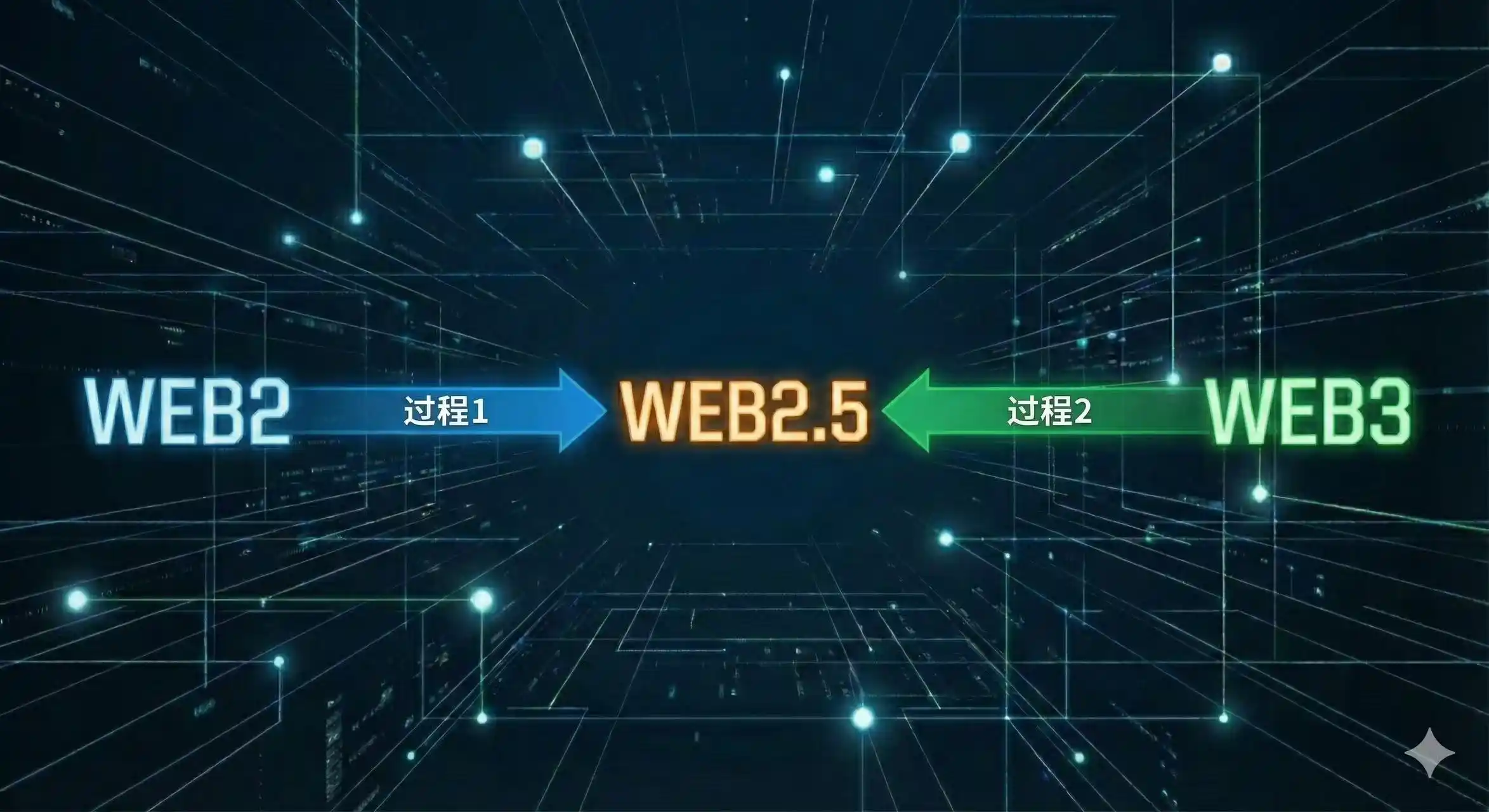
Process 1 in the chart represents the expansion of traditional finance (TradFi) into the crypto space, such as CME listing futures and BlackRock launching ETFs. Process 2 represents the penetration of crypto finance into traditional assets, such as tokenized U.S. stocks and RWA.

The current market gives a clear answer: Process 1 is advancing irresistibly, while Process 2 is struggling to make progress. The core of this difference lies not in technology, but in a "compliance cost"-induced dimensional打击 (dimensional strike/attack) on liquidity.

n

Why can Wall Street giants easily cut into the heart of the crypto circle, while we find it difficult to attack their城池 (strongholds/cities)?

Marginal cost in economics can explain everything.

For CME, CBOE (Chicago Board Options Exchange), EUREX (Eurex Exchange), or SGX (Singapore Exchange), the marginal cost of listing Bitcoin derivatives is almost zero.

These financial behemoths possess clearing licenses that have been operational for decades, extremely mature risk control models, and dedicated network lines connecting to the world's top hedge funds. For them, Bitcoin is just another ticker code after gold, crude oil, and soybeans. They don't need to rewrite underlying code, rehire compliance teams, or even re-educate clients. They just need to file a document with the CFTC (Commodity Futures Trading Commission), adjust some parameters, and a new, compliant market capable of carrying trillions in liquidity is born.

In contrast, look at Process 2. When crypto exchanges attempt to "tokenize U.S. stocks," they face an insurmountable chasm.

Remember FTX's once-proud equity tokens? That was not only one of the triggers for its downfall but also an original sin in the eyes of regulators. For a crypto-native platform to compliantly allow users to buy Tesla stock with USDT, it needs to obtain securities broker licenses, clearing licenses, resolve cross-jurisdictional securities law conflicts, and implement extremely complex KYC/AML processes. The compliance cost here is not linear; it's exponential.

For crypto-native enterprises, this is a war that was over before it even began. Traditional finance is not only inherently compliant; they are the rule-makers themselves.

Why is compliance cost so important? Because compliance directly determines safety, and safety determines the entry threshold for capital.

Retail investors in the crypto market often misunderstand the source of "liquidity." True liquidity doesn't come from the few thousand U in散户 (retail investors') hands; it comes from pension funds, endowment funds, sovereign wealth funds, and large market makers.

These behemoths face extremely strict Fiduciary Duty. This explains why the approval of the Bitcoin spot ETF in 2024 became a historic turning point.

Before the ETF, a traditional family office wanting to allocate Bitcoin had to go through extremely complex approvals: Who manages the private keys? What if the exchange explodes? How is auditing done? ETFs and CME futures perfectly solve this problem: no need to manage private keys, no need to trust offshore exchanges, everything is done within a U.S. stock account.

The record-high open interest in CME's Bitcoin futures is not driven by retail speculation, but by Wall Street institutions engaging in basis trading and risk hedging. Top high-frequency trading firms like Jump Trading and Jane Street have lower latency in CME's server rooms than on AWS.

As CBOE plans to re-enter the crypto derivatives market, and as SGX and EUREX begin laying out compliant derivatives channels in Asia and Europe, we see a clear trend: The pricing power of crypto assets is shifting from offshore, unregulated exchanges (like the early BitMEX, or some current offshore CEXs) to regulated traditional financial exchanges.

Just as crude oil futures don't require the owner to actually transport crude oil, future crypto finance won't require investors to actually use decentralized wallets.

In this process, cryptocurrency itself is stripped of its "currency" payment attributes, stripped of its "censorship-resistant" ideology, and refined into a pure, highly volatile financial instrument. It is packed into ETF capsules, bundled into futures contracts, and stuffed into traditional 60/40 asset allocation portfolios.

The conclusion seems inevitable: Web3 finance (especially the secondary market part) will most likely be integrated into Web2 finance, becoming a trading category within traditional finance.

This might sound unpleasant to crypto purists, but it is precisely a sign of the asset's maturity.

The future landscape might look like this: The underlying blockchain technology (Web3) will still be responsible for asset generation and title verification, like BTC mining. But in the vast financial superstructure of trading, clearing, and derivatives, the Web2 giants, with their low-cost compliance advantages, will still occupy the main seats at the table.

For investors, seeing this clearly is crucial. Where the liquidity is, the Alpha is. And right now, liquidity is irreversibly flowing back to those in suits.

Related Questions

QWhat was the significant event on November 10, 2023, that marked a shift in institutional crypto investment?

AOn November 10, 2023, due to strong expectations of the approval of the first cryptocurrency spot ETF, institutional funds massively entered through compliant channels, causing CME's open interest to surge and surpass Binance.

QWhy can traditional financial institutions like CME easily enter the crypto market, while crypto exchanges struggle to tokenize traditional assets?

ATraditional financial institutions have near-zero marginal costs due to existing licenses, mature risk models, and established networks, whereas crypto exchanges face exponentially high compliance costs, regulatory hurdles, and complex legal challenges when attempting to tokenize assets like stocks.

QWhat does the shift in Bitcoin's open interest from Binance to CME indicate about market dynamics?

AThe shift indicates that pricing power for crypto assets is moving from offshore, less regulated exchanges to regulated traditional financial exchanges, driven by institutional participation and compliance advantages.

QHow do Bitcoin ETFs and CME futures lower the barrier for traditional capital to enter the crypto market?

AThey eliminate the need for institutions to manage private keys, trust offshore exchanges, or handle complex audits, allowing seamless investment through traditional stock accounts and meeting strict fiduciary duties.

QWhat is the author's conclusion about the future relationship between Web3 and traditional finance?

AThe author concludes that Web3 financial markets, especially secondary trading, will likely be absorbed into traditional finance, becoming a regulated asset class, with blockchain underlying asset generation but traditional institutions dominating trading and derivatives.

Related Reads

Silicon Valley 'Startup Guru' Steve Hoffman: Web3 + AI Could Be a Trap

Silicon Valley investor and "Godfather of Startups" Steve Hoffman warns that combining Web3 with AI is likely a trap, not a promising venture. In an interview, Hoffman argues that while AI is a foundational technology touching all industries, Web3 adds complexity, friction, and regulatory risk without solving mainstream consumer or business needs. He advises founders to focus on deep, specialized applications where startups can out-iterate giants, rather than on generic features easily replicated by large tech companies. Hoffman observes that Silicon Valley will lead foundational AI research, while China excels at rapid, large-scale application and commercialization, particularly in robotics. He stresses that AI-driven autonomous agents capable of collaborative, multi-step tasks are 2-4 years away, which will cause significant job displacement. The solution is not to slow AI but to redesign business models around human-AI collaboration and reform social systems like education and retraining. For startups, Hoffman recommends focusing on vertical, expertise-heavy domains to build defensibility. He sees major opportunities in AI fraud detection and cybersecurity. Key founder mindsets include systemic thinking over feature-focus, relentless customer centricity, building adaptive teams, and deeply understanding AI's capabilities and limits. Hoffman is also leading a non-profit initiative to establish university centers aimed at training future leaders in responsible, human-value-aligned AI innovation.

marsbit1h ago

Silicon Valley 'Startup Guru' Steve Hoffman: Web3 + AI Could Be a Trap

marsbit1h ago

Token Inefficient, Economy Tokenless

The article "Tokens Aren't Economical, Economics Aren't Tokenized" analyzes a pivotal shift in the AI industry from a technology-driven narrative to one dominated by capital efficiency. It highlights two concurrent trends: a severe capital shortage due to the exorbitant and recurring costs of compute (e.g., OpenAI's high burn rate) and a wave of corporate spin-offs where major tech companies are separating their AI units (like Kuaishou's Kling and Baidu's Kunlunxin). The core argument is that AI's "anti-internet" business model, where user growth increases costs rather than profits, has created a disconnect between high valuations and actual cash flow. Spin-offs address this by allowing AI assets to be valued independently. Within a parent company, they are seen as cost centers, but as standalone entities, they are priced based on their growth potential and scarcity in the primary market, leading to massive valuation premiums (e.g., Kling's estimated value tripling post-spin-off). The industry is at an inflection point, moving from "model worship" to "value realization." The competition is evolving from a pure compute (GPU) race to a broader focus on systemic efficiency and full-stack engineering (involving CPUs and orchestration) to achieve viable commercialization. The year 2026 is framed as a critical moment where the industry must definitively answer how to economically translate AI capability into tangible business value, reshaping the sector's future power structure.

marsbit1h ago

Token Inefficient, Economy Tokenless

marsbit1h ago

Crossing the 'Memory Wall': The Wafer-Level Revolution and Computing Power Routes in the AI Inference Era

In 2026, a historic shift occurred in AI as major cloud providers' inference spending surpassed training spending for the first time, signaling a move from "building large models" to "using large models." This shifts the core challenge from computing power to the "memory wall"—the bottleneck of data movement (model weights, activations, KV Cache) between external DRAM and processors, where energy and latency from data transfer far exceed computation itself. Companies like Nvidia face GPU idle time due to bandwidth limits. In contrast, Cerebras Systems adopts a radical "wafer-scale" approach with its Wafer-Scale Engine (WSE). Instead of cutting a silicon wafer into many chips, Cerebras uses almost the entire wafer as one massive chip (WSE-3). This design provides 44GB of on-chip SRAM, delivering memory bandwidth thousands of times higher than traditional HBM (e.g., 21 PB/s vs. Nvidia B200). For LLM inference, weights are streamed layer-by-layer from external MemoryX storage to the chip, avoiding HBM bottlenecks. This results in token generation speeds 1.5–5 times faster than Nvidia's B200 in some models and significant advantages in first-token latency and long-context tasks. Additionally, Cerebras's architecture offers much lower interconnect power consumption (0.15 pJ/bit vs. GPU's ~10 pJ/bit). However, Cerebras faces challenges: SRAM scaling has slowed with advanced nodes, limiting future capacity gains; the chip requires specialized liquid cooling and custom software stacks; and its external I/O bandwidth (150 GB/s) is low compared to NVLink, hindering multi-system scaling for very large models. Competition is intensifying. Major players are pursuing three paths: 1) Developing proprietary inference ASICs (e.g., Google TPU, Microsoft Maia), 2) Leveraging advanced packaging (e.g., TSMC's SoW) to democratize wafer-scale-like integration, potentially eroding Cerebras's process advantage within a few years, and 3) Exploring optical interconnects for ultimate bandwidth. Commercially, Cerebras is transitioning from a hardware vendor to a service provider, facing the immense challenge of building high-power, specialized data centers to meet large contracts (e.g., 250MW/year from 2026–2028). In conclusion, the AI inference era presents a fundamental architectural trade-off. Cerebras opts for extreme physical optimization for low-latency, single-task performance, while Nvidia prioritizes versatility and massive cluster throughput. The path forward remains uncertain, with technology and business models still evolving in the race toward advanced AI.

marsbit1h ago

Crossing the 'Memory Wall': The Wafer-Level Revolution and Computing Power Routes in the AI Inference Era

marsbit1h ago

Has Bitcoin's 'Rebound Ended', Officially Entering the Late Bear Market Phase?

**Title: Has Bitcoin's Rebound Ended, Entering the Late Bear Market Phase?** **Summary:** Bitcoin's price has declined by 13% this week, signaling a potential return to late-stage bear market conditions. The price fell to around $67k, positioned between the Realized Price and Realized Cap Weighted Average. For the first time since early 2022, the Short-Term Holder cost basis has dropped below this key average, confirming a hallmark of late-cycle bear markets. Profitability metrics have collapsed sharply. The 7-day average of the Realized Profit/Loss ratio plummeted from a local high of 3.16 to 0.29, mirroring the February panic sell-off. Critically, the 90-day average never breached the threshold of 2, indicating the recent rally to $82k was a bear market bounce, not a structural shift. Realized losses surged to $1.35 billion daily, with $770 million coming from Long-Term Holders selling at a loss. This accelerating redistribution of supply from weak to strong hands is a necessary but ongoing process for a market bottom. The rally stalled almost precisely at the aggregate cost basis (~$83k) of US spot Bitcoin ETF investors, turning that level into strong resistance and leaving the average ETF holder underwater again. Spot market flows have turned decisively negative, showing sellers are dominating order books despite the price drop. While a significant futures long liquidation event cleared over $400 million in leverage, providing a potential reset, sustained spot demand is yet to materialize. Options markets continue to price in higher future volatility (Implied Volatility) than recent price action (Realized Volatility) has shown, with a persistent skew towards put options, indicating ongoing demand for downside protection. In conclusion, multiple metrics point to a fragile market structure. Resistance at the ETF cost basis, accelerating realized losses, dominant spot selling, and cautious options pricing all suggest the bear market trend persists. A sustainable recovery likely requires a resurgence of spot demand, ETF holders returning to profit, and a clear reduction in selling pressure.

marsbit1h ago

Has Bitcoin's 'Rebound Ended', Officially Entering the Late Bear Market Phase?

marsbit1h ago

Trading

Spot
Futures
活动图片

