The Body is the Ultimate Cold Wallet: Don't Lose the Private Key to Your Health

marsbitPublished on 2026-01-23Last updated on 2026-01-23

Abstract

English Summary: The article argues that one's physical body is the ultimate "cold wallet" – the foundational asset upon which all other investments and achievements depend. Drawing parallels between financial portfolio management and biohacking, the author details a comprehensive, data-driven protocol to optimize health and cognitive performance for high-stakes decision-makers. The system is built on four pillars of biometric monitoring: continuous glucose monitoring (CGM) to stabilize energy, a WHOOP band to track recovery via HRV, a body composition scale to audit visceral fat, and genetic testing to understand inherent strengths and weaknesses. The core strategies focus on fixing metabolic inflexibility through intermittent fasting and a low-sugar diet, and combating the "liquidity crisis" of sedentary life with a standing desk and under-desk treadmill. The author also outlines a precise "supplement Stack" investment portfolio, categorized into defensive infrastructure (e.g., Omega-3s, anti-inflammatories), performance enhancers for mitochondrial function (e.g., ALA, CoQ10), and maintenance tools for sleep and gut health. The execution protocol involves data-driven eating to flatten glucose curves and a structured exercise regimen combining Zone 2 cardio with strength training. The ultimate goal is not just longevity but ensuring the brain and body operate at all-time highs (ATH) to consistently capture alpha in all aspects of life. The best foundational asset is one...

Author: Chen Xiaomeng

A healthy person has a thousand wishes, while a sick person has only one.

— Naval Ravikant

In the crypto market and capital games, I have always emphasized a concept: the cornerstone assets of human civilization.

I buy NVIDIA/GOOGL to bet on the future of the computing power civilization, and I hold BTC to hedge against the collapse of the fiat system. I scrutinize every project's whitepaper, tokenomics, and on-chain data with extremely critical eyes.

However, upon crossing the threshold of 30, I have become increasingly aware of an obvious yet often overlooked Beta risk: if the "cold wallet" of the body loses its private key, or if the hardware suffers irreversible failure, then all the asset appreciation on-chain becomes meaningless.

For those of us who require all-day, high-intensity mental decision-making and frequently cope with violent market fluctuations, physical function is actually the second largest cornerstone asset, after BTC and AI.

To build the most robust biological moat, I have constructed a full-stack Biohacking protocol.

This is a war about efficiency, metabolic rate, and ROI.

I. Due Diligence: Building a High-Frequency Data Dashboard
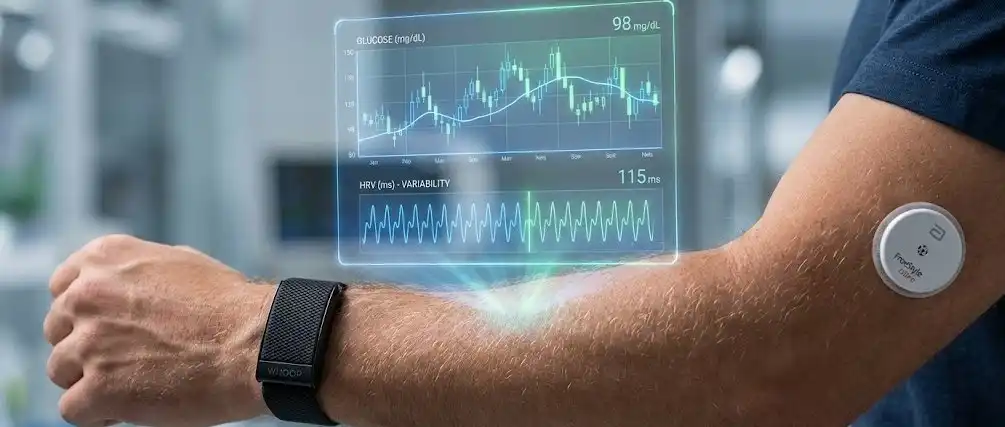
Investment requires data support, and body management should never rely on feelings. To precisely control this complex biological system, I introduced a four-dimensional data monitoring system, equivalent to building a Dune dashboard for the body:

Real-time Metabolic Monitoring: Continuous Glucose Monitor (CGM) I wear an Abbott FreeStyle Libre CGM patch. While it's used by diabetics, high-performers can also use it as a real-time volatility monitor.

  • Logic: Dramatic blood sugar fluctuations are the main culprits behind post-meal drowsiness and the collapse of focus and willpower. Through the CGM, I can visually see the "K-line trend" that each bite of food brings to my body, thereby keeping my blood sugar within a stable, narrow fluctuation range.

  • System Recovery Monitoring: WHOOP monitors Heart Rate Variability (HRV) and deep sleep. This determines whether my strategy for the day is aggressive or conservative.

  • Body Composition Audit: 8-electrode body fat scale focuses on muscle mass and visceral fat level. Visceral fat is the biggest hidden liability and must be liquidated at all times.

  • Underlying Code Audit: Full genome testing to understand my factory settings (source code) and formulate the safest interaction strategies for genetic weaknesses.

II. Core Algorithm Upgrade: Repairing Metabolism and Liquidity

For someone like me who sits in front of a computer all day, the two biggest systemic risks are: metabolic rigidity and blood liquidity depletion.

1. Repairing Metabolic Flexibility

The watershed after 30 is whether the body, this mining rig, can still operate efficiently. Many people's problem lies in insulin resistance—this is like congestion and high Gas Fees on the Ethereum network, preventing energy from being used efficiently by cells and instead accumulating as fat.

  • Strategy: I aim for a hybrid power system. The body can burn glucose (electricity) and also smoothly switch to burning fat (oil) during fasting periods.

Means:

Intermittent Fasting (16:8): Give the digestive system a 16-hour daily maintenance shutdown to clear memory garbage.

  • Sugar-Control Diet: Reduce intake of refined carbohydrates to avoid frequent insulin spikes and crashes.

2. Combating the Sedentary Crisis

Sitting is the new smoking. For me, sitting for long periods is not just a posture issue; it's an internal liquidity crisis. Long-term inactivity reduces lipase activity by 90%, like an exchange pulling the plug—all transactions halt instantly.
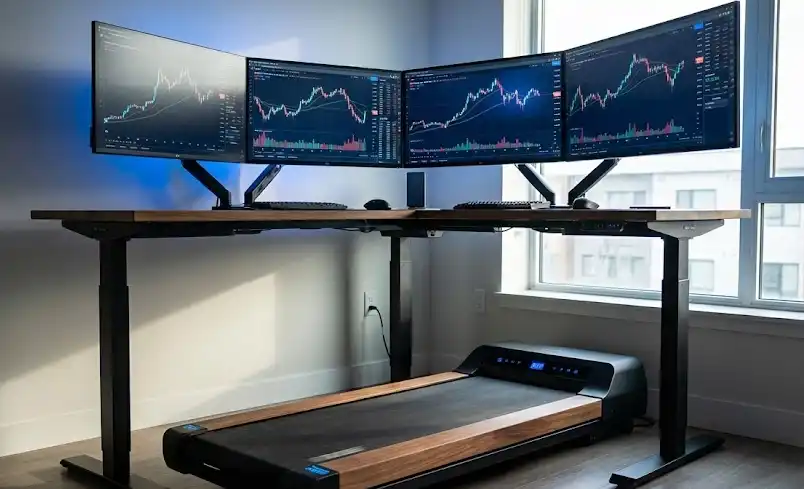
Hardware Upgrade:

Standing Desk: Switch to a standing posture at any time to break the僵局 (deadlock).

  • Under-desk Treadmill: This is my secret weapon. During leisure or entertainment, maintain a slow walk to increase blood flow to the brain, directly doubling mental clarity.

III. Portfolio Strategy: My Supplement Investment Portfolio

Based on the above logic, I have built a supplement portfolio called "The Stack." I only select long-term proven blue-chip assets.

Sector 1: Infrastructure & Defense

Goal: Counter the inflammatory response caused by sedentary habits and high pressure.

  • High-Purity Omega-3 (EPA/DHA): Vascular scavenger, combats blood viscosity from sitting, and is a hardware lubricant for the brain.

  • Milk Thistle + Curcumin: "Insurance" for the liver. Handles熬夜 (staying up late) stress and reduces systemic chronic inflammation.

  • Vitamin D3 + K2: Essential basics for indoor workers.

Sector 2: Computing Power Enhancement & Metabolic Optimization

Goal: Optimize mitochondrial function, address metabolic sluggishness.

  • Alpha-Lipoic Acid (ALA) + Coenzyme Q10 + PQQ: This is an extremely powerful combination. ALA is not only an antioxidant but also mimics insulin action, helping brain workers like me metabolize blood sugar more efficiently, sending energy into cells instead of storing it on the belly. The Mitochondrial Trio. The heart and brain are the organs with the highest energy consumption. This combination can significantly increase energy output (ATP) at the cellular level, resolve brain fog, and make decision-making more decisive.

  • Active B-Complex Vitamins: Stabilizers for the nervous system, combat anxiety.

Sector 3: Maintenance & Garbage Collection

  • Magnesium Glycinate: The holy grail of sleep, improves sleep ROI.

  • Psyllium Husk Powder: A physical firewall for gut health, reduces toxin absorption.

IV. Execution Protocol: Data-Based Alpha Strategy

With hardware monitoring and supplement leverage, daily behaviors are the foundation for Beta returns.

  • Data-Driven Dietary Algorithm: No longer blindly follow a certain diet, but adjust in real-time based on CGM feedback. The core principle is to flatten the blood sugar curve. High protein, quality fats, large amounts of fiber, and strategic intake of low-glycemic carbs. This is essentially a low-volatility strategy; keeping blood sugar stable means keeping focus stable.

Structured Exercise Protocol:

DCA (Dollar-Cost Averaging): 3-4 sessions of Zone 2 low-intensity steady-state cardio per week to build a strong cardiopulmonary foundation and metabolic base.

  • Building Support Levels: 2-3 strength training sessions per week. Muscles are the body's armor and metabolic organs, crucial for maintaining structural support levels and preventing a crash as age increases.

V. Conclusion

Investment is an infinite game. Those who live long will see the prosperity of the next cycle.

After 30, building a biological moat is a necessity. I must not only prevent capital shrinkage but also prevent muscle loss, metabolic collapse, and vascular hardening.

This is not just for longevity, but also to ensure that at every critical moment, the brain is in ATH (All-Time High) condition to capture its own Alpha.

The best cornerstone asset is always yourself.

Related Questions

QWhat is the main analogy the author uses to describe the human body in the context of high-performance work and investing?

AThe author uses the analogy of the body being the 'ultimate cold wallet', where health is the private key. If this 'hardware' fails or the 'private key' is lost, all other asset accumulation becomes meaningless.

QAccording to the author, what are the two biggest systemic risks for someone who sits at a computer all day?

AThe two biggest systemic risks are metabolic rigidity (metabolic inflexibility) and a liquidity crisis in blood flow.

QWhat is the primary purpose of the author's 'The Stack' supplement portfolio?

AThe purpose of 'The Stack' supplement portfolio is to function like a selection of proven 'blue-chip' assets to support the body's infrastructure, enhance cognitive performance (compute power), optimize metabolism, and aid in maintenance and 'garbage collection'.

QHow does the author use a Continuous Glucose Monitor (CGM) beyond its typical medical application?

AThe author uses a CGM as a real-time volatility monitor to track how different foods affect blood sugar levels, aiming to keep glucose in a stable, narrow range to avoid post-meal fatigue and crashes in focus and willpower.

QWhat is the ultimate goal of building what the author calls a 'biological moat'?

AThe ultimate goal is not just longevity, but to ensure the brain is consistently performing at an 'All-Time High' (ATH) state to capture alpha opportunities, making the individual themselves the best foundational asset.

Related Reads

Robots Begin to 'Consume Data': The Hidden Production Chain from Indian Data Factories to Billion-Dollar Humanoid Robots

Robots have started to 'consume data,' driving the formation of a new industrial supply chain focused on producing training data for embodied AI. Unlike large language models, which are trained on vast internet text corpora, embodied AI models face a 'data desert' in the physical world. This has created a massive demand for first-person perspective video data (Ego Data), captured by workers wearing cameras in places like Indian garment factories. Companies like Neocambrian AI are establishing 'data factories' where workers perform standardized tasks (e.g., sorting clothes, kitchen organization) to generate thousands of hours of video. Research, such as NVIDIA's EgoScale, demonstrates that scaling this human demonstration data predictably improves robot performance, particularly for dexterous manipulation. This has validated a training path combining large-scale human data for pre-training with smaller amounts of robot-specific data for fine-tuning. The value of different data types varies significantly, forming a 'data pyramid.' The base consists of low-cost, large-scale internet and Ego Data. Higher layers include more expensive motion-capture data (e.g., from data gloves), simulation/synthetic data, and the most costly and scarce layer: real robot teleoperation data. This demand has spawned a layered ecosystem of data suppliers: low-cost data factories, motion capture and alignment specialists, robot-native teleoperation service providers, simulation data companies, and platforms aiming for data standardization. Robot companies themselves are adopting a 'layered procurement' strategy: outsourcing generic Ego Data while building in-house capabilities for robot-specific adaptation data and the critical deployment/failure data generated in real-world applications. The industry is shifting focus from hardware and basic mobility to the data pipelines required for general-purpose capability. While parallels exist to data labeling companies like Scale AI in the LLM boom, the physical complexity of robot data—involving action success ambiguity and sim-to-real gaps—requires more integrated solutions for data collection, annotation, and a continuous feedback loop. The race is on to build the data engines that will teach robots to operate reliably in the unstructured real world.

marsbit28m ago

Robots Begin to 'Consume Data': The Hidden Production Chain from Indian Data Factories to Billion-Dollar Humanoid Robots

marsbit28m ago

Spicy Commentary | Michael Saylor's 'Player Talk'; 60-Year-Old Aunt Liquidated After 'Scamming a Young Man'

**"Spicy Commentary": Three Tales of Crypto's Wild Week** This week's "Spicy Commentary" column highlights three dramatic stories from the cryptocurrency world. First, **MicroStrategy's Michael Saylor** addressed the controversy over his company potentially selling Bitcoin. At the BTC Prague event, he clarified, "I never said the company can't sell Bitcoin. I told *you* never to sell *your* Bitcoin." This "do as I say, not as I do" stance was criticized by netizens as peak linguistic gymnastics, noting a history of him previously stating the company would "never" sell. Second, a **bizarre fraud case** emerged from Beijing. A 60-year-old woman, obsessed with getting rich from crypto but unwilling to risk her own savings, posed online as the 20-something "god-daughter" of a high-ranking official. She catfished a young man, convincing him to give her over 200,000 yuan for fabricated emergencies. She then invested all the stolen money into cryptocurrency with 10x leverage, only to lose everything in a market crash. The woman was sentenced to four years in prison for fraud. Finally, a **sobering trader's tale** surfaced on Reddit. A user posted "Tale of a crypto trader," confessing their net worth had plummeted from a peak of $45 million to roughly $17,200, primarily due to holding meme coins too long. The post, described as a crypto "book of confessions," sparked reactions ranging from sympathy to critique about greed, poor risk management, and the perils of treating meme coins as long-term investments instead of taking profits. The column concludes that this week featured masterful rhetoric, elaborate scams, and extreme financial volatility, stitching together another chapter in crypto's unpredictable theater.

Foresight News59m ago

Spicy Commentary | Michael Saylor's 'Player Talk'; 60-Year-Old Aunt Liquidated After 'Scamming a Young Man'

Foresight News59m ago

Tremble Humans, AI Continues Its Accelerated Sprint

Trembling, Humans: AI Continues Its Accelerated Sprint Yes, AI is still rapidly accelerating. While deep learning seemed to stall quickly in its early years, large models after years of development show no sign of hitting their ceiling. At the Zhiyuan Conference 2026, the focus is on enabling AI to move from the digital world into the physical world. Scaling Law remains effective, continuing to drive advancements in both large language models and multimodal models. The industry is now entering a phase of pursuing World Models, though unresolved technical paths and data issues mean this exploration may take 3-5 more years. Concurrently, breakthroughs in Agents are accelerating AI's real-world application in fields like healthcare and meetings. Making Agents truly useful requires key hardware-software co-design, evident from the strong presence of chip vendors at the conference. We stand at a new historical threshold where AI is becoming a foundational force reshaping the world. The first day of the conference highlighted AI's evolution from "knowing how to chat" to "knowing how to work." Scaling Law persists, World Models are the next key battleground, and Agents are transitioning from usable to好用 (user-friendly). Scaling Law is not ending but diversifying. New models like Anthropic's Fable 5 demonstrate scaling through parameter size, synthetic data, and reinforcement learning. Advancements in AI Coding and Agent deployment are enabling a trend of AI self-evolution, potentially allowing AI to take over digital world iterations. World Models represent the next frontier for large models extending into the physical realm, but no current model is truly impressive at solving real-world problems. Technical consensus is lacking, with debates on data sources (video, simulation, real-world). Different approaches are emerging: language-centric, pixel-centric, 3D-structure-centric, and visual-representation-centric models. Zhiyuan Institute is exploring a fifth path: unified latent space modeling fusing language and visual representations, and introduced its own under-development World Model, Physis-v0.1. On the product side, Agents are key to bringing AI into daily life. Since 2025, the "Year of the Agent," products have become more proactive and capable of complex tasks. Zhiyuan showcased four vertical Agents for cardiac diagnosis, autonomous research, meeting summarization, and protein risk discovery. However, technical challenges remain, particularly in context engineering like memory and orchestration. "Harness" – the engineering framework around an Agent – is crucial for maximizing its capabilities by clarifying intent, designing workflows, and incorporating validation and feedback. In summary, AI's breakneck pace continues on multiple fronts: foundational model scaling, the ambitious pursuit of World Models for physical understanding, and the ongoing refinement of practical Agents. The journey from capable to truly reliable and useful AI systems is well underway.

marsbit1h ago

Tremble Humans, AI Continues Its Accelerated Sprint

marsbit1h ago

The Backside of Musk's Trillion-Dollar Fortune: 85% Can't Be Sold

Elon Musk becomes the world's first trillionaire, driven by SpaceX's IPO valuing the company at $1.77 trillion. However, his vast wealth is largely illiquid: he holds over 85% voting control, likely through super-voting shares that are subject to lock-ups and selling restrictions. While his net worth surpasses $1 trillion across SpaceX, Tesla, and private holdings, only a tiny fraction (potentially under 2% annually) could be converted to cash without jeopardizing control and market confidence. SpaceX's IPO also creates paper millionaires for roughly 4,400 employees, but their holdings face lock-up periods, exercise costs, and taxes, delaying and reducing actual cash proceeds. Only 4.2% of total shares are initially available for public trading, making the stock price highly sensitive to limited net buying or selling pressure. A major test will come when lock-ups expire for the remaining 96% of shares. The article contrasts SpaceX's wealth distribution with potential AI IPOs. Anthropic and OpenAI could generate employee wealth pools 20 times larger than SpaceX's in paper value, due to their higher valuations relative to revenue and potentially more distributed ownership. However, sustaining those high price-to-sales multiples post-IPO is uncertain. A key financial puzzle for SpaceX investors is its xAI unit. While it has locked in an estimated $26 billion in annual compute revenue from clients like Anthropic and Google, the unit reported a $6.4 billion loss in 2025. More critically, estimated annual capital expenditures of ~$30.8 billion exceed that revenue. The long-term viability of SpaceX's AI narrative hinges on whether this compute income can eventually cover the unit's massive ongoing investments and losses.

链捕手1h ago

The Backside of Musk's Trillion-Dollar Fortune: 85% Can't Be Sold

链捕手1h ago

Trading

Spot
Futures
活动图片





