TechFlow Intelligence Bureau: Anthropic IPO Odds Exceed 80%, Iran Closes Strait of Hormuz Again, Triggering Oil Price Volatility

marsbitPublished on 2026-06-21Last updated on 2026-06-21

Abstract

**Market Digest** **AI & Tech:** Anthropic is widely expected to announce an IPO before November 2026, raising questions about balancing its trillion-dollar valuation ambitions with its core "AI safety" mission. Brands are increasingly adopting AI-generated virtual influencers for marketing. Cloudflare introduced temporary accounts for AI agents to ease automation workflows. **Infrastructure & Hardware:** Google's IPv6 traffic surpassed 50%, marking a major internet milestone. Goldman Sachs warned that massive projected AI capital expenditure ($5.3T) is approaching credit saturation limits, potentially curbing the "AI arms race." **Space & Robotics:** SpaceX's IPO saw a historic $370M retail buying frenzy in three days. Hyundai Motor Group plans to acquire full ownership of Boston Dynamics. Elon Musk speculated about future "septillion-dollar" investments in antimatter for interstellar travel. **Energy & Geopolitics:** Iran's military announced another closure of the strategic Strait of Hormuz, accusing Israel of violating a ceasefire, causing oil market volatility. However, ship-tracking data indicated some traffic continued. Concurrently, Iran resumed crude loadings at Kharg Island, potentially releasing up to 20 million barrels to the market. **Finance & Macro:** A European CLO (collateralized loan obligation) experienced its first post-2008-crisis-era equity tranche default, raising alarms in credit markets. Nomura warned that new Federal Reserve Chair Wash's perceiv...

The market expects Anthropic to announce its IPO before November 2026. The company has attracted significant investment by selling its "AI safety" core. The question now is: Can a trillion-dollar valuation coexist with its safety promises?

First Squawk | It Before Beer

> Spicy Take: An AI safety company going public is like a fitness trainer opening a bubble tea shop—the intention is noble, but the KPI of the capital market won't wait for you to slowly "align."

Brands Start Using AI Virtual Influencers to Promote Products on Social Media

From virtual models to virtual spokespersons, AI-generated "influencers" are becoming the new standard for brand marketing. Low cost, high controllability, and never making a misstep—a nightmare for real-life influencers is here.

The Guardian

Musk: The Future Will Cost "Septillion Dollars" (1024) to Manufacture Antimatter for Interstellar Travel

Musk tweeted that by then, "everything will no longer be measured in dollars, only mass and energy." NASA Administrator Jared Isaacman publicly expressed support for antimatter propulsion research. It sounds crazy, but it's entirely feasible physically—it's just that each gram of antimatter currently costs about $62.5 trillion.

Elon Musk

> Spicy Take: When Musk starts talking about "septillion," it means he already finds "trillion" insufficiently stimulating. Next time, he might just quote prices in Planck units.

Crypto / Web3

Iranian Military Announces Closure of Strait of Hormuz Again, Accuses Israel of Violating Ceasefire Agreement

The Iranian Revolutionary Guard warned ships not to approach the strait, or their "safety cannot be guaranteed." However, ship tracking data showed vessels were still transiting north and south routes on June 20th, with the southern route resuming activity for the first time in weeks. Trump threatened to charge a "guardian angel service fee" for ships passing through the strait.

Hot Topic: The market is debating whether this "closure" is a real blockade or a bargaining chip, as ships are still actually transiting.

BBC | CNN | Lloyd's List Intelligence

Iran Resumes Crude Loading at Kharg Island, U.S. Naval Blockade Ends, Up to 20 Million Barrels of Crude to Flow into Market

As U.S.-Iran negotiations progress, Iran's largest export terminal has resumed loading. This batch of crude entering the market may ease recent oil price pressure, but the Strait of Hormuz situation remains unstable.

First Squawk

Chips / Hardware

Goldman Sachs Warns: $5.3 Trillion AI Capital Expenditure Nearing Credit Saturation

Corporates are beginning "compute cost reduction." Goldman Sachs warned that massive AI infrastructure investment may be hitting credit limits. This contrasts with the previous narrative of an "unstoppable AI arms race."

Wall Street News

Tech Companies

Cloudflare Launches AI Agent Temp Account Feature

Allows AI agents to temporarily access Cloudflare services without manual registration, lowering the barrier for automated workflows. The developer community responded enthusiastically, viewing this as a crucial step for "agent infrastructure."

Cloudflare Blog

Google IPv6 Traffic Exceeds 50%

Global internet traffic has officially entered the IPv6 era, with Google becoming the first major internet company to have over half its traffic come from IPv6. Years after IPv4 address exhaustion, migration has finally reached a tipping point.

APNIC

Hyundai Motor Group Plans to Acquire 9.65% of Boston Dynamics for 500 Billion Won, Turning It into a Wholly-Owned Subsidiary

SoftBank will exit completely, with Hyundai doubling down on robotics. Boston Dynamics' path to commercialization remains rocky, but Hyundai appears prepared for long-term investment.

IT Home

U.S. Stocks

Retail Investors Pour $370 Million into SpaceX IPO in Three Days, One of the Largest Retail Buying Frenzies for a New Stock in History

After SpaceX's listing, retail investors flocked in, with the net purchase scale of $SPCX stock setting a new record. A perfect combination of Musk's aura, space fever, and FOMO.

First Squawk

Finance / Macro

Europe's First Post-Crisis Era CLO Equity Default Sounds Alarm in Credit Market

A bottom-tier bond in a European leveraged loan CLO managed by a Bain Capital affiliate defaulted, the first since regulatory reforms post-2008. Markets fear this could be a signal of a credit cycle turning point.

First Squawk

Ukraine Attacks Oil Facilities in Crimea and Krasnodar Region, All Fuel Stations in Crimea Suspend Sales

The Governor of Crimea announced fuel is reserved for government and security agencies only, with supply to individuals and businesses suspended. Ukraine continues to strike Russian energy infrastructure.

Zelenskyy Statement

Nomura Warns: "Warsh Debut" Could Be a Once-in-a-Decade Turning Point, Beware "Preemptive Hike" Evolving into "Substantive Tightening"

The new Federal Reserve Chair's first speech was interpreted as hawkish. Nomura believes the market may be underestimating the force of the policy shift.

Wall Street News

Today's Underlying Thread

Iran closing the strait, European CLO default, Goldman Sachs warning of AI capital saturation—three seemingly unrelated pieces of news actually point to the same underlying logic: Global liquidity is tightening. Whether it's energy channels, credit markets, or tech investment, marginal costs are rising. Meanwhile, Musk is talking about "septillion dollars" and antimatter propulsion, Anthropic is preparing for an IPO, and SpaceX is seeing retail frenzy—capital is still searching for the next narrative outlet. When the leverage of the old world begins to crack, the stories of the new world must be told on a grander scale.


Related Questions

QAccording to the article, what is the market expectation for Anthropic's IPO timeline and what potential conflict is highlighted regarding its valuation?

AThe market expects Anthropic to announce an IPO by November 2026. The article questions whether a potential trillion-dollar valuation can coexist with the company's core selling point of 'AI safety,' suggesting capital market pressures might conflict with its long-term safety alignment goals.

QWhat is the main implication of Iran's announced closure of the Strait of Hormuz, as indicated by the article's analysis?

AWhile Iran's military announced the closure, ship-tracking data showed vessels were still transiting. The article suggests the 'closure' may be more of a negotiating tactic than a complete physical blockade, creating market uncertainty and contributing to oil price volatility.

QWhat key warning did Goldman Sachs issue regarding AI investment, and how does it contrast with the prevailing market narrative?

AGoldman Sachs warned that the $5.3 trillion in AI capital expenditure is approaching credit saturation. This contrasts with the earlier prevailing market narrative of an unstoppable 'AI arms race,' signaling potential constraints on massive infrastructure spending.

QWhat underlying theme does the article's '暗线' (dark line) section connect between the reports on Iran, European CLOs, and AI capital spending?

AThe 'dark line' connects these reports to a common underlying theme: a tightening of global liquidity. It argues that rising marginal costs are evident across energy channels (Strait closure), credit markets (CLO default), and tech investment (AI capital saturation), while capital simultaneously seeks new, even more grandiose narratives (e.g., antimatter propulsion, Anthropic IPO).

QWhat significant milestone did Google achieve regarding internet traffic, and what does it signify according to the article?

AGoogle's IPv6 traffic surpassed 50% of its total traffic. The article states this marks a critical turning point, signifying the global internet is formally entering the IPv6 era after years of IPv4 address exhaustion.

Related Reads

Base Under Pressure

**Title: The Pressure Mounts for Base** Base, the Ethereum Layer 2 scaling solution backed by Coinbase, is facing significant pressure and public scrutiny from its leadership following the launch of Robinhood Chain. Base co-founder Jesse Pollak recently acknowledged strategic missteps, admitting that the chain's past focus on social and creator tokens (e.g., through Farcaster, Zora) failed to deliver sustainable adoption. He has refocused on core infrastructure, handing leadership of the Base App back to Coinbase's Cobie. While Base remains a top L2 contender alongside OP Mainnet and Arbitrum, and boasts the highest TVL (nearly $12B), its weaknesses are being highlighted by the new competitor. Key criticisms include its slow progress on decentralization. Base has faced issues with its single sequencer causing block production halts, and L2BEAT is reportedly considering downgrading its decentralization rating from Stage 1 to Stage 0. This contrasts sharply with the rapid initial success of Robinhood Chain, whose DEX quickly entered the top five by volume. The leadership styles of the parent companies are also being compared: Robinhood's CEO actively engages with new projects, while a recent incident where Coinbase's Brian Armstrong briefly changed his profile picture—sparking and then crashing a related meme token—drew community ire and mockery. Pollak stated Base is working with Coinbase on tokenized stocks backed 1:1 by real equity, differentiating it from Robinhood's derivatives model. However, the article argues that Base's most urgent task is to address its long-standing technical and trust issues. With more traditional finance players likely to emulate Robinhood's path, Base must use this competitive pressure to solidify its position as long-term financial infrastructure.

Foresight News7m ago

Base Under Pressure

Foresight News7m ago

White House Concession Removes Ethical Hurdle, Clarity Act Races Against Final Window Before Recess?

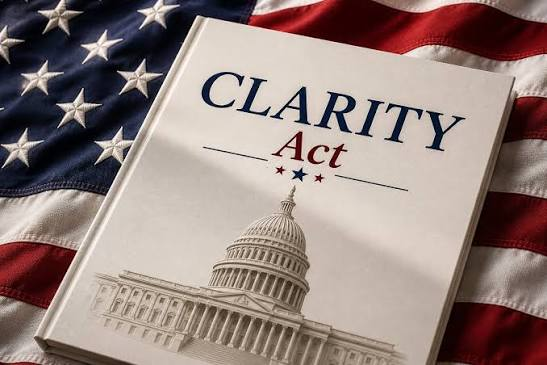
On July 21st, industry sources reported that the Trump administration has agreed to include an ethics provision in the "Clarity Act" (Digital Asset Market Clarity Act of 2025). This concession addresses the long-standing conflict-of-interest concerns regarding government officials and the crypto industry, potentially removing the final major obstacle to the bill's progress. Additionally, Patrick Witt, the executive director of the White House's Digital Asset Advisory Committee, confirmed he will remain in his role to help finalize the bill, alleviating previous concerns about his potential departure. The Clarity Act aims to establish a unified federal regulatory framework for the U.S. digital asset market. Its core objective is to resolve regulatory ambiguity by defining different types of digital assets (digital commodities, investment contract assets, and permitted payment stablecoins) and clarifying the respective oversight roles of the SEC and CFTC. This would end the long-running jurisdictional dispute between the two agencies and provide clearer compliance paths for the industry. With the ethics issue moving toward resolution, the most urgent challenge now is time. The U.S. Congress is set to begin its August recess in mid-August, leaving only a few working weeks to finalize the text and advance the bill through the Senate. Industry advocates, like the Blockchain Association's Kristin Smith, stress that this is a critical moment. If negotiations conclude successfully in the coming weeks, the Clarity Act could pass a key hurdle before the recess; otherwise, it may face significant delays. If enacted, the Clarity Act could mark a historic turning point in crypto regulation. By providing a clearer and more predictable legal framework, it aims to reduce uncertainty for businesses, developers, and traditional financial institutions looking to enter the digital asset space, potentially setting a global benchmark for market structure regulation.

Odaily星球日报12m ago

White House Concession Removes Ethical Hurdle, Clarity Act Races Against Final Window Before Recess?

Odaily星球日报12m ago

AI Era, Industrial Revolution, and Future Civilization Interview — Zhang Dingwen: The Future Does Not Belong to Chasers

"AI Era, Industrial Revolution and Future Civilization: An Interview with Zhang Dingwen – The Future Does Not Belong to Those Who Chase" In this interview, entrepreneur Zhang Dingwen reflects on his entrepreneurial journey and philosophy, moving beyond discussions of financing or success to emphasize understanding the "era" itself. He argues that true entrepreneurs should not chase short-term trends ("winds"), but position themselves in the direction of long-term technological and societal evolution. Zhang shares key lessons from his early days, including the realization that user value does not automatically translate to commercial value. For him, the core of entrepreneurship is not building a company but constantly upgrading one's own "cognition" – the ability to interpret information, ask the right questions, and understand the underlying "causes" behind business outcomes, not just the effects. His thinking has evolved from a focus on creating good products to a strategic focus on building "entrances" – platforms that naturally connect users to digital services. He sees smart wearables, like watches, not merely as hardware but as potential future gateways combining technological, financial, social, and even fashion attributes to create sustained user relationships and ecosystems. Ultimately, Zhang's vision transcends individual products or companies. He discusses business competition in three stages: product, platform, and finally, "civilization" – where the greatest companies influence how society operates by defining new rules and ways of life. He believes the mission of a truly great enterprise is to solve problems of its time, build enduring trust, and contribute lasting value, leaving behind not just wealth but a positive impact on how the world works. The future, he concludes, belongs not to the fastest, but to those with the correct long-term direction and a commitment to continuous learning and evolution.

marsbit24m ago

AI Era, Industrial Revolution, and Future Civilization Interview — Zhang Dingwen: The Future Does Not Belong to Chasers

marsbit24m ago

Cryptocurrency & Stock Market Barometer丨Strategy Cash Reserves Increase to $3.23 Billion, Halting BTC Purchases; Vanguard and Other Asset Managers Increase Holdings in Strategy Stock (July 21)

Market Overview & Warnings: The article warns of high volatility in South Korean stocks and continued dependence on U.S. stocks on geopolitics. Chinese A-shares remain under pressure. It advises against using leverage in current equity markets. For crypto-linked stocks, most have limited growth except Robinhood, with caution advised. U.S. Stock Market: Bearish bets on U.S. stocks, particularly targeting AI-related companies, have reached record highs since 2010, signaling deep skepticism about the sustainability of the AI-driven rally. Tech and chip stocks led a market decline, with the Philadelphia Semiconductor Index potentially entering a bear market. Increased expectations for Federal Reserve interest rate hikes and geopolitical tensions contributed to the negative sentiment. Bitcoin Treasury Company Updates: * Strategy: Increased its cash reserves to $3.23 billion and paused Bitcoin purchases. Several major asset managers, including Vanguard Group and Capital Group, increased their holdings of Strategy (MSTR) stock. * Global corporate Bitcoin buying slowed significantly to just $1.33 million last week. * Other notable activity: Strive purchased 21 BTC; ORANGE JUICE raised $40 million for Bitcoin acquisitions; Bitcoin Japan Corp. raised $60 million, allocating $4.08 million for its first BTC purchase. Other Crypto Treasury Holdings: * Ethereum: BitMine increased its ETH holdings to 5.78 million, nearing its 5% of supply goal. Its total crypto assets, cash, and securities are valued at $11.5 billion. * Solana: No significant corporate treasury activity reported. * Altcoins: HypeStrat made no adjustments to its treasury; its mNAV ratio fell to a long-term low. (Note: This summary is for informational purposes only and does not constitute investment advice.)

marsbit24m ago

Cryptocurrency & Stock Market Barometer丨Strategy Cash Reserves Increase to $3.23 Billion, Halting BTC Purchases; Vanguard and Other Asset Managers Increase Holdings in Strategy Stock (July 21)

marsbit24m ago

Trading

Spot
活动图片