# Execution Related Articles

HTX News Center provides the latest articles and in-depth analysis on "Execution", covering market trends, project updates, tech developments, and regulatory policies in the crypto industry.
The Truth About the Crypto Money Printer: Want to Make Money in 2026? Keep an Eye on These Three Directions

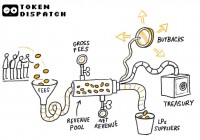
The article "Crypto’s Revenue Recipe" analyzes the revenue generation landscape in the crypto industry, highlighting key trends and drivers based on data from 2025. Total crypto protocol revenue doubled to over $16 billion in 2025, with stablecoin issuers like Tether and Circle dominating, accounting for 60% of total revenue. However, perpetual DEXs (e.g., Hyperliquid, EdgeX) emerged significantly, contributing 7-8% of industry revenue. Three core drivers are identified for 2026: 1. **Carry**: Revenue from holding and transferring assets (e.g., stablecoin interest earnings), though vulnerable to Fed rate cuts. 2. **Execution**: Perpetual DEXs gain traction by enabling low-friction, high-frequency trading and liquidity provision, challenging stablecoin dominance. 3. **Distribution**: Token launch platforms (e.g., pump.fun) leverage frictionless asset creation and distribution to capture incremental revenue. The article emphasizes the shift towards value transfer to token holders, with 19% of protocol revenue distributed via staking, dividends, buybacks, or burns in 2025—a sign of growing "economic ownership" rather than mere governance. Projects like Hyperliquid and pump.fun are cited for prioritizing holder rewards. In 2026, value distribution is expected to become standard for protocols aiming for fundamental-based token valuation.

比推Yesterday 18:54

The Truth About the Crypto Money Printer: Want to Make Money in 2026? Keep an Eye on These Three Directions

比推Yesterday 18:54

6th Man Ventures Founder: Forget the 'Token vs. Equity' Debate, What Really Needs to Be Trusted?

Mike Dudas, founder of The Block and 6th Man Ventures, argues that the debate between tokens and equity misses the point: the real question is what deserves trust. He suggests there is no one-size-fits-all answer to whether a "dual token + equity" structure works. Instead, the core principle is trusting a team that is not only exceptional but also long-term oriented, committed to building a founder-led, enduring business like Binance. Dudas notes that for application-layer projects requiring sustained leadership, tokens often underperform compared to equity. Many DeFi 1.0 founders have left their projects, which are now maintained by DAOs in "maintenance mode," struggling with slow and ineffective decision-making. Pure equity isn’t always superior either—tokens enable functions like fee discounts, staking for airdrops, and access rights, which equity can’t easily replicate. He proposes a hybrid model: an equity entity operates on a "cost-plus" basis to serve a token-driven protocol, aiming not to maximize its own profits but to maximize the token’s and ecosystem’s value. This requires high trust in the team, as token holders lack strong legal rights. Ultimately, success depends on the team’s capability, credibility, execution, vision, and action. The best tokens will thrive by 2026 if teams communicate well, conduct buybacks, enable substantive governance, and direct value to the token through utility.

marsbit01/12 08:09

6th Man Ventures Founder: Forget the 'Token vs. Equity' Debate, What Really Needs to Be Trusted?

marsbit01/12 08:09

Stop Gambling Within the Framework of Luck

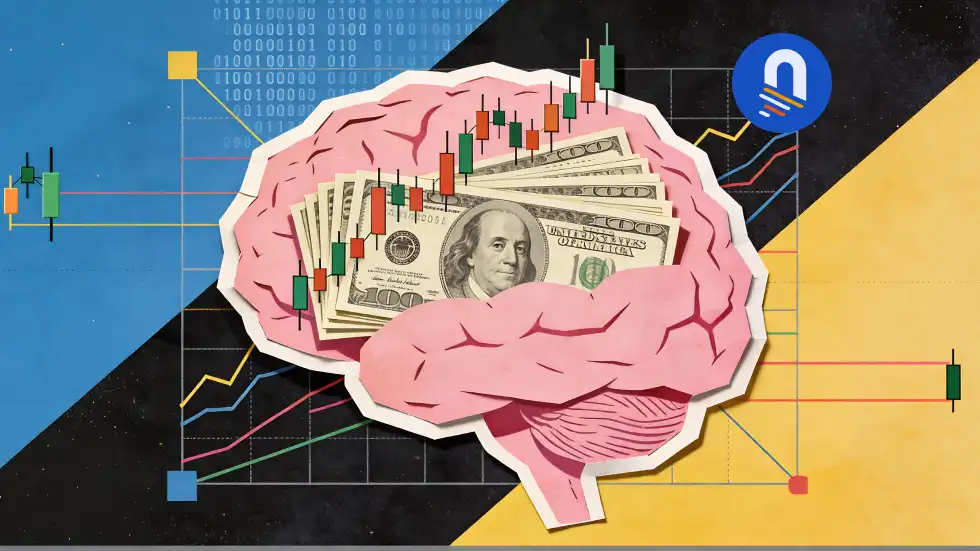
Stop Gambling Under the Guise of Fortune Human instinct drives us to act quickly when facing problems, creating an illusion that action alone can ease the anxiety of the unknown. However, the greatest trap lies in the mismatch between rapid action and the resources invested. Most actions are merely pseudo-diligence aimed at alleviating anxiety. When the speed of action surpasses the precision of thought, the consumption of capital is no longer an investment—it becomes a gamble on luck. This is a common pitfall, and the ability to confront it and develop effective solutions truly separates individuals. The first step is to find your unique edge. Rather than following idealized or high-barrier methods, the author suggests using AI as a "cognitive leverage amplifier" to help identify personal strengths. By engaging in detailed self-analysis through AI conversations—discussing childhood, personality, investment experiences, and missed opportunities—one can uncover and refine their advantages through constructive dialogue and counterarguments. The second step involves building an execution framework. After identifying a direction, it’s crucial to establish a systematic approach that allows agile responses to dynamic market conditions. This framework is built through复盘 (review and reflection)—extracting underlying logical patterns from past experiences, such as recognizing similar opportunities like $AERO and $ZORA based on Coinbase’s strategic needs, and turning them into a reusable decision model: signal identification → logic verification → execution. In essence, the key is to know yourself. Most trading pain stems from a mismatch between personality and holdings. Abandon the fantasy of being all-capable; recognize your boundaries, cultivate your strengths, and use them within a structured framework to succeed.

marsbit01/05 05:38

Stop Gambling Within the Framework of Luck

marsbit01/05 05:38

The Truth of Trading: A Numbers Game of Patterns and Probabilities

The Truth of Trading: A Numbers Game of Patterns and Probability Most traders fail not due to a lack of methods or information, but because they misunderstand the nature of trading. Mark Douglas, in "Trading in the Zone," redefines the market as a probabilistic environment where an edge only materializes over a sufficiently long period. Trading is not about prediction or seeking certainty; it is a numbers game of pattern recognition. A valid trading pattern does not guarantee that any single trade will be profitable. It merely indicates a historical probability of success. Each individual trade outcome is random, but the overall probability distribution over many trades is not. Traders must evaluate performance like a casino: focus on long-term expectation and repeated execution, not single wins or losses. Accepting that "anything can happen" is liberating. It removes the emotional sting from losses, enables disciplined stop-loss execution, and eliminates hesitation. The ideal "flow state" is not excitement but emotional neutrality—executing the plan without attachment to outcomes or need to be right. Ultimately, traders cannot control results, but they can control their execution. Success comes from emotional detachment and consistent repetition. When traders stop trying to prove themselves right and let the probabilities work over time, they align with the true nature of the market: a numbers game based on pattern recognition and disciplined repetition.

深潮12/26 02:45

The Truth of Trading: A Numbers Game of Patterns and Probabilities

深潮12/26 02:45

The Truth of Trading: A Numbers Game of Patterns and Probabilities

The Truth of Trading: A Numbers Game of Patterns and Probabilities Most traders fail not due to a lack of methods or information, but because they misunderstand the nature of trading. Mark Douglas, in "Trading in the Zone," redefines trading: it is not about prediction or certainty, but a probabilistic environment where edges manifest only over time. Thus, experienced traders summarize it as a pattern-recognition numbers game. Trading isn’t forecasting; it’s executing a plan amid uncertainty. No single trade can be guaranteed. Patterns don’t predict outcomes—they only define probabilistic edges. A valid pattern means historically higher chance of profit, not a promised win. Losses don’t invalidate the method; they are part of randomness. Individual trade outcomes are random, but the overall probability distribution isn’t. Profit comes from expectancy multiplied by repetition, not single trade accuracy. Accepting "anything can happen" liberates traders: losses feel less offensive, stop-losses are executed cleanly, and emotional interference fades. The "flow state" is emotional neutrality—no need to prove correctness or fear mistakes. It’s loyalty to the process. Trading is a numbers game: identify edges, repeat executions, and let large samples reveal results. Many traders intellectually agree but emotionally reject this: they judge themselves per trade, expect every pattern to work, take losses personally, and abandon strategies after few failures. The key isn’t a better method, but correct execution. You can’t control outcomes, but you can control execution. Patterns offer probability, not promises. Consistency requires emotional detachment and repetitive discipline. When traders stop proving themselves right and let probabilities work, trading succeeds.

marsbit12/26 01:59

The Truth of Trading: A Numbers Game of Patterns and Probabilities

marsbit12/26 01:59

活动图片