# Control Related Articles

HTX News Center provides the latest articles and in-depth analysis on "Control", covering market trends, project updates, tech developments, and regulatory policies in the crypto industry.


Daniil and David Liberman: AI is Not Just a Battle of Models, But a Battle of Computing Infrastructure

In the article "Daniil and David Liberman: AI Is Not Just a Battle of Models, but a Battle of Compute Infrastructure," the authors argue that the core of AI development is not just about algorithmic advances but control over computational resources. They emphasize that AI is not a neutral technology—who owns and governs the compute infrastructure ultimately determines who benefits from AI. Currently, advanced AI compute is highly concentrated among a few cloud providers and specific nations, creating a growing "compute divide." This centralization leads to high costs, limited access, and geographic imbalance. Decentralized alternatives, meanwhile, often waste resources on consensus mechanisms rather than meaningful computation. The authors propose a practical alternative: an infrastructure where most compute is used for actual AI work, governance is based on verified computational effort (not capital), and global GPU access is permissionless. They stress that infrastructure choices made today will have long-term economic and geopolitical consequences. For businesses, early reliance on centralized AI infrastructure creates lock-in effects that reduce strategic flexibility over time. The authors warn that waiting too long to explore decentralized options may make transition prohibitively difficult. They conclude that future generations must recognize that AI architecture is a deliberate design choice—not an inevitability—and that open, decentralized infrastructure is essential to preserving fairness, innovation, and freedom in the AI era.

marsbitYesterday 03:19

Daniil and David Liberman: AI is Not Just a Battle of Models, But a Battle of Computing Infrastructure

marsbitYesterday 03:19

Deciphering the Dispute Between Anthropic and the War Department: What Does Trump Intend?

The article reflects on the decline of the American republic, drawing a metaphor between the gradual process of death—observed during the author’s father’s passing—and the slow erosion of democratic institutions. It examines the recent conflict between AI company Anthropic and the U.S. Department of War (DoW) as a symptom of this decay. Under both Biden and Trump administrations, Anthropic’s Claude AI was approved for use in classified environments, subject to two policy restrictions: no mass surveillance of Americans and no use in fully autonomous lethal weapons. The Trump administration later reversed its stance, opposing the idea of a private company imposing policy limits on military technology and threatening to designate Anthropic a "supply chain risk"—a move typically reserved for foreign-adversary companies. The author argues that this response reflects a broader breakdown in governance: the increased use of arbitrary state power, the decline of legislative process, and the erosion of property rights and predictable rule-of-law order. The confrontation raises fundamental questions about who should control advanced AI—private actors, the state, or yet-to-be-defined public mechanisms. While not causing institutional decline, the episode signals deeper dysfunction: the state’s willingness to coerce private entities and the blurring line between democratic oversight and government overreach. The author warns against equating "democratic control" with "government control" and calls for vigilance to protect civil liberties as AI and governance continue to evolve.

marsbit03/03 06:08

Deciphering the Dispute Between Anthropic and the War Department: What Does Trump Intend?

marsbit03/03 06:08

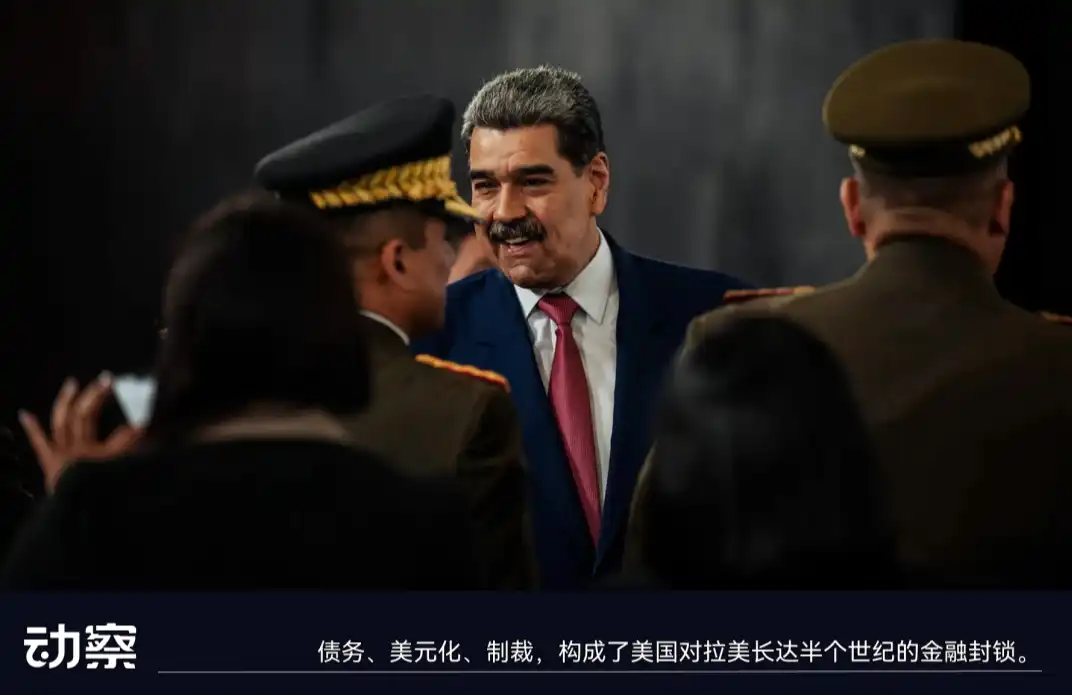
The U.S. Can No Longer Control Latin America, So They Took Maduro

US influence over Latin America is waning, as evidenced by the recent US military operation to extract Venezuelan President Maduro. For decades, the US maintained control through three key financial tools: debt, dollarization, and sanctions. In the 1980s, Latin America’s foreign debt reached 50% of GDP, but today it stands at just 20%, partly due to China’s rise as a major lender and trading partner since the 2000s. Countries like Brazil and Argentina used commodity-driven revenue to pay off IMF debts and reduce dependency. Dollarization, once a means of control, has evolved into “de-Americanized dollarization”—people use the dollar for stability but reject US political influence. Meanwhile, extreme sanctions, such as those imposed on Venezuela, backfired. Instead of crushing resistance, they spurred the growth of a parallel financial ecosystem. This new system includes: - Stablecoins like USDT, used for 80% of Venezuela’s oil revenue - Local fintech platforms (e.g., Brazil’s Pix and Nubank) serving millions - Non-dollar trade channels, such as currency swaps with China - A thriving underground economy and crypto markets US policies—like proposed taxes on remittances and Wall Street’s “de-risking”—have unintentionally accelerated this shift. As the US tightens control, dollar usage becomes more decentralized, echoing the historical decline of the British pound. The very tools meant to enforce dominance are now fueling its erosion.

marsbit01/05 04:03

The U.S. Can No Longer Control Latin America, So They Took Maduro

marsbit01/05 04:03

活动图片