Solana’s 90% slowdown: Is quantum-safe security killing SOL’s speed?

ambcryptoPublished on 2026-04-05Last updated on 2026-04-05

Abstract

Solana's recent quantum security testing with Project Eleven has exposed a critical trade-off: implementing quantum-resistant signatures could slow the network by 90%. This is a significant challenge for Solana, as its core advantage has been its high speed and scalability, processing 31x more transactions than Ethereum with 1,191 TPS. This speed has fueled its growth in DeFi and stablecoin adoption, notably for non-USD currencies. The potential 90% slowdown forces Solana to balance its defining speed with future-proof security, risking its competitive edge if it cannot maintain both performance and protection against quantum computing threats.

Can a blockchain achieve both scalability and speed, or is it forced to prioritize one over the other?

Solana’s latest move has put this question in the spotlight for traders and developers. For years, Solana’s high-speed powered growth in its stablecoin market and transaction volume.

Put simply, its fast throughput allowed the network to handle huge transaction loads while maintaining strong on-chain liquidity.

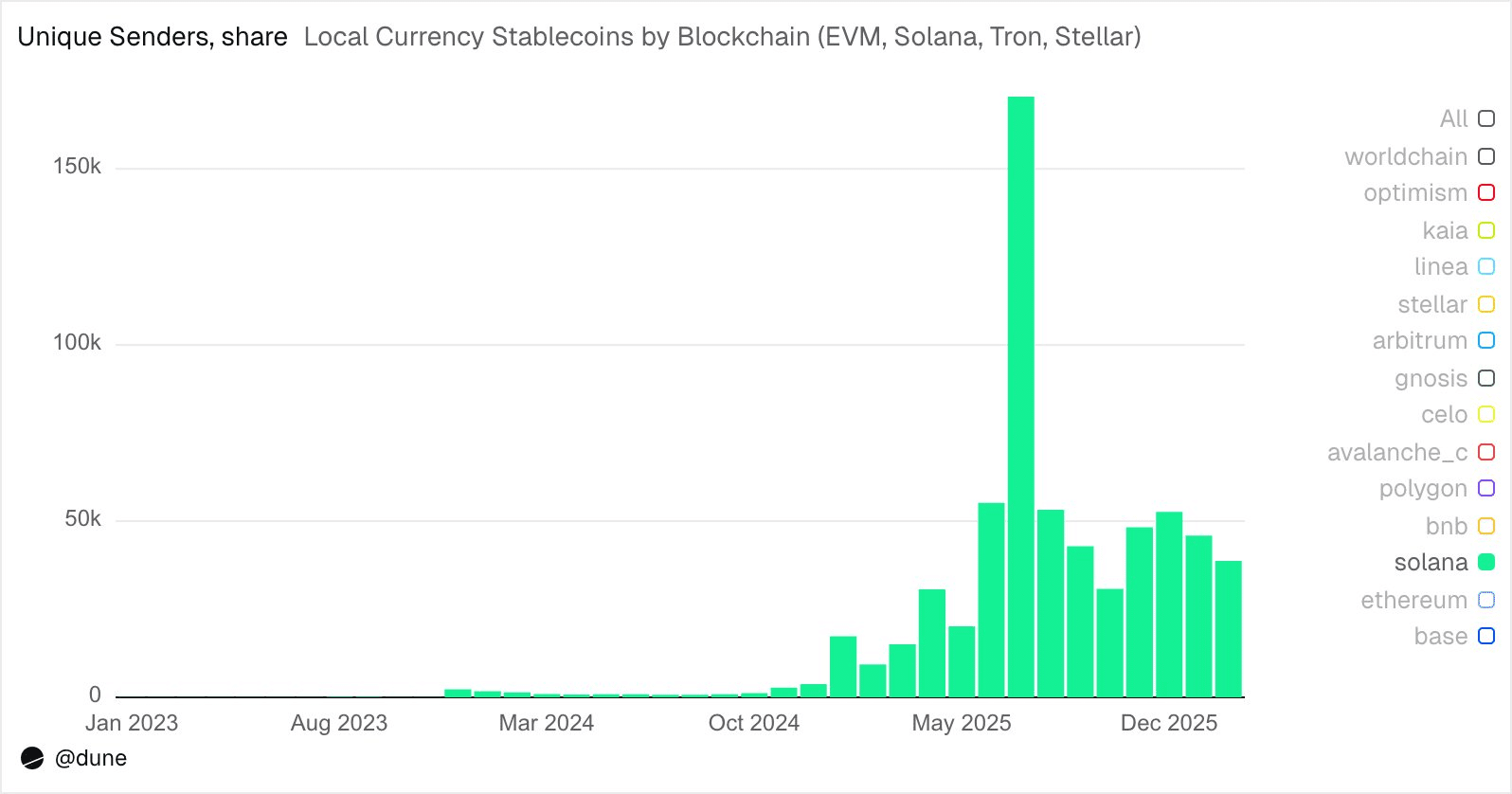
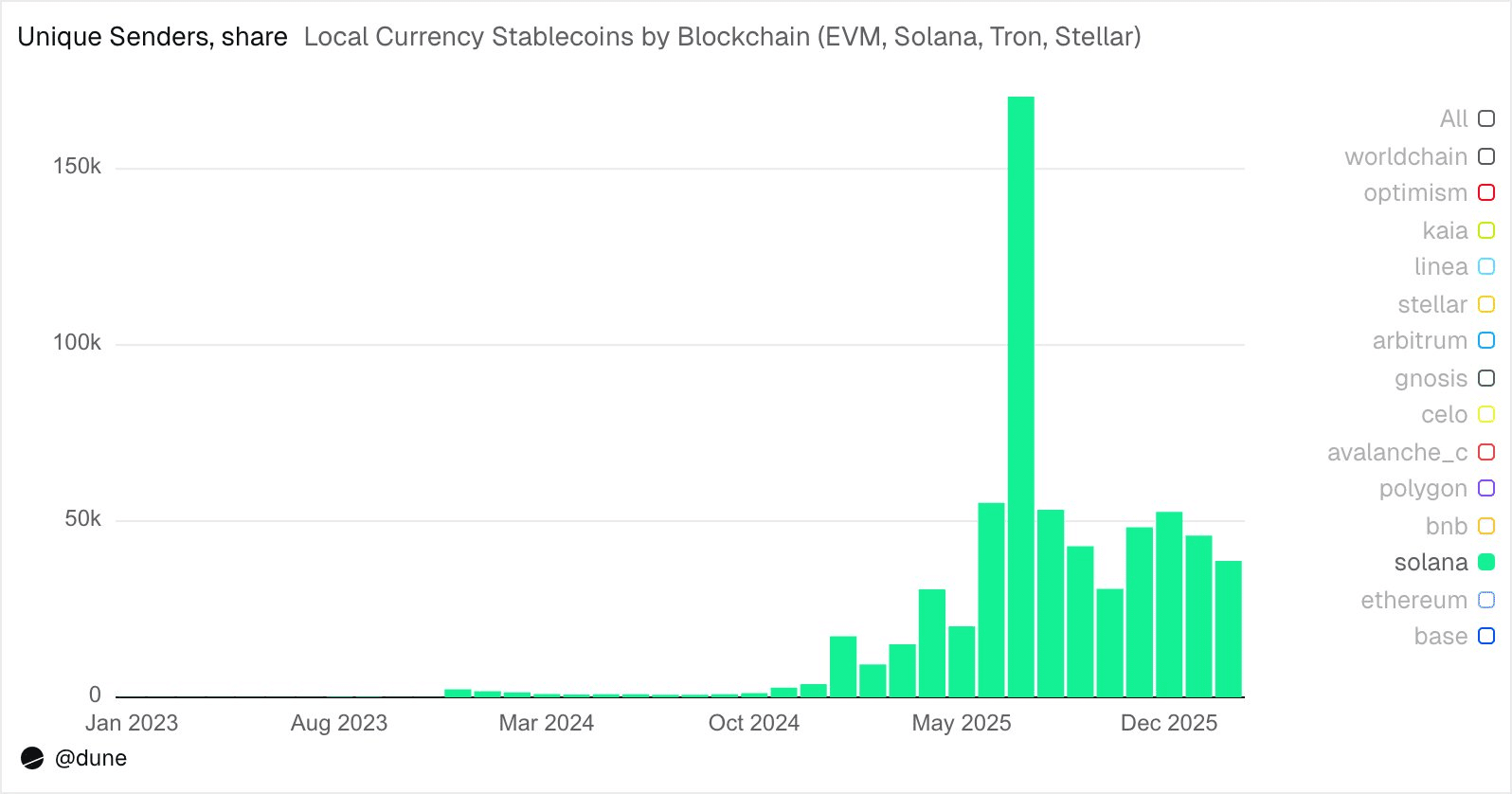
Look at Solana’s de-dollarization push: Dune data, as of press time, showed that Unique Senders of non-USD stablecoins on the network nearly tripled year-on-year, driven by EURC and BRZ adoption.

From a strategic standpoint, the network is clearly diversifying its stablecoin portfolio, laying the groundwork for broader DeFi expansion.
Source: Dune

From a technical perspective, however, this growth highlights Solana’s [SOL] strong underlying network fundamentals. Its high throughput, fast confirmation times, and robust on-chain liquidity have enabled it to support complex financial activity at scale, something that many competing blockchains still struggle with.

However, recent quantum testing revealed a trade-off, raising questions about whether Solana can keep its edge.

For context, Solana is working with Project Eleven to test quantum-safe signatures. Basically, it’s a way to protect the network from potential attacks by future quantum computers.

The catch?

Early tests show some big compromises.

Quantum-safe signatures are up to 40× larger, and the network ran roughly 90% slower. In simple terms, making Solana quantum-resistant could seriously slow down transactions, forcing the network to juggle speed, scalability, and security all at once.

That naturally brings up a tough question: Can Solana stay fast and secure while keeping its edge?

Speed vs security: Solana’s edge over Ethereum faces a critical test

The trade-off is clear: Either lock in security and slow down, or keep speed and take on more risk.

Recent quantum testing exposed this trade-off. To safeguard the network against future quantum attacks, Solana accepted a roughly 90% slowdown in speed.

As AMBCrypto noted, this is particularly challenging for Solana, since speed has long been its defining advantage over other layer-1s, especially Ethereum [ETH].

The impact of that advantage has been enormous.

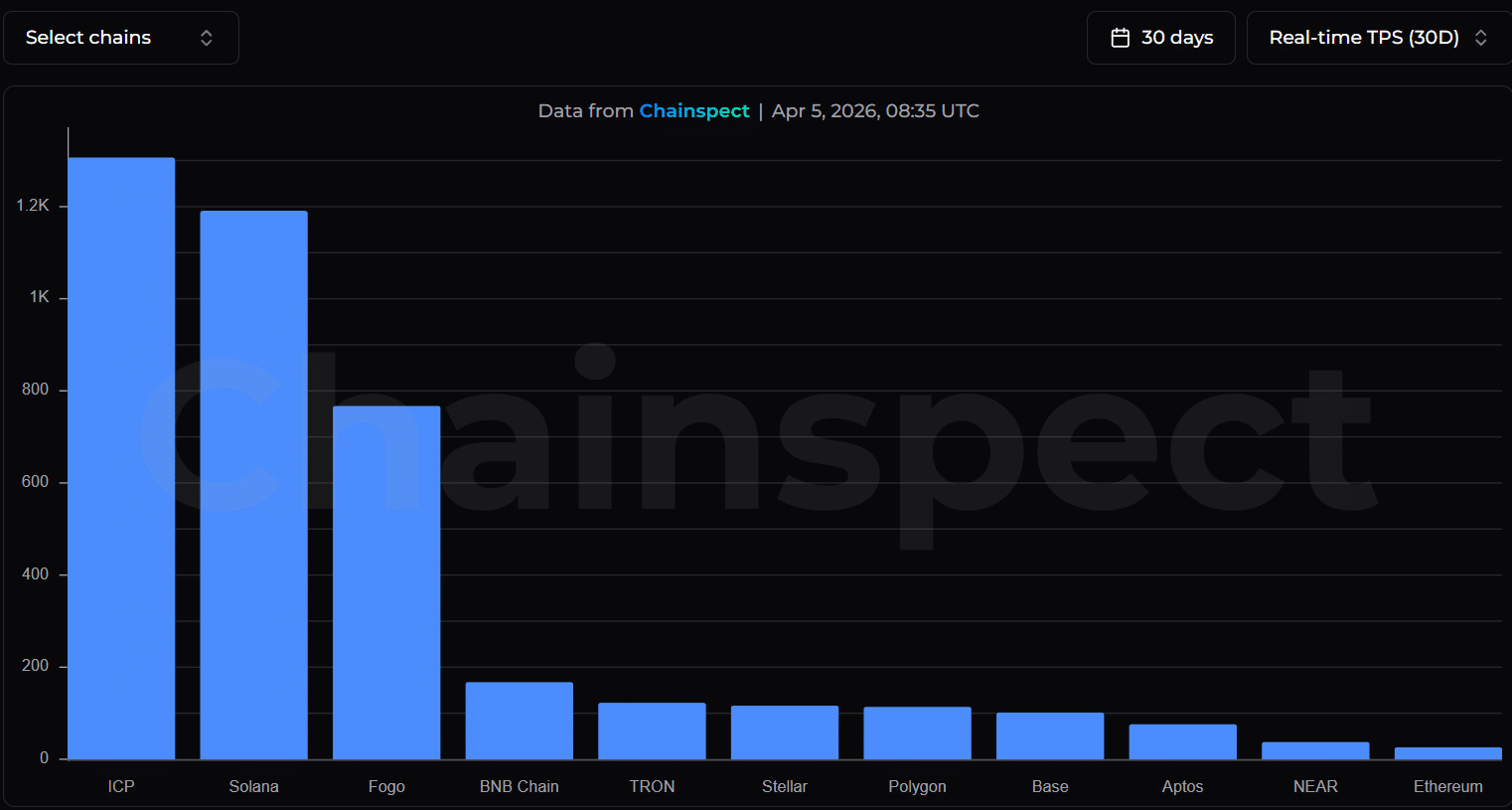
According to Chainspect data, Solana’s high throughput has given it a massive edge over Ethereum across multiple metrics. Look at transaction volume: Solana has processed 31× more transactions than Ethereum, reaching a staggering 106 billion transactions in total.
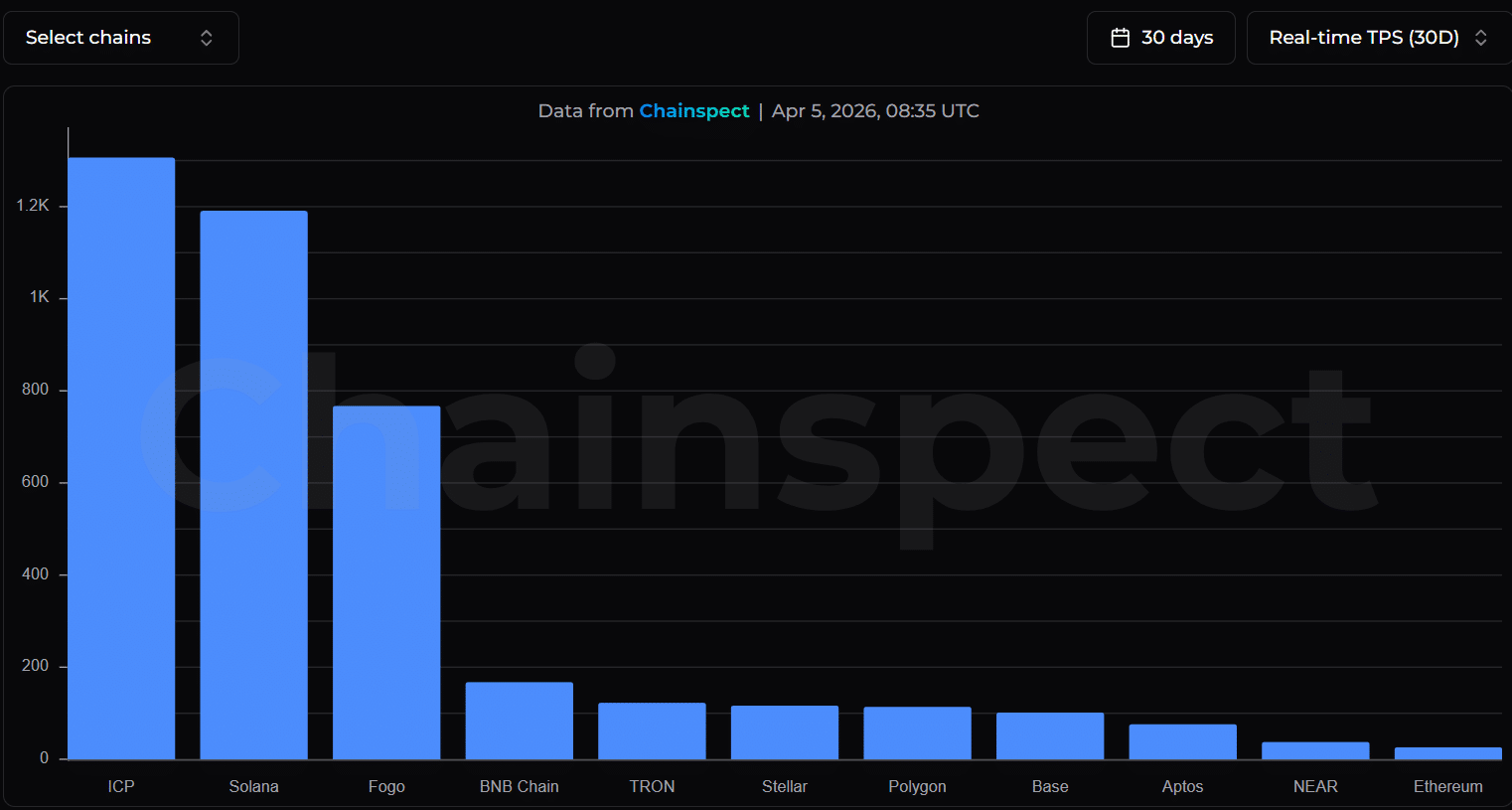
Source: Chainspect

Notably, this scalability comes straight from Solana’s high speed.

As the chart above shows, Solana ranks second among all blockchains with 1,191 real-time transactions per second (TPS), compared to Ethereum’s 25.99 TPS. This allows Solana to handle massive transaction loads efficiently, giving it a clear edge in DeFi, something slower L1s like Ethereum still struggle with.

According to AMBCrypto, that’s why the recent quantum testing is such a crucial moment.

A 90% slowdown in speed puts Solana’s signature advantage under pressure. Even more, it could slow DeFi growth just as competition from Ethereum is heating up.

This, in turn, forces the network to prove it can stay fast, secure, and ahead of the pack. Otherwise, it risks losing the edge that has long set it apart.


Final Summary

  • High throughput and fast TPS let Solana handle massive transactions, support DeFi growth, and outperform Ethereum across key metrics.
  • Moving toward quantum-safe security slows the network by 90%, forcing Solana to balance speed and security, or risk losing its lead.


Related Questions

QWhat is the main trade-off Solana faces according to the recent quantum testing?

AThe main trade-off is between security and speed. Implementing quantum-safe signatures would make the network roughly 90% slower, forcing Solana to choose between enhanced security against future quantum attacks and maintaining its signature high transaction speed.

QHow does Solana's transaction speed (TPS) compare to Ethereum's, and why is this significant?

ASolana's real-time TPS is 1,191, which is significantly higher than Ethereum's 25.99 TPS. This high speed and scalability have been Solana's defining advantage, allowing it to process 31 times more total transactions and efficiently support complex DeFi activity, which Ethereum struggles with.

QWhat evidence from the article shows Solana is diversifying its stablecoin ecosystem?

ADune data shows that the number of Unique Senders of non-USD stablecoins on Solana, such as EURC and BRZ, nearly tripled year-on-year. This indicates a strategic push to diversify its stablecoin portfolio as part of a broader DeFi expansion.

QWhat is the purpose of Solana's collaboration with Project Eleven?

ASolana is working with Project Eleven to test and implement quantum-safe signatures. The purpose is to protect the network from potential attacks by future quantum computers, thereby future-proofing its security.

QWhat is a key potential consequence for Solana if its network speed is significantly reduced?

AA key potential consequence is that Solana could lose its competitive edge, particularly in DeFi, just as competition from other layer-1s like Ethereum is increasing. A 90% slowdown could hinder its ability to handle massive transaction loads efficiently and support growth.

Related Reads

First Batch of Keynote Speakers and Partners Announced! Web2+3 Summit: Defining the Next Generation of Digital Economy

Web2+3 Summit: Defining the Next Generation of Digital Economy The 6th BEYOND International Technology Innovation Expo (BEYOND Expo 2026), Asia's largest tech and ecosystem exhibition, is launching a dedicated Web2+3 stage for the first time. Co-hosted by BEYOND Expo and ChainNeXT Group, the Web3 Summit will take place from May 28–30, 2026. Against the backdrop of accelerating global tech integration, the boundaries between Web2 and Web3 are rapidly blurring. With clearer global regulations for blockchain-driven internet (Web3) and the special issuance of a Hong Kong dollar stable币 license by the Hong Kong SAR government on April 10, 2026, Web3's decentralized principles are quickly merging with traditional industries (Web2) such as e-commerce, finance, and artificial intelligence. Focused on blockchain-driven digital economy elements, the summit will center on three core principles—implementability, commercial viability, and compliance. It will bring together top Web3 experts to discuss key integration areas like stablecoin payment finance (PayFi), real-world asset tokenization (RWA), and decentralized AI (DeAI), unveiling new opportunities for industrial innovation. The first wave of confirmed speakers includes Jack Kong (Director of Hong Kong Cyberport, Chairman of Nano Labs), Yat Siu (Chairman of Animoca Brands), Michael Wu (Co-founder & CEO of Amber Group), Michael Heinrich (Co-founder & CEO of 0G), and Art Abal (Co-founder of Vana). More Web3 ecosystem pioneers, AI, and fintech experts will be announced soon. Core forum topics include: - Web2+DeAI: New AI Paradigms Driven by Decentralized Infrastructure - Web2+RWA: Real-World Asset Tokenization and Global Liquidity - Web2+PayFi: Cross-Border Payments and Financial Innovation Powered by Crypto Infrastructure - Web2+3 AI: Autonomous Agents and the Crypto Economy - Web2+3 Wealth: On-Chain and Off-Chain Integrated Investment Ecosystems - Web2+3 Commerce: A New Landscape for Global Trade Driven by Stablecoins Additional agenda details will be released in the near future.

marsbit3h ago

First Batch of Keynote Speakers and Partners Announced! Web2+3 Summit: Defining the Next Generation of Digital Economy

marsbit3h ago

Trading

Spot
Futures

Hot Articles

Discussions

Welcome to the HTX Community. Here, you can stay informed about the latest platform developments and gain access to professional market insights. Users' opinions on the price of SOL (SOL) are presented below.

活动图片