Solana Price Stays Under Pressure As 1.4M Tokens Flow To Exchanges

bitcoinistPublished on 2026-04-06Last updated on 2026-04-06

Abstract

The Solana price is facing significant downward pressure, exacerbated by a major DeFi exploit that resulted in over $270 million in outflows from the ecosystem. On-chain data reveals a bearish signal as 1.4 million SOL tokens, valued at approximately $110 million, were transferred to centralized exchanges within a 72-hour period. This substantial increase in exchange inflows is often a precursor to heightened selling pressure, as investors move assets to exchanges to offload them. Consequently, the Solana price, which had already dropped below the key $80 support level after a local high of $85, remains under strain. At the time of writing, SOL is trading around $80.80, showing little change over 24 hours but down more than 3% over the past week.

The cryptocurrency market has indeed seen better days than the past week, but the Solana price has particularly struggled to contend with the broad downward pressure. This sluggish price action could be linked to the major DeFi exploit that rocked the ecosystem, causing the outflow of more than $270 million in value. According to the latest on-chain data, the Solana price could see even further pressure as exchange inflows spike.

$110 Million Of SOL Flow To Centralized Exchanges In 3 Days

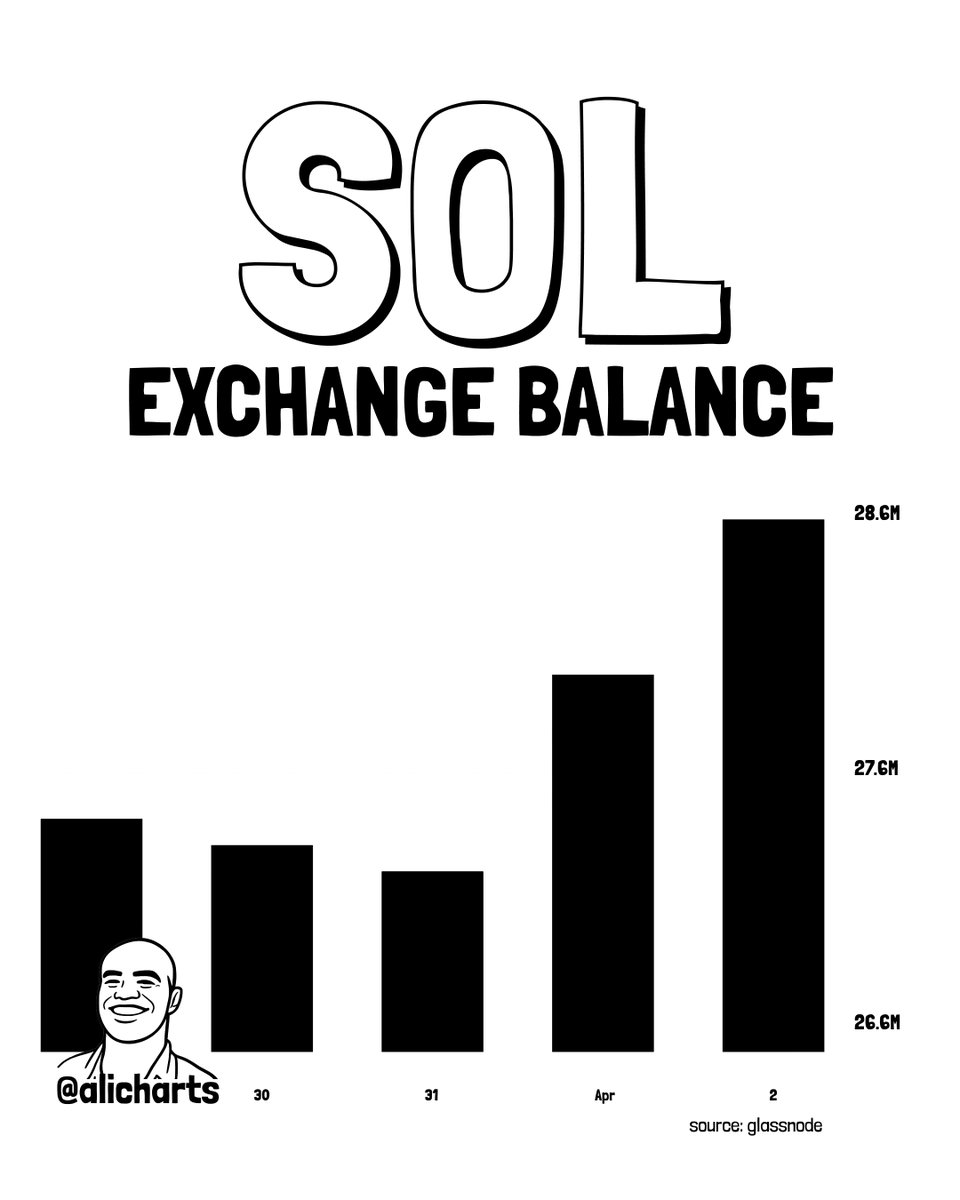
In an April 4th post on the social media platform X, crypto analyst Ali Martinez shared that significant amounts of the Solana token have been moved to centralized exchanges over the past few days. This on-chain observation has caused a warning alarm to go off on the potential price trajectory of SOL, especially considering the already not-so-optimistic market climate.

The relevant indicator here is the Exchange Balance metric, which tracks the amount of a particular cryptocurrency available on centralized exchanges at a given time. This on-chain metric provides some level of insight into the current demand and supply dynamics in the crypto open market.

Hence, a rise in the value of this metric suggests that more market participants are sending assets to exchanges, which could imply that supply might be overwhelming the available demand. This trend could be bearish for an asset’s value (the Solana price, in this case), as it could be an indication of increasing selling pressure.
Source: @alicharts on X

According to Glassnode data highlighted by Martinez, 1.40 million Solana, valued at approximately $110 million, were transferred to centralized exchanges in the last 72 hours. As inferred earlier, coin movements of this magnitude are often red flags in the market, as they could be a potential source of bearish pressure on price.

The rationale behind this conclusion is that one of the major services offered by centralized exchanges is a platform for investors and traders to offload their digital assets. Hence, this latest increase in the exchange inflow can be linked to a rise in selling pressure on the Solana price.

Solana Price At A Glance

Interestingly, the Solana price fell below the psychological $80 support after reaching the local high of around $85. As of this writing, the price of SOL stands at around $80.8, reflecting no significant change in the past 24 hours. According to data from CoinGecko, the altcoin’s value has been down by more than 3% in the past seven days.

The price of Solana on the daily timeframe | Source: SOLUSDT chart on TradingView

Related Questions

QWhat is the main reason for the recent downward pressure on the Solana (SOL) price mentioned in the article?

AThe main reason for the downward pressure is a spike in exchange inflows, with 1.4 million SOL tokens (worth ~$110 million) being moved to centralized exchanges in the last 72 hours, indicating potential increased selling pressure.

QAccording to the on-chain data shared by analyst Ali Martinez, how many SOL tokens were sent to exchanges in a 3-day period?

AAccording to the on-chain data from Glassnode, 1.40 million SOL tokens were transferred to centralized exchanges in the last 72 hours.

QWhat does a rise in the 'Exchange Balance' metric typically indicate for a cryptocurrency's price?

AA rise in the Exchange Balance metric suggests that more market participants are depositing assets to exchanges, which can imply that supply is overwhelming demand. This is often a bearish signal as it indicates increasing selling pressure.

QWhat was the value of the SOL tokens that flowed into exchanges, and what was the time frame for this movement?

AThe value of the SOL tokens that flowed into exchanges was approximately $110 million, and this movement occurred over a 72-hour (3-day) period.

QAt what price level did Solana find psychological support after falling from its local high?

ASolana found psychological support at the $80 price level after falling from its local high of around $85.

Related Reads

The Value Distribution of Stablecoins

**Summary: The Value Distribution of Stablecoins** The article argues that stablecoins are evolving from mere trading tools into broader channels for dollar access. It divides the stablecoin ecosystem into four layers to analyze how value is distributed: 1. **Issuance Layer:** Mints stablecoins, holds reserve assets, and captures the spread between reserve yield and user costs (e.g., Tether, Circle). This layer currently earns the largest profit margin. 2. **Infrastructure Layer:** Connects stablecoins to the traditional financial system, handling fiat on/off-ramps, banking integration, compliance (KYC/AML), and asset management (e.g., Bridge, BVNK). This is the "unglamorous" but critical work, building the essential bridges between crypto and real-world finance. 3. **Acquiring/Distribution Layer:** Integrates stablecoins into merchant systems, manages payment flows, and provides enterprise financial software (e.g., Stripe, Coinbase). They act as the access point for businesses. 4. **Application Layer:** The end-users and businesses that ultimately use stablecoins for payments, settlements, or as a store of value. They benefit from convenience but have little pricing power. The core thesis is that while the issuance layer currently dominates profits, the often-overlooked **infrastructure layer holds significant long-term potential**. The real challenge and barrier to mass adoption is not the on-chain transfer of stablecoins (which is simple), but the complex "last mile" integration into existing business workflows, banking systems, and regulatory frameworks across different countries. Companies in this layer are currently in a "land grab" phase, investing heavily to build networks, secure bank partnerships, and establish compliance pathways. While their position is currently pressured by the profitable issuers above and distribution platforms below, the article suggests that if stablecoins become a default financial rail for businesses, the infrastructure providers who have done the hard work of integration will ultimately gain strong pricing power and become entrenched, essential players.

marsbit5h ago

The Value Distribution of Stablecoins

marsbit5h ago

The Value Distribution of Stablecoins

The Value Distribution of Stablecoins The article argues that stablecoins are evolving from a mere trading tool into a broad "dollar channel." It analyzes the industry's value chain through four layers: 1. **Issuance Layer (e.g., Tether, Circle):** The top layer that mints stablecoins, holds reserve assets, and captures the thickest interest rate spread. 2. **Infrastructure Layer (e.g., Bridge, BVNK):** Connects stablecoins to the traditional financial system, handling critical but complex "dirty work" like fiat on/off-ramps, banking integration, compliance (KYC/AML), and cross-border settlement. 3. **Acquiring/Distribution Layer (e.g., Stripe, Coinbase):** Embeds stablecoins into merchant systems, manages payment flows, and integrates with enterprise software. 4. **Application Layer:** End-users and businesses that ultimately use stablecoins for payments, settlement, or storing value. The author posits that while the issuance layer currently captures the most profit, the most overlooked and potentially critical layer is infrastructure. The core challenge for stablecoin adoption isn't the on-chain transfer (which is simple), but bridging the gap between blockchain and the real-world financial system. This involves solving practical problems for businesses: fiat conversion, reconciliation, tax handling, and user onboarding. Infrastructure companies are currently in a difficult "land-grab" phase—building networks, securing banking relationships, and achieving compliance country-by-country. They face pressure from both the profitable issuance layer above and distribution platforms below. However, the author suggests this layer is building a crucial moat. Once stablecoins become a default business rail, the infrastructure players who have done the hard work of integration may gain significant, durable value and pricing power.

链捕手5h ago

The Value Distribution of Stablecoins

链捕手5h ago

Trading

Spot
Futures
活动图片





