ShapeShift founder denies $260mln whale accumulation – Here’s what we know!

ambcryptoPublished on 2026-03-23Last updated on 2026-03-23

Recent on-chain data suggests that large investors are quietly building strong positions in Ethereum.

Over the past two weeks, a major whale, reportedly linked to Erik Voorhees, Founder of ShapeShift, has deployed nearly $260 million in USDT to accumulate more than 120,000 ETH.

This buying pattern points to a steady accumulation strategy rather than a one-time trade. For instance, in the latest transaction, the whale spent $4.29 million to purchase ETH at $2,134.
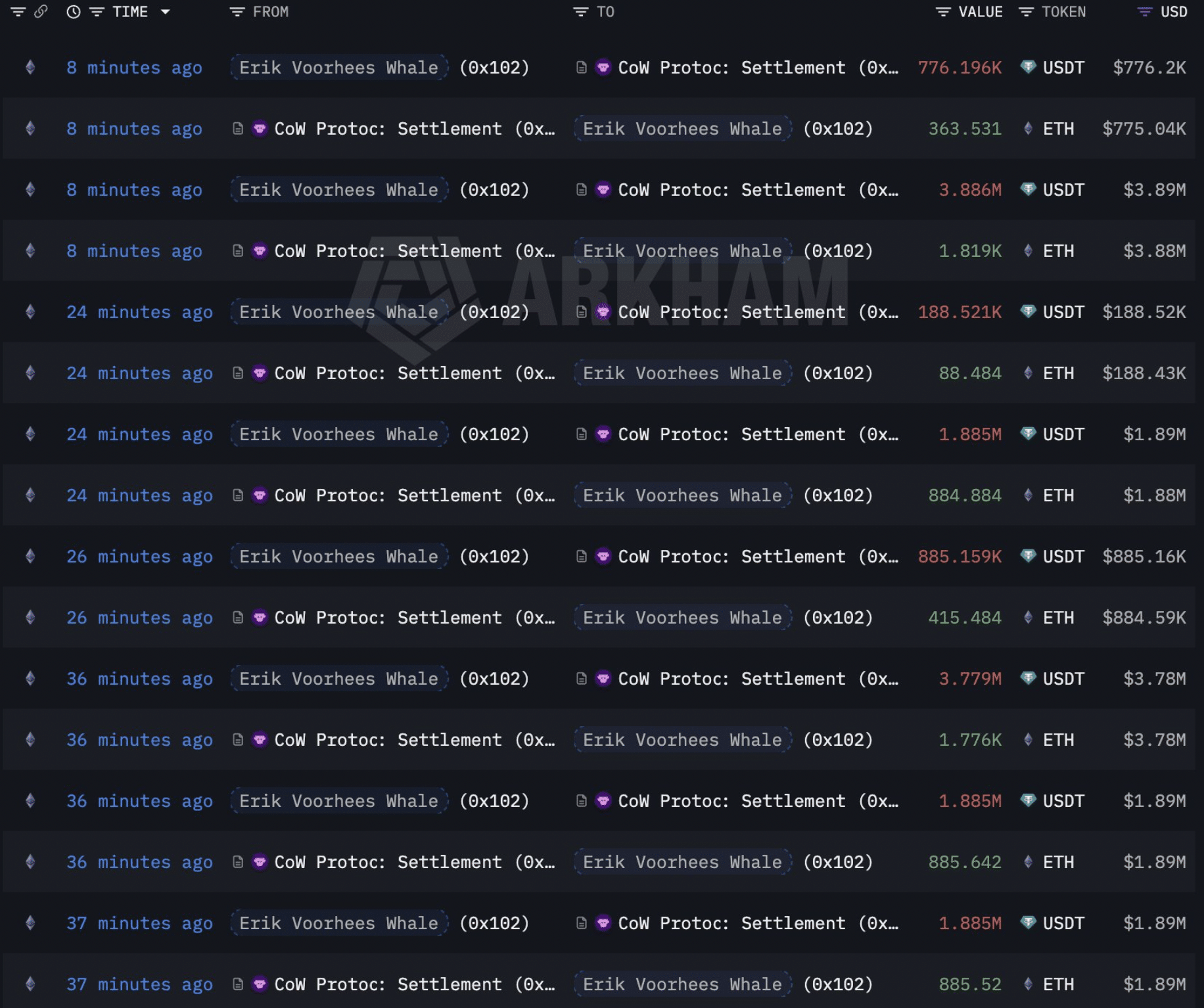
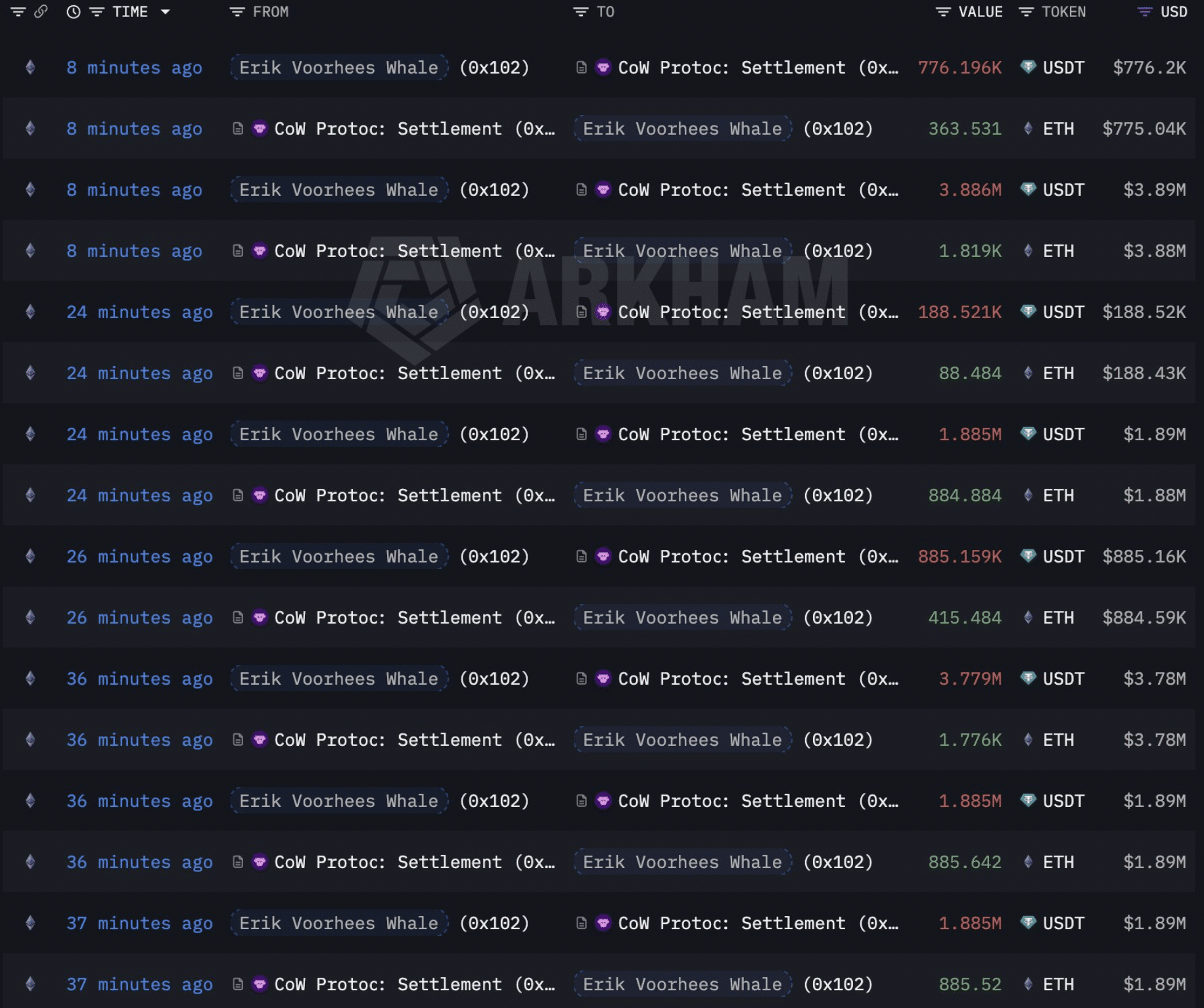
Source: Lookonchain/X

Overall, the average buying price stands at around $2,162, which now acts as a key support level for the market.

Such moves signal strong confidence that Ethereum may be nearing its bottom, with expectations of potential upside in the coming months.

Notably, this accumulation is happening even as ETH trades at $2,071.67, down over 3% in the last 24 hours. This paints a clear divergence between short-term price action and long-term investor sentiment.

Retail vs whale behavior

To understand this better, let’s analyse the Spot Retail Activity by CryptoQuant.

Historically, smaller investors tend to buy when prices are already high, driven by FOMO. This happened in past cycles like 2018, 2021, and even 2024.
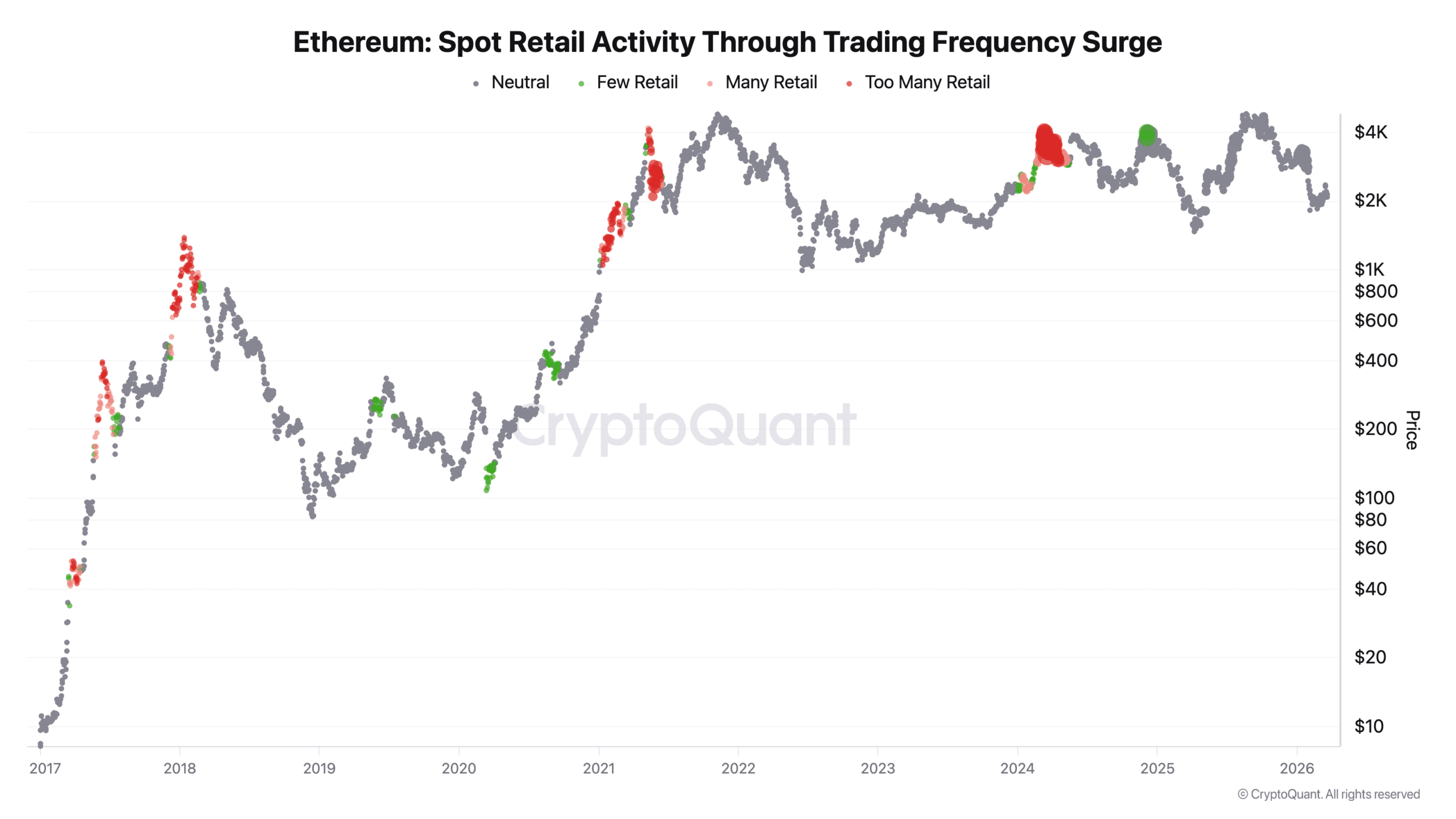
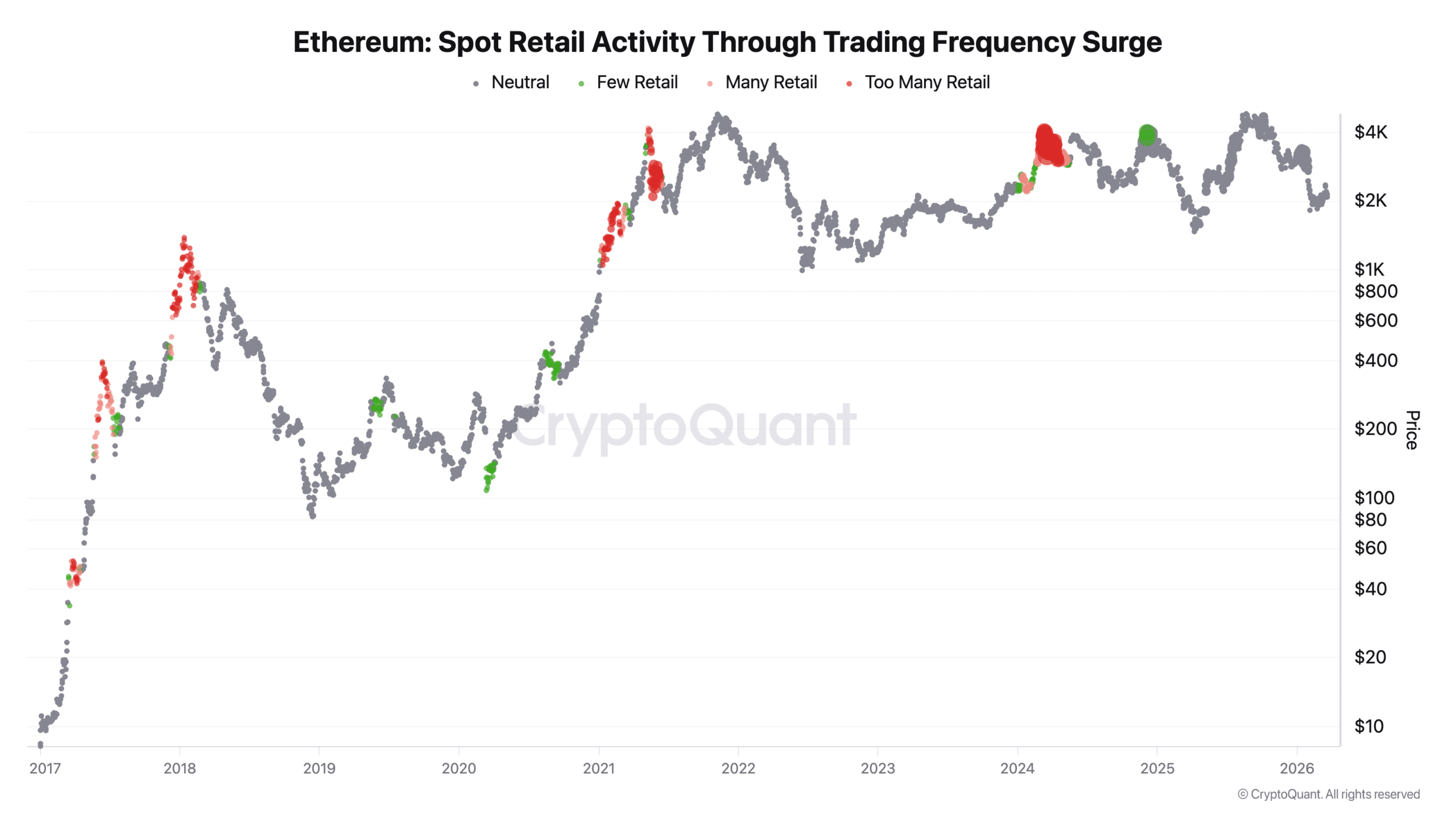
Source: CryptoQuant

Right now, retail activity is relatively low, which is actually a good sign. It means the market is in a quieter phase where large investors are accumulating, while the public is still on the sidelines.

Interestingly, while this whale has been aggressively buying Ethereum [ETH], ETFs have been seeing money flow out, which may seem negative at first.
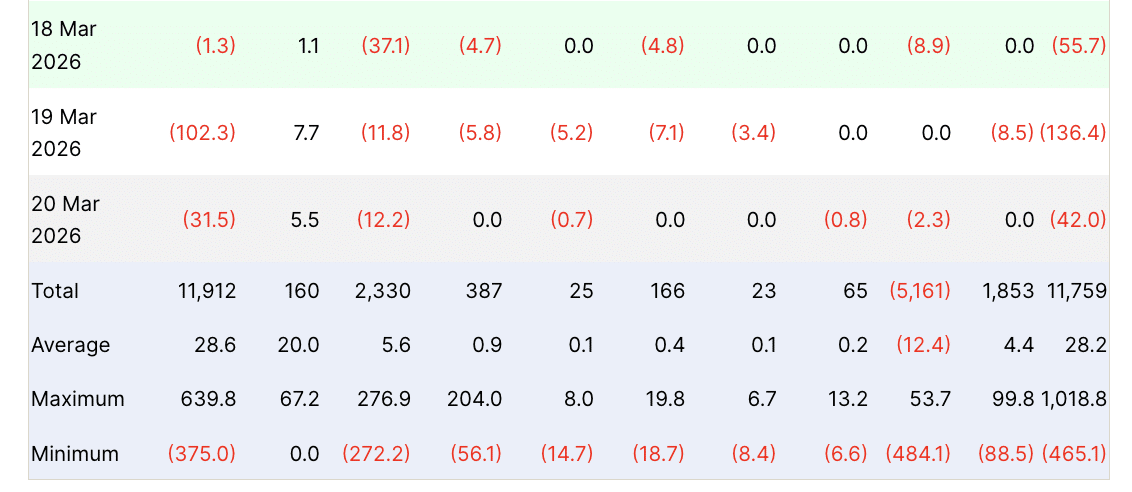
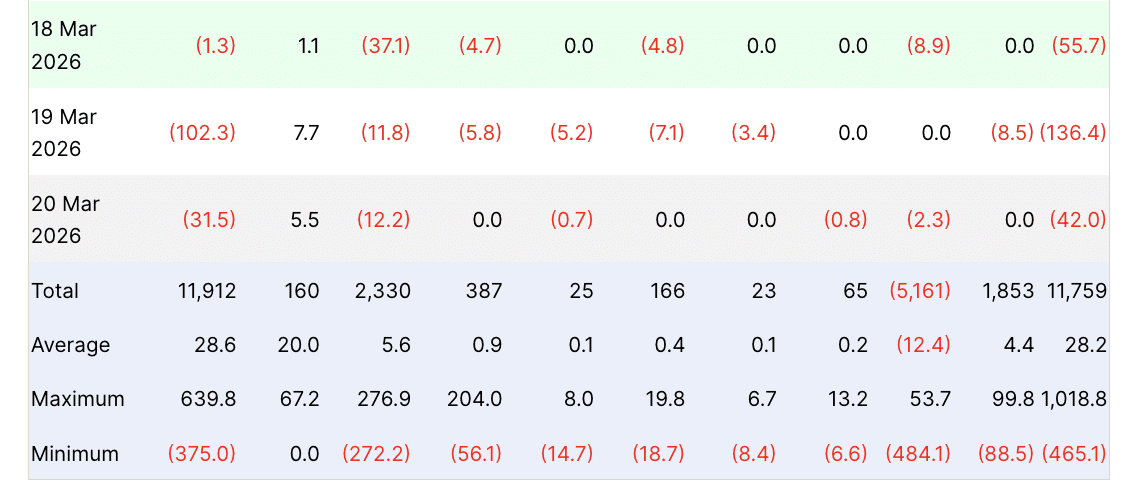
Source: Farside Investors

However, a closer look reveals that large whales are steadily increasing their holdings, while mid-sized investors seem to be selling or redistributing.

Meanwhile, retail investors remain inconsistent, often buying at higher levels and selling during dips.
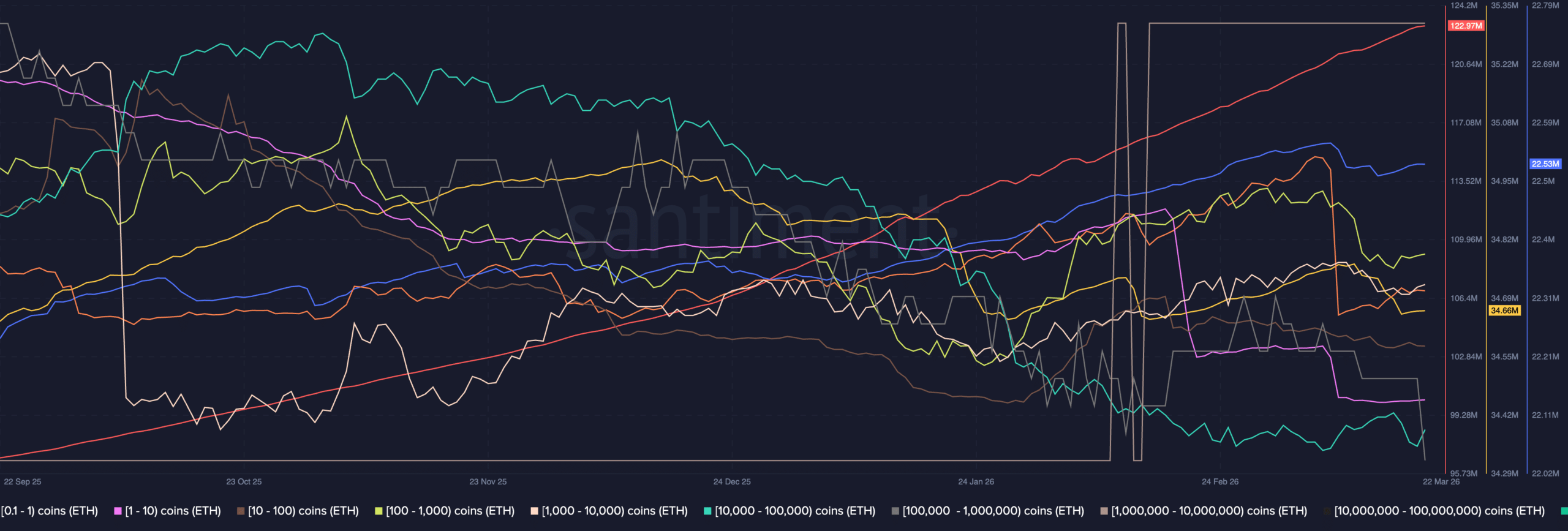
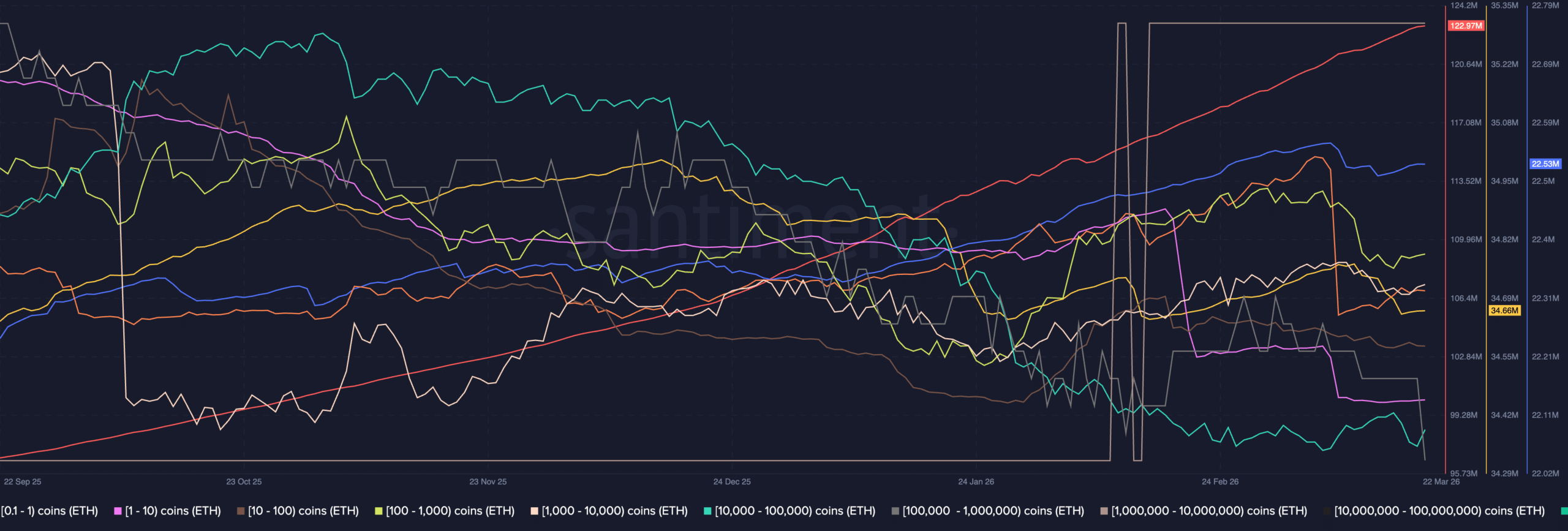
Source: Santiment

Overall, this indicates that Ethereum is gradually moving from weaker hands to stronger, long-term holders, which is typically a bullish sign for the market.

Voorhees’ past whale move and a crazy plot twist

For those unaware, this whale activity began on the 16th of March and intensified on the 20th of March, when the Voorhees-linked whale made another major move.
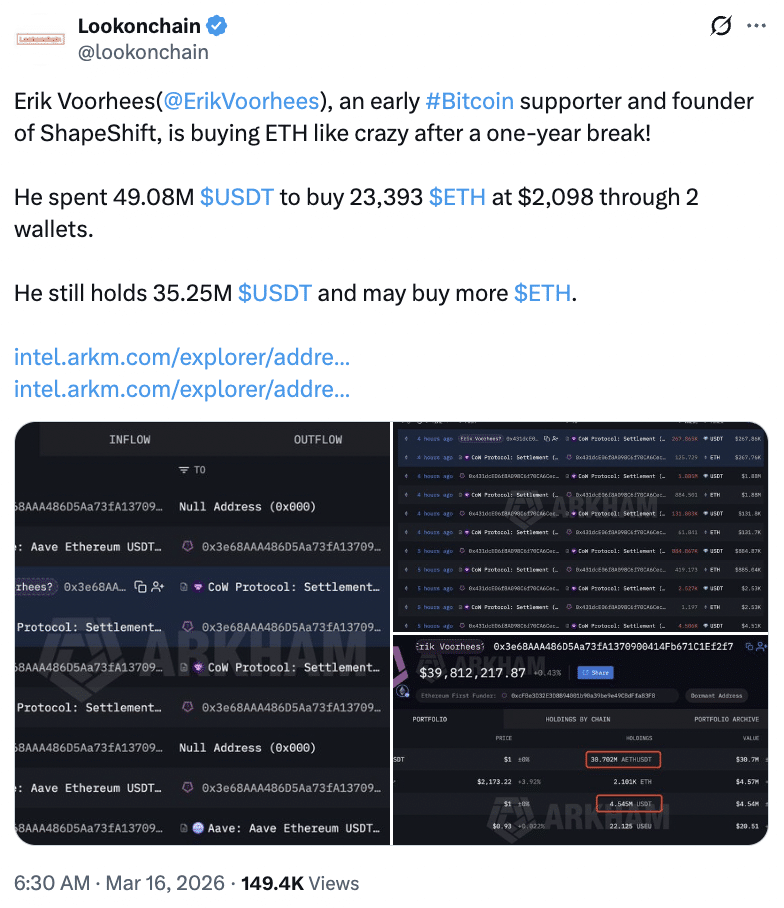
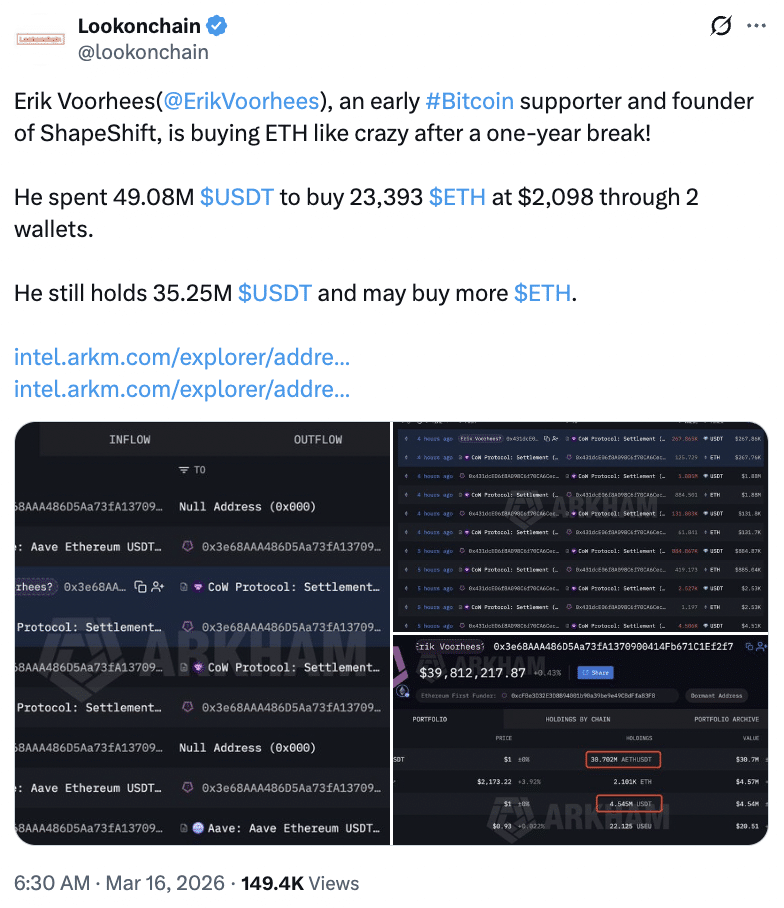
Source: Lookonchain/X

However, the narrative took a sharp turn when Voorhees publicly denied any involvement and said,

I did not buy any eth and those tracking sites are a scam.

Now, this throws darts at two opposite possibilities. In the first case, it could be a different investor with similar wallet activity, or simply a misidentification by tracking platforms.

However, another possibility is stealth accumulation, where large investors buy quietly to avoid moving the market.

Whatever the possibilities may be, such whale movements do impact how investors perceive and feel about the token’s future.


Final Summary

  • Price weakness is being used as an opportunity by large players, not a warning sign.
  • ETF outflows may look bearish, but on-chain data shows whales are steadily increasing holdings.

Related Questions

QWhat recent on-chain activity is linked to a major whale, and how much ETH was accumulated?

ARecent on-chain data suggests a major whale, reportedly linked to Erik Voorhees, deployed nearly $260 million in USDT to accumulate more than 120,000 ETH over the past two weeks.

QWhat is the average buying price for the whale's ETH accumulation, and why is it significant?

AThe average buying price for the whale's accumulation stands at around $2,162, which now acts as a key support level for the market.

QHow does the current retail activity for Ethereum compare to the behavior of large whales, according to the article?

ARetail activity is currently low, which is a sign the market is in a quieter phase where large investors are accumulating, while retail investors tend to buy at higher prices and sell during dips.

QWhat was Erik Voorhees's public response to the reports linking him to the whale activity?

AErik Voorhees publicly denied any involvement, stating, 'I did not buy any eth and those tracking sites are a scam.'

QWhat is one possible explanation given in the article for the whale's activity if it is not Voorhees?

AOne possibility is that it could be a different investor with similar wallet activity, or simply a misidentification by tracking platforms. Another possibility is stealth accumulation, where large investors buy quietly to avoid moving the market.

Related Reads

Bitcoin Withdrawals Continue: 8 Years of Storage in a Coldcard Cold Wallet Ended in Zero

Coldcard Hardware Wallet Hacked: Losses Mount Due to Vulnerable Seed Generation A critical vulnerability in Coldcard hardware wallets has led to a continued wave of fund thefts. According to Galaxy Research, the total stolen has reached 1,367.05 BTC (approx. $88.6 million) from 4,585 addresses, a significant increase from the initial 594.5 BTC reported on July 30, 2026. Most of the stolen funds remain on the attackers' addresses. The issue is not with the current firmware, which Coinkite has updated, but with seed phrases generated on vulnerable devices between March 2021 and the release of fixed firmware versions. Due to a programmer error, devices switched from using a hardware random number generator to the software-based Yasmarang generator, which was initialized with publicly accessible data like the chip's serial number. This made the seed phrases predictable through offline brute-force attacks, meaning wallets remain at risk until funds are moved to a new wallet generated with the patched firmware. Affected devices include Mk2/Mk3 with firmware 4.0.1–4.1.9 (and up to 5.0.3), Mk4/Mk5 up to version 5.6.0, and Q models up to 1.5.0Q. The only exceptions are seeds created with a high-entropy method like at least 50 independent dice rolls or a strong unique BIP-39 passphrase. All other owners must generate a new seed on the fixed firmware and transfer their assets. A case highlighting the human impact involves a 39-year-old long-term investor who lost 2 BTC (approx. $130,000) in minutes. He had accumulated the Bitcoin over eight years through physical labor, viewing it as a financial lifeline and a retirement plan in a country suffering from hyperinflation. His story underscores that even conservative "buy and hold in cold storage" strategies can be compromised by such underlying technical flaws. From a technical perspective, this incident echoes historical failures where weak random number generators undermined cryptographic security, challenging the assumption that offline storage is automatically foolproof.

cryptonews.ru27m ago

Bitcoin Withdrawals Continue: 8 Years of Storage in a Coldcard Cold Wallet Ended in Zero

cryptonews.ru27m ago

Trading

Spot
活动图片





