Sentient Announces Token Economics, How Will the Market Price It?

marsbitPublished on 2026-01-16Last updated on 2026-01-16

Abstract

Sentient, an open-source AI platform focused on building an open, monetized, and verifiable Artificial General Intelligence (AGI) economy, has released the tokenomics for its native token SENT. The total supply is set at approximately 34.36 billion tokens (2³⁵), distributed across five categories: Community Initiatives & Airdrops (44%), Ecosystem & R&D (19.55%), Team (22%), Investors (12.45%), and Public Sale (2%). The SENT will be used for staking, model services, data-related functions, and payments within the platform's ecosystem, particularly for services powered by Artifacts. Unlock schedules vary: 30% of community and ecosystem allocations are unlocked at TGE, with the remainder linearly released over four years. Team and investor tokens are locked for one year post-TGE, then linearly vested over four and six years, respectively. The public sale portion is fully unlocked at TGE. Market expectations are high, with Polymarket prediction data indicating a 99% probability that Sentient’s fully diluted valuation (FDV) will exceed $200 million upon launch. Sentient aims to create a decentralized AGI economy where developers can monetize models, data, and innovations. Its core infrastructure, GRID (Global Research and Intelligence Directory), is a composable network of AI agents, models, and tools. The project has raised $85 million in seed funding from investors including Founders Fund, Pantera Capital, and Framework Ventures. Key advisors include Sandeep Nailwal (Polygon...

Original Title: 《Sentient Announces Token Economics, How Will the Market Price It?》

Original Author: ChandlerZ, Foresight News


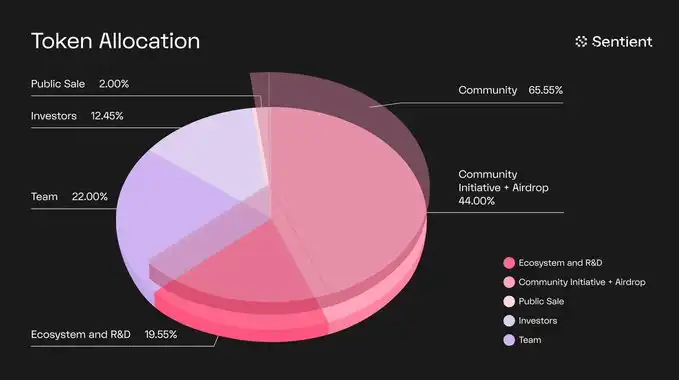
On January 16, the open-source AI platform Sentient announced the SENT token economics. The total supply of SENT tokens is approximately 34.3 billion, with 44% allocated to community incentives and airdrops, 19.55% to the ecosystem system and R&D, 2% to public sales, 22% allocated to the team, and 12.45% allocated to investors.
According to Polymarket data, the market's bet on the probability of Sentient's next-day FDV exceeding $200 million has risen to 99%, the probability of exceeding $400 million is 87%, and the probability of exceeding $600 million is 83%. The current trading volume of this prediction market is approximately $330,000.

Allocation Rules Details

Throughout the entire ecosystem, SENT is used for agents, models, data services, and other products driven by Artifacts. Artifacts can also use SENT for payments, thereby realizing composable on-chain value flows between services. The official set the total supply of SENT at 34,359,738,368, which is exactly 2³⁵. The official stated that the full story of how this number was chosen will be shared in the future; however, technically savvy readers might be able to deduce the reason.

SENT allocation is divided into five categories: Community Advocacy and Airdrops, Ecosystem System and R&D, Team, Investors, and Public Sale.

Community Activities and Airdrops ——44.00%

This portion of tokens accounts for 44% of the total supply and is specifically used for airdrops, community grants, bounties, and incentive programs to reward users and developers for their verifiable work on GRID. To ensure broad ownership, 30% of these tokens will be unlocked at TGE (approximately 13% of total supply), and the remaining 70% will be linearly unlocked over 4 years. According to the design, personnel who build, test, and share open-source intelligence and products will be eligible to receive the largest share of tokens. Airdrops will be fully unlocked at TGE.

Ecosystem System and R&D ——19.55%

This portion of tokens accounts for 19.55% of the total supply and will be used to promote ecosystem development, R&D, growth, infrastructure construction, and the operation of the Sentient Foundation. To ensure long-term stable supply, 30% will be unlocked at TGE (token issuance date), and the remaining 70% will be linearly unlocked over four years.

Team —— 22.00%

This funding pool accounts for 22% of the total supply and is exclusively for the team members of the Sentient Foundation and Sentient Labs, including employees, founders, and key contractors. At TGE, the team funding pool is locked for one year, after which the funds will be released linearly over 6 years, with a 1-year cliff period.

Investors ——12.45%

This portion of tokens accounts for 12.45% of the total supply and is allocated to investors who supported Sentient in private rounds. Investor tokens will be locked for one year and then linearly unlocked over four years. This structure aims to reward the confidence of early investors.

Public Sale ——2.00%

This public sale accounts for 2% of the total supply and aims to encourage broader participation from community members at the project's launch. This allocation will be fully unlocked at TGE. The specific public sale structure will be announced soon.

At the end of November 2025, Sentient opened airdrop registration for users, targeting four groups: community contributors, active Sentient Chat users, social platform Top Voices, and external open-source researchers.

The second season's activities will feature new roles based on contributions, clearer upgrade paths, and multiple reward mechanisms. Rewards will include SENT tokens, NFTs, and merchandise. Specific airdrop activity details have not yet been announced.

A New AI Star That Raised $85 Million

Sentient is an AI research organization dedicated to building an open artificial general intelligence (AGI) economy, developing a platform and protocol that allows open-source AI developers to monetize or tokenize their models, data, and other innovations. Here, developers can collaborate to build powerful AI agents and become key stakeholders in the new open AGI economy, driving AI transformation and prosperity.

Sentient proposed the "OML" (Open, Monetary, Loyal) model concept, hoping to promote the shared open AGI economy through the OML model, building a shared open AGI economic system involving millions of AI agents and billions of users, providing continuous momentum for the innovation and development of downstream applications.

At the product and architecture level, Sentient's main focus is its intelligent network called GRID (Global Research and Intelligence Directory). The official describes it as a collaborative system composed of specialized agents, models, data, tools, and computing power: when a user initiates a query, the task is decomposed, routed to suitable intelligences / tools / data sources, and then the multi-path results are aggregated into a consistent output.

For general users, Sentient Chat is positioned as the unified entry point and distribution channel into GRID, emphasizing that users can see which capabilities and sources are called during the interaction process; for developers and ecosystem partners, GRID provides channels to be used, distributed, and receive future回流 income, using the SENT token economy to incentivize contributors to connect various Artifacts to the network, directing incentives towards more valuable modules through signals like staking and usage volume.

To support this multi-agent collaboration capability, Sentient launched and open-sourced the ROMA (Recursive Open Meta-Agent) framework in 2025, abstracting complex tasks into a recursive hierarchical task tree: parent nodes are responsible for decomposing goals, sending context to child nodes, and completing aggregation after collecting results, making the context flow of medium-to-long chain tasks more transparent, traceable, and debuggable, and also facilitating the replacement of different models, tools, or manual verification steps at the node level. Sentient described ROMA in its product update as the skeleton for building high-performance multi-agent systems and synchronized it to GitHub as an open-source base for secondary community development.

Strong Alliance Between Academia and Crypto

In July 2024, Sentient announced the completion of an $85 million seed funding round, setting a record in the AI加密 field. This funding was co-led by Peter Thiel's Founders Fund, Pantera Capital, and Framework Ventures, with participation from Ethereal Ventures, Foresight Ventures, Robot Ventures, Symbolic Capital, Delphi Ventures, Hack VC, Arrington Capital, HashKey Capital, and Canonical Crypto.

One of Sentient's core contributors is Polygon's co-founder Sandeep Nailwal, and EigenLayer founder and CEO Sreeram Kannan is an advisor to the project.

In addition, in terms of team composition, Sentient Labs' public personnel page shows two other co-founders: Pramod Viswanath (Princeton University engineering professor) and Himanshu Tyagi (Indian Institute of Science engineering professor). Pramod Viswanath has long researched information theory and communication systems, leading Sentient's AI safety and theoretical foundation construction; Himanshu Tyagi is skilled in privacy protection and decentralized learning algorithms, providing academic support for model training and privacy collaboration.

The core engineering and development team consists of AI research lines led by university professors and researchers, as well as functions such as platform engineering, blockchain R&D, product, and operations, presenting a team structure that blends academic research, engineering implementation, and加密 economic mechanisms.

Ecosystem Cooperation and Landing Scenes

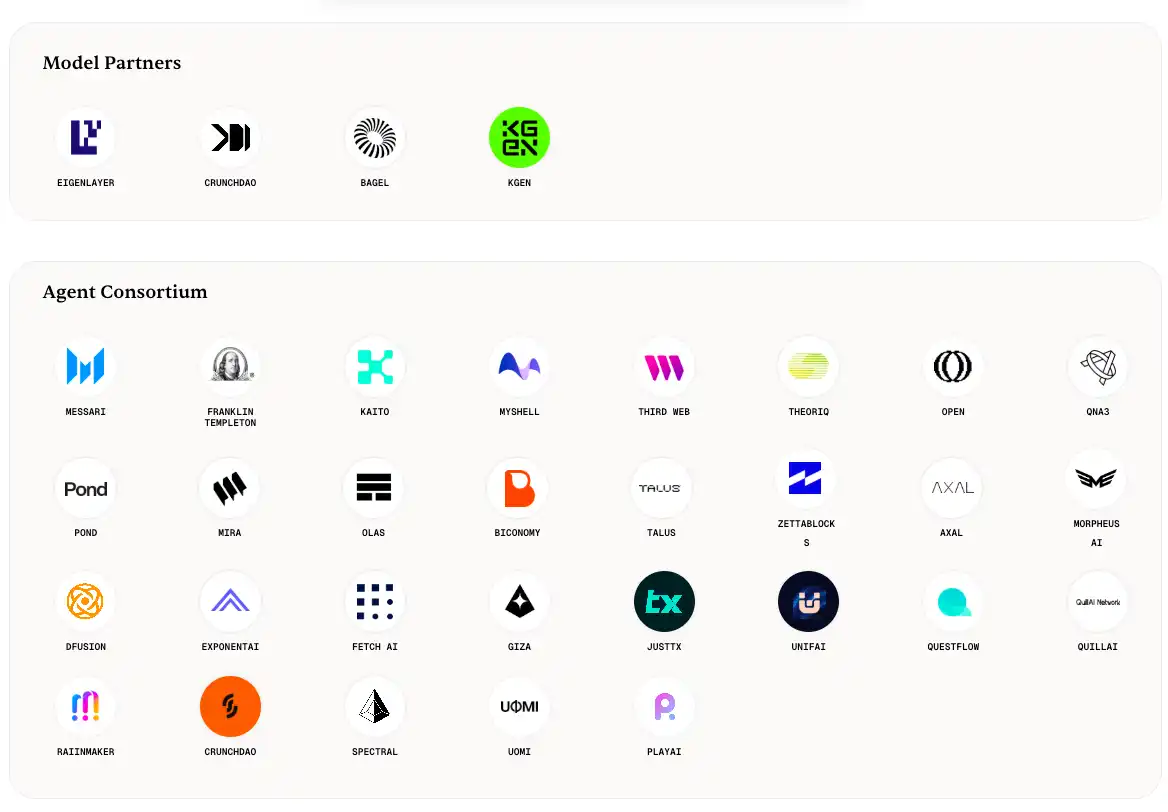
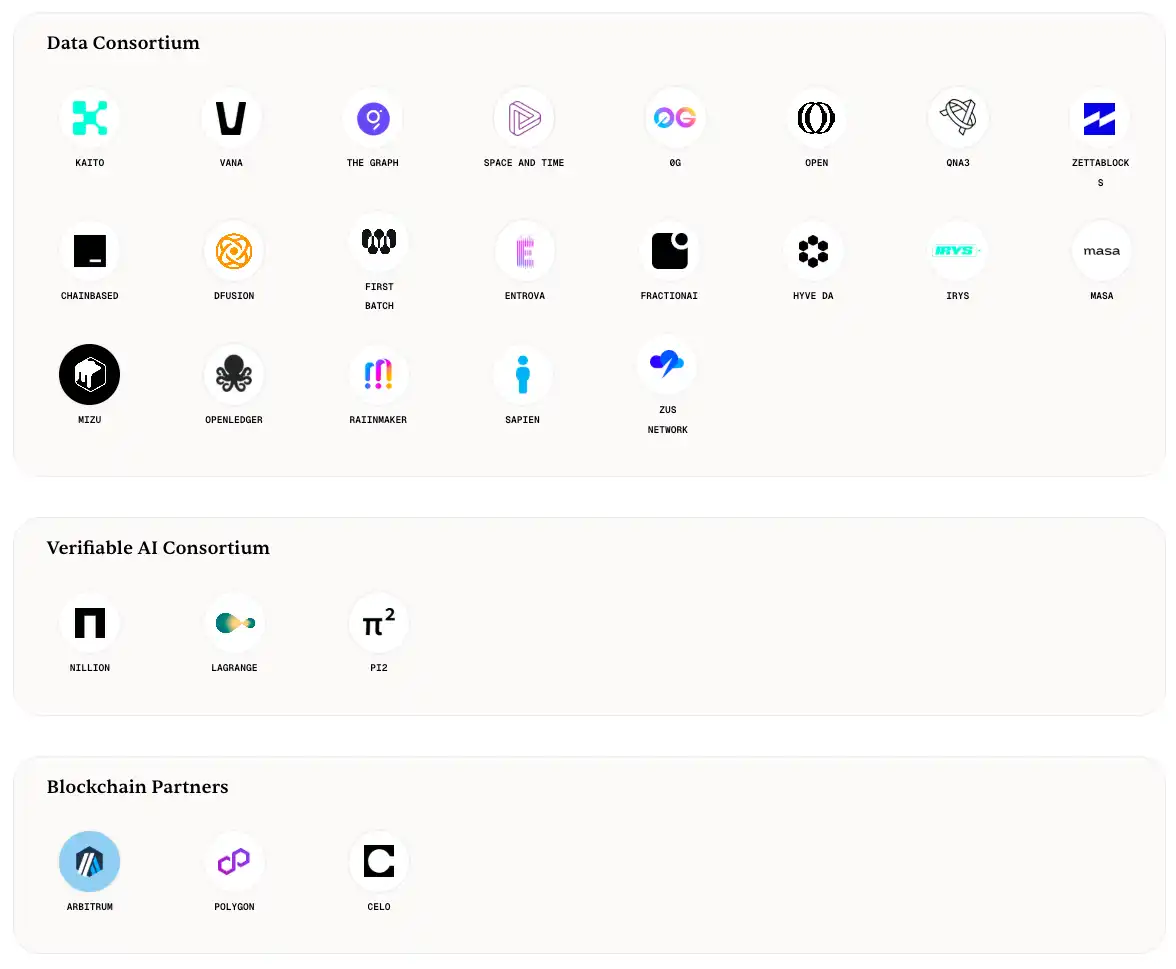
The official revealed that the ecosystem scale has reached 60+ partners / integrations, covering model cooperation partners, Agents, data providers, model and verifiable inference and other types.
Overall, Sentient's differentiation lies in defining the path to AGI as a composable open network, using SENT's incentives and staking mechanisms to try to solve the funding, distribution, and sustainability issues long faced by open-source AI. Its key variables are therefore more about systematic engineering and mechanism design rather than single-point model capabilities, including whether the quality of ecosystem接入 can持续 improve, whether incentives will导向 real usage value, and whether the multi-agent system can form a replicable model in terms of reliability and safety.


Related Questions

QWhat is the total supply of SENT tokens and what is the significance of the number?

AThe total supply of SENT tokens is 34,359,738,368, which is exactly 2³⁵. The official statement mentions that the full story of how this specific number was chosen will be shared in the future, but technically savvy readers might infer the reasoning behind it.

QAccording to the tokenomics, what are the five major allocation categories for SENT tokens and their percentages?

AThe five major allocation categories are: Community Initiatives and Airdrop (44.00%), Ecosystem System and R&D (19.55%), Team (22.00%), Investors (12.45%), and Public Sale (2.00%).

QWhat is the market's expectation for Sentient's Fully Diluted Valuation (FDV) at launch, based on Polymarket data?

AAccording to Polymarket data, the probability of Sentient's FDV exceeding $200 million at launch has risen to 99%, the probability of exceeding $400 million is 87%, and the probability of exceeding $600 million is 83%. The prediction market currently has a trading volume of approximately $330,000.

QWhat is the core product architecture that Sentient is building, as described in the article?

ASentient's core product architecture is a smart network called GRID (Global Research and Intelligence Directory). It is described as a collaborative system composed of specialized agents, models, data, tools, and computing power. When a user initiates a query, the task is decomposed and routed to suitable intelligent entities/tools/data sources, and the multi-path results are aggregated into a unified output.

QWho are the key investors and advisors behind Sentient's $85 million seed funding round?

AThe $85 million seed round was co-led by Peter Thiel's Founders Fund, Pantera Capital, and Framework Ventures. Other participants included Ethereal Ventures, Foresight Ventures, Robot Ventures, Symbolic Capital, Delphi Ventures, Hack VC, Arrington Capital, HashKey Capital, and Canonical Crypto. Key contributors include Sandeep Nailwal, co-founder of Polygon, and Sreeram Kannan, founder and CEO of EigenLayer, who serves as an advisor.

Related Reads

Agent Race Ends, Super Workbench Takes Over

The era of fragmented AI agents is ending. Over the past month, China's tech giants—Tencent, Alibaba, and ByteDance—have simultaneously shifted strategy: instead of launching new, standalone AI agents, they are consolidating their various agent projects into unified "super workbenches." Tencent integrated its QClaw teams into WorkBuddy, a strategic product hailed as a potential third flagship after QQ and WeChat. Alibaba is merging its QoderWork, Wukong, and MuleRun agents into a new "Qianwen Office" platform under DingTalk's leadership. ByteDance rebranded its TRAE SOLO coding agent to TRAE Work, signaling a broader focus on workflow collaboration. This convergence marks a pivotal industry consensus. The initial exploration phase, where companies rapidly built numerous overlapping agents for different scenarios, proved costly and inefficient. With open-source tools eroding technical barriers, competition has shifted from agent creation to resource consolidation and cost control. Historically, platform wars are won not by creating more products, but by simplifying them—as seen with browsers unifying web access and super-apps consolidating services. Now, the "super workbench" aims to become the unified AI entry point for work. This reflects a deeper market realization: the primary audience for AI is no longer just programmers (a market in the tens of millions) but all knowledge workers (a market of billions). The real opportunity lies in augmenting everyday tasks—managing emails, documents, data, and meetings—across the entire workday. The core battleground is becoming control over the primary AI entry point that employees use daily. Tencent's WorkBuddy leverages WeChat and Tencent Docs; Alibaba's Qianwen Office taps into DingTalk's organizational data; ByteDance's TRAE Work integrates with Feishu's workflows. Whoever owns this "super workbench" gains strategic control over orchestrating enterprise data and APIs. This shift is redefining enterprise software. Traditional SaaS applications, valued for their user interfaces, will recede into the background. Their core functionalities will be exposed as standardized "Skills" or APIs for the super workbench's agents to invoke. Software value will shift from selling user seats to charging based on API calls and outcomes delivered. The evolution of agents is moving through clear stages: first as novel standalone products, then as consolidated primary work entry points, and finally as pervasive, invisible capabilities embedded into the digital fabric. The recent moves by major tech firms signal the transition from the first stage into the second, accelerating toward the third. In the end, the most successful agent technology may become invisible—like electricity or the HTTP protocol—a fundamental, unnamed infrastructure powering work itself.

marsbit16m ago

Agent Race Ends, Super Workbench Takes Over

marsbit16m ago

Michael Saylor: 110 Reasons to Oppose BIP-110

Michael Saylor presents 110 arguments against Bitcoin Improvement Proposal (BIP) 110, a soft fork aimed at restricting certain non-monetary data storage uses (like inscriptions) on the Bitcoin blockchain. He acknowledges the proponents' valid concerns—such as node costs, fee pressure, and preserving Bitcoin's monetary focus—but fundamentally disagrees with the proposed solution. Saylor argues that BIP 110 represents a dangerous precedent of using consensus rules to enforce value judgments on transaction validity, moving away from Bitcoin's core principles of neutrality and permissionless innovation. His key objections are organized into eleven categories: 1) It violates neutrality and hard consensus by banning currently valid transactions. 2) It fails to meet the high burden of proof required for a consensus change, lacking concrete data on the alleged crisis. 3) Its seven bundled technical restrictions are overly broad, targeting generic script functionalities and blocking future upgrade paths. 4) It sacrifices compatibility and future optionality by closing off designed upgrade hooks. 5) Its temporary rules add significant complexity (grandfathering, expiry states) without sufficient justification. 6) The economic and security impacts, particularly on miner revenue and fee markets, are uncertain and unmodeled. 7) Superior, market-based tools (fee markets, relay/mining policies) already exist to manage blockchain load. 8) It stifles innovation by creating a chilling effect for developers. 9) Its modified activation mechanism (55% threshold, forced signaling) is aggressive and risks network splits. 10) The precedent it sets—using consensus to suppress disliked but legal uses—is more dangerous than the problem it aims to solve. 11) A better path exists: improving measurements, refining resource-based policies, and allowing market forces to work. Saylor concludes that Bitcoin's strength lies in its neutral rules, open markets, and hard consensus. Changing these foundational elements to target specific use cases is an unnecessary and risky "iatrogenic" intervention. He advocates for guarding Bitcoin's neutrality rather than acting as its redeemer.

marsbit31m ago

Michael Saylor: 110 Reasons to Oppose BIP-110

marsbit31m ago

Trading

Spot
活动图片