Securitize Capital becomes SEC-registered investment adviser

cointelegraphPublished on 2026-07-27Last updated on 2026-07-27

Abstract

Securitize Capital, a subsidiary of tokenization platform Securitize, has registered with the U.S. Securities and Exchange Commission as an investment adviser. This registration allows the firm to expand its regulated advisory services for institutional clients. It adds to Securitize's existing regulated offerings, which include a broker-dealer and transfer agent. CEO Carlos Domingo stated this enhances their ability to help institutions manage investment strategies for on-chain capital markets. Previously an exempt reporting adviser, the firm is now subject to stricter compliance and disclosure rules. Securitize is noted as the largest tokenization platform by on-chain asset value, managing approximately $4.8 billion in tokenized assets for major firms like BlackRock and KKR. The company began trading on the NYSE in early July following a merger, though its share price has declined significantly since its debut.

Securitize Capital, a subsidiary of tokenized asset platform Securitize, has registered with the US Securities and Exchange Commission (SEC) as an investment adviser, allowing the company to expand its regulated investment advisory business for institutional clients, Securitize said Monday.

The registration adds investment advisory capabilities to Securitize’s existing regulated businesses, which include an SEC-registered broker-dealer, alternative trading system, transfer agent and fund administration services.

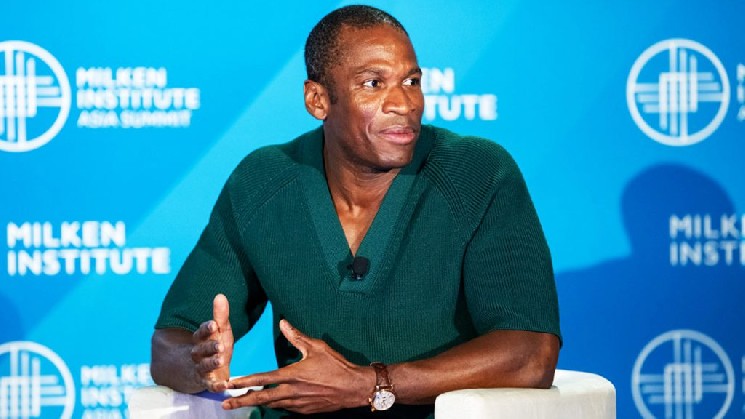
CEO Carlos Domingo said the registration strengthens Securitize’s ability to help institutions develop and manage investment strategies for onchain capital markets. Securitize Capital previously operated as an exempt reporting adviser and is now subject to additional disclosure, compliance, recordkeeping and examination requirements under the Investment Advisers Act.

Securitize is the largest tokenization platform by onchain asset value, with around $4.8 billion in tokenized assets across funds from BlackRock, Apollo, KKR, VanEck, Hamilton Lane and other asset managers.

The company began trading on the New York Stock Exchange under the ticker SECZ on July 2 after completing a merger with Cantor Equity Partners II. Shares have since fallen about 46% from their first-day closing price.
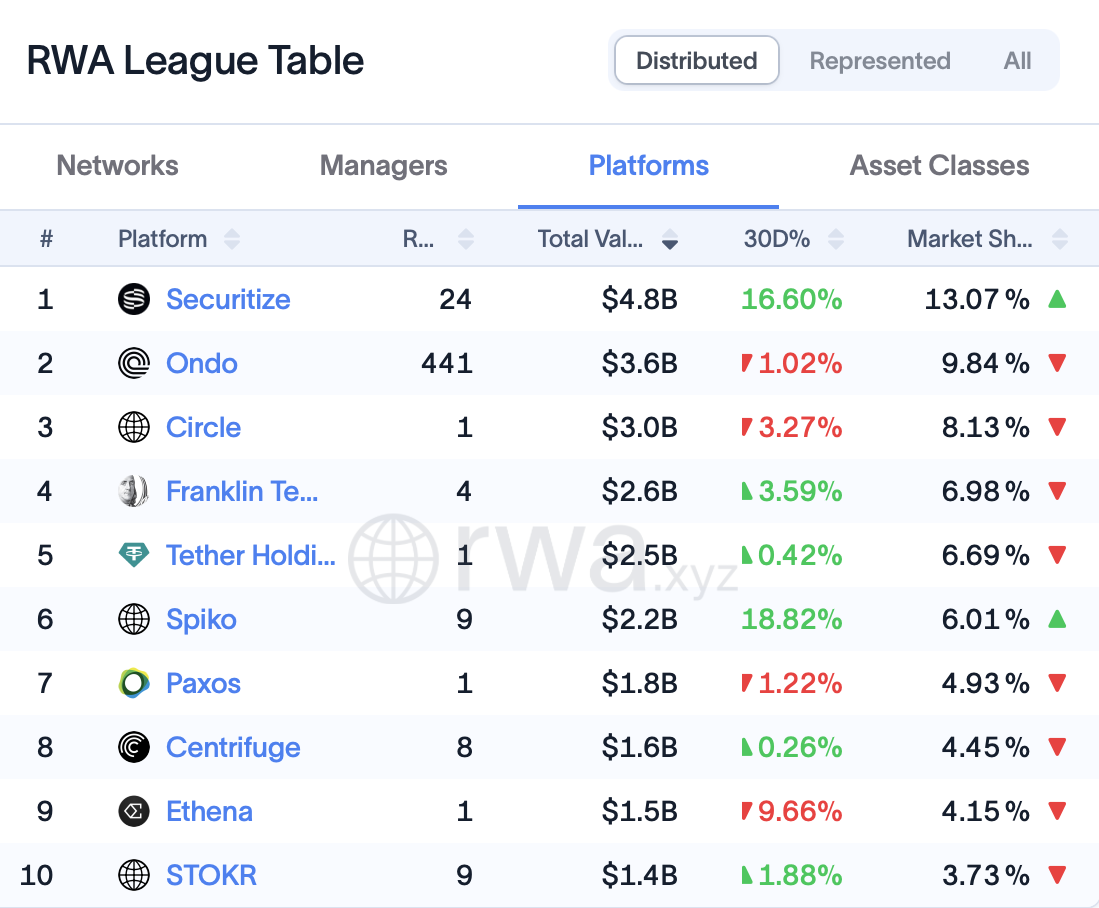
Top RWA tokenization platforms. Source: RWA.xyz

Magazine: CLARITY hopes fade, BitMEX shuts as lawsuit looms: Hodler’s Digest, July 26

Related Questions

QWhat is the primary significance of Securitize Capital's recent SEC registration?

AThe primary significance is that Securitize Capital has become a registered investment adviser with the SEC. This allows the company to expand its regulated investment advisory services for institutional clients and strengthens its ability to help institutions develop and manage investment strategies for onchain capital markets.

QWhat regulated services did Securitize already offer before this registration as an investment adviser?

ABefore registering as an investment adviser, Securitize's existing regulated businesses included an SEC-registered broker-dealer, an alternative trading system, a transfer agent, and fund administration services.

QHow does the status change for Securitize Capital from being an exempt reporting adviser to a registered investment adviser?

AAs a registered investment adviser, Securitize Capital is now subject to additional disclosure, compliance, recordkeeping, and examination requirements under the Investment Advisers Act, compared to its previous status as an exempt reporting adviser.

QAccording to the article, what makes Securitize the largest tokenization platform?

ASecuritize is the largest tokenization platform by onchain asset value, with approximately $4.8 billion in tokenized assets across funds from major asset managers like BlackRock, Apollo, KKR, VanEck, and Hamilton Lane.

QWhat was the performance of Securitize's stock (SECZ) after it began trading on the NYSE?

AAfter beginning to trade on the New York Stock Exchange under the ticker SECZ on July 2 following a merger, the company's shares have fallen about 46% from their first-day closing price.

Related Reads

Goldman Sachs: July Smashes Through Crowded Trades, U.S. Stock Bull Market Not Broken but Harder to Navigate

Goldman Sachs: July Sees Crowded Trades Unwound, U.S. Bull Market Intact but Getting Tougher. The U.S. stock market in July did not see an index-level crash, but rather a significant unwinding of speculative positions. While the S&P 500 remained stable—trading within a narrow 3.5% range and staying within 2% of its high—underlying market dynamics were volatile. Heavily crowded trades, particularly in high-momentum tech, AI-linked stocks, and Asian strategies, faced severe pressure and forced deleveraging. Data indicates this was a meaningful cleanse, not a minor adjustment. Global tech exposure saw its largest sell-off in over five years, leverage in Korean equity ETFs plummeted, and Goldman's prime brokerage recorded the largest gross exposure reduction since late 2022. Leverage on momentum factors among fundamental long/short clients fell to the 28th percentile of its one-year range. The AI trade narrative shifted from pure potential to a focus on tangible returns. While Meta failed to show clear AI monetization, Microsoft and Amazon provided evidence that massive capital expenditure is translating into scalable revenue and product growth, preventing a blanket sell-off of the AI sector. The Federal Reserve's more opaque communication style and volatility in long-end Treasury yields have introduced new friction, particularly for rate-sensitive growth and tech stocks. The broader outlook for U.S. equities remains favorable, supported by a strong economy, robust earnings, and substantial AI capital expenditure. However, risk/reward is no longer cheap, and the market's upward elasticity has weakened. The Nasdaq 100's trajectory—up 12% year-to-date despite significant pullbacks—illustrates that the bull trend persists but the path is becoming more difficult. The key lesson from July is that the market no longer rewards crowded, highly leveraged trades, requiring more disciplined and liquid portfolio approaches.

marsbit4h ago

Goldman Sachs: July Smashes Through Crowded Trades, U.S. Stock Bull Market Not Broken but Harder to Navigate

marsbit4h ago

Trading

Spot
活动图片