Rhythm Interview with OpenMind: From x402 Payments to Building the 'Android for Robots'

marsbitPublished on 2026-01-22Last updated on 2026-01-22

Abstract

In a 2025 interview, OpenMind founder and Stanford professor Jan Liphardt discusses his vision for building the "brain" for humanoid robots, positioning it as a potential "Android for robots." Following a $20 million funding round, OpenMind has accelerated its product roadmap, launching a suite of offerings from an underlying operating system to a payment protocol. A core of OpenMind’s strategy is enabling the emerging "Machine Economy," where robots act as independent economic agents. A key development is its partnership with Circle and the implementation of the x402 protocol, allowing robots to autonomously conduct transactions using USDC stablecoins—exemplified by robots independently paying for charging at stations in San Francisco. Beyond payments, OpenMind is creating a modular operating system (OM1) and a dedicated app store where users can download skills and applications for their robots. The company aims to address critical challenges in robotics, including value exchange, identity authentication, data privacy, and collaborative governance through its FABRIC protocol and blockchain technology, envisioning a future of seamless human-robot collaboration.

In 2025, humanoid robots are transitioning from science fiction to reality. From Tesla's Optimus to Figure AI's Figure 01, the capabilities of general-purpose humanoid robots are rapidly expanding with the support of large language models. According to Goldman Sachs predictions, the humanoid robot market could reach $154 billion by 2035. A trillion-dollar market is attracting the world's top tech companies and brightest minds to dive in.

However, as robots' "limbs" become increasingly advanced, a more core question arises: how to build an intelligent, open, and secure enough "brain"? When thousands of robots enter homes, hospitals, and cities, how will they collaborate, exchange value, and seamlessly integrate with human society?

Stanford professor and OpenMind founder Jan Liphardt provides his answer. After securing $20 million in funding led by Pantera Capital in August 2025, OpenMind hit the fast-forward button, releasing a series of products from the underlying operating system to upper-layer payment protocols, gradually outlining the complete blueprint for its "robot brain."
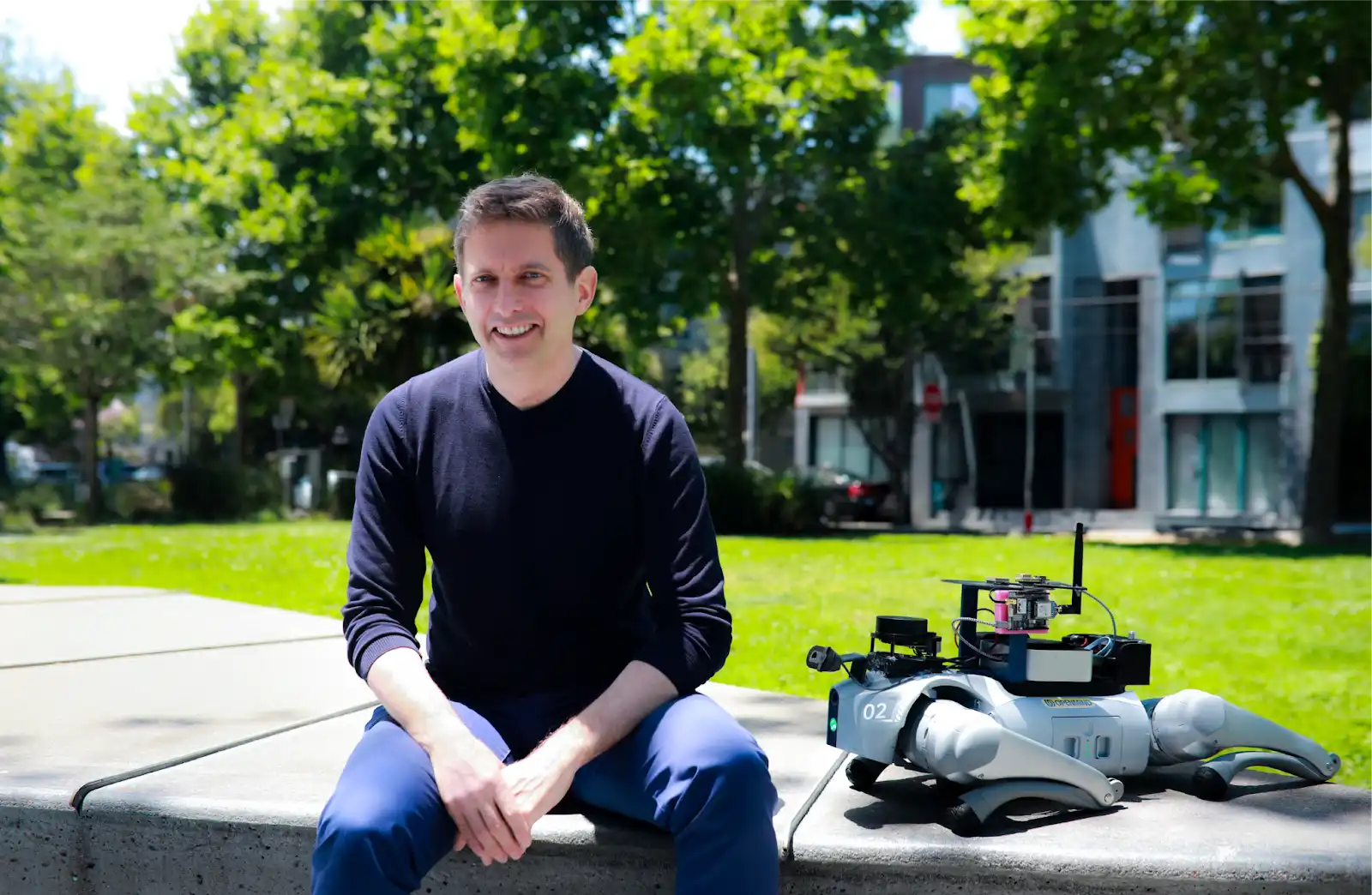
OpenMind's core business is providing SaaS-based cloud cognitive services to enterprises. But they keenly observed that as robots become independent economic participants, blockchain will play a crucial role in payment systems, identity authentication, data privacy, and collaborative governance.

Recently, OpenMind's collaboration with stablecoin issuer Circle and the deployment of robot charging stations on the streets of San Francisco are initial implementations of this vision. Robots can independently complete charging payments using USDC, which may mark the dawn of the "Machine Economy" era.

Simultaneously, OpenMind is building a dedicated app store for robots, allowing users to download applications and skills to their robots in one place, much like customizing phone apps on the Apple App Store or Google Play Store. The app was launched last week on the OpenMind App Store.

In this exclusive interview, we delved into the philosophy behind building the robot "brain," the design理念 of the modular operating system OM1, and how the FABRIC protocol and blockchain technology can构建 a future where machines and humans collaborate efficiently. He shared OpenMind's technical roadmap and offered profound insights on key issues such as developer ecosystems, remote operation, and data privacy.

Below is the interview content:

Establishing a "Bank Account" for Robots

In December 2025, OpenMind and stablecoin issuer Circle jointly announced the launch of a robot autonomous payment system based on the x402 protocol. As robots' capabilities improve, they will no longer be mere tools for executing tasks but will start to act as autonomous economic entities. They will need to purchase computing power, data, skills, and even hire other robots or humans to complete complex tasks.

To achieve this, a financial system designed specifically for machines, requiring no human intervention, becomes indispensable. The traditional banking system is clearly not prepared for this, and cryptocurrency and blockchain technology, with their native digital and decentralized characteristics, have become the most natural choice.


Related Questions

QWhat is the core business of OpenMind as mentioned in the article?

AOpenMind's core business is providing SaaS-based cloud cognitive services for enterprises.

QWhich company led the $20 million funding round for OpenMind in August 2025?

APantera Capital led the $20 million funding round for OpenMind in August 2025.

QWhat specific payment protocol did OpenMind collaborate with Circle to implement for robots?

AOpenMind collaborated with Circle to implement a robot autonomous payment system based on the x402 protocol.

QWhat is the name of the modular operating system that OpenMind is developing for robots?

AOpenMind is developing a modular operating system called OM1 for robots.

QWhat recent development did OpenMind announce for customizing robot capabilities, similar to smartphone app stores?

AOpenMind announced a dedicated app store for robots, allowing users to download applications and skills to their robots, similar to smartphone app stores.

Related Reads

You Bet on the News, the Pros Read the Rules: The True Cognitive Gap in Losing Money on Polymarket

The article explains that the key to profiting on Polymarket, a prediction market platform, lies not just predicting real-world events correctly, but in meticulously understanding the specific rules that govern how each market will be resolved. It illustrates this with examples, such as a market on Venezuela's 2026 leader, where the official rules defining "officially holds" the office overruled the intuitive answer of who was in practical control. Other examples include debates over the definition of a "token" or what constitutes an "agreement." The core argument is that a "reality vs. rules" gap creates pricing discrepancies that savvy traders ("车头" or "whales") exploit. The platform has a formal dispute resolution process managed by UMA token holders to settle ambiguous outcomes. This process involves proposal submission, a challenge window, a discussion period, and a final vote. However, the article highlights a critical flaw in this system compared to a traditional court: the lack of separation between the arbiters (UMA voters) and the interested parties (traders with financial stakes in the outcome). This conflict of interest undermines the discussion phase, leads to herd mentality, and results in opaque final decisions without explanatory rulings. Consequently, the system lacks a body of precedent, making it difficult for users to learn from past disputes. The ultimate takeaway is that success on Polymarket requires a lawyer-like scrutiny of the rules to identify and capitalize on the cognitive gap between how events appear and how they are contractually defined for settlement.

marsbit20m ago

You Bet on the News, the Pros Read the Rules: The True Cognitive Gap in Losing Money on Polymarket

marsbit20m ago

Will the Fed Still Cut Interest Rates? Tonight's Data Is Crucial

The core debate surrounding the Federal Reserve's potential interest rate cuts is intensifying amid geopolitical conflict and rebounding inflation. The key question is whether high energy prices will cause persistent inflation or weaken consumer demand enough to force the Fed to cut rates. Citigroup presents a bullish case for cuts, arguing that oil supply disruptions from the Strait of Hormuz are temporary and will not lead to lasting inflationary pressure. They point to receding bond yields and oil prices as evidence the market is pricing in a short-lived shock. Citi's data also shows tightening financial conditions, a stabilizing labor market, and healthy tax returns, supporting their view that the path to lower rates remains open. Conversely, Deutsche Bank offers a starkly contrasting, more hawkish outlook. They argue the Fed's current policy is already neutral and expect rates to remain unchanged indefinitely. Their view is based on stalled disinflation progress and a shift toward more hawkish rhetoric from key Fed officials like Waller, who cited risks from prolonged Middle East conflict and tariffs. Other officials, including Williams and Hammack, signaled rates would likely stay on hold for a "considerable time." The market pricing has shifted dramatically, now forecasting zero cuts in 2026. The imminent release of the March retail sales "control group" data is highlighted as a critical test. This metric, which excludes gas station sales, will reveal if high gasoline prices are eroding consumer spending in other areas. A weak reading could support the case for imminent rate cuts, while a strong one would bolster the argument for the Fed to hold steady. This data is pivotal for determining the near-term policy path.

marsbit41m ago

Will the Fed Still Cut Interest Rates? Tonight's Data Is Crucial

marsbit41m ago

Trading

Spot
Futures
活动图片