Quantum Threat Becomes Key Narrative, Privacy Coin Sector Defies Trend with Capital Siphon

比推Published on 2026-01-29Last updated on 2026-01-29

Abstract

Quantum Threat Emerges as Key Narrative, Privacy Coins Defy Market Downturn with Capital Inflow Privacy coins like ZEC, XMR, and DASH have surged significantly since September 2025, outperforming the broader crypto market. ZEC rose from around $50 to over $700 in two months, a 12x return, despite a post-halving correction. Monero (XMR) climbed from $300 to a record $800, bolstered by its decentralized nature and real-world usage, even after being delisted from 73 exchanges. Dash also saw a 7x increase, peaking at $150 before settling around $62. A major catalyst is growing concern over quantum computing threats to Bitcoin. Although experts believe quantum computers cannot yet break Bitcoin's ECDSA algorithm by 2026, fears have driven institutional and whale investors toward privacy coins, which use zero-knowledge proofs and ring signatures to resist quantum attacks. Reports indicate large-scale fund shifts from BTC to privacy assets, with ZEC and XMR attracting significant hedging interest. Market dynamics and high-profile endorsements, such as from Arthur Hayes, have amplified the trend. Additionally, privacy coins are being used to launder stolen funds, with one day seeing $282 million in mixed Bitcoin transactions. While Bitcoin market remains stagnant around $85,000, privacy coins continue to benefit from both quantum anxiety and practical demand for anonymity. The sector's future may depend on broader market recovery and macroeconomic factors, including Fed policy and...

Author: Ma He, Foresight News

Original Title: Under the Quantum Threat, Are Privacy Coins About to Break the "Last Dance" Curse?


Privacy coins use zero-knowledge proofs, ring signatures, or coin mixing technology to ensure untraceable transactions. Against the backdrop of increasing global regulation, they have become the preferred choice for investors seeking refuge and privacy.

Starting from September 2025, the privacy coin sector began to break away from the broader market's slump and entered an accelerated upward trend.

Taking ZEC, the leading coin in the privacy sector surge, as an example, its price was around $50 in October 2025. Within just 2 months, it broke through $700, yielding a return of over 12 times.
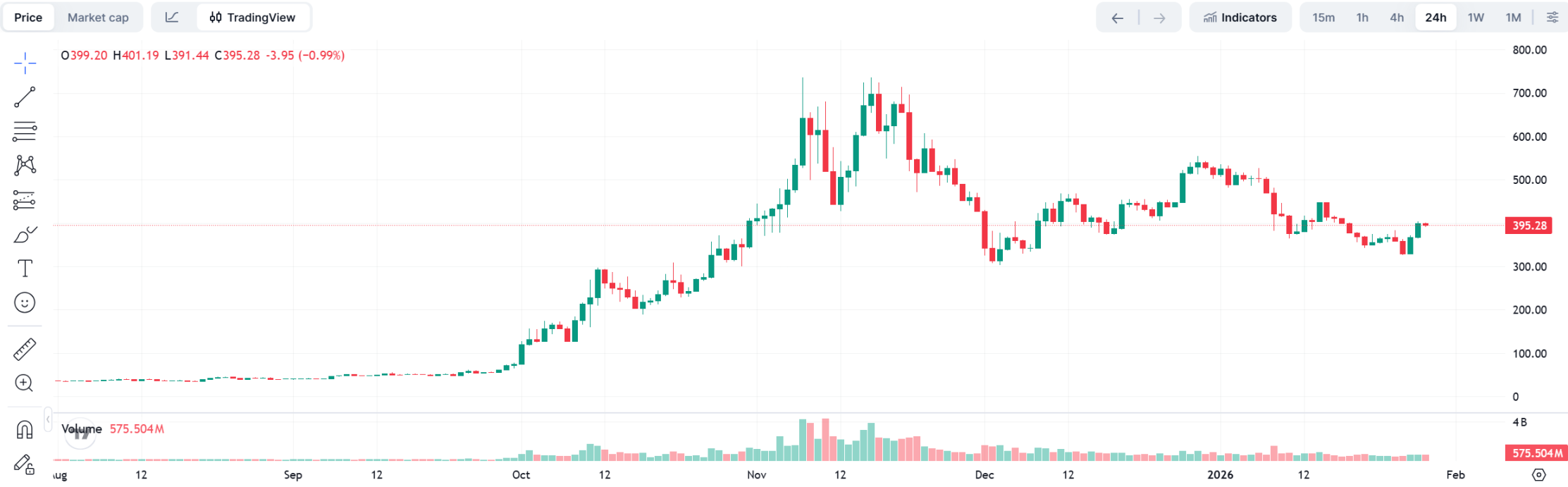
This trend is not an isolated case but a sector-wide explosion.

On November 18th, after the ZEC halving event, which reduced the block reward from 3.125 coins to 1.5625 coins, the price experienced short-term fluctuations before starting to decline and hover erratically.

Monero (XMR), the "big brother" of privacy coins, also showed a strong performance. From around $300 at the end of 2025, it skyrocketed to a high of $800, setting a new historical record.
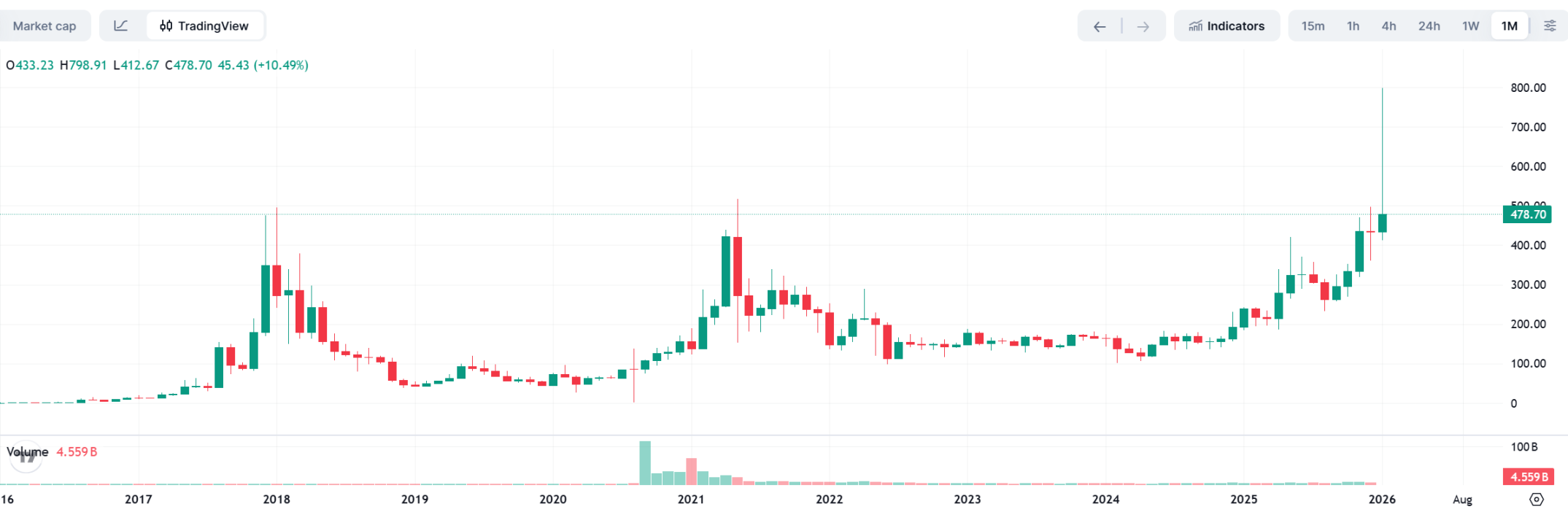
Unlike ZEC's halving-driven rise, XMR's increase relies more on its inherent decentralized nature and actual adoption rate. Despite being delisted from 73 exchanges previously, XMR's transaction volume grew against the trend, with a single-day mixing volume of stolen BTC reaching $282 million, proving the reliability of its privacy technology.

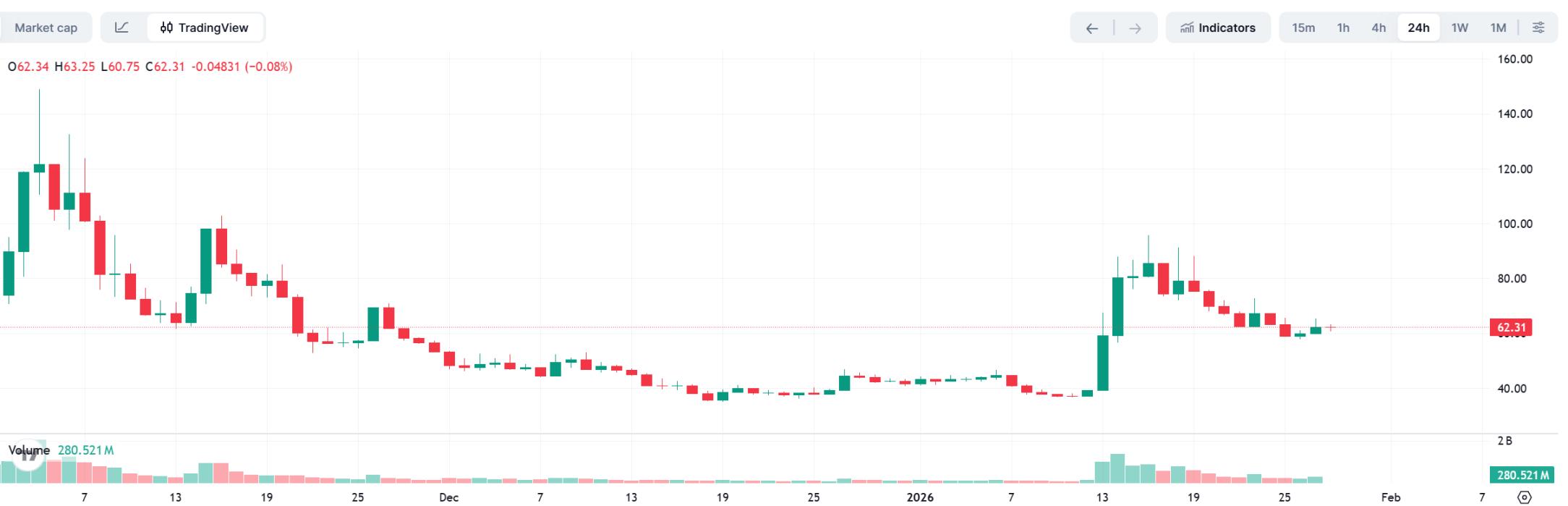
Another privacy coin, DASH, rose from nearly $20 to a high of $150, an increase of over 7 times, and has currently pulled back to $62.
Quantum Computing Threat and the Rise of the Privacy Narrative

The potential threat of quantum computing to Bitcoin became a significant catalyst for the surge in privacy coins from late 2025 to early 2026. Although experts generally believe that quantum computers cannot practically crack Bitcoin's ECDSA signature algorithm by 2026, this risk has already sparked market panic, driving capital away from BTC and towards privacy coins with better quantum resistance.

According to a report by Grayscale Research, although quantum computing is seen as a "false threat to the 2026 market," it amplified investors' concerns about exposed Bitcoin public keys in Q4 2025, leading institutional funds to reassess risk exposure and shift towards coins like ZEC and XMR. These privacy coins use zero-knowledge proofs and ring signature technology, which can better resist Shor's algorithm attacks and theoretically provide higher long-term security.

A CoinDesk report showed that the quantum upgrade discussed at the Bitcoin developer conference in December 2025 would take 5-10 years. During this window, whale investors moved hundreds of millions of dollars from BTC to privacy coins.

Secondly, market rotation and the amplification effect of capital inflows. In Q4 2025, the overall crypto market corrected, but privacy coins rose against the trend, attracting whales and large funds. BitMEX co-founder Arthur Hayes heavily invested in ZEC through the Maelstrom fund, calling it the "next BTC."

Additionally, multiple hacking incidents in 2025 (involving billions of dollars in theft) prompted funds to turn to privacy coins: stolen BTC was quickly converted to XMR, with a single-day mixing volume reaching $282 million. A CoinDesk report pointed out that 80% of privacy coins rose in 2026, with 14 out of 18 coins doubling in market capitalization.

Arthur Hayes warned that the "quantum ghost" would accelerate the privacy supercycle, predicting that ZEC and XMR would attract more hedging funds in 2026.

With the strong rise of privacy coins, some investors are happy while others are worried. Past market trends have often seen privacy coins gradually fade after their "last dance."

Wintermute stated that BTC's current price range shows fatigue, but the market structure is not bearish; instead, it is in a stalemate. The $85,000 support level has been tested multiple times—it is either a solid bottom or a trap waiting to be sprung. Although U.S. fund flows show net outflows and volatility continues to compress, this support level has held, indicating buying interest below (albeit mild). Gold is playing the role that Bitcoin should be playing. The stock market is waiting for earnings reports to validate valuation rationality. Bitcoin is stuck in "no man's land"—not weak enough to break support, nor strong enough to regain upward momentum. The macro environment is poised for a trending move, but the crypto market has been slow to follow.

This situation could change due to a reversal in ETF fund flows or shifts in the U.S. dollar's movement. If the Federal Reserve intervenes in the yen exchange rate and the dollar continues to weaken, it will become a clear catalyst for risk assets. If the "Magnificent Seven" tech stocks report better-than-expected earnings and the AI narrative continues to develop, it will drive the Nasdaq index higher, thereby boosting the crypto market. Conversely, if Powell sends hawkish signals or tariff conflicts escalate, the $85,000 support level will face severe tests. A 60-day consolidation period combined with such密集的事件风险, the market will eventually choose a direction.

If BTC's trend can stabilize and recover, privacy coins may perform well driven by the broader market.


Twitter:https://twitter.com/BitpushNewsCN

Bitpush TG Discussion Group:https://t.me/BitPushCommunity

Bitpush TG Subscription: https://t.me/bitpush

Original link:https://www.bitpush.news/articles/7607020

Related Questions

QWhat is the main reason for the recent surge in privacy coins like ZEC and XMR according to the article?

AThe surge is primarily driven by concerns over quantum computing threats to Bitcoin's security, leading investors to shift funds to privacy coins which offer better quantum resistance through technologies like zero-knowledge proofs and ring signatures.

QHow much did ZEC's price increase from October 2025 to its peak, as mentioned in the article?

AZEC's price increased over 12 times, from around $50 in October 2025 to over $700 within two months.

QWhat event specifically impacted ZEC's price in November 2025, causing short-term volatility?

AZEC underwent a halving event in November 2025, which reduced the block reward from 3.125 to 1.5625 coins, leading to price fluctuations.

QWhy did XMR's value rise despite being delisted from many exchanges, as per the article?

AXMR's value rose due to its strong decentralized attributes and practical adoption, evidenced by increased transaction volumes, including a single-day mixing volume of $282 million for stolen BTC, proving the reliability of its privacy technology.

QWhat broader market condition is suggested as necessary for privacy coins to maintain their positive performance?

AThe article suggests that if Bitcoin's price stabilizes and recovers, privacy coins could perform well under the broader market's upward momentum.

Related Reads

Must-Watch Events Next Week|CLARITY Act Could Face Senate Vote; SpaceX, Circle to Report Earnings (8.3-8.9)

**Summary: Key Events and Developments to Watch (August 3-9)** The upcoming week is marked by significant financial disclosures, key legislative deadlines, and notable product updates. **Major Financial Events:** Several companies are scheduled to release their Q2 2026 earnings. American Bitcoin (ABTC) will report on August 3, followed by SpaceX and Hut 8 Mining Corp. on August 4, and Circle on August 5. Notably, a significant portion of SpaceX shares (up to 12% of total shares) will be unlocked on August 6 following their earnings release. **Key Legislative Deadline:** The U.S. Senate faces an August 7 deadline to secure 60 votes for the CLARITY Act, a bipartisan bill aiming to establish a federal regulatory framework for cryptocurrencies. The Senate may hold a full vote on the bill during the week. **Economic Data:** The U.S. July Non-Farm Payrolls report will be released on August 7, providing crucial labor market data. **Technology & Product Updates:** * **Shutdowns:** DeFi portfolio tracker Zapper and wallet app Ctrl Wallet will cease operations on August 3. * **Upgrades:** LayerZero will deprecate its v1 relayers on August 3. XRP Ledger's new version 3.3.0, featuring five new functions, is expected next week. * **AI:** Elon Musk announced that the advanced Grok 4.6 AI model is set for release around August 7. * **Bitcoin:** The BIP-110 forced signaling for a potential Bitcoin network change is scheduled to begin around August 8. **Other Notable Events:** Chinese robotics firm Unitree Tech has set its preliminary price inquiry for its IPO for August 5. South Korean exchange Upbit will delist AQT and AERGO tokens on August 3.

marsbit1h ago

Must-Watch Events Next Week|CLARITY Act Could Face Senate Vote; SpaceX, Circle to Report Earnings (8.3-8.9)

marsbit1h ago

Stocks Are Plummeting More Sharply Than Cryptocurrencies. Where Has the Money Gone?

Stock Markets Plunge Deeper Than Cryptocurrencies: Where Did the Money Go? In late July, Seoul's Kospi index triggered circuit breakers for two consecutive days, plummeting over 40% from its June high. The collapse was led by heavyweight stocks like SK Hynix, whose record profits still disappointed investors, and devastating leveraged ETFs, with one major product losing over 83% of its value. This signaled a global, forced deleveraging targeting the most crowded trades. Interestingly, while stocks exhibited extreme volatility akin to crypto markets, Bitcoin rose nearly 15% in July after a prior steep drop. Analysis shows the money fleeing equities did not flow into Bitcoin. Instead, Bitcoin had already absorbed its sell-off in May-June, when U.S. spot Bitcoin ETFs saw historic outflows. The true safe-haven beneficiary was gold, whose price rose over 20% year-on-year, highlighting a decoupling between Bitcoin and gold as "digital gold." The sell-off was a targeted unwinding of leveraged positions in tech and semiconductors, accelerated by broker-dealer risk management and shifts in the AI narrative, including new competition from Chinese memory chipmakers. The retreat path was clear: from high-valuation tech stocks to cash and U.S. Treasuries, then to gold. For Bitcoin to attract sustained institutional inflows, conditions like eased global liquidity pressure, a "soft-landing" Fed rate cut, and U.S. regulatory clarity via legislation like the stalled CLARITY Act are needed. Currently, Bitcoin is not a safe haven but an already-cleared asset. Its low correlation with tech stocks, however, makes it a potential diversification play for institutional portfolios once the storm passes. The money isn't here yet, but the positioning is underway.

marsbit1h ago

Stocks Are Plummeting More Sharply Than Cryptocurrencies. Where Has the Money Gone?

marsbit1h ago

In Conversation with Ray Dalio: We Are Currently in an AI Bubble, with 1% of My Portfolio in Bitcoin

Ray Dalio, founder of Bridgewater Associates, warns in an interview that the current AI boom shows classic bubble characteristics, which could lead to significant economic downturns as seen in past cycles like 1929 or 2000. He explains that speculative enthusiasm, fueled by debt and overvaluation, often precedes a crash when rising rates or taxation force asset sales, causing widespread losses and recession. Dalio also outlines his "Big Cycle" theory, describing an approximate 80-year pattern where widening wealth gaps, massive government deficits, and shifting geopolitical power (like China's rise) create internal conflict and global instability. He emphasizes that we are in a late-cycle, transitional phase where traditional powers like the US and UK face decline. For personal wealth protection, Dalio advises diversification beyond cash into assets like stocks, bonds, real estate, and particularly gold, which he prefers over Bitcoin. While he holds about 1% of his portfolio in Bitcoin as a non-printable hard asset, he views gold as more secure from technological or governmental threats. Regarding AI's impact, Dalio believes it will disproportionately benefit capital owners, worsening inequality by replacing both physical and cognitive labor. He suggests that human intuition and emotional intelligence, combined with AI, will be key for future workers. On taxation, Dalio argues that wealth taxes are impractical and risk triggering asset sell-offs, reducing productive investment. He points to the UK as a cautionary example of debt, low productivity, and political strife. Geopolitically, Dalio foresees a more regionalized world, with the US showing weakness in prolonged conflicts like with Iran, akin to past imperial declines. The ideal outcome, he suggests, is coexisting powerful blocs (e.g., Americas, China-Asia Pacific) without major war.

marsbit5h ago

In Conversation with Ray Dalio: We Are Currently in an AI Bubble, with 1% of My Portfolio in Bitcoin

marsbit5h ago

Trading

Spot
活动图片





