August 14th was the statutory deadline for US SEC-required institutional investors to submit Q2 13F forms. After the centralized disclosure of these documents, Wall Street's crypto holdings were once again laid bare.
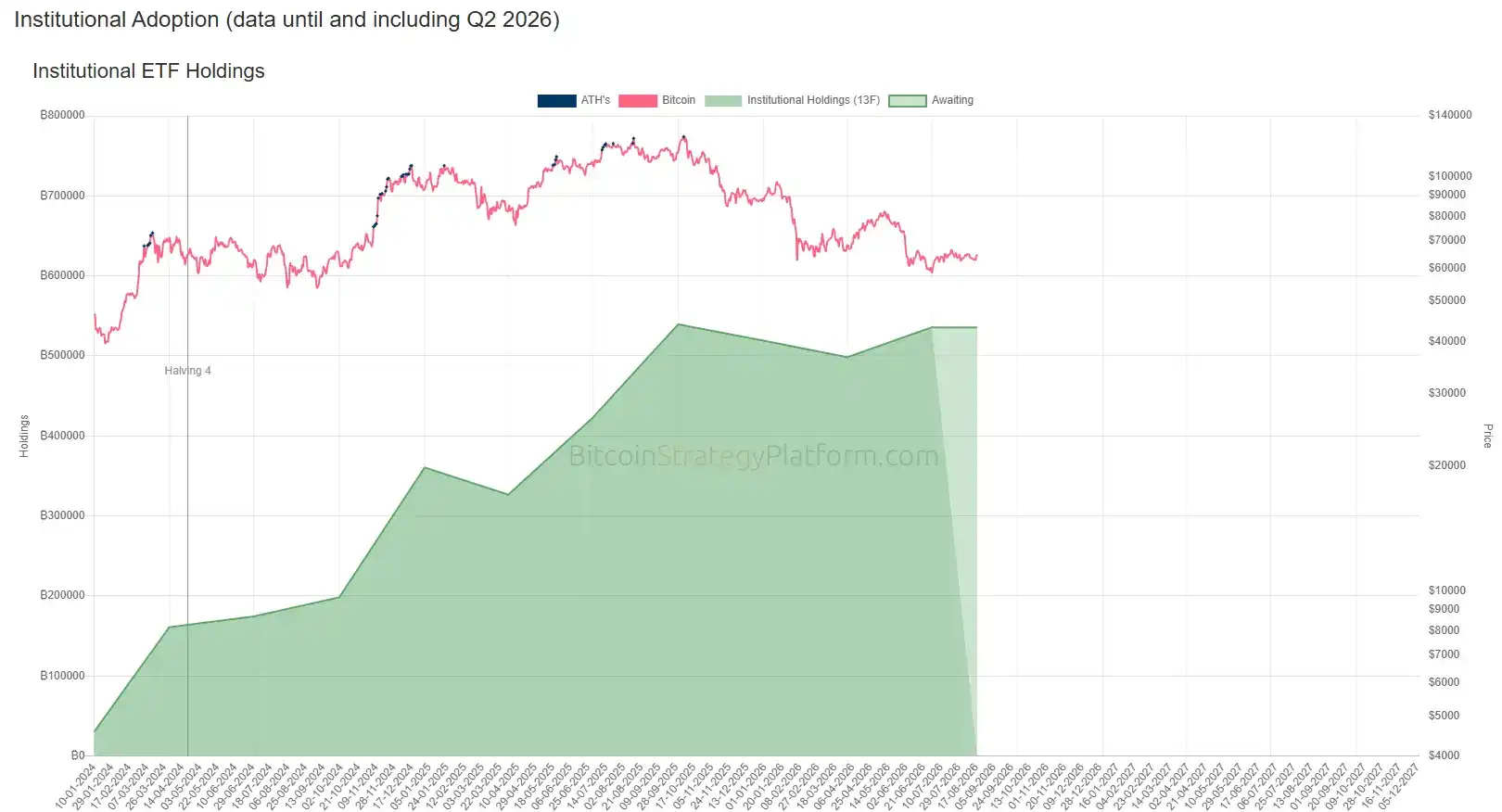
This quarter's institutional movements formed a stark contrast with price trends. Bitcoin price fell approximately 14.2%, yet institutional crypto holdings reported in filings increased instead.
According to Bitcoin Strategy's calculations based on 13F data, institutional Bitcoin holdings rose from approximately 498,000 to about 536,000 BTC, a quarter-on-quarter increase of 7.5%. In contrast, total ETF holdings decreased from about 1.297 million to roughly 1.211 million BTC during the same period.
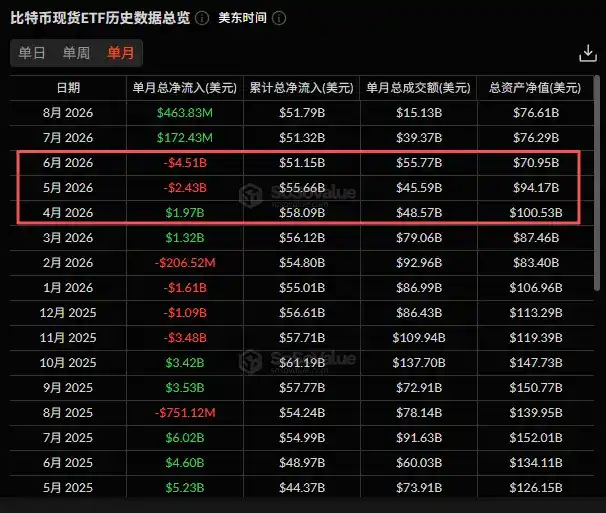
According to SoSoValue data, US spot Bitcoin ETFs experienced sustained net redemptions in Q2, with net outflows of approximately $2.4 billion and $4.5 billion in May and June respectively, with June setting the worst monthly record since launch. Spot Ethereum ETFs also saw cumulative net outflows of about $700 million during the same period.
Simultaneously, holdings are concentrating towards the top. The number of institutions reporting Bitcoin holdings decreased from about 2,000 to roughly 1,900. According to Bloomberg data, as of August 13, the iShares Bitcoin Trust (IBIT) alone had approximately 1,500 institutional holders and net assets of about $47.35 billion.
Ethereum Growth at Banks Outperformed Bitcoin Across the Board
Previously, ChainCatcher noted in its Q1 holdings summary: Institutional interest in Ethereum allocation was increasing, with Jane Street, Wells Fargo, and JPMorgan adding Ethereum ETFs during outflow phases. In Q2, this trend solidified on the banking side.
According to DWF Labs calculations based on corresponding crypto asset quantities, Morgan Stanley's Q2 BTC exposure grew 3.7% QoQ, while its ETH exposure grew 18.6%. JPMorgan's BTC exposure grew 12.2%, while its ETH exposure grew 67.3%. Both banks saw ETH growth rates significantly higher than BTC.
On an individual product level, it's more intuitive. Morgan Stanley's ETHA holdings increased by about 202% to 4.6 million shares, JPMorgan's ETHA increased by about 338% to nearly 1.17 million shares, and Bank of America's ETHA surged from about 67,500 shares to about 1.98 million shares, roughly 29 times the previous amount.
However, in reality, spot Ethereum ETFs saw net outflows overall in Q2. SoSoValue data shows that while there were about $356 million in net inflows in April, May and June saw net outflows of approximately $541 million and $529 million respectively, resulting in combined Q2 net outflows of about $714 million.

Jane Street Bought Back, Hedge Funds Moved Positions into Options
Last quarter, Jane Street cut its IBIT holdings by about 71%, leading the market to speculate it was bearish on Bitcoin. This quarter, it turned around and added back approximately 24.9 million shares of IBIT, a QoQ surge of about 324%, making it one of the largest buyers for the quarter. Currently, its spot Bitcoin ETF exposure is about $990 million, with approximately $828 million in IBIT.
As an authorized participant and market maker, its quarter-end inventory is related to creations/redemptions and hedging. A large addition in spot does not equate to a directional bet.
Notably, 13F only reports quarter-end spot long positions. If options are included, the profile of several institutions would also reverse.
Global macro hedge fund Brevan Howard cut its spot IBIT holdings from 24.3 million to 7.21 million shares in Q2, a reduction of about 70.4%. However, it simultaneously held call options corresponding to about 7.23 million IBIT shares and put options for 5.27 million shares.
Graham Capital reduced its spot IBIT holdings from about 926,000 to 259,000 shares during the same period, a cut of about 72%, yet held put options corresponding to approximately 1.74 million IBIT shares, with a reported value of about $57.94 million. Multi-strategy giant Millennium reduced its spot IBIT holdings from about 19.29 million to 9.69 million shares, a cut of about 49.8%.
UBS's directly held IBIT only increased by about 12% to 407,890 shares, while its call options exposure surged from 80,000 shares to about 1.95 million shares, a quarterly increase of over 24 times, while put options were reduced by about 53% during the same period.
In contrast, actions by Paul Tudor Jones's fund Tudor appear contradictory, increasing spot IBIT holdings by nearly 20% to 688,500 shares, ending nearly a year of reductions, while cutting IBIT-linked call options by about 85%, from 998,000 to about 148,000 shares.
Institutions Diverge on Crypto-Related Stocks
Our previous article noted that crypto-related stocks are becoming unavoidable allocation options for institutions. Among these, MicroStrategy (MSTR) is the most representative.
In Q2, MicroStrategy tore a hole in its "never sell Bitcoin" myth: at the end of May, it sold 32 bitcoins for the first time to pay preferred stock dividends, and on June 29, its board authorized a framework for bitcoin monetization of up to $1.25 billion.
The 13F snapshot is as of June 30; the actual larger sell-off occurred post-quarter, altering the narrative around BTC proxy plays.
Filings show Bank of America reduced its MSTR holdings from about 3.97 million to about 1.18 million shares, cutting about 70%. Renaissance Technologies, conversely, newly purchased 422,881 MSTR shares, increasing its total holdings to 2.55 million shares valued at approximately $242.3 million. BlackRock also added MSTR holdings to about 19.39 million shares, worth about $1.69 billion. However, as the world's largest index provider, BlackRock's addition may be more due to passive index-based allocation.
Renaissance Technologies newly purchased 422,881 shares of MicroStrategy, increasing its total holdings to 2.55 million shares with a value of $242.3 million, a 20% increase. Royal Bank of Canada (RBC) increased its MSTR holdings by 46,000 shares, now holding a total of approximately 385,000 shares with a total value of about $37.2 million, a 13.5% increase from before.
Additionally, Circle is one of the few related names receiving shared bullish sentiment. Morgan Stanley significantly increased its holdings from about 1.46 million to about 8.32 million shares, and ARK also slightly increased its holdings by about 1% to 4.56 million shares. Regarding Coinbase, the two institutions operated in completely opposite directions: Morgan Stanley reduced its holdings by about 550,000 shares, while ARK increased its holdings by about 5.8% to 2.51 million shares, while cutting Robinhood holdings by about 12.8%.
Notably, ARK's weighting of Circle in its portfolio dropped from about 3.34% in Q1 to 1.85%, but the actual share count slightly increased. The decline in weighting was mainly due to dilution after initiating a new position in SpaceX, which expanded the portfolio.
Furthermore, after significantly increasing its Circle holdings in Q2, Morgan Stanley cut its target price for CRCL from $106 to $38 in early August, citing that the contraction in USDC's scale exposed the sensitivity of Circle's reserve income, indicating a shift in revenue structure towards lower-margin transaction income.
New Money Enters for the First Time, Old Money Holds Steady
In Q2, Spain's Banco Santander disclosed Bitcoin and Ethereum ETF holdings for the first time, though the positions are minuscule relative to its over $10 billion US stock portfolio. UBS's crypto exposure is also rising quarter by quarter, this quarter adding a position worth about $1.5 million in the miner American Bitcoin Corp.
Morgan Stanley also newly established positions in Grayscale Solana Staking ETF and Fidelity Solana Fund in Q2, with market values of approximately $4.25 million and $2.26 million respectively; JPMorgan also established a new position in Bitwise Solana Staking ETF and bought back the XRP it had cleared in Q1, making small initial positions via Bitwise and Grayscale's XRP funds.
Additionally, investment advisory firm Edelman Financial Engines disclosed holdings of approximately $34 million in spot Bitcoin ETF positions, primarily allocated to BlackRock iShares Bitcoin Trust (IBIT) and Grayscale products. While this scale still represents a small portion of its overall portfolio, it already exceeds its holdings in Amazon, valued at around $25 million.
Abu Dhabi's Mubadala and the Abu Dhabi Investment Council maintained their IBIT holdings unchanged at approximately 14,721,900 and 8,218,700 shares respectively, totaling about $764 million, pausing their consecutive multi-quarter accumulation trend in Q2.
Harvard University Endowment's IBIT holdings remained precisely unchanged at about 3,044,600 shares, valued at approximately $101.4 million, ending two consecutive quarters of reductions. Its combined holdings in gold products iShares Gold Trust and SPDR Gold Trust total about $171.2 million, now exceeding its Bitcoin holdings.
Signals from Institutional Crypto Allocation Changes
Looking at this quarter's institutional actions collectively, several directional signals are taking shape.
First, ETF fund flows have decoupled from institutional behavior, indicating deepening institutionalization of crypto assets.
Second, institutional divergence on crypto-related stock names is growing, especially after MicroStrategy began selling bitcoin.
Additionally, Ethereum has become a clear buy-side focus among institutions, with Q3 fund flows also turning accordingly.
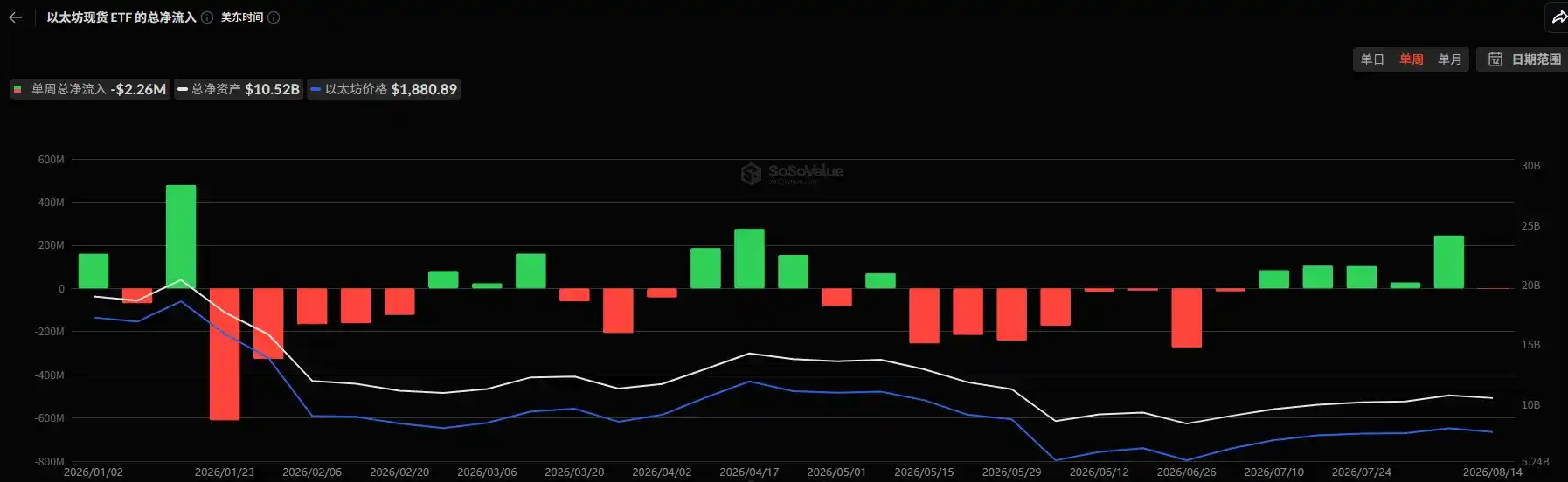
According to SoSoValue data, Ethereum ETFs saw net inflows of approximately $365 million in July and about $243 million so far in August, totaling over $600 million for the two months; ETH price has recovered from around $1,570 at the end of June to near $1,900 currently, a gain of about 20%.
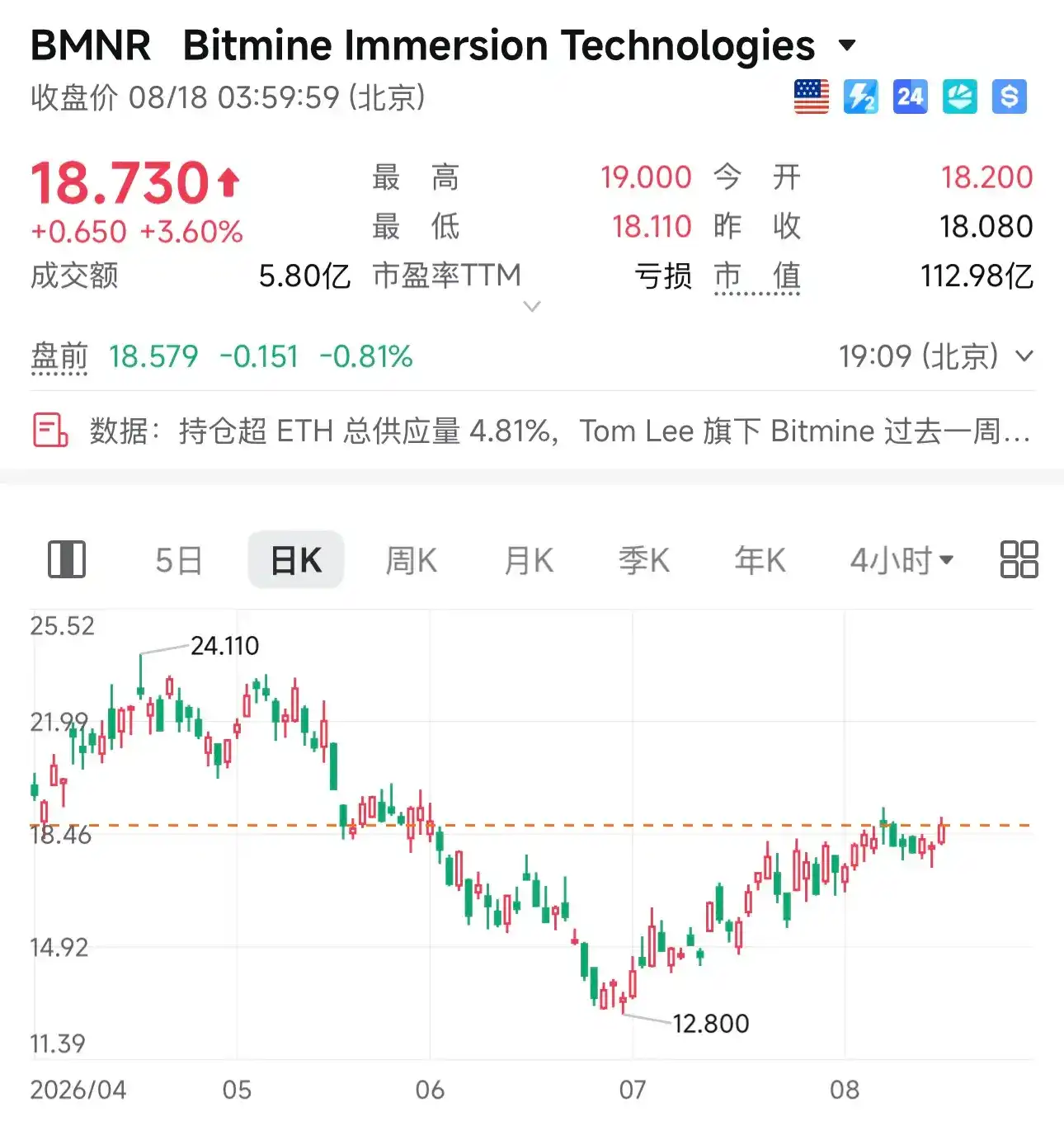
Even Ethereum treasury company BitMine has strengthened in sync, with its stock price rising from about $13.3 at the end of June to nearly $19, an increase of about 40%.