Original | Odaily Planet Daily (@OdailyChina)
Author | jk
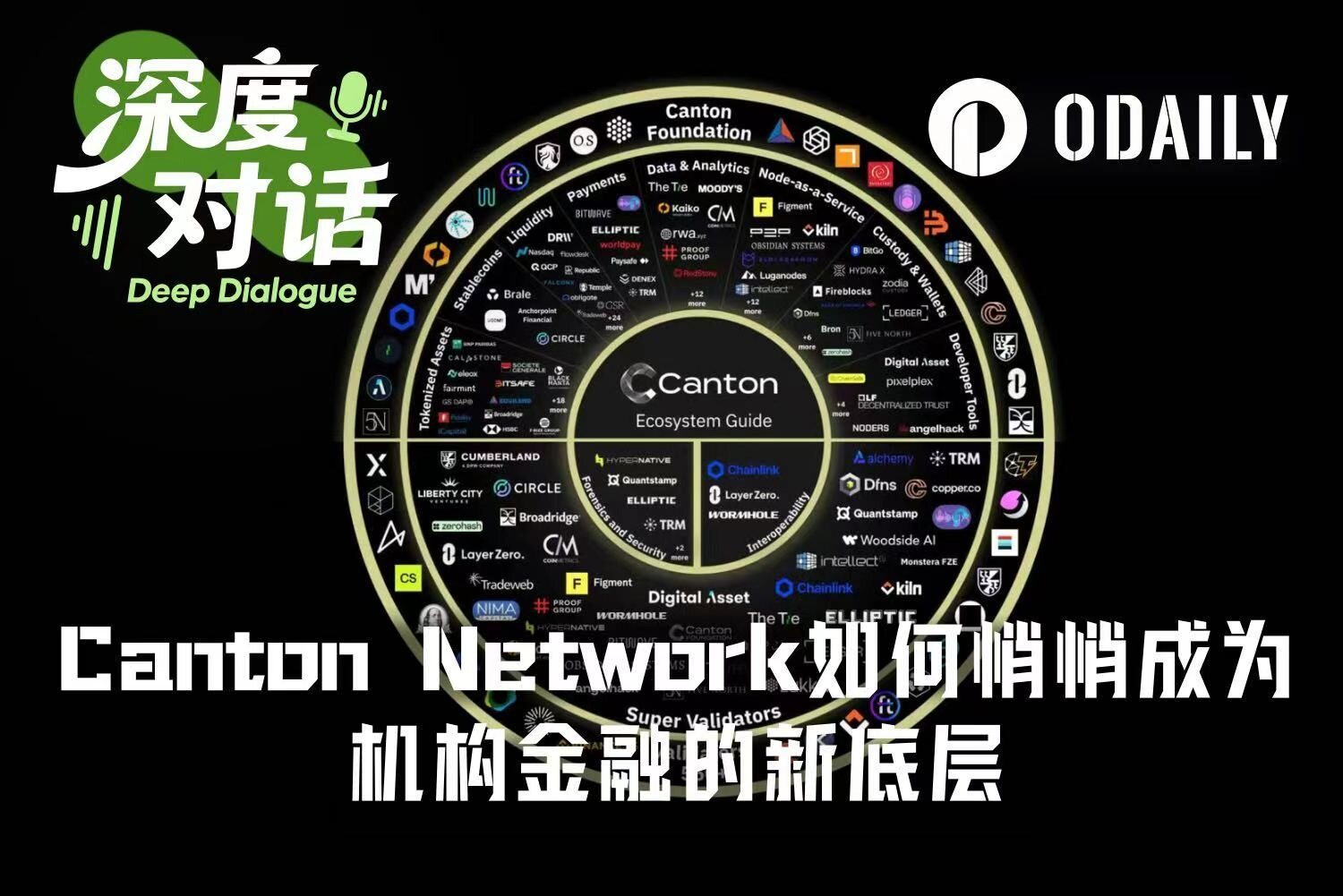
I. A Proposal Approved in Three Days
On March 20, 2026, Visa, a globally renowned payment service provider and the logo represented on most bank cards, submitted a governance proposal to Canton Network. According to The Block's report, just three days later, the proposal was approved, and Visa officially became a Canton super validator with the highest weight of Level 10 (Super Validator Weight 10). This was also the first time Visa had ever submitted a blockchain governance proposal.
Within the crypto space, this event might seem like another foray by traditional finance. But if you understand the internal legal and compliance processes of traditional institutions like Visa well enough, you'll realize that approval within three days is rather unusual. Visa's compliance team must have submitted this document with the caution and seriousness of the traditional financial world, and the fact that it received the highest weight indicates that negotiations and due diligence had already been fully completed beforehand. The public saw this proposal, which should be the result of months of collaboration between traditional finance and the crypto world.
In a statement, Rubail Birwadker, Visa's Head of Global Growth Products and Strategic Partnerships, said: "Many banks believe the lack of privacy is the biggest obstacle to moving meaningful business on-chain. By serving as a Canton Network super validator, we bring Visa-level trust, governance, and operational standards to this privacy-preserving blockchain infrastructure, enabling regulated financial institutions to move payments on-chain without upending their existing operating models."
It can be seen that Visa's entry is an endorsement of an already operational, mature institutional network, not a starting point.
Since 2017, in every market cycle, a batch of traditional financial institutions has loudly announced "exploring blockchain," but very few eventually translate into real business. This time, Visa chose to enter the governance layer of the blockchain, holding voting rights and participating in infrastructure decisions. In a statement, Eric Saraniecki, Head of Network Strategy at Digital Asset, a co-founder of Canton Network, said: "Visa's participation confirms that this technology has moved from the experimental stage to being production-ready."
Driven by curiosity about this cooperation, Odaily Planet Daily interviewed the Canton Network team. What exactly facilitated this collaboration? And what made Canton, a long-quiet project, the chosen one?
II. Not More Assets On-Chain, But Putting the Market Itself On-Chain
To understand why Canton can attract Visa, we need to first look at the core differences between Canton and other chains.
The problems Ethereum and Solana solve are: how to get more people involved, how to get more assets on-chain. The problem Canton solves is: how can financial institutions conduct business normally on-chain. They sound like different focuses, but when it comes to specific design, the trade-offs become almost opposite everywhere.
Ethereum's global transparency is an advantage for retail investors but an obstacle for institutions. Take a concrete example: if every buy/sell operation of dollars and euros by a bank's foreign exchange trading desk is visible in real-time, counterparties could immediately adjust their quotes based on this information, significantly increasing the bank's transaction costs. If a market maker's positions and hedging operations were fully public, competitors could simply trade against them, squeezing out profit margins. Repurchase agreements between institutions involve both parties' funding positions and collateral scale; once this data leaks, it poses risks to the entire institution's liquidity management. These limitations are not directly related to regulation; they are dictated by basic business logic.
Even if addresses are not linked to real-name institutions, transparent on-chain trading would change the entire logic of the secondary market. No traditional financial institution wants its trades to be front-run, so designs like Ethereum and Hyperliquid are not optimal choices for large institutions.
Canton's approach is to incorporate data visibility control into the design.
This treatment method builds selective disclosure of data into the protocol layer as a native L1 design, rather than relying on upper-layer applications to patch it. Specifically, only the direct participants in a transaction can see its details; the network completes validation without exposing any sensitive data. Two banks can perform cross-border settlement on the same shared infrastructure, with the transaction completely invisible to all unrelated parties. Competitors can interact on the same network without exposing their respective positions or strategies.
We also inquired about the relevant technical details. Canton's exact words were: "Canton separates the coordination layer (shared across the network) from data visibility (limited to participants), achieved through isolated execution environments and selective synchronization. This allows institutions to trade securely, and competitors to interact, without exposing their respective holdings or strategies. This is the mechanism that enables the real market, not just assets, to operate natively on-chain."
Canton Network told us that the summary of this design logic is: data visibility control is foundational, not an add-on feature.
Therefore, why does Canton's validator list look like an old-money gathering: Goldman Sachs, JPMorgan Chase, BNP Paribas, Citigroup, Bank of America, DTCC, Nasdaq, Broadridge, Tradeweb... These institutions are joining because this infrastructure allows them to replicate their traditional financial success on it, which is why liquidity will gradually flow in.
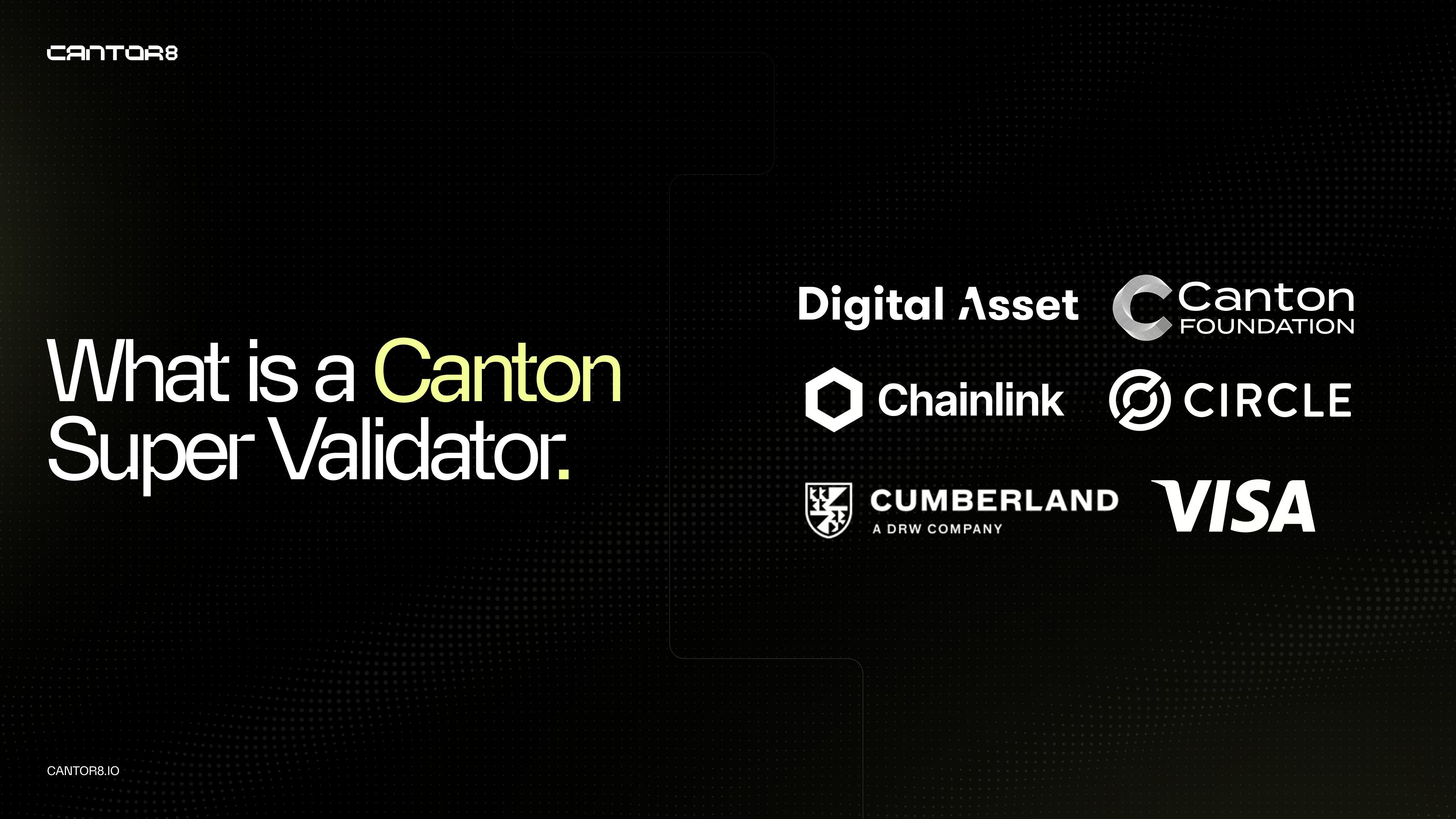
Canton's Super Validator List
III. Wall Street Pedigree, Slow and Steady Work
Canton's creator is Digital Asset Holdings, founded in 2014 by Blythe Masters. Blythe Masters was a star executive at JPMorgan Chase, one of the key pioneers in the CDS field, with deep connections and industry backing on Wall Street. From day one, this company was not making blockchain products for retail; its target customers were those financial institutions with real balance sheets, under strict regulation, needing to operate within legal frameworks.
Regarding its origins, we asked a pointed question: We saw Canton launch in 2023, why did it only fully go live this year?
Canton's answer is, slow and steady work yields fine results.
The Wall Street pedigree determined the entire project's pace. Canton admitted in the interview that this chain took longer than other L1s to reach today because from the start, it was dealing with regulated financial systems, building institutional trust, and how to truly connect to markets with actual business.
This rhythm is completely opposite to the mainstream Web3 narrative. Most public chains pursue rapid launch, rapid ecosystem expansion, rapid hype generation, TGE rollout, and then "the team isn't really sure either." Canton's path is step-by-step negotiation: first secure DTCC, then Goldman Sachs, then JPMorgan Chase, then Visa, introducing real business through their endorsement.
2026 is a turning point, not because of project promotion itself, nor because the crypto world's bear market is starting to shake out, but because above the narrative, the infrastructure has truly met institutional requirements for the first time: real balance sheet activities are operating on it. This is also why now is the best time to pay attention to Canton Network.
"So how much business has been introduced?" we continued to ask.
IV. Canton's On-Chain Activity
Canton's current data is an outlier in the entire blockchain industry, and the nature behind these numbers is very different from most public chains. Currently, Canton Network's monthly processing volume exceeds $9 trillion, with daily transactions reaching hundreds of thousands. The number of ecosystem participants has grown by orders of magnitude over the past three years. These numbers correspond to traditional financial business: tokenized repos, treasury bond settlement, cross-institution collateral mobilization. These are not wash trading but real operations on institutional balance sheets.
We also asked which products are currently mainstream on-chain. Currently, there seem to be several flagship products:
JPMorgan's JPM Coin: In January 2026, JPMorgan's Kinexys division announced the native deployment of JPM Coin to Canton Network. JPM Coin differs in nature from USDT and USDC; it is a deposit token, representing a direct claim on JPMorgan deposits, operating under existing banking regulatory frameworks. For example, two institutions settling a cross-border transaction with JPM Coin on Canton is not fundamentally different from what they do in the traditional system, just much faster settlement and operations no longer limited to business hours. Kinexys currently handles a daily transaction volume between $2-3 billion, with a cumulative total exceeding $1.5 trillion since 2019. This capital flow is about to operate on Canton.
DTCC's U.S. Treasury Tokenization: In December 2025, the U.S. securities depository DTCC announced a partnership with Digital Asset to tokenize a portion of its custodied U.S. Treasuries on Canton, aiming to launch the first version in a controlled production environment in the first half of 2026, then expand based on market demand. DTCC also jointly serves as co-chair of the Canton Foundation with Euroclear, directly participating in network governance.
DTCC processes securities transactions worth over $2 quadrillion annually and is the core of the entire U.S. capital market clearing and settlement system. To use a more intuitive analogy, DTCC's position in traditional finance is somewhat like the People's Bank of China; no one deposits money there, but everyone's stock and bond trades must pass through its backend. The traditional repo market can only operate on business days, stalling after Friday afternoon until Monday. But on Canton, repo transactions can run 24/7, using on-chain U.S. Treasuries as collateral, achieving real-time cross-institution, cross-timezone, weekend-capable funding.
So what will Visa do on Canton?
A core goal described by Canton in the interview is atomic settlement: The buyer's payment and the seller's delivery of assets are completed simultaneously in a single operation, without needing two separate steps or relying on intermediaries to bridge them. For example, currently when an institution buys a batch of bonds, the asset transfer and cash settlement are often two separate processes with a time gap, counterparty risk, and manual reconciliation costs. What Canton aims to achieve is these two things happening at the same time, locked and settled instantly with no time gap. To achieve this goal, capital market infrastructure and payment infrastructure must both be on-chain. Canton has a fairly solid layout on the capital market side; Visa's addition provides a true institutional anchor point on the payments side.
Beyond this, it includes real-time cross-border capital flows, embedding programmable logic into financial transactions, and other blockchain strengths.
Canton believes 2026 is the cycle where infrastructure has truly met institutional requirements for the first time, which is why institutions like Visa are choosing to engage with blockchain infrastructure now.
Other Use Cases Already Running
Tokenized repo is currently the most mature scenario. Repurchase agreements (Repo) are the most common short-term financing tool among financial institutions, simply put, Institution A sells bonds to Institution B for cash while agreeing to buy them back a few days later. Traditionally, this process could only be completed during business hours, and fund settlement had delays. Tokenized repos on Canton have already achieved 24/7 availability and instant settlement; several leading institutions have completed real cross-institution, weekend-covering repo transactions on Canton.

Collateral mobilization is another scenario with real demand. Large financial institutions often need to move collateral from one account or institution to another, e.g., moving bonds held at A to B to meet margin requirements for a derivatives trade. Traditionally, this process took days, during which assets were locked and unavailable for other uses. Canton's settlement model allows this process to be completed nearly in real-time.
Digital bond issuance is another area where Canton has an advantage. Canton mentioned in the interview that it currently holds over half the market share in global digital bond issuance. The reason is Canton can provide complete Delivery versus Payment (DvP), full lifecycle bond management, and multi-party coordination. Bonds can have a complete closed loop from issuance to settlement on-chain, rather than just tokenizing the asset and then relying on off-chain processes to finalize.
Stablecoin settlement is a direction accelerating after Visa's addition, aiming to enable stablecoin payments between institutions to be completed on the same set of compliant infrastructure with data visibility control, rather than detouring through public chains.
Simply put, it's not mentioning RWA, but every sentence is about RWA's needs.
Canton also gave a rough judgment on the upcoming roadmap in the interview: In the medium term, corporate bonds, private credit, and trade finance will follow; longer term, equities are also on this path. From existing use cases to this roadmap, the logic is consistent: the more liquid and the more mature the regulatory framework for an asset class, the sooner it moves.
V. What Does the CC Token Represent?
For broader market participants, what the CC token actually is remains an unavoidable question.
Canton's characterization in the interview is quite direct: CC is a "network utility asset," its value anchored to the volume of real financial activity occurring on the network.
Meaning, demand comes from actual usage; the greater the transaction volume of institutions on Canton, the more CC the network consumes. Long-term drivers for the token include institutional transaction flow, stablecoin settlement volume, on-chain asset totals, and the depth of interoperability between Canton and other networks.
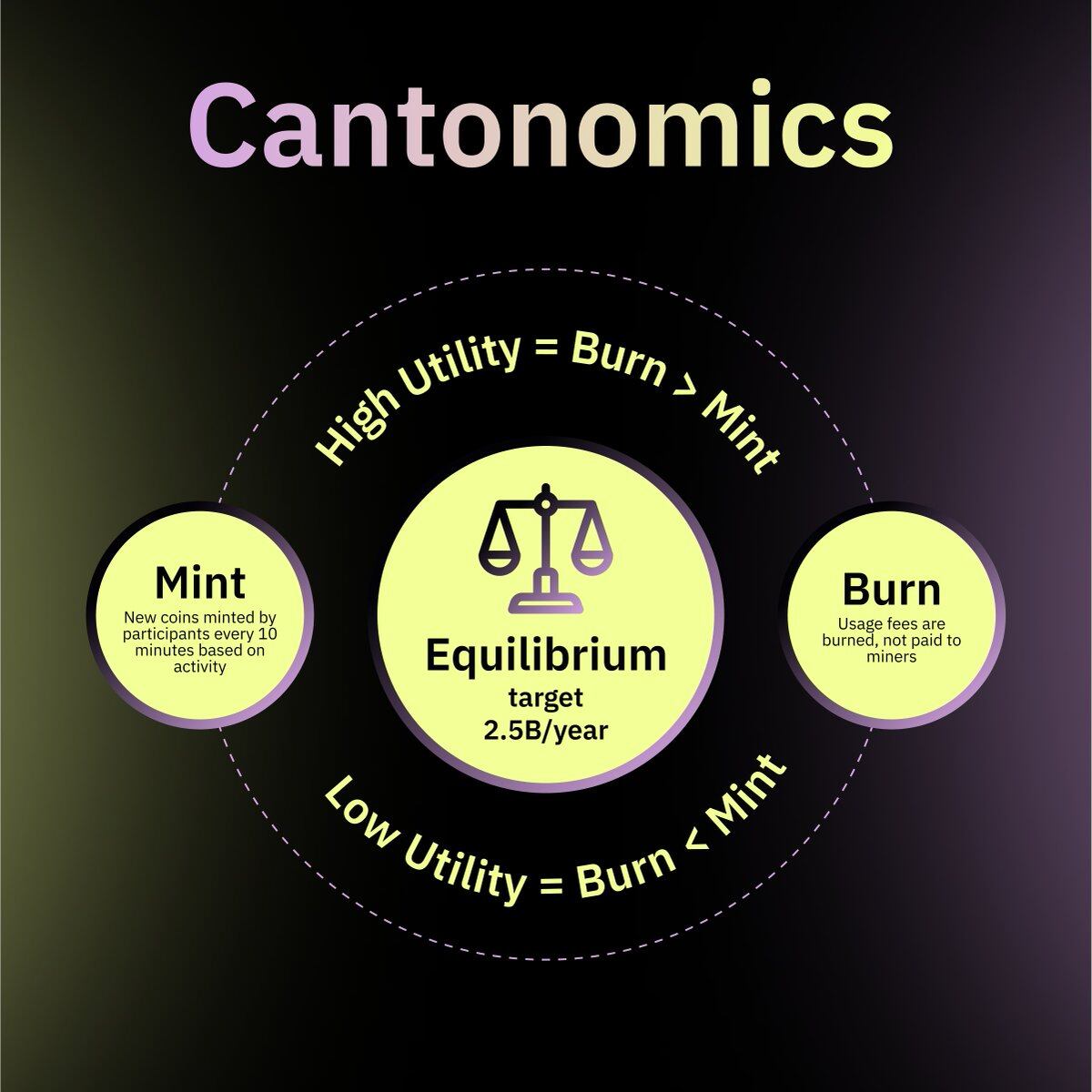
CC has a rather rare setting in token distribution within the Web3 circle: zero pre-mine, zero team allocation, zero VC allocation. All tokens enter the market through fair means. For institutional participants, this setting reduces concerns about "someone holding ultra-low-cost chips, ready to cash out and flee the secondary market at any time." The rules are transparent and equal for all participants.
For ordinary market participants, Canton exists more as backend infrastructure. The way ordinary people will interact with it is more likely through exchanges, wallets, or financial platforms, not directly with the protocol. The improvements it brings, such as faster settlement speeds, tighter bid-ask spreads, and better financial product terms due to lower operational costs, will gradually reach end-users through the product layer, rather than being presented in a way users can directly perceive.
VI. Next Steps
Canton's 3-to-5-year goals provided in the interview are not measured by on-chain TVL or token price. Looking at the specific goals Canton listed: stablecoins becoming the standard means for inter-institutional settlement, just as SWIFT wire transfers are the standard now; major financial institutions, like banks, being able to directly operate loans, deposits, bond issuance, and product packaging on-chain; cross-border capital no longer needing to endure settlement cycles of several days in the traditional system but moving at near-real-time speeds; multiple asset classes completing native issuance and settlement on Canton, rather than being issued off-chain first and then manually syncing information on-chain.
Canton uses "invisible" to describe itself in this state: By then, Canton would just be one of the underlying protocols quietly powering global finance, like TCP/IP for the internet today or SWIFT for cross-border remittances. Users wouldn't perceive its existence, but nothing would work without it.
Of course, this road is still long. Regulation is highly fragmented across jurisdictions; compliance methods in Europe are completely different from Asia; integrating with existing legacy systems is very difficult; banks' core systems used for decades cannot migrate overnight; interoperability between different blockchain networks remains an unresolved technical issue; coordinating institutions on the same infrastructure involves complex interest games. The Canton team did not avoid these in the interview, telling us: The technical bottleneck is no longer the biggest problem; how to truly roll it out globally is.
It can be seen that the transformation of financial infrastructure never happens suddenly on a single day. SWIFT was established in 1973 and took nearly two decades to become the true standard for cross-border settlement. People using it today don't think about how it came to be. The position Canton is in now is probably that "no one realizes yet what it will become" stage. But for something that truly wants to become infrastructure, being forgotten might be what success should look like.