Predicting the 'Side Hustles' of Market Giants: From Online Betting to Offline Store Openings

比推Published on 2026-02-04Last updated on 2026-02-04

Abstract

The competition between leading prediction market platforms Kalshi and Polymarket has expanded from online to offline. On February 4, Kalshi distributed free groceries (up to $50 per person) at a market in New York City, promoting its event-based trading platform with the slogan “We believe in free markets.” The campaign targeted economic concerns like inflation and aimed to attract users by lowering entry barriers. On the same day, Polymarket announced plans to open a permanent free grocery store in New York, supported by a $1 million donation to address food security. The store, set to open on February 12, aligns with Polymarket’s mission to make prediction markets accessible and socially impactful. This offline move reflects intensifying competition. Kalshi, compliant in the U.S., has partnered with platforms like Coinbase and reported annualized trading volume exceeding $100 billion. Polymarket faces regulatory challenges, including bans in Ukraine and Portugal, and restrictions in Nevada. It also competes with new entrants like Opinion, which raised millions and gained rapid traction. Other players, including Crypto.com, Kraken, Robinhood, and Hyperliquid, are also entering the prediction market space, driven by growing user interest in event-based trading. As global events like elections and sports continue to attract attention, prediction markets are poised for further growth, keeping platforms like Kalshi and Polymarket in a fierce battle for users.

Author: Ma He, Foresight News

Original Title: Behind the 'Side Hustles' of Prediction Market Giants: Opening Offline Grocery Stores Out of Anxiety?


Who would have thought that the competition between the two online prediction market giants, Kalshi and Polymarket, has already extended from purely online to offline.

At 12:00 PM on February 4th, Kalshi gave away free groceries to residents at the West Side Market on 84 Third Avenue in New York City, with a limit of up to $50 per person.

Kalshi CEO Tarek Mansour stated, "We believe in free markets," making it clear that this move aims to promote the concept of prediction markets through tangible benefits to the public.

The highlight of the event lies in its clever marketing strategy. First, it directly ties into current economic hot topics—inflation and rising living costs have become pain points for the American public. By offering free groceries, Kalshi not only provides immediate value but also positions itself as an "event contract exchange," allowing users to trade on events such as politics, economics, and sports.

For example, users can predict fluctuations in grocery prices or changes in economic indicators on the platform, thereby transforming the offline experience into online participation. Second, the event’s location in a high-density, high-consumption city like New York maximizes exposure. Official videos show crowds rushing in at the opening moment, likened to "Christmas revisited."

The event had a low barrier to entry: no app download was required to participate; one only needed to shop in-store, and Kalshi would cover the bill. This not only lowered the entry barrier for users but also reinforced the platform’s approachable image.

Unlike Kalshi’s short-term promotion, Polymarket’s offline activity is more long-term and ambitious.

On February 4th, Polymarket announced it would open a "free grocery store" in New York, located at 7 Madison Avenue, scheduled to officially open on February 12th. The store is supported by the Food Bank for New York City, with the project breaking ground in late 2025 and a lease agreement already signed. Additionally, Polymarket donated $1 million to address security concerns.

Polymarket’s announcement coincidentally came on the same day as Kalshi’s event, even with overlapping opening times, which is seen as a direct response.
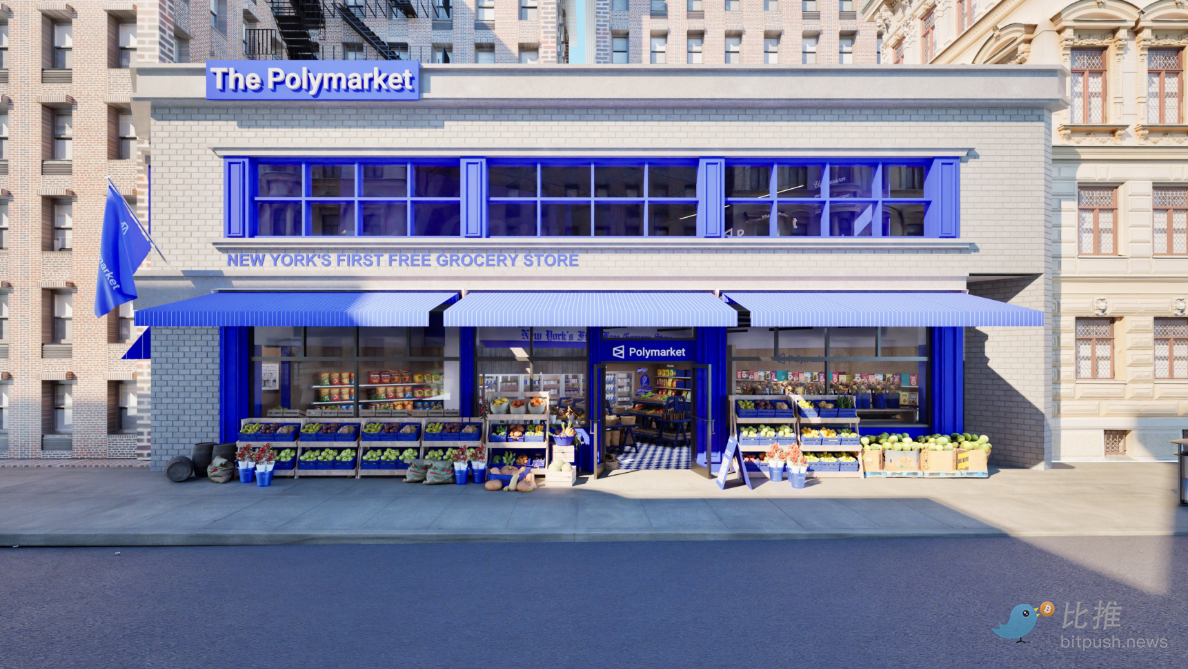
The highlight of Polymarket’s activity lies in its innovation and emphasis on social responsibility. First, this is not a one-time promotion but a permanent store where users can obtain groceries for free, addressing food security issues in New York. Second, this aligns closely with the platform’s core philosophy of revealing truth and allocating resources through prediction markets.

Polymarket founder Shayne Coplan stated that this move is an expansion of the platform from online to offline, aiming to "make prediction markets accessible."
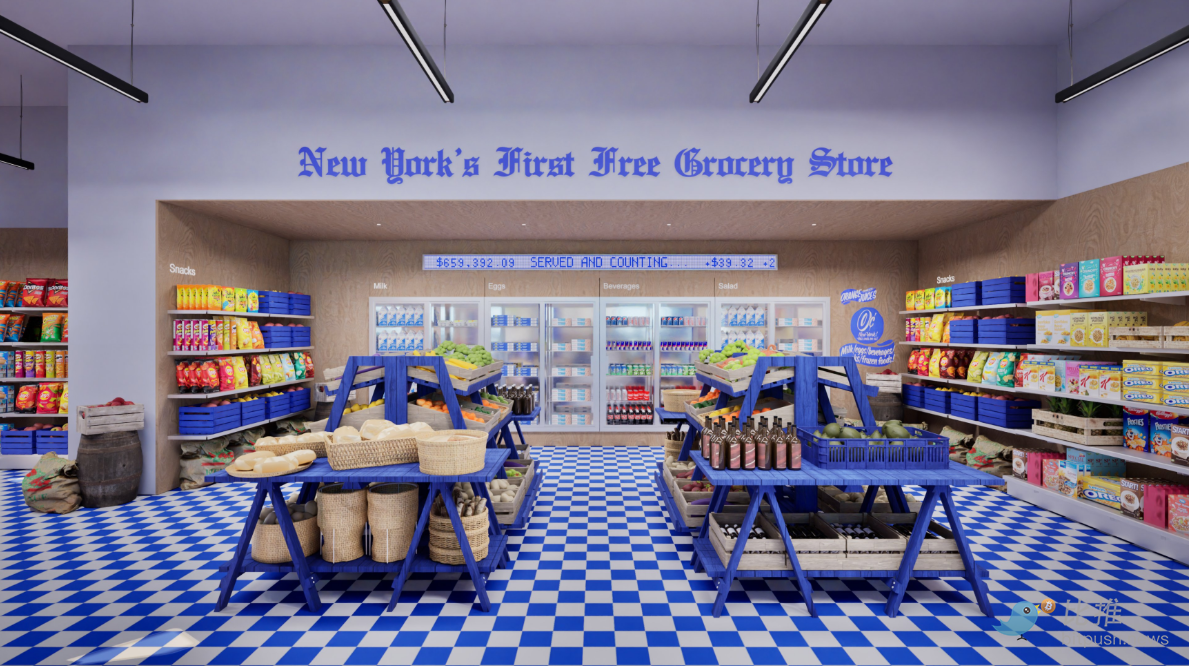
Polymarket incorporates its signature blue logo into the store, with a simple and stylish interior design. Compared to Kalshi’s $50 cap, Polymarket’s free model is more attractive and is expected to reach more low-income groups.

Intensified Rivalry Between the Two Platforms

The offline activities of Kalshi and Polymarket are a microcosm of the fierce competition in the prediction market.

Kalshi uses U.S. compliance as its moat, rapidly expanding its territory. It has not only integrated with various Web3 wallets like Phantom but also partnered with Coinbase to extend its services to all 50 U.S. states. Coinbase users can trade prediction market contracts with as little as $1. In January of this year, Kalshi officially announced that its annualized trading volume exceeded $100 billion.

Polymarket has not only strengthened collaborations with crypto-native players like Jupiter and Phantom but has also expanded its traffic channels by sponsoring events such as the Hollywood Golden Globe Awards.

However, the latest data shows that its market share is still being eroded by Kalshi.
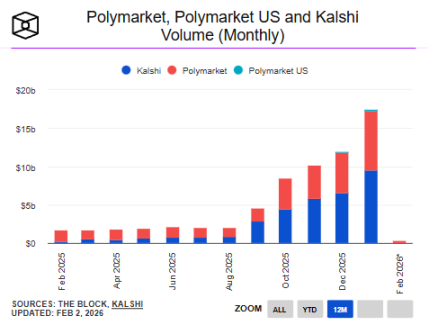
To make matters worse, Polymarket faces troubling regulatory issues.

In January of this year, Ukraine banned Polymarket, as the country’s current legal framework does not recognize prediction markets. Portuguese regulators have also ordered Polymarket to cease operations in the country.

In February, a Nevada court issued a temporary restraining order, prohibiting Polymarket from offering event contract services to Nevada residents before a preliminary hearing on February 11th.

Additionally, many regions in Asia view Polymarket as a gambling platform and have blocked its IP address.

Another competitor backed by Binance is also eyeing the market. Opinion completed a tens of millions of dollars funding round in December 2025. Driven by airdrop expectations, the platform’s trading volume exceeded $5 billion in just one month, with daily fee revenue consistently surpassing $100,000.
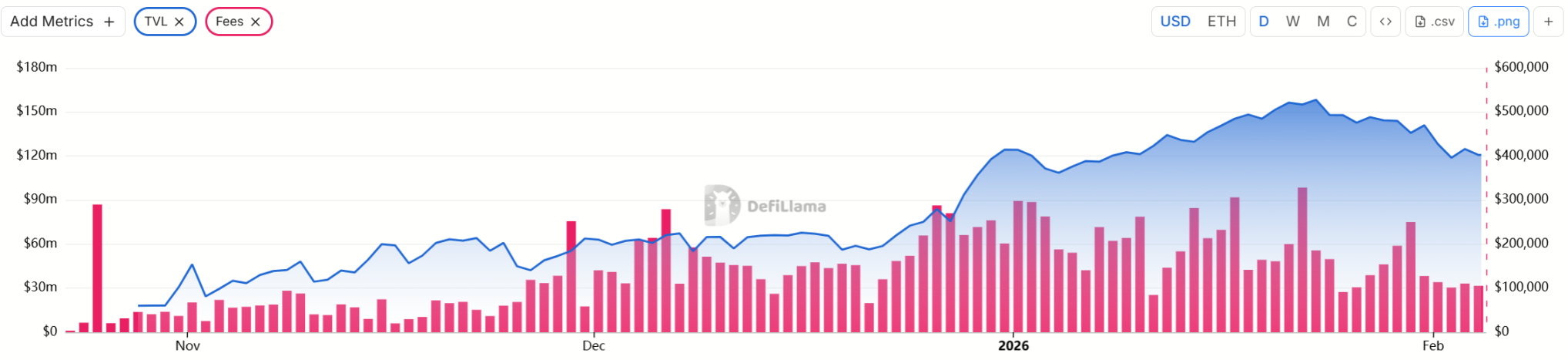
Meanwhile, various exchanges, DEXs, and traditional financial institutions are also entering the prediction market.

Bloomberg reported that Crypto.com announced on Tuesday that it would launch a dedicated prediction market platform, OG, just days before the Super Bowl. Its co-founder and CEO, Kris Marszalek, stated that its event contract business has grown 40 times week-over-week in the past six months, making the launch of an independent product necessary. Another crypto trading platform, Kraken, plans to launch prediction market services in 2026, as revealed by its Global Consumer Business Head, Mark Greenberg, on the Crypto World show.

Robinhood had already launched a prediction market before Trump’s election and plans to introduce more new event contracts. In October 2025, Robinhood CEO Vlad Tenev stated in an interview with Bloomberg that its prediction market segment is one of the fastest-growing sectors and one of its nine business lines with annual revenue exceeding $100 million.

Derivatives DEX leader Hyperliquid is also testing a native prediction market on its testnet. Hyperliquid announced that HyperCore will support Outcome Trading (HIP-4). Outcome Trading involves fully collateralized contracts settled within a fixed range. This is a universal foundational trading element applicable to scenarios such as prediction markets and bounded option-like instruments.

It features non-linear, time-bound contracts, offering a form of derivatives trading without leverage or liquidation, and can be combined with portfolio margin and HyperEVM. Currently, this feature is still under development and is only being tested on the testnet. Once technical development is complete, Hyperliquid will deploy standardized markets denominated in USDH.

The store openings by Kalshi and Polymarket are not just marketing but also battles to capture user attention.

Wars, political events, elections, and sports competitions are gathering global users online, enabling 24/7 non-stop global betting. Rule disputes, wealth stories, and insider trading are all unfolding simultaneously, with only money and brains never sleeping. Perhaps future hot events like the World Cup and U.S. elections will continue to drive prediction market trading volumes and recognition to new heights.

Before the final outcome is determined, no participant dares to let their guard down.


Twitter:https://twitter.com/BitpushNewsCN

Bitpush TG Discussion Group:https://t.me/BitPushCommunity

Bitpush TG Subscription: https://t.me/bitpush

Original link:https://www.bitpush.news/articles/7608693

Related Questions

QWhat was the main purpose of Kalshi's free grocery giveaway event in New York?

AKalshi's free grocery event aimed to promote the concept of prediction markets by providing immediate value to the public, linking economic concerns like inflation to their platform where users can trade on events such as politics, economics, and sports.

QHow does Polymarket's approach to a physical store differ from Kalshi's event?

APolymarket's store is a permanent establishment in partnership with Food Bank for New York City, focusing on long-term social responsibility and addressing food insecurity, while Kalshi's was a temporary promotional event with a spending limit per person.

QWhat regulatory challenges is Polymarket currently facing?

APolymarket faces bans in Ukraine and Portugal, a temporary restriction order in Nevada, and is blocked in several Asia-Pacific regions where it is viewed as a gambling platform.

QWhich companies are emerging as new competitors in the prediction market space?

ANew competitors include Opinion, which received funding and rapid growth, Crypto.com's OG platform, Kraken's planned service, Robinhood's expanding prediction market, and Hyperliquid's testing of native prediction market features.

QWhat is the significance of the competition between Kalshi and Polymarket expanding to physical locations?

AThe expansion into physical locations represents a strategic move to capture user attention and market share beyond online platforms, using real-world engagement to drive awareness and participation in prediction markets amid growing competition.

Related Reads

Debate: Korean Workers Fear Unemployment, While Musk Envisions a Society 'Without Work'?

While South Korean auto workers fear job losses from robotics, Elon Musk envisions a future where AI and robots render most work optional. This article explores the growing tension between immediate anxieties over automation and long-term visions of a post-work society. The piece begins with recent strikes at Hyundai's Korean plants, where unions, amid standard wage negotiations, also sought job guarantees against advancing robotics—specifically mentioning Boston Dynamics' Atlas. This reflects how anxiety about technological displacement is emerging even before robots are fully capable of replacing skilled labor on assembly lines. The author argues that while current robotics still struggle with the nuanced, experiential knowledge of veteran workers, the *perception* of imminent replacement is fueling social conflict prematurely. This modern "Luddite" sentiment is compared to the 19th-century English textile workers who smashed machines. Historically, Luddites weren't simply anti-technology; they were protesting the rapid devaluation of their skills and the unequal distribution of productivity gains. Similarly, today's workers ask who will bear the cost of transition and share in the new wealth created by machines. In contrast, figures like Elon Musk propose an optimistic endpoint: with AI and robotics driving extreme abundance, the link between work and survival could break. He suggests concepts like "Universal High Income" could allow society to share the technological bounty, transforming work from a necessity into a choice. The core challenge, however, lies in the transition. The author notes that technology's benefits diffuse slowly, while its disruptive costs—job losses, skill obsolescence—can be concentrated and immediate. The risk is a painful interim period where productivity gains are captured by a few before new social contracts, safety nets, and retraining systems are established. The conclusion calls for proactive governance. Just as past industrial revolutions gave rise to labor standards and social safety nets, the robotics era needs its own frameworks. These should address job transition support, distribution of productivity gains, safety liability, and ethical deployment. Embracing such "constraints" is not opposition to progress but a necessary step to ensure technology benefits society broadly. The discussion sparked by Hyundai's workers, therefore, is not premature but essential.

marsbit3m ago

Debate: Korean Workers Fear Unemployment, While Musk Envisions a Society 'Without Work'?

marsbit3m ago

CATL Invests in a 00s Graduate from Harbin Institute of Technology

Contemporary Amperex Technology Co., Limited (CATL) has exclusively invested in the Pre-A round of RoboParty, a company founded by 22-year-old Huang Yi. A former student at Harbin Institute of Technology, Huang built a bipedal humanoid robot in his dorm room and later dropped out to launch RoboParty in Shanghai. The company focuses on developing a fully open-source platform for humanoid robots, combining self-developed hardware, operating systems (Party OS), and foundational models. RoboParty's strategy emphasizes open-source collaboration to accelerate development and build a developer ecosystem, positioning itself as foundational infrastructure for embodied AI. Since its 2025 founding, the team—composed largely of top-tier university graduates—has secured six funding rounds in eight months, with investors including Matrix Partners, Xiaomi, and now CATL. This investment by CATL's corporate venture arm signals strong industry confidence in RoboParty's potential for real-world manufacturing and complex scenarios. Huang Yi prioritizes technological excellence and developer community growth over rapid commercialization. The company has already garnered significant interest from developers and research institutions globally. With a focus on continuous, rapid iteration and open innovation, RoboParty aims to prove the versatility of humanoid robots and drive the field toward an open-source future.

marsbit6m ago

CATL Invests in a 00s Graduate from Harbin Institute of Technology

marsbit6m ago

Will SpaceX's First Quarterly Report Rescue Its Stock Price Under the Pressure of 1.2 Billion Shares Unlocking?

SpaceX is set to release its first quarterly earnings report since going public, a key test for its stock which has declined 20% from its IPO price. Approximately 9.12 billion shares are set to unlock on August 6, with an additional 3.19 billion following a week later, creating potential selling pressure from early investors. A strong report may be the only catalyst to reverse the downtrend. The report will cover three segments: Space, Connectivity (Starlink), and AI. The AI business, centered on the merged xAI, is the biggest uncertainty. While it generated $818 million in revenue last quarter, it also reported a $2.5 billion operating loss and $7.7 billion in capital expenditures. New data center rental agreements with Anthropic and Google, particularly the substantial $1.25 billion monthly deal with Anthropic, add significant revenue variability this quarter. Investors await guidance on AI's future outlook and the timeline for launching AI computing satellites via Starship. Starlink remains the stable profit driver, ending last quarter with 10.3 million subscribers. Key metrics will be user growth, average revenue per user (ARPU), and enterprise/government contract backlogs. The Space segment, which posted a $657 million operating loss last quarter, will be scrutinized for updates on Starship development following its 13th test flight and the pace of Falcon 9 launches, many of which support internal Starlink deployment. Wall Street expects Q2 revenue of around $6.9 billion and EBITDA of $2.1 billion. However, as this is the first earnings report, analyst forecasts lack a historical baseline and could see significant variance. With a current market cap of ~$1.4 trillion and a high valuation, the market's reaction post-earnings will hinge on the report's strength, the magnitude of post-lockup selling, and ongoing investor concerns.

marsbit6m ago

Will SpaceX's First Quarterly Report Rescue Its Stock Price Under the Pressure of 1.2 Billion Shares Unlocking?

marsbit6m ago

Soaring 20% Then Dropping 5%: When Will the Bottom of the Korean Stock Market Be?

"South Korean stocks face a turbulent period as the KOSPI index, after a 20% surge, fell 5% to 6257 points. The market is grappling with severe issues: over 500,000 leveraged retail accounts have been liquidated, and more than 24 trillion won has flowed from stocks into bank deposits for safety. This reflects a significant loss of market liquidity and shaken investor confidence. In response, Korean financial regulators are taking action. They have tripled the minimum保证金 (margin) requirement for single-stock leveraged ETF trades to 30 million won and are considering granting themselves "emergency intervention" powers. These could include capping leverage ratios and setting investment limits on these ETFs, seen by many as amplifying market volatility. Initial results show a 75% drop in these products' trading volume post-regulation. The market downturn has political repercussions, pushing President Yoon Suk-yeol's approval rating to a new low. Meanwhile, foreign investors made a record net purchase of 7.18 trillion won during a recent rebound, while domestic retail investors sold off massively. Morgan Stanley has upgraded South Korean stocks to "overweight," citing the ongoing "leverage unwinding" and potential for a 36% upside, with giants like Samsung Electronics and SK Hynix providing valuation support. However, analysts caution that the market's structure remains vulnerable to foreign capital flows, and the current low may not be the bottom."

marsbit22m ago

Soaring 20% Then Dropping 5%: When Will the Bottom of the Korean Stock Market Be?

marsbit22m ago

Trading

Spot
活动图片