OUSD, Which Caused Circle to Plunge 17% Overnight, Is Mired in Marketing Controversy

Foresight NewsPublished on 2026-07-06Last updated on 2026-07-06

Abstract

On June 30th, Open Standard announced the upcoming launch of Open USD (OUSD), a new stablecoin promising features like free minting/burning, yield sharing, and shared governance by a coalition of over 140 partners, including major names like Western Union, Ripple, and MetaMask. This news caused a 17.55% drop in Circle's stock price. However, the announcement quickly faced controversy. Several listed companies, including Samsung Electronics and Dunamu (Upbit's parent), denied formal agreements, stating they were only approached for initial discussions. Critics accused Open Standard of "legitimacy-borrowing"—inflating its partner list for marketing. Circle CEO Jeremy Allaire publicly questioned OUSD's sustainability, arguing that free transactions and full revenue sharing might underfund critical infrastructure, and that multi-company governance often scales poorly. Despite the backlash, some firms like Stripe and Coinbase confirmed support, with Stripe planning to set OUSD as a default stable币 for businesses. The incident has cast an early shadow of skepticism over OUSD's launch.


Author: Eric, Foresight News


On the evening of June 30th Beijing time, the emergence of a new stablecoin once again stirred up the stablecoin landscape.


A company called Open Standard announced that it would launch the stablecoin Open USD. Features like free minting and redemption, sharing of reserve asset yields, and partner co-governance directly address the pain points in stablecoin distribution and seem very attractive.


What most surprised the market was that Open Standard had already "secured" over 140 partners before the stablecoin's launch.
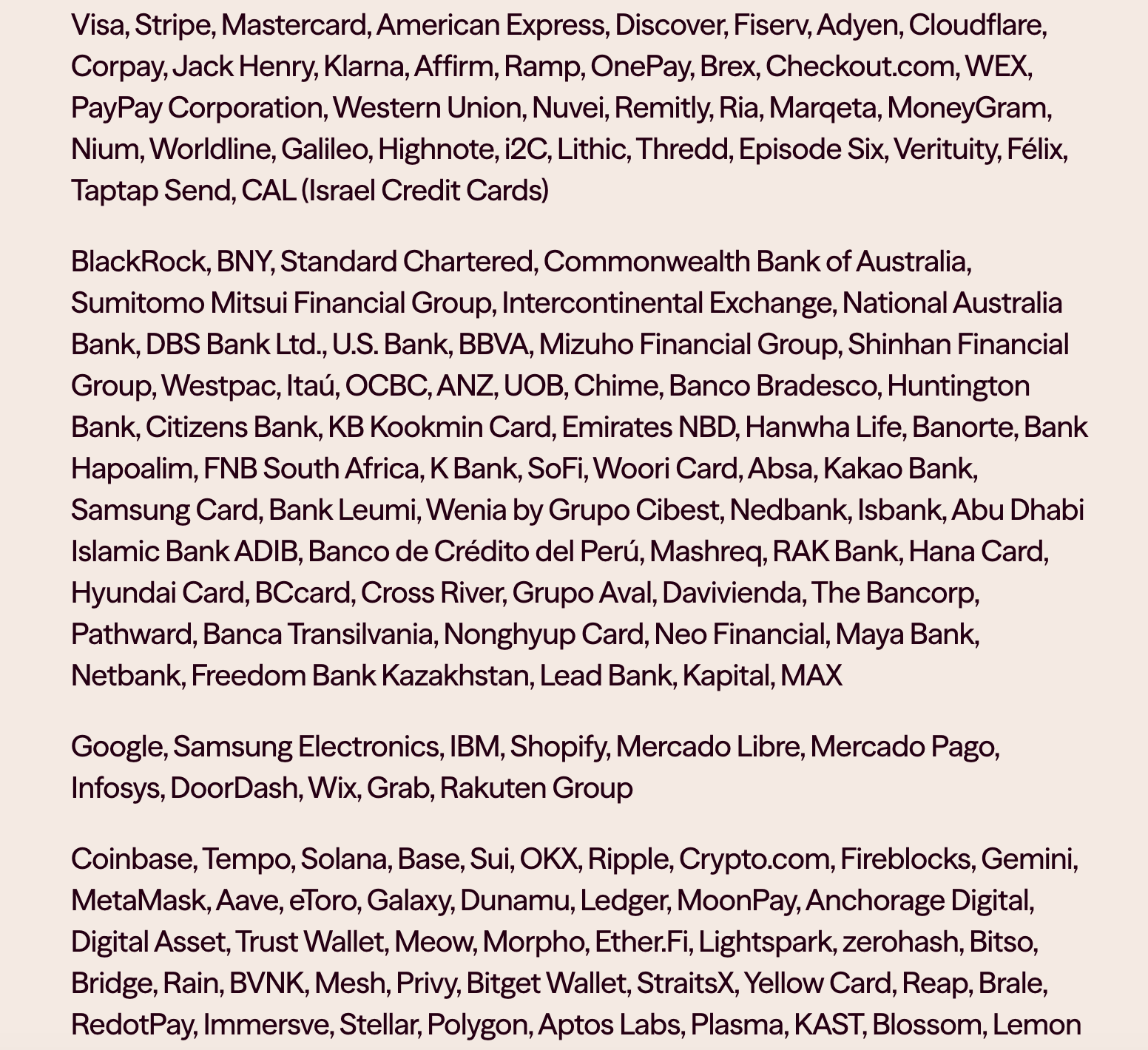


This list includes companies that have already issued stablecoins, such as Western Union, Ripple, MetaMask, and Aave. The fact that it gathered signatures from so many giants in both Web3 and traditional finance before launch surprised the market and filled it with anticipation for Open USD's future development. The most telling reflection of this anticipation was the performance of stablecoin leader Circle's stock, which plummeted 17.55% that day, leaving it less than 20% away from a new low.
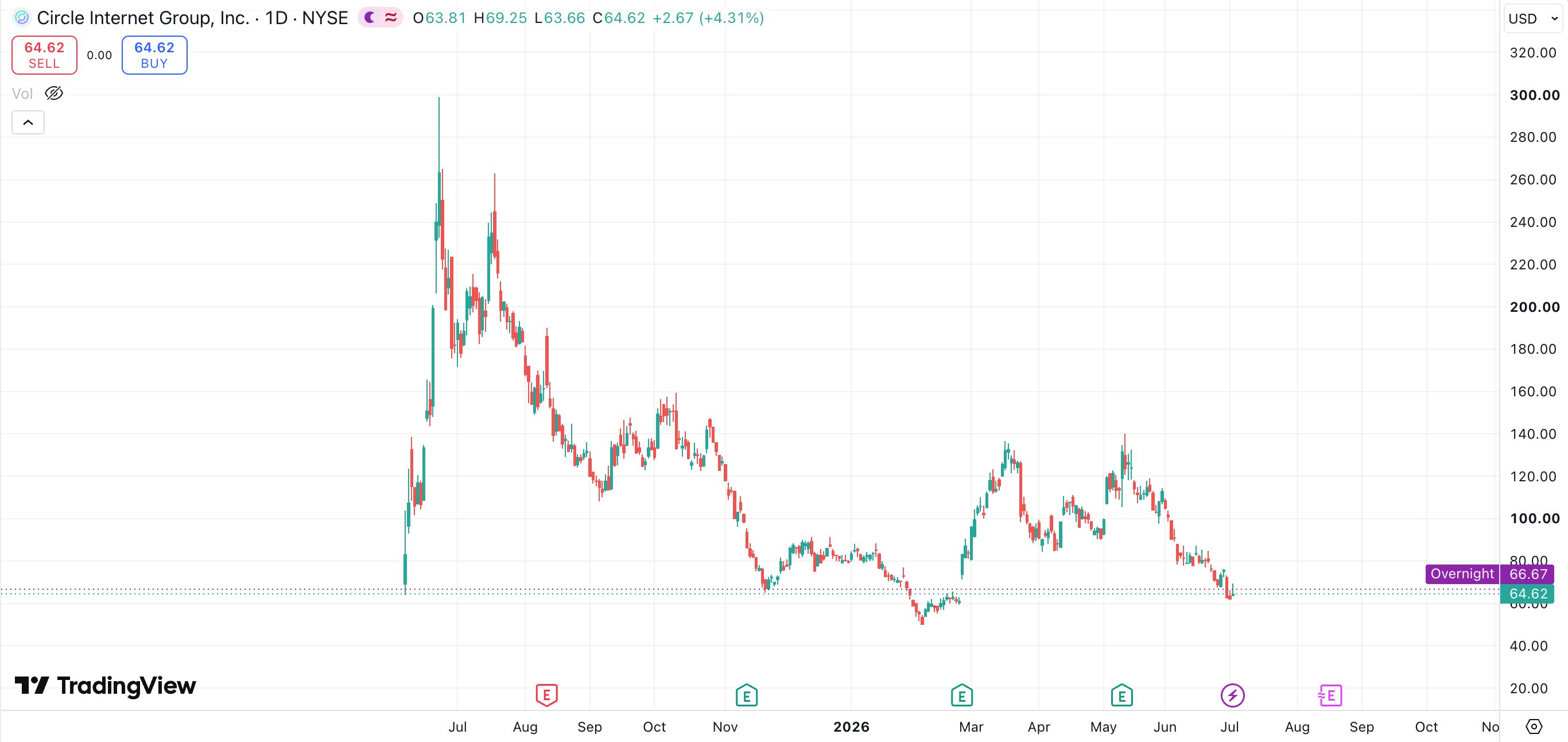


However, this explosive announcement was quickly debunked.


On July 3rd, according to a report by *The Chosun Ilbo*, companies including Samsung Electronics, Dunamu (parent company of Upbit), Shinhan Financial Group, and K Bank stated that they had never negotiated matters related to Open USD (OUSD). A Samsung Electronics representative said, "There has been no formal negotiation, and we don't know what role (in the alliance) we are supposed to undertake." Shinhan Financial Holdings, Dunamu, and K Bank also stated that while Open Standard had inquired about their willingness to participate in OUSD, and they had only responded that they "would consider it briefly," their names were listed as alliance members.


Tony Chung, BD Director at the Korean Web3 media outlet Blockmedia, added that a representative from one of the Korean companies said they learned about being on the list from Korean media reports and were very confused, as they had only casually replied at the time, "We'll consider it if feasible."


Gabor Gurbacs, Founder & CEO of OpenAssets, reposted Tony Chung's tweet and noted that not only Korean companies were misled. After contacting some of OpenAssets' clients on the list, Gabor Gurbacs received responses stating: "They said they never signed or agreed to anything. Either the media grossly distorted the facts, or the list of participants is misleading."
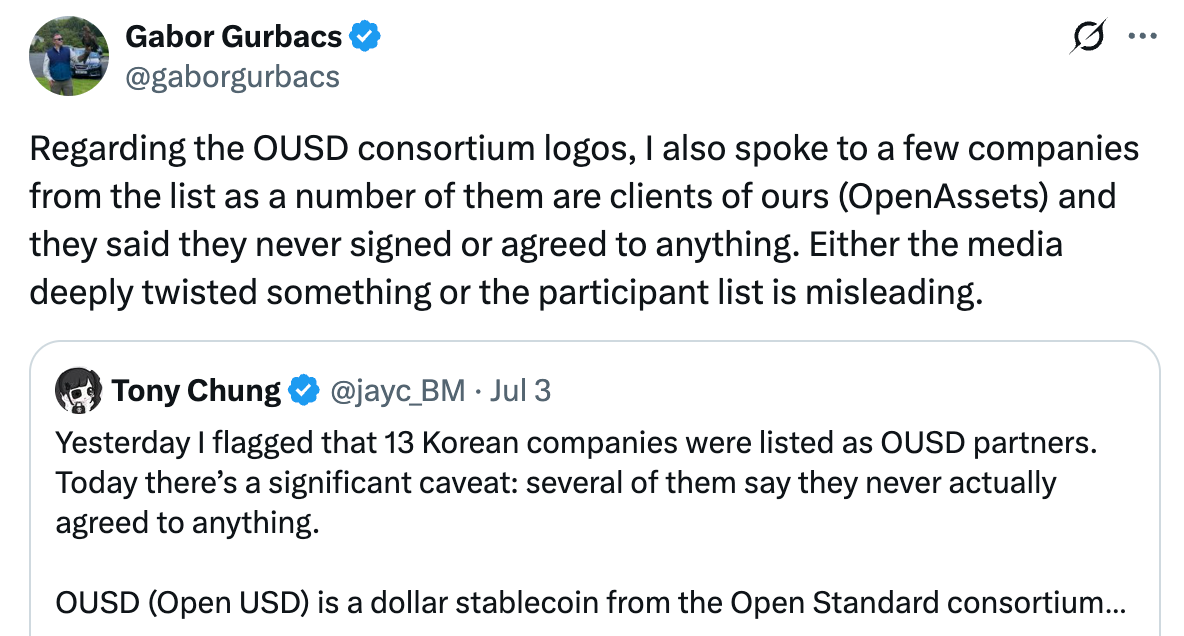


From this perspective, Open Standard's "list of a hundred" likely included some companies they had merely contacted. In the original announcement, Open Standard's wording was: "Businesses across industries have signed up to use Open USD." Perhaps in Open Standard's view, not explicitly refusing meant "agreeing" to use Open USD, but agreeing to use does not necessarily mean "must use."


This is a very typical marketing tactic of trading controversy for attention, which indeed had some effect, albeit with a flavor of rubbing business ethics on the ground.


Faced with such aggressive tactics and an "unruly" opponent, Jeremy Allaire, Co-founder & CEO of Circle, published a long post on X questioning the "three major features" of Open USD:


Free Minting and Burning: Appealing in the short term but potentially unsustainable at scale, leading to insufficient funds for maintaining banking relationships, regulatory licenses, and technical infrastructure. Circle already offers favorable terms to major partners via contracts, not blanket free services.

Sharing Almost All Yields with Partners: Could "starve" the infrastructure, leading to systemic underinvestment and limiting the platform's scale. Circle already shares most of its revenue with distribution partners.

Alliance/Multi-Company Governance: Circle previously co-founded the Centre Consortium with Coinbase, later integrated into Circle for sole issuance. He believes the historical record of multi-company products scaling up is "very poor" (slow coordination, difficult decision-making).


Jeremy still expressed a welcoming attitude toward OUSD joining the "stablecoin family," but between the lines, his post conveyed one point: the stablecoin business is one where winners take all through accumulated time, and simply modifying a few mechanisms is not enough to "sit at the table."


Besides these negative controversies, some companies on the list have explicitly stated they will support Open USD's development. Stripe stated it would set OUSD as the default stablecoin for businesses using stablecoins on Stripe; Coinbase also said it would integrate OUSD into Base and other chains, planning to launch in late 2026 for expanding on-chain transactions, payments, and DeFi scenarios.


Payment network giants like Visa and Mastercard, financial institutions like BlackRock and Bank of New York Mellon, as well as crypto-native projects like Aave, Solana, and Ripple have also expressed support, though no specific cooperation methods have been clarified yet.


According to the announcement, the founding CEO of Open Standard is the CEO of Bridge. This Bridge is the fiat on/off-ramp solution provider that previously partnered with multiple contenders in the Hyperliquid native stablecoin USDH issuance rights dispute but caused controversy when it was acquired by Stripe, which is developing the stablecoin chain Tempo. Stripe was among the first to clarify its partnership after Open Standard's announcement, so there is likely a relatively close connection between the two.
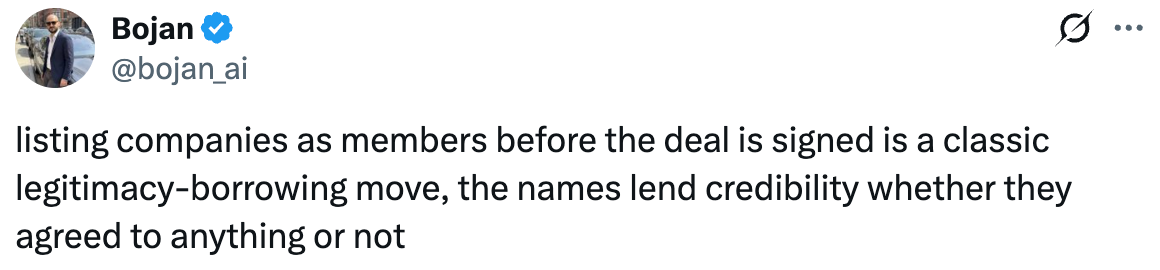


A user named Bojan on X suggested that Open Standard's promotion is a typical case of "legitimacy-borrowing"—borrowing the reputation or endorsement of other well-known, credible entities to quickly boost its own legitimacy and credibility, without having actually obtained deep endorsement or formal authorization from them. For the stablecoin track, where trust is foundational, OUSD seems to have left a somewhat negative first impression even before its debut.


Related Questions

QWhat was the primary market reaction to the announcement of Open USD (OUSD), and how did it affect Circle?

AThe announcement of Open USD (OUSD) caused significant market concern, leading to a 17.55% drop in the stock price of Circle, the company behind the USDC stablecoin, as investors anticipated increased competition.

QWhat major controversy arose regarding Open Standard's list of over 140 launch partners for OUSD?

AA controversy arose when several major companies listed as partners, including Samsung Electronics, Dunamu (Upbit's parent), Shinhan Financial Group, and K Bank, stated they had never formally agreed to join the OUSD alliance. They reported that Open Standard had only inquired about their interest, and some learned they were listed from media reports.

QWhat were the three main features of OUSD that Circle CEO Jeremy Allaire publicly criticized?

AJeremy Allaire publicly questioned OUSD's three key features: 1) Free minting and redemption, which he argued is unsustainable at scale; 2) Sharing nearly all yield with partners, potentially starving infrastructure investment; and 3) Multi-company governance, which he cited as historically having a poor track record for scaling due to slow coordination and decision-making.

QWhich companies have explicitly stated their support or plans to integrate Open USD (OUSD)?

AStripe announced it would set OUSD as the default stablecoin for businesses using its platform. Coinbase stated it would integrate OUSD into Base and other chains, planning to launch support later in 2026. Other entities like Visa, Mastercard, BlackRock, BNY Mellon, Aave, Solana, and Ripple also expressed support, though specific collaboration details were not immediately provided.

QWhat concept did an X user named Bojan use to describe Open Standard's marketing strategy for OUSD?

ABojan described Open Standard's marketing as a form of 'legitimacy-borrowing,' meaning they attempted to quickly gain credibility and trust by associating with well-known, reputable companies, even without obtaining their deep, formal endorsement or authorization.

Related Reads

1600 Lines of Code Create an Underwater Manhattan, Fable 5 Leaves Karpathy Stunned

Title: Fable 5 Stuns Karpathy with 3D Worlds Built from 1600 Lines of Code An AI model, Fable 5, has demonstrated a remarkable leap in generating complex, interactive 3D worlds with minimal code. Showcased by Peter Gostev of Arena.ai, the model created 63 diverse 3D environments across themes like immersive cityscapes, explorable famous paintings, natural wonders, and cosmic phenomena. Many were generated in a single attempt. A standout creation is a detailed, submerged Manhattan built with only 1600 lines of Three.js code. Other highlights include traversable versions of Van Gogh's "Starry Night," a bear catching a salmon with realistic physics, and a split Red Sea. The model's ability to cohesively manage vast numbers of elements within a scene represents a significant technical advancement. Andrej Karpathy, who recently joined Anthropic's pre-training team, expressed amazement, particularly at how the model intuitively understood and rendered complex real-world interactions like a fish struggling when caught. He coined the term "fablemaxxing" to describe this qualitative leap. While Fable 5 excels at world-building, Gostev notes current limitations in creating engaging, long-form gameplay. The model also sometimes requires prompting to fully utilize its capabilities. Having topped the Agent Arena benchmark for real-world task completion, Fable 5 signals that the boundaries of AI-generated content are rapidly expanding, with its full potential yet to be discovered.

marsbit6m ago

1600 Lines of Code Create an Underwater Manhattan, Fable 5 Leaves Karpathy Stunned

marsbit6m ago

From ANSEM to CZ, The Celebrity Coin Relay Race Between Solana and BSC

The past week was a whirlwind of on-chain activity, sparked by the meteoric rise of $ANSEM, a Solana-based meme coin that surged 600x and hit a $100 million market cap in a single day. This rally began when crypto influencer Ansem announced his return to buying Solana meme coins and publicly advocated for an airdrop from the platform pump.fun. Ansem’s subsequent "soft claim" of the token—promising to airdrop creator revenue to followers—ignited a frenzy, drawing comparisons to past community-led token distributions. However, his dual role as a co-founder of the trading terminal Bullpen, which later hosted the $ANSEM airdrop, suggests a strategic promotional element. The narrative quickly shifted to "celebrity coins," where tokens named after influencers are sent to their public addresses in hopes of endorsement. While a similar coin, $TJR, briefly gained traction, it faltered after the influencer TJR urged focus back on $ANSEM. Attention then turned to projects Ansem endorsed and coins found in his wallet, like $manlet, but momentum on Solana began to stall. The action then migrated to BSC with the viral resurgence of a 2021 tweet from former Binance CEO CZ, referencing a "final form" bull. This sparked the explosive launch of $CZ, which briefly approached a $90 million market cap despite expectations that CZ wouldn't actively engage like Ansem. Another BSC token, $TCC, gained attention due to CZ's interactions with its promoter. The BSC ecosystem saw faster-paced, albeit volatile, "celebrity coin" plays, with tokens like $dingaling experiencing rapid pumps and dumps without official endorsements. Currently, BSC shows more momentum for new token launches than Solana, with the market awaiting a new narrative to succeed the fleeting "celebrity coin" trend.

marsbit16m ago

From ANSEM to CZ, The Celebrity Coin Relay Race Between Solana and BSC

marsbit16m ago

A Decade of Change: The Demise of Crypto Startups

"The Decade-Long Transformation: The Demise of Crypto Startups" The article traces the dramatic evolution of the cryptocurrency industry from its anarchic beginnings to its current highly regulated and institutionalized state. In the early days (circa 2017), launching a crypto startup was remarkably simple: a whitepaper, a GitHub repository, and a Telegram group could attract thousands of retail investors via an Initial Coin Offering (ICO). Founders operated anonymously with near-zero regulatory and financial barriers, enabling rapid, global innovation but also widespread fraud. By 2026, the landscape is fundamentally different. To operate in major markets like the US, EU, and Asia, crypto businesses must now navigate a complex web of regulations akin to traditional finance. Compliance costs are prohibitive: estimates for a US multi-state operation range from $750,000 to $1.2 million in the first three years, with annual costs exceeding $2 million thereafter. Regulations like MiCA in the EU and New York's BitLicense have created high capital and operational hurdles that act as barriers to entry. Simultaneously, venture capital investment has shifted dramatically. Following the collapses of Terra and FTX, funding has concentrated in later-stage, established companies, creating a "barbell market." Early-stage and seed funding has shrunk significantly, while mega-funds like Andreessen Horowitz's $15 billion pool dominate. Most capital now flows to trading platforms, lending infrastructure, and B2B services. This environment favors mergers and acquisitions as the primary path for growth. Companies like Coinbase and Ripple are acquiring firms like Deribit and Hidden Road not for their technology, but for their licenses, banking relationships, and institutional trust—assets far more valuable than code. Distribution channels, compliance, and brand reputation have become the new moats, overshadowing pure technical innovation. The industry's maturation brings benefits: reduced scams, increased institutional participation, and clearer regulatory frameworks. However, it comes at a cost. The low-barrier, experimental ethos that defined crypto's first decade is fading. Entrepreneurs without substantial capital, pre-existing licenses, or institutional connections face immense challenges. Funding for exploratory fields like decentralized social media or novel governance models is drying up. Ultimately, the crypto industry is replicating the consolidation pattern seen in banking and tech after the 2008 financial crisis. While this brings stability and legitimacy, it raises a critical question: in this new, resource-intensive reality, is there still room for the disruptive, from-scratch innovation that gave birth to the sector?

Foresight News1h ago

A Decade of Change: The Demise of Crypto Startups

Foresight News1h ago

Trading

Spot
活动图片