OpenAI Experiences Internal Strife Again! Major Leadership Shake-Up on the Eve of IPO

marsbitPublished on 2026-04-06Last updated on 2026-04-06

Abstract

OpenAI is experiencing significant internal turmoil and executive reshuffling just as it prepares for a potential IPO later this year. Key changes include COO Brad Lightcap transitioning to a special projects role, Chief Marketing Officer Kate Rouch resigning for health reasons, and Chief App Officer Fidji Simo taking a medical leave. These departures and reassignments have raised concerns about management stability during a critical period. Additionally, tensions have emerged between CEO Sam Altman and CFO Sarah Friar over the IPO timeline. Altman is pushing for a faster launch, aiming to go public before competitor Anthropic, and has publicly committed to $600 billion in future AI infrastructure investments. Friar, however, advocates for a more cautious approach, citing the immense internal preparation required and uncertainties around the company’s financial sustainability given slowing revenue growth and massive compute expenditure commitments. These developments have led to speculation about OpenAI’s ability to execute a successful IPO this year, with external observers and industry insiders questioning both its business model and internal cohesion amid fierce competition and financial pressures.

OpenAI, eager to go public before Company A, turns around only to find:

Ahhh, the house is on fire!!

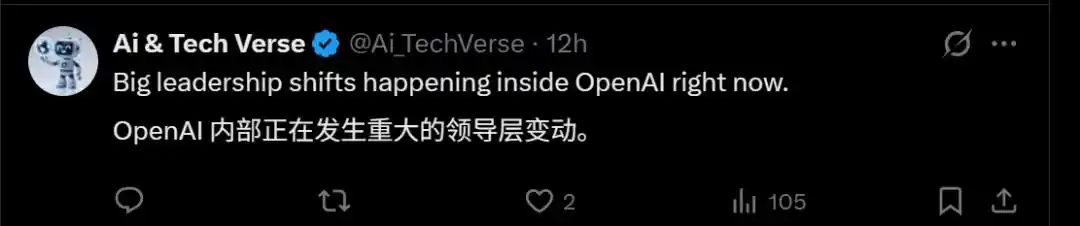
On one hand, there is intense personnel turmoil at the top—the COO is moving to a special project, and several key executives are leaving or taking leave;

On the other hand, the CEO leading the IPO and the CFO controlling the purse strings are reported to be at odds over the timeline.

How should we put it? Compared to the recent billion-dollar funding round and the new progress on GPT-6, this reversal came way too fast.

As the news broke, netizens also raised new doubts about whether OpenAI can successfully go public this year:

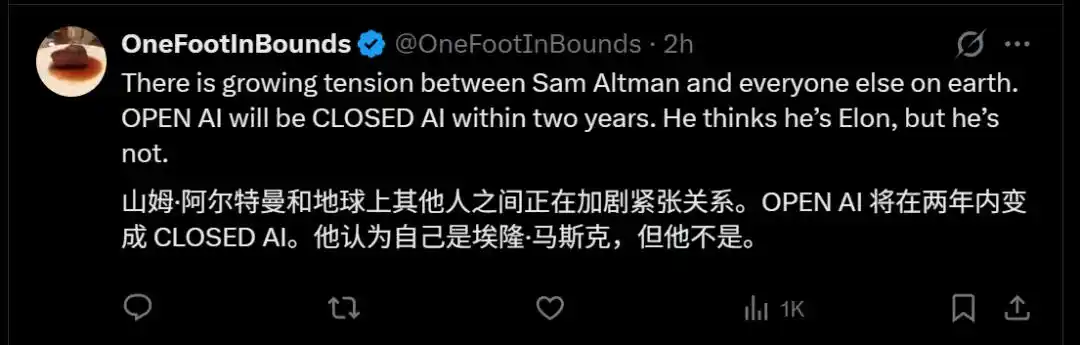
Sam's tensions with everyone else on Earth are intensifying.
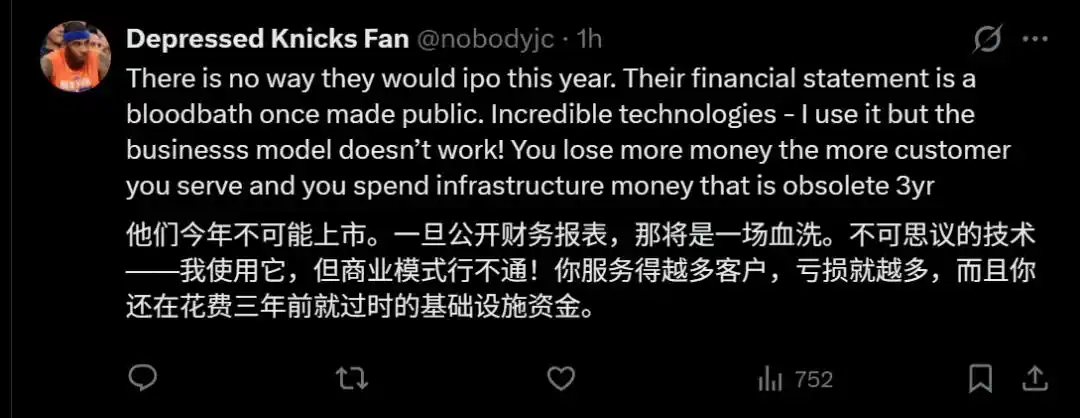
They can't go public this year... After trying it, the business model doesn't seem viable.
So, what exactly is happening at OpenAI?

IPO Imminent, Leadership in Turmoil

The first thing happening at OpenAI is quite intriguing:

Right at the critical juncture of securing a record $122 billion in funding and sprinting towards an IPO, several key executives are either changing roles, taking leave, or leaving.
According to Bloomberg, its long-time Chief Operating Officer Brad Lightcap will transition to a new role, leading "special projects" and reporting directly to CEO Altman.

Although the "special projects" are not explicitly defined, one of the responsibilities is related to OpenAI's strategic shift towards the B2B market—

overseeing the formation of joint ventures with private equity firms to sell software to enterprises.

On the surface, Brad Lightcap seems to have been given a significant responsibility, but in terms of title, he has indeed lost his identity as "OpenAI's chief steward."

As a result, netizens unanimously think Brad Lightcap has been "kicked upstairs."

The person replacing Brad Lightcap as COO is Denise Dresser, who was appointed as Chief Revenue Officer at OpenAI just late last year.

Before joining OpenAI, Denise Dresser was the CEO of the globally renowned collaboration platform Slack, particularly skilled in commercial expansion.

But after only three months in the role, she was pushed into the COO position, so this adjustment doesn’t look like a "routine handover" at all.

Taking a step back, even if the changes involving the first two executives are explained as part of OpenAI's normal strategic adjustments—

after all, the overall direction is for commercial considerations.

But the fact that two other executives, one taking leave and the other leaving, and happening around the same time, seems to hint at something else?

One of them on leave is Fidji Simo, who joined OpenAI as Chief App Officer last May.

It's worth noting that she was a major hire for OpenAI—she spent 10 years at Facebook (now Meta), directly responsible for the entire Facebook App, later moved to Instacart as CEO, and took the company public during a overall downturn in tech stocks.

And now, she stated in an internal memo to employees that due to "particularly poor health over the past month," she has decided to take several weeks off for recovery.

During her leave, OpenAI President Greg Brockman will temporarily take over her role, overseeing the product department.

The one leaving is Chief Marketing Officer Kate Rouch, also citing health reasons—leaving to focus on cancer treatment.

She also specifically mentioned that if her condition allows, she might return in a limited capacity later.

OpenAI is currently looking for a new Chief Marketing Officer.

Seeing this, some might ask: Aren't health reasons normal?

Yes, they are. But precisely because it's so normal, so faultless, it makes people even more suspicious.

Not to mention, doesn't this seem like a scene from "The Return of the Empress"?

The specific events are familiar to everyone, so we won't elaborate here, just one point—at that time, many people (including the current president of OpenAI) also expressed their stance or temporarily laid low using leave as a reason.

So, on the surface, everything has a reasonable explanation—role change is strategic, leave is for health, and departure is understandable.

But when the timelines overlap, it's hard not to think one step further:

Why exactly at this critical juncture of the IPO sprint?

After all, for a company heading towards the capital market, the most important things are stability and predictability, especially the continuity of the core management team.

And now, OpenAI is collectively staging such a drama.

Altman and CFO Diverge on IPO Timeline

What's worse, there are signs that the relationship between the CEO and CFO, these two key roles, is also quite delicate.

They have major disagreements on the IPO timeline:

Altman seeks "speed", hoping to go public in Q4 of this year before Anthropic (Company A was rumored to be planning an IPO as early as October).

To go public faster, he also publicly承诺 (committed - note: the original Chinese word 承诺 (chéngnuò) means promise/commit) to invest $600 billion over the next five years (anyway, putting the word out first).

And it's important to know that OpenAI itself once estimated that it would burn through over $200 billion before generating positive cash flow.

CFO Sarah Friar seeks "stability", believing the amount of internal preparation work needed for the IPO is enormous, and targeting this year is somewhat aggressive.

As a financial expert who previously took Square public, she expressed her concerns privately to colleagues earlier this year.

Especially since the IPO is backed by Altman's "$600 billion" promise, she is uncertain whether such massive investments in AI servers will truly be needed in the coming years, and whether the slowing revenue growth can support these commitments.
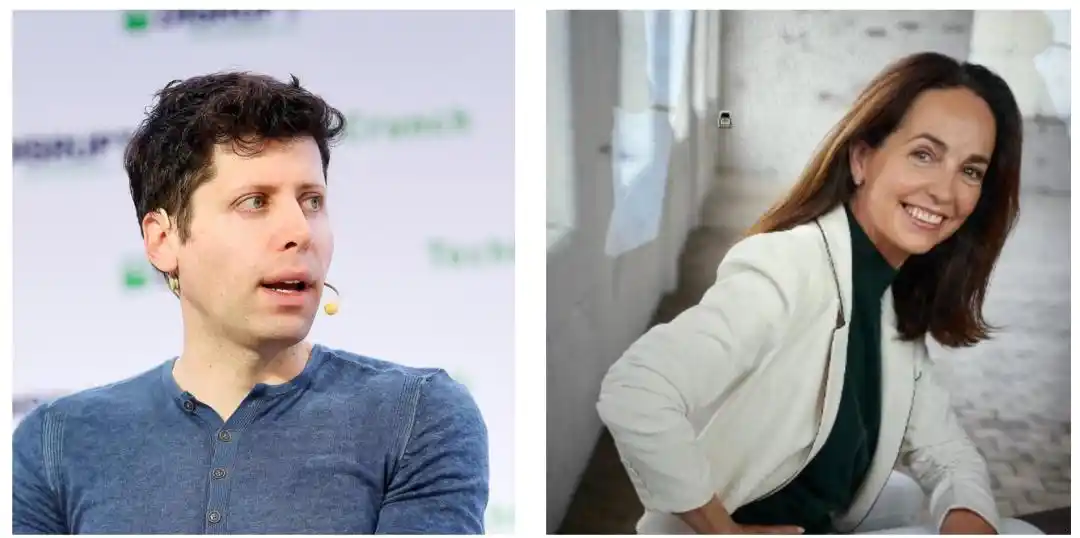
This strategic divergence has also cast a shadow over their working relationship.

It is reported that although the two appeared harmonious at a private dinner Altman hosted for investors earlier this year, those around them have vaguely sensed:

This is only superficial; their relationship has become strained.

A clear example is that in recent months, when Altman was discussing server expenses with senior executives of a top investment firm, Sarah Friar was not included.

If she had never participated before, it might be different, but the key is that Sarah Friar was present at previous events discussing the same topic.

So even other attendees felt that Altman might indeed have done it on purpose.

And even more unusually, since last August, Sarah Friar's reporting line was adjusted—

no longer reporting directly to CEO Altman, but to the head of the applications business.

In the eyes of outsiders, "this is a rare organizational arrangement in any large company."

At this point, the "discord" between the two has gradually come to light.

So the question is, is Sarah Friar's concern justified? Especially regarding Altman's承诺 (commitment) of $600 billion.

The answer is: It really is.

According to public information, this $600 billion is primarily for computing power expenditure—OpenAI has signed long-term server leasing agreements with Oracle, Microsoft, and Amazon totaling approximately $665 billion, valid until 2030.

The key is that this is not a "pay-as-you-go" contract; in some cases, OpenAI must commit billions of dollars years in advance to fund partners building custom data centers for it.

This dramatically increases the spending pressure on OpenAI.

But on the other end, OpenAI's revenue is not proportional to its burn rate—

Although it just secured $122 billion in new funding from NVIDIA, Amazon, etc., they privately warned investors in February that its cash consumption by 2030 would be more than double previous forecasts.

Moreover, due to increasingly fierce competition from Anthropic and Google Gemini, its gross profit margin on revenue already fell short of expectations last year.

Under multiple pressures, the CEO of old rival Company A also jumped in to subtly mock—

If one misjudges the speed of technology-driven revenue growth, locking in massive data center investments years in advance would be "disastrous," even leading to bankruptcy.

Although the OpenAI president later countered this comment in a podcast, the financial pressure on OpenAI has indeed reached a point that cannot be ignored.

One More Thing

It is worth mentioning that CEOs and CFOs "clashing" before an IPO is not uncommon.

A long time ago, Airbnb had a similar situation, but the outcome then was—

The CFO left, the leadership turmoil triggered a wave of executive departures, but the CEO still successfully took Airbnb public.

(P.S.: The Airbnb CEO is also an informal advisor to Altman, and the two have a good personal relationship).

It remains to be seen how this will end.

Reference links:[1]https://x.com/WesRoth/status/2040776475214012560[2]https://www.theinformation.com/articles/openai-ceo-cfo-diverge-ipo-timing[3]https://x.com/i/status/2040894109817393240

This article is from the WeChat public account "QbitAI", author: Focus on Frontier Technology

Related Questions

QWhat major leadership changes are happening at OpenAI ahead of its planned IPO?

AOpenAI is undergoing significant leadership changes, including COO Brad Lightcap transitioning to a special projects role, Chief Revenue Officer Denise Dresser being promoted to COO, Chief Application Officer Fidji Simo taking a leave of absence, and Chief Marketing Officer Kate Rouch resigning.

QWhat is the reported disagreement between CEO Sam Altman and CFO Sarah Friar?

ACEO Sam Altman wants to pursue a fast IPO in Q4 of this year to beat competitor Anthropic to market, while CFO Sarah Friar advocates for a more cautious approach, believing the internal preparation workload is too large for a 2024 target and expressing concerns about the financial commitments.

QWhat financial pressure is OpenAI facing according to the article?

AOpenAI faces immense financial pressure from long-term server leasing agreements totaling approximately $665 billion with partners like Oracle, Microsoft, and Amazon, which require significant upfront capital commitments. This is compounded by revenue that is not keeping pace with the burn rate and increased competition.

QWhy are the timing and nature of the executive changes seen as suspicious?

AThe changes are seen as suspicious because they are concentrated at a critical juncture just before a planned IPO, a period when stability and predictability in the core management team are paramount for investor confidence. The coincidental timing of multiple high-profile departures and role changes, all with seemingly 'normal' explanations, has led to speculation about internal turmoil.

QWhat precedent does the article mention for a CEO and CFO disagreeing before an IPO?

AThe article mentions that a similar situation occurred at Airbnb, where the CFO departed and executive turmoil led to other高管离职s, but the CEO ultimately still successfully took the company public. It also notes that Airbnb's CEO is an informal advisor to Sam Altman.

Related Reads

Analyzing the Impact of AI on Economic Growth and Productivity

**Title: Analyzing AI's Impact on Economic Growth and Productivity** This article examines three contrasting views on AI's influence on economic growth and productivity. **The Optimistic View** posits that AI, especially through automating R&D ("recursive self-improvement"), could dramatically accelerate growth, even triggering a technological "singularity" with explosive, potentially infinite, economic expansion. **The Moderate/Mainstream View** acknowledges AI's productivity benefits but emphasizes significant real-world constraints that could limit its impact. These include: limited cost savings per task, structural ceilings on which jobs and industries are "exposed" to AI, adoption bottlenecks (e.g., compute, energy, regulatory hurdles), and the "weak link" effect where non-automatable tasks cap overall gains. Consequently, the realized AI dividend may be far lower than optimistic projections, with estimates typically ranging from 0.1% to 1.3% annual productivity growth. **The Pessimistic View** stems from two strands. The first aligns with the moderate view but applies extremely conservative assumptions about task exposure and efficiency gains, yielding minimal projected impact. The second introduces a demand-side critique: if AI primarily replaces rather than augments labor, it could depress labor's share of income, weaken consumer demand, and create a "demand trap" that ultimately stifles growth, unless offset by redistribution policies. **The authors' assessment** is nuanced: * **Short-term (1-2 years):** AI will support growth primarily through investment spending, not significant productivity gains. * **Medium-term (3-5 years):** Three potential paths emerge based on AI demand and bottleneck severity: 1. **"Optimistic Path":** High demand, few bottlenecks. Rapid productivity gains but risk of major job displacement and social conflict without redistribution. 2. **"Moderate Path" (most likely):** High demand but significant, surmountable bottlenecks. Leads to moderate productivity gains, financial market volatility (K-shaped returns), and sectoral job losses. 3. **"Pessimistic Path":** Low demand or severe bottlenecks. Minimal productivity and growth impact, triggering financial market corrections but allowing a smoother societal transition with less labor disruption. * **Long-term:** AI holds potential for a major productivity revolution and prosperity. The conclusion stresses that no path is smooth. Technologically "optimistic" outcomes could be socially detrimental, while "pessimistic" technological diffusion might be more socially stable. Policymakers must monitor developments and prepare balanced responses to manage economic, financial, and social sustainability.

marsbit6m ago

Analyzing the Impact of AI on Economic Growth and Productivity

marsbit6m ago

The New Cold War is a Tech Stock War

The New Cold War is a Tech Stock War The article argues that the contemporary geopolitical and economic rivalry between the US and China represents a "New Cold War," but one fundamentally fought through technology and financial markets, not physical barriers or conventional trade. Historically, US dominance was secured through financial systems. The Soviet Union, reliant on the rigid "Transferable Ruble," was ultimately undermined by its dependency on the US dollar for oil trade. Later, Japan's semiconductor challenge was countered not just by tariffs (e.g., Plaza Accord, 301 investigations) but by binding it to US Treasury bonds. China presents a more complex, "embedded" challenger. While it holds vast dollar reserves and US debt like Japan, its industrial base is stronger and more diversified than the Soviet Union's. Surviving the initial 2018 trade war phase, the conflict has evolved into a "tech-financial war." The core battlefield is now the stock market. US tech stocks (AI, semiconductors) are treated as sovereign assets, buoyed by bipartisan national will. China is pushing to strengthen its own financial markets to convert industrial strength into financial power and fund its tech ambitions. Companies like ChangXin (semiconductors), Moonshot AI, and DJI compete not just for market share but as financial proxies for their respective systems. The new paradigm is moving from globally efficient monopolies (Apple, Google) towards companies that achieve monopolistic profits within their respective geopolitical spheres. This competition over "pricing power" and financial valuation in segmented markets defines the current era, making the stock market the primary arena for this tech-centric struggle.

marsbit16m ago

The New Cold War is a Tech Stock War

marsbit16m ago

RWA Weekly: Ten European Financial Institutions Establish Tokenized Asset Cooperative; Ondo Launches New Execution Network Ondo Network

RWA Weekly: European Banks Form Tokenized Asset Cooperative; Ondo Launches New Execution Network Ondo Network Covering July 24-31, 2026, the RWA sector saw a steady on-chain total value locked (TVL) of $36.8 billion, with holder count hitting a record high. However, stablecoin transfer volumes fell sharply (~30%), indicating low on-chain settlement demand. Key regulatory moves include South Korea advancing stablecoin legislation and a push to scrap crypto taxes, Kenya lowering capital requirements for stablecoin issuers, and Zimbabwe approving seven projects for its crypto sandbox. In project developments, BIS-led Project Agorá successfully tested cross-border payments with tokenized funds across six currencies. Ten major European financial institutions formed the RL1 blockchain cooperative to build tokenized asset infrastructure. Other notable updates: Aviva launched a tokenized dollar liquidity fund on XRPL, POSCO International tokenized commercial invoices on Injective, and a Brazilian farmer used tokenized cattle as collateral for a loan. Additional progress includes BNY Mellon migrating its core transfer agent operations to blockchain, Securitize gaining SEC investment advisor registration, and Tether’s compliant stablecoin USA₮ launching on Celo. Ondo Finance introduced Ondo Network, a new execution layer focused on speed and privacy, moving away from its initial chain plans. An analysis highlights that despite the growing scale of on-chain RWAs (~$32B), approximately 90% remain underutilized in DeFi, pointing to a critical challenge in unlocking liquidity and fostering real-world application beyond mere issuance.

marsbit16m ago

RWA Weekly: Ten European Financial Institutions Establish Tokenized Asset Cooperative; Ondo Launches New Execution Network Ondo Network

marsbit16m ago

South Korean Stock Market Sees Sharp Rebound After Forceful De-leveraging, SK Hynix Rises 30%

On July 31, South Korean stocks staged a historic rebound. The benchmark KOSPI index surged 18.27%, with chipmaker SK Hynix hitting a 30% gain limit. This followed a brutal, near-40% decline in the KOSPI over the previous month, driven largely by a deleveraging spiral involving leveraged ETFs. Analysts attributed the sharp sell-off to structural liquidity issues rather than deteriorating corporate fundamentals. The rally was triggered by a confluence of positive catalysts. Firstly, strong earnings from U.S. cloud giants Microsoft and Amazon alleviated fears of an "AI bubble burst," boosting global tech sentiment. Secondly, SK Group Chairman Chey Tae-won made a rare personal purchase of SK Hynix shares, seen as a strong vote of confidence. Thirdly, the South Korean government announced a 20 trillion won ($139 billion) AI investment fund. In response to the market turmoil, South Korean regulators are tightening controls on leveraged ETFs, admitting oversight shortcomings. Measures include raising minimum cash保证金 requirements for散户 investors and suspending new product launches. While the rebound signals eased liquidity pressure, analysts note deep structural issues remain. The market's future stability is seen as dependent on global tech capital expenditure trends and memory chip price cycles, with some viewing the surge as a technical correction rather than a definitive trend reversal.

marsbit37m ago

South Korean Stock Market Sees Sharp Rebound After Forceful De-leveraging, SK Hynix Rises 30%

marsbit37m ago

Trading

Spot
活动图片