Oil Again Becomes the Main Subject on the Chain|TradeXYZ Weekend Watch

marsbitPublished on 2026-06-22Last updated on 2026-06-22

Abstract

Tensions surrounding the Iran-US ceasefire memorandum and the Strait of Hormuz drove volatile market movements over the weekend of June 19-22. Despite an initial announcement of a deal, friction escalated when Israel continued airstrikes in Lebanon, prompting Iran to threaten closing the strait. This pushed crude oil prices to a peak near $79. Subsequent aggressive rhetoric from Trump, including threats to potentially take control of the strait, added to volatility. However, by June 22, negotiations in Switzerland showed progress, with Iran indicating it would not block the strait for 60 days, causing oil prices to retreat nearly 6% from their highs. US stock indices traded flat to slightly lower, with minor declines in major tech and growth stocks. In commodities, gold and silver gained, supported by falling yields and a weaker dollar amid receding inflation fears rather than traditional safe-haven demand. Natural gas prices rose (+2.51%) following an explosion at a key Qatari LNG facility, though this was partially offset by signals that Qatari LNG shipments were preparing to resume. Overall, geopolitical developments in the Middle East remained the primary driver for oil and related asset prices.

Last weekend, Trump announced 'an agreement with Iran is complete' and the Strait of Hormuz would open. But peace is never delivered by a single post from Trump. This weekend, the implementation of the ceasefire Memorandum of Understanding (MOU) encountered its first significant friction—and oil prices, precious metals, and stock indices all moved back and forth in a complete cycle, pulled by this main narrative.

On June 19-20, Israel conducted sustained airstrikes against Lebanon. Iran once postponed talks with the US as a result, with the Revolutionary Guards declaring a 'high state of alert' and threatening to withdraw from negotiations if Israeli strikes continued.

On June 20, Trump, while stating that 'about 700 ships are transiting the Strait, and Iran must reach an agreement within 60 days,' described the ceasefire MOU in an interview as 'basically Iran's unconditional surrender,' and threatened 'further action' if no deal is reached within 60 days. Tehran was thoroughly angered. Later that day, Iran's Supreme Military Joint Headquarters once declared the Strait of Hormuz closed due to US-Israeli 'violations of the ceasefire MOU.' Although US Central Command refuted this, claiming 'Iran does not control the Strait,' 55 commercial vessels still passed through that day.

On June 21, technical-level quadrilateral (US, Iran, Qatar, Pakistan) consultations commenced in Bürgenstock, Switzerland, led personally by Vice President Vance, with Iranian Foreign Minister Araghchi sitting at the same table. During the initial 80-minute closed-door session, the Iranian delegation briefly left in protest over Trump's remarks but soon returned.

By June 22 (this morning), the atmosphere had noticeably warmed. Qatar and Pakistan issued a joint statement announcing three phased outcomes: the establishment of a high-level political oversight committee, the locking-in of a 60-day roadmap for a final agreement, and the activation of a mechanism for resolving the Lebanon conflict. The mediators described the negotiation atmosphere as 'extremely positive and constructive.' Pakistan also revealed that Iran would not obstruct ship passage through the Strait in the next 60 days, and passage would be free of charge. An Iranian Foreign Ministry spokesperson stated that 'the Swiss talks have made good progress.'

Crude Oil

Crude oil continued to oscillate with the news over the weekend but maintained an overall downtrend.

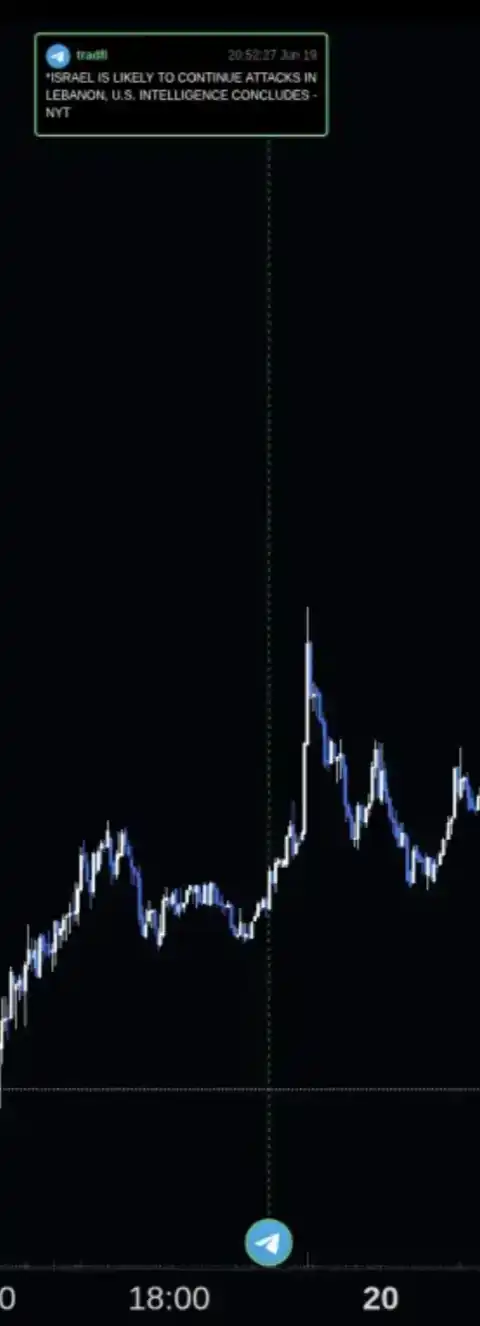
On June 19, citing US intelligence, The New York Times reported that 'Israel is likely to continue striking Lebanon,' pushing oil prices from $76.5 to around $78.
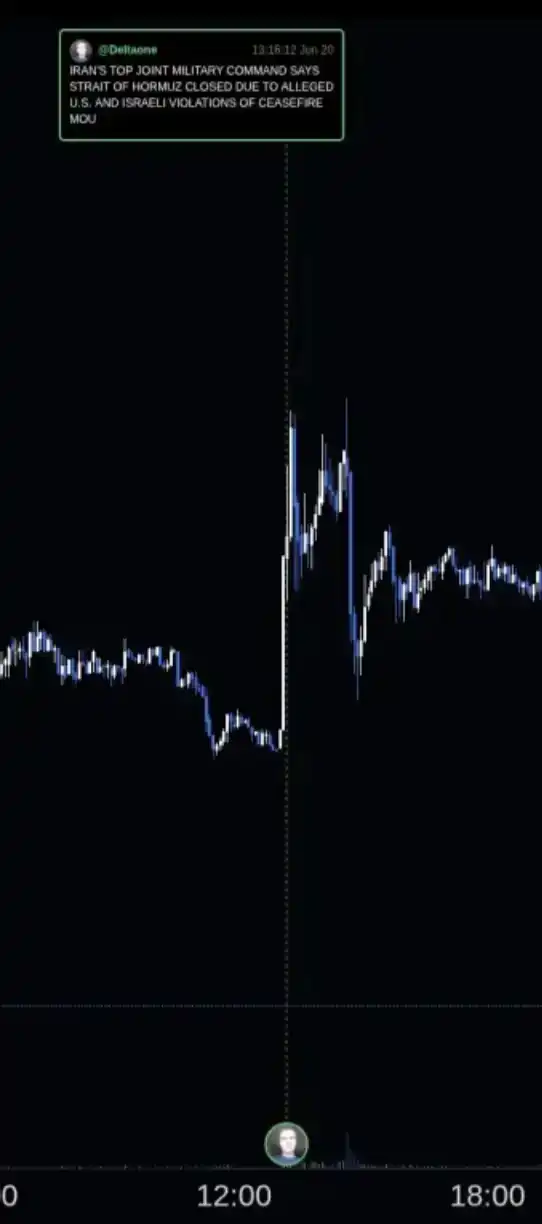
On the evening of June 20, when Iran's Supreme Military Headquarters declared the 'closure of the Strait,' oil prices surged instantly to a high of $79.
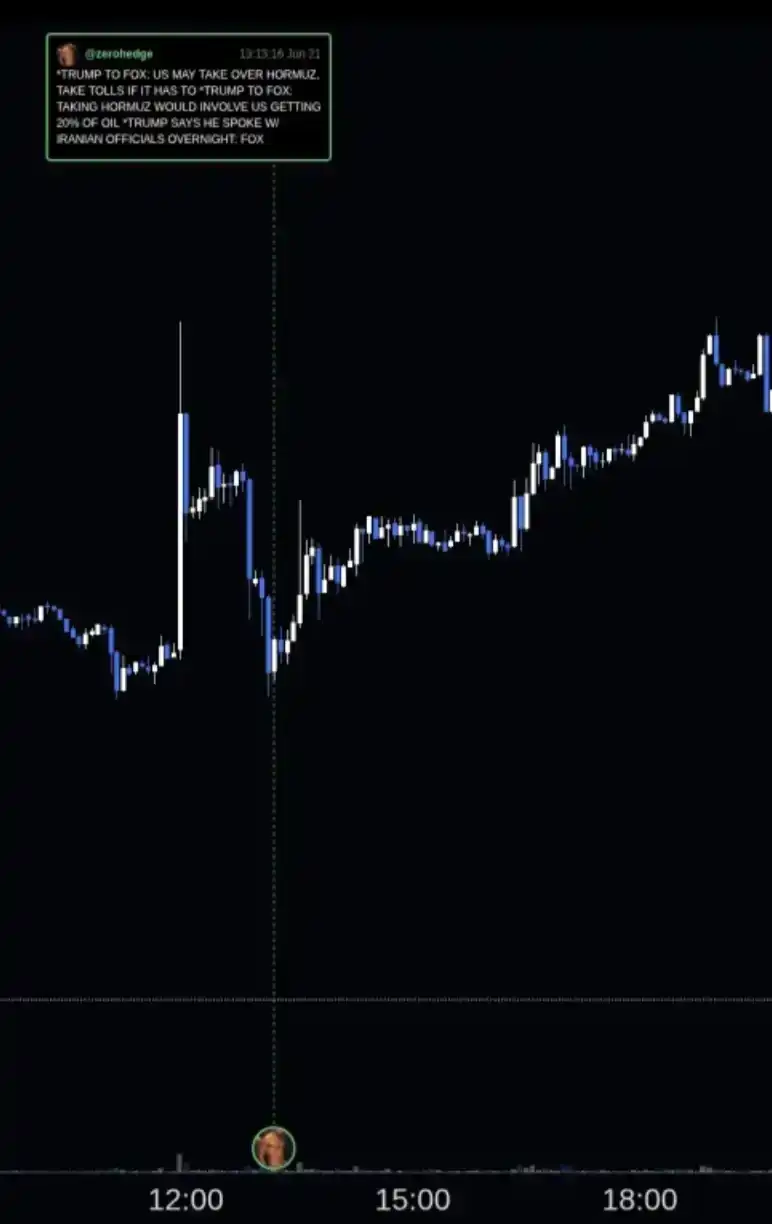
Subsequently, Trump made more aggressive remarks to Fox: 'The US may take over the Strait of Hormuz and charge tolls if necessary,' 'taking over the Strait means the US gets 20% of the oil,' and claimed to have had overnight calls with Iranian officials. Crude oil then rose slowly.
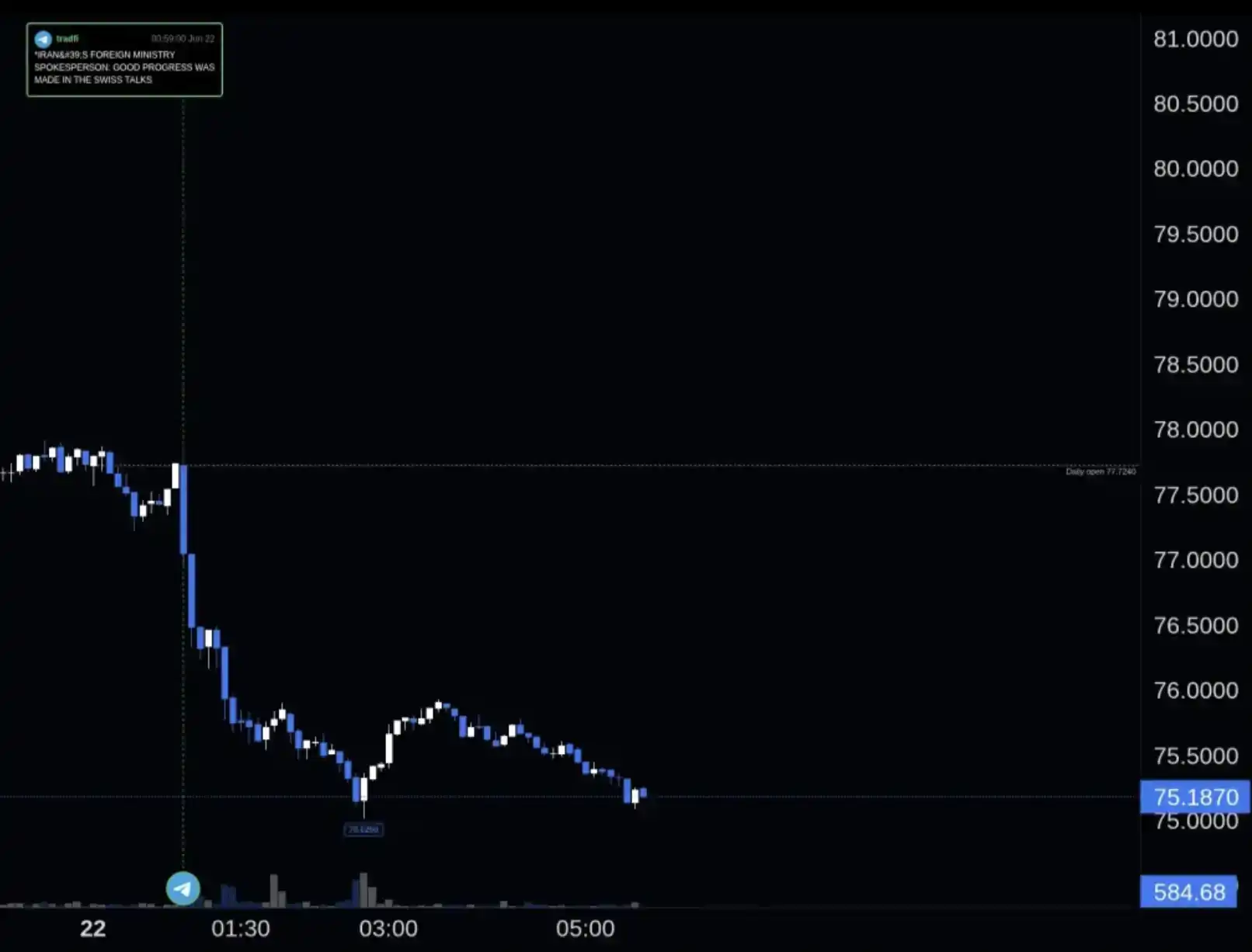
In the early hours of June 22, the Iranian Foreign Ministry's characterization that 'the Swiss talks have made good progress' led crude oil futures to retreat nearly 6% from the weekend's highs.
US Stocks

Compared to crude oil's sharp volatility, US stocks performed much more flatly this week.

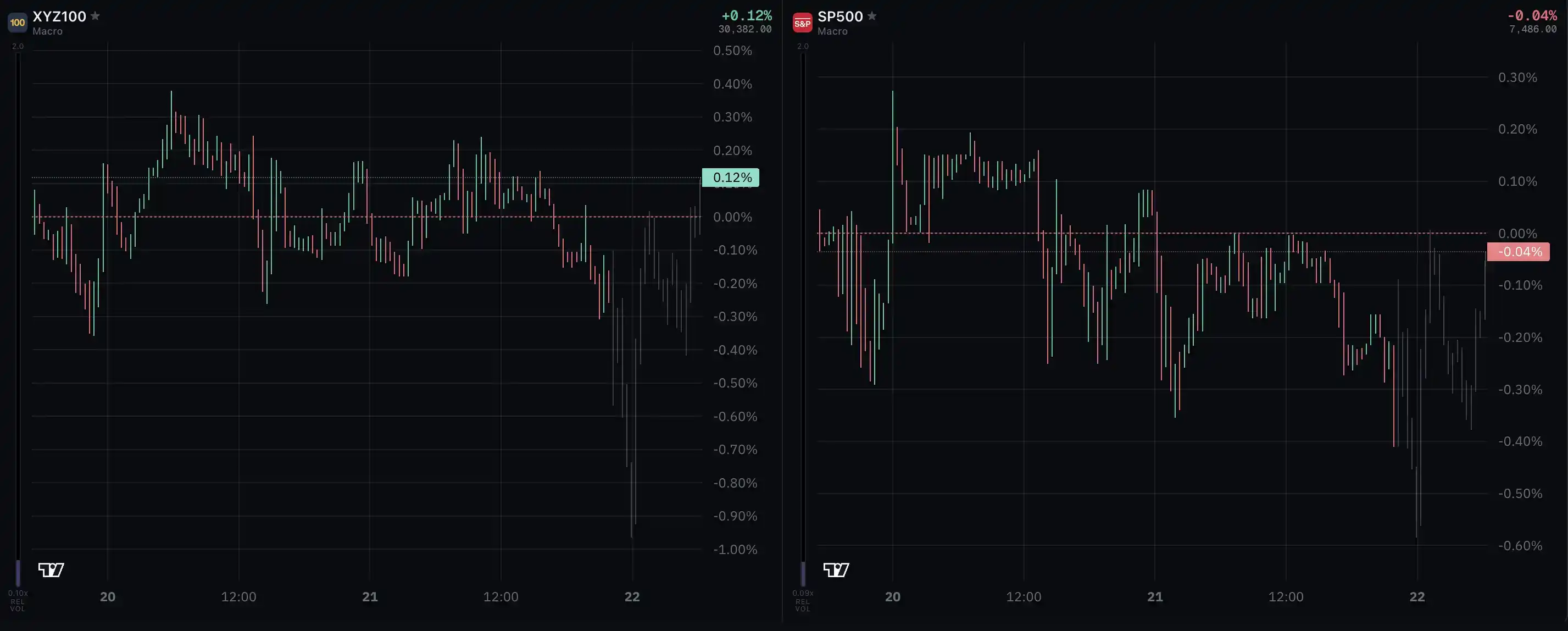
On the index front, XYZ100 and SP500 basically oscillated around the zero line throughout the weekend, weakening intraday at one point (SP500 briefly probed near −0.6%) before recovering alongside the opening gains in index futures.
At the individual stock level, most followed the broader market slightly lower: tech sector SKHX −0.79%, MU −0.63%, NVDA −0.8%, SMSN −3.0%;
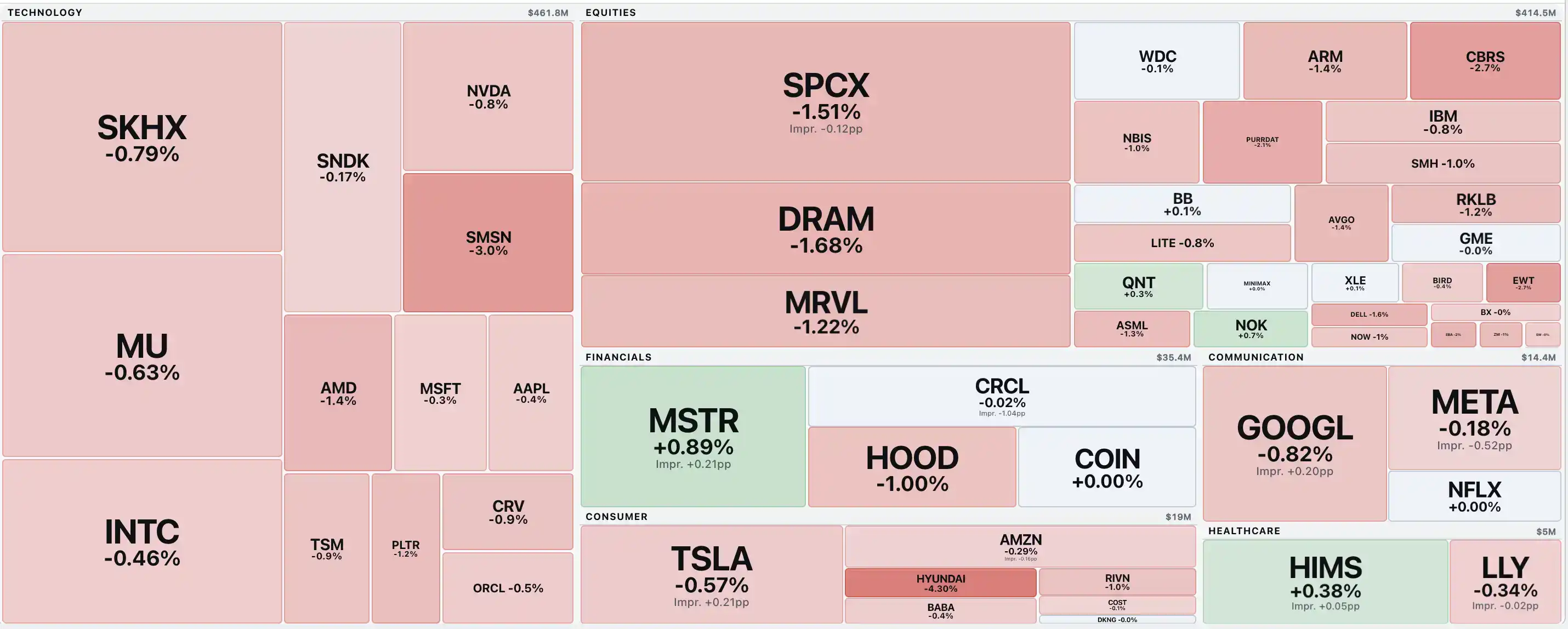
High-beta growth stocks SPCX −1.51%, DRAM −1.68%, MRVL −1.22% also pulled back in sync; relatively strong stocks included MSTR +0.89% and HIMS +0.38%.

Commodity Futures

Gold and silver saw a gap-up at the futures market open. This continued the 're-pricing of easing' logic that emerged last weekend. Falling oil prices reinforced expectations of peak inflation, lower yields, and a weaker dollar, which instead supported precious metals, rather than traditional safe-haven buying.
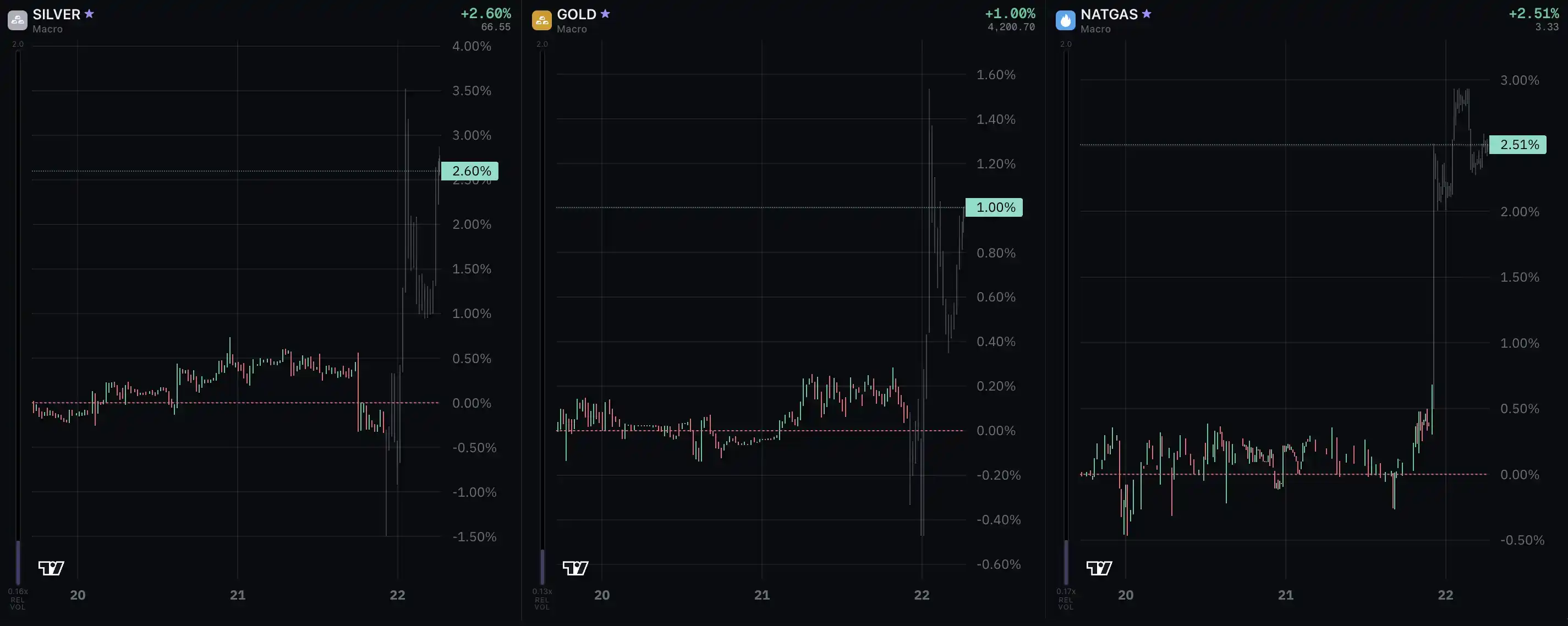
An unexpected move was the counter-trend rise in natural gas (+2.51%).

The increase may stem from an accident. Earlier today, a fire and explosion occurred at a natural gas plant at Qatar's core LNG processing base, Ras Laffan, injuring 54 people with 18 missing. The Barzan gas plant at this base supplies gas for Qatar's domestic industry and power generation. It is still unclear if LNG production is affected. Qatar was the world's second-largest LNG exporter before the war and had temporarily suspended production due to facility attacks and Strait closures in the early stages of the conflict.
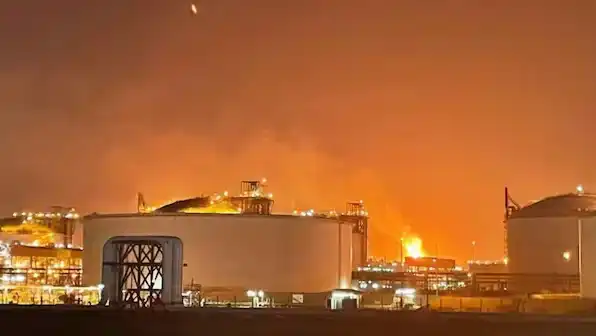
In subtle contrast to this explosion was another 'production resumption' signal: Qatar has begun recalling empty LNG carriers to re-enter the Persian Gulf, with market predictions that gas supply from Qatar is about to resume.


Related Questions

QAccording to the article, what were the key events from June 19 to June 22 that caused volatility in the price of crude oil?

AOn June 19, crude oil rose from $76.5 to near $78 after a New York Times report suggested Israel would likely continue strikes in Lebanon. On the evening of June 20, it surged to a high near $79 after Iran's top military command announced the closure of the Strait of Hormuz. It saw further slow gains following Trump's aggressive comments about potentially taking control of the Strait. Finally, on the morning of June 22, prices fell nearly 6% from the weekend's high after Iran's Foreign Ministry characterized the Swiss talks as having 'made good progress.'

QHow did the US stock market, specifically indices and tech stocks, perform over the weekend described in the article?

AThe US stock market performance was relatively flat. Major indices like the XYZ100 and SP500 oscillated near the zero line, with the SP500 briefly dipping to around -0.6% before recovering. In the tech sector, stocks like SKHX fell -0.79%, MU -0.63%, NVDA -0.8%, and SMSN -3.0%. High-beta growth stocks such as SPCX, DRAM, and MRVL also saw declines of over 1%.

QWhat was the unexpected commodity that rose in price over the weekend, and what event likely caused this increase?

ANatural gas was the unexpected commodity that rose in price, gaining +2.51%. The increase was likely triggered by an explosion and fire at the Barzan gas plant in Qatar's key Ras Laffan LNG processing complex. The incident resulted in 54 injuries and 18 missing persons, raising concerns about potential supply disruptions.

QWhat was the outcome of the four-party technical-level consultations held in Switzerland, as mentioned in the article?

AAccording to statements from Qatar and Pakistan, the consultations in Switzerland yielded three main results: 1) The establishment of a high-level political oversight committee, 2) A finalized 60-day roadmap for a final agreement, and 3) The launch of a mechanism to resolve the conflict in Lebanon. Mediators described the atmosphere as 'extremely positive and constructive.' Pakistan also indicated that Iran would not block ships from passing through the Strait of Hormuz for the next 60 days and that passage would be free.

QAccording to the article, what was the primary market logic supporting the prices of gold and silver over the weekend, rather than traditional safe-haven buying?

AThe primary logic supporting gold and silver prices was a 'loose re-pricing' driven by macroeconomic factors. Falling oil prices reinforced expectations of peak inflation, leading to lower bond yields and a weaker US dollar. This environment was supportive for precious metals, rather than direct safe-haven demand due to geopolitical tensions.

Related Reads

human.tech Launches Clean SDK for Privacy-First Web3 Apps

human.tech has launched the Clean SDK, a toolkit enabling developers to build privacy-first Web3 applications with transparent accountability. Released alongside Aztec's version 5, the SDK provides components for integrating zero-knowledge identity verification, sanctions screening, and private transactions, without developers handling sensitive user data or building compliance infrastructure from scratch. It uses zero-knowledge proofs and programmable verification to allow apps to confirm user legitimacy and sanctions compliance while keeping identities confidential. The first application built on the SDK, Shield, a privacy bridge to Aztec, also launched. It allows users to transfer assets privately while proving a unique human is behind each transfer and that funds have passed sanctions checks, as verified by a May 2026 audit. The SDK offers three core verification techniques: Proof of Innocence (sanctions screening against 23 sources), Proof of Personhood (simpler verification via Human Passport), and Proof of Clean Hands (higher-assurance zero-knowledge government ID checks). This allows apps to authenticate users and transactions without exposing personal data. Designed for Aztec builders, the SDK lets developers add programmable privacy to decentralized apps, eliminating the need to create their own verification and ZK infrastructure. Shield demonstrates its practical use for private bridges, but the SDK aims to enable a wider ecosystem of private, accountable financial apps and services. The launch addresses growing demand for infrastructure that balances privacy and accountability. The SDK avoids traditional identity databases, storing encrypted data off-chain, screening at both entry and exit points, and including a gated disclosure mechanism for legal requests. human.tech's products, including the Clean SDK, focus on using zero-knowledge technology to enable verifiable personhood and privacy in digital systems.

TheNewsCrypto21m ago

human.tech Launches Clean SDK for Privacy-First Web3 Apps

TheNewsCrypto21m ago

Unlocking $100 Million in Liquidity? Pump.fun's New Policy Tests the 5-Minute Pump Technique

Pump.fun, a popular meme coin launchpad, has introduced a new standard mechanism called BOOST. It aims to address a significant capital efficiency issue: when a newly launched token graduates from its initial bonding curve to a liquidity pool (LP), roughly 20% of its liquidity becomes permanently locked as "dead liquidity," estimated to waste over $100 million annually. Instead of locking these funds permanently, BOOST repurposes them. Upon a token's migration, approximately 20% of the settlement funds (e.g., 17.6 SOL or ~$2516 USDC) are used to buy back the token on the open market over a 5-minute period via a Time-Weighted Average Price (TWAP) mechanism. All purchased tokens are immediately burned. This creates a brief, systematic buy pressure immediately after migration, potentially generating a short-term price surge ("pump") while permanently reducing the token's circulating supply. The goal is to enhance the immediate post-launch trading experience, potentially increasing trader retention and sustainable protocol revenue, which funds ongoing token buybacks. However, concerns exist that this artificial 5-minute boost could lower the barrier for launching low-quality tokens and lead to steeper price crashes once the buy pressure stops, if followed by large sell-offs. The feature automatically applies to tokens migrating after July 21, 2024, but not to previously migrated tokens or those launched via the Mayhem AI Agent lab.

marsbit29m ago

Unlocking $100 Million in Liquidity? Pump.fun's New Policy Tests the 5-Minute Pump Technique

marsbit29m ago

Podcast Notes | Conversation with GSR Asset Management Head: To Determine if This Crypto Rally is Real, Just Watch the Lending Rates on Aave

Podcast Summary: Dialogue with GSR's Head of Asset Management: To Determine if This Crypto Rally is Real, Just Check Lending Rates on Aave Andy Baehr, Managing Director of Asset Management at GSR, discusses the current crypto market, characterizing it as stuck in a state of "ambivalence" with short-lived, unsustainable rallies. He outlines a simple framework: the market moves between "ambivalence" and "conviction" (sustained upward momentum). Currently, every rally resembles a single-stage rocket booster that quickly fizzles out. Baehr identifies three key signals to watch: 1) DeFi lending rates, 2) the potential passage of the CLARITY Act, and 3) the market forming a consensus on the "Fed hawkish peak." He emphasizes that the most immediate indicator for the sustainability of the recent CPI-triggered rally is the USDC borrowing rate on Aave, currently around 3.75%—close to U.S. Treasury yields. The absence of a credit spread indicates low leverage demand and a lack of market energy. He explains that a healthy, sustained rally requires layered buying pressure. Last year's rally progressed from an ETH short squeeze to crypto-native trader influx and finally to ETF inflows. Currently, this structure is missing. Other potential structural buyers like Digital Asset Treasury (DAT) companies are absent, and ETF flows have proven transient. Baehr notes that while small-cap crypto tokens outperformed large caps in Q2—a potential sign of capitation in major assets—capital is also flowing to more exciting opportunities like AI stocks and tech IPOs, leaving crypto sidelined. Regarding DeFi, he highlights that platforms like Aave provide a clear, real-time signal of leverage demand through their supply/demand-driven interest rates. A significant, sustained rate increase would signal genuine market conviction. He also observes the quiet emergence of fixed-income-like products and vaults in DeFi. On regulation, the probability of the CLARITY Act passing before the August 7th deadline has dropped linearly from 75% to below 40% on Polymarket. Baehr suggests its passage would be treated as a bullish surprise, a potent driver for price movement. However, political hurdles, including ethical clause debates and disclosures about the First Family's crypto profits, remain significant obstacles. Ultimately, the market awaits clarity on the Fed's terminal rate under Chair Warsh. Until the "Fed Solstice"—the point where the market collectively understands the peak of hawkish policy—sustained conviction will be difficult to achieve.

marsbit1h ago

Podcast Notes | Conversation with GSR Asset Management Head: To Determine if This Crypto Rally is Real, Just Watch the Lending Rates on Aave

marsbit1h ago

Trading

Spot
活动图片




