NVIDIA to Grow Another 70% Next Year! Computing Power 'Money Printer' at Full Speed, Overheating Risks Also Rise

Published on 2026-08-27Last updated on 2026-08-27

Abstract

NVIDIA's data center revenue exceeds expectations, with Rubin beginning to take over from Blackwell. Management expects approximately 70% growth in the next fiscal year, but capital investment and gross margin risks are increasing.

Datacenter Exceeds Expectations, Rubin Begins to Take Over from Blackwell

NVIDIA's Datacenter revenue for the second quarter of fiscal 2027 reached $89.0 billion, an increase of $13.8 billion sequentially, exceeding market expectations of $86.0 billion. The growth was primarily driven by shipments of the Blackwell series. The Rubin series will begin shipments in the third quarter, gradually succeeding Blackwell to complete the product upgrade.

Under the new reporting format, revenue from hyperscale customers was $48.7 billion, an increase of $5.7 billion sequentially; revenue from AI cloud, industrial, enterprise, and sovereign customers was $40.3 billion, an increase of $8.1 billion sequentially. The faster growth in the latter indicates that the demand for computing power is expanding from a few cloud giants to a broader range of customers.

The company's overall revenue was $96.2 billion, a year-over-year increase of 106%; Datacenter revenue grew 117% year-over-year. The revenue guidance for the third quarter reached $108.0 billion, continuing to exceed market expectations, and does not include revenue from datacenter computing in China.

Why the 70% Growth Guidance Caused a Post-Market Reversal in the Stock Price

Following the earnings release, the market initially expressed concerns about the sustainability of growth rates and capital expenditures, causing the stock price to weaken temporarily. However, management projected revenue growth of approximately 70% for the next fiscal year and emphasized that real demand exceeds current supply capabilities. Subsequently, the stock price turned upward in after-hours trading.

NVIDIA is converting strong demand into orders by securing capacity in advance, participating in customer financing, and providing infrastructure support. This model strengthens revenue visibility but also embeds the company deeper into the capital cycle of AI datacenters. If customers fail to achieve sufficient returns in the future, the market may re-evaluate the associated financing and guarantee risks.

High Growth Coexists with Overheating Risks

The gross margin for the second quarter was 75%, with guidance for the third quarter at approximately 74%. The volume production of new platforms, memory costs, and supply chain constraints may all put pressure on gross margins. On the other hand, the rapid scaling of AI infrastructure investment, customer concentration, and returns on capital expenditures have become important variables for valuation.

In the short term, the $108.0 billion guidance, the shipment of Rubin, and the 70% growth expectation for the next fiscal year continue to support NVDA. In the medium term, it will be necessary to observe whether Rubin deliveries proceed smoothly, whether supply can expand, and whether customers can generate sufficient revenue from AI applications. The computing power 'money printer' is still operating at high speed, but when the market is already pricing in extremely high growth, any deviation in delivery or profitability could amplify stock price volatility.


Related Reads

Tokenized Deposits Could Raise US Lending Costs: Dallas Fed Economists

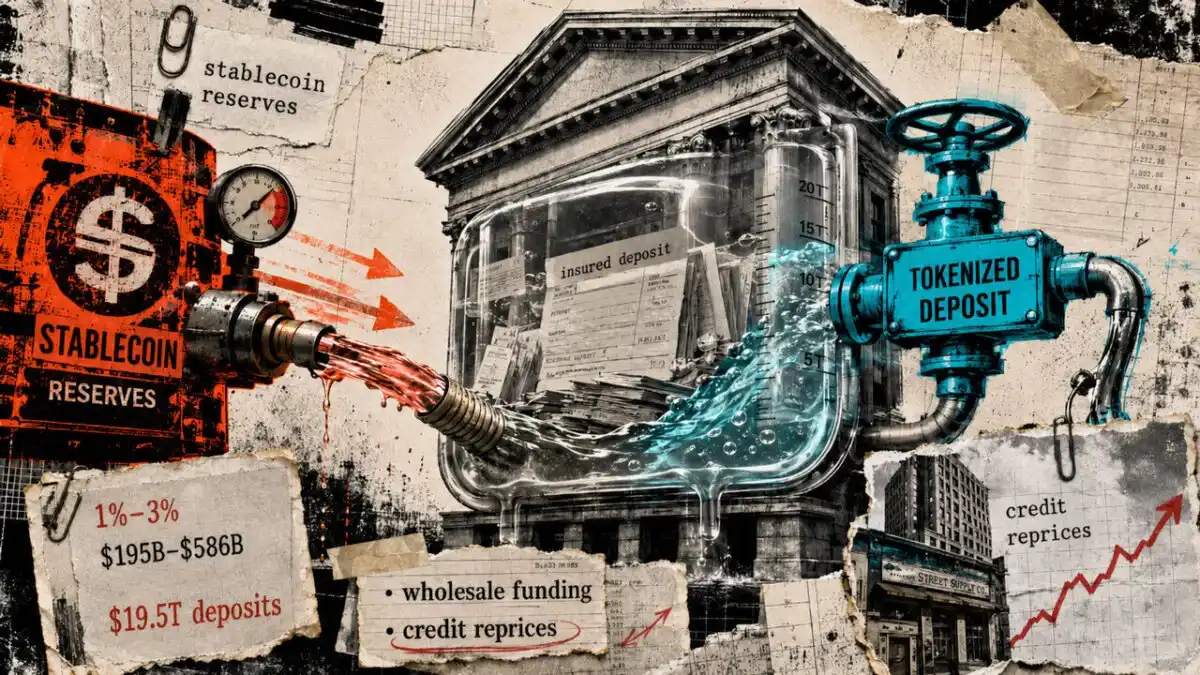
Tokenized deposits could increase U.S. lending costs and make bank funding less stable, according to an analysis by Dallas Fed economists. Rosy Leigh and Sreeni Ramaswamy note that instant settlement capabilities, programmable deposit tokens, and AI could allow depositors chasing higher yields to move funds faster between banks, reducing deposit tenures and increasing their sensitivity to interest rates. The economists estimate that a 10% increase in deposit rate sensitivity could reduce banks' capacity to hold long-term loans by around $700 billion over a ten‑year equivalent. A 10% reduction in deposit tenures could lower capacity by about $580 billion. These scenarios do not imply a direct, proportional cut in lending but highlight potential pressures. U.S. banks are developing blockchain networks for moving tokenized deposits around‑the‑clock while keeping funds within the regulated banking system. Thirty‑nine state banking associations recently formed the BankChain alliance to build a nationwide network, while The Clearing House is developing a separate network with major banks. Institutions like Standard Chartered and HSBC have also tested cross‑border tokenized deposit transactions via blockchain. Banks may respond to more volatile deposits by holding more liquid assets (like reserves and Treasuries) or relying more on wholesale debt—which would likely raise borrowing costs for consumers and businesses. The authors cite Brazil's Pix instant payment system as a comparative example, where increased use raised bank liquidity holdings and reduced credit intermediation.

cryptonews.ru3m ago

Tokenized Deposits Could Raise US Lending Costs: Dallas Fed Economists

cryptonews.ru3m ago

SEC to Relax Crypto Regulations: Projects Don't Need Full Decentralization, 'Functional' is Enough

The U.S. Securities and Exchange Commission (SEC), led by Commissioner Hester Peirce, has proposed a new regulatory safe harbor for crypto assets. This rule, part of the "Regulation of Crypto Assets," would allow tokens to exit the securities law framework once the underlying project becomes "functional" or decentralized, rather than requiring full decentralization from the start. Currently, tokens are often deemed securities due to the central managerial efforts needed during early development. The proposal addresses this "catch-22" where projects need to distribute tokens to grow but face securities regulations for doing so. The safe harbor grants developers up to four years of temporary exemption from certain securities laws while they build their networks. A key shift is the exit criteria: tokens cease to be investment contracts when the network matures into either a "decentralized" or "functional" state, no longer reliant on a single entity for essential managerial or entrepreneurial efforts. The term "functional" is not strictly defined but appears to be a pragmatic version of decentralization, emphasizing broad community involvement over perfect, Bitcoin-like decentralization. Crucially, the rule permits developers to continue maintaining and improving the network even after achieving this status, as such activities are not considered "essential managerial efforts." This offers a clearer, more feasible compliance path for token issuers. The proposal places the onus on projects to self-certify when they meet the exit criteria, which may incentivize more realistic promises and potentially foster greater genuine decentralization—a core principle the crypto industry has long advocated but often failed to implement.

marsbit9m ago

SEC to Relax Crypto Regulations: Projects Don't Need Full Decentralization, 'Functional' is Enough

marsbit9m ago

Trading

Spot
活动图片