Nvidia, AMD, Qualcomm CEOs Gather in Taipei: Whether Your Chips Can Sell Is Decided by Taiwanese Assembly Plants

marsbitPublished on 2026-06-02Last updated on 2026-06-02

Abstract

**Summary:** The buzz around this year’s Computex in Taipei isn't just about flashy keynotes from top CEOs like Jensen Huang (Nvidia), Lisa Su (AMD), and Cristiano Amon (Qualcomm). The real story lies in Taiwan’s hardware ecosystem—the often-overlooked manufacturers of modules, cooling systems, and assembly lines who hold decisive power over which chips succeed or fail. While brands like Dell, HP, and Lenovo set final product specs, it’s Taiwan’s engineers and suppliers who make early, critical decisions during development. If a module maker declines to design around a new chip, or an assembler won’t integrate it, that component can be effectively dead before reaching the market. This bottom-up dynamic defines the industry’s pace: fast, collaborative, and ruthlessly pragmatic. Computex remains the world’s premier computer expo, but its true value is offstage—in private meetings, small forums, and factory visits where relationships are forged and supply-chain hurdles are solved. For global tech leaders, showing up in Taipei isn’t about spectacle; it’s about paying respect to the engineers who turn silicon into sellable systems.

Author: Tim Culpan

Translation: Deep Tide TechFlow

Deep Tide Guide: This year's Computex has attracted a record number of overseas tech CEOs, but they are not here for show. This article reveals a neglected truth: The fate of chip manufacturers is not decided by brand companies like Dell or HP, but by supply chain engineers in Taiwan who handle modules, cooling, and assembly. Understanding this bottom-up power structure is key to understanding the real operational logic of the tech industry.

Good evening Taipei. The Computex Taipei computer exhibition opens tomorrow (Tuesday, June 2nd), and this annual event is more bustling than ever before.

I was recently asked what's different about Computex this year, why it's suddenly so hot. The answer is: nothing is different. I've been attending every year since 2000, and the exhibition itself has barely changed.

What has changed in recent years is the world's rediscovered interest in computers, along with a sudden realization that Taiwan dominates this industry. This year, servers—those giant computers inside big, boring black boxes—have become part of mass conversation and cultural discussion in an unprecedented way.

This is my guide for Computex, teaching you how to attend efficiently and how to understand what's really happening behind the scenes of this globally most important exhibition.

The origin story of Computex is written in its name, Computer Expo. Even as the world's interest in computers has waxed and waned, this annual event has always remained true to its roots.

Over the years, the rise of consumer electronics, gaming consoles, and smartphones made computers seem boring. But this exhibition never strayed from its original purpose. It has always been a stage for computer manufacturers to showcase desktops, laptops, servers, motherboards, cables, peripherals, and all components of the PC industry.

The exhibition officially begins on Tuesday of the first week of June. Monday is not an official exhibition day, but some companies hold events. Saturday is the final day, open to the public. I recommend avoiding Saturday at Computex.

Computex is mainly divided into three parts:

  • Industry Keynote Speeches
  • Forums
  • Exhibition Floor

Keynote Speeches

Keynote speeches are opportunities for executives to pitch their companies, ecosystems, and latest products to people. Remember, the target audience at Computex is engineers, product managers, supply chain purchasers, and global sourcing executives. This is a group proficient in technology, familiar with soldering and motherboards. Bus speeds and thermal thresholds are their daily topics.

For many years, Intel specifically reserved one of its annual chip launches for Computex. AMD often did the same. Taiwan's VIA Technologies once became a hero at Computex, while Intel was the villain for bursting this little rival's balloon (literally, I'm not joking). Graphics chip manufacturers ATi and Nvidia heavily relied on Computex to introduce their niche products to an attentive audience.

Well-known brands occupy prime marketing spots around the exhibition hall

Image: Tim Culpan/Culpium

Computex was, is, and remains the premier computer exhibition.

Therefore, Intel's CEO usually gives a keynote, and one or two other bosses might show up to speak. A few foreign CEOs are about all we could expect, while local leaders like Asus's Jonney Shih or Acer's Gianfranco Lanci would carry Taiwan's flag. Regional or vice-president level bosses of global giants often appear as company ambassadors.

This year, Computex has attracted the most overseas bosses I can remember, including:

Qualcomm, Cristiano Amon

Intel, Lip-Bu Tan

Arm, Rene Haas

AMD, Lisa Su

Nvidia, Jensen Huang

Marvell, Matt Murphy

NXP, Rafael Sotomayor

The importance of Computex is not because all these tech CEOs are coming to Taipei. On the contrary, they are all coming to Taipei because Computex is so important.

The global industry elite come to Taipei to kiss the ring of tech power.

I count AMD's Lisa Su on the list, even though she came to town before Computex, not specifically for the exhibition itself. Nvidia's Jensen Huang is not officially appearing at Computex either. At least not officially. His Monday GTC keynote is not on the official Computex schedule.
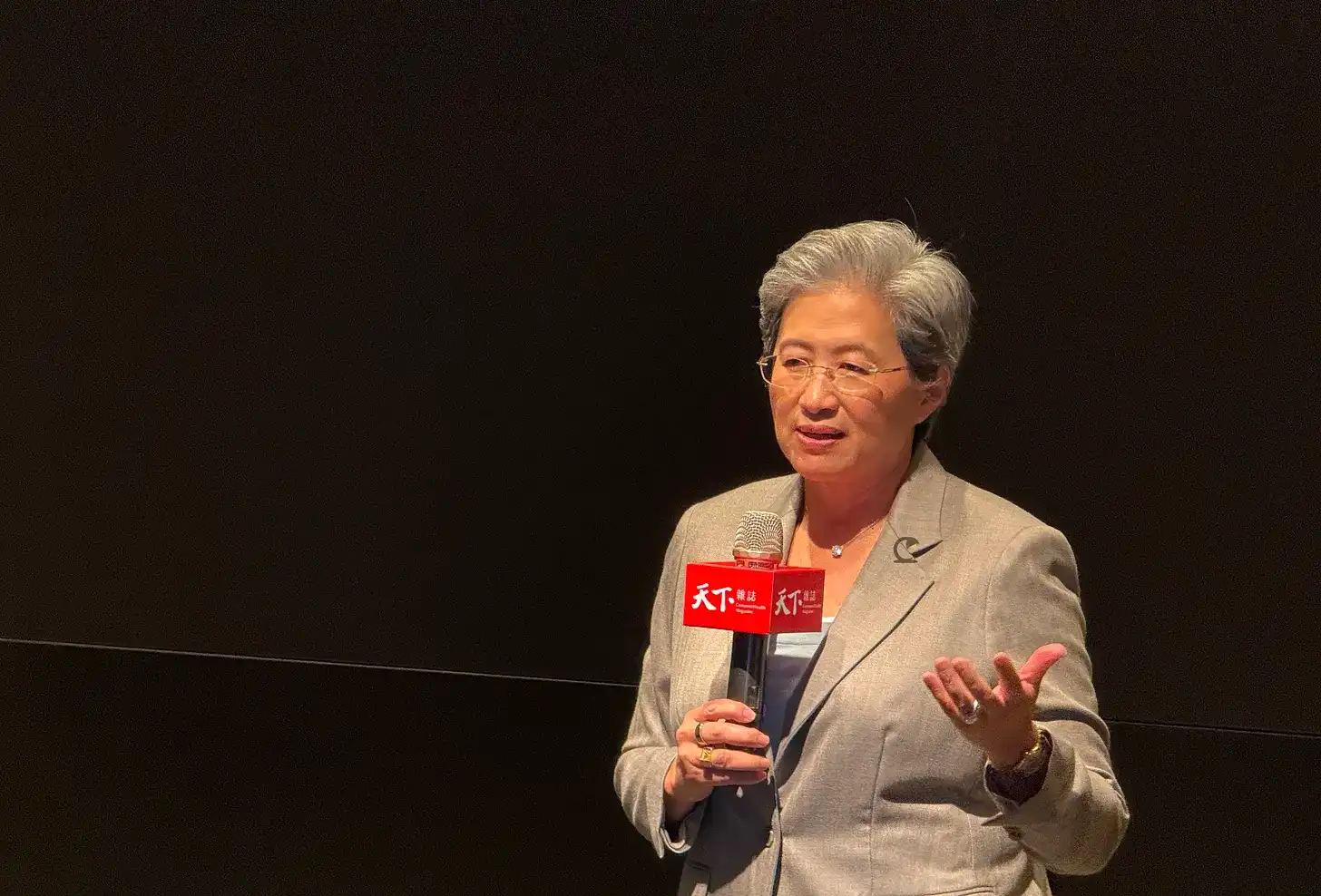
AMD CEO Lisa Su speaks to reporters after attending a pre-Computex 100 event and making announcements in Taipei

Photo: Tim Culpan/Culpium

But this precisely illustrates the point. So many executives realize that Computex, and Taiwan more broadly, are so crucial to their business that they find ways to squeeze into this packed schedule. They want to make major announcements while the world is watching them, and then meet key figures in closed-door sessions to build relationships that will make or break their business over the next 12 months.

The real action doesn't actually happen in the keynotes. All the news naturally flows from interviews under embargo and press releases, timed exactly for when the boss takes the stage.

Forums

Since keynotes are thoroughly covered by media, press releases, and social media, your time might be better spent on small forums focusing on super-niche topics. For example, ABB Robotics' Managing Director Craig McDonnell will host a forum this year on industrial-grade physical AI for robotics. If that's not your thing, consider Google DeepMind's Ed H. Chi and his speech on the future of personalized universal assistants. There are many more. There are also supporting events like Innovex, focusing on startups and emerging companies.

Companies want to present at these forums to promote their vision and ecosystem. Companies also want to sit in the audience to understand what competitors and partners are doing, exchange business cards. I guarantee you'll learn more and build higher-quality connections from a few carefully selected forums than from attending every keynote.

The Exhibition Floor

I'm always surprised to find Computex visitors scheduling their departure for Wednesday or Thursday. But this is understandable if you don't know where the real treasures lie. I think these early departures happen because the final days of most other exhibitions really don't have much good stuff left.

But the most exciting action is neither in the keynotes nor the forums. Everything happens on the exhibition floor, in the VIP areas of those 3x3 booths, in invitation-only hotel suites, in meeting rooms at tech company offices near the Taipei Nangang Exhibition Center and Neihu District.

Many enterprises, including local tech companies and local offices of foreign companies, mark Computex as a closed day on their calendars, prohibiting leave or business trips to ensure full attendance.

Overseas clients are the lifeblood of Taiwan's industry, especially the tech sector, and local partners prepare for this annual pilgrimage. Veterans come because they understand something many visitors don't: winning over the PC ecosystem is crucial for winning market share with end-buyers.

The tech ecosystem is more bottom-up than many imagine. Foreign clients have the money, but local suppliers have the talent and the connections.
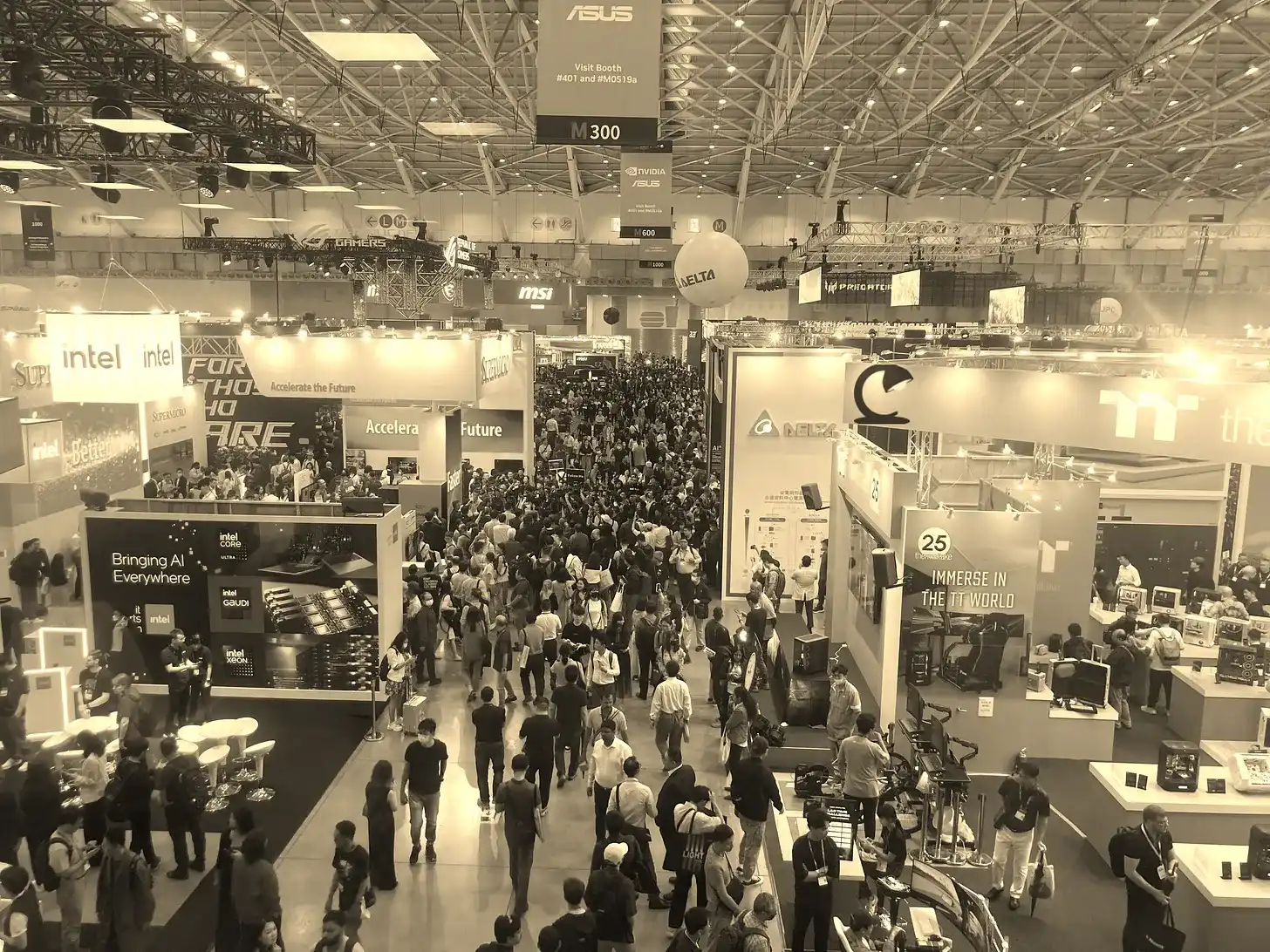
Another trade show? Perhaps not?

Image: Tim Culpan/Culpium

A module manufacturer that doesn't want to design circuit boards around your chip won't become an advocate for your product. A thermal management or mechanical parts maker unwilling to spend time learning and building around your specifications won't have ready solutions when the assembler needs them.

And an assembler that doesn't want to invest time and resources developing a system integrating your product, partly because upstream manufacturers aren't ready with parts, won't even bother showing it to the branded PC manufacturers.

While Dell, HP, Lenovo, Acer, and Asus decide what products to sell, what specifications, and at what price, they are powerless if the rest of the ecosystem isn't interested.

A little-known reality is that system manufacturers and their suppliers make many crucial product and engineering decisions before presenting to brand clients. These choices mark whether your component is taken seriously or becomes yet another oddity that barely ships.

Although many parts are made in South Korea, Japan, China, and even the US, the real ones calling the shots are Taiwan's hardware gang. An uninterested assembler, or a confused and fatigued module manufacturer, can kill your product even before it leaves TSMC's wafer fab. This isn't some conspiracy. It's cold, hard pragmatism.

Tech cycles are short. Margins are thin. Technical barriers are high. The only speed at which this industry functions is fast. Doing so requires cooperation between competitors and partners. As Lisa Su recently said in Taipei about her competitors, "We're all friends because we grew up together." Bringing something new to market is a huge risk for every possible manufacturing participant.

The exhibition floor and the hidden backrooms are where these relationships develop. It's at these booths that niche manufacturers of heat spreaders, high-speed cables, or multi-layer printed circuit boards showcase their products. Then they listen as existing or potential clients share engineering challenges, outline their own sales forecasts, and seek advice on how to build products under oppressive profit margins and impossible deadlines.

Got an idea? Please share.

For big companies like Intel, AMD, Nvidia, Qualcomm, and Marvell, not being mentioned in these discussions means your chip is being rejected by those who make the final product. Similarly, failing to show up and support these manufacturers will lead them to work with suppliers who are willing to do so.

Like any industry, relationships and interoperability matter. What's unique about tech hardware is that the manufacturing of physical products combines with product development cycles operating at tech speed.

Computex offers a unique opportunity to observe this ecosystem. You just need to know where to look.


Related Questions

QWhy did the article claim that the fate of chip companies like NVIDIA, AMD, and Qualcomm is determined by Taiwanese assembly and component manufacturers?

ABecause the Taiwanese supply chain (module makers, heat dissipation engineers, assembly factories) plays a critical bottom-up role. They decide whether to invest resources into designing circuits, making components, and integrating a specific chip into a system. If they are not interested or supportive, the brand companies (like Dell, HP) have nothing to sell, effectively killing the chip's market potential before it even leaves the fab.

QWhat is the primary purpose of the Computex exhibition according to the article?

AComputex is fundamentally a computer expo for the industry's engineers, product managers, and supply chain professionals. Its core purpose is not the flashy keynotes but facilitating the crucial behind-the-scenes meetings where hardware component makers, module suppliers, and system assemblers collaborate, solve engineering challenges, and build the relationships that determine which technologies and chips get integrated into final products.

QWhat is the most important place for real business deals and relationship-building during Computex?

AThe most critical action happens on the exhibition floor itself—specifically in the VIP areas of small booths, in invitation-only hotel suites, and in closed-door meetings at tech company offices near the venue. This is where component manufacturers and system assemblers have practical discussions about engineering problems, sales forecasts, and production challenges, forming the alliances that make or break products.

QHow does the article explain the unprecedented attendance of so many overseas tech CEOs at Computex this year?

ATheir attendance is a result of Computex's (and Taiwan's) enduring importance, not the cause of it. These CEOs come to Taipei to 'kiss the ring' of tech power. They recognize that Taiwan's hardware ecosystem is vital to their business success, so they schedule major announcements and critical private meetings around the event to build the relationships that will define their fortunes for the next year.

QWhat unique challenge does the tech hardware industry face, as highlighted in the article?

AThe tech hardware industry uniquely combines the physical manufacturing of products with product development cycles that operate at 'tech speed.' This requires incredibly fast and close collaboration between competitors and partners across the supply chain to manage high technical barriers, thin profit margins, and short cycles. Failure to cooperate and integrate quickly can cause a product to fail before it even reaches the market.

Related Reads

7 Months After the Collapse of Huiwang, Southeast Asia's Escrow Platforms Undergo a Major Reshuffle

Following the collapse of Huione Pay—dubbed the "Alipay of Southeast Asia"—seven months ago, the region's underground financial guarantee platform sector is undergoing a significant reshuffle. This power vacuum has been swiftly filled by emerging platforms such as XinBi, Tiger/Navigator, JinBei (renamed JinBo), Dali/Tiancheng, and FullyLight. These platforms, operating largely via Telegram and offering services like escrow for illicit transactions, have absorbed the vast user base and markets left behind by Huione. While positioning themselves as "trust intermediaries," their primary clientele consists of networks involved in online scams, money laundering, illegal gambling, and even human trafficking. For instance, the Tiger/Navigator platform explicitly provides "escrow" services for kidnapping-for-ransom operations ("强押车交易"). Data underscores the immense scale: Huione alone processed over $103 billion in cryptocurrency payments and facilitated over $31 billion through its escrow market before its downfall, linking it to Cambodia's notorious Prince Group. Since its collapse, competitors have seen explosive growth. For example, the XinBi platform has accumulated over $1.6 billion in total USDT revenue, while platforms like NewPay, OkPay (under Dali), and FullyLight Wallet collectively processed over $4.8 billion in USDT in a single year. This ecosystem thrives in regions like Cambodia and Myanmar, where regulatory gaps allow these platforms to act as critical financial infrastructure for sprawling cybercrime industries, from scam compounds to online casinos. The article concludes that the moniker "Southeast Asian Alipay" is a misnomer, obscuring the platforms' fundamental role in enabling serious criminal enterprises rather than representing legitimate financial innovation.

Odaily星球日报7m ago

7 Months After the Collapse of Huiwang, Southeast Asia's Escrow Platforms Undergo a Major Reshuffle

Odaily星球日报7m ago

The Changing Landscape: What Are Crypto VCs Experiencing?

Title: The Shifting Landscape of Crypto Venture Capital The era of dedicated crypto venture capital funds is undergoing a significant transformation. Once essential for navigating the sector's complexity and high risk, these specialized funds are now facing an identity crisis as the market matures. This shift mirrors historical patterns in other specialized investment classes like cleantech and SPACs, where initial information advantages dissipate as technologies become mainstream and integrated into existing industry frameworks. The article argues that crypto is reaching a critical inflection point, transitioning from a "building phase" to an "integration phase." Major players like Stripe, BlackRock, and Visa now engage with crypto not for its novel mechanics but as a foundational financial infrastructure. Their needs—regulatory compliance, banking partnerships, distribution channels—align with traditional fintech, a domain easily understood by large, generalist funds like Sequoia and Founders Fund. This evolution creates a "barbell effect" within the VC landscape. On one end are massive, diversified platforms that can incorporate crypto as one vertical among many. On the other are small, nimble funds focused on niche, experimental projects. The middle ground—medium-sized dedicated crypto funds—is being squeezed out. Their typical fund size makes it impossible to generate sufficient returns solely from early-stage crypto bets, yet they cannot compete with giants for later-stage deals. Consequently, leading crypto-native firms like Paradigm and Framework Ventures are expanding into AI, robotics, and other sectors, driven partly by LP pressure for better returns amid a broader VC DPI crisis. Others, like Dragonfly and a16z, have narrowed their crypto focus predominantly to financial infrastructure like stablecoins, reframing the sector's core narrative. For crypto entrepreneurs, this consolidation presents challenges. While generalist funds offer larger checks and broader resources, crypto projects now compete fiercely with AI for attention and capital within these firms. Furthermore, the long-term, non-commercial foundational work that built the ecosystem—funded by dedicated crypto VCs—is less likely to attract generalist capital focused on direct returns. The conclusion is that "crypto investor" as a standalone category is becoming obsolete, akin to "internet investor." Crypto is becoming a baseline infrastructure layer. The future will see a barbell structure: large-scale growth financing handled by generalist funds, while pioneering, speculative projects are funded by small, specialized vehicles. The dedicated crypto funds of the 2017-2021 boom, which incubated core infrastructure, are giving way to this new, bifurcated reality.

Foresight News25m ago

The Changing Landscape: What Are Crypto VCs Experiencing?

Foresight News25m ago

As Consensus Accelerates, What Are Young Investors Betting On?

Title: As Consensus Forms Faster, What Are Young Investors Betting On? In the rapid evolution of tech investment, a new generation of young investors is navigating a landscape where AI, robotics, commercial aerospace, and quantum computing are advancing simultaneously. Traditional investment logic based on financial models is giving way to a need for deep technical understanding and the ability to act before industry consensus forms. An analysis of trends from the "WAIC FUTURE TECH" list of young investment leaders reveals key shifts in focus. The first major trend is the movement of AI from the digital screen into the physical world. Investment is shifting from large language models and chatbots towards embodied AI, robotics, AI hardware, and edge computing. While demonstrations generate excitement, the real challenge lies in achieving scalable, reliable, and cost-effective delivery in complex real-world environments like factories and logistics. Success depends not just on algorithms but on the integration of sensors, actuators, and control systems. Second, the competitive focus for large models is moving beyond raw capability toward building an "intelligence flywheel." The goal is to create self-reinforcing systems where user interaction generates data, improving the model, which in turn enhances the user experience and attracts more engagement. Companies that successfully embed AI into workflows to create these closed-loop systems can build lasting value that isn't easily erased by the next model upgrade. Third, facing a potential bottleneck in high-quality human-generated data, investors are looking at new underlying technologies. Reinforcement learning and self-play, as demonstrated by AlphaGo Zero, offer paths for AI to generate its own experience. Scientific foundation models, which aim to build general AI capabilities for fields like life sciences and materials discovery, represent a non-consensus direction that could unlock new frontiers of knowledge and data. Finally, in deep-tech areas like quantum computing, commercial aerospace, and space-based infrastructure, patient capital is essential. These fields have long, uncertain development and validation cycles involving complex engineering, supply chains, and regulations. Investment here requires a long-term view, focusing on foundational team capabilities and the eventual emergence of market demand, even if commercial returns are distant. Collectively, these trends illustrate how young investors are adapting to a new era. They are learning to make earlier, technically-informed judgments, balance hype with real-world viability, and provide the patient capital needed to build the deep-tech foundations of the future.

marsbit53m ago

As Consensus Accelerates, What Are Young Investors Betting On?

marsbit53m ago

Trading

Spot
活动图片




