MrBeast, the Most Generous KOL, Sets His Sights on Teenagers' Digital Wallets

marsbitPublished on 2026-02-10Last updated on 2026-02-10

Abstract

MrBeast, the renowned YouTube creator with over 466 million subscribers, has expanded into fintech through his company Beast Industries by acquiring Step, a mobile banking app designed for teenagers. Step offers FDIC-insured banking services via Evolve Bank & Trust, including savings accounts and Visa cards. This move follows a $200 million equity investment from Ethereum treasury firm BitMine in January 2026, with plans to integrate DeFi into future financial services. Previously, MrBeast faced allegations of profiting over $10 million through alleged pump-and-dump schemes involving low-market-cap cryptocurrencies like SUPER and PMON, where he promoted tokens before selling them during price surges. Despite these controversies, MrBeast aims to create financial educational content and provide youth with financial tools he lacked. His company has also filed a trademark for "MrBeast Financial," indicating intentions to offer crypto trading and payment processing services.

Original Author: ChandlerZ, Foresight News

On February 9, Beast Industries, owned by renowned YouTube creator MrBeast, announced its acquisition of Step, a mobile banking app for teenagers, marking its entry into the fintech sector. This move follows the company's recent announcement of a $200 million equity investment from Ethereum treasury firm BitMine, representing its first concrete action since the funding round.

Step is an all-in-one financial management application designed to help young people begin their financial journey through a digital banking platform. The company has long offered a range of services tailored for teenagers and young adults, including savings accounts, credit-building Visa cards that function like debit cards, and cash advances. Step itself is not a bank but provides banking services through a partnership with Evolve Bank & Trust, a member of the FDIC.

Neither company disclosed the terms of the transaction. In 2022, Step reported raising $500 million in equity and debt financing from institutional investors such as General Catalyst, companies like Stripe, and individual investors including TikTok influencer Charli D'Amelio.

Expanding Beyond YouTube

MrBeast, whose real name is Jimmy Donaldson, has evolved from a single creator into the core of a commercial organization spanning content, consumer goods, and offline experiences. Public data shows he has over 466 million YouTube subscribers, with his main channel and multi-language matrix covering an extensive audience, placing his communication efficiency and user mobilization capabilities at the top of global internet platforms.

The influencer began planning his entry into the fintech sector several months ago. In October 2025, Beast Holdings, LLC filed a trademark application for "MrBeast Financial" with the U.S. Patent and Trademark Office. The company plans to offer cryptocurrency trading services, crypto payment processing, and crypto trading via DEXs, among other services.

Although a trademark application only represents a预设的业务边界 and does not directly equate to product launch, with regulatory approvals and business implementation still requiring time, it nonetheless marks the first time MrBeast's intentions in finance and crypto have been formally documented.
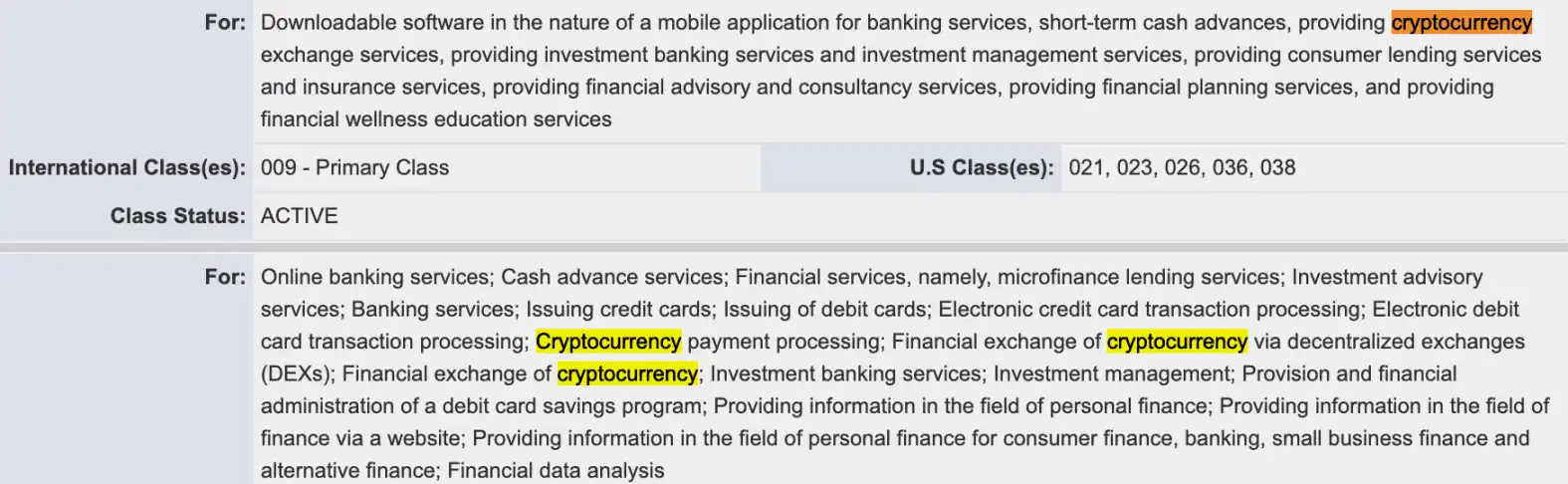
Going back a month earlier, in January 2026, Ethereum treasury company BitMine announced a $200 million equity investment in Beast Industries, with the transaction expected to be completed around January 19, 2026. Beast Industries CEO Jeff Housenbold stated that future collaborations would explore introducing DeFi into their financial services platform. The two parties plan to explore integrating DeFi into the upcoming financial services platform. Beast Industries is an entertainment and consumer goods company founded by renowned YouTube creator MrBeast.

MrBeast has frequently discussed his personal financial situation, viewing the acquisition of Step as an opportunity to "provide millions of young people with the financial foundation I never had." As the company prepares to enter the financial industry, MrBeast expressed his desire to create videos about finance, such as "educating people on how to invest and showing them what a Roth IRA is."

Previously Accused of Profiting Over $10 Million Through Crypto Pump-and-Dump Schemes

This is not MrBeast's first foray into the crypto space. On October 11, 2024, on-chain detective SomaXBT publicly released a chain investigation. The investigation alleged that MrBeast participated in several Initial DEX Offerings (IDOs) and token promotion activities, profiting significantly from代言后 token price surges.

The projects involved included SuperFarm (SUPER), Polychain Monsters (PMON), SPLYT (SHOPX), and others. Some tokens experienced price drops of over 90% after MrBeast sold his holdings.
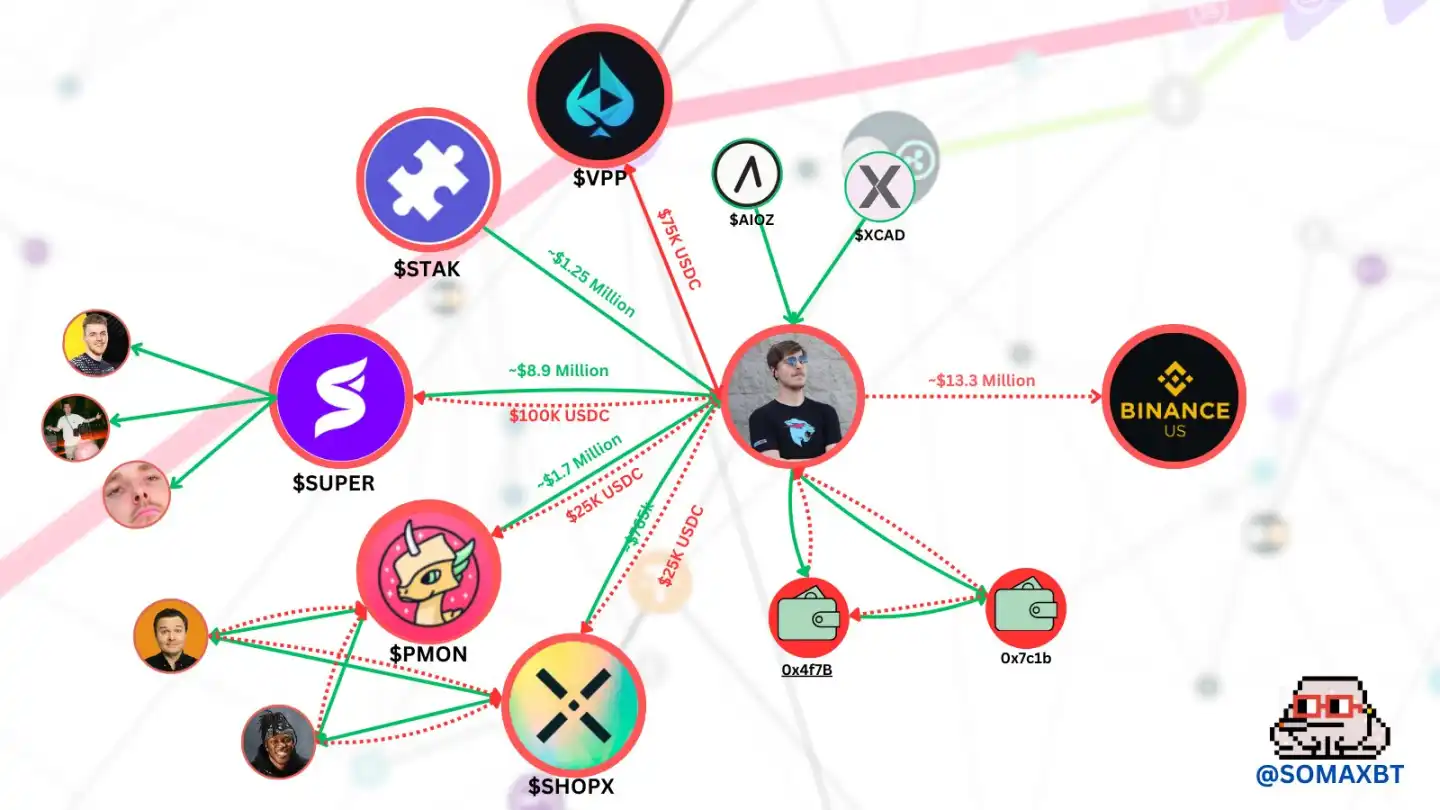
SomaXBT detailed multiple cases. Using the SUPER token, a project backed by Elliot Trades, as an example:

According to SomaXBT, MrBeast invested $100,000 in the project and received 1 million SUPER tokens in return. After his investment, the token price surged. MrBeast transferred his SUPER tokens to an alternate wallet on March 30, 2021, where they were sold through a series of transactions totaling 1,900 ETH (approximately $3.7 million at the time). MrBeast received additional SUPER tokens based on a vesting contract, which he later sold for $5.5 million, bringing his total revenue from the project to approximately $9 million.

SomaXBT's investigation also highlighted MrBeast's involvement with Polychain Monsters (PMON), another low-market-cap token project. In this case, MrBeast invested $25,000 and received 25,000 PMON tokens. On March 31, 2021, his wallet transferred these tokens to another wallet, where they were sold through a series of transactions, netting a profit of 685 ETH (approximately $1.3 million).

The investigation also discussed projects like SHOPX, STAK, and VPP under the same pattern, alleging that after MrBeast completed the accused sell-offs, these tokens experienced significant price corrections, with some falling over 90% from their peaks. It characterized this as a "pump-and-dump" scheme, emphasizing that influencer promotions combined with low-liquidity tokens amplify volatility and transfer risk to retail investors.
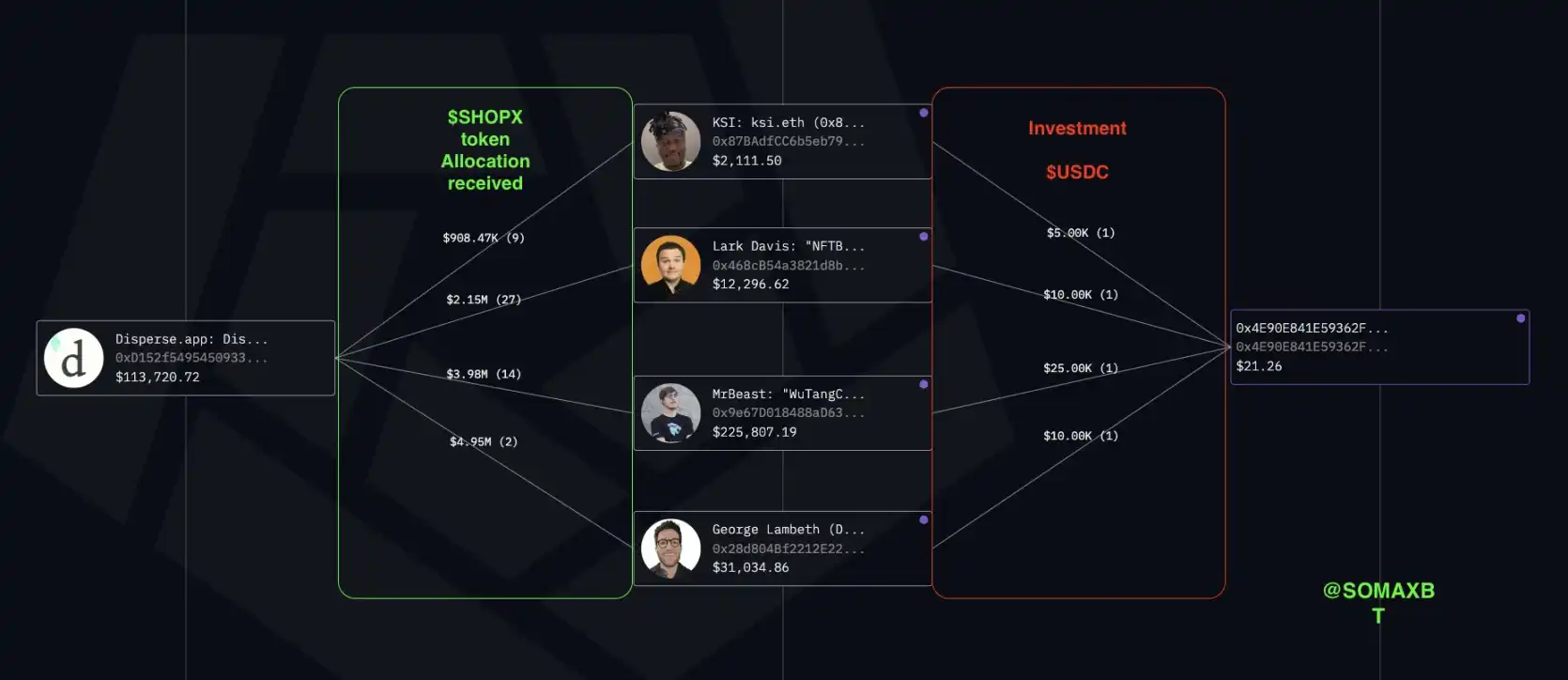
Additionally, in September 2025, MrBeast accumulated 705,821 ASTER tokens, worth approximately $1.28 million at the time.

In summary, Beast Industries has made a key move in establishing its financial entry point. Crypto-related capabilities are still in the planning and exploration stages, and historical on-chain controversies may continue to affect the trust threshold for its financial and crypto businesses.


Related Questions

QWhat is the main business move announced by MrBeast's Beast Industries on February 9th?

ABeast Industries announced it has acquired Step, a mobile banking app for teenagers, marking its entry into the fintech sector.

QWhat specific financial services does the Step app provide to its young audience?

AStep provides a suite of services including savings accounts, a credit-building card that functions like a debit card, and cash advances. It offers these banking services through a partnership with the FDIC-insured Evolve Bank & Trust.

QWhat was the significant investment that preceded the acquisition of Step, and which company made it?

APrior to the acquisition, Beast Industries received a $200 million equity investment from BitMine, an Ethereum treasury company.

QAccording to the on-chain investigation by SomaXBT, what controversial practice was MrBeast accused of in the crypto space?

AMrBeast was accused of participating in 'pump and dump' schemes, where he promoted low-market-cap tokens and sold his allocated tokens after their prices surged, allegedly profiting over $10 million and leaving retail investors with significant losses.

QWhat future financial content does MrBeast express an interest in creating for his audience?

AMrBeast expressed an interest in creating videos that educate people on how to invest and explain financial concepts like a Roth IRA.

Related Reads

The Tao (τ) Law Makes EDA Go Viral

In May 2026, Huawei's semiconductor division introduced the "Tao (τ) Law" at IEEE ISCAS, shifting the industry focus from Moore's Law's geometric scaling to "time scaling." Unlike traditional approaches relying on transistor miniaturization, τ Law optimizes the time constant (τ) across device, circuit, chip, and system levels to improve information processing speed and efficiency. Huawei has already applied this principle, mass-producing 381 chips across various applications, with a target to achieve performance equivalent to 1.4nm technology by 2031. The implementation of τ Law, involving techniques like Chiplet, 3DIC, and Logic Folding, places new demands on EDA tools, highlighting gaps in current offerings. Traditional 2D or pseudo-3D EDA flows lack native support for true 3D design, cross-layer co-optimization (STCO), and coupled multi-physics analysis (thermal, power, stress), which are crucial for advanced integration. Chinese EDA companies, such as Empyrean Software, Primarius Technologies, and Xpeedic, are evolving from point-tool specialists to providing full-flow, system-level solutions. For instance, Peking University has developed a prototype "true 3D" EDA tool showing significant improvements in wirelength and timing. Empyrean Software has also launched a comprehensive 3DIC design and verification platform. The τ Law framework presents an opportunity for the domestic EDA industry to transition from achieving basic functionality to developing robust, integrated toolsets essential for next-generation chip design.

marsbit2h ago

The Tao (τ) Law Makes EDA Go Viral

marsbit2h ago

It's Not Jensen Huang Who Wants to Change the PC, But the PC That's Revolting Against Itself

The 40-year-old PC industry is undergoing a fundamental transformation, driven by the rise of AI PCs. At the GTC Taipei 2026 event, NVIDIA, backed by Microsoft and major PC OEMs, announced the RTX Spark super chip for Windows PCs, marking its official entry into the PC core processor market. This move aims to redefine the AI PC by shifting its core from the CPU to an AI-focused SoC (System on Chip). NVIDIA envisions the PC evolving from a personal computer to a "personal AI"—a platform where local AI Agents can autonomously perform tasks. While Intel pioneered the AI PC concept earlier in 2026, NVIDIA's aggressive push, leveraging its vast CUDA developer ecosystem of 6 million, positions it to potentially reshape the industry's long-standing Wintel (Windows-Intel) power structure. NVIDIA's strategy extends beyond hardware; it's about embedding its CUDA, RTX, and AI software stack into the PC platform itself. The article identifies key shifts: 1) The move from a CPU-centric to an AI SoC-centric architecture, similar to Apple's approach with its M-series chips. 2) The PC's evolution from a human-operated tool to a platform for human-Agent collaboration. 3) The extension of NVIDIA's data center-centric CUDA ecosystem to personal devices via RTX Spark. Ultimately, the change is driven by the broader trend of AI moving to personal devices. Companies like Intel, AMD, Qualcomm, and Apple are all participating in this shift. NVIDIA's entry accelerates the competition, but the core driver is the technology itself finding its optimal expression in the PC. The industry is reinventing itself, with the outcome hinging on execution, ecosystem development, and the creation of compelling local AI applications.

marsbit4h ago

It's Not Jensen Huang Who Wants to Change the PC, But the PC That's Revolting Against Itself

marsbit4h ago

Trading

Spot
Futures
活动图片




