Morning Post | Michael Saylor Releases Bitcoin Tracker Info; Aave Publishes Kelp rsETH Bridge Attack Post-Incident Investigation; Gravity Bridge Announces Service Suspension Following Attack

链捕手Published on 2026-06-01Last updated on 2026-06-01

Abstract

ChainCatcher Daily Summary - June 1, 2026 In regulatory news, the U.S. OCC granted preliminary conditional approval for Laser Digital to establish a federally regulated trust bank. In Vietnam, a draft law amendment proposes allowing SMEs to use digital and virtual assets as loan collateral. Hong Kong's SFC chairman reported that trading volume on the city's 12 licensed virtual asset platforms grew nearly 300% YoY in Q1 2026. Notable incidents include the Cosmos ecosystem cross-chain bridge Gravity Bridge pausing services after an attack. Aave published a post-mortem on the April 18th Kelp rsETH bridge attack, attributing it to a third-party bridge infrastructure vulnerability via an RPC poisoning attack, not the Aave protocol itself. In market developments, MicroStrategy's Michael Saylor hinted at a potential upcoming Bitcoin purchase announcement. Fed Governor Waller commented that widespread stablecoin adoption could amplify the impact of U.S. monetary policy. Meanwhile, sentiment analysis from Santiment indicates a record-high Bitcoin long/short ratio of 2.23, potentially signaling a short-term price correction, while Ethereum shows signs of FUD among commentators. In legal matters, the SEC sued the founder of Privvy Investments for an alleged $12.3 million crypto AI trading bot scam. In China, a Qingdao man was sentenced to 10 years and 9 months for stealing 107 BTC by obtaining a victim's wallet seed phrase. Top trending meme tokens on ETH, Solana, and Base networks...

Compiled by: ChainCatcher


Key News:

  • Digital asset firm Laser Digital receives preliminary conditional approval from US OCC to establish a federally regulated trust bank
  • Aave publishes Kelp rsETH bridge attack post-incident investigation
  • Vietnam plans to allow SMEs to use digital assets and virtual assets as collateral for bank loans
  • Cosmos ecosystem cross-chain bridge Gravity Bridge announces service suspension following an attack
  • Hong Kong SFC Chairman: Trading volume of 12 licensed virtual asset trading platforms in Q1 2026 increased nearly threefold year-on-year
  • Michael Saylor releases Bitcoin Tracker info again, may disclose acquisition data next week

What important events happened in the last 24 hours?

Fed Governor Waller: Stablecoin adoption will amplify policy influence

ChainCatcher news, according to Jinshi reports, Fed Governor Waller stated at the 32nd Dubrovnik Economic Conference that the global adoption of stablecoins could amplify the influence of Fed policy.

He noted that for countries adopting stablecoins, it's like a fixed exchange rate regime, effectively expanding the reach of US monetary policy.

Michael Saylor releases Bitcoin Tracker info again, may disclose acquisition data next week

ChainCatcher news, Bitcoin treasury company Strategy founder Michael Saylor has again released information related to the Bitcoin Tracker.

Based on previous patterns, Strategy always discloses bitcoin acquisition information the day after related messages are posted.

Hong Kong SFC Chairman: Trading volume of 12 licensed virtual asset trading platforms in Q1 2026 increased nearly threefold year-on-year

ChainCatcher news, Hong Kong SFC Chairman Tim Wong revealed in his latest speech that the 2025 trading volume of Hong Kong's 12 licensed virtual asset trading platforms has exceeded HKD 640 billion, with the Q1 2026 trading volume surging nearly threefold year-on-year.

Furthermore, commission income for brokerages engaged in virtual asset-related business increased by over 80% year-on-year last year.

Cosmos ecosystem cross-chain bridge Gravity Bridge announces service suspension following an attack

Vietnam plans to allow SMEs to use digital assets and virtual assets as collateral for bank loans

ChainCatcher news, according to Viet Nam News, Vietnam's Ministry of Finance proposes in the draft amended "Small and Medium-sized Enterprise Support Law" to allow SMEs to use digital assets, virtual assets, intellectual property, intangible assets, and future-forming assets as collateral for bank loans, aiming to improve financing accessibility for private enterprises and tech startups.

The draft also encourages credit institutions to grant loans more based on credit ratings, business plans, market expansion potential, and corporate cash flow, reducing reliance on traditional collateral like real estate. The Vietnamese Ministry of Finance stated this policy aims to unlock resources in the private economy and align with Resolution No. 68-NQ/TW.

Aave publishes Kelp rsETH bridge attack post-incident investigation

ChainCatcher news, regarding the April 18th attack on the Kelp rsETH LayerZero V2 bridge, Aave published a post-incident investigation on X, emphasizing that the exposure primarily stemmed from third-party bridge infrastructure, not the protocol itself. The attacker used an RPC poisoning attack, targeting a single validator of LayerZero, and forged a cross-chain message. This led to the release of 116,500 rsETH on the Ethereum side without actual burning on Unichain. The attacker subsequently deposited the stolen rsETH into Aave V3 (Ethereum Core and Arbitrum), borrowing approximately 82,650 WETH and 821 wstETH.

The Aave Protocol Guardian and Risk Steward immediately implemented protective measures for the rsETH and WETH reserves. Currently, in the affected V3 deployments, the WETH and rsETH markets are operating normally. The attacker's rsETH on Arbitrum has been burned, the LayerZero OFT adapter has been fully replenished in five batches, rsETH support has been fully restored, and Kelp has reopened withdrawal, bridging, and claim functions for rsETH. The WETH LTV in the affected markets has been reset to pre-attack values, and aside from rsETH, Aave V3 is fully operational across all markets.

Arbitrum DAO has voted to authorize the transfer of the frozen ETH to Aave LLC, currently awaiting on-chain execution. The court is still deliberating the merits of the restraining order, and Aave LLC will continue to comply with the order during the court's consideration. Ongoing projects include: Llama Risk's Aave risk framework, bridge assessment framework, release of evaluation reports for currently listed assets, on-chain execution of the Arbitrum DAO vote, and the court's deliberation on the restraining order.

Chinese Qingdao man who stole 107 BTC while "helping acquaintance register wallet" convicted of theft, sentenced to 10 years 9 months

ChainCatcher news, the People's Procuratorate of Licang District, Qingdao City, Shandong Province, China, recently handled a bitcoin theft case. Defendant Zhang Moumou obtained the mnemonic phrase while assisting an acquaintance in registering a virtual currency wallet, later transferring away 107 BTC in multiple transactions, equivalent to over RMB 50 million at current market prices. Zhang Moumou argued his actions constituted "protective takeover," but prosecutors found he transferred the stolen BTC through multiple trading platforms and converted it into over RMB 660,000. The Licang District Court sentenced Zhang Moumou to 10 years and 9 months in prison for theft in the first instance, with a fine of RMB 100,000; the second instance upheld the original judgment.

Reports indicate that the case prosecutor strictly followed laws and judicial policies, conducting in-depth analysis. They concluded that while China's regulatory policy denies the legal tender status of virtual currency, it does not deny its property attributes, nor does it prohibit citizens from legally holding and transferring it. Bitcoin requires investment in computing power, capital, and other costs to obtain, possessing economic value; rights holders can achieve exclusive control and management through private keys and mnemonic phrases, aligning with the core characteristics of "property" in criminal law and making it a viable target for theft crimes. In determining the amount, due to the lack of official pricing for virtual currency, the Licang District Procuratorate abandoned market price estimation, using the actual proceeds from selling the stolen goods, RMB 660,000, as the theft amount, achieving accurate conviction, appropriate sentencing, and unity of crime, responsibility, and punishment.

Santiment: Bitcoin long/short ratio surges to 2.23, hitting yearly high, may signal short-term pullback

ChainCatcher news, crypto sentiment platform Santiment published an analysis stating that the ratio of positive to negative comments on Ethereum has shifted from strong FOMO sentiment in late April to clear FUD sentiment now. Harvard University fully divested its $87 million Ethereum ETF holdings one quarter after purchase; an Ethereum Foundation researcher announced resignation; and David Hoffman publicly stated he is stepping away from the Ethereum project. The Santiment team interprets this trend as a moderately bullish signal, similar to the sharp rise following the market sentiment low in mid-2023.

Despite the panic, the number of non-empty Ethereum wallets remains high at 192.92 million, over three times more than Bitcoin's approximately 59 million. DeFi and staking transaction activity spiked at the beginning of the year, later normalizing, but new wallet creation continues at a healthy pace. Foundational data on holders and activity does not support the notion that "the Ethereum network is dying." Additionally, the Bitcoin long/short ratio is as high as 2.23, reaching the highest level since 2026. The previous two highest daily long/short ratios coincided with short-term price pullbacks, while extremely low long/short ratios marked local bottoms. The current optimism starkly contrasts with the short fund flows in ETFs, thus caution is advised.

US SEC files lawsuit against Privvy founder over alleged $12.3 million crypto scam

ChainCatcher news, according to The Block, the US SEC filed a lawsuit in Houston federal court, alleging that Cypress, Texas resident Nathan Fuller operated a cryptocurrency scam project involving up to $12.3 million, which used a fake artificial intelligence trading bot.

Nathan Fuller told investors that his proprietary AI-based bot could automatically scan cryptocurrency exchanges, capture tiny price gaps through high-frequency arbitrage, and promised returns of 40% to 50% within 30 to 45 days. Some investors were even told they could get guaranteed returns of over 100% in 21 days.

The SEC alleges that Privvy Investments LLC founder and sole member Nathan Fuller raised these funds from about 150 investors across nine states and two foreign countries between October 2022 and mid-2024. He also operated under the alias "Gateway Digital Investments."

Allegedly, only about 3% of the funds were actually used for cryptocurrency trading, while Fuller himself misappropriated at least $6.2 million and paid about $5.5 million to early investors in a Ponzi-like scheme.

Digital asset firm Laser Digital receives preliminary conditional approval from US OCC to establish a federally regulated trust bank

ChainCatcher news, according to an official announcement, Laser Digital has received preliminary conditional approval from the US Office of the Comptroller of the Currency (OCC) to establish Laser Digital National Trust Bank, an entity that will serve as a federally regulated trust institution for institutional clients.

Upon receiving the formal charter, its business scope will include foreign exchange and stablecoin intermediation, cross-margin collateral management for digital and traditional assets, and multi-asset trust custody for tokenized assets and traditional assets.

Meme Hotlist

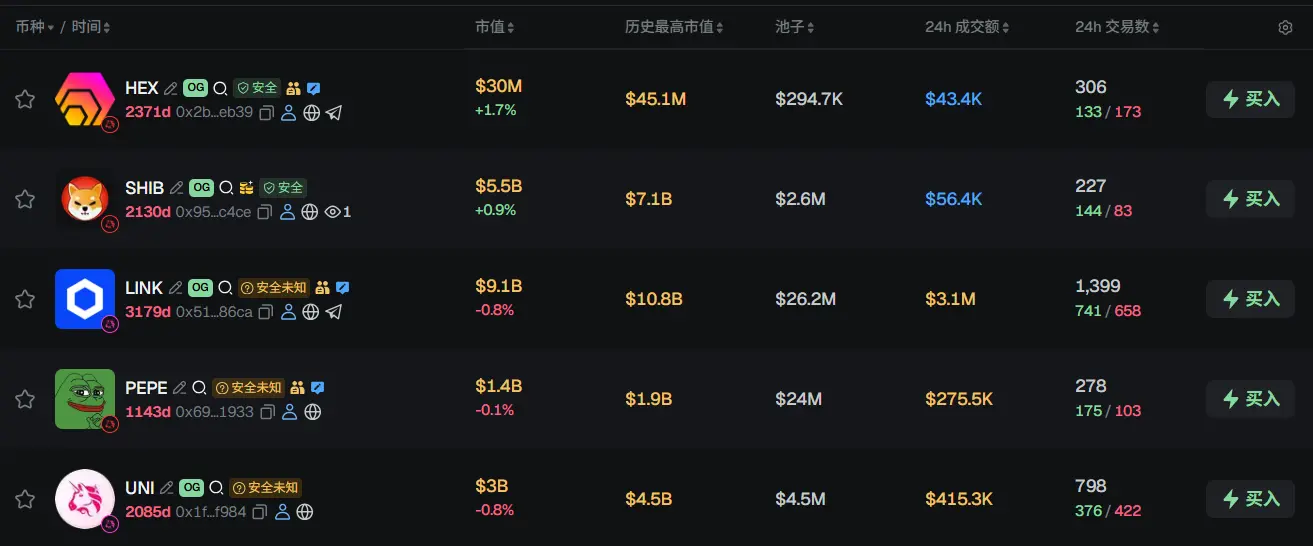
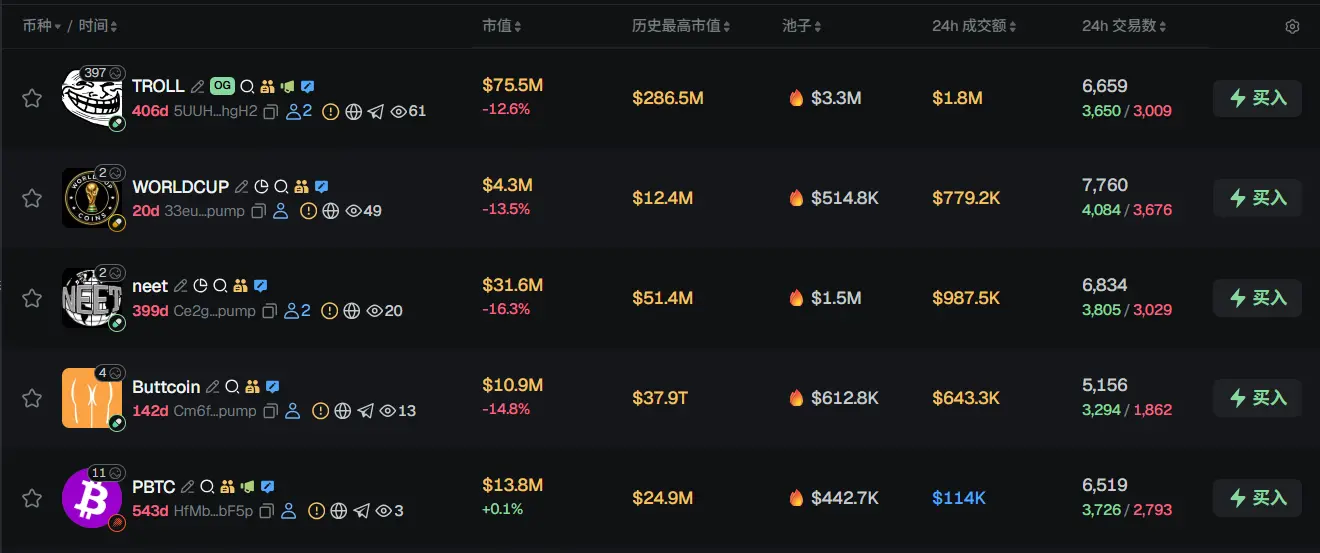
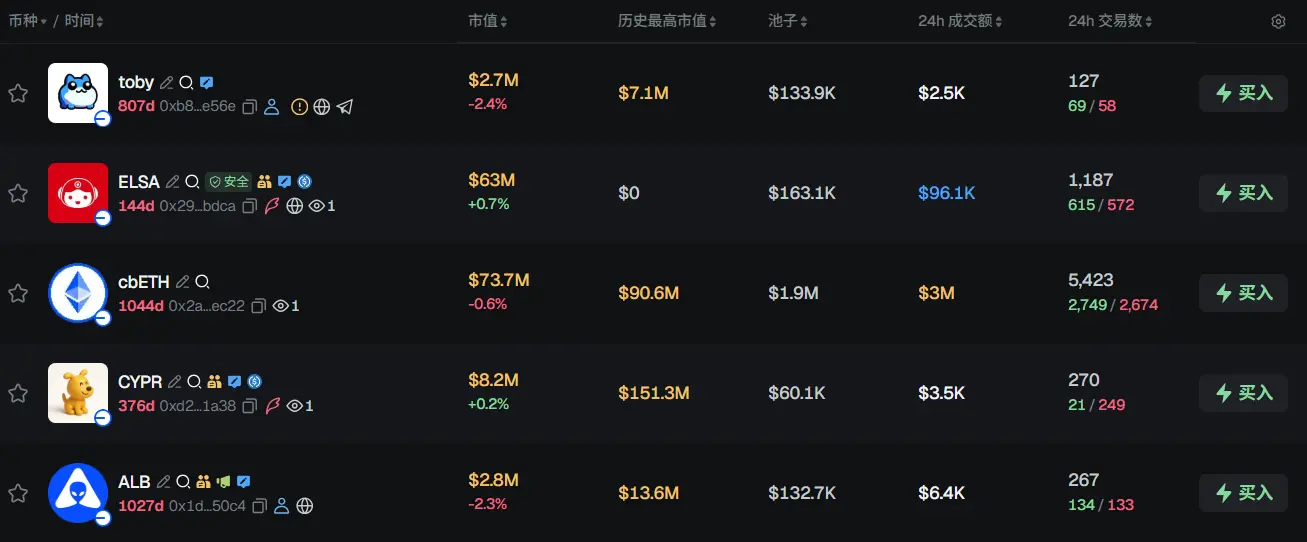
According to market data from the Meme token tracking and analysis platform GMGN, as of 09:00, June 1,

The top five popular ETH tokens in the past 24h are: HEX, SHIB, LINK, PEPE, UNI
The top five popular Solana tokens in the past 24h are: TROLL, WORLDCUP, neet, Buttcoin, PBTC
The top five popular Base tokens in the past 24h are: toby, ELSA, cbETH, CYPR, ALB
What worthwhile articles were there to read in the past 24 hours?

Three Years Later: Revisiting My 2023 Predictions on ChatGPT

On March 6, 2023, soon after ChatGPT emerged and before GPT-4 was released, Sarah and I conducted an interview about ChatGPT—the third episode of the "Plain Talk" series of Traders' Talk (Plain Talk about ChatGPT podcast is released, welcome to listen).

At that time, ChatGPT had just come out, and very few people had actually used it. This three-hour interview later topped the ChatGPT category on Xiaoyuzhou. I made about twenty judgments and predictions in it, purely based on intuition and limited information, with little data. The full transcript of that interview remains on the public account.

It's now late May 2026, three years have passed, and AI has grown into something unimaginable back then.


Related Questions

QWhat major security events are reported in the article?

AThe article reports two major security events. First, the Cosmos ecosystem cross-chain bridge Gravity Bridge was attacked and subsequently announced a service suspension. Second, Aave published a post-mortem investigation into the attack on the Kelp rsETH LayerZero V2 bridge, which resulted from an RPC poisoning attack targeting a single validator, leading to significant fund losses that were then used on Aave's platforms.

QWhat are the key regulatory and institutional developments mentioned?

AThe article highlights several regulatory and institutional developments. 1) Digital asset company Laser Digital received preliminary conditional approval from the U.S. OCC to establish a federally regulated trust bank. 2) Vietnam is considering allowing SMEs to use digital assets and virtual assets as collateral for bank loans. 3) The chairman of Hong Kong's SFC reported that trading volume on the 12 licensed virtual asset trading platforms grew nearly threefold year-on-year in Q1 2026.

QWhat is the sentiment analysis provided by Santiment regarding Bitcoin and Ethereum?

ASantiment's analysis indicates a shift in market sentiment. For Ethereum, the ratio of positive to negative comments has shifted from strong FOMO in late April to noticeable FUD, which Santiment interprets as a mildly bullish signal. For Bitcoin, the long/short ratio has surged to 2.23, a new high for the year 2026. Historically, such high ratios have preceded short-term price pullbacks, suggesting a need for caution despite the prevailing optimism.

QWhat legal action did the U.S. SEC take according to the news?

AThe U.S. Securities and Exchange Commission (SEC) filed a lawsuit in a Houston federal court against Nathan Fuller, the founder of Privvy. He is accused of operating a $12.3 million cryptocurrency scam that used a fake AI trading bot, promising investors returns of 40-50% within 30-45 days. The SEC alleges that only about 3% of the funds were used for actual trading, with Fuller misappropriating at least $6.2 million and using about $5.5 million in a Ponzi-like scheme to pay earlier investors.

QWhat comment did Federal Reserve Governor Waller make about stablecoins?

AFederal Reserve Governor Christopher Waller stated at the 32nd Dubrovnik Economic Conference that the widespread global adoption of stablecoins could amplify the influence of U.S. monetary policy. He explained that for countries adopting stablecoins, it would be akin to a fixed exchange rate regime, effectively expanding the reach of American monetary policy.

Related Reads

BIT Trading Moment: BTC Still Suppressed by Weekly 200 EMA, Rejection May Restart Decline; Storage and Semiconductors that Surged Last Night Begin Falling in Evening Trading

**Crypto & Stock Market Wrap: Bitcoin Tests Resistance, Stocks Retreat After AI Surge** Bitcoin consolidates around $66,000, facing key resistance near $68,000—an area seen as a major psychological and technical hurdle where previous rallies have failed. Analysts note the cryptocurrency is caught between its 200-week moving average (~$63,333) and 200-week EMA (~$68,328). A clear break above $68k is needed to signal a stronger bullish trend, while a rejection could lead to a retest of $63k support. Market sentiment remains cautious, with low futures open interest pointing to a low-liquidity rebound rather than a full bull market. Bitcoin spot ETFs saw another $203 million inflow. US stock futures pointed lower after a strong Tuesday session led by a massive rebound in semiconductors and memory stocks. The rally was fueled by renewed optimism about AI-driven hardware demand, with Micron, SanDisk, and SK Hynix surging. However, those gains reversed in pre-market trading. Super Micro Computer (SMCI) soared over 20% after hours on strong guidance and a record backlog. Other standouts included Rocket Lab and nuclear energy plays Oklo and X-Energy. Rising oil prices (Brent above $91) and climbing Treasury yields (10-year near 4.64%), however, are reigniting inflation concerns and acting as a headwind for equities. In Asia, markets were mixed. South Korea's KOSPI pared early gains to close slightly higher as semiconductor stocks like SK Hynix gave back initial surges. Japan's Nikkei edged lower as the yen hit a fresh 38-year low against the dollar, raising fears of potential market intervention. Key events to watch include the Samsung Galaxy launch, AMD's AI event, and a slew of major tech earnings from Alphabet, Tesla, and IBM after the close on Wednesday, followed by the ECB meeting and Intel's earnings on Thursday.

marsbit10m ago

BIT Trading Moment: BTC Still Suppressed by Weekly 200 EMA, Rejection May Restart Decline; Storage and Semiconductors that Surged Last Night Begin Falling in Evening Trading

marsbit10m ago

Former CFTC Chairman, Circle President Tarbert: Preaching Long-Termism While Cashing Out $30 Million Himself

Former CFTC Chairman and Circle President Heath Tarbert has consistently advocated for a long-term vision in public, urging patience from investors as Circle’s stock price has fallen significantly from its peak. However, it has been revealed that since Circle’s IPO, Tarbert has continuously sold his CRCL shares through pre-arranged trading plans, cashing out approximately $30 million, without making any public market purchases. This contrast between his public messaging and personal actions has drawn criticism. Tarbert joined Circle in July 2023 as Chief Legal Officer, leveraging his regulatory experience to help guide the company through its IPO and expansion. Despite promoting stablecoins as long-term infrastructure, he established a 10b5-1 trading plan just before Circle went public, leading to substantial stock sales over the following year. In March 2026, he initiated another plan to sell more shares. His career trajectory highlights a pattern of moving between high-level regulatory roles and influential positions in the financial sector. After resigning as CFTC Chairman in early 2021, he joined Citadel Securities as Chief Legal Officer just 27 days later, during a period of intense regulatory scrutiny for the firm. He later joined Circle, aiding its efforts to navigate regulatory challenges for its public listing. While Tarbert's expertise in policy and compliance is valuable to companies like Circle, his actions—advocating long-term confidence while personally divesting—raise questions about the alignment between his public statements and his private financial decisions, leaving investors who followed his advice to bear the market risks.

marsbit33m ago

Former CFTC Chairman, Circle President Tarbert: Preaching Long-Termism While Cashing Out $30 Million Himself

marsbit33m ago

Gate Research Institute: The 'Wall Street-ization' Wave of Crypto Financial Products – Competition or Integration?

The article titled "Gate Research Institute: Are Crypto Financial Products Sparking a 'Wall Street' Wave—Competition or Convergence?" explores the evolving relationship between the crypto ecosystem and traditional finance (TradFi). The piece begins by reflecting on Bitcoin's original 2009 vision of decentralization, disintermediation, and moving away from banks. It then contrasts this with the 2024 landscape, where key crypto assets like Bitcoin are increasingly held through Wall Street products like ETFs issued by giants like BlackRock. The article questions whether this signifies that TradFi is systematically taking over the rights to issue, price, custody, and distribute crypto financial assets. The core argument is that this is not a zero-sum takeover but rather a bidirectional convergence where each side addresses the other's weaknesses. Crypto offers 24/7 global markets, programmable settlement, and open access but lacks compliant channels, institutional-grade custody, deep fiat liquidity, and mainstream distribution. TradFi possesses these but is constrained by legacy systems, limited operating hours, and slow settlement. Two primary convergence paths are highlighted: * **Path A (CEX to TradFi):** Exemplified by Gate, which has progressed from offering tokenized stocks and CFDs to providing direct, real stock trading (US, Hong Kong, South Korea) within its platform, using USDT. * **Path B (TradFi to Crypto):** Exemplified by Robinhood, which has integrated crypto trading, acquired exchanges like Bitstamp, and is moving traditional assets like stocks onto the blockchain via tokenization and its own Layer 2. Both paths are ultimately competing to become the next-generation, unified financial account—a "super account" where users can seamlessly trade cryptocurrencies, stocks, ETFs, RWA (Real World Assets), and tokenized treasury products in one interface. The growth of RWA and tokenized treasuries (e.g., BlackRock's BUIDL) is presented as the asset-layer fusion, providing stable, yield-bearing assets on-chain and acting as a bridge between the two worlds. In conclusion, the "Wall Street-ization" of crypto is framed as a mutual transformation. Decentralized ideals persist in the protocol layer, while at the application layer, a more efficient, global, and accessible unified capital market is emerging from this convergence. The future competition lies not between crypto exchanges and stockbrokers, but between platforms vying to offer the most comprehensive asset coverage, liquidity, and user experience within a single account.

marsbit37m ago

Gate Research Institute: The 'Wall Street-ization' Wave of Crypto Financial Products – Competition or Integration?

marsbit37m ago

Trading

Spot
活动图片




