MEXC 2025 Report: Zero-Fee Strategy Delivers $1.1B in User Savings, Capturing Leading Market Share

TheNewsCryptoPublished on 2026-01-29Last updated on 2026-01-29

Abstract

MEXC's 2025 Zero-Fee Strategy Annual Report highlights that its zero-fee trading model saved users a total of $1.1 billion USDT, with 3.44 million users saving an average of $320 each. The strategy significantly increased MEXC's market share in key trading pairs, capturing 72% in PUMPUSDT and 59% in LINKUSDT. It also strengthened the exchange's presence in emerging assets and tokenized real-world assets (RWA), dominating trading volumes for major equities like McDonald’s (73%), Amazon (70%), and Meta (61%). The report emphasizes that zero-fee trading acts as a liquidity engine and competitive advantage, supporting both mainstream and emerging crypto markets.

MEXC, the fastest-growing global cryptocurrency exchange, redefining a user-first approach to digital assets through true Zero-Fee trading, today released its 2025 Zero-Fee Strategy Annual Report. The ongoing commitment not only saved users a total of 1.1 billion USDT in fees but also bolsters both mainstream growth and emerging asset visibility, driving balanced development across the entire crypto landscape.

The platform’s removal of fees across 3,026 spot trading pairs and 203 futures pairs resulted in significant savings for its users. Data shows 3.44 million users saved an average of $320 each, with the top single-user saving reaching $9 million. The move represented a significant shift in standard exchange fee models.

“We proved that Zero-Fee trading isn’t a promotional tactic—it’s a liquidity engine,” the report states. The strategy delivered measurable competitive advantages, with MEXC capturing 72% market share in PUMPUSDT and 59% in LINKUSDT.

The “dual-market” approach demonstrated strategic precision: futures volume was anchored by mainstream assets (BTC& ETH made up 70% of the top 10), while emerging narratives surged. SUIUSDT ranked fourth, and USDC pairs exploded (BNBUSDC up 110x, SUIUSDC up 83x).

Zero-Fee proved particularly transformative for emerging assets. MNTUSDT gained 53% points in market share, while PUMP and LINK increased 42% and 34% respectively. The platform successfully bootstrapped new tokens while unlocking renewed trading potential in established assets across Layer 1s, DeFi, and oracle sectors.

In spot markets, MEXC established a commanding presence in the year’s defining narrative: tokenized real-world assets (RWA). The exchange captured dominant market shares in leading tokenized equities—73% of McDonald’s trading, 70% of Amazon, and 61% of Meta—while also securing 61% of Robinhood and 55% of Coinbase volume. This performance reinforced the platform’s strategic “Widest Selection” positioning within the RWA landscape.

Since December 22, 2025, MEXC expanded Zero-Fee coverage to all spot trading pairs, removing the final barriers to entry for retail and institutional traders alike.

The report illustrates how MEXC’s “MEXCmize, Zero-Fee, Infinite Opportunities” flywheel has transitioned from concept to a demonstrable market advantage. This was achieved by stripping away transaction costs to facilitate high-frequency strategies and providing consistent liquidity across the asset spectrum, thereby establishing a resilient competitive position.

“We’re not just building the lowest-cost exchange,” the report concludes. “We’re building the premier crypto gateway defined by lowest costs and widest selection—empowering global users to capture market opportunities and maximize asset value.”

Access the full report here.

About MEXC

Founded in 2018, MEXC is committed to being “Your Easiest Way to Crypto.” Serving over 40 million users across 170+ countries, MEXC is known for its broad selection of trending tokens, everyday airdrop opportunities, and low trading fees. Our user-friendly platform is designed to support both new traders and experienced investors, offering secure and efficient access to digital assets. MEXC prioritizes simplicity and innovation, making crypto trading more accessible and rewarding.

MEXC Official Website| X | Telegram |How to Sign Up on MEXC

For media inquiries, please contact MEXC PR team: media@mexc.com

Disclaimer: TheNewsCrypto does not endorse any content on this page. The content depicted in this Press Release does not represent any investment advice. TheNewsCrypto recommends our readers to make decisions based on their own research. TheNewsCrypto is not accountable for any damage or loss related to content, products, or services stated in this Press Release.


TagsMEXCPress Release

Related Questions

QHow much did MEXC's Zero-Fee Strategy save users in total according to the 2025 report?

AMEXC's Zero-Fee Strategy saved users a total of 1.1 billion USDT in fees.

QWhat percentage of market share did MEXC capture in the PUMPUSDT trading pair?

AMEXC captured 72% market share in the PUMPUSDT trading pair.

QWhich two mainstream assets made up 70% of the top 10 futures trading pairs by volume on MEXC?

ABTC and ETH made up 70% of the top 10 futures trading pairs by volume.

QIn the RWA (tokenized real-world assets) market, what percentage of McDonald's tokenized equity trading did MEXC capture?

AMEXC captured 73% of McDonald's tokenized equity trading.

QWhen did MEXC expand its Zero-Fee coverage to include all spot trading pairs?

AMEXC expanded Zero-Fee coverage to all spot trading pairs on December 22, 2025.

Related Reads

Once-Popular Web3 Enters Wave of Layoffs

The once-hot Web3 industry is experiencing a severe wave of layoffs. While many companies attribute job cuts to AI-driven restructuring, the primary reason is often financial pressure. The Web3 sector, at the intersection of tech and finance, has been hit particularly hard. Employees at major cryptocurrency exchanges report sudden, impersonal layoffs—often with system access revoked overnight—and minimal or no severance. Common tactics include setting impossible performance targets or terminating employees for minor policy violations. The working atmosphere has become toxic, marked by intense monitoring, excessive meetings, and management obsessed with control and internal politics rather than product innovation. The industry's core business model is collapsing. Exchange revenue from trading fees and listing charges has plummeted due to a decline in quality projects and retail investor exodus. Events like the massive forced liquidation on October 10th further shattered confidence. Competition from on-chain derivatives platforms and prediction markets is intensifying the downturn. As layoffs continue, displaced workers struggle to find new opportunities. Many transition to the AI sector, but face significant bias from traditional finance and even some AI firms, which view crypto industry experience with suspicion. The current downturn appears more structural than cyclical, driven by unsustainable practices, internal strife, and a failure to innovate, raising questions about the industry's future trajectory.

marsbit48m ago

Once-Popular Web3 Enters Wave of Layoffs

marsbit48m ago

Sales Drop 26% But Prices Rise? Xiaomi's Dilemma

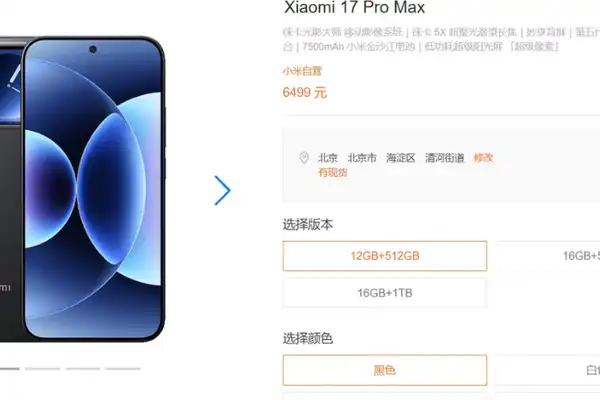
Xiaomi, facing a significant 26.3% year-on-year decline in global smartphone shipments in Q2 2026, has implemented its third price hike of the year. On August 2nd, prices were raised for nine models, including the flagship Mi 17 series (up 400-500 yuan) and Redmi K90/Turbo 5 series (up 300 yuan). This move completes a pattern where cost pressure, originating from surging memory chip prices, has climbed from entry-level to mid-range and now flagship products. The primary driver is a severe supply squeeze on consumer-grade DRAM and NAND flash memory, as major manufacturers like Samsung shift advanced capacity to more profitable HBM for AI applications. According to Xiaomi President Lu Weibing, memory prices for the same configuration have skyrocketed nearly fourfold since Q1 2025, adding roughly 1500 yuan to the cost of a mainstream 12GB+512GB phone. IDC estimates consumer memory costs have risen nearly 300% year-on-year. While the price increases hurt demand and contributed to the sales slump, Xiaomi's strategy of reducing entry-level models and upgrading its product mix also played a role. Domestically, its market share in China fell to 12% (5th place), while leaders Huawei and Apple saw shipments grow over 24%. To mitigate future risks, Xiaomi is accelerating its in-house "Surge" chip development and optimizing memory configurations across its lineup. Xiaomi is not alone; major brands like OPPO, vivo, and Apple have already raised prices in 2026, with industry insiders predicting another round of increases (200-800 yuan) in the second half. A full-scale industry-wide涨价 cycle is underway, forcing both manufacturers and consumers to recalibrate their strategies and purchasing decisions amid sustained cost pressures.

marsbit59m ago

Sales Drop 26% But Prices Rise? Xiaomi's Dilemma

marsbit59m ago

Trading

Spot
活动图片