Mento Brings Its FX Protocol to Polygon

TheNewsCryptoPublished on 2026-07-27Last updated on 2026-07-27

Abstract

The Mento Protocol, a decentralized foreign exchange (FX) infrastructure, has launched on the Polygon network. This deployment introduces Mento's stablecoin markets to Polygon's ecosystem, starting with a USDm/EURm trading pool. The integration aims to provide predictable onchain FX liquidity between USD and non-USD stablecoins, addressing a key need as stablecoin activity expands beyond dollar-denominated assets. The launch is supported by day-one liquidity partner Capa. Additionally, Mento is adding EURØP, a MiCA-regulated euro stablecoin from Schuman Financial, as a reserve asset for its EURm token. Mento's Fixed Price Market Maker (FPMM) design uses trusted price oracles to offer predictable, reference-rate pricing similar to traditional FX markets. Executives from Mento Labs, Polygon Labs, and Capa emphasized that this FX infrastructure is critical for enabling reliable, large-scale payments using non-USD stablecoins, which are already gaining significant traction on Polygon. The move represents Mento's expansion beyond the Celo and Monad networks.

Mento deploys its decentralized FX infrastructure on Polygon, launching with USDm/EURm liquidity supported by day-one partner Capa and adding EURØP as a reserve asset for EURm.

Mento Protocol (Mento), the leading decentralized FX infrastructure that processed USD 18.5B in trading volume in 2025, has been deployed on Polygon. The launch brings Mento stablecoin markets to one of crypto’s leading stablecoin ecosystems, starting with the USDm/EURm pool as the first FX trading pair. The EUR/USD pair accounts for ~USD 2T of the USD 9.5T traded daily across global FX markets, making it the single deepest currency pair in the world.

Stablecoin activity remains largely concentrated in USD-denominated assets. This is shifting. Polygon has become one of the leading networks where local-currency stablecoin markets are finding real payment scale, with more than USD 11.1B in lifetime non-USD stablecoin transfer volume and over 43% of non-USD stablecoin transfers across major blockchains.

The deployment of the Mento Protocol adds the FX layer needed to connect those markets on Polygon. The launch enables predictable onchain FX liquidity between USD-denominated and non-USD-denominated stablecoins, expanding Polygon’s stablecoin ecosystem beyond dollar-only liquidity.

“Mento’s mission is to make non-USD stablecoins usable across markets by providing the FX infrastructure that lets them move reliably.” said Bogdan-Radu Dumitru, CEO at Mento Labs. “Polygon is a natural frontier ecosystem for that infrastructure, given the scale of local-currency stablecoin activity already happening on the network and their investment in its growth.”

“Non-USD stablecoins are already moving at scale on Polygon, and FX infrastructure is what lets that activity grow into something payments businesses can actually rely on,” said Marc Boiron, CEO of Polygon Labs. “Mento brings that layer to the ecosystem, connecting the local-currency stablecoin markets we’ve been building toward with the reliable execution those markets need to function. This is exactly the kind of infrastructure the Polygon Open Money Stack is designed to support.”

The Polygon deployment is supported by Capa, a LATAM-focused financial infrastructure provider that powers cross-border FX and payments, as a day-one liquidity partner. Together, Mento and Capa are bringing supported dollar-euro FX liquidity to Polygon from launch, providing access to a more complete stablecoin market structure beyond dollar-only liquidity.

“Non-USD stablecoin markets don’t grow on infrastructure alone, they need deep liquidity. We’re backing the Mento Protocol on Polygon from day one because we believe onchain FX for non-dollar currencies is where real cross-border value moves next.” Jonathan Herrera, Head of Ecosystems at Capa.

Mento Protocol is also adding EURØP as a reserve asset for EURm, a MiCA-regulated euro token from Schuman Financial, bringing regulated euro liquidity onchain.

“The Euro is the world’s second most-used currency, yet EUR-denominated stablecoins represent only around 1% of the stablecoin market. The Mento Protocol is the necessary infrastructure to make that change. Adding EURØP as a reserve asset for EURm brings a MiCA-regulated euro token into onchain FX markets,” said Eduardo Morrison, Chief Business Officer at Schuman Financial.

Mento Protocol’s Fixed Price Market Maker (FPMM) design is built to provide real-world reference rates via trusted price feed oracles, enabling predictable execution across currencies without relying on volatile AMM curves. This model gives applications access to onchain FX markets with features of traditional FX markets: predictable reference-rate pricing and reliable execution, with liquidity that is programmable and composable.

Mento’s stablecoin infrastructure is built for a world where stablecoins are not limited to USD. It offers the FX layer for non-USD stablecoin markets, supporting trading across 15 currencies. With Polygon, Mento continues its cross-chain expansion beyond Celo and Monad.

About Mento

The Mento Protocol is the leading decentralized FX infrastructure for institutions and individuals, enabling developers and institutions to launch, trade, and settle global currencies onchain with institutional-grade reliability. The Mento Protocol provides programmable FX via transparent liquidity and real-world pricing from trusted oracles, supporting use cases such as cross-border payments, treasury operations, and institutional settlement through an expanding set of stablecoins and a transparent, multicurrency platform. Mento Labs is the core development team behind the Mento Protocol, focused on advancing global onchain FX.

About Capa

Capa is a financial infrastructure that connects Latin America to the global financial system through a single API and dashboard. The platform enables seamless cross border payments by handling local pay ins and pay outs, instant conversion between local currencies and stablecoins, and access to deep liquidity, all with full regulatory compliance and cost efficient settlement. www.capa.fi

About Polygon Labs

Polygon Labs is a global blockchain payments company building and operating infrastructure to move money instantly, reliably, and at internet scale, with the mission to move all money onchain. It is building the Polygon Open Money Stack, an open and integrated stack of services and technologies to instantly and reliably move money anywhere, and put it to work. Its infrastructure has facilitated trillions of dollars in onchain value transfer and supported millions of transactions daily for some of the globe’s largest banks, fintechs, enterprises, and consumer applications. To learn more, visit www.polygon.technology

About Schuman Financial

Schuman Financial is a leading euro stablecoin issuer and payments company. We provide the solutions, technologies and infrastructure for rebuilding euro-denominated financial services on-chain. Our core product is EURØP, a euro-denominated stablecoin issued by our French-licensed subsidiary regulated by Banque de France. Thanks to our best-in-class technology platform and EMI license, we are the only company that can offer free and instant cross-border payments anywhere in the world. www.schuman.io

Disclaimer: TheNewsCrypto does not endorse any content on this page. The content depicted in this Press Release does not represent any investment advice. TheNewsCrypto recommends our readers to make decisions based on their own research. TheNewsCrypto is not accountable for any damage or loss related to content, products, or services stated in this Press Release.

TagsMento Protocol (Mento)Press Release

Related Questions

QWhat is the main announcement of the article regarding the Mento Protocol?

AThe main announcement is that the Mento Protocol, a decentralized FX infrastructure, has been deployed on the Polygon blockchain, launching with its first FX trading pair being the USDm/EURm pool.

QAccording to the article, why is deploying on Polygon a strategic move for Mento?

AIt's strategic because Polygon has become a leading network for local-currency (non-USD) stablecoin activity, with over $11.1B in lifetime non-USD stablecoin transfer volume. Mento's FX layer connects these markets on Polygon, providing predictable onchain FX liquidity.

QWho is the day-one liquidity partner supporting Mento's deployment on Polygon, and what is their role?

AThe day-one liquidity partner is Capa, a LATAM-focused financial infrastructure provider. Capa is providing supported dollar-euro (USD/EUR) FX liquidity to the Polygon network from launch.

QWhat significant addition is Mento Protocol making to its EURm stablecoin, and what is the significance of this addition?

AMento is adding EURØP, a MiCA-regulated euro token from Schuman Financial, as a reserve asset for EURm. This brings regulated euro liquidity onchain, which is significant as euro-denominated stablecoins currently represent only about 1% of the stablecoin market.

QWhat key feature of the Mento Protocol's design (FPMM) enables predictable execution for onchain FX?

AThe Fixed Price Market Maker (FPMM) design uses trusted price feed oracles to provide real-world reference rates. This enables predictable execution across currencies without relying on the volatile pricing curves of traditional Automated Market Makers (AMMs).

Related Reads

Uncertainty persists regarding cryptocurrency regulation, and there is a possibility of delay in passing the Clarity Act! Here are the details

The U.S. Senate's vote on the CLARITY Act, which aims to establish a legal framework for the crypto market, faces a potential delay. Priority on the Senate agenda is being given to a Russia sanctions bill and confirmations of federal officials, making a vote on the crypto bill after next week increasingly likely. Senate tradition of handling only one contentious bill at a time further complicates early consideration of the CLARITY Act. Key political disagreements persist, notably over provisions to restrict cryptocurrency trading by senior government officials and elected representatives, including potentially former President Donald Trump. A bipartisan consensus has not been reached. This uncertainty raises doubts about whether a vote can occur before the Senate's August recess. If disputes intensify, the bill's passage could be jeopardized not only for this year but potentially until 2026. Even if the Senate approves the bill, it would still require a revote in the House of Representatives and the President's signature to become law, potentially prolonging the establishment of a comprehensive regulatory framework long awaited by the crypto industry. The Clarity Act is considered crucial for clarifying which agencies will oversee digital assets, defining their legal status, and setting operational principles. Industry advocates argue its passage would boost institutional investor confidence and strengthen the U.S. position in the global digital asset market.

cryptonews.ru4m ago

Uncertainty persists regarding cryptocurrency regulation, and there is a possibility of delay in passing the Clarity Act! Here are the details

cryptonews.ru4m ago

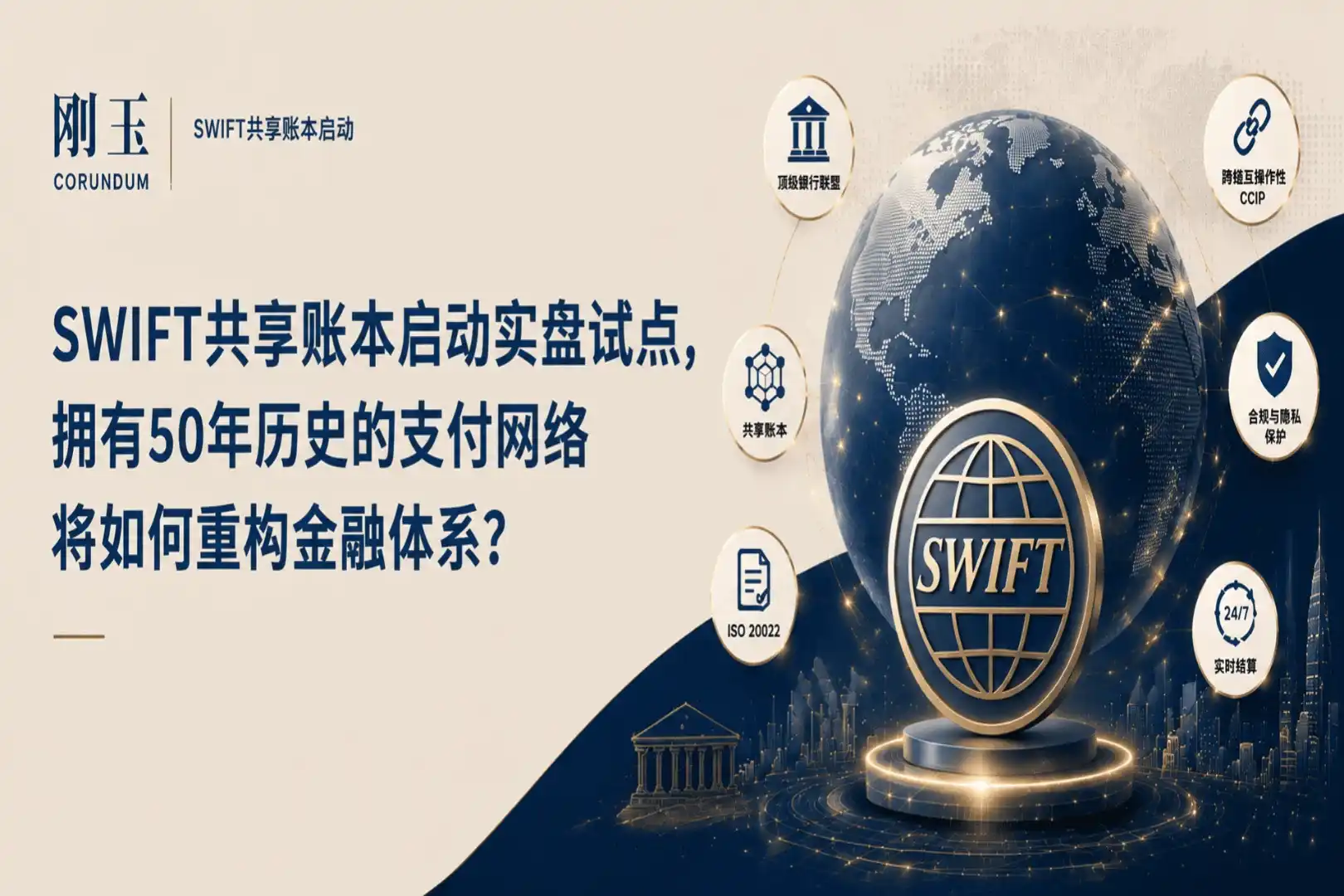
SWIFT Shared Ledger Launches Live Pilot, How Will the 50-Year-Old Payment Network Reconstruct the Financial System?

SWIFT, a global financial messaging provider with a 50-year history, has launched a live pilot of a blockchain-based "shared ledger" in July 2026, involving 17 major banks. This marks a direct move by traditional finance to upgrade its core payment infrastructure using blockchain technology, transforming SWIFT's role from a messaging channel to a "value orchestration layer" for digital payments. The system is built on Hyperledger Besu (EVM-compatible) and integrates Chainlink's CCIP for cross-chain interoperability. It deepens the fusion of the ISO 20022 messaging standard with smart contracts to automate compliance (KYC/AML). The primary settlement medium in this network is "tokenized deposits"—digital representations of traditional bank deposits, not independent stablecoins—preserving the existing two-tier banking system. The move introduces "atomic settlement" (24/7, instant) but requires banks to adopt "pre-funding" models, increasing demands on liquidity management. It presents direct competitive pressure on native blockchain payment tokens (e.g., XRP) by offering an efficient, bank-backed alternative for cross-border settlement. Significant regulatory hurdles remain, including legal jurisdiction over cross-border digital assets, legal definitions of "settlement finality" for smart contracts, and balancing blockchain transparency with data privacy/localization laws. Technologies like zero-knowledge proofs may be needed to resolve privacy-compliance conflicts. Industry views are mixed: participating banks and SWIFT emphasize extending trusted, compliant finance into the digital realm with real-time efficiency, while crypto analysts warn of potential "liquidity backlash" as capital flows back to the traditional, now-tech-enhanced banking system. This pilot signifies that traditional finance and crypto are entering a phase of direct competition and fusion at the infrastructure level, likely leading to a future of interconnected, highly regulated financial networks rather than a fully decentralized system.

marsbit14m ago

SWIFT Shared Ledger Launches Live Pilot, How Will the 50-Year-Old Payment Network Reconstruct the Financial System?

marsbit14m ago

Trading

Spot
活动图片