Memecoin Millionaires Line Up For Trump’s Exclusive Luncheon

bitcoinistPublished on 2026-04-25Last updated on 2026-04-25

Abstract

A crypto investor paid only $500 to attend an exclusive luncheon with former President Donald Trump at Mar-a-Lago, reflecting a significant decline in enthusiasm compared to previous events. The TRUMP memecoin has lost over 93% of its value since its peak, falling from around $45 to under $3. Despite the collapse, nearly 300 top holders are expected to attend the gathering, which critics argue is an attempt to buy access to the president. Notable attendees include key figures from the industry like Tether CEO Paolo Ardoino and Bitcoin advocate Anthony Pompliano. However, Tron founder Justin Sun, the largest holder of the token, is absent amid a lawsuit against a crypto platform co-founded by Trump’s sons. Ethics watchdogs have raised concerns about conflicts of interest and lack of financial transparency.

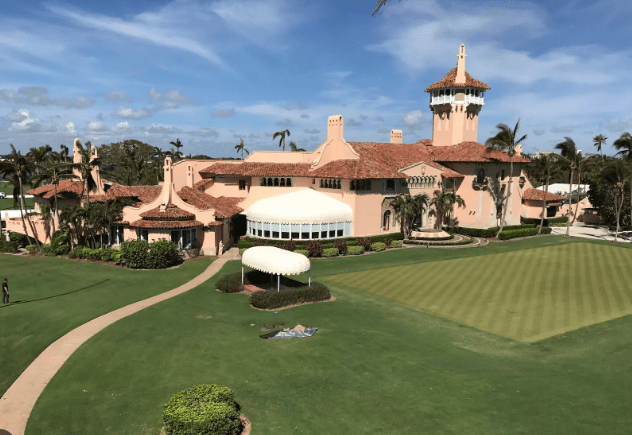
A crypto investor who paid just $500 got a seat at the table. That detail alone tells you something about the crowd gathering at Mar-a-Lago on Saturday.

A Token That Lost 93% Of Its Value

Morten Christensen, who attended a similar event in 2025 after a $1,200 bet on US President Donald Trump’s memecoin, scored his way back in for a fraction of that cost.

He’s candid about the mood shift. “Trump is much less liked right now than he was after inauguration,” Christensen told Bloomberg.

“With the whole year of tariffs, crypto is bleeding, his reputation within the crypto community is not as good.”

The TRUMP token, officially called Official Trump, has dropped more than 93% from its all-time high of roughly $45 to under $3.
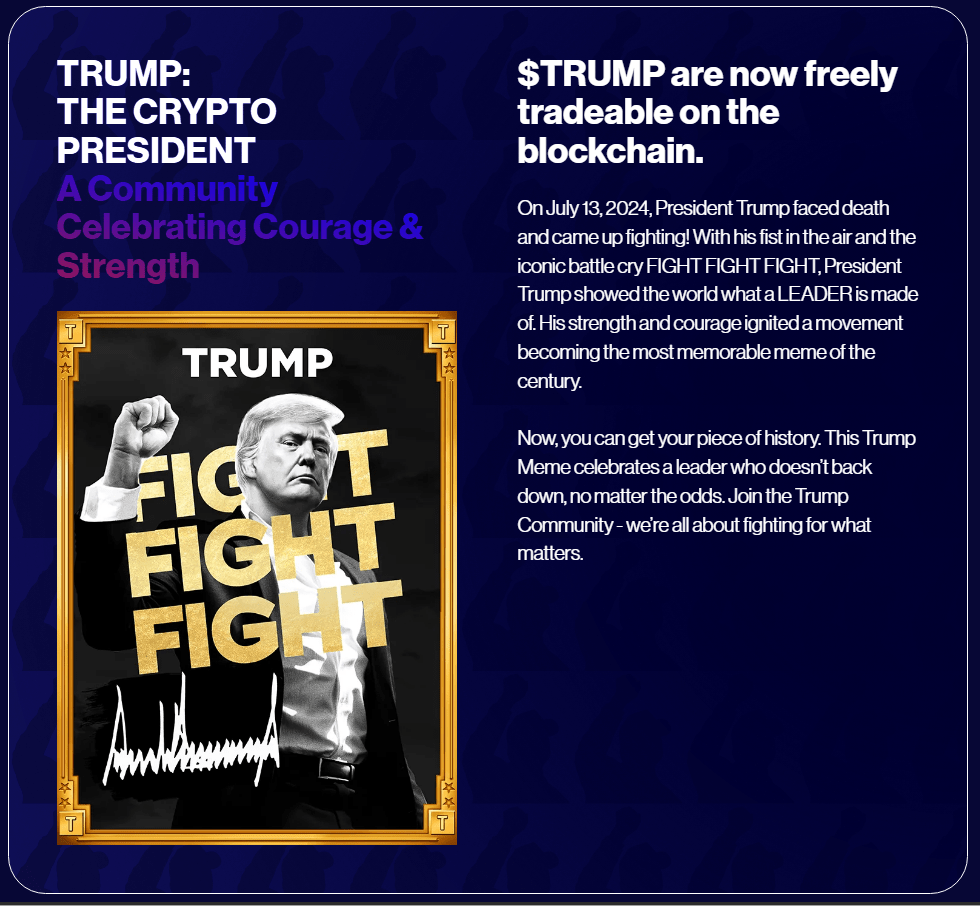
Source: gettrumpmemes.com

Despite that collapse, up to 297 top holders of the coin are expected to join Trump at his Florida estate for what organizers are calling the “Memecoin Millionaires Line Up for Trump’s Exclusive Luncheon” — a private gathering that critics say is really about buying face time with a sitting president.

The guest list reads like a who’s who of crypto finance: Tether CEO Paolo Ardoino, Upbit founder ChiHyung Song, Bitcoin advocate Anthony Pompliano, and Anchorage Digital CEO Nathan McCauley are all reported to be attending.

TRUMPUSDT currently trading at $2.56. Chart: TradingView

The Absent Name At The Top Of The Leaderboard

One name is conspicuously missing from the confirmed list. Tron founder Justin Sun sits atop the TRUMP memecoin leaderboard with 2.4 billion points — more than anyone else — yet no public confirmation of his attendance has been made.

That silence comes after Sun filed a lawsuit this week against World Liberty Financial, the crypto platform co-founded by Trump’s sons.
Sun alleges the platform froze his tokens and threatened to destroy them without valid reason. He described himself as an “ardent supporter” of Trump while blaming unnamed project team members for acting against the president’s values.

Ethics Watchdogs Raise Conflict Of Interest Concerns

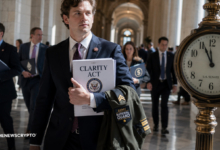
Lawmakers and nonpartisan watchdog groups have criticized the Saturday gathering, arguing that Trump is using a financial product he personally profits from to offer access to the presidency.

The nonprofit Citizens for Responsibility and Ethics in Washington went further, pointing out in a Friday post that crypto wallets linked to the TRUMP token have moved money in ways that make it hard to trace how much the president is earning.

Featured image from Getty Images, chart from TradingView

Related Questions

QWhat is the main reason critics are concerned about Trump's exclusive luncheon for memecoin holders?

ACritics argue that Trump is using a financial product he personally profits from to offer access to the presidency, raising conflict of interest concerns.

QHow much has the TRUMP memecoin dropped from its all-time high?

AThe TRUMP token has dropped more than 93% from its all-time high of roughly $45 to under $3.

QWhy is Justin Sun's absence from the event notable despite his large holdings?

AJustin Sun sits atop the TRUMP memecoin leaderboard with 2.4 billion points but hasn't confirmed attendance, following his lawsuit against World Liberty Financial, a crypto platform co-founded by Trump's sons.

QWhat does Morten Christensen say about Trump's current standing in the crypto community?

AChristensen states that Trump is much less liked now than after inauguration, citing tariffs, crypto market decline, and a damaged reputation within the crypto community.

QWhich prominent crypto figures are reported to be attending the luncheon?

AReported attendees include Tether CEO Paolo Ardoino, Upbit founder ChiHyung Song, Bitcoin advocate Anthony Pompliano, and Anchorage Digital CEO Nathan McCauley.

Related Reads

Has Hook Summer Really Arrived? sato, Lo0p, FLOOD Ignite the New Narrative of Uniswap v4

"Hook Summer" Arrives? Sato, Lo0p, FLOOD Ignite Uniswap v4 Narrative Amidst a slight market recovery, attention within the Ethereum ecosystem has shifted to Meme coins built on Uniswap v4's Hook protocol. Following ASTEROID, tokens like sato, sat1, Lo0p, and FLOOD have become market focal points, with market caps ranging from millions to tens of millions, bringing concentrated liquidity to a narrative-dry market. Uniswap v4 Hooks are "plugin smart contracts" that allow developers to inject custom logic at key points in a liquidity pool's lifecycle (initialization, adding/removing liquidity, swaps, etc.), making the AMM programmable. Recent representative projects include: * **sato**: Market cap peaked over $38M; uses a v4 curve mechanism for minting/burning, locking ETH as reserve. * **sat1**: Market cap briefly exceeded $10M, positioning as an "optimized sato," but later declined significantly. * **Lo0p**: Market cap neared $6.6M; a "lending AMM protocol" allowing users to borrow ETH against deposited LO0P tokens without immediate selling pressure. * **FLOOD**: Market cap approached $6M; channels trading reserves into Aave v3 to generate yield, which is retained in the pool. The emergence of these Hook-based tokens could drive long-term growth for the Uniswap ecosystem by attracting users and liquidity to v4 pools. Combined with Uniswap's activated fee switch (partially used to burn UNI), the long-term outlook for UNI appears positive. However, short-term UNI price appreciation is not directly guaranteed. Factors include the sustainability and lifecycle of these new tokens, their price volatility, overall market conditions, and regulatory pressures. Currently, Uniswap v4's TVL ($595M) lags behind v3 and v2, indicating Hook adoption still requires time to mature. In summary, the Hook ecosystem serves as "long-term nourishment" for UNI, but acts more as a "catalyst" than a direct "booster" in the short term. Note: These are early-stage experimental tokens and may carry unknown risks.

marsbit18m ago

Has Hook Summer Really Arrived? sato, Lo0p, FLOOD Ignite the New Narrative of Uniswap v4

marsbit18m ago

Has Hook Summer Truly Arrived? sato, Lo0p, FLOOD Ignite the New Uniswap v4 Narrative

With the broader market showing signs of recovery, a new wave of interest has emerged around Ethereum-based meme coins. Following ASTEROID, tokens like sato, sat1, Lo0p, and FLOOD, built upon the Uniswap v4 Hook protocol, are capturing market attention. Their market capitalizations range from millions to tens of millions of dollars, injecting much-needed focused liquidity into a market lacking narratives. This article explores whether this trend signifies an incoming "Hook Summer" and its potential impact on UNI's price. Hooks are essentially plug-in smart contracts for Uniswap v4 liquidity pools, allowing developers to inject custom logic at key points in a pool's lifecycle (like initialization, adding/removing liquidity, swaps). This transforms the AMM into programmable building blocks. Key highlighted projects include: * **sato**: Peaked over $38M market cap. It utilizes a v4 curve for minting/burning; buying locks ETH as reserve to mint new tokens, while selling redeems ETH from the reserve and burns tokens. * **sat1**: Market cap briefly exceeded $10M, promoted as an "optimized sato," but later declined significantly. * **Lo0p**: Reached nearly $6.6M. It's a lending AMM protocol where buying LO0P tokens locks them as collateral, allowing users to borrow ETH from the pool reserve at 40% LTV, aiming to improve capital efficiency for idle ETH in LPs. * **FLOOD**: Peaked near $6M. Its mechanism directs asset reserves from buys into Aave v3 to generate yield, with fees and interest retained in the pool to potentially influence the token's price long-term. In the long term, the development of the Hook ecosystem can attract users and liquidity to Uniswap v4, benefiting UNI's fundamentals—especially combined with the recent activation of the protocol fee switch, where a portion of fees is used to burn UNI. However, in the short term, these Hook-based tokens are unlikely to directly drive significant UNI price appreciation. Their impact is moderated by factors like token sustainability, price volatility, and broader market and regulatory conditions. Currently, Uniswap v4's TVL ($595M) still trails behind v2 and v3, indicating adoption and growth will take time. The article concludes that while the Hook ecosystem provides long-term "nourishment" for UNI, its short-term role is more of a "catalyst" than a "booster." Readers are cautioned that these are early-stage experimental tokens and may carry unknown risks.

Odaily星球日报31m ago

Has Hook Summer Truly Arrived? sato, Lo0p, FLOOD Ignite the New Uniswap v4 Narrative

Odaily星球日报31m ago

Interview with Michael Saylor: I Did Say I Would Sell Bitcoin, But Never a Net Sale

Interview with Michael Saylor: I Said We'd Sell Bitcoin, But Never Be a Net Seller In a recent podcast, MicroStrategy Executive Chairman Michael Saylor clarified the company's stance on potentially selling Bitcoin. Following MicroStrategy's earnings call statement about being prepared to sell BTC to fund dividends for its STRC (Strategic) credit product, Saylor emphasized the distinction between selling and being a "net seller." Saylor explained the core business model: MicroStrategy sells credit instruments like STRC and uses the proceeds to buy Bitcoin, which is viewed as "digital capital" expected to appreciate around 30-40% annually. A portion of these capital gains can then be used to pay the dividends on the credit products. He stressed that even if the company sells some Bitcoin for dividends, it simultaneously buys much more with new credit issuance. For example, after raising $3.2 billion from STRC sales in April, the dividend obligation was only $80-90 million, making the company a net buyer. The clarification aims to counter market narratives questioning the value of Bitcoin on MicroStrategy's balance sheet if it were never sold, and to dismiss claims of a "Ponzi scheme." Saylor reiterated his personal philosophy for investors: "Don't be a net seller of bitcoin" and ensure your Bitcoin holdings increase each year. Saylor also discussed Bitcoin's role as the foundation for "digital credit," noting that STRC has become the largest and most liquid preferred stock issue in the U.S., offering high risk-adjusted returns (Sharpe ratio). He highlighted Bitcoin's deep liquidity, stating that even large purchases by MicroStrategy do not move the market significantly, which is driven by macro factors, geopolitical tensions, and capital flows from ETFs and credit products. Finally, Saylor reflected on his early inspiration from sci-fi books, which motivated his path to MIT, and maintained his fundamental thesis on Bitcoin remains unchanged: it is superior digital capital enabling superior digital credit.

链捕手35m ago

Interview with Michael Saylor: I Did Say I Would Sell Bitcoin, But Never a Net Sale

链捕手35m ago

Beaten SK Hynix Employees in China: Year-end Bonus Less Than 5% of Korean Staff's

"SK Hynix Chinese Staff Hit Hard: Bonuses Less Than 5% of Korean Counterparts" Driven by the AI boom, South Korea's SK Hynix is experiencing record performance, with media reports predicting massive year-end bonuses for its employees, making them highly desirable in the matchmaking market. However, this prosperity starkly contrasts with the situation for the company's Chinese employees. According to reports, SK Hynix operates under a rule allocating 10% of operating profit for employee bonuses. While projections suggest Korean employees could receive bonuses reaching millions of RMB, a Chinese employee with over a decade of technical experience revealed the disparity: "If they get 3 million, Chinese staff get less than 5% of that." After adjustments based on KPI ratings, this employee's highest bonus was slightly over 100,000 RMB. Bonuses are paid annually in Korea but semi-annually in China. During the industry downturn in 2023-2024, Chinese employees received no bonus at all. The gap extends beyond bonuses. Recruitment posts for SK Hynix's Chinese factories (in Wuxi, Dalian, Chongqing) show engineer monthly salaries ranging from 10,000 to 35,000 RMB, with a 13th-month salary promised. Chinese employees also receive standard benefits like annual leave but lack stock incentives, which are reportedly unavailable to them. Furthermore, management positions in China are predominantly held by Korean personnel, though industry observers note a gradual increase in local middle managers over time. SK Hynix has confirmed the 10% bonus rule but cautioned that specific future bonus amounts remain unpredictable. The company forecasts strong demand for HBM and other high-value enterprise products for the next 2-3 years, driven by AI infrastructure investment. This focus on business-to-business markets may continue to constrain supply for consumer products, potentially prolonging price increases for components like memory.

链捕手48m ago

Beaten SK Hynix Employees in China: Year-end Bonus Less Than 5% of Korean Staff's

链捕手48m ago

Trading

Spot
Futures
活动图片