Mastercard Snags BVNK After Failed $2 Billion Coinbase Deal

bitcoinistPublished on 2026-03-18Last updated on 2026-03-18

Abstract

Mastercard has acquired stablecoin infrastructure firm BVNK for up to $1.8 billion, including $300 million in contingent payments. This follows BVNK’s earlier failed $2 billion merger talks with Coinbase. The acquisition aims to expand Mastercard’s capabilities in digital assets and on-chain payments, integrating fiat rails with blockchain-based transactions. BVNK operates in over 130 countries and previously partnered with Visa to enable stablecoin payments. The deal, pending regulatory approval, is expected to close by year-end. Meanwhile, the stablecoin market has seen slowed growth recently but remains resilient despite broader crypto market volatility. Bitcoin is trading around $74,700, up 7% over the past week.

Mastercard has announced an acquisition of stablecoins infrastructure firm BVNK, which was previously in talks with Coinbase over a $2 billion deal.

Mastercard Will Be Acquiring BVNK For Up To $1.8 Billion

As announced in a press release, Mastercard has reached a definitive agreement to acquire BVNK for up to $1.8 billion, including $300 million in contingent payments.

BVNK is an enterprise stablecoins infrastructure solutions provider that operates across more than 130 countries. Last year, the company was in discussion with cryptocurrency exchange Coinbase over a merger, but in November, the deal fell through.

Now, it would appear that Mastercard has been successful in obtaining a signature from the stablecoins infrastructure firm. “The deal further expands Mastercard’s end-to-end support of digital assets and value movement across currencies, rails and regions,” noted the press release.

In January, another major payments card provider, Visa, also formed a partnership with BVNK, seeking its expertise to enable stablecoin payments on the Visa Direct platform.

Mastercard is also eyeing an integration of its fiat rails with on-chain payments in this acquisition. Jorn Lambert, Mastercard Chief Product Officer, said:

This acquisition reinforces what we have always done, using innovation and technology to power economies and empower people. Adding on-chain rails to our network will support speed and programmability for virtually every type of transaction.

Stablecoins, which are cryptocurrencies tied to fiat currencies, have been gaining adoption around the world in recent years, owing to positive regulation like the United States’ GENIUS Act. “We expect that most financial institutions and fintechs will in time provide digital currency services, be it with stablecoins or tokenized deposits,” noted Lambert.

Mastercard’s transaction with BVNK is expected to close before the end of the year, but according to the statement, it’s subject to regulatory review and other customary closing conditions.

Jesse Hemson-Struthers, BVNK co-founder and CEO, said:

This deal brings together complementary capabilities to define and deliver the future of money. Together, we’re able to deliver an unprecedented infrastructure for digital currency-based financial services.

During 2024 and most of 2025, the stablecoin sector enjoyed a notable uptrend, with the combined market cap of these tokens ballooning in size. Since October, however, the slowdown in the wider cryptocurrency market has also affected the fiat-pegged coins, as data from DefiLlama shows.
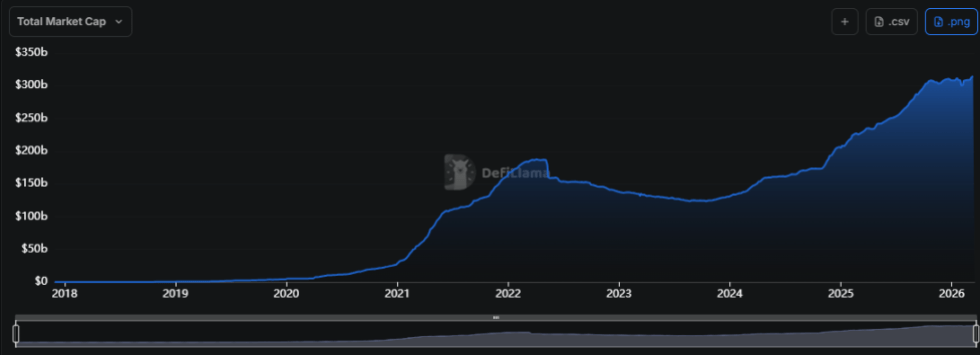
The value of the metric seems to have been moving sideways over the last few months | Source: DefiLlama

From the chart, it’s visible that the stablecoin market cap has seen its growth stall in recent months. However, unlike the rest of the sector, these assets haven’t actually faced any drawdown, at least not yet. As such, stablecoins have still been holding up relatively well in the wider context.

Bitcoin Price

At the time of writing, Bitcoin is trading around $74,700, up nearly 7% over the past week.

Looks like the price of the coin has shot up in the last couple of days | Source: BTCUSDT on TradingView


Related Questions

QWhat company did Mastercard announce the acquisition of, and for how much?

AMastercard announced the acquisition of stablecoins infrastructure firm BVNK for up to $1.8 billion, including $300 million in contingent payments.

QWhy did the previous deal between BVNK and Coinbase not go through?

AThe previous merger deal between BVNK and cryptocurrency exchange Coinbase fell through in November of last year, though the specific reasons were not detailed in the article.

QHow does Mastercard's Chief Product Officer, Jorn Lambert, believe this acquisition will benefit their network?

AJorn Lambert stated that adding on-chain rails to Mastercard's network will support speed and programmability for virtually every type of transaction.

QWhat recent partnership did Visa, another major payments provider, form with BVNK?

AIn January, Visa formed a partnership with BVNK to leverage its expertise to enable stablecoin payments on the Visa Direct platform.

QWhat is the current trend in the stablecoin market cap according to data from DefiLlama?

AAccording to DefiLlama, the stablecoin market cap has seen its growth stall and has been moving sideways in recent months, though it has not faced a significant drawdown.

Related Reads

Bitcoin Withdrawals Continue: 8 Years of Storage in a Coldcard Cold Wallet Ended in Zero

Coldcard Hardware Wallet Hacked: Losses Mount Due to Vulnerable Seed Generation A critical vulnerability in Coldcard hardware wallets has led to a continued wave of fund thefts. According to Galaxy Research, the total stolen has reached 1,367.05 BTC (approx. $88.6 million) from 4,585 addresses, a significant increase from the initial 594.5 BTC reported on July 30, 2026. Most of the stolen funds remain on the attackers' addresses. The issue is not with the current firmware, which Coinkite has updated, but with seed phrases generated on vulnerable devices between March 2021 and the release of fixed firmware versions. Due to a programmer error, devices switched from using a hardware random number generator to the software-based Yasmarang generator, which was initialized with publicly accessible data like the chip's serial number. This made the seed phrases predictable through offline brute-force attacks, meaning wallets remain at risk until funds are moved to a new wallet generated with the patched firmware. Affected devices include Mk2/Mk3 with firmware 4.0.1–4.1.9 (and up to 5.0.3), Mk4/Mk5 up to version 5.6.0, and Q models up to 1.5.0Q. The only exceptions are seeds created with a high-entropy method like at least 50 independent dice rolls or a strong unique BIP-39 passphrase. All other owners must generate a new seed on the fixed firmware and transfer their assets. A case highlighting the human impact involves a 39-year-old long-term investor who lost 2 BTC (approx. $130,000) in minutes. He had accumulated the Bitcoin over eight years through physical labor, viewing it as a financial lifeline and a retirement plan in a country suffering from hyperinflation. His story underscores that even conservative "buy and hold in cold storage" strategies can be compromised by such underlying technical flaws. From a technical perspective, this incident echoes historical failures where weak random number generators undermined cryptographic security, challenging the assumption that offline storage is automatically foolproof.

cryptonews.ru1h ago

Bitcoin Withdrawals Continue: 8 Years of Storage in a Coldcard Cold Wallet Ended in Zero

cryptonews.ru1h ago

Trading

Spot
活动图片




