Kyrgyzstan President Meets Justin Sun, Tron Collaborates with Kyrgyzstan to Build a New Digital Economy Landscape in Central Asia

marsbitPublished on 2026-04-19Last updated on 2026-04-19

Abstract

Justin Sun, founder of TRON, met with Kyrgyzstan President Sadyr Japarov in Bishkek to discuss digital financial transformation, virtual asset regulation, and TRON’s strategic expansion into Central Asia. This marks TRON's first major partnership in the region. President Japarov emphasized Kyrgyzstan’s goal to become a regional hub for virtual assets and Web3 technologies, aligning with TRON’s strengths in high-throughput, low-cost stablecoin infrastructure. Sun expressed TRON’s commitment to supporting this vision through concrete projects. Japarov also highlighted the work of the National Committee for Virtual Assets and Blockchain Development, which he chairs. The committee has advanced initiatives including exploring a national stablecoin, testing a CBDC, and developing a regulatory sandbox. The meeting underscores growing international interest in Kyrgyzstan’s digital economy strategy.

Justin Sun, founder of Tron, held an official meeting with Kyrgyzstan President Sadyr Japarov in Bishkek, the capital of Kyrgyzstan. The meeting involved in-depth discussions on global digital financial transformation trends, the construction of virtual asset regulatory frameworks, and Tron's strategic layout in the Central Asian region, marking the entry of Tron's collaboration with Kyrgyzstan in blockchain and artificial intelligence into a substantive phase. This is Tron's first strategic move in Central Asia.

Following the meeting, President Japarov has instructed the Secretariat of the National Committee for the Development of Virtual Assets and Blockchain Technology of Kyrgyzstan to actively promote the cooperation between the two parties and ensure the implementation of various joint initiatives.

President's Strategic Vision Highly Aligns with Tron's Core Advantages

During the talks, President Japarov pointed out that modern digital technologies are pioneering a "New Digital Silk Road"—a global network connecting cooperation and financial freedom. He highly recognized Tron's technological leadership in stablecoin infrastructure and explicitly stated, "Our goal is to establish Kyrgyzstan as a regional hub for virtual assets and Web3 technologies in Central Asia."

In response, Justin Sun stated that Tron, with its high throughput, near-instant transaction finality, and extremely low on-chain transaction fees, has become a core infrastructure for global cross-border USD stablecoin settlements, naturally aligning with Kyrgyzstan's digital economy strategy. "President Japarov's forward-looking leadership has created a rare historical opportunity for Kyrgyzstan to lead in the digital era. Tron will contribute to turning this vision into reality through concrete and actionable projects," Sun said.

President Japarov also highlighted the establishment of the National Committee for the Development of Virtual Assets and Blockchain Technology, which he personally leads and comprises government agencies and internationally renowned industry experts.

"In less than a year, the committee has made significant progress, issuing a series of market-oriented decisions covering the potential issuance of a national stablecoin, testing of a central bank digital currency (CBDC), and the introduction of a pilot regulatory framework," Japarov said.

He noted that Kyrgyzstan's open policies have effectively attracted large technology companies and global experts, and Sun's visit is a strong testament to the growing international attention on the country.

"Our strategic goal is to establish Kyrgyzstan as a regional hub for virtual assets and Web3 technologies in Central Asia," President Japarov stated. He also pointed out that the industry is continuously expanding, with an increasing number of licensed participants, a maturing regulatory system, and accelerated implementation of infrastructure projects.


Related Questions

QWhat was the main focus of the meeting between Kyrgyzstan's President Japarov and Justin Sun, founder of TRON?

AThe meeting focused on global digital financial transformation trends, the construction of a virtual asset framework, and TRON's strategic layout in the Central Asia region.

QWhat specific action did President Japarov take following the meeting with Justin Sun?

APresident Japarov instructed the Secretariat of the National Committee for the Development of Virtual Assets and Blockchain Technology to promote cooperation and ensure the implementation of joint initiatives.

QWhat is President Japarov's strategic goal for Kyrgyzstan in the digital economy?

AHis strategic goal is to establish Kyrgyzstan as a regional hub for virtual assets and Web3 technology in Central Asia.

QWhat technological advantages of the TRON network were highlighted as aligning with Kyrgyzstan's strategy?

ATRON's high throughput, near-instant transaction finality, and extremely low on-chain transaction fees were highlighted as being naturally aligned with Kyrgyzstan's digital economic strategy.

QWhat progress has the National Committee for the Development of Virtual Assets and Blockchain Technology made according to President Japarov?

AIn less than a year, the committee has made significant progress, including making market-oriented decisions on the potential issuance of a national stablecoin, testing a central bank digital currency (CBDC), and launching a pilot regulatory framework.

Related Reads

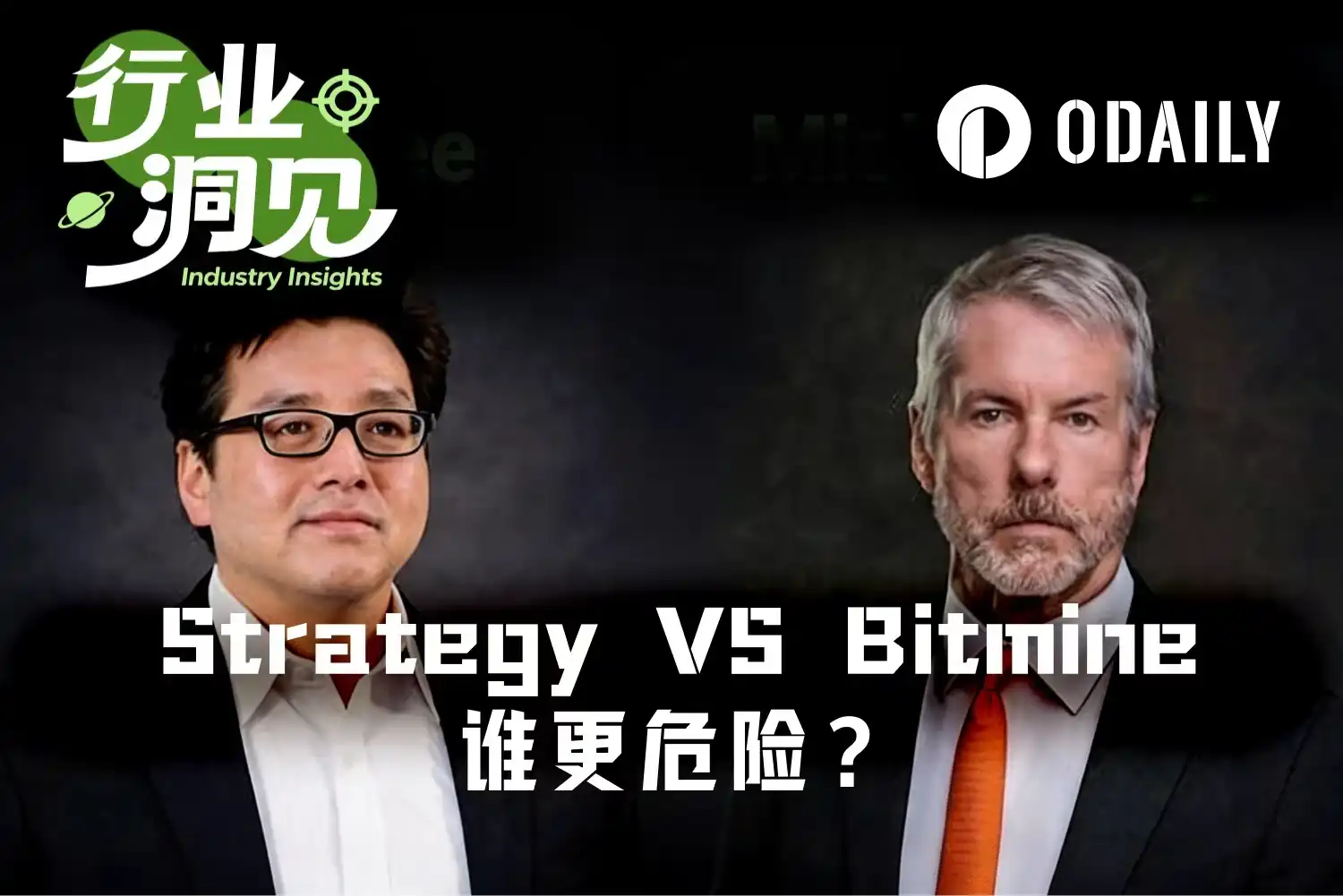
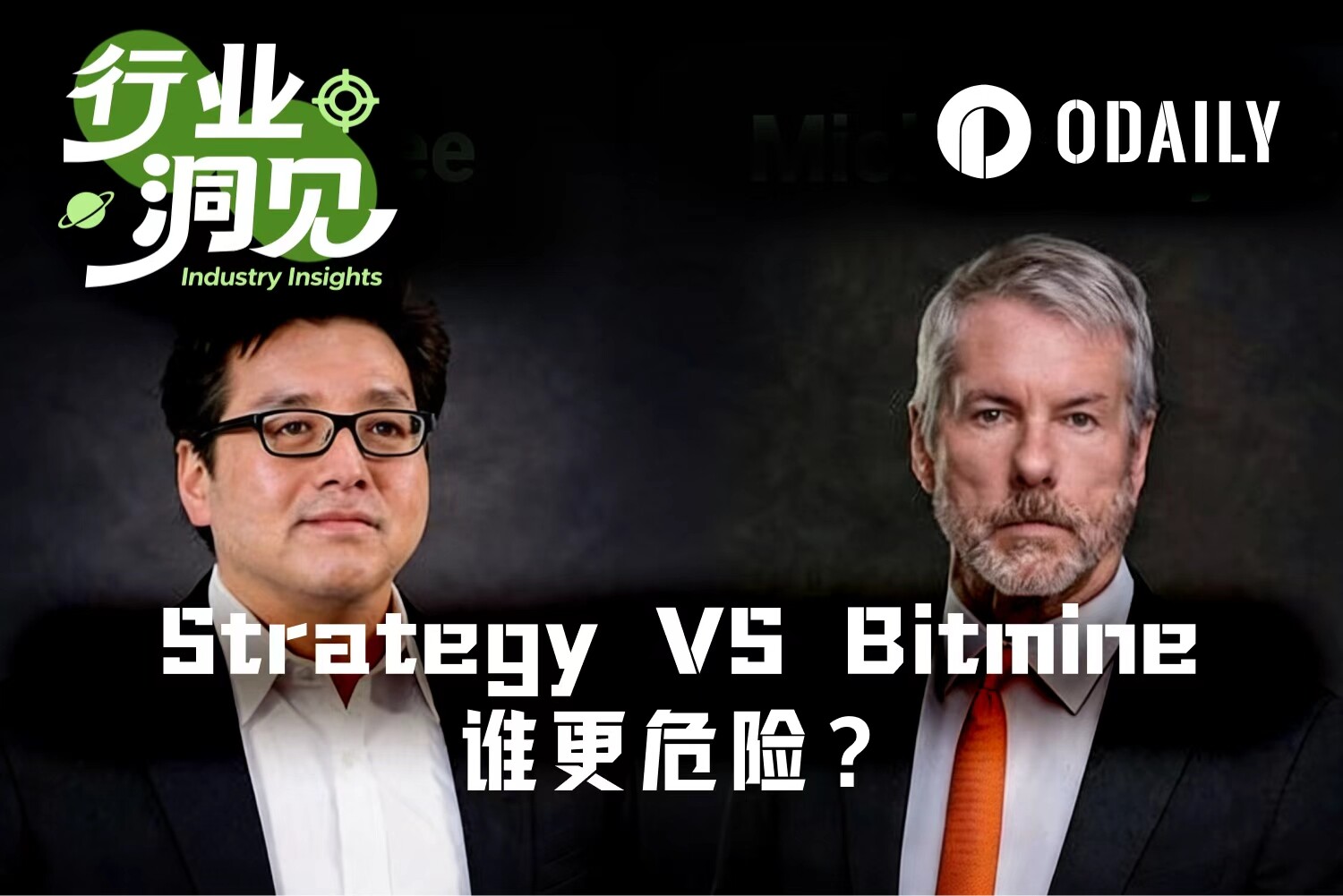
Both Suffer Massive Losses Exceeding $90 Billion, Which Is in Greater Peril: Strategy or Bitmine?

Facing massive paper losses exceeding $90 billion each amidst a sharp market downturn, "Digital Asset Treasury" (DAT) giants Strategy and Bitmine find themselves in a precarious position, but with different underlying risks. Strategy, heavily invested in Bitcoin (BTC), faces significant financial strain. Its strategy relies heavily on debt, including convertible notes and preferred stock (STRC) requiring substantial dividend payments. With its cash reserves dwindling and BTC offering no staking yield for cash flow, Strategy's high leverage makes it vulnerable. A continued price decline could force asset sales to meet obligations, potentially creating a negative feedback loop. Its market value has already fallen sharply. In contrast, Bitmine, an Ethereum (ETH) holder, appears on firmer financial ground. It primarily funds its purchases through equity offerings (like ATM programs), avoiding debt pressure. It also generates income by staking a large portion of its ETH holdings. While not immune to market drops and shareholder dilution concerns, Bitmine maintains more flexibility, recently announcing a new preferred share offering to raise further capital. The core divergence lies in their financing: Bitmine uses equity (investor money), while Strategy uses debt (borrowed money). Consequently, Bitmine currently faces less immediate liquidity pressure than Strategy, which must navigate the dual challenge of servicing debt/dividends and a declining core asset (BTC) price.

marsbit8m ago

Both Suffer Massive Losses Exceeding $90 Billion, Which Is in Greater Peril: Strategy or Bitmine?

marsbit8m ago

Where the AI Bubble Really Is: Which Layer of Players Are Naked

AI Bubble: Where It Really Is and Who's Swimming Naked This analysis dissects the AI industry not as a single entity but as a five-layer pyramid, arguing that bubbles are concentrated in specific tiers, not uniformly distributed. **Key Distinction from the 2000 Dot-com Bubble:** Unlike 2000, where companies had stock prices before revenue, today's leading AI players have massive, contract-backed revenue driving their valuations. Core infrastructure demand is real, with every GPU running at full capacity for paying customers. **The Five-Layer Pyramid & Bubble Assessment:** * **L0 (Fab/Manufacturing) & Top L4 (Leading AI Apps): NO BUBBLE.** Companies like TSMC, NVIDIA, major cloud providers (Microsoft, Google, Meta, Amazon), and top AI labs have real revenues and orders. Supply is tightly constrained by TSMC's disciplined capacity control and physical limits like power/land for data centers, preventing a supply glut. * **L1 (Memory): BATTLEGROUND.** Sky-high HBM margins could signal a new structural cycle or a classic "boom before bust." The oligopoly of three major players may enforce supply discipline, making this a high-stakes bet. * **L2 (Interconnect/Optical Modules): BUBBLE TERRITORY.** Companies like Lumentum and AAOI have seen stock surges (4-10x) far outpacing revenue growth. This hardware segment has lower physical barriers to expansion than fabs, allowing speculation. It mirrors the 2000 bubble's epicenter—optics. * **L3 (Infrastructure/"GPU Landlords"): VULNERABLE.** GPU leasing companies profit from the current compute shortage but own no long-term moat. Their business model relies on a temporary bottleneck that will ease as big tech expands and new tech (e.g., potential space-based data centers) emerges. * **L4 Long Tail (VC-backed Startups): STRONG BUBBLE SIGNALS.** VC funding concentration in AI is twice that of the 1999 peak. Many startups with little revenue use the valuation logic of successful giants to justify their own, creating high risk of a "valuation crunch" when funding dries up. **Critical Risks to Monitor:** 1. **GPU Depreciation & Accounting:** Companies extending the assumed useful life of GPUs artificially boost profits. The true economic life depends on future generational leaps from NVIDIA. 2. **"GPU Credit" & Off-Balance-Sheet Leverage:** Emerging structures where shell companies borrow to buy GPUs and lease them out (with chipmakers sometimes investing) move debt off major balance sheets. This echoes the "vendor financing" of 2000 and the securitization risks of 2008, though currently small-scale. 3. **TSMC Abandoning Caution:** If the primary supply bottleneck (TSMC's conservative capacity planning) breaks, runaway supply could trigger a bust. 4. **Algorithmic Efficiency Breakthrough:** A major leap in software efficiency could drastically reduce the need for raw compute hardware, undermining the investment thesis. **Conclusion:** The AI boom is expensive and has frothy areas, but its core is underpinned by real demand and physical supply constraints. The bubble risk is layered: most present in optical components, GPU leasing, and the long-tail startup ecosystem, while the foundational chip manufacturing and leading application layers remain relatively solid—for now.

marsbit21m ago

Where the AI Bubble Really Is: Which Layer of Players Are Naked

marsbit21m ago

Trading

Spot
Futures

Hot Articles

How to Buy SUN

Welcome to HTX.com! We've made purchasing SUN (SUN) simple and convenient. Follow our step-by-step guide to embark on your crypto journey.Step 1: Create Your HTX AccountUse your email or phone number to sign up for a free account on HTX. Experience a hassle-free registration journey and unlock all features.Get My AccountStep 2: Go to Buy Crypto and Choose Your Payment MethodCredit/Debit Card: Use your Visa or Mastercard to buy SUN (SUN) instantly.Balance: Use funds from your HTX account balance to trade seamlessly.Third Parties: We've added popular payment methods such as Google Pay and Apple Pay to enhance convenience.P2P: Trade directly with other users on HTX.Over-the-Counter (OTC): We offer tailor-made services and competitive exchange rates for traders.Step 3: Store Your SUN (SUN)After purchasing your SUN (SUN), store it in your HTX account. Alternatively, you can send it elsewhere via blockchain transfer or use it to trade other cryptocurrencies.Step 4: Trade SUN (SUN)Easily trade SUN (SUN) on HTX's spot market. Simply access your account, select your trading pair, execute your trades, and monitor in real-time. We offer a user-friendly experience for both beginners and seasoned traders.

6.9k Total ViewsPublished 2024.03.29Updated 2026.06.02

How to Buy SUN

Discussions

Welcome to the HTX Community. Here, you can stay informed about the latest platform developments and gain access to professional market insights. Users' opinions on the price of SUN (SUN) are presented below.

活动图片