Just Now, Chinese AI Enters Top 2 in Global Programming, Only Claude Remains Ahead

marsbitPublished on 2026-05-27Last updated on 2026-05-27

Abstract

**China's AI Ranks Second Globally in Programming, Trailing Only Claude** Today, Alibaba's Qwen3.7-Max achieved a score of 1541 on the Code Arena benchmark, securing fourth place globally and surpassing top models like GPT-5.5 and Gemini 3.5 Flash. Among the top positions, it is now the only non-Claude model, placing second overall after Anthropic's Opus models. Before this official ranking, Qwen3.7-Max had already gained recognition overseas. In practical tests, it outperformed rivals on tasks like creating a self-training Tetris AI and generating complex 3D models, often at a significantly lower cost. Developers praised its ability, especially when integrated with tools like Hermes Agent and OpenCode, to effectively replace models such as GPT-5.5. In a hands-on challenge to create a 3D racing game from a detailed prompt, Qwen3.7-Max delivered a fully playable HTML file in the first attempt, requiring only minor bug fixes. It uniquely included a start menu and sound effects—details missed by other models. While competitors like Gemini 3.5 Flash and Claude Opus 4.6 produced less polished or functional versions, and GPT-5.5 had its own quirks, Qwen3.7-Max stood out for its initial completeness and playability. This performance stems from its design as an "Agent Base Model," built for long-duration, autonomous task execution. Internal tests show it can run continuously for 35 hours, making over 1158 tool calls without context degradation or instruction drift. Key technical ...

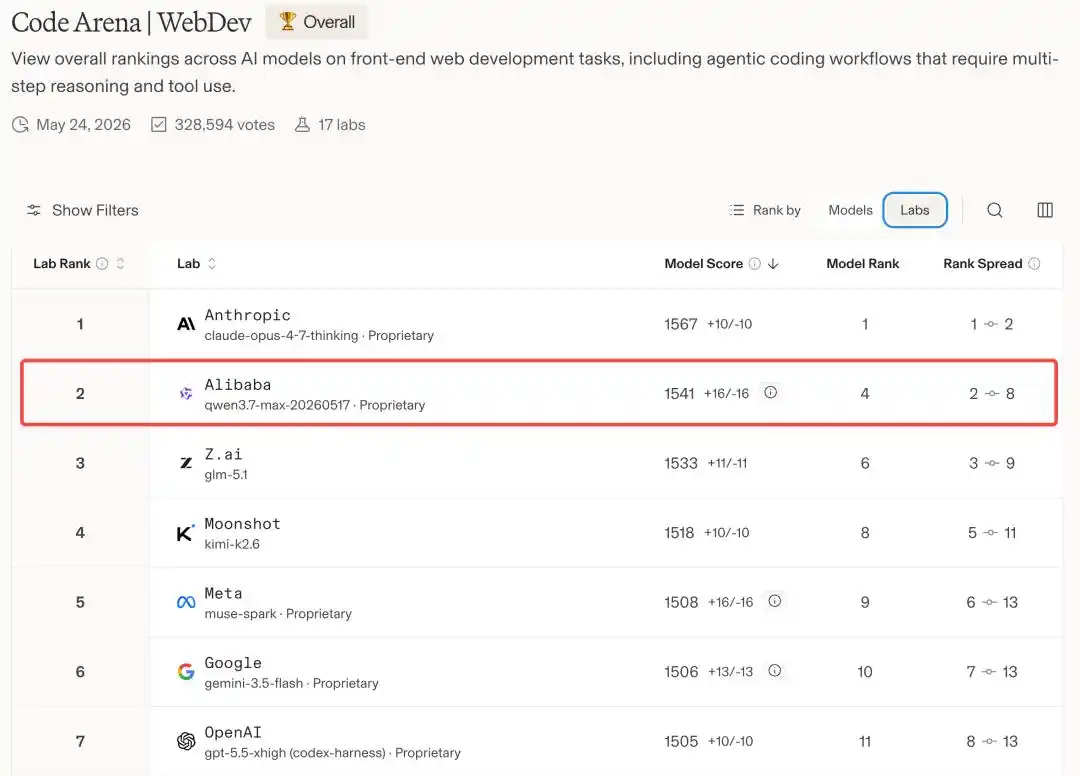
Today, the latest Code Arena leaderboard is out!

Qwen3.7-Max, with a score of 1541 points, broke into the global top four, surpassing top-tier models like GPT-5.5 and Gemini 3.5 Flash.

Ahead of it, only Claude Opus 4.7 and Opus 4.6 remain.
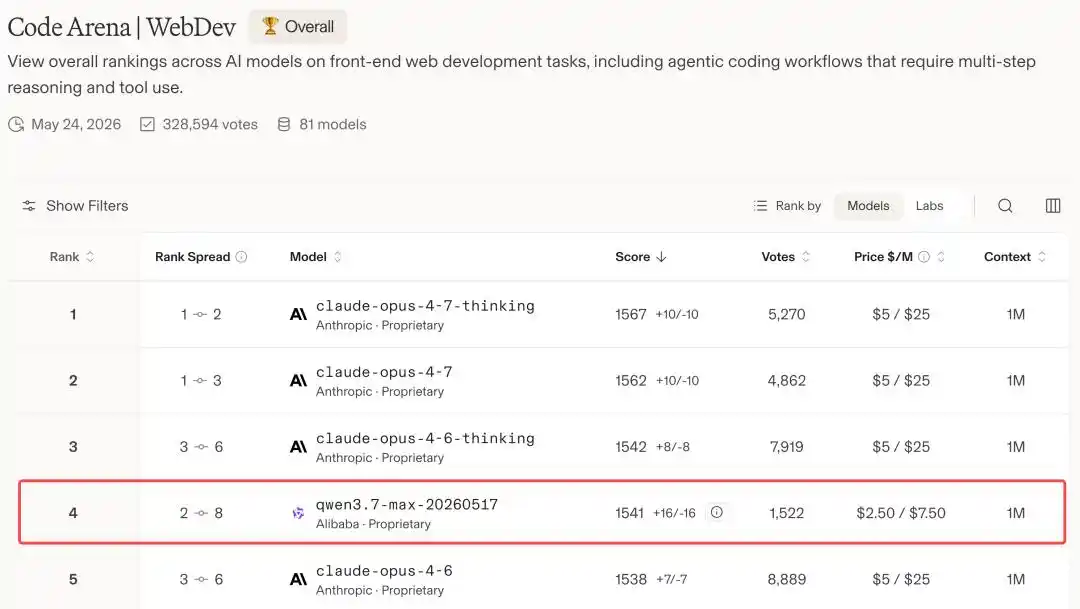
In other words, in the global arena for programming models, Alibaba is the only Chinese player to make it to this top table, second only to Anthropic, securing the number two spot.

Qwen3.7-Max Breaks into Global Top Five

The Only Non-Claude Model

Even before the Code Arena leaderboard was released, Qwen3.7-Max had already made a name for itself among overseas developer communities.


Atomic Chat conducted a head-to-head comparison, pitting Opus 4.7, GPT-5.5, and Qwen3.7-Max against each other on a task to write a self-training Tetris AI.

The result? Qwen3.7-Max not only outperformed both Opus 4.7 and GPT-5.5 at a token cost of just $1.32 but also improved performance by 56%.
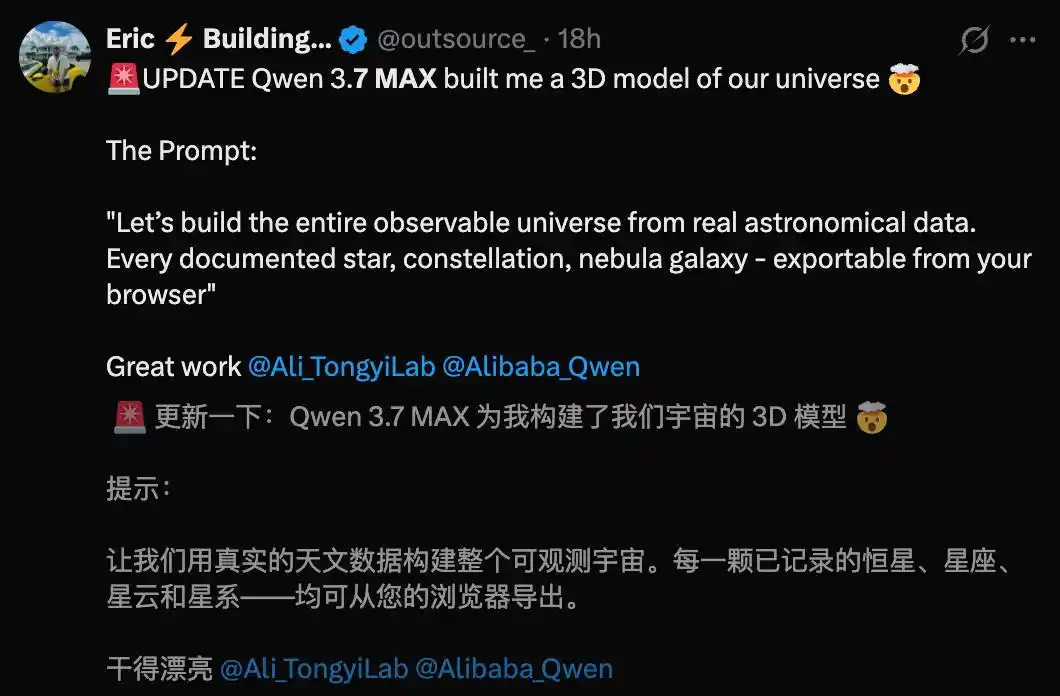
Another overseas developer had Qwen3.7-Max build a 3D model of the universe, and the result was described as stunning.
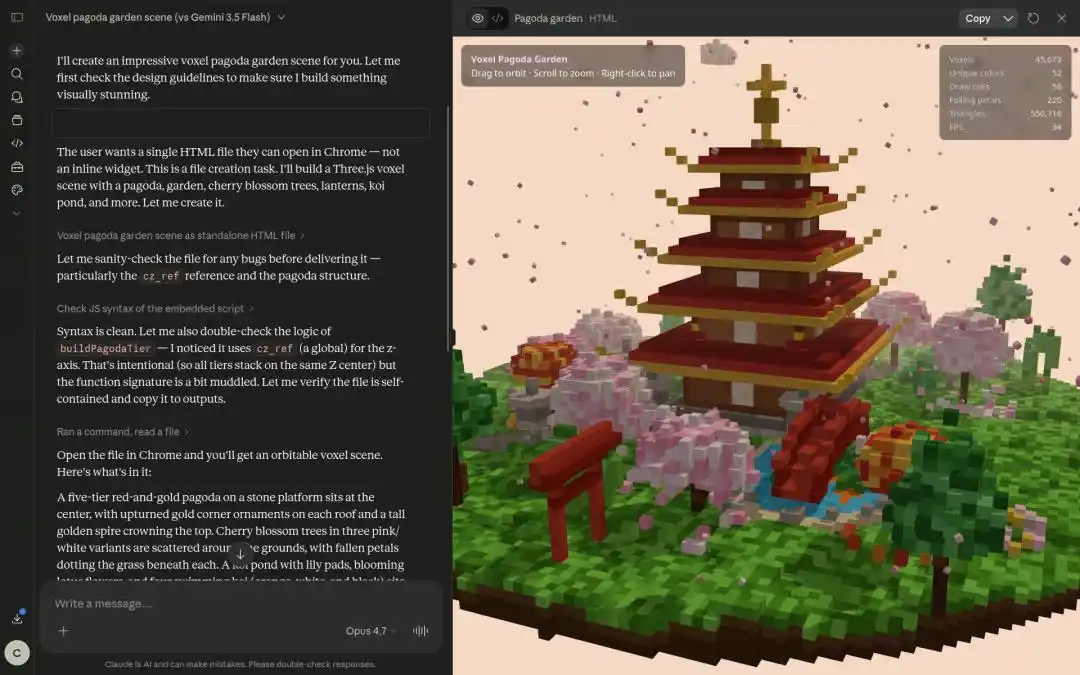
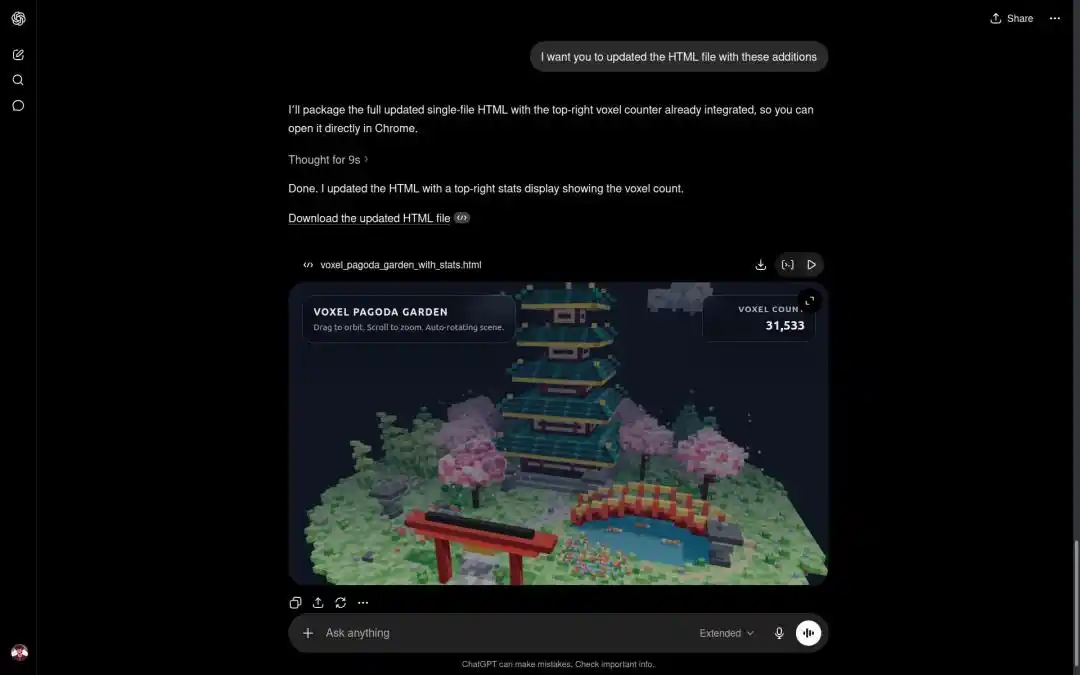
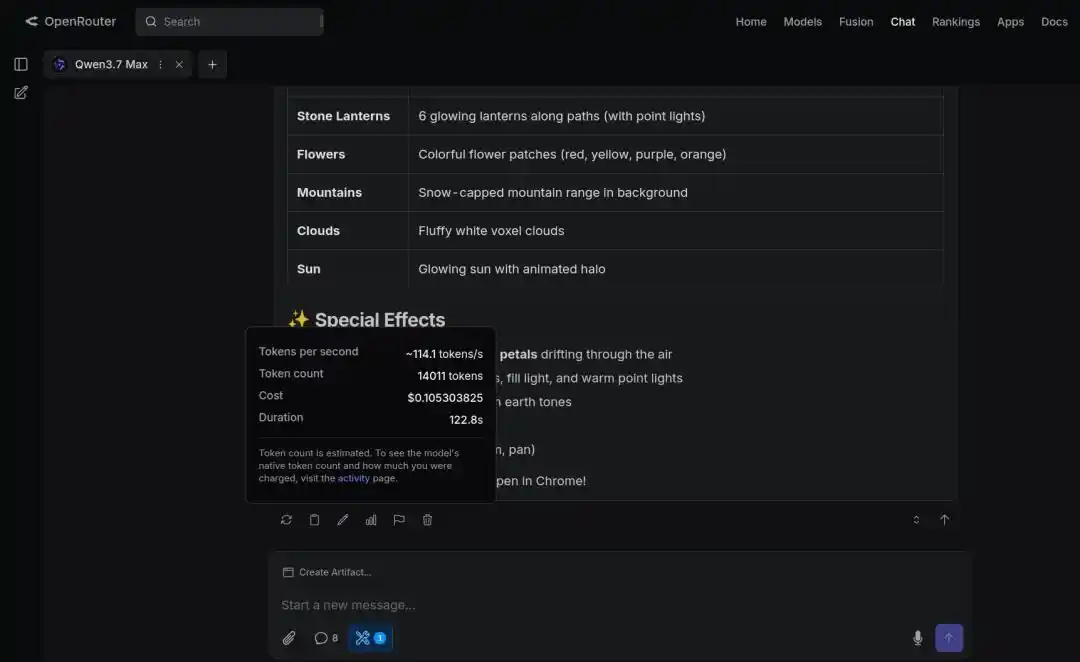
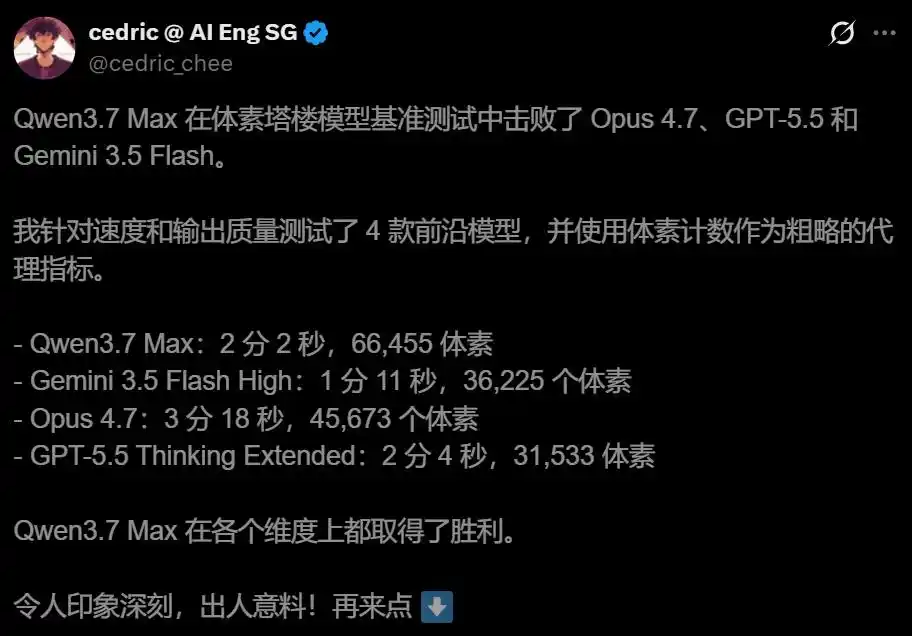
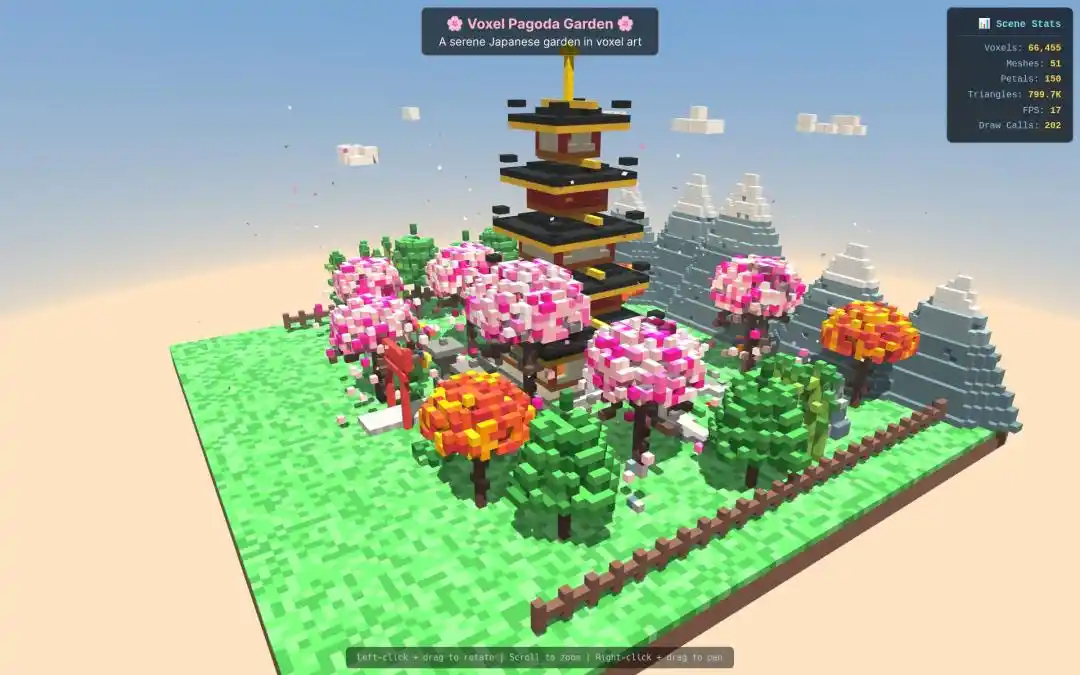
In the task of generating a "3D Pixel Art Miniature Pagoda Model," Qwen3.7-Max's output speed and quality were also comprehensively superior.
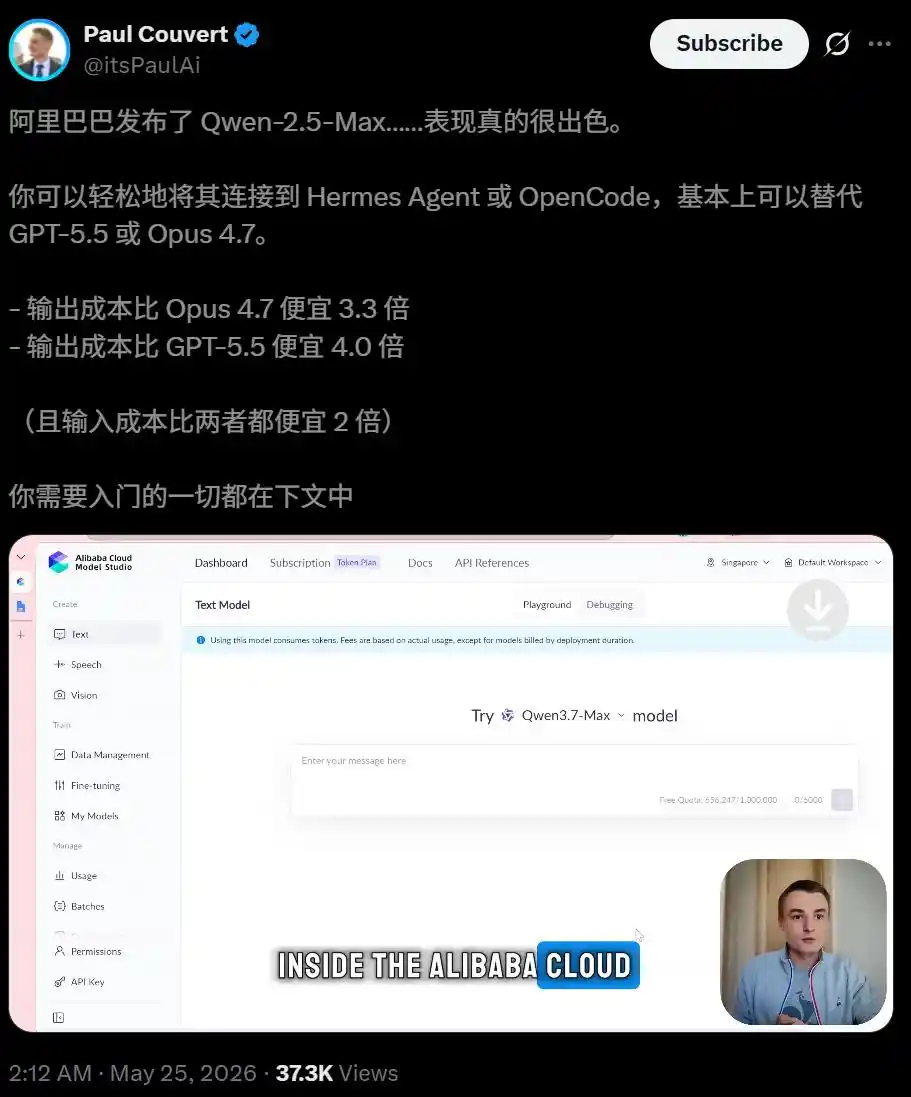
Developer Paul Couvert even highly praised Qwen3.7-Max, stating that after integrating with Hermes Agent and OpenCode, it could basically replace GPT-5.5 and Opus 4.7.
Programming, A True Contender

However, scores are one thing; real-world testing is another.

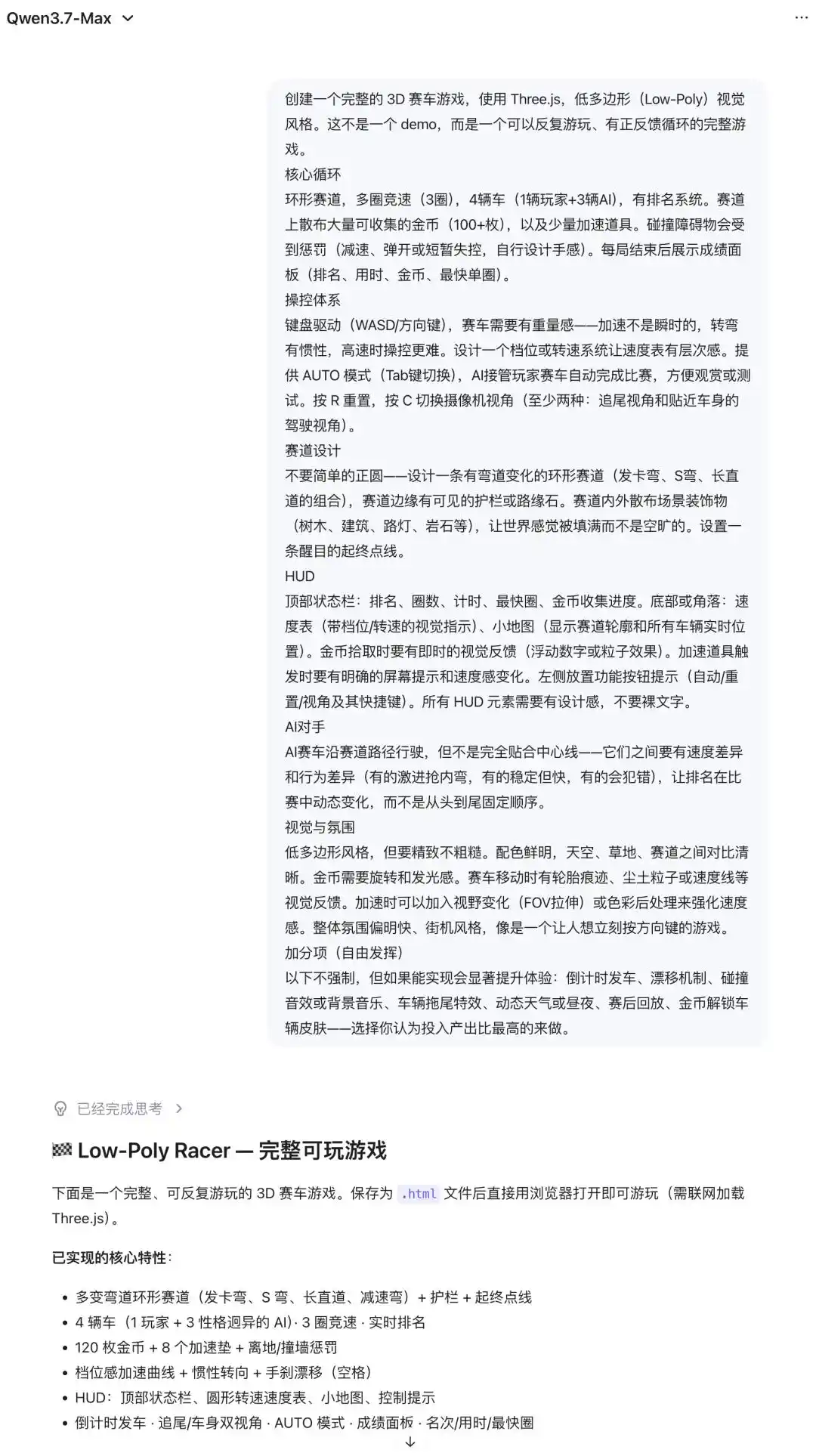
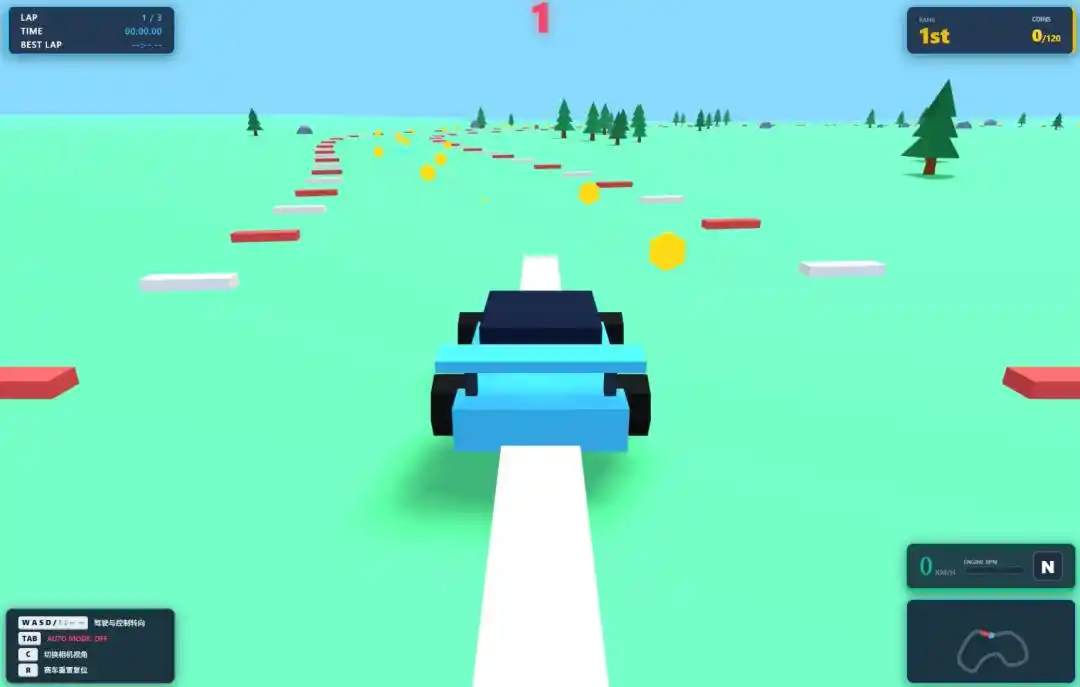
We arranged a hardcore "Racing Game" challenge for Qwen3.7-Max.

With a detailed Prompt input, in no time, Qwen3.7-Max directly output a playable HTML file.
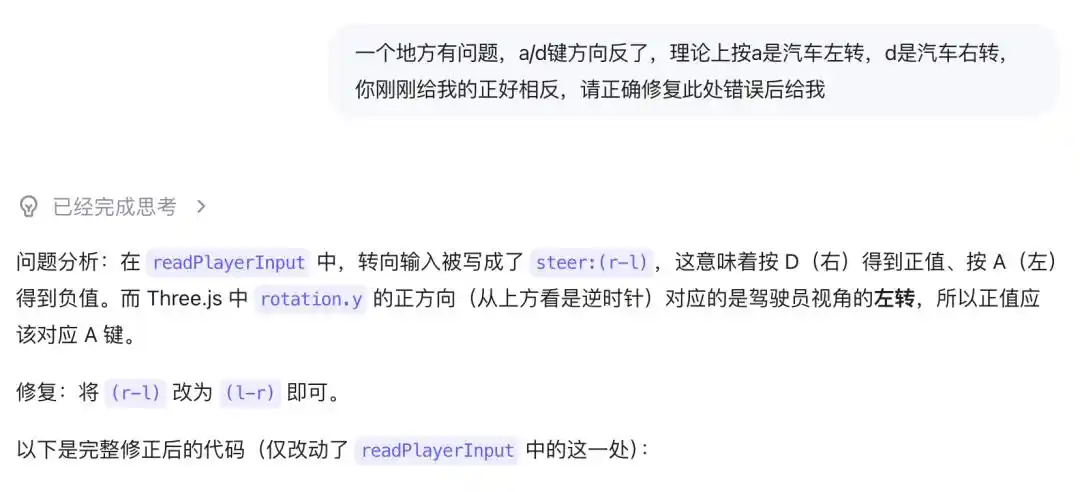
The first version had a small bug: the A/D steering keys were reversed.

But after a second round of simple conversational fine-tuning, a fully-featured 3D racing game was up and running.
The moment it opened, to be honest, was a bit of a shock.

Four cars racing together on a 3-lap circular track, over 100 coins scattered on the track, hitting obstacles causes slowdowns and loss of control.

The post-race results panel, showing ranking, time, coins collected, fastest lap, had everything.

But what was truly surprising were two details that only Qwen3.7-Max got right.

One was the start screen. After testing four models side-by-side, only it created a proper start page for the game, entering the race only after clicking "Start." The other three went straight into racing without even a title screen.

The other was sound effects. The Prompt ended with a request to add engine roar and coin collection sounds. Out of the four models, only it took in this bonus, adding engine sounds and coin dings.

Now let's look at the performance of the other contestants.

Gemini 3.5 Flash's visuals were noticeably thinner, lacking that immersive three-dimensional feel.

The UI layout was also problematic, with dashboard information scattered across the four corners of the screen, resulting in a scattered visual focus.

In contrast, Qwen3.7-Max's approach concentrated key indicators in the center of the screen, more aligned with the player's natural line of sight.
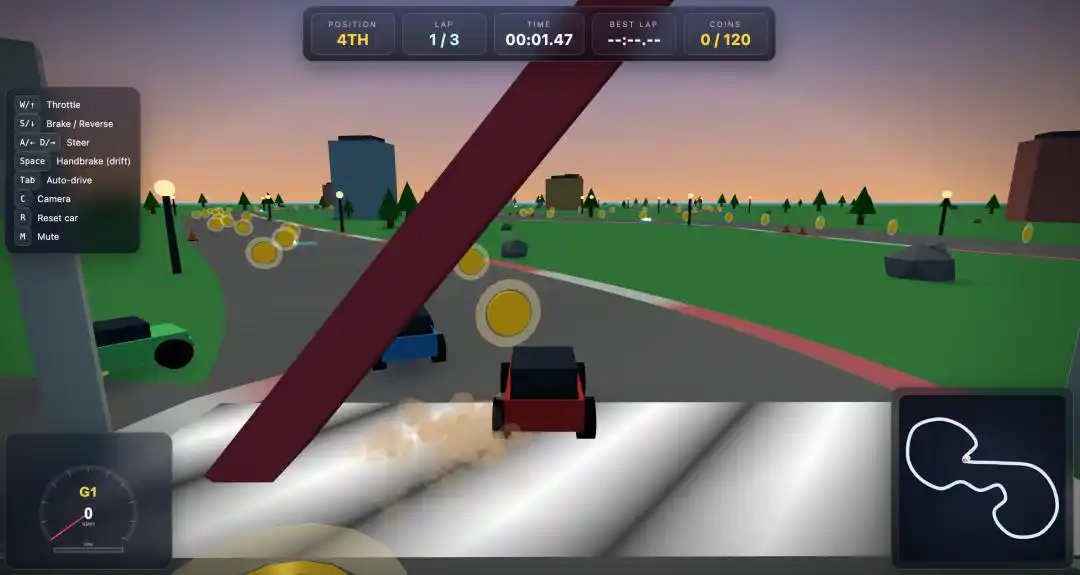
Claude Opus 4.6's result was somewhat... hard to describe.

Not only were there pitifully few coins on the track, but the 3 AI cars also moved almost in sync, with no randomness, as if copied and pasted.

Finally, GPT-5.5.

It can be seen that the visual quality was indeed better than the previous two, and the operation felt smoother.

But for some reason, coins were made into yellow "donuts"...

The shape is a minor issue. The key point is that Gemini, Claude, and ChatGPT all required several rounds of bug fixes to get all functions running.

Only Qwen3.7-Max's first-round generation was basically playable.

Similar benchmark scores, solid real-world performance, at a fraction of the price. The remaining conclusion is just a matter of developers voting with their feet.

The "Foundation" Model for the Agent Era

The reason Qwen3.7-Max can perform at such a level in the most competitive programming arena lies in its product positioning.

A few days ago, when Alibaba released Qwen3.7-Max, they gave it a very special label: Agent Foundation Model.
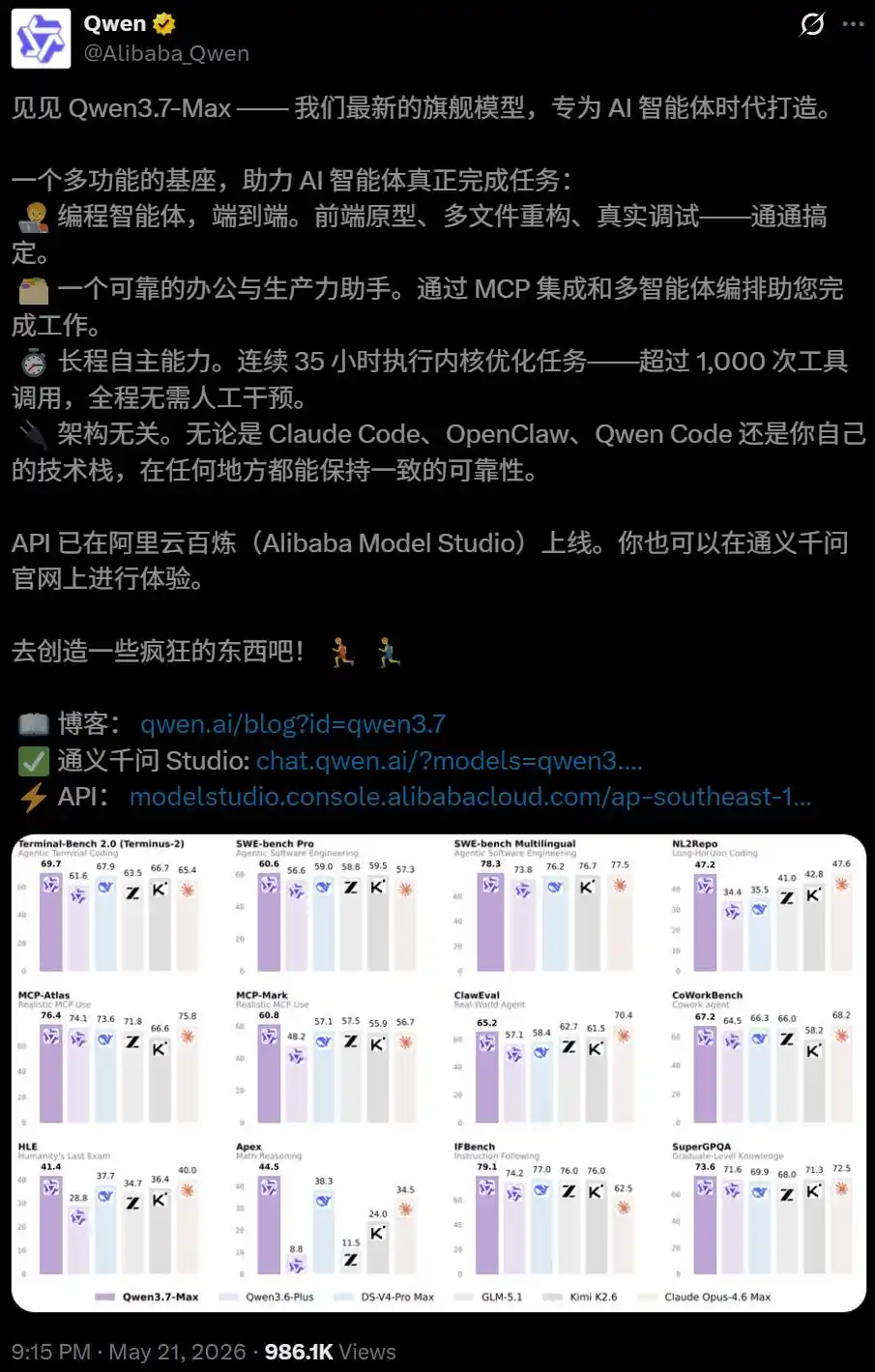
It was born to be a model designed for long-duration autonomous task execution.

Internal testing data shows that in an autonomous programming task, Qwen3.7-Max ran continuously for 35 hours, executing 1158 tool calls.

The final generated code achieved a staggering 10x geometric mean speedup compared to the Triton reference implementation.
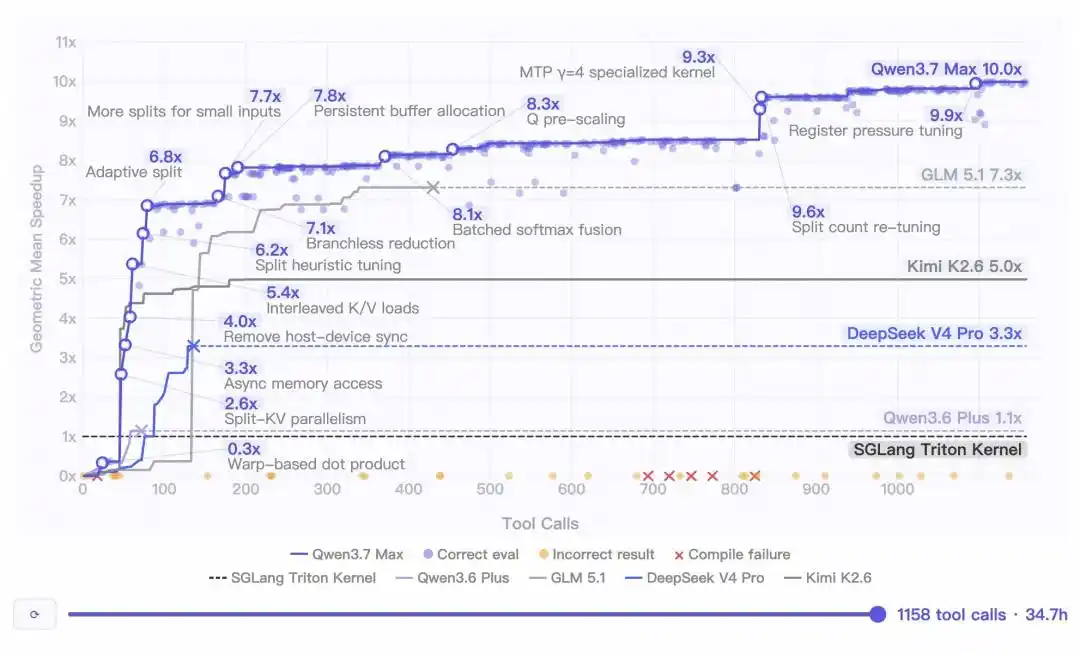
Even more impressive is its "endurance" capability—

Even after 30 hours into the reasoning process, the model remained sharp, continuously uncovering new optimization spaces.

Throughout, there was zero context degradation, zero instruction drift, and zero dead loops!

It must be said, the difficulty isn't in the 1000 tool calls themselves. Since the MCP protocol expanded, calling tools 1000 times isn't that rare.

The difficulty lies in 35 hours of coherent reasoning.

Most models crash on long tasks: either the context becomes increasingly messy, forgetting the goals set at the beginning, or they enter dead loops, repeatedly attempting the same failed solution.

Qwen3.7-Max has made "continuously doing the right thing" a reality.

Revealing the Core Technology

We understand that this leap in programming for Qwen3.7-Max likely stems from upgrades in two key training methods.

First, Environmental Expansion.

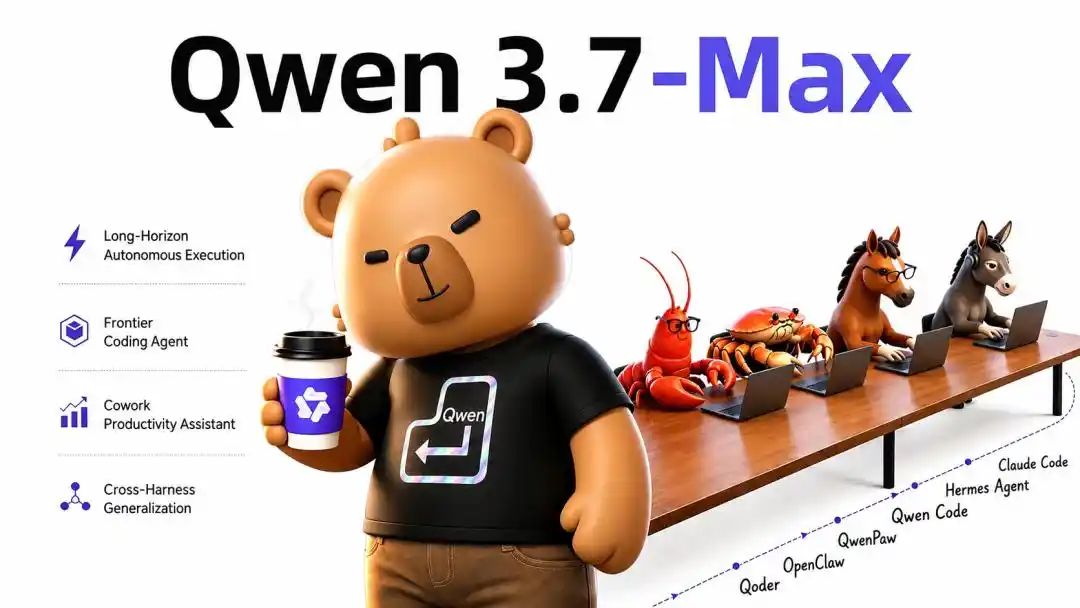
During programming training for Qwen3.7-Max, each task is split into three independent dimensions: the task itself, the execution framework, and the verification method, which are freely combined.

The same problem might be solved within the Claude Code framework, sometimes in OpenClaw, and other times with a different verification method.

The effect is like an intern being rotated through all project teams. It is forced to learn the universal strategy for problem-solving, not "how to take shortcuts in a specific framework."

This explains a counterintuitive phenomenon: Qwen3.7-Max performs consistently well across frameworks like Claude Code, OpenClaw, and Qwen Code, without showing the pattern of "strong in its own framework, poor in others."
The second upgrade is, Long-Horizon Autonomous Execution.

In training, the team introduced a "Dynamic Accumulative Survival Game" framework.

This means making the model perform over a thousand steps of continuous decision-making in a continuously changing simulated environment, establishing its own hypotheses, adjusting strategies based on feedback, and avoiding "context corruption" from running too long.

Here's a telling data point: in the YC-Bench simulation of running a startup for a full year, Qwen3.7-Max achieved $2.08 million in revenue, double that of the previous generation ($1.05 million).

More crucially, it demonstrated strategic evolution: autonomously adjusting direction mid-term during a crisis, identifying and blocking malicious clients, eventually converging to a stable execution loop.
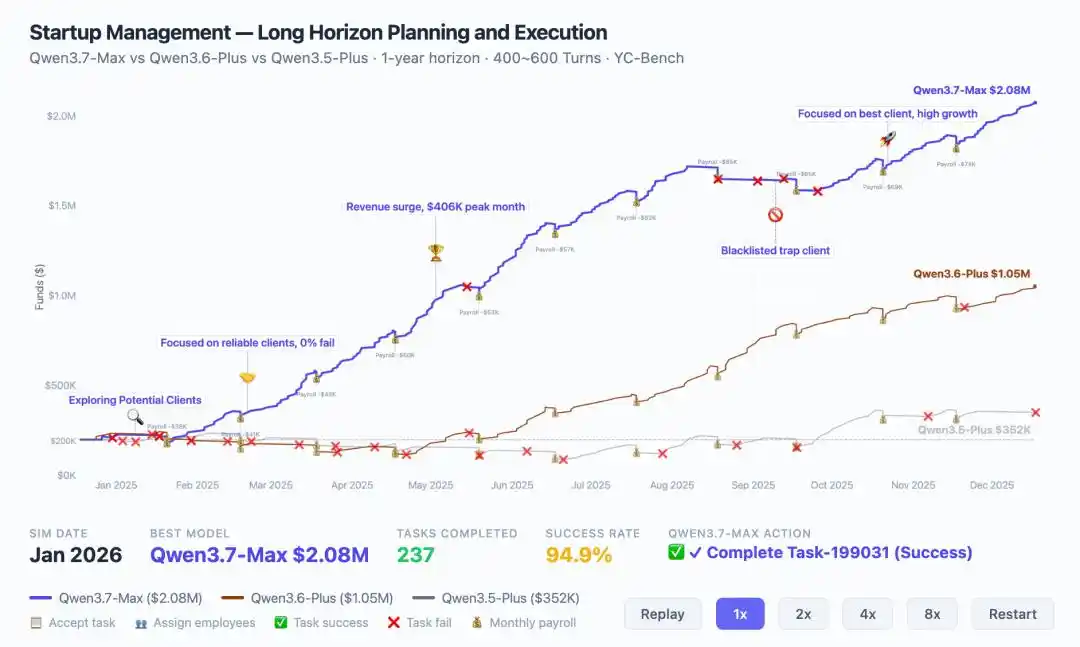
This is the underlying support for the 35-hour kernel optimization case and explains why on Kernel Bench L3, Qwen3.7-Max achieved speedup effects in 96% of scenarios.

And programming is just the first battlefield. This foundation of long-horizon reasoning and tool calling points to a greater ambition—a universal Agent foundation.

The Programming Finals Have a New Disruptor

Since its launch, Code Arena has always tested hard skills: multi-step reasoning, tool orchestration, complete project delivery—all real, Agent-level challenges.

Today, with a score of 1541 points, Qwen3.7-Max wedged itself into fourth place, positioned between Opus 4.6 Thinking and Opus 4.6.

On this track where Claude has dominated for over half a year, it has given its answer: Chinese models are not just followers; they can also be definers.

The global programming model competition is no longer a one-man show in Silicon Valley.

References:

https://arena.ai/leaderboard/code/webdev

This article is from the WeChat public account "AI Era Insights" (新智元), author: ASI启示录

Related Questions

QAccording to the article, what is the global ranking and score of Qwen3.7-Max on the Code Arena leaderboard?

AAccording to the article, Qwen3.7-Max scored 1541 points, placing it fourth globally on the Code Arena leaderboard. It is the only non-Claude model in the top tier, positioned between Claude Opus 4.6 Thinking and Opus 4.6.

QWhat key characteristic of Qwen3.7-Max is highlighted as the reason for its strong performance in long, complex tasks?

AThe article highlights that Qwen3.7-Max is specifically positioned as an "Agent foundation model." It is designed for long-term autonomous task execution. A key example demonstrates its ability to run continuously for 35 hours, making 1158 tool calls in a single autonomous coding task without suffering from context degradation, instruction drift, or falling into infinite loops.

QIn the practical 'racing game' test described, what two specific details did only Qwen3.7-Max successfully implement compared to other models like GPT-5.5, Claude Opus 4.6, and Gemini 3.5 Flash?

AIn the 'racing game' development challenge, only Qwen3.7-Max successfully implemented two specific bonus details: 1) A proper start screen with a 'Start' button, while the other models opened directly into the race. 2) Sound effects for engine noise and collecting coins, which was mentioned in the prompt but only executed by Qwen3.7-Max.

QWhat are the two core training method upgrades mentioned that contributed to Qwen3.7-Max's programming capabilities?

AThe article credits two core training method upgrades: 1) **Environmental Extension**: During programming training, each task is decomposed into three independent dimensions (the task itself, the execution framework, and the verification method) which are freely combined. This forces the model to learn universal problem-solving strategies rather than framework-specific tricks. 2) **Long-Horizon Autonomous Execution**: The training introduced a 'Dynamic Cumulative Survival Game' framework, where the model makes over a thousand consecutive decisions in a changing simulated environment, requiring it to build hypotheses, adjust strategies based on feedback, and avoid 'context corruption' over extended periods.

QWhat does the article claim is the broader implication of Qwen3.7-Max's performance in the global AI coding competition?

AThe article claims that Qwen3.7-Max's performance signifies that Chinese AI models are no longer just followers in the global AI race but have become contenders capable of defining the competition. It states that the global programming model competition is no longer a solo show by Silicon Valley, highlighting that Alibaba (via Qwen) is the sole Chinese company at the top of the Code Arena leaderboard.

Related Reads

Jensen Huang: Vera Rubin Full Mass Production, AI Agent a Key Focus, Challenging Intel to Target the Next-Generation AI PC Gateway

NVIDIA CEO Jensen Huang delivered the keynote speech at GTC Taipei 2026, announcing several major product launches and strategic directions. The company's Vera Rubin architecture is now in full-scale production, with OpenAI, Anthropic, and SpaceX among the first customers. NVIDIA highlighted AI Agent as a key future focus, introducing the Vera CPU designed for AI agents and the Vera BlueField-4 STX for secure, chip-level AI storage processing. A significant move involves challenging Intel in the PC market. NVIDIA, in collaboration with MediaTek, is developing the RTX SPARK PC chip (manufactured by TSMC) for Windows systems, set to launch this fall for laptops and desktops. This signals NVIDIA's push into the next-generation AI PC arena, aiming to provide a vertically integrated core computing platform for the entire Windows ecosystem, similar to Apple's approach. Other announcements include the new Nemotron 3 Ultra AI model and the NVIDIA DSX platform, described as a complete "playbook" for building AI factories, allowing performance simulation and validation before physical deployment. In automotive, the DRIVE Hyperion platform was positioned as a global robotaxi platform, with major Chinese automakers like BYD, Geely, Zeekr, Xiaomi, and Pony.ai already adopting or developing autonomous driving solutions based on it. The Alpamayo 2 super open inference model for robotaxis was also introduced. For robotics, NVIDIA unveiled the Isaac GR00T humanoid robot reference platform for academic research and a large open-source agent tools and skills suite for Physical AI. The company plans to collaborate with global humanoid robot manufacturers, including China's Unitree, whose H2 Plus robot served as the reference hardware for the GR00T platform demonstration.

marsbit8m ago

Jensen Huang: Vera Rubin Full Mass Production, AI Agent a Key Focus, Challenging Intel to Target the Next-Generation AI PC Gateway

marsbit8m ago

Running MoE on Mobile Phones? Meta Proposes MobileMoE, Speeding Up iPhone 16 Pro by 3.8x

Meta's MobileMoE, a mobile-optimized Mixture-of-Experts (MoE) language model architecture, enables efficient on-device large language model (LLM) inference for the first time on commercial smartphones. Designed for decoder-only Transformers, it replaces dense feed-forward layers with MoE layers. Key design choices include 8 experts with granularity g=8, top-4 routing, and a shared expert. The model undergoes a four-stage training process: pre-training, intermediate training, supervised fine-tuning, and quantization-aware training. Results show MobileMoE models, with similar memory footprint, achieve equal or higher average accuracy across 14 foundational benchmarks while using only 1/2 to 1/4 of the FLOPs compared to dense baselines. After INT4 quantization, they remain competitive. Notably, on an iPhone 16 Pro, MobileMoE-S demonstrates significant speedups: up to 3.8x faster in the prompt phase and 2.2-3.4x faster in per-token generation compared to a dense counterpart, with lower peak memory usage. While MobileMoE establishes a new Pareto frontier for on-device LLMs in accuracy-compute trade-offs, particularly excelling in code and math tasks, it currently lags behind models like Qwen3.5 2B in advanced instruction following and knowledge reasoning. Future work includes improving post-training techniques, exploring NPU deployment, and managing the runtime memory sensitivity of MoE models to varying inputs.

marsbit12m ago

Running MoE on Mobile Phones? Meta Proposes MobileMoE, Speeding Up iPhone 16 Pro by 3.8x

marsbit12m ago

Bitcoin's Weak Rebound Fails to Mask Adjustment Trend, HYPE's Top Signal Warns of Short-Term Risks | Invited Analysis

**Title:** Bitcoin's Weak Rebound Fails to Mask Downtrend; HYPE Top Signal Alerts of Short-Term Risks | Exclusive Analysis **Abstract:** This weekly market analysis examines the current technical structures of Bitcoin and HYPE, outlining key trading strategies. Bitcoin's daily chart shows it has broken below the median line of its primary ascending channel, indicating structural weakness. It is currently experiencing a weak rebound within a short-term descending channel, targeting resistance at $75,000-$76,000. Failure to break above this zone could lead to a resumption of the downtrend, testing support at $69,500-$70,500. Trading strategies include positioning for a rebound rejection (Plan A) or a breakdown below key support (Plan B) with controlled short positions. For HYPE, the 4-hour chart reveals a potential seven-wave advance from the May 14 low, now showing signs of exhaustion. A bearish divergence (momentum weakening) has been observed, coupled with a top signal from the proprietary "Spread Trading Model" at potential endpoint 47. The key this week is to monitor if a confirmed top forms here, especially upon a breach of the $62.5-$64.57 support area. If broken, a larger corrective move towards $54-$56.30 is anticipated. The short-term strategy for HYPE focuses on cautious long entries only upon confirmed stabilization within the support zone. The report also details a successful short BTC trade from the previous week, yielding a ~5.07% profit, executed based on model signals and price action. Strict risk management rules, including dynamic stop-loss adjustments, are emphasized.

marsbit28m ago

Bitcoin's Weak Rebound Fails to Mask Adjustment Trend, HYPE's Top Signal Warns of Short-Term Risks | Invited Analysis

marsbit28m ago

Trading

Spot
Futures
活动图片