Just Now, Chinese AI Enters Top 2 in Global Programming, Only Claude Remains Ahead

marsbitPublished on 2026-05-27Last updated on 2026-05-27

Abstract

**China's AI Ranks Second Globally in Programming, Trailing Only Claude** Today, Alibaba's Qwen3.7-Max achieved a score of 1541 on the Code Arena benchmark, securing fourth place globally and surpassing top models like GPT-5.5 and Gemini 3.5 Flash. Among the top positions, it is now the only non-Claude model, placing second overall after Anthropic's Opus models. Before this official ranking, Qwen3.7-Max had already gained recognition overseas. In practical tests, it outperformed rivals on tasks like creating a self-training Tetris AI and generating complex 3D models, often at a significantly lower cost. Developers praised its ability, especially when integrated with tools like Hermes Agent and OpenCode, to effectively replace models such as GPT-5.5. In a hands-on challenge to create a 3D racing game from a detailed prompt, Qwen3.7-Max delivered a fully playable HTML file in the first attempt, requiring only minor bug fixes. It uniquely included a start menu and sound effects—details missed by other models. While competitors like Gemini 3.5 Flash and Claude Opus 4.6 produced less polished or functional versions, and GPT-5.5 had its own quirks, Qwen3.7-Max stood out for its initial completeness and playability. This performance stems from its design as an "Agent Base Model," built for long-duration, autonomous task execution. Internal tests show it can run continuously for 35 hours, making over 1158 tool calls without context degradation or instruction drift. Key technical ...

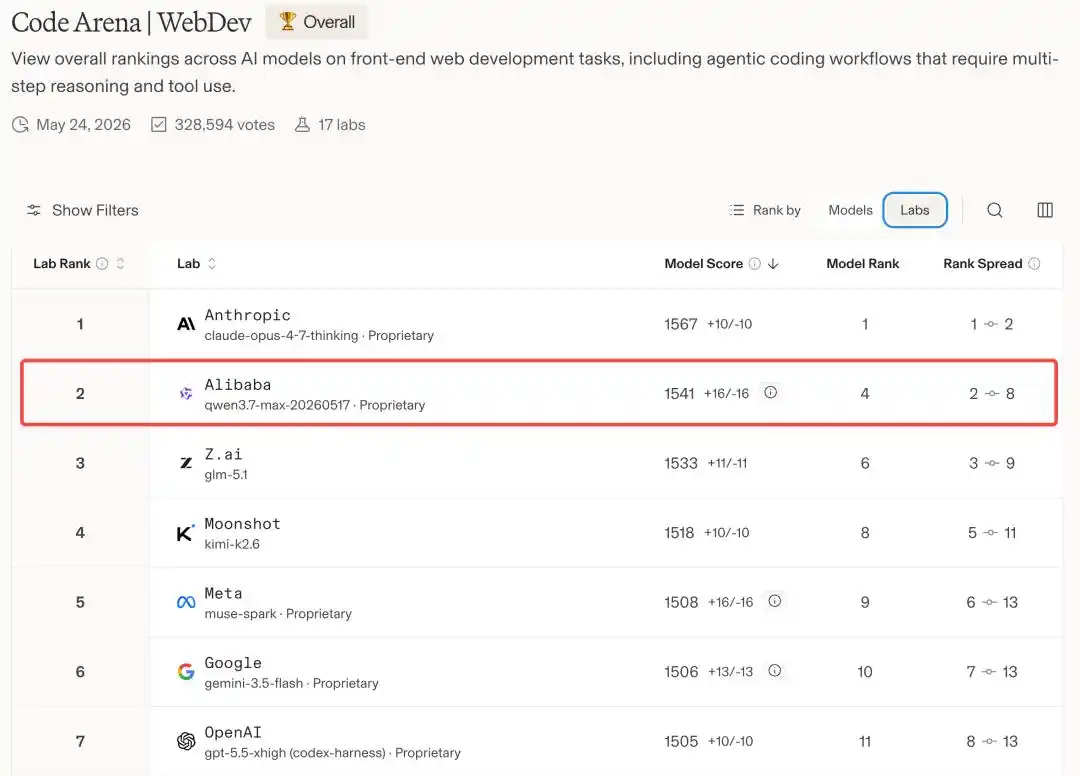
Today, the latest Code Arena leaderboard is out!

Qwen3.7-Max, with a score of 1541 points, broke into the global top four, surpassing top-tier models like GPT-5.5 and Gemini 3.5 Flash.

Ahead of it, only Claude Opus 4.7 and Opus 4.6 remain.
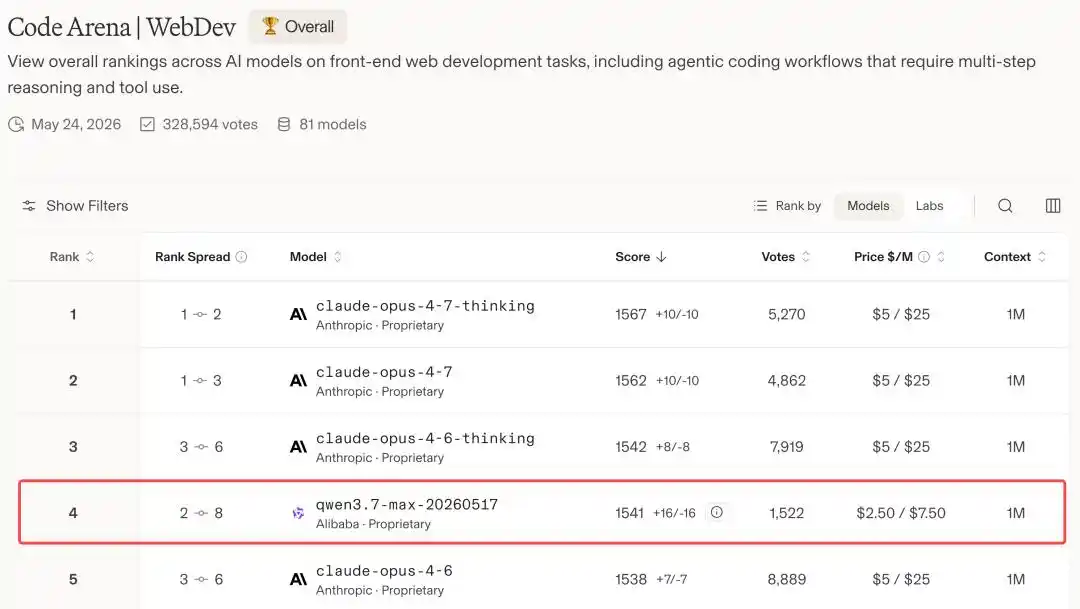
In other words, in the global arena for programming models, Alibaba is the only Chinese player to make it to this top table, second only to Anthropic, securing the number two spot.

Qwen3.7-Max Breaks into Global Top Five

The Only Non-Claude Model

Even before the Code Arena leaderboard was released, Qwen3.7-Max had already made a name for itself among overseas developer communities.


Atomic Chat conducted a head-to-head comparison, pitting Opus 4.7, GPT-5.5, and Qwen3.7-Max against each other on a task to write a self-training Tetris AI.

The result? Qwen3.7-Max not only outperformed both Opus 4.7 and GPT-5.5 at a token cost of just $1.32 but also improved performance by 56%.
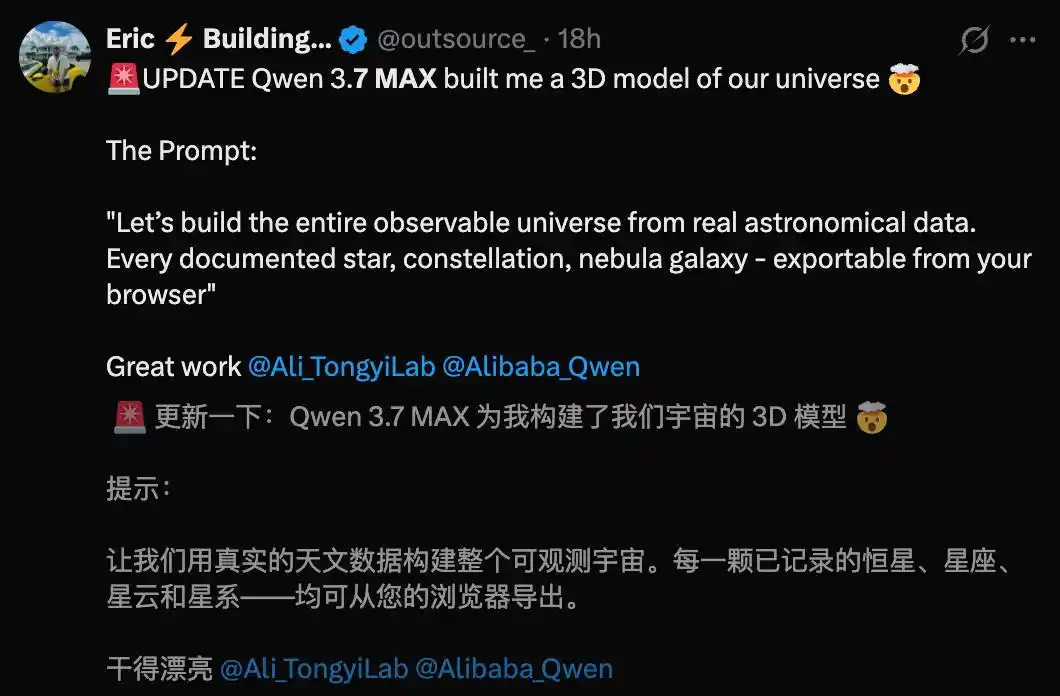
Another overseas developer had Qwen3.7-Max build a 3D model of the universe, and the result was described as stunning.
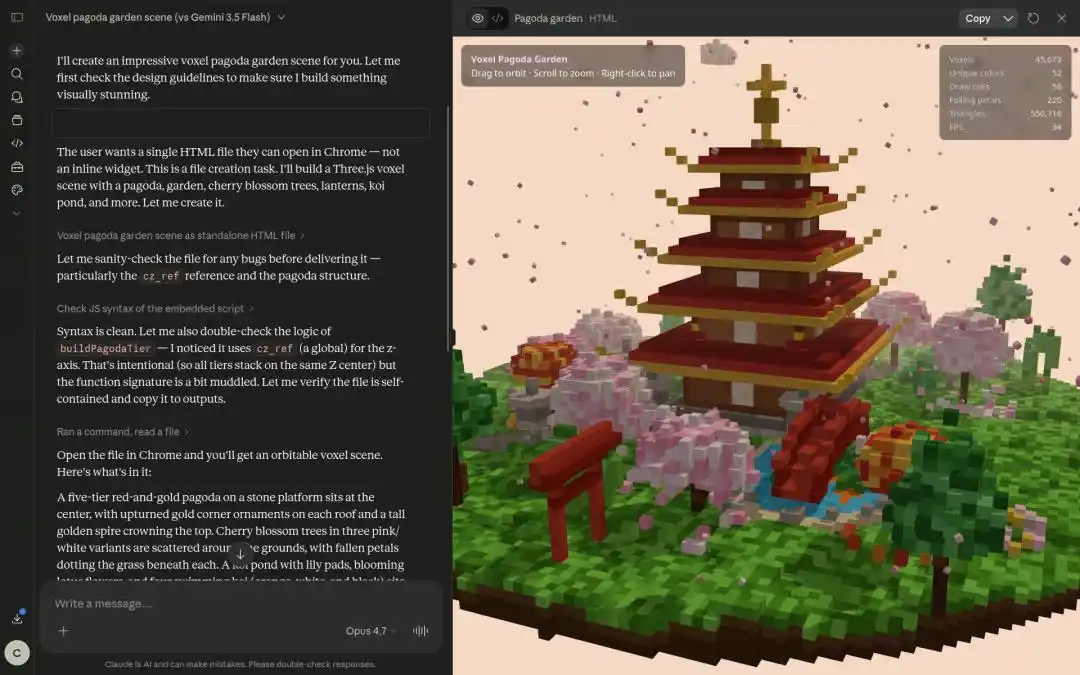
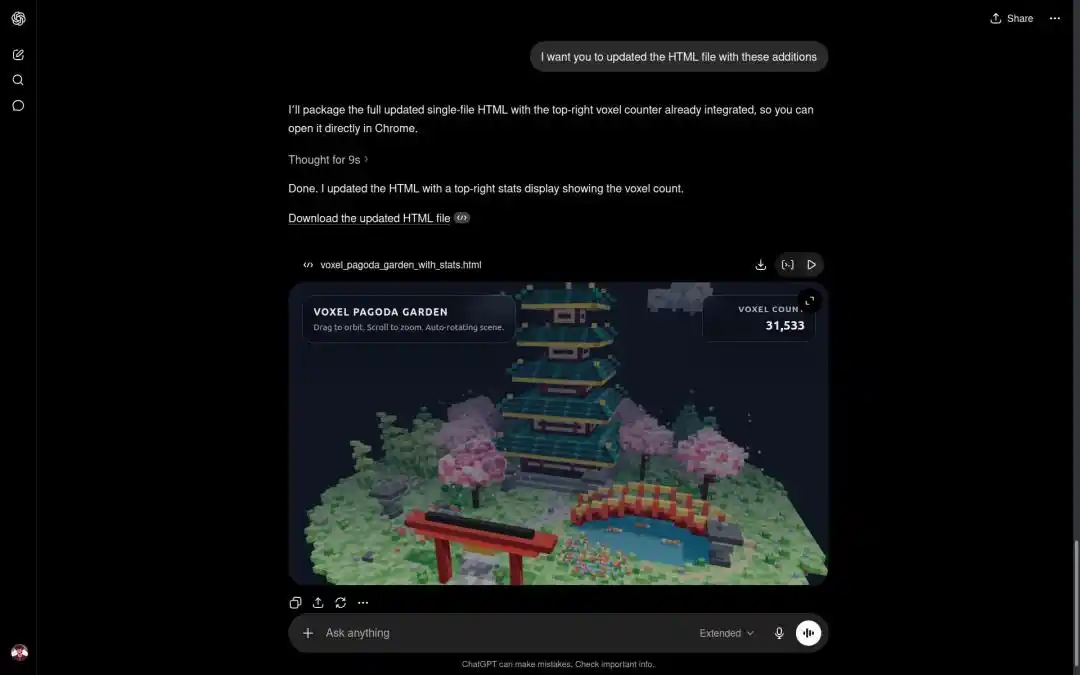
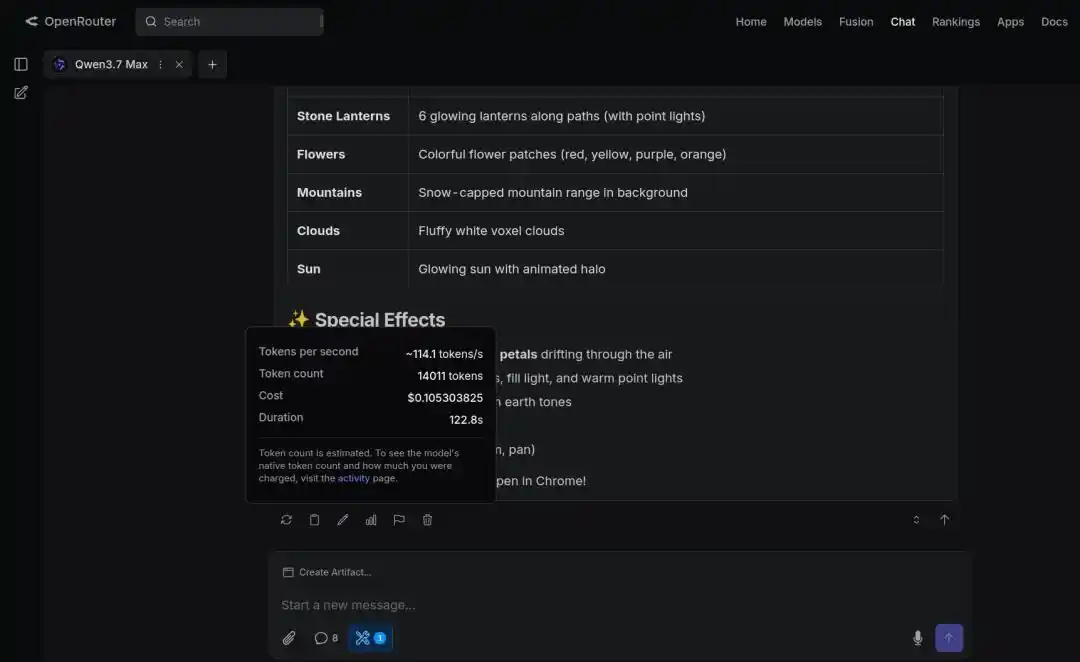
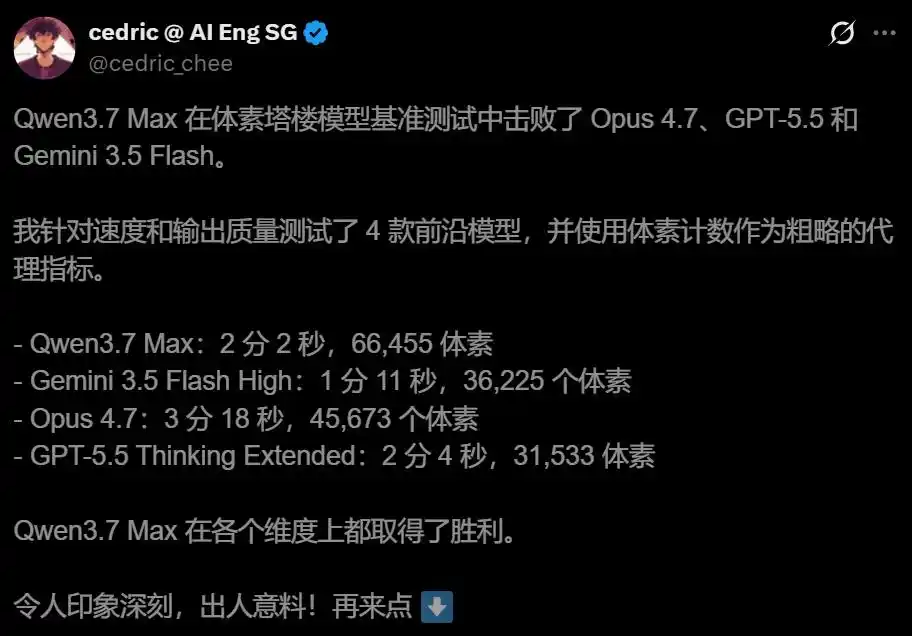
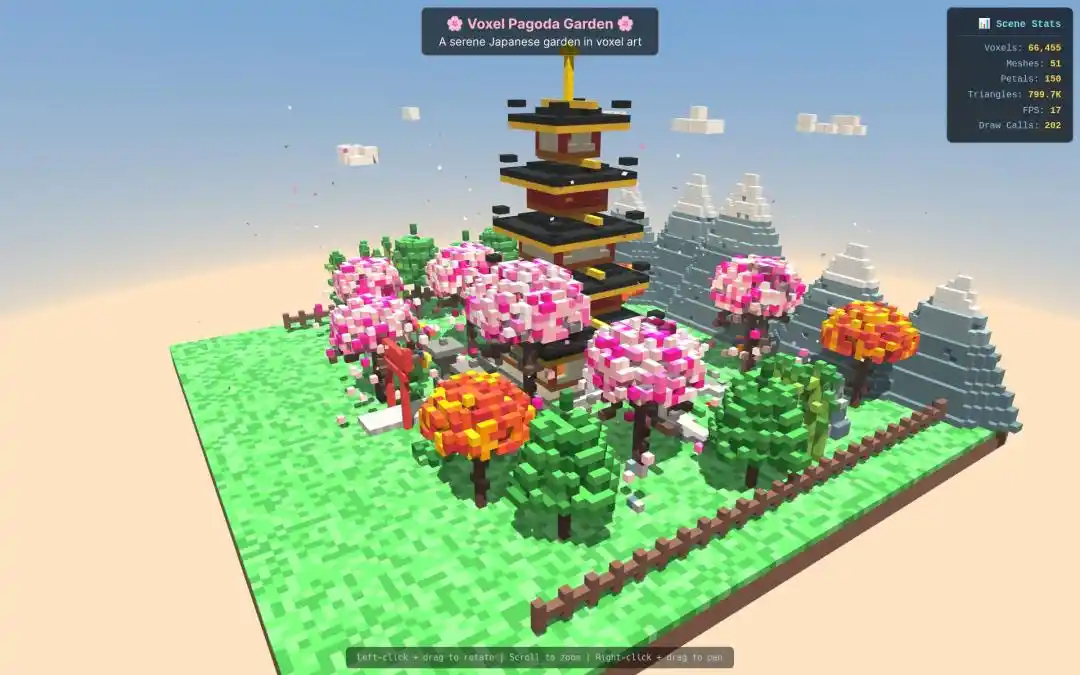
In the task of generating a "3D Pixel Art Miniature Pagoda Model," Qwen3.7-Max's output speed and quality were also comprehensively superior.
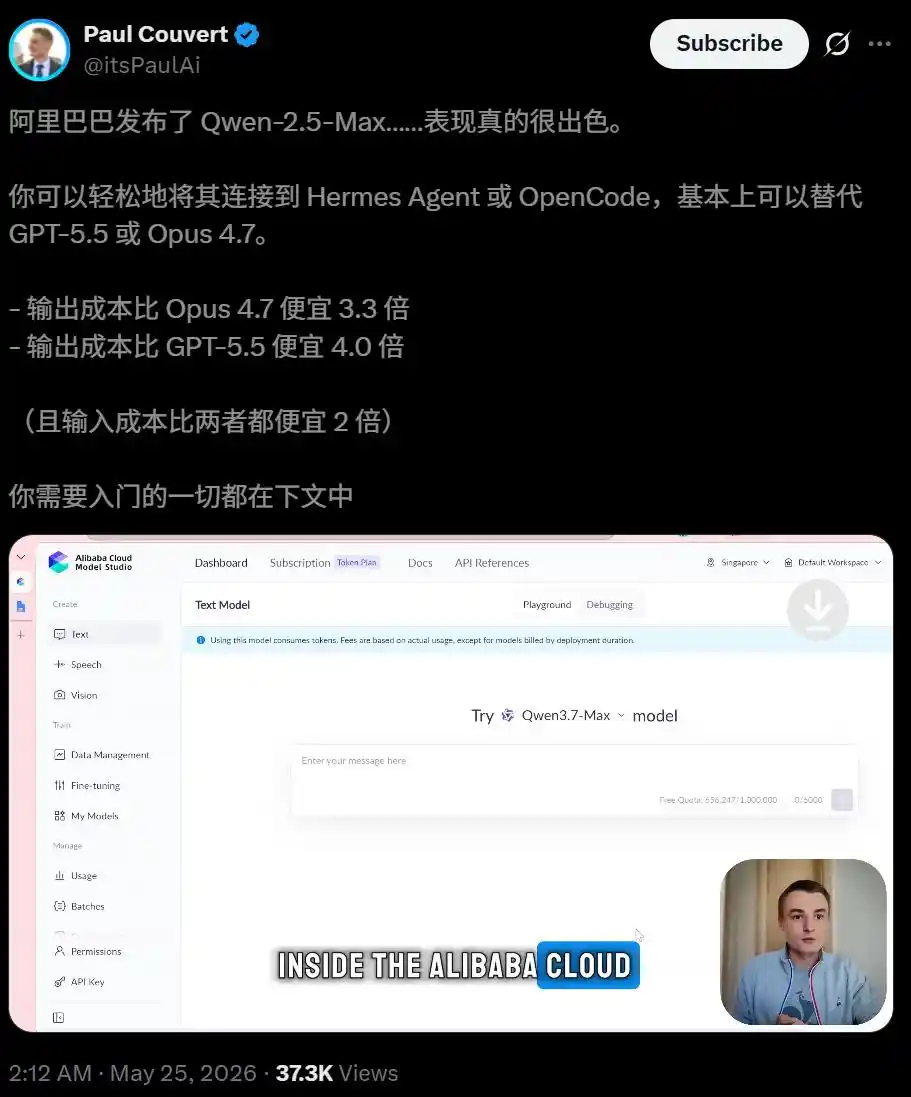
Developer Paul Couvert even highly praised Qwen3.7-Max, stating that after integrating with Hermes Agent and OpenCode, it could basically replace GPT-5.5 and Opus 4.7.
Programming, A True Contender

However, scores are one thing; real-world testing is another.

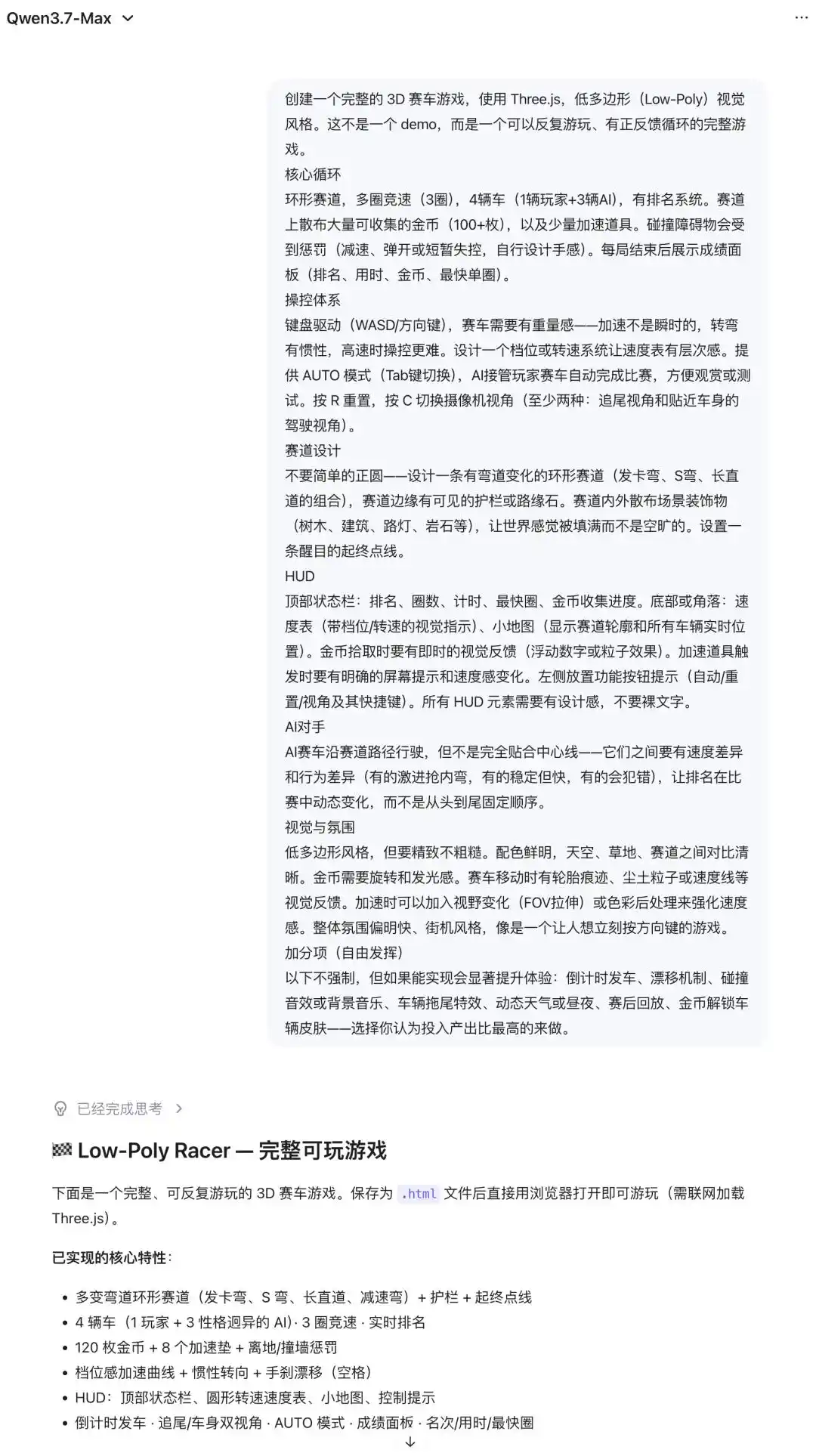
We arranged a hardcore "Racing Game" challenge for Qwen3.7-Max.

With a detailed Prompt input, in no time, Qwen3.7-Max directly output a playable HTML file.
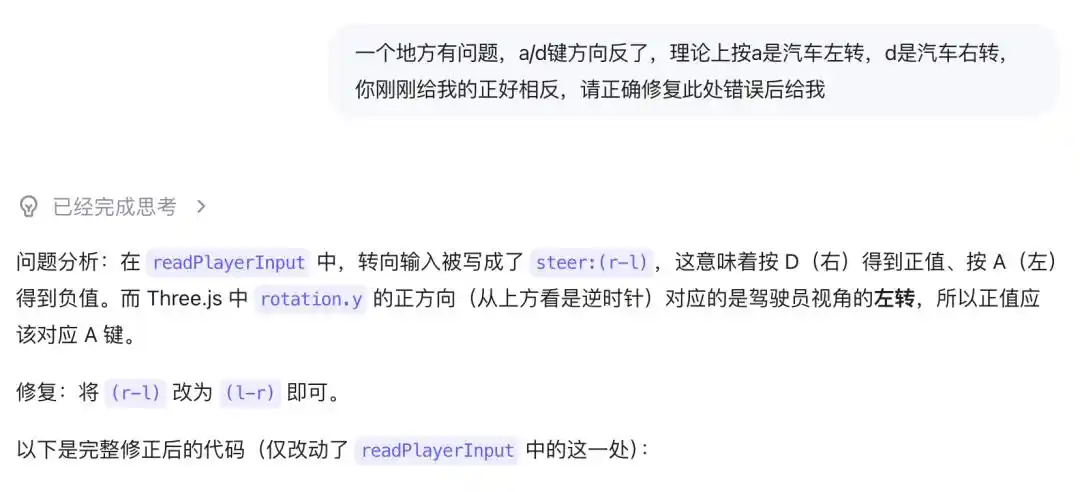
The first version had a small bug: the A/D steering keys were reversed.

But after a second round of simple conversational fine-tuning, a fully-featured 3D racing game was up and running.
The moment it opened, to be honest, was a bit of a shock.

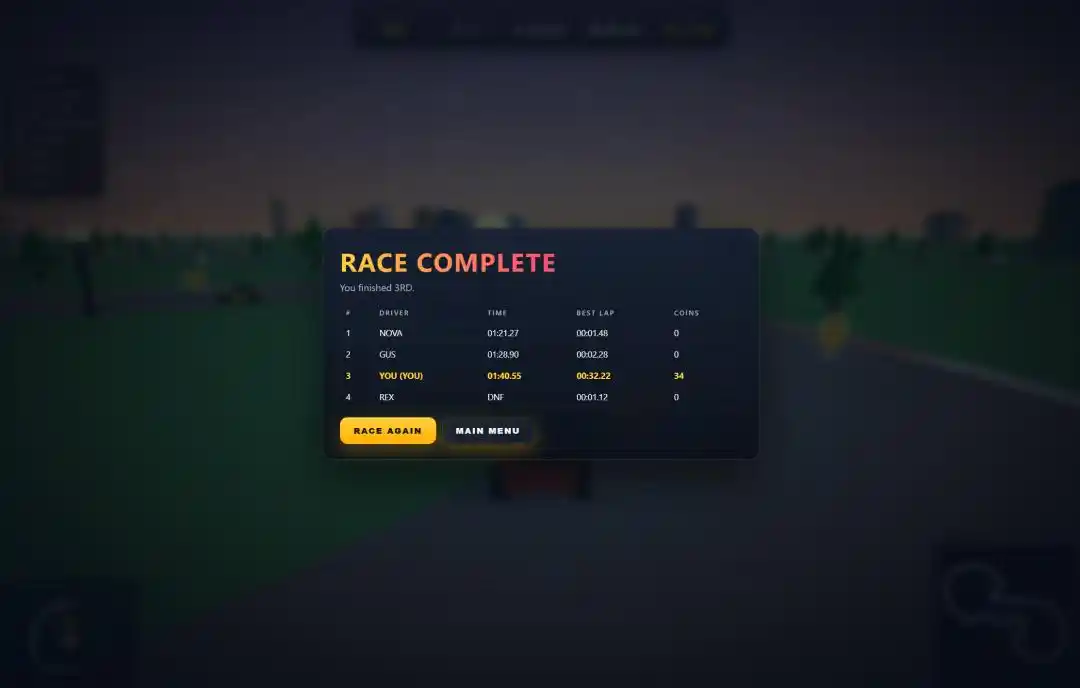
Four cars racing together on a 3-lap circular track, over 100 coins scattered on the track, hitting obstacles causes slowdowns and loss of control.

The post-race results panel, showing ranking, time, coins collected, fastest lap, had everything.

But what was truly surprising were two details that only Qwen3.7-Max got right.

One was the start screen. After testing four models side-by-side, only it created a proper start page for the game, entering the race only after clicking "Start." The other three went straight into racing without even a title screen.

The other was sound effects. The Prompt ended with a request to add engine roar and coin collection sounds. Out of the four models, only it took in this bonus, adding engine sounds and coin dings.
Now let's look at the performance of the other contestants.

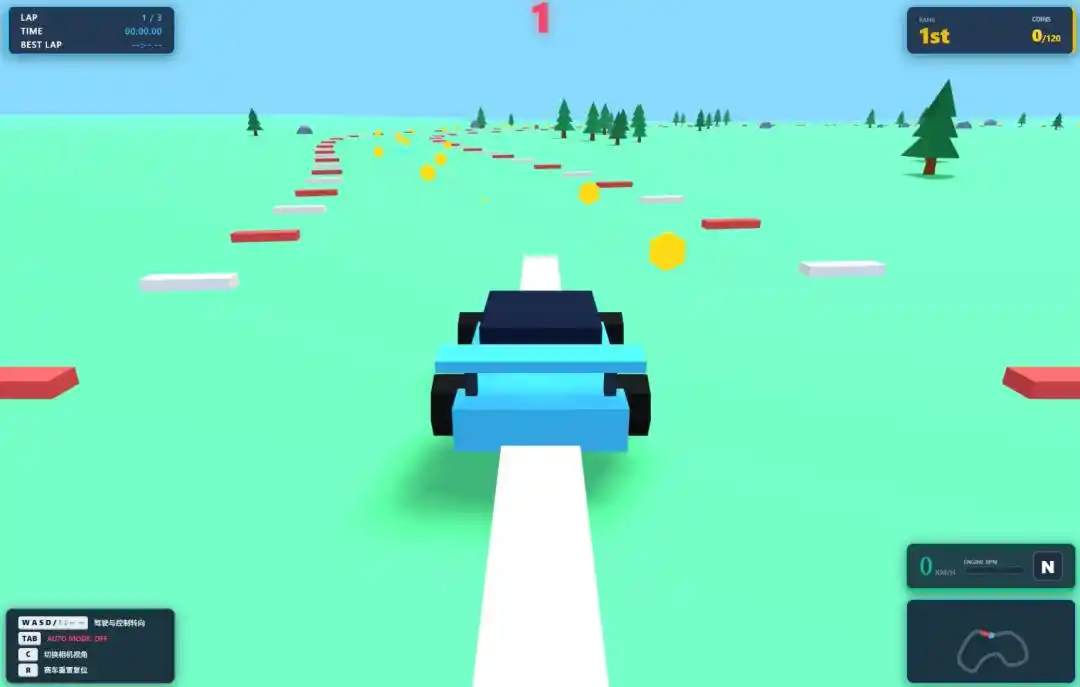
Gemini 3.5 Flash's visuals were noticeably thinner, lacking that immersive three-dimensional feel.

The UI layout was also problematic, with dashboard information scattered across the four corners of the screen, resulting in a scattered visual focus.

In contrast, Qwen3.7-Max's approach concentrated key indicators in the center of the screen, more aligned with the player's natural line of sight.
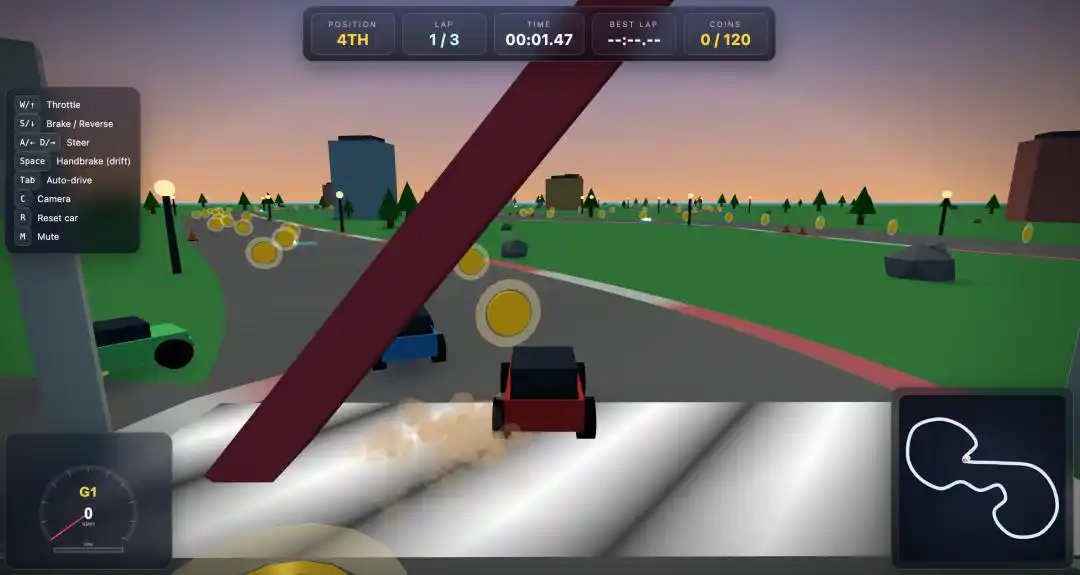
Claude Opus 4.6's result was somewhat... hard to describe.

Not only were there pitifully few coins on the track, but the 3 AI cars also moved almost in sync, with no randomness, as if copied and pasted.

Finally, GPT-5.5.

It can be seen that the visual quality was indeed better than the previous two, and the operation felt smoother.

But for some reason, coins were made into yellow "donuts"...

The shape is a minor issue. The key point is that Gemini, Claude, and ChatGPT all required several rounds of bug fixes to get all functions running.

Only Qwen3.7-Max's first-round generation was basically playable.

Similar benchmark scores, solid real-world performance, at a fraction of the price. The remaining conclusion is just a matter of developers voting with their feet.

The "Foundation" Model for the Agent Era

The reason Qwen3.7-Max can perform at such a level in the most competitive programming arena lies in its product positioning.

A few days ago, when Alibaba released Qwen3.7-Max, they gave it a very special label: Agent Foundation Model.
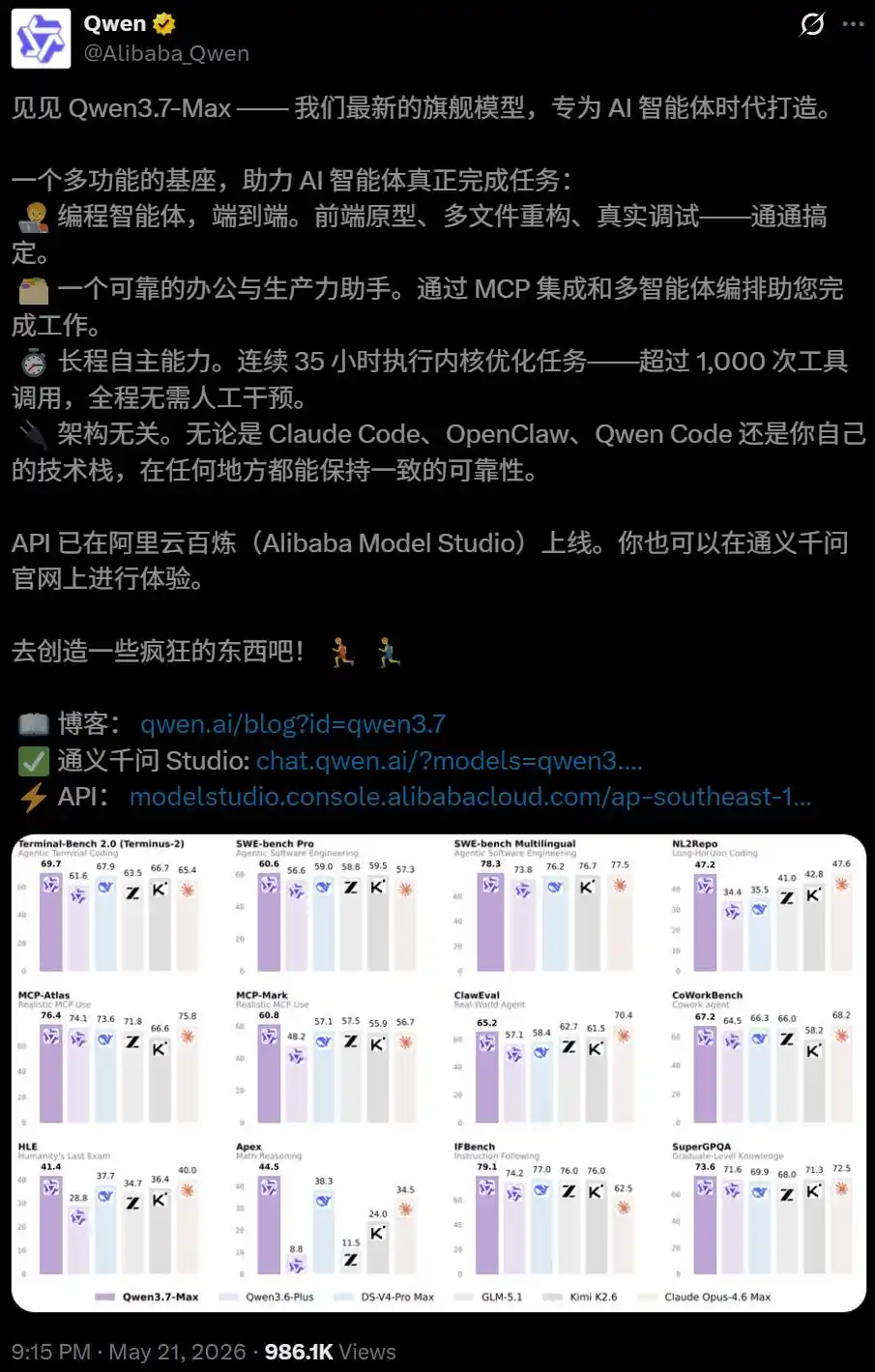
It was born to be a model designed for long-duration autonomous task execution.

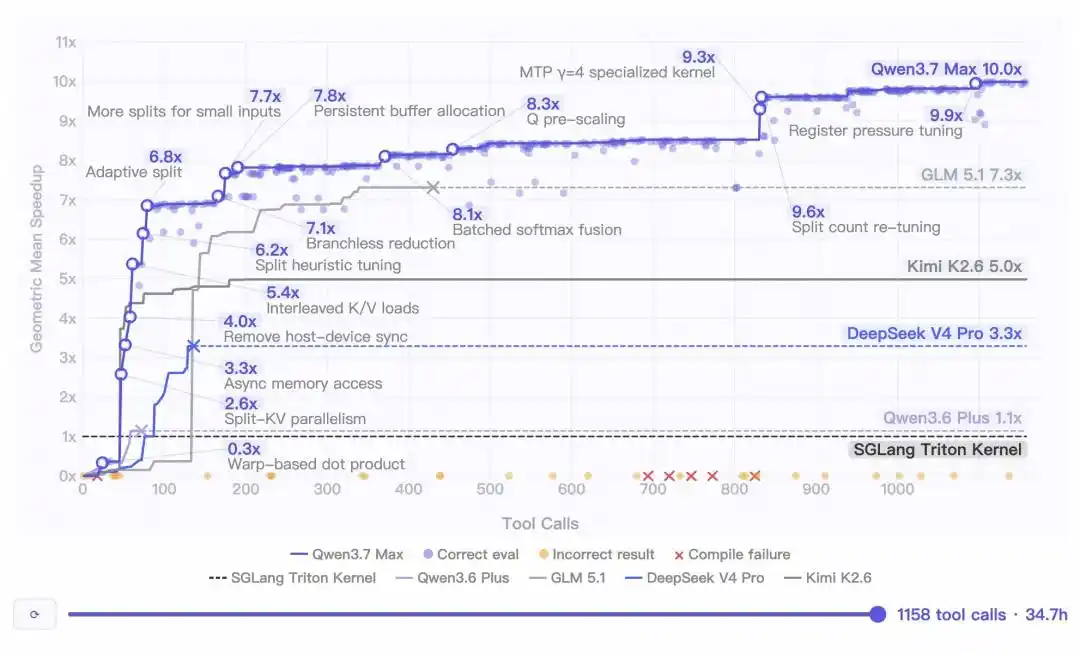
Internal testing data shows that in an autonomous programming task, Qwen3.7-Max ran continuously for 35 hours, executing 1158 tool calls.

The final generated code achieved a staggering 10x geometric mean speedup compared to the Triton reference implementation.
Even more impressive is its "endurance" capability—

Even after 30 hours into the reasoning process, the model remained sharp, continuously uncovering new optimization spaces.

Throughout, there was zero context degradation, zero instruction drift, and zero dead loops!

It must be said, the difficulty isn't in the 1000 tool calls themselves. Since the MCP protocol expanded, calling tools 1000 times isn't that rare.

The difficulty lies in 35 hours of coherent reasoning.

Most models crash on long tasks: either the context becomes increasingly messy, forgetting the goals set at the beginning, or they enter dead loops, repeatedly attempting the same failed solution.

Qwen3.7-Max has made "continuously doing the right thing" a reality.

Revealing the Core Technology

We understand that this leap in programming for Qwen3.7-Max likely stems from upgrades in two key training methods.

First, Environmental Expansion.

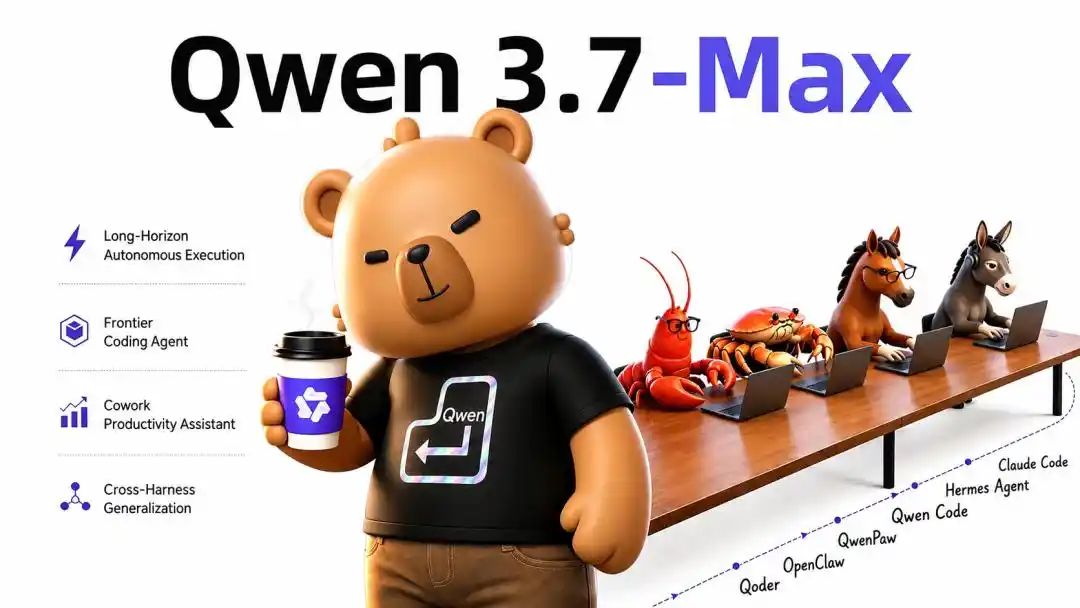
During programming training for Qwen3.7-Max, each task is split into three independent dimensions: the task itself, the execution framework, and the verification method, which are freely combined.

The same problem might be solved within the Claude Code framework, sometimes in OpenClaw, and other times with a different verification method.

The effect is like an intern being rotated through all project teams. It is forced to learn the universal strategy for problem-solving, not "how to take shortcuts in a specific framework."

This explains a counterintuitive phenomenon: Qwen3.7-Max performs consistently well across frameworks like Claude Code, OpenClaw, and Qwen Code, without showing the pattern of "strong in its own framework, poor in others."
The second upgrade is, Long-Horizon Autonomous Execution.

In training, the team introduced a "Dynamic Accumulative Survival Game" framework.

This means making the model perform over a thousand steps of continuous decision-making in a continuously changing simulated environment, establishing its own hypotheses, adjusting strategies based on feedback, and avoiding "context corruption" from running too long.

Here's a telling data point: in the YC-Bench simulation of running a startup for a full year, Qwen3.7-Max achieved $2.08 million in revenue, double that of the previous generation ($1.05 million).

More crucially, it demonstrated strategic evolution: autonomously adjusting direction mid-term during a crisis, identifying and blocking malicious clients, eventually converging to a stable execution loop.
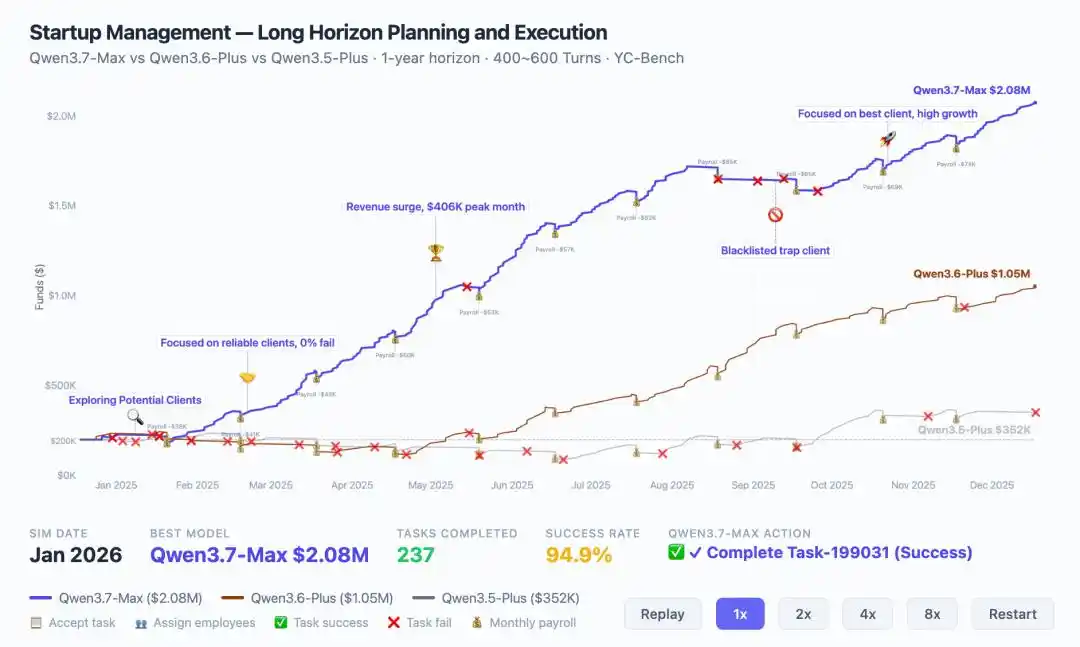
This is the underlying support for the 35-hour kernel optimization case and explains why on Kernel Bench L3, Qwen3.7-Max achieved speedup effects in 96% of scenarios.

And programming is just the first battlefield. This foundation of long-horizon reasoning and tool calling points to a greater ambition—a universal Agent foundation.

The Programming Finals Have a New Disruptor

Since its launch, Code Arena has always tested hard skills: multi-step reasoning, tool orchestration, complete project delivery—all real, Agent-level challenges.

Today, with a score of 1541 points, Qwen3.7-Max wedged itself into fourth place, positioned between Opus 4.6 Thinking and Opus 4.6.

On this track where Claude has dominated for over half a year, it has given its answer: Chinese models are not just followers; they can also be definers.

The global programming model competition is no longer a one-man show in Silicon Valley.

References:

https://arena.ai/leaderboard/code/webdev

This article is from the WeChat public account "AI Era Insights" (新智元), author: ASI启示录

Related Questions

QAccording to the article, what is the global ranking and score of Qwen3.7-Max on the Code Arena leaderboard?

AAccording to the article, Qwen3.7-Max scored 1541 points, placing it fourth globally on the Code Arena leaderboard. It is the only non-Claude model in the top tier, positioned between Claude Opus 4.6 Thinking and Opus 4.6.

QWhat key characteristic of Qwen3.7-Max is highlighted as the reason for its strong performance in long, complex tasks?

AThe article highlights that Qwen3.7-Max is specifically positioned as an "Agent foundation model." It is designed for long-term autonomous task execution. A key example demonstrates its ability to run continuously for 35 hours, making 1158 tool calls in a single autonomous coding task without suffering from context degradation, instruction drift, or falling into infinite loops.

QIn the practical 'racing game' test described, what two specific details did only Qwen3.7-Max successfully implement compared to other models like GPT-5.5, Claude Opus 4.6, and Gemini 3.5 Flash?

AIn the 'racing game' development challenge, only Qwen3.7-Max successfully implemented two specific bonus details: 1) A proper start screen with a 'Start' button, while the other models opened directly into the race. 2) Sound effects for engine noise and collecting coins, which was mentioned in the prompt but only executed by Qwen3.7-Max.

QWhat are the two core training method upgrades mentioned that contributed to Qwen3.7-Max's programming capabilities?

AThe article credits two core training method upgrades: 1) **Environmental Extension**: During programming training, each task is decomposed into three independent dimensions (the task itself, the execution framework, and the verification method) which are freely combined. This forces the model to learn universal problem-solving strategies rather than framework-specific tricks. 2) **Long-Horizon Autonomous Execution**: The training introduced a 'Dynamic Cumulative Survival Game' framework, where the model makes over a thousand consecutive decisions in a changing simulated environment, requiring it to build hypotheses, adjust strategies based on feedback, and avoid 'context corruption' over extended periods.

QWhat does the article claim is the broader implication of Qwen3.7-Max's performance in the global AI coding competition?

AThe article claims that Qwen3.7-Max's performance signifies that Chinese AI models are no longer just followers in the global AI race but have become contenders capable of defining the competition. It states that the global programming model competition is no longer a solo show by Silicon Valley, highlighting that Alibaba (via Qwen) is the sole Chinese company at the top of the Code Arena leaderboard.

Related Reads

Must-Watch Events Next Week|CLARITY Act Could Face Senate Vote; SpaceX, Circle to Report Earnings (8.3-8.9)

**Summary: Key Events and Developments to Watch (August 3-9)** The upcoming week is marked by significant financial disclosures, key legislative deadlines, and notable product updates. **Major Financial Events:** Several companies are scheduled to release their Q2 2026 earnings. American Bitcoin (ABTC) will report on August 3, followed by SpaceX and Hut 8 Mining Corp. on August 4, and Circle on August 5. Notably, a significant portion of SpaceX shares (up to 12% of total shares) will be unlocked on August 6 following their earnings release. **Key Legislative Deadline:** The U.S. Senate faces an August 7 deadline to secure 60 votes for the CLARITY Act, a bipartisan bill aiming to establish a federal regulatory framework for cryptocurrencies. The Senate may hold a full vote on the bill during the week. **Economic Data:** The U.S. July Non-Farm Payrolls report will be released on August 7, providing crucial labor market data. **Technology & Product Updates:** * **Shutdowns:** DeFi portfolio tracker Zapper and wallet app Ctrl Wallet will cease operations on August 3. * **Upgrades:** LayerZero will deprecate its v1 relayers on August 3. XRP Ledger's new version 3.3.0, featuring five new functions, is expected next week. * **AI:** Elon Musk announced that the advanced Grok 4.6 AI model is set for release around August 7. * **Bitcoin:** The BIP-110 forced signaling for a potential Bitcoin network change is scheduled to begin around August 8. **Other Notable Events:** Chinese robotics firm Unitree Tech has set its preliminary price inquiry for its IPO for August 5. South Korean exchange Upbit will delist AQT and AERGO tokens on August 3.

marsbit5m ago

Must-Watch Events Next Week|CLARITY Act Could Face Senate Vote; SpaceX, Circle to Report Earnings (8.3-8.9)

marsbit5m ago

Stocks Are Plummeting More Sharply Than Cryptocurrencies. Where Has the Money Gone?

Stock Markets Plunge Deeper Than Cryptocurrencies: Where Did the Money Go? In late July, Seoul's Kospi index triggered circuit breakers for two consecutive days, plummeting over 40% from its June high. The collapse was led by heavyweight stocks like SK Hynix, whose record profits still disappointed investors, and devastating leveraged ETFs, with one major product losing over 83% of its value. This signaled a global, forced deleveraging targeting the most crowded trades. Interestingly, while stocks exhibited extreme volatility akin to crypto markets, Bitcoin rose nearly 15% in July after a prior steep drop. Analysis shows the money fleeing equities did not flow into Bitcoin. Instead, Bitcoin had already absorbed its sell-off in May-June, when U.S. spot Bitcoin ETFs saw historic outflows. The true safe-haven beneficiary was gold, whose price rose over 20% year-on-year, highlighting a decoupling between Bitcoin and gold as "digital gold." The sell-off was a targeted unwinding of leveraged positions in tech and semiconductors, accelerated by broker-dealer risk management and shifts in the AI narrative, including new competition from Chinese memory chipmakers. The retreat path was clear: from high-valuation tech stocks to cash and U.S. Treasuries, then to gold. For Bitcoin to attract sustained institutional inflows, conditions like eased global liquidity pressure, a "soft-landing" Fed rate cut, and U.S. regulatory clarity via legislation like the stalled CLARITY Act are needed. Currently, Bitcoin is not a safe haven but an already-cleared asset. Its low correlation with tech stocks, however, makes it a potential diversification play for institutional portfolios once the storm passes. The money isn't here yet, but the positioning is underway.

marsbit5m ago

Stocks Are Plummeting More Sharply Than Cryptocurrencies. Where Has the Money Gone?

marsbit5m ago

In Conversation with Ray Dalio: We Are Currently in an AI Bubble, with 1% of My Portfolio in Bitcoin

Ray Dalio, founder of Bridgewater Associates, warns in an interview that the current AI boom shows classic bubble characteristics, which could lead to significant economic downturns as seen in past cycles like 1929 or 2000. He explains that speculative enthusiasm, fueled by debt and overvaluation, often precedes a crash when rising rates or taxation force asset sales, causing widespread losses and recession. Dalio also outlines his "Big Cycle" theory, describing an approximate 80-year pattern where widening wealth gaps, massive government deficits, and shifting geopolitical power (like China's rise) create internal conflict and global instability. He emphasizes that we are in a late-cycle, transitional phase where traditional powers like the US and UK face decline. For personal wealth protection, Dalio advises diversification beyond cash into assets like stocks, bonds, real estate, and particularly gold, which he prefers over Bitcoin. While he holds about 1% of his portfolio in Bitcoin as a non-printable hard asset, he views gold as more secure from technological or governmental threats. Regarding AI's impact, Dalio believes it will disproportionately benefit capital owners, worsening inequality by replacing both physical and cognitive labor. He suggests that human intuition and emotional intelligence, combined with AI, will be key for future workers. On taxation, Dalio argues that wealth taxes are impractical and risk triggering asset sell-offs, reducing productive investment. He points to the UK as a cautionary example of debt, low productivity, and political strife. Geopolitically, Dalio foresees a more regionalized world, with the US showing weakness in prolonged conflicts like with Iran, akin to past imperial declines. The ideal outcome, he suggests, is coexisting powerful blocs (e.g., Americas, China-Asia Pacific) without major war.

marsbit4h ago

In Conversation with Ray Dalio: We Are Currently in an AI Bubble, with 1% of My Portfolio in Bitcoin

marsbit4h ago

Daily 7.2 Trillion KRW: Foreign Capital's Record Net Buying on Friday! Wall Street Says Headwinds for Korean Stock Fund Flows Have Subsided

South Korean stock market sees a dramatic shift in fund flows. On July 31, foreign investors made a record net purchase of approximately KRW 7.2 trillion in KOSPI stocks, marking a fundamental reversal from the persistent large-scale net outflows seen in previous months. This contributed to a significant narrowing of foreign net selling in July to KRW 9.8 trillion, down sharply from KRW 48.4 trillion in June and KRW 44.5 trillion in May. Simultaneously, domestic institutional pressure eased. South Korean pension funds and asset managers turned to a net buying position in July, purchasing KRW 1.0 trillion worth of KOSPI shares, contrasting with net sales in May and June. Market volatility is expected to be dampened by new financial regulations. Effective July 31, the Financial Services Commission tightened access for retail investors to single-stock leveraged ETFs by raising the minimum cash deposit requirement. Trading volumes for these products subsequently dropped to about 50% of their monthly average. Citigroup Research maintains its year-end KOSPI target of 10,000 points. The firm cites several supportive factors: the substantial easing of headwinds from capital outflows, a robust fundamental outlook for the semiconductor sector, historically low market valuations, strong economic fundamentals, and the potential for policy support from financial authorities if needed.

marsbit4h ago

Daily 7.2 Trillion KRW: Foreign Capital's Record Net Buying on Friday! Wall Street Says Headwinds for Korean Stock Fund Flows Have Subsided

marsbit4h ago

Trading

Spot
活动图片