Jensen Huang: Vera Rubin Full Mass Production, AI Agent a Key Focus, Challenging Intel to Target the Next-Generation AI PC Gateway

marsbitPublished on 2026-06-01Last updated on 2026-06-01

Abstract

NVIDIA CEO Jensen Huang delivered the keynote speech at GTC Taipei 2026, announcing several major product launches and strategic directions. The company's Vera Rubin architecture is now in full-scale production, with OpenAI, Anthropic, and SpaceX among the first customers. NVIDIA highlighted AI Agent as a key future focus, introducing the Vera CPU designed for AI agents and the Vera BlueField-4 STX for secure, chip-level AI storage processing. A significant move involves challenging Intel in the PC market. NVIDIA, in collaboration with MediaTek, is developing the RTX SPARK PC chip (manufactured by TSMC) for Windows systems, set to launch this fall for laptops and desktops. This signals NVIDIA's push into the next-generation AI PC arena, aiming to provide a vertically integrated core computing platform for the entire Windows ecosystem, similar to Apple's approach. Other announcements include the new Nemotron 3 Ultra AI model and the NVIDIA DSX platform, described as a complete "playbook" for building AI factories, allowing performance simulation and validation before physical deployment. In automotive, the DRIVE Hyperion platform was positioned as a global robotaxi platform, with major Chinese automakers like BYD, Geely, Zeekr, Xiaomi, and Pony.ai already adopting or developing autonomous driving solutions based on it. The Alpamayo 2 super open inference model for robotaxis was also introduced. For robotics, NVIDIA unveiled the Isaac GR00T humanoid robot reference platform...

Author: Wall Street Insights

On June 1st, NVIDIA founder and CEO Jensen Huang delivered the NVIDIA GTC Taipei 2026 keynote speech in Taipei, China.

During this speech, Huang focused on releasing multiple new products and platforms including the Vera Rubin architecture, the Vera CPU for AI Agents, the AI model Nemotron 3 Ultra, and the AI factory platform DSX.

Simultaneously, NVIDIA further signaled its push into the next-generation AI PC market, targeting the entire Windows ecosystem.

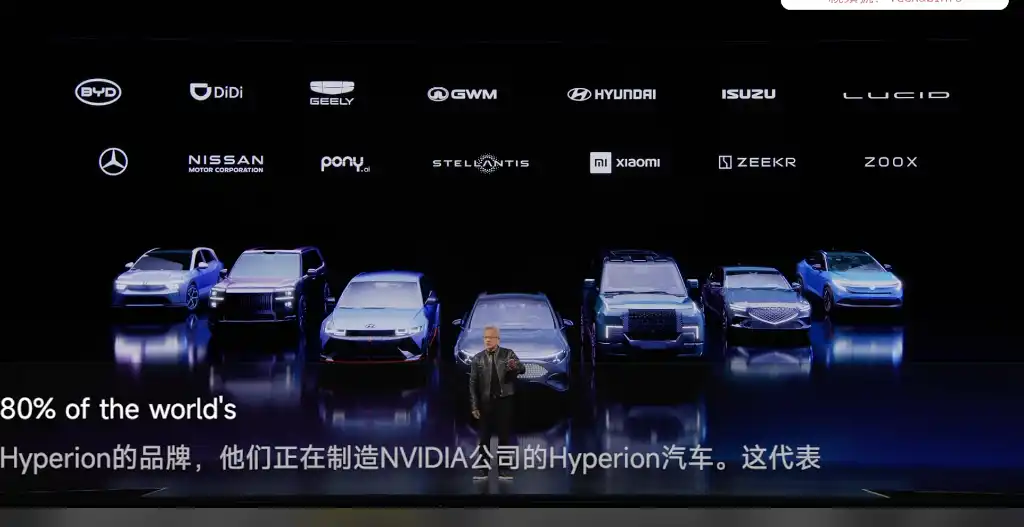
NVIDIA revealed at the event that mainstream Chinese automakers and autonomous driving companies including BYD, Geely, ZEEKR, Xiaomi, and Pony.ai have adopted or are developing autonomous driving based on the NVIDIA Hyperion platform.

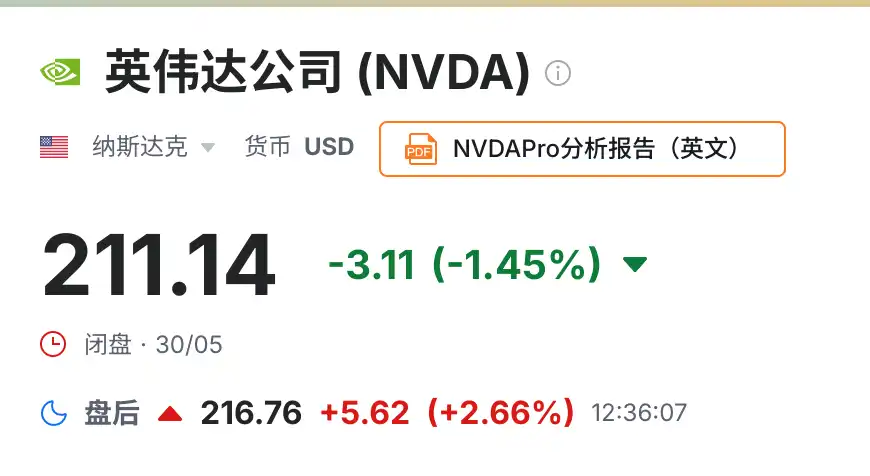
NVIDIA's U.S. stock pre-market price rose 2.7%.
Vera Rubin Now in Full Mass Production

Jensen Huang stated that the Vera Rubin architecture has now fully entered mass production, with OpenAI, Anthropic, and SpaceX becoming the first customers for NVIDIA's Vera chips.
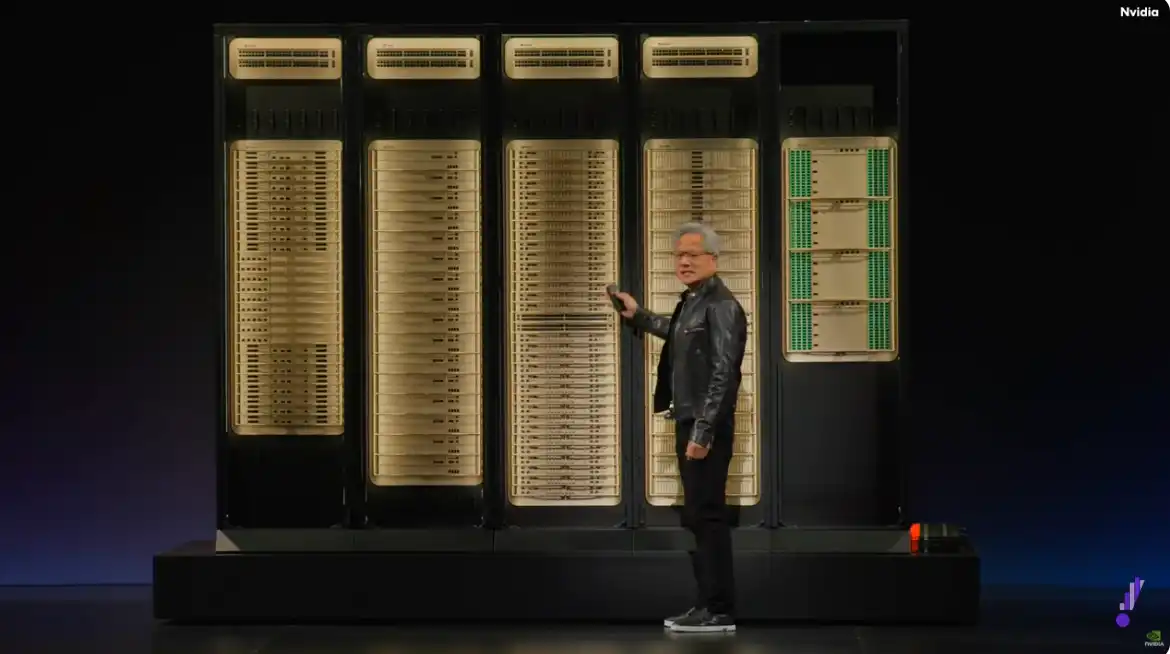
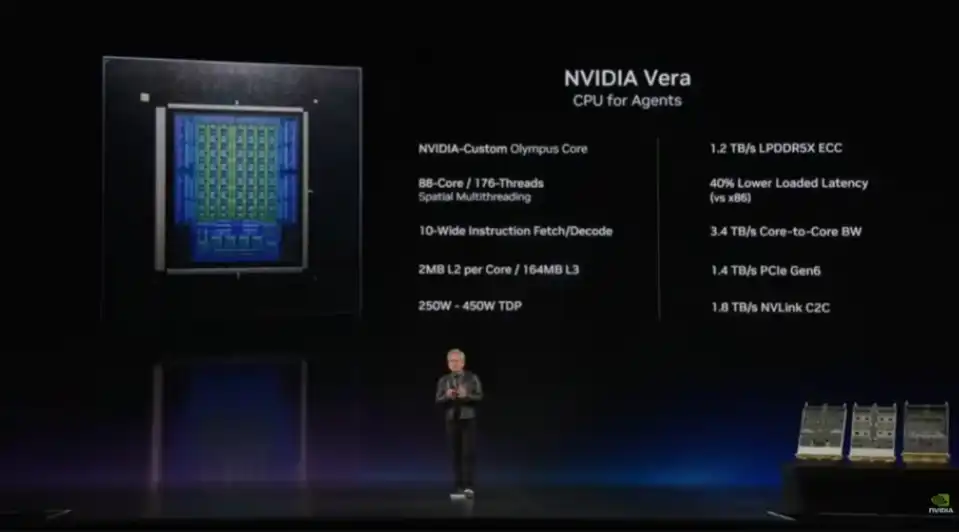
AI Agents will become a key focus for future efforts, and NVIDIA will launch the Vera CPU for AI agents.

Huang also emphasized that NVIDIA Vera BlueField-4 STX delivers chip-level secure, agentic AI storage processing capabilities.
Targeting the Next-Generation AI PC Gateway

Notably, NVIDIA unveiled a new processor for Windows-based personal computers, challenging Intel.

NVIDIA will collaborate with MediaTek to develop the RTX SPARK personal computer chip, which will be manufactured by TSMC. Huang revealed that NVIDIA's personal computer chip will launch this fall, suitable for laptops and desktops.

Jensen Huang stated that NVIDIA will launch a new generation of personal computer (PC) chips alongside each generation of its AI processors.

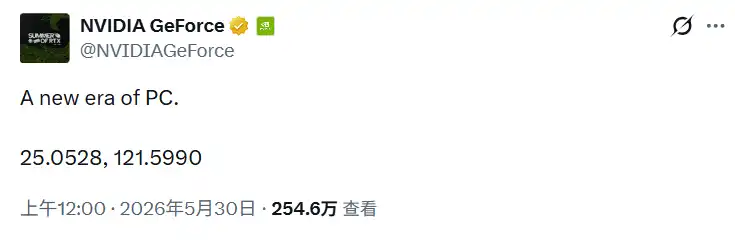
Previously, NVIDIA's official social media account issued a three-word teaser—"A new era of PC"—signaling its aim for the next-generation AI PC gateway.
Analysis suggests NVIDIA intends to integrate CPU, GPU, and AI units into a single SoC, directly supplying a complete core computing platform to OEMs like Dell and Lenovo, fundamentally altering its position in the value chain. This follows the vertical integration path of Apple Silicon, but targets the entire Windows ecosystem.

NVIDIA: Will Collaborate with Unitree Tech and Other Global Humanoid Robot Makers to Develop Robots

NVIDIA plans to collaborate not only with China's Unitree Tech but also with humanoid robot manufacturers in the United States, Europe, and South Korea on research robot projects.

Launches New AI Model + AI Factory "Action Guide"

Furthermore, NVIDIA announced the launch of a new AI model, Nemotron 3 Ultra.
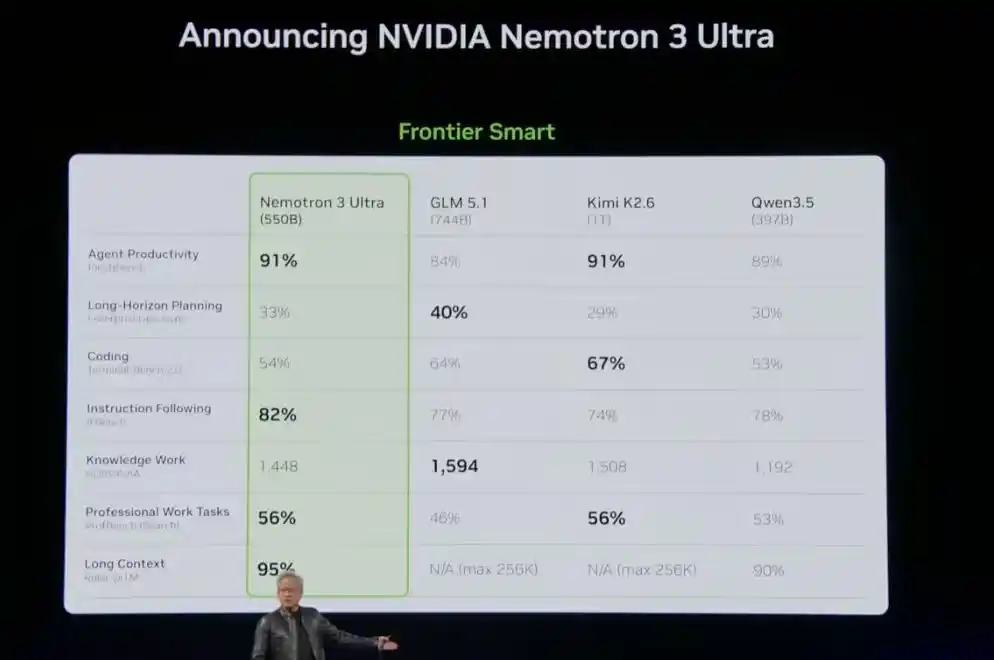
NVIDIA announced the launch of the NVIDIA DSX platform, providing infrastructure builders with a complete action guide for creating AI factories. Jensen Huang stated:

With the DSX platform, you can simulate the entire factory without spending a dime, validate performance before installing a single rack, and operate with the reliability required for production-grade AI.

Autonomous Driving Platform Hyperion Ecosystem Emerges

NVIDIA DRIVE Hyperion becomes the global autonomous robotaxi platform.

NVIDIA revealed at the event that mainstream Chinese automakers and autonomous driving companies including BYD, Geely, ZEEKR, Xiaomi, and Pony.ai have adopted or are developing autonomous driving based on the NVIDIA Hyperion platform.

NVIDIA also launched the Alpamayo 2 super open inference model for autonomous taxis.
Building the Development Ecosystem for the Robotics Era

In the field of humanoid robots, NVIDIA is attempting to play the role of an "infrastructure provider."

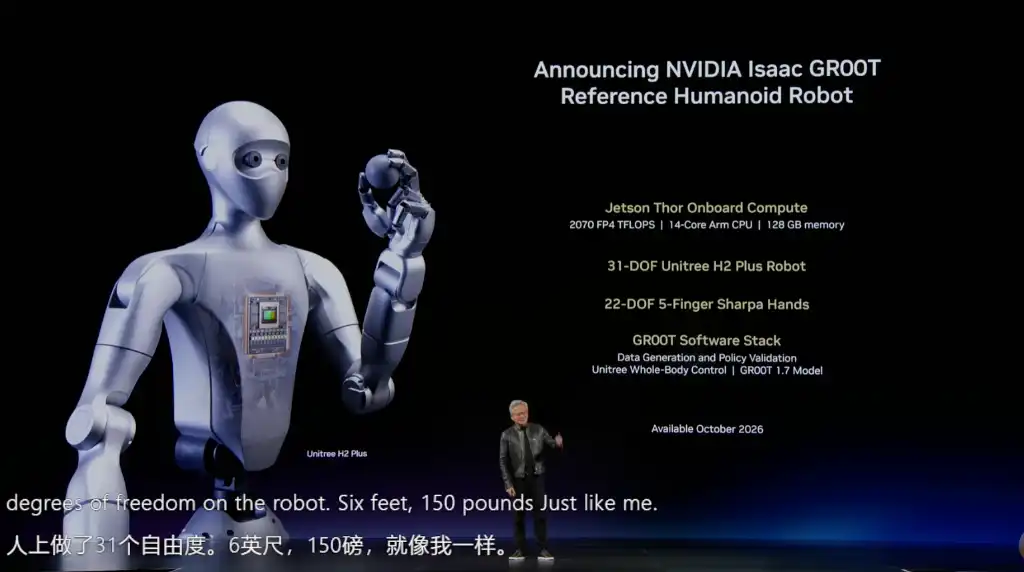
At this launch event, NVIDIA introduced the NVIDIA Isaac GR00T humanoid robot reference platform for academic research, while also releasing a large-scale open-source toolkit of agents and skills for Physical AI.

At the event, NVIDIA selected Unitree Tech's H2 Plus as the reference model, introducing the Isaac GR00T reference humanoid robot platform. This platform integrates Jetson Thor computing chips, the GR00T software stack, as well as dexterous hand and full-body control systems, providing robot manufacturers with a hardware-to-software one-stop development framework.
Related Questions

QWhat major new products or platforms did Jensen Huang announce during his GTC Taipei 2026 keynote?

AJensen Huang announced several major new products and platforms, including the Vera Rubin architecture, the Vera CPU for AI Agents, the Nemotron 3 Ultra AI model, the DSX platform for building AI factories, and new processors for Windows PCs developed in partnership with MediaTek (RTX SPARK chips).

QWhat is the significance of NVIDIA's partnership with MediaTek on the RTX SPARK PC chips?

AThe partnership with MediaTek to develop RTX SPARK PC chips signifies NVIDIA's major push into the next-generation AI PC market, directly challenging Intel. These SoC (System on Chip) designs integrate CPU, GPU, and AI units, aiming to provide a complete core computing platform to OEMs like Dell and Lenovo. This represents a fundamental shift in NVIDIA's position in the value chain.

QWhich major companies were mentioned as the first customers for the new Vera Rubin architecture chips?

AOpenAI, Anthropic, and SpaceX were named as the first customers for NVIDIA's Vera Rubin architecture chips.

QIn which key application areas besides AI PCs did NVIDIA highlight its ecosystem growth during the keynote?

ANVIDIA highlighted significant ecosystem growth in two key areas: Autonomous Driving, with companies like BYD, Geely, ZEEKR, Xiaomi, and Pony.ai adopting the NVIDIA Hyperion platform, and Robotics, with announced collaborations with global humanoid robot makers including China's Unitree Robotics.

QHow does NVIDIA's Isaac GR00T platform aim to support development in the robotics field?

ANVIDIA's Isaac GR00T is a reference humanoid robot platform designed to be a development ecosystem provider. It integrates the Jetson Thor compute chip, the GR00T software stack, and dexterous hand and whole-body control systems. It provides robot manufacturers with a comprehensive hardware-to-software development framework, with Unitree's H2 Plus robot serving as a reference model.

Related Reads

Within Strategy's Framework, STRC's Dividend Yield Remains at 12% as Share Price Stays Below Par Value

Michael Saylor, Executive Chairman of Strategy (MSTR), confirmed that the dividend rate for its STRC perpetual preferred shares will remain at 12.00% through August 2026. The rate has increased from 9% at its July 2025 launch to the current high via a "ratchet" mechanism, which permanently raises the rate by 0.5% whenever the share price falls below $95. This mechanism is intended to push the price back toward its $100 par value and support Strategy's "at-the-market" (ATM) program for issuing new shares to fund Bitcoin purchases. However, the mechanism has not worked as intended. STRC shares closed at $89.46 on July 31, remaining about 10-11% below par value despite the record-high dividend. Competition from rival Strive's higher-yielding SATA securities has pressured demand. The persistent discount has forced Strategy to suspend new STRC issuances via its ATM program, limiting this funding channel for Bitcoin acquisitions. STRC's struggles reflect Bitcoin's own volatility, as the preferred shares historically move in tandem. Analysts have warned the ratchet structure carries long-term, one-way risk. A law firm is investigating Strategy's ability to maintain dividend payments if Bitcoin's price stays low. Retail investors own roughly 83% of outstanding STRC shares, a group seen as prone to panic selling during downturns. In response, Strategy has established financial reserves, including a liquidity cushion covering about 26 months of dividend/interest obligations, and a $2 billion share buyback program alongside a Bitcoin monetization framework, though the company emphasized it is not obligated to sell any Bitcoin.

cryptonews.ru11m ago

Within Strategy's Framework, STRC's Dividend Yield Remains at 12% as Share Price Stays Below Par Value

cryptonews.ru11m ago

Analyst: Bitcoin's Price Will Drop to $60k in August, Then Rebound to $70k

Financial analyst Andrey Poroshin has provided a new forecast for Bitcoin's price dynamics in August. Poroshin, an analyst at the Bitbanker exchange, expects the cryptocurrency market to experience a downturn this month, with prices retesting the $60,000 level due to a lack of supportive macroeconomic catalysts. He noted that the recent US Federal Reserve decision to hold interest rates did not significantly impact the market, while inflation remains above the 2% target. Poroshin stated that Bitcoin is ending July under pressure from moderate volatility and a lack of new macroeconomic stimuli, leading to continued market caution. According to his base scenario, Bitcoin will drop to a range of $60,000 to $62,000 before recovering to $70,000. He pointed out that even $70,000 remains below the cost of mining in the US, which has prompted some miners to shift towards AI data center operations. Poroshin cited the winding down of BitMEX's operations as a potential catalyst for a price rebound, suggesting the exit of weaker players often coincides with market reversals and reduced short-term selling pressure. He believes Bitcoin is currently less susceptible to geopolitical shocks, such as the Iran-US conflict, and does not expect significant market changes in August related to the pending CLARITY Act. Looking ahead, Poroshin forecasts that September will bring more active price fluctuations driven by potential Fed rate decisions and possible discussions or approval of the CLARITY Act.

cryptonews.ru12m ago

Analyst: Bitcoin's Price Will Drop to $60k in August, Then Rebound to $70k

cryptonews.ru12m ago

Trading

Spot
活动图片





