Japan's $2.7 Billion Securities Assets Go On-Chain: Why Is Traditional Finance Collectively Betting on Avalanche?

marsbitPublished on 2026-07-15Last updated on 2026-07-15

Abstract

Japan's largest securities token platform Progmat, initially incubated by Mitsubishi UFJ Trust and Banking (MUFG), has completed a major migration, moving over 452 billion yen (approximately $27 billion) in tokenized assets from a Corda-based private blockchain to a dedicated Avalanche Layer 1 network. This move signifies a strategic shift for Japan's financial infrastructure, as the platform transitions from a closed, permissioned system to an open, EVM-compatible architecture. The migration reportedly tripled asset transfer speeds, reduced finality to under two seconds, and enables future multi-chain connectivity while maintaining operational continuity for supported financial institutions. The choice of Avalanche reflects a broader trend where traditional finance is increasingly opting for solutions that balance the control and compliance of private chains with the innovation and interoperability of public blockchain ecosystems. Progmat's Avalanche-based network allows for custom validation nodes and governance while gaining access to the extensive EVM developer tooling and applications. Beyond the platform upgrade, Japan is advancing its Real World Asset (RWA) strategy by establishing a working group focused on the tokenization of Japanese government bonds and exploring 24/7 trading and real-time settlement. This migration demonstrates blockchain's evolving role from a niche technology for crypto assets to a potential foundational layer for next-generation global financ...

Author: Climber, CryptoPulse Labs

Recently, Japan's largest securities token platform, Progmat, officially completed its migration to the Avalanche Layer1, with securities token assets valued at over 452 billion yen (approximately $2.7 billion) all successfully moved on-chain.

This is more than just a routine technical upgrade; it represents a significant iteration in Japan's financial infrastructure. As traditional financial institutions begin migrating their core business to more open, high-performance blockchain networks, it signifies that securities tokenization is entering a new stage of development.

I. Behind the Major Migration: Japan's Securities Token Market Enters a New Phase

Progmat is not an ordinary blockchain company; it is one of the most important pieces of infrastructure in Japan's securities token market. Initially incubated by Mitsubishi UFJ Trust Bank (MUFG), it began operating independently in 2023.

It has already gained support from major Japanese financial institutions such as Mizuho Bank, the Tokyo Stock Exchange, and SBI. It holds a 53% share of Japan's securities token market, accounts for 64.6% of the total issuance volume of securities tokens, and covers various asset classes including real estate and corporate bonds. Essentially, most of Japan's securities token assets operate on this system.

The most noteworthy aspect of this migration is that Progmat abandoned its previous permissioned blockchain built on Corda 5 and instead adopted an Avalanche custom Layer1 as its new underlying architecture.

In recent years, Corda has been a widely adopted consortium chain solution by the global banking industry, offering advantages such as strong privacy protection, comprehensive permission management, and ease of meeting regulatory requirements. Consequently, many financial institutions chose it as their preferred option for blockchain pilots.

However, as the scale of securities tokens continues to expand, the limitations of such consortium chains have become increasingly apparent. A closed ecosystem means assets struggle to interconnect with other blockchains, developing new applications requires significant repeated investment, and it's difficult to share in the continuous innovation stemming from the entire Web3 ecosystem.

Therefore, Progmat's migration is not just a replacement of the underlying system but represents an adjustment in its technical roadmap.

After migrating all smart contracts to an EVM environment, the platform maintains its original business logic unchanged. However, asset rights transfer speed has increased by 3 to 5 times, transaction finality time is shortened to within 2 seconds, and the future capability to support more blockchain network integrations has been established, enabling a truly multi-chain architecture.

More importantly, the entire migration process did not disrupt the normal operations of any financial institutions, further proving that blockchain infrastructure is now capable of supporting large-scale financial business.

II. Why is Avalanche Becoming the New Foundation for Financial Institutions?

For a long time, financial institutions have grappled with a core question regarding blockchain: should they opt for a completely closed consortium chain or an open public chain ecosystem? The greatest advantage of consortium chains lies in their controllable nodes, data privacy, and high security, making them favored by banks and securities firms.

But with the development of the blockchain industry, it has become increasingly clear that the real driving force behind innovation comes more from open ecosystems. Whether it's smart contracts, stablecoins, DeFi, or RWA applications, almost all significant innovations first emerged within the EVM ecosystem, not on closed consortium chains.

The custom Layer1 solutions launched by Avalanche in recent years provide financial institutions with a new option that balances openness and compliance.

On one hand, each institution can have its own independent network, customizing validator nodes, gas mechanisms, and permission management to meet regulatory requirements for KYC, data isolation, and business compliance.

On the other hand, it remains compatible with the EVM ecosystem, enabling interconnection with a vast number of mature development tools, smart contracts, and applications globally.

This means financial institutions can retain the security and controllability demanded by traditional finance while enjoying the innovation capabilities and network effects brought by an open ecosystem.

Globally, this is increasingly becoming the direction for large financial institutions. Compared to building isolated, closed consortium chains in the past, more institutions now aim to construct a new generation of interconnected financial networks.

Because what will hold real value in the future is not an isolated blockchain but open infrastructure capable of connecting banks, securities firms, exchanges, asset management institutions, and more financial products.

Progmat's migration, in essence, reflects this global trend of financial digitization.

III. RWA Competition Intensifies: Japan Pioneers the Move Towards a Financial Infrastructure Era

If this migration merely completed the upgrade of a securities token platform, then the new plans announced by Progmat reveal Japan's broader strategic ambitions.

In May this year, Progmat, in collaboration with banks, securities companies, and asset management institutions, established a working group focused on Japanese government bond tokenization and on-chain repo (repurchase agreements). The goal is to explore new models such as putting Japanese government bonds on-chain, enabling 7×24 hour trading, and achieving T+0 real-time settlement.
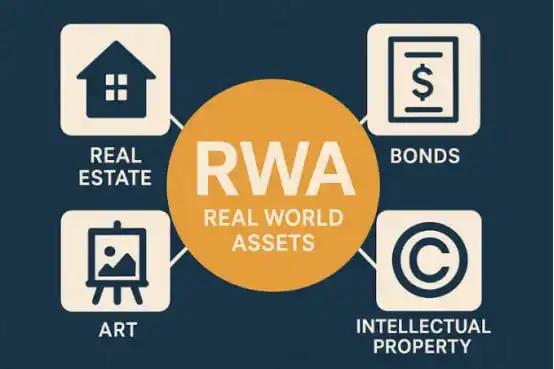
This signifies that Japan has begun experimenting with moving its most core financial assets onto blockchain networks.

Government bonds are considered the most fundamental assets in modern financial markets. They are not just investment products but are widely used in bank liquidity management, collateral financing, and repo transactions. If government bonds can be tokenized in the future, the operational efficiency of the entire capital market could undergo significant changes.

Traditional bond markets are constrained by trading hours, whereas on-chain assets can enable round-the-clock trading; traditional securities settlement typically requires a specific settlement cycle, while on-chain smart contracts can achieve real-time delivery, significantly reducing capital occupation and transaction risk.

Simultaneously, processes like asset issuance, registration, custody, and clearing can be automated through smart contracts, reducing a substantial amount of manual operations and improving the efficiency of the entire financial system.

In fact, securities tokenization is just the first step in RWA development. In the future, real estate, fund shares, corporate bonds, private equity, and even more real-world assets could potentially be issued, traded, and managed using unified on-chain infrastructure.

In recent years, major international financial institutions including BlackRock, JPMorgan Chase, and Goldman Sachs have been actively advancing related initiatives. Globally, more countries are beginning to improve their regulatory frameworks for tokenized assets.

By taking the lead in upgrading its securities token platform and exploring government bond tokenization, Japan likely aims to secure a leading position in the future global RWA competition.

Conclusion

Progmat's migration of $2.7 billion in assets may seem like just a technical upgrade, but in reality, it reflects a fundamental shift in traditional finance's perception of blockchain's role. Blockchain is evolving from serving crypto assets to becoming the new financial infrastructure for carrying real-world assets like securities and bonds.

As more financial institutions enter the RWA arena, the future focus of industry competition will no longer be about who has the higher-performing public chain, but about who can truly become the underlying infrastructure for the next generation of global financial markets. The step Japan has taken may just be the beginning of the comprehensive on-chain transformation of global finance.


Related Questions

QWhat was the value of the securities token assets that Progmat migrated to Avalanche Layer1, and what does this migration signify for Japan's financial infrastructure?

AThe value of the securities token assets migrated is over 452 billion Japanese Yen (approximately 27 billion USD). This migration represents a significant upgrade to Japan's financial infrastructure, signaling that traditional financial institutions are moving core operations to more open, high-performance blockchain networks and marking a new developmental stage for securities tokenization.

QWhy did Progmat switch from the Corda-based private chain to an Avalanche-specific Layer1 as its underlying architecture?

AProgmat switched because private/consortium chains like Corda, while offering strong privacy and compliance, have limitations such as difficulty interoperating with other blockchains, high costs for new application development, and isolation from the broader Web3 innovation ecosystem. The Avalanche-specific Layer1 allows for a customizable, regulated network that is also EVM-compatible, offering the benefits of an open ecosystem while meeting financial security and compliance requirements.

QWhat are some key performance improvements Progmat achieved after migrating its smart contracts to the EVM-compatible Avalanche Layer1?

AAfter migration, asset rights transfer speeds increased by 3 to 5 times, and transaction finality confirmation time was reduced to under 2 seconds. The platform maintained its original business logic but gained the ability for future multi-chain connectivity.

QAccording to the article, what new strategic initiative did Progmat announce in May, and what are its potential impacts on the financial market?

AIn May, Progmat co-established a working group for Japanese government bond (JGB) tokenization and on-chain repurchase (repo) transactions with banks, securities firms, and asset managers. This initiative explores new models like 7x24 hour trading and T+0 real-time settlement. As JGBs are foundational assets, their tokenization could transform capital market efficiency, enabling round-the-clock trading, instant settlement (reducing risk), and automation of issuance and custody processes.

QHow does the author interpret the significance of Progmat's migration in the context of the global Real World Assets (RWA) trend and blockchain's evolving role?

AThe author interprets the migration as reflecting a fundamental shift in how traditional finance views blockchain. It is evolving from a tool for crypto assets into a new type of financial infrastructure capable of handling real-world assets like securities and bonds. The competition is shifting from having high-performance public chains to building the underlying infrastructure for the next generation of global financial markets. Japan's move is seen as a potential starting point for the comprehensive on-chain transformation of global finance.

Related Reads

The Price of DeFi Mass Adoption: Understanding the Profit Distribution and Hidden Risks of Aave Stable Vaults

**Title:** The Price of DeFi Mass Adoption: Understanding Aave Stable Vaults' Profit Distribution and Hidden Risks **Summary:** Aave Labs' new "Stable Vaults" product aims to simplify DeFi for mainstream users by offering fixed yields, a rarity in crypto. The model inserts a middleman layer between users and Aave's underlying lending pools. This layer, often a fintech app or digital bank, absorbs interest rate volatility, guaranteeing users a pre-set stable return while capturing any excess yield from Aave's underlying pools. In exchange for this predictable "peace of mind" and services like customer support and simplified onboarding, users sacrifice potential higher yields and take on new counterparty risks from the operating entity and its infrastructure. The article illustrates this with the example of payroll provider Rise, which transparently passes through most Aave yield, versus the higher profit margins possible through Stable Vaults. While a rational trade-off for many non-expert users prioritizing simplicity and security, the system centralizes risk and obfuscates true market yields. Aave benefits by attracting sticky, non-speculative capital crucial for its long-term economic model, highlighting the industry's shift towards catering to fundamental human preferences for convenience over complex, self-managed financial systems.

Foresight News9m ago

The Price of DeFi Mass Adoption: Understanding the Profit Distribution and Hidden Risks of Aave Stable Vaults

Foresight News9m ago

Stripe's $53.4 Billion Acquisition of PayPal: The Final Piece of the Stablecoin Empire Puzzle

Stripe has reportedly made a $53.4 billion acquisition offer for PayPal, a move that could signal a major shift in the stablecoin landscape from a "technology race" to a "customer war." Over recent years, Stripe has been quietly building nearly every layer of a stablecoin empire: acquiring the issuance platform Bridge, wallet provider Privy, co-incubating the payments-focused Layer 1 network Tempo with Paradigm, and joining the Open USD (OUSD) alliance stablecoin initiative. What it lacks, however, is a massive direct consumer user base. PayPal, with its hundreds of millions of active accounts, the Venmo app, and its own PYUSD stablecoin, would provide exactly that. The acquisition could create a closed-loop system where Stripe handles the merchant side, PayPal/Venmo serve consumers, and transactions are settled via stablecoins on a blockchain like Tempo, potentially bypassing traditional card networks and their fees. While the deal is not yet finalized and may face hurdles—including potential resistance from PayPal's board or a higher bid—the mere offer suggests Stripe's strategic focus may have evolved. It indicates that having superior infrastructure alone may not be enough; distribution and user access are critical battlegrounds. Questions remain about how PYUSD, OUSD, and Venmo would integrate with Stripe's stack, and whether private equity co-investor Advent International would prioritize such crypto experiments. If successful, this acquisition could significantly boost Tempo's position in the competitive public blockchain space and further push crypto-based payments into the mainstream, potentially fulfilling PayPal's original vision of an internet-native currency through a new, crypto-native infrastructure.

marsbit22m ago

Stripe's $53.4 Billion Acquisition of PayPal: The Final Piece of the Stablecoin Empire Puzzle

marsbit22m ago

Hyperliquid's "Stock Price" for ChangXin Memory Tech Hits $8.64: How Was This Price Determined Before the IPO?

Title: Hyperliquid's "Stock Price" for CXMT Hits $8.64: How is This Pre-IPO Price Determined? Summary: On Hyperliquid, a derivative contract tracking the pre-IPO value of Chinese chipmaker Changxin Xinqiao (CXMT) has been trading, with its price reaching $8.64. This price is not a real stock price or a direct IPO valuation, but the result of a specific market mechanism. Trade.xyz deployed this "Pre-IPO Perpetual" (IPOP) contract via Hyperliquid's HIP-3 framework. It tracks the expected USD value of one Changxin A-share post-listing. The contract started with an artificial "discretionary reference price" of $5 set by Trade.xyz. Subsequent trading prices are primarily determined by supply and demand on Hyperliquid's on-chain order book. Since there's no tradable现货 before the IPO, the contract price isn't forced to align with the official IPO price of 8.66 RMB (~$1.28). Key mechanics shape the price: 1. **Order Book-Driven**: The actual成交价 comes from limit orders matched on-chain. 2. **Internal Oracle & Smoothing**: An internal oracle, run by Trade.xyz, calculates a smoothed price based on the order book's "impact price" using a 30-minute exponential moving average (EWMA). This oracle price influences funding rates. 3. **Mark Price for Risk**: A separate Mark Price, derived from the median of the internal oracle and other inputs, is used for calculating profit/loss and liquidation. 4. **Discovery Bound (Price护栏)**: A 20% "Discovery Bound" limits how far the price can move from the current reference point. However, if the price hits the bound, the reference price can be re-anchored upward (or downward) up to 7 times. This explains the阶梯状 jumps to $6, $7.2, and $8.64. 5. **Low Funding Rate**: A minimal funding rate (0.005 multiplier) allows positions to be held with low cost before the IPO, but it provides a weak anchor. Post-IPO, the contract is expected to convert to a standard stock perpetual, with its oracle switching to the actual A-share price converted to USD. This transition could cause price jumps and potential liquidations if there's a significant gap between the pre-IPO contract price and the real market price. In essence, the $8.64 price is a composite of: a人为设定的起点 + on-chain order book supply/demand +内部 oracle 平滑 + low funding rate damping + a moving price护栏. It represents a collective bet by specific market participants on the future public market valuation, not the company's current or official IPO price.

marsbit23m ago

Hyperliquid's "Stock Price" for ChangXin Memory Tech Hits $8.64: How Was This Price Determined Before the IPO?

marsbit23m ago

Prices From the Future Fool the Oracle, Ostium Drained of $24 Million in Five Minutes

Ostium, a perpetual trading platform, suffered a security incident on July 15, resulting in significant losses from its public liquidity vault. Initial analyses from Blockaid, Cyvers, and PeckShield estimate losses of up to $24 million. The exploit occurred over a five-minute window. According to security firms, the core issue was not a missing signature, but a data integrity failure: a registered price oracle (PriceUpKeep) submitted authorized price reports with manipulated future timestamps, creating false trading profits. The protocol’s verification process confirmed the signatures as authorized but did not enforce price sanity checks or timestamp boundaries, allowing the manipulated data to be accepted for settlement. This caused the liquidity vault to pay out on these fraudulent profits. Ostium’s co-founder confirmed the team paused trading within an hour and is collaborating with law enforcement and security experts. The extracted funds were reportedly swapped for ETH, with a portion moved to Tornado Cash. The incident highlights risks in DeFi oracle designs where cryptographic signature verification is insufficient without additional safeguards for data validity, timestamp freshness, and price reasonableness. Ostium's response and planned fixes—including stricter timestamp validation, independent price checks, and circuit breakers—will be critical to preventing similar exploits.

marsbit45m ago

Prices From the Future Fool the Oracle, Ostium Drained of $24 Million in Five Minutes

marsbit45m ago

Trading

Spot
活动图片