In recent years, the focus of Crypto users has been quietly shifting. A few years ago, the most discussed topics on trading platforms were Bitcoin, Ethereum, and various emerging crypto assets. However, as global financial markets become increasingly interconnected, more and more traders are beginning to pay attention to popular assets in traditional markets, such as Nvidia, Apple, Microsoft, Tesla, as well as the Nasdaq index, gold, and others.
This change has also brought about a new question: What exactly do these traditional financial assets mean when they appear on crypto trading platforms? What is the difference between U.S. stock tokens offered by exchanges and traditional stock market investments? For users encountering TradFi products for the first time, is the platform reliable, and what aspects should they consider when making a judgment?
These are, in fact, the most pressing concerns for the growing number of Crypto users entering the TradFi space.
From Digital Assets to Traditional Markets: Trading Boundaries Are Evolving
In the past, the Crypto market and traditional financial markets largely existed as two relatively independent systems.
Investing in U.S. stocks typically meant opening a securities account and executing trades through a broker; participating in the crypto asset market relied more on digital asset trading platforms. These two systems differed significantly in terms of account structures, trading hours, and asset types.
However, with the trend of global asset digitization, this boundary is gradually blurring.
More and more traders wish to observe broader global market opportunities within the familiar environment of digital asset trading. This is a key reason why TradFi (Traditional Finance) related products have garnered attention in recent years.
For Crypto users, TradFi is not simply about bringing traditional stocks onto a trading platform; it offers a new way to connect with the markets. It allows users to monitor price movements of global stocks, indices, and commodity markets through a more familiar trading experience.
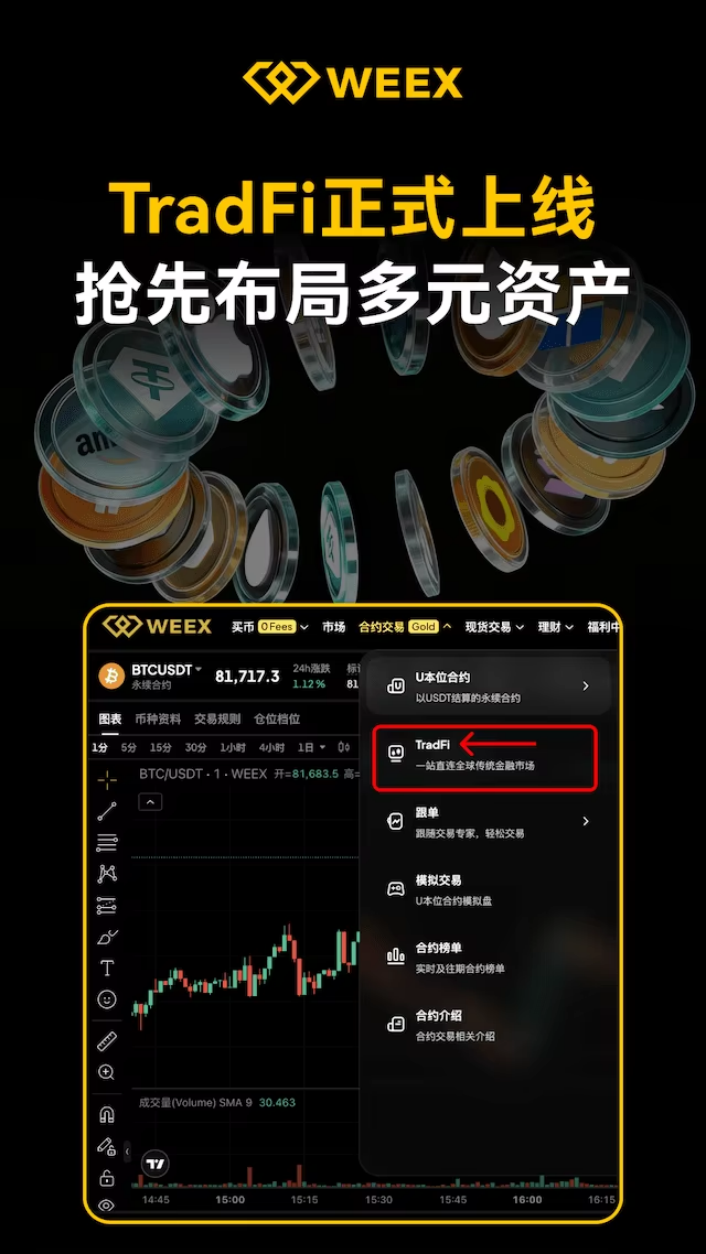
WEEX TradFi introduced related products under this trend, currently supporting trading of popular U.S. stock tokens including NVDA (Nvidia), MSFT (Microsoft), AAPL (Apple), TSLA (Tesla), QQQ, and more, while also covering some traditional financial market assets.
Trading U.S. Stock Tokens Is Not Equivalent to Holding Traditional Stocks
Many users encounter a similar question when first dealing with U.S. stock tokens:
"I'm trading a Nvidia token, does that mean I own Nvidia stock?"
This is actually the most crucial step in understanding TradFi products.
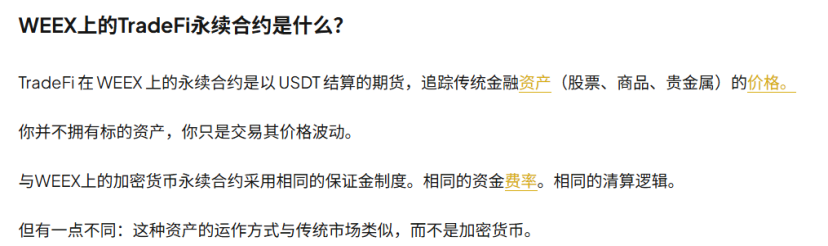
Traditional stock investment essentially involves purchasing shares of a listed company through a securities account; investors may enjoy shareholder rights such as dividends and voting. U.S. stock token products on trading platforms primarily facilitate trading based on the price movements of the related assets. Users participate in price volatility, not traditional stock ownership.
Therefore, while both U.S. stock tokens and stock investment are related to the asset prices of listed companies, they represent different product forms.
Understanding this point is very important because for many users, the first step in judging whether a trading product is reliable is not looking at marketing, but confirming what exactly they are trading.
For users accustomed to Crypto trading, the value of U.S. stock tokens lies in providing a method closer to the digital asset trading experience, allowing them to follow price changes of popular assets in traditional markets without needing to completely switch to another investment system.
7x24-Hour Trading: Bringing a New Trading Experience to Traditional Assets
Another frequently asked question is: U.S. stock markets typically have fixed trading hours, so why can TradFi products be traded around the clock?
This reflects the difference between traditional financial trading models and digital trading models.
Traditional stock markets are subject to exchange opening and closing schedules, while digital trading products can offer more flexible trading hours to users through different trading mechanisms.
For Crypto users, this model aligns more with their long-established trading habits. Important global market news doesn't always occur during U.S. stock market hours, so a more flexible trading mechanism can help users stay abreast of market changes promptly.
However, extended trading hours do not mean the disappearance of risk.
Factors such as market liquidity and price volatility can still change during traditional market closures. While enjoying the convenience of trading, users also need to understand the potential market differences across various trading periods.
A truly mature trading experience is not just about having more trading opportunities, but also about enabling users to fully understand the risks behind those opportunities.
Judging the Reliability of TradFi Products: Transparency and Risk Management Are Equally Important
For any financial product, reliability isn't just about how many assets a platform offers; more importantly, it's about whether users can clearly understand the product rules.
The same applies to U.S. stock token trading.
Users need to focus on several core questions: What is the mechanism of the trading product? How does the price track the related asset? What are the risks during trading? If using leverage, how should positions be managed?
These factors directly impact the trading experience.
Especially in the Crypto market, some users are already accustomed to a high-volatility environment, but traditional financial assets also carry price fluctuation risks. Popular tech stocks like Nvidia and Tesla can be affected by company performance, industry trends, and macro-environmental factors; index and commodity assets are also influenced by interest rates, policies, and global economic changes.
Therefore, trading TradFi assets is not simply about adding a trading entry; it requires users to build a more comprehensive understanding of risk.
While WEEX TradFi offers a variety of traditional asset trading options, it also aims to help users access global markets through a more familiar trading method. However, for any trader, understanding the product and its risks remains the most crucial step before participating in the market.
TradFi Is Becoming a New Gateway Connecting Crypto with Global Markets
Looking at market trends, the assets attracting Crypto users' attention are continuously expanding.
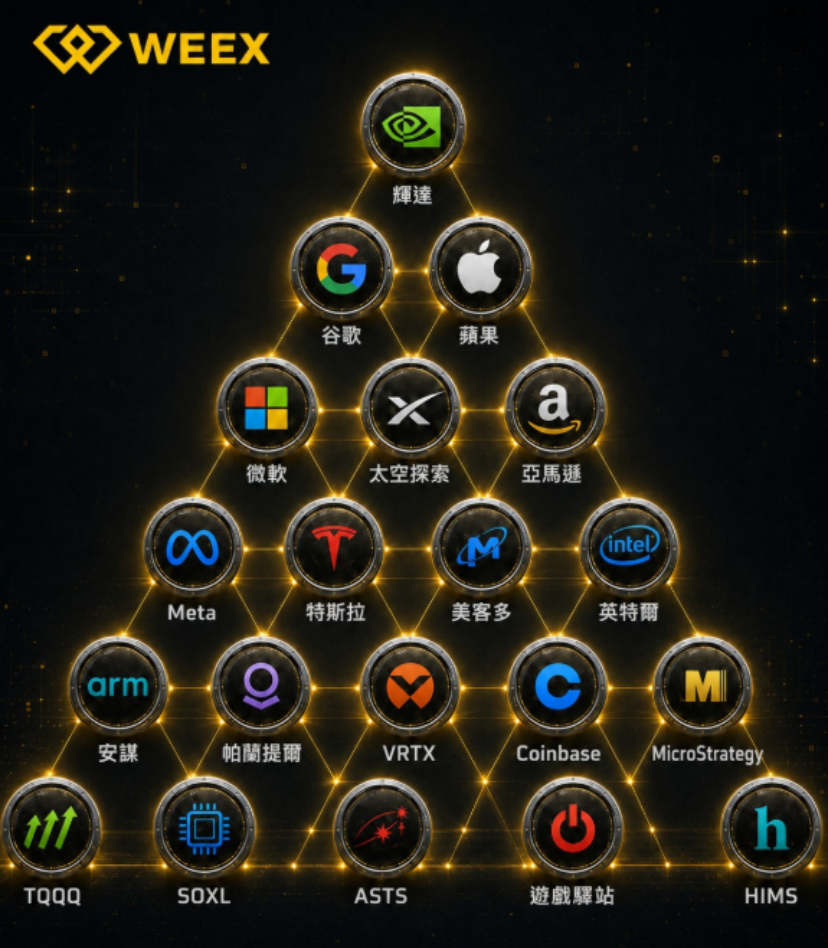
In the past, a trader might only have focused on BTC price changes; today, the factors influencing market movements are increasingly complex. The development of the AI industry, the performance of U.S. tech stocks, dollar policies, and the global macro-environment can all affect the interconnections between different assets.
This is why more and more traders are starting to pay attention to traditional financial assets.
Future market participants may no longer simply distinguish between "Crypto investors" and "traditional investors." As financial infrastructure continues to converge, more users will likely want to understand a broader range of global assets within the same trading environment.
For users trading U.S. stock tokens for the first time, reliability does not come from a simple promise, but from an understanding of the product mechanism, awareness of risks, and a comprehensive assessment of the trading platform's capabilities.
WEEX TradFi aims to provide users with a trading gateway that connects digital assets with traditional markets, allowing them to explore more global asset opportunities in a familiar environment.
And for the entire industry, the fusion of TradFi and Crypto may have just begun.






