Iran Opens Fire on an Oil Tanker That Paid Bitcoin Transit Fees to Scammers

marsbitPublished on 2026-04-22Last updated on 2026-04-22

Abstract

Iran announced plans to charge Bitcoin and USDT transit fees for oil tankers passing through the Strait of Hormuz. Within two weeks, scammers impersonated Iranian officials and sent fraudulent messages to stranded vessels, demanding cryptocurrency payments in exchange for safe passage. At least one tanker that paid the fake fee was fired upon by Iranian Revolutionary Guard boats when attempting to cross. Maritime risk firm MARISKS confirmed the scam exploited shipowners’ anxiety amid heightened regional tensions. Chain analysis firms TRM Labs and Chainalysis found no evidence of large-scale crypto payments actually being made to Iranian entities. Legal experts warned that even payments made to scammers—if intended for Iran—could violate international sanctions. The incident highlights how cryptocurrency’s irreversibility, often touted as a strength, becomes a critical risk in conflict-driven fraud. While Iran’s proposal initially sparked excitement in crypto circles, it ultimately created a new attack vector for deception, leaving ships trapped, fined, or even under fire.

Author: Deep Tide TechFlow

Deep Tide Introduction: Less than two weeks after Iran announced it would collect Bitcoin transit fees in the Strait of Hormuz, scammers impersonated Iranian officials and sent fake messages to stranded oil tankers demanding BTC and USDT.

At least one tanker that paid the fake transit fee was fired upon by the Iranian Revolutionary Guard Corps when attempting to pass. Chain analysis firms TRM Labs and Chainalysis both stated that no large-scale on-chain evidence of cryptocurrency payments has been found so far.
Iran announced it would collect transit fees in Bitcoin, and within two weeks, scammers turned this narrative into a weapon.

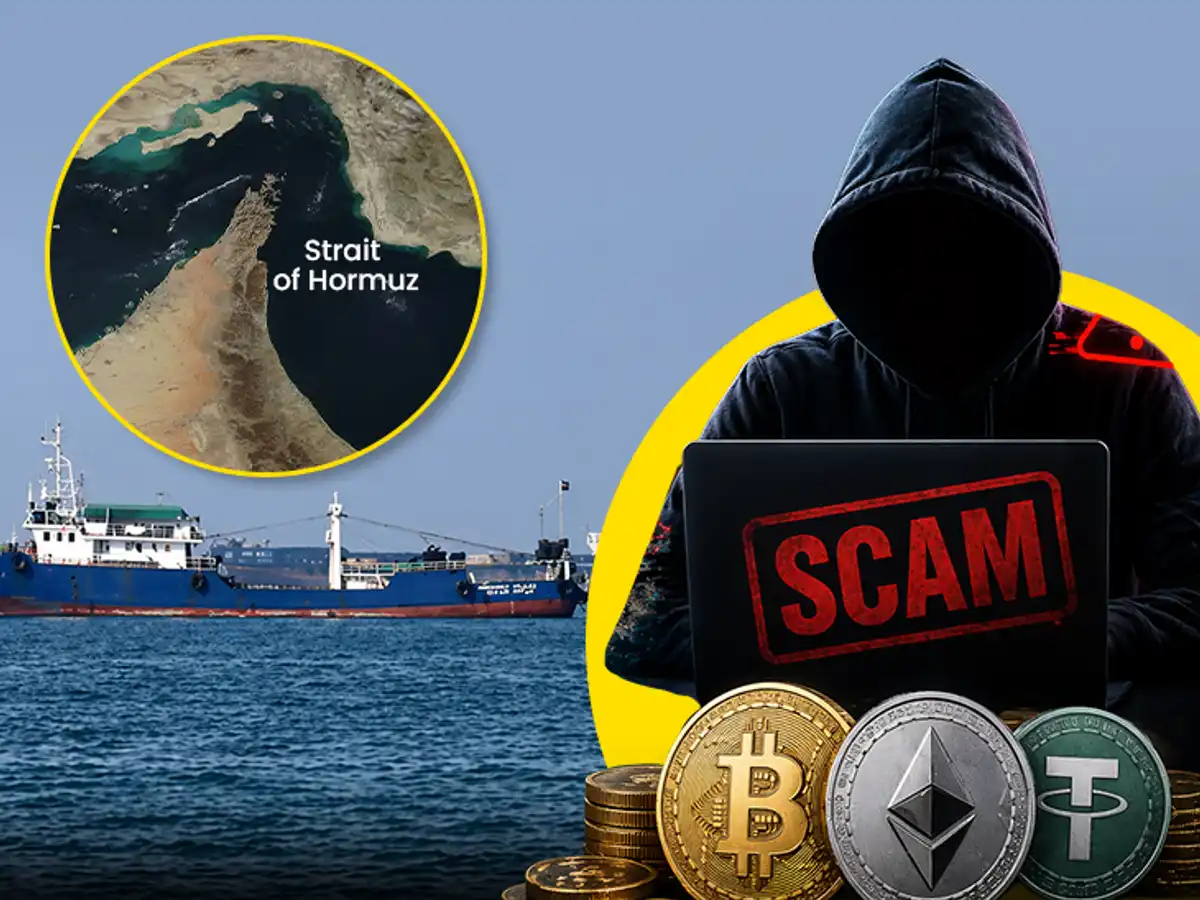
According to a Reuters report on April 21, the maritime risk management company MARISKS issued a warning: unidentified individuals are posing as Iranian authorities and sending false messages to ships stranded on the western side of the Strait of Hormuz, demanding payment of "transit fees" in BTC or USDT in exchange for safe passage. MARISKS believes that at least one of the vessels fired upon by Iranian Revolutionary Guard Corps speedboats on April 18, when Iran briefly opened the strait, was a victim of this scam.

The absurdity of the incident lies in the entire chain of causality: a sovereign state announces it will collect Bitcoin transit fees, scammers copy this rhetoric to commit fraud, shipowners believe it and pay, and then get shot at by the real Iranian military.

From "National-Level Settlement Tool" to Attack Surface for Scammers

The story begins in early April.

From March 30 to 31, the Iranian parliament passed the "Hormuz Strait Management Plan," formally writing into law the transit fee system that the Islamic Revolutionary Guard Corps had already been implementing since mid-March. According to the Financial Times, Hamid Hosseini, spokesperson for the Iran Oil, Gas, and Petrochemical Products Exporters Union, confirmed that fully loaded tankers are required to pay a fee of $1 per barrel, with payment methods including Bitcoin, USDT, or Chinese yuan. A supertanker carrying 2 million barrels of crude oil could face a single transit fee of up to $2 million.

Upon the news, Bitcoin's price jumped 5%, briefly breaking through $72,700. The crypto community quickly interpreted this as a milestone validation of Bitcoin as a "neutral settlement layer for international trade." Institutions like Bitwise even linked it to predictions of Bitcoin reaching $1 million.

But there were also many skeptics.

Sam Lyman of the Bitcoin Policy Institute pointed out in a report on April 15 that large-scale collection of Bitcoin transit fees with existing technology is "almost impossible." Ari Redbord, global policy head at TRM Labs, told Fortune magazine that on-chain data does not show transit fee payments occurring on a large scale. Chainalysis, in its analysis report, noted that on-chain activities of entities linked to Iran primarily rely on USDT on the Tron network, not Bitcoin.

Scammers don't care about these technical debates. They only need a credible narrative, and the Iranian government has already written the script for them.

Ships That Paid the Fake Fee Got Shot at for Real

According to Reuters and DL News, the wording of the scam messages highly imitates official language. The scammers required shipowners to submit ship documents, claiming they would be assessed by the "Iranian security department." After passing the assessment, payment in BTC or USDT would be required, after which the ship could "safely pass through the strait at the scheduled time."

Approximately 400 ships and about 20,000 crew members are currently stranded in the Persian Gulf. With the U.S. blockading Iranian ports and Iran repeatedly opening and closing the strait for passage, the anxiety of shipowners is understandable. The scammers precisely exploited this anxiety.

On April 18, Iran briefly opened the strait, and some ships attempted to pass. According to the UK Maritime Trade Operations (UKMTO), two Iranian Revolutionary Guard Corps speedboats opened fire on an oil tanker trying to exit the strait, forcing it to turn back. MARISKS believes this tanker had previously paid the cryptocurrency "transit fee" to scammers, thinking it had obtained passage permission.

They paid, but the money didn't go to Iran. The ship was still shot at.

Paying Scammers Could Also Violate Sanctions Laws

Even more ironically, even if shipowners realize they have been scammed, the legal risks won't disappear.

Xue Yin Peh, investigation strategy head at Chainalysis, told Decrypt that regardless of whether the recipient is actually the Iranian authorities, as long as the payer intended to pay a sanctioned regime, it could constitute a violation of OFAC, EU, and UK sanctions regulations. In other words, even if you thought you were paying Iran and the money ended up in a scammer's pocket, regulators could still pursue your "subjective intent."

Isabella Chase, head of policy for Europe, the Middle East, and Africa at TRM Labs, also warned that any wallet addresses associated with such demands should be considered "high-risk," and cryptocurrency payments do not provide any "safe harbor" in terms of sanctions compliance.

This creates a nearly unsolvable dilemma for shipowners: paying Iran violates sanctions, paying scammers might also violate sanctions, and not paying means continuing to drift in the Persian Gulf.

"Bitcoin's Irreversibility" Turns from Advantage to Flaw

The most noteworthy aspect for the crypto industry to reflect on is how Bitcoin's core characteristics performed in this scenario.

Benzinga's report highlighted the key issue: cryptocurrency payments cannot be reversed once sent. Traditional bank transfers at least offer the possibility of freezing and recovery, but once Bitcoin or USDT is transferred, the funds are lost. This feature is called "trustless settlement" in normal commercial contexts but becomes "irrecoverable loss" in the combined scenario of war and fraud.

This might be the most absurd crypto story of 2026... Iran's plan to collect transit fees in Bitcoin may never have been truly implemented, but scammers have already made money from this story, and an oil tanker got shot because of it.


Related Questions

QWhat did Iran announce regarding the Strait of Hormuz in early April, and what was the proposed payment method?

AIran announced a toll system for oil tankers passing through the Strait of Hormuz, requiring a fee of $1 per barrel of oil. The payment methods included Bitcoin, USDT, or Chinese Yuan.

QHow did scammers exploit Iran's announcement about cryptocurrency toll payments?

AScammers impersonated Iranian authorities and sent fake messages to ships stranded in the Strait of Hormuz, demanding payments in BTC or USDT as 'tolls' for safe passage, capitalizing on the anxiety of shipowners.

QWhat happened to at least one ship that paid the fake toll to scammers?

AAt least one ship that paid the fake toll was fired upon by Iranian Revolutionary Guard Corps boats when it attempted to pass through the strait during a brief opening, forcing it to turn back.

QAccording to chain analysis firms TRM Labs and Chainalysis, was there evidence of large-scale cryptocurrency toll payments to Iran?

ANo, both TRM Labs and Chainalysis stated that there was no on-chain evidence of large-scale cryptocurrency toll payments being made to Iran.

QWhat legal risk do shipowners face even if they pay scammers instead of the actual Iranian authorities?

AShipowners could still be deemed in violation of OFAC, EU, and UK sanctions laws because the intent to pay a sanctioned regime (Iran) is what matters, regardless of whether the funds actually reached Iranian authorities or scammers.

Related Reads

TechFlow Intelligence Bureau: Chip Stocks Lose Trillions in a Single Day, Bitcoin Falls Below $60,000, US-Iran Conflict Escalates

**Daily Tech & Markets Roundup: AI Advances, Market Turmoil, and Geopolitical Tensions** **AI / LLMs**: Anthropic's internal report on AI self-improvement sparked serious discussions about Recursive Self-Improvement (RSI). Meanwhile, debate continues on AI coding tools after Claude was accused of introducing bugs into the rsync codebase. In positive news, DeepSeek V4 Flash impressed in local deployment tests, and GitHub Copilot now supports custom endpoints for local models. A surprising research turn suggests removing chain-of-thought prompting can sometimes improve LLM performance. **Crypto / Web3**: Bitcoin plunged below $60,000, with its RSI hitting levels last seen during the COVID-19 crash, driven by strong U.S. jobs data reviving interest rate hike fears. Discussions highlight Ethereum DeFi's continued lack of a smooth consumer payment layer. **Chips / Hardware**: Chip stocks suffered a massive sell-off, with the Philadelphia Semiconductor Index posting its worst single-day drop in six years, erasing over a trillion dollars in value. Marvell, Micron, AMD, and Intel were among the biggest losers. **Tech Companies**: A leaked Microsoft document revealing goals to make Copilot "addictive" drew criticism. LinkedIn founder Reid Hoffman left Microsoft's board to focus full-time on his AI agent startup, Manus. Google was revealed to be paying SpaceX $920 million monthly for AI training compute. **Markets & Macro**: A blowout U.S. jobs report (172k vs. 80k expected) crushed hopes for near-term rate cuts, sending Treasury yields soaring and triggering a broad market sell-off. CEOs from Kraft, McDonald's, and Whirlpool simultaneously warned U.S. consumers are exhausting their savings. **Geopolitics**: U.S.-Iran tensions escalated with missile/drone interceptions and U.S. strikes on Iranian radar sites, keeping the critical Strait of Hormuz largely closed since late February and posing ongoing oil supply risks. **The Bottom Line**: The strong jobs data acted as a single trigger for correlated sell-offs across equities, crypto, and chips. Underlying the volatility is a stark contradiction between robust employment data and warnings of consumer weakness, alongside geopolitical risks that could reignite inflation, leaving markets to price in a fraught macro outlook with no clear "soft landing" path.

marsbit59m ago

TechFlow Intelligence Bureau: Chip Stocks Lose Trillions in a Single Day, Bitcoin Falls Below $60,000, US-Iran Conflict Escalates

marsbit59m ago

It Took Me a Year to See the Bitter Truth About Agent Payments

After a year building infrastructure for the Agent economy, engaging with major players like Stripe, Visa, and Coinbase, the author shares a sobering analysis of the current state of Agent payments. The core finding is a stark lack of genuine, immediate demand across most envisioned use cases. The article breaks down four key market segments: 1. **Agent-to-Merchant (Consumer Shopping):** For most product categories (e.g., clothing, electronics), conversational AI shopping is a step backwards from visual e-commerce interfaces. While agents excel at understanding needs, they can't replace side-by-side product comparison. Real merchant interest is defensive "Agent Engine Optimization," not driven by current customer demand. Potential exists for high-frequency, low-decision purchases (like food delivery) or navigating complex store UIs, but these require massive B2C distribution channels dominated by giants like Amazon. 2. **Agent-to-API (Developer Services):** Developers already have subscriptions and billing relationships for APIs (compute, data). Prepaid balances solve micro-payment issues for low transaction volumes. A deeper structural problem is that major SaaS vendors' business models rely on enterprise contracts, resisting granular pay-per-call pricing. While protocols like MPP and x402 serve the long tail of niche services, this market is small and developers are historically low-willingness-to-pay. 3. **Agent-to-Agent:** This remains largely theoretical with minimal transaction volume. While it represents a long-term bet on a fundamentally new transaction infrastructure (sub-second, micro-penny to million-dollar, multi-party settlements), it does not constitute a present market. 4. **Agent-to-Finance:** This is the only category with existing, paying demand. Integrating AI into financial workflows (trading, portfolio management) is a natural evolution and enables new capabilities like autonomous rebalancing. However, competition favors established, regulated institutions. The "real problem" is not moving money between agents, but the broader challenge of **coordination**—orchestrating work between agents and humans, verifying outcomes, and settling results. Payment is just one component of settlement, which is itself part of coordination. Companies that solve the coordination layer will subsume payment, not the other way around. While well-funded incumbents build defensively for a long-term future, startups must find where the market is today—which, for the author's team, lies outside these four categories in an area of real, growing, and underserved activity.

marsbit1h ago

It Took Me a Year to See the Bitter Truth About Agent Payments

marsbit1h ago

It Took Me a Year to See the Hard Truth About Agent Payments

**Title: It Took Me a Year to See the Hard Truth About Agent Payments** Over the past year, I've worked on infrastructure for the Agent economy, engaging with major players like Stripe, Visa, Coinbase, and numerous startups. The findings reveal a stark reality: genuine, widespread demand for Agent-based payments does not yet exist. **Key Observations:** * **Agent-to-Merchant (Shopping):** The user experience for AI shopping often falls short, especially for visual product discovery. While AI excels at understanding needs, conversational interfaces can't yet replace browsing and comparing multiple products visually. Current merchant interest is largely defensive ("Agent Engine Optimization") for a future that hasn't arrived. High-frequency, low-friction purchases (like food delivery) are potential fits, but lack open APIs and face high AI inference costs. Simpler, more affordable, or cross-language interactions for complex UIs are a niche opportunity but require massive consumer distribution to scale. * **Agent-to-API (Developer Tools):** Developer payment needs for APIs (computing, data, models) are already met through subscriptions and prepaid credits. The core challenge is not payment friction but supplier economics: most large SaaS providers prefer enterprise contracts over micropayments for API calls. Protocols like MPP and x402 suit the long-tail of smaller services but cater to a developer market historically reluctant to pay for these tools. Major infrastructure needs at the top of the stack are already being addressed. * **Agent-to-Agent (Machine Commerce):** This is a long-term vision with almost no current transaction volume. While a future with high-speed, high-frequency, multi-party machine-to-machine transactions would require novel infrastructure, it remains theoretical. The market is not here yet. * **Agent-to-Finance:** This is the only category with clear, present demand. Financial professionals and DeFi users already pay for tools, and AI augmentation is a natural evolution. Autonomous AI agents can enable entirely new financial strategies. However, competition is fierce from established, regulated incumbents who can more easily layer AI onto their existing products. **The Core Insight:** Companies, especially giants with long time horizons, are building defensively for a potential future of mass machine commerce. For them, early investment is a low-cost hedge. For startups, the current market reality is different. The primary challenge isn't just moving money between agents (payments). The larger, unsolved problem is **orchestration** – coordinating work between agents and humans, verifying outcomes, and then settling. Payment is just a part of settlement, which is just a part of orchestration. Companies that solve the orchestration problem will subsume payments, not the other way around. After a year of building, we see the real, growing, and underserved market opportunity lies in this broader domain of orchestration.

链捕手2h ago

It Took Me a Year to See the Hard Truth About Agent Payments

链捕手2h ago

Claude Opus 4.8 Finds a $4.5 Billion Bug: The AI Era is Mass-Producing Hackers

A researcher discovered a critical "infinite mint" vulnerability in the Zcash cryptocurrency's Orchard protocol using Claude Opus 4.8, leading to a swift fix but also a 50% market drop, erasing billions in value. This incident highlights a new era where powerful, accessible AI models are dramatically lowering the barrier to finding software vulnerabilities. Previously, the security community feared specialized models like Claude Mythos Preview, capable of finding decades-old zero-day exploits. The Zcash case, however, involved a publicly available, general-purpose model. This shift makes advanced security auditing—and attack capabilities—accessible to far more people, not just experts. The mass democratization of vulnerability discovery brings a dual challenge: a flood of low-quality, AI-generated false reports that overwhelm maintainers, and the real, rapid uncovering of deep, dangerous bugs. Open-source projects, often understaffed and unfunded, are particularly vulnerable to this "attention DDoS." The article cites examples like curl shutting down its bug bounty program due to the unsustainable workload. Our perceived digital safety has often been luck, relying on the high cost and effort required to find deeply hidden flaws in complex systems, as seen with historical vulnerabilities like Heartbleed or Baron Samedit. AI changes this cost structure, effectively "mass-producing flashlights" to illuminate every corner of our codebase. While large companies operate extensive security chains involving external white-hat hackers and massive defensive operations, the global cybersecurity workforce faces a severe shortage, especially of experienced personnel capable of analyzing complex threats and coordinating fixes. The core dilemma emerges: AI makes *finding* bugs cheap and scalable, but *fixing* them remains a slow, expensive, and human-intensive process. The article concludes that AI won't destroy the internet but acts as a bright light, revealing that our digital existence is not inherently secure but is precariously maintained by ongoing human effort. The true cost in the AI era may not be discovery, but whether there will be enough people left willing and able to do the hard work of repair.

marsbit2h ago

Claude Opus 4.8 Finds a $4.5 Billion Bug: The AI Era is Mass-Producing Hackers

marsbit2h ago

Trading

Spot
Futures

Hot Articles

How to Buy IR

Welcome to HTX.com! We've made purchasing Infrared Finance (IR) simple and convenient. Follow our step-by-step guide to embark on your crypto journey.Step 1: Create Your HTX AccountUse your email or phone number to sign up for a free account on HTX. Experience a hassle-free registration journey and unlock all features.Get My AccountStep 2: Go to Buy Crypto and Choose Your Payment MethodCredit/Debit Card: Use your Visa or Mastercard to buy Infrared Finance (IR) instantly.Balance: Use funds from your HTX account balance to trade seamlessly.Third Parties: We've added popular payment methods such as Google Pay and Apple Pay to enhance convenience.P2P: Trade directly with other users on HTX.Over-the-Counter (OTC): We offer tailor-made services and competitive exchange rates for traders.Step 3: Store Your Infrared Finance (IR)After purchasing your Infrared Finance (IR), store it in your HTX account. Alternatively, you can send it elsewhere via blockchain transfer or use it to trade other cryptocurrencies.Step 4: Trade Infrared Finance (IR)Easily trade Infrared Finance (IR) on HTX's spot market. Simply access your account, select your trading pair, execute your trades, and monitor in real-time. We offer a user-friendly experience for both beginners and seasoned traders.

3.7k Total ViewsPublished 2025.12.17Updated 2026.06.02

How to Buy IR

Discussions

Welcome to the HTX Community. Here, you can stay informed about the latest platform developments and gain access to professional market insights. Users' opinions on the price of IR (IR) are presented below.

活动图片