Interactive Brokers Opens 'Stablecoin Deposits': Why Is the Wall Street Giant Tearing Down the 'Payment Berlin Wall' at This Moment?

marsbitPublished on 2025-12-16Last updated on 2025-12-16

Abstract

Interactive Brokers (IBKR), a major global electronic brokerage, has announced a landmark update allowing clients to deposit funds using stablecoins—primarily USDC—to trade traditional assets like stocks, futures, and forex. This move effectively bridges a significant gap between crypto and traditional finance (TradFi), addressing long-standing inefficiencies in fiat payment channels. Traditionally, cross-border wire transfers via SWIFT are slow (taking 1-3 business days), costly, and limited to banking hours. By leveraging blockchain technology, IBKR enables near-instant, 24/7 settlements, drastically reducing friction and improving capital efficiency for traders. Behind the scenes, IBKR likely partners with regulated entities like Paxos or Circle to convert USDC to USD seamlessly, ensuring compliance while using the blockchain as a new settlement layer. This strategic shift aims to attract crypto-native high-net-worth clients and institutions holding significant wealth in stablecoins, offering them a secure, compliant path to invest in traditional markets. It also signals the evolution of stablecoins from mere trading instruments to a foundational global payment infrastructure. However, challenges remain, including stringent KYC/AML requirements, address screening, and enhanced tax transparency. Despite these hurdles, IBKR’s move is a decisive step toward erasing the boundaries between crypto wallets and securities accounts, setting a new standard for the industry.

Author: BlockWeeks

Between the cryptocurrency market and the traditional financial market (TradFi), there has long been an invisible wall: the friction cost of fiat currency channels.

Recently, the globally renowned electronic broker Interactive Brokers (IBKR) announced a milestone update: it now officially supports clients using stablecoins (primarily USDC) to deposit funds into their accounts for trading traditional assets such as stocks, futures, and foreign exchange.

At first glance, this might seem like a simple payment function update. But to observers well-versed in the transformation of financial infrastructure, this is a substantive acknowledgment of the "on-chain settlement network" by a top-tier Wall Street broker. When the US Dollar becomes USDC, and when SWIFT becomes ERC-20, it reflects a paradigm shift in the efficiency of global capital flow.
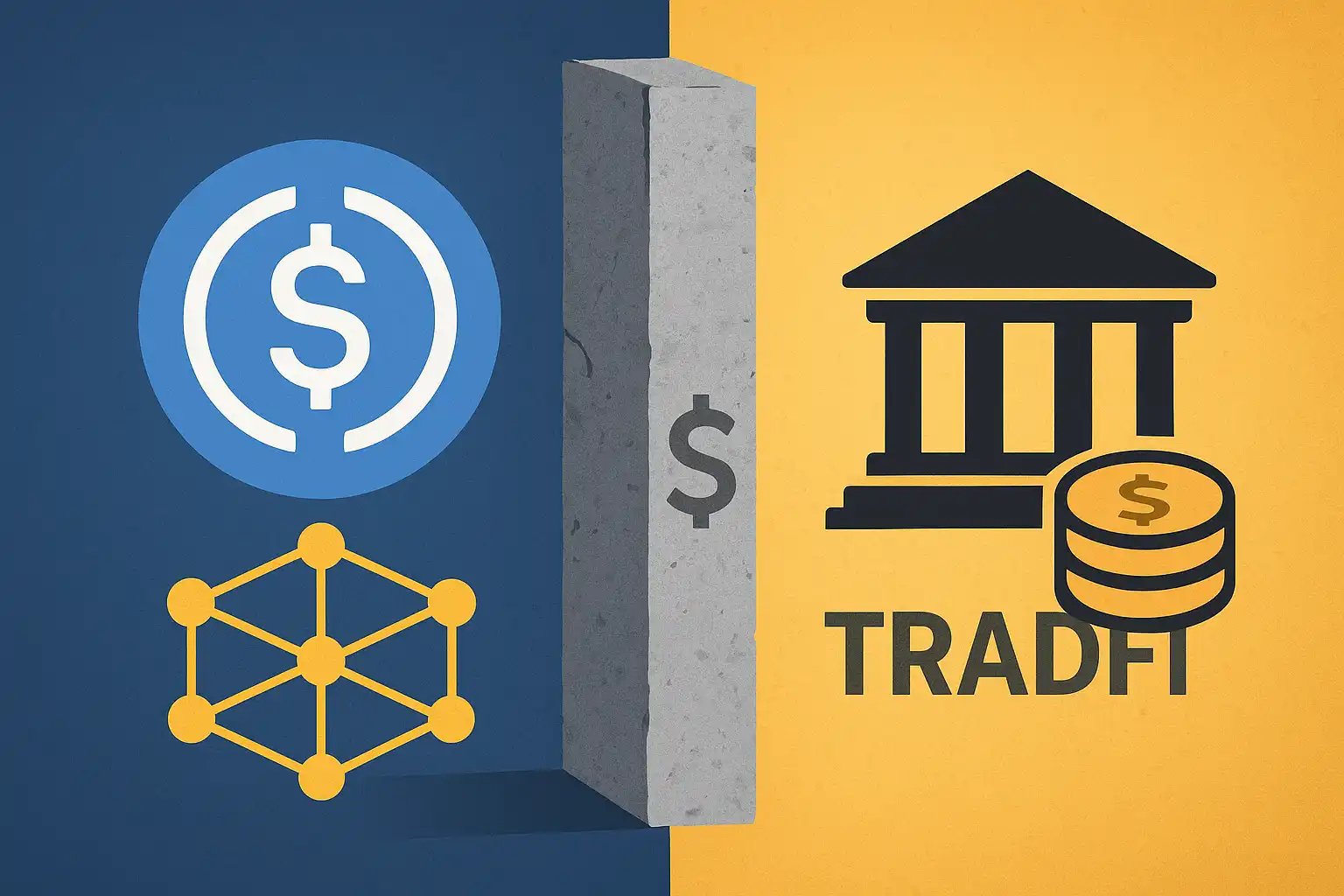
I. Breaking the Wall: A Dimensional Reduction Strike from "T+N" to "7×24"

For a long time, the biggest pain point for global investors (especially non-U.S. investors) using U.S. stock brokers has been depositing funds.

The traditional wire transfer path is: local bank foreign exchange purchase -> SWIFT cross-border transfer -> intermediary bank -> U.S. receiving bank -> broker account crediting. This process not only involves high fees (wire transfer fee + intermediary fee) but is also limited by bank working hours and the inefficiency of the SWIFT system, typically taking 1-3 business days.

Interactive Brokers' introduction of stablecoin deposits is essentially using blockchain as a "new clearing layer" to launch a dimensional reduction strike against traditional bank wire transfers:

  1. 24/7 Liquidity: On-chain transfers have no concept of "bank closing time." A deposit on Friday night no longer has to wait until Monday morning to be processed.

  2. Instant Settlement: Compared to the multi-layer confirmation of SWIFT, on-chain confirmation of USDC takes only seconds to minutes.

  3. Capital Efficiency Revolution: For high-frequency traders and cross-market arbitrageurs, the seamless transfer of funds between on-chain (Web3) and securities accounts (Web2) means a drastic reduction in capital occupancy costs.

Technical Black Box Revealed: It is important to clarify that Interactive Brokers does not directly "hold" these tokens for stock settlement. Its backend logic likely involves cooperation with compliant institutions like Paxos or Circle: users transfer in USDC -> the partner exchanges it 1:1 for USD -> instantly transfers it to the IBKR client's fiat balance. Superficially, it's coins; fundamentally, it's still money, but the channel has become the chain.

II. Open Strategy: Competing for the Asset Pricing Power of "Web3 Nouveau Riche"

Interactive Brokers is known for serving professional traders and institutions, with famously strict risk control. Why would such a conservative giant take the first step?

The answer lies in the competition for incremental wealth.

The past two bull markets have created a large number of "Crypto Natives" and Web3 institutions holding millions or even billions of dollars in assets. The wealth of this group primarily exists on-chain in the form of USDT/USDC or ETH.

In the past, if they wanted to allocate to U.S. stocks (such as buying NVIDIA or Coinbase stock), they had to go through a painful "off-ramp" process, facing not only the risk of bank risk control freezing their accounts but also enduring significant exchange rate losses.

Interactive Brokers' move is a typical "capital attraction open strategy":

  • For users: It is the safest "off-ramp channel." Depositing USDC into IBKR to buy U.S. Treasuries or the S&P 500 is currently the most compliant path for "traditionalizing crypto assets."

  • For IBKR: It directly locks in a group of high-net-worth clients with the most abundant liquidity and highest risk appetite globally. This is not just to earn commissions but also to accumulate huge amounts of client margin (Float).

III. Signal: Stablecoins Are Evolving into a "Supranational Version of SWIFT"

Zooming out, this event is a reverse mapping of the RWA (Real World Assets) narrative.

If RWA is about "moving" U.S. Treasuries onto the chain, then Interactive Brokers supporting stablecoin deposits is about "moving" liquidity from the chain back to traditional finance. This marks a qualitative change in the historical positioning of stablecoins (Stablecoin):

  • Era 1.0: Trading chips on exchanges.

  • Era 2.0: Safe-haven assets in DeFi protocols.

  • Era 3.0 (Now): A true global payment and settlement infrastructure.

When a Nasdaq-listed brokerage giant starts using a blockchain network instead of the SWIFT network to handle client funds, it indicates that the security, compliance, and efficiency of blockchain as a "payment pipeline" have passed the most stringent stress tests on Wall Street.

IV. Concerns and Games: The Sword of Damocles of Compliance

Despite the bright prospects, we cannot ignore the regulatory games involved.

  • KYC/AML Penetration Challenges: Interactive Brokers supporting stablecoin deposits will inevitably require extremely strict on-chain address reviews. Has the user's deposit address interacted with sanctioned entities (like Tornado Cash)? How to identify "black U"? This will test IBKR's compliance technology capabilities.

  • Tax Transparency: The opening of this channel also means a strong binding between on-chain assets and real-name securities accounts. For users hoping to avoid taxes through cryptocurrency, this channel is tantamount to "surrendering" to the tax authorities. This could be a double-edged sword.

Conclusion: The First Brick in Tearing Down the Berlin Wall

The small step taken by Interactive Brokers is a big step for financial integration.

It预示着 that within the next five years, the boundary between "securities accounts" and "crypto wallets" will completely blur. Future investors may not need to care whether they hold dollars in a bank ledger or USDC on the chain; they will only care about the appreciation of their assets.

For other brokers (such as Charles Schwab, Futu, etc.), the time left to follow suit is running out. In an era where liquidity is justice, whoever masters the stablecoin channel holds the key to the Web3 wealth vault.


Related Questions

QWhat is the significance of Interactive Brokers (IBKR) announcing support for stablecoin deposits?

AIt represents a major step in bridging the gap between crypto and traditional finance by allowing clients to use stablecoins like USDC for funding accounts to trade stocks, futures, and forex, leveraging blockchain for faster, cheaper, and more efficient settlements compared to traditional banking systems like SWIFT.

QHow does using stablecoins for deposits improve upon traditional wire transfers?

AStablecoin deposits offer near-instant settlement (seconds to minutes), 24/7 availability without banking hours restrictions, and lower transaction costs, eliminating the delays and fees associated with multi-day SWIFT transfers and intermediary banks.

QWhy is Interactive Brokers targeting crypto-native users with this feature?

ATo attract high-net-worth individuals and institutions from the Web3 space who hold significant wealth in stablecoins, providing them a compliant and efficient path to invest in traditional assets like stocks and bonds, thereby capturing new sources of liquidity and client assets.

QWhat does the move signal about the evolution of stablecoins?

AIt indicates that stablecoins are transitioning from being mere trading instruments or DeFi assets to becoming a global payment and settlement infrastructure, capable of handling cross-border transactions with efficiency that meets Wall Street's rigorous standards.

QWhat are the regulatory challenges associated with stablecoin deposits in traditional finance?

AKey challenges include ensuring robust KYC/AML compliance to prevent interactions with sanctioned addresses or illicit funds, and addressing tax transparency issues as stablecoin transactions linked to verified accounts increase visibility for tax authorities.

Related Reads

7 Months After the Collapse of Huiwang, Southeast Asia's Escrow Platforms Undergo a Major Reshuffle

Following the collapse of Huione Pay—dubbed the "Alipay of Southeast Asia"—seven months ago, the region's underground financial guarantee platform sector is undergoing a significant reshuffle. This power vacuum has been swiftly filled by emerging platforms such as XinBi, Tiger/Navigator, JinBei (renamed JinBo), Dali/Tiancheng, and FullyLight. These platforms, operating largely via Telegram and offering services like escrow for illicit transactions, have absorbed the vast user base and markets left behind by Huione. While positioning themselves as "trust intermediaries," their primary clientele consists of networks involved in online scams, money laundering, illegal gambling, and even human trafficking. For instance, the Tiger/Navigator platform explicitly provides "escrow" services for kidnapping-for-ransom operations ("强押车交易"). Data underscores the immense scale: Huione alone processed over $103 billion in cryptocurrency payments and facilitated over $31 billion through its escrow market before its downfall, linking it to Cambodia's notorious Prince Group. Since its collapse, competitors have seen explosive growth. For example, the XinBi platform has accumulated over $1.6 billion in total USDT revenue, while platforms like NewPay, OkPay (under Dali), and FullyLight Wallet collectively processed over $4.8 billion in USDT in a single year. This ecosystem thrives in regions like Cambodia and Myanmar, where regulatory gaps allow these platforms to act as critical financial infrastructure for sprawling cybercrime industries, from scam compounds to online casinos. The article concludes that the moniker "Southeast Asian Alipay" is a misnomer, obscuring the platforms' fundamental role in enabling serious criminal enterprises rather than representing legitimate financial innovation.

Odaily星球日报2m ago

7 Months After the Collapse of Huiwang, Southeast Asia's Escrow Platforms Undergo a Major Reshuffle

Odaily星球日报2m ago

The Changing Landscape: What Are Crypto VCs Experiencing?

Title: The Shifting Landscape of Crypto Venture Capital The era of dedicated crypto venture capital funds is undergoing a significant transformation. Once essential for navigating the sector's complexity and high risk, these specialized funds are now facing an identity crisis as the market matures. This shift mirrors historical patterns in other specialized investment classes like cleantech and SPACs, where initial information advantages dissipate as technologies become mainstream and integrated into existing industry frameworks. The article argues that crypto is reaching a critical inflection point, transitioning from a "building phase" to an "integration phase." Major players like Stripe, BlackRock, and Visa now engage with crypto not for its novel mechanics but as a foundational financial infrastructure. Their needs—regulatory compliance, banking partnerships, distribution channels—align with traditional fintech, a domain easily understood by large, generalist funds like Sequoia and Founders Fund. This evolution creates a "barbell effect" within the VC landscape. On one end are massive, diversified platforms that can incorporate crypto as one vertical among many. On the other are small, nimble funds focused on niche, experimental projects. The middle ground—medium-sized dedicated crypto funds—is being squeezed out. Their typical fund size makes it impossible to generate sufficient returns solely from early-stage crypto bets, yet they cannot compete with giants for later-stage deals. Consequently, leading crypto-native firms like Paradigm and Framework Ventures are expanding into AI, robotics, and other sectors, driven partly by LP pressure for better returns amid a broader VC DPI crisis. Others, like Dragonfly and a16z, have narrowed their crypto focus predominantly to financial infrastructure like stablecoins, reframing the sector's core narrative. For crypto entrepreneurs, this consolidation presents challenges. While generalist funds offer larger checks and broader resources, crypto projects now compete fiercely with AI for attention and capital within these firms. Furthermore, the long-term, non-commercial foundational work that built the ecosystem—funded by dedicated crypto VCs—is less likely to attract generalist capital focused on direct returns. The conclusion is that "crypto investor" as a standalone category is becoming obsolete, akin to "internet investor." Crypto is becoming a baseline infrastructure layer. The future will see a barbell structure: large-scale growth financing handled by generalist funds, while pioneering, speculative projects are funded by small, specialized vehicles. The dedicated crypto funds of the 2017-2021 boom, which incubated core infrastructure, are giving way to this new, bifurcated reality.

Foresight News19m ago

The Changing Landscape: What Are Crypto VCs Experiencing?

Foresight News19m ago

As Consensus Accelerates, What Are Young Investors Betting On?

Title: As Consensus Forms Faster, What Are Young Investors Betting On? In the rapid evolution of tech investment, a new generation of young investors is navigating a landscape where AI, robotics, commercial aerospace, and quantum computing are advancing simultaneously. Traditional investment logic based on financial models is giving way to a need for deep technical understanding and the ability to act before industry consensus forms. An analysis of trends from the "WAIC FUTURE TECH" list of young investment leaders reveals key shifts in focus. The first major trend is the movement of AI from the digital screen into the physical world. Investment is shifting from large language models and chatbots towards embodied AI, robotics, AI hardware, and edge computing. While demonstrations generate excitement, the real challenge lies in achieving scalable, reliable, and cost-effective delivery in complex real-world environments like factories and logistics. Success depends not just on algorithms but on the integration of sensors, actuators, and control systems. Second, the competitive focus for large models is moving beyond raw capability toward building an "intelligence flywheel." The goal is to create self-reinforcing systems where user interaction generates data, improving the model, which in turn enhances the user experience and attracts more engagement. Companies that successfully embed AI into workflows to create these closed-loop systems can build lasting value that isn't easily erased by the next model upgrade. Third, facing a potential bottleneck in high-quality human-generated data, investors are looking at new underlying technologies. Reinforcement learning and self-play, as demonstrated by AlphaGo Zero, offer paths for AI to generate its own experience. Scientific foundation models, which aim to build general AI capabilities for fields like life sciences and materials discovery, represent a non-consensus direction that could unlock new frontiers of knowledge and data. Finally, in deep-tech areas like quantum computing, commercial aerospace, and space-based infrastructure, patient capital is essential. These fields have long, uncertain development and validation cycles involving complex engineering, supply chains, and regulations. Investment here requires a long-term view, focusing on foundational team capabilities and the eventual emergence of market demand, even if commercial returns are distant. Collectively, these trends illustrate how young investors are adapting to a new era. They are learning to make earlier, technically-informed judgments, balance hype with real-world viability, and provide the patient capital needed to build the deep-tech foundations of the future.

marsbit47m ago

As Consensus Accelerates, What Are Young Investors Betting On?

marsbit47m ago

Trading

Spot
活动图片




