In Web3 Storytelling, You Don't Need Creativity

marsbitPublished on 2025-12-29Last updated on 2025-12-29

Abstract

In the Web3 content space, many creators mistakenly believe they lack creativity, but the real issue is the absence of contrast in their narratives. Contrast refers to a shift or change—such as moving from "before" to "after," "expectation" to "reality," or "belief" to "realization"—that makes content engaging and memorable. Without this transformation, content remains flat and forgettable, merely presenting information like features, data, or promises straightforwardly. The human mind is activated by unexpected changes, not linear facts. For example, instead of stating "Solana is fast and cheap," a contrast-driven approach would describe the surprise of a transaction completing instantly. This creates a relatable moment. Embracing contrast often involves acknowledging past mistakes, doubts, or uncertainties, which fosters authenticity and connection with audiences. To incorporate contrast, ask: "What changed here?" Include elements like a mistaken assumption, a moment of hesitation, or an unexpected outcome. In Web3’s noisy environment, contrast helps content stand out without needing exaggerated creativity—just genuine, relatable shifts.

Author:Noir

Compiled by: Deep Tide TechFlow

Most Web3 content creators think they're not good at storytelling because they feel they "lack creativity."

But friend, that's usually not the real issue.

Actually, the real problem is:

— Your content lacks contrast.

Hey, either the content:

Sounds the same,

Feels flat,

Or has no variation.

And when nothing changes, there's no story to tell.

What is Contrast?
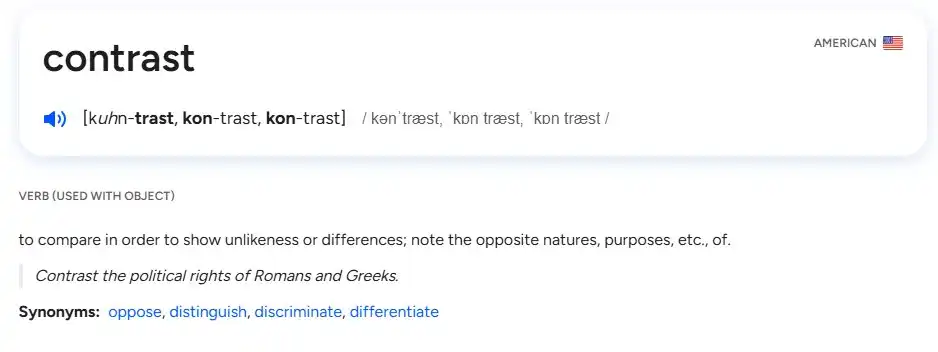
Contrast simply means something is different from what came before.

Yes, it's that simple.

It doesn't require:

Flowery language,

Unexpected plot twists,

Or background music.

At its core, contrast is a transformation, such as:

From "before" to "after"

From "expectation" to "reality"

From "belief" to "realization"

Without this transformation, your content is just information.

Yes, it might be useful, but memorable? Hmm... unlikely.

Why does a lack of contrast make content weak?

The Web3 world is full of:

Features, data, promises, roadmaps......

But most content is presented too straightforwardly:

"This is what it does."

"These are its benefits."

"This is why you should care."

However, the brain isn't interested in this linear information.

It wakes up when something unexpected happens.

Why Content Loses Appeal Without Contrast

The Web3 world is flooded with:

Features, data, promises, roadmaps......

But most content is presented too directly:

"This is its function."

"Why it's good."

"Why you need to care about it."

Yet, the brain isn't activated by this linear information.

It only wakes up when something unexpected occurs.

A Simple Example of "Contrast"

(You've definitely seen this countless times)

Expression without contrast:

Solana has fast transactions and low costs.

Your brain responds: Okay... and?

Expression with contrast:

I clicked send, switched tabs, and only then realized the transaction was already complete.

The same idea, but with a completely different impact.

The second expression creates a "moment." Get it?

Why Does "Contrast" Feel Uncomfortable?

(And why this matters)

Contrast often requires you to admit:

You were wrong, you were confused, you underestimated something.

That's why most people avoid it.

But this discomfort is precisely what makes content feel authentic.

People don't like flawless things.

They connect more easily with relatability and vulnerability.

When someone thinks: "Wait... I've felt that way too."

Congratulations, you've succeeded.

How to Add "Contrast" to Your Content?

Before publishing, ask yourself one question:

"What changed here?"

If you can't answer, try adding one of the following:

  • A mistaken assumption you once had

  • A moment of hesitation

  • An unexpected result

  • A "small decision" you almost didn't make

It really doesn't need a dramatic plot.

You just need a bit of relatable change.

Weirdo's Summary

Don't get me wrong, creativity does play an important role in storytelling.

But not everyone is born creative. This article is specifically for those who genuinely want to learn storytelling techniques.

Its core is: being sincere enough to show "transformation."

In the complex and noisy world of Web3,

"Contrast" is how you stand out without having to shout :)

Remember to follow me, or else you'll... (Content here does not comply with Mainland China norms, suggested deletion).


Related Questions

QAccording to the article, what is the main reason most Web3 content creators struggle with storytelling?

AThe main reason is not a lack of creativity, but that their content lacks contrast.

QWhat is the article's definition of 'contrast' in the context of storytelling?

AContrast is defined as something that is different from what came before it, representing a transformation such as from 'before' to 'after' or from 'expectation' to 'reality'.

QWhy does the brain find content without contrast unengaging?

AThe brain is not activated by straightforward, linear information; it is awakened when something unexpected happens.

QWhat is one reason that using contrast in content can feel uncomfortable for the creator?

AIt often requires admitting that you were wrong, confused, or that you underestimated something.

QWhat is a simple question the article suggests creators ask themselves to add contrast to their content?

AAsk: 'What changed here?' and if you can't answer, add elements like a past mistaken assumption, a moment of hesitation, or an unexpected result.

Related Reads

iQiyi Is Too Impatient

The article "iQiyi Is Too Impatient" discusses the controversy surrounding the Chinese streaming platform IQiyi's recent announcement of an "AI Actor Library" during its 2026 World Conference. IQiyi claimed over 100 actors, including well-known names like Zhang Ruoyun and Yu Hewei, had joined the initiative. CEO Gong Yu suggested AI could enable actors to "star in 14 dramas a year instead of 4" and that "live-action filming might become a world cultural heritage." The announcement quickly sparked backlash. Multiple actors named in the list issued urgent statements denying they had signed any AI-related authorization agreements. This forced IQiyi to clarify that inclusion in the library only indicated a willingness to *consider* AI projects, with separate negotiations required for any specific role. The incident, which trended on social media with hashtags like "IQiyi is crazy," is presented as a sign of the company's growing desperation. Facing intense competition from short-video platforms like Douyin and Kuaishou, as well as Bilibili and Xiaohongshu, IQiyi's financial performance has weakened, with revenues declining for two consecutive years. The author argues that IQiyi is "too impatient" to tell a compelling AI story to reassure the market, especially as it pursues a listing on the Hong Kong stock exchange. The piece concludes by outlining three key "AI questions" IQiyi must answer: defining its role as a tool provider versus a content creator, balancing the "coldness" of AI with the human element audiences desire, and properly managing the interests of platforms, actors, and viewers. The core dilemma is that while AI can reduce costs and increase efficiency, it risks creating homogenized, formulaic content and devaluing human performers.

marsbit36m ago

iQiyi Is Too Impatient

marsbit36m ago

Trading

Spot
Futures

Hot Articles

How to Buy T

Welcome to HTX.com! We've made purchasing Threshold Network Token (T) simple and convenient. Follow our step-by-step guide to embark on your crypto journey.Step 1: Create Your HTX AccountUse your email or phone number to sign up for a free account on HTX. Experience a hassle-free registration journey and unlock all features.Get My AccountStep 2: Go to Buy Crypto and Choose Your Payment MethodCredit/Debit Card: Use your Visa or Mastercard to buy Threshold Network Token (T) instantly.Balance: Use funds from your HTX account balance to trade seamlessly.Third Parties: We've added popular payment methods such as Google Pay and Apple Pay to enhance convenience.P2P: Trade directly with other users on HTX.Over-the-Counter (OTC): We offer tailor-made services and competitive exchange rates for traders.Step 3: Store Your Threshold Network Token (T)After purchasing your Threshold Network Token (T), store it in your HTX account. Alternatively, you can send it elsewhere via blockchain transfer or use it to trade other cryptocurrencies.Step 4: Trade Threshold Network Token (T)Easily trade Threshold Network Token (T) on HTX's spot market. Simply access your account, select your trading pair, execute your trades, and monitor in real-time. We offer a user-friendly experience for both beginners and seasoned traders.

10.6k Total ViewsPublished 2024.03.29Updated 2025.03.21

How to Buy T

Discussions

Welcome to the HTX Community. Here, you can stay informed about the latest platform developments and gain access to professional market insights. Users' opinions on the price of T (T) are presented below.

活动图片