Huobi Growth Academy | Crypto Market Macro Report: Liquidity Repricing Amid Fed Rate Cuts, BOJ Rate Hikes, and the Christmas Holiday Season

深潮Published on 2025-12-18Last updated on 2025-12-18

Abstract

The recent volatility in the cryptocurrency market is driven by the convergence of three key macro factors: the Fed's rate cut, the Bank of Japan's anticipated rate hike, and reduced liquidity during the Christmas holiday period. The Fed's 25-basis-point cut did not signal the start of a sustained easing cycle; instead, it reflected a cautious stance on future liquidity, disappointing markets expecting more aggressive easing. This led to a repricing of risk assets, including cryptocurrencies. Meanwhile, the BoJ’s expected 0.75% rate hike threatens to disrupt the yen carry trade—a foundational source of global liquidity. This could trigger synchronized deleveraging across risk assets, as seen in past episodes of JPY-driven market stress. Compounding these shifts, the Christmas holiday season reduces market depth and liquidity, amplifying price movements and increasing volatility. Together, these factors suggest a period of elevated uncertainty and structural adjustment for crypto markets, rather than a definitive end to the broader trend.

Abstract

Recent volatility in the crypto market is not an isolated event but a structural adjustment triggered by the convergence of three macro factors over time. First, the Federal Reserve's rate cut during the super central bank week did not signal a clear easing cycle; instead, through its dot plot and voting structure, it conveyed a message of restrained future liquidity, correcting market expectations of "sustained monetary easing." Second, the upcoming rate hike by the Bank of Japan is shaking the foundation of the long-standing yen carry trade, which has served as a global low-cost financing mechanism, potentially triggering a phase of deleveraging and simultaneous pressure on risk assets. Finally, the liquidity contraction brought about by the Christmas holiday season has significantly reduced the market's capacity to absorb these macro shocks, amplifying price fluctuations. The convergence of these three factors has pushed the crypto market into a phase of high volatility and low error tolerance, where price action exhibits more non-linear characteristics and must be understood from a structural perspective.

I. The Fed Rate Cut: The Path to Easing After the Rate Reduction

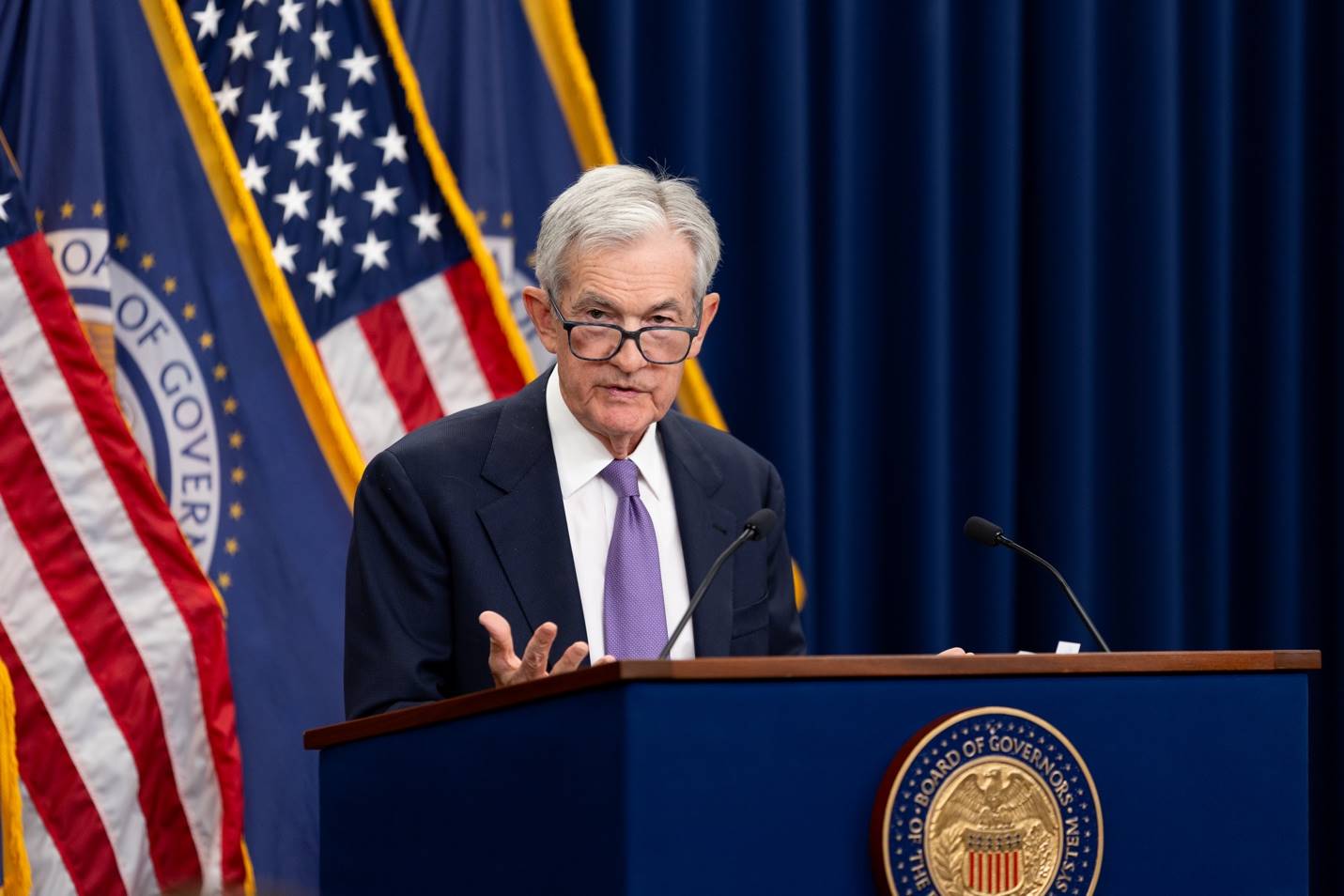
On December 11, the Federal Reserve announced a 25 basis point rate cut as expected. On the surface, this decision was highly consistent with market expectations and was even interpreted as a signal of a shift toward monetary easing. However, the market reaction quickly turned cold, with U.S. stocks and crypto assets falling simultaneously and risk appetite contracting significantly. This seemingly counterintuitive movement actually reveals a key fact in the current macro environment: a rate cut itself does not equate to liquidity easing. During this super central bank week, the message conveyed by the Fed was not "re-flooding the market with liquidity" but rather a clear constraint on future policy space. From a policy detail perspective, the changes in the dot plot had a substantive impact on market expectations. The latest projections indicate that the Fed may only implement one rate cut in 2026, significantly lower than the market's previously priced path of 2 to 3 cuts. More importantly, in the voting structure of this meeting, 3 out of 12 voting members explicitly opposed the rate cut, with 2 advocating for keeping rates unchanged. This divergence is not marginal noise but clearly indicates that the Fed's internal vigilance toward inflation risks is far higher than the market previously understood. In other words, the current rate cut is not the start of an easing cycle but rather a technical adjustment to prevent financial conditions from tightening excessively in a high-interest-rate environment.
For this reason, what the market truly anticipates is not a "one-time rate cut" but a clear, sustainable, and forward-looking easing path. The pricing logic of risk assets relies not on the absolute level of current interest rates but on the discounting of future liquidity conditions. When investors realize that this rate cut does not open new easing space but may instead lock in future policy flexibility prematurely, the original optimistic expectations are quickly corrected. The signal sent by the Fed resembles a "painkiller," temporarily alleviating tension but not changing the underlying issue; meanwhile, the restrained stance revealed in the forward guidance forces the market to reassess future risk premiums. In this context, the rate cut has instead become a classic case of "buy the rumor, sell the news." Long positions built around easing expectations began to unwind, with high-valuation assets bearing the brunt. Growth and high-beta sectors in U.S. stocks were the first to come under pressure, and the crypto market was no exception. The pullback in Bitcoin and other major crypto assets was not due to a single negative factor but rather a passive reaction to the reality that "liquidity will not return quickly." When futures basis converges, marginal ETF buying weakens, and overall risk appetite declines, prices naturally gravitate toward a more conservative equilibrium. A deeper change is reflected in the shift in the U.S. economic risk structure. A growing body of research suggests that the core risk facing the U.S. economy in 2026 may no longer be a traditional cyclical recession but rather a demand-side contraction directly triggered by a significant correction in asset prices. Post-pandemic, the U.S. has seen an "excess retirement" cohort of approximately 2.5 million people, whose wealth is highly dependent on stock market and risk asset performance, creating a highly correlated联动 relationship between their consumption behavior and asset prices. If the stock market or other risk assets experience a sustained decline, the consumption capacity of this group will contract simultaneously, forming a negative feedback loop for the overall economy. In this economic structure, the Fed's policy options are further constrained. On one hand, stubborn inflationary pressures persist, and premature or excessive easing could reignite price increases; on the other hand, if financial conditions continue to tighten and asset prices experience a systemic correction, it could quickly transmit to the real economy through wealth effects, triggering a demand slump. The Fed is thus caught in an extremely complex dilemma: continuing to suppress inflation forcefully could trigger an asset price collapse, while tolerating higher inflation levels could help maintain financial stability and asset prices.

More and more market participants are beginning to accept the judgment that in future policy games, the Fed is more likely to choose to "protect the market" over "protecting inflation" at critical moments. This implies that the long-term inflation center may shift upward, but short-term liquidity releases will be more cautious and intermittent rather than forming a sustained wave of easing. For risk assets, this is an unfriendly environment—the pace of interest rate decline is insufficient to support valuations, while liquidity uncertainty persists. It is against this macro backdrop that the impact of this super central bank week extends far beyond a single 25 basis point rate cut. It marks a further correction in market expectations of the "unlimited liquidity era" and sets the stage for the subsequent Bank of Japan rate hike and year-end liquidity contraction. For the crypto market, this is not the end of the trend but a critical phase where risks must be recalibrated and macro constraints must be re-understood.

II. Bank of Japan Rate Hike: The True "Liquidity Bomb Disposer"

If the Fed's role during the super central bank week was to disappoint and correct market expectations for "future liquidity," then the action the Bank of Japan is about to take on December 19 is closer to a "bomb disposal operation" directly acting on the底层 foundation of the global financial structure. The market's probability of expecting a 25 basis point rate hike by the BOJ, raising the policy rate from 0.50% to 0.75%, is now close to 90%. This seemingly modest adjustment意味着 Japan will push its policy rate to its highest level in three decades. The key issue lies not in the absolute value of the rate itself but in the chain reaction this change causes to the operational logic of global capital. For a long time, Japan has been the most important and stable source of low-cost financing in the global financial system. Once this premise is broken, its impact will far exceed the domestic Japanese market.
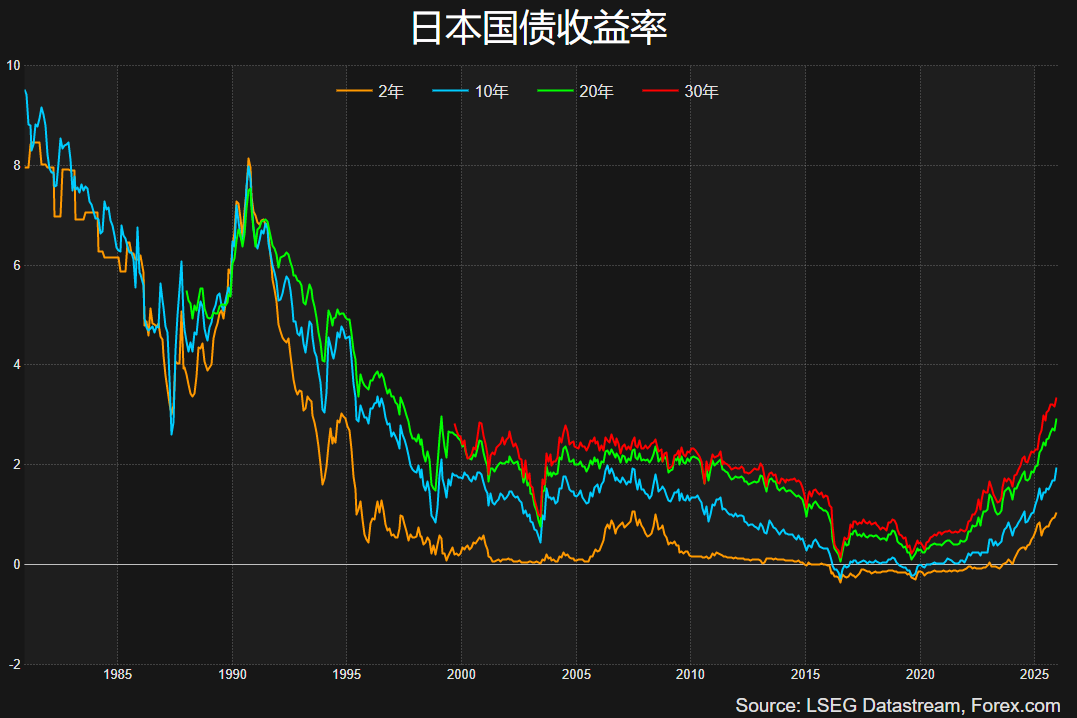
Over the past decade-plus, global capital markets have gradually formed an almost默认 structural consensus: the yen is a "permanent low-cost currency." Supported by long-term ultra-loose policies, institutional investors could borrow yen at near-zero or even negative costs, convert it into U.S. dollars or other high-yielding currencies, and allocate to U.S. stocks, crypto assets, emerging market bonds, and various risk assets. This model evolved from short-term arbitrage into a long-term capital structure worth trillions of dollars, deeply embedded in the global asset pricing system. Because of its long duration and high stability, the yen carry trade gradually shifted from a "strategy" to a "background assumption," rarely priced by the market as a core risk variable. However, once the BOJ clearly enters a rate-hiking channel, this assumption is forced to be reassessed. The impact of a rate hike extends beyond the marginal increase in financing costs; more importantly, it changes market expectations regarding the long-term direction of the yen exchange rate. When policy rates rise, and inflation and wage structures change, the yen is no longer just a passively depreciating funding currency but may transform into an asset with appreciation potential. Under such expectations, the logic of the carry trade is fundamentally disrupted. Capital flows originally centered on "interest rate differentials" begin to incorporate considerations of "exchange rate risk," rapidly deteriorating the risk-reward ratio for capital.

In this situation, the choices facing carry trade capital are not complex but highly destructive: either close positions early to reduce yen liability exposure or passively endure the dual pressure of exchange rate and interest rate squeezes. For large-scale, highly leveraged capital, the former is often the only viable path. The specific method of closing positions is also极其 direct—selling the held risk assets, converting back to yen, and using the proceeds to repay financing. This process does not distinguish between asset quality, fundamentals, or long-term prospects but has the sole goal of reducing overall exposure, thus exhibiting明显的 "indiscriminate selling" characteristics. U.S. stocks, crypto assets, and emerging market assets often come under pressure simultaneously, forming highly correlated declines. History has repeatedly verified the existence of this mechanism. In August 2025, the BOJ unexpectedly raised its policy rate to 0.25%, a move not traditionally considered aggressive, yet it triggered a剧烈 reaction in global markets. Bitcoin fell 18% in a single day, multiple categories of risk assets came under simultaneous pressure, and the market took nearly three weeks to gradually complete the repair. The reason that shock was so severe was precisely because the rate hike came suddenly, forcing carry trade capital to deleverage rapidly without preparation. The upcoming December 19 meeting, however, differs from that "black swan" event, resembling more a "gray rhino" whose tracks have been revealed in advance. The market already has some expectation of a rate hike, but expectation itself does not mean the risk has been fully digested, especially given the larger magnitude of the hike and its overlap with other macro uncertainties.

More notably, the macro environment in which this BOJ rate hike is occurring is more complex than in the past. Policies of major global central banks are diverging: the Fed is cutting rates nominally but tightening future easing space in terms of expectations; the ECB and BOE are relatively cautious; while the BOJ is becoming one of the few major economies explicitly tightening policy. This policy divergence will exacerbate the volatility of cross-currency capital flows, making the unwinding of carry trades not a one-time event but potentially an evolving process of phased, repeated occurrences. For crypto markets highly dependent on global liquidity, the persistent existence of this uncertainty means the center of price volatility may remain at a relatively high level for some time. Therefore, the BOJ's rate hike on December 19 is not merely a regional monetary policy adjustment but a critical node that could trigger a rebalancing of the global capital structure. What it "disposes of" is not the risk of a single market but the long-accumulated assumption of low-cost leverage embedded in the global financial system. In this process, crypto assets often bear the brunt of the impact due to their high liquidity and high-beta attributes. This impact does not necessarily imply a reversal of the long-term trend but is almost certain to amplify volatility, depress risk appetite in the short term, and force the market to re-examine the capital logic taken for granted over many years.

III. The Christmas Holiday Season: The Underestimated "Liquidity Amplifier"

Starting December 23, major North American institutional investors gradually enter the Christmas holiday mode, and global financial markets随之 enter the most typical, yet most easily underestimated, phase of liquidity contraction of the year. Unlike macro data or central bank decisions, the holiday does not change any fundamental variables but significantly削弱 the market's "absorption capacity" for shocks in a short period. For markets like crypto assets, which highly rely on continuous trading and market maker depth, this structural decline in liquidity is often more damaging than a single negative event itself. In a normal trading environment, the market has sufficient counterparties and risk-bearing capacity. A large number of market makers, arbitrage funds, and institutional investors continuously provide two-way liquidity, allowing selling pressure to be dispersed, delayed, or even hedged.

More alarmingly, the Christmas holiday does not occur in isolation but恰好 overlaps with the current集中 release of a series of macro uncertainties. The "dovish cut but hawkish stance" signal released by the Fed during the super central bank week has significantly tightened market expectations for future liquidity; meanwhile, the upcoming rate hike decision by the BOJ on December 19 is shaking the long-standing capital structure of the global yen carry trade. Under normal circumstances, these two types of macro shocks can be gradually digested by the market over a longer period, with prices completing repricing through repeated博弈. But when they恰好 occur during the Christmas holiday window, the period of weakest liquidity, their impact is no longer linear but exhibits a明显的 amplification effect. The essence of this amplification effect is not panic sentiment itself but a change in market mechanisms. Insufficient liquidity means the price discovery process is compressed; the market cannot gradually absorb information through continuous trading but is forced to complete adjustments through more drastic price jumps. For the crypto market, declines in such an environment often do not require new major negatives; merely the集中 release of existing uncertainties is enough to trigger a chain reaction: price drops trigger passive liquidations of leveraged positions, passive liquidations further increase selling pressure, selling pressure is rapidly amplified in shallow order books, ultimately forming剧烈 volatility within a short time. Historical data shows this pattern is not an exception. Whether in Bitcoin's early cycles or in the more mature stages of recent years, the period from late December to early January has always been a time when crypto market volatility is significantly higher than the annual average. Even in years with relatively stable macro environments, holiday liquidity declines are often accompanied by rapid price surges or plunges; in years with inherently high macro uncertainty, this time window is more likely to become an "accelerator" for trend movements. In other words, the holiday does not determine the direction but greatly amplifies the price performance once the direction is confirmed.

IV. Conclusion

In summary, the current pullback in the crypto market is closer to a phased repricing triggered by changes in the global liquidity path, rather than a simple reversal of a trend行情. The Fed's rate cut did not provide new valuation support for risk assets; on the contrary, its restrictions on future easing space in the forward guidance have led the market to gradually accept a new environment of "falling interest rates but insufficient liquidity." In this context, high-valuation and high-leverage assets naturally face pressure, and the adjustment in the crypto market has a clear macro logical basis.

Simultaneously, the BOJ's rate hike constitutes the most structurally significant variable in this adjustment round. The yen's long-standing role as the core funding currency for global carry trades means that once its low-cost assumption is broken, it triggers not just localized capital flows but a systemic contraction of global risk asset exposure. Historical experience shows that such adjustments are often phased and repetitive; their impact is not fully released in a single trading day but is gradually completed through sustained volatility in a deleveraging process. Crypto assets, due to their high liquidity and high-beta attributes, often reflect this pressure first, but this does not necessarily mean their long-term logic is negated.

For investors, the core challenge in this phase is not judging direction but recognizing environmental changes. When policy uncertainty and liquidity contraction coexist, the importance of risk management significantly outweighs trend judgment. Truly valuable market signals often emerge after macro variables gradually materialize and carry trade funds complete their phased adjustments. For the crypto market, the current period更像是一个过渡期 for recalibrating risks and rebuilding expectations, rather than the final chapter of the行情. The medium-term direction of future prices will depend on the actual recovery of global liquidity after the holiday season ends and whether the policy stance among major central banks diverges further.


Related Questions

QWhat are the three key macro factors identified in the report that are causing structural adjustments in the crypto market?

AThe three key macro factors are: 1) The Federal Reserve's interest rate cut, which did not signal a clear easing cycle but instead showed restraint on future liquidity; 2) The upcoming interest rate hike by the Bank of Japan, which threatens the long-standing yen carry trade structure; 3) The liquidity contraction during the Christmas holiday period, which reduces the market's ability to absorb these macro shocks and amplifies price volatility.

QWhy did the crypto market react negatively to the Fed's rate cut, even though a cut is typically seen as positive for risk assets?

AThe market reacted negatively because the Fed's accompanying forward guidance, particularly the dot plot and voting structure, signaled a restrained approach to future liquidity. This corrected the expectation of 'sustained easing' and indicated that the cut was a technical adjustment rather than the start of a new easing cycle. This led to a reassessment of future risk premiums, causing a 'sell the news' event where long positions built on easing expectations were unwound.

QHow does the Bank of Japan's potential rate hike impact global financial markets, particularly crypto assets?

AA BoJ rate hike challenges the long-held assumption of the yen being a permanent low-cost funding currency. This disrupts the massive yen carry trade, where investors borrow cheap yen to invest in higher-yielding risk assets like crypto. An expected hike prompts these investors to unwind their leveraged positions by selling their risk assets (including crypto) to buy back yen and repay their loans. This creates a phase of synchronized, non-discriminatory selling pressure across global risk assets.

QWhat role does the Christmas holiday period play in amplifying market volatility according to the report?

AThe Christmas holiday period acts as a 'liquidity amplifier'. As major North American institutional investors go on holiday, market liquidity and depth significantly contract. This reduced 'shock absorption capacity' means that any existing macro shocks (like the Fed's signals or BoJ's actions) are not digested gradually through continuous trading but are instead forced through rapid, sharp price movements. This environment also makes the market more vulnerable to cascading liquidations from leveraged positions.

QWhat is the report's overall conclusion on the nature of the current crypto market correction and the key challenge for investors?

AThe report concludes that the current correction is a phase of repricing triggered by changes in the global liquidity path, not a simple reversal of the long-term trend. The key challenge for investors is not necessarily predicting the market's direction, but rather recognizing the changed environment. In this period of high policy uncertainty and liquidity contraction, risk management becomes significantly more important than trend forecasting. The market is in a transitional phase of recalibrating risks and rebuilding expectations.

Related Reads

Trading

Spot
Futures

Hot Articles

What is SONIC

Sonic: Pioneering the Future of Gaming in Web3 Introduction to Sonic In the ever-evolving landscape of Web3, the gaming industry stands out as one of the most dynamic and promising sectors. At the forefront of this revolution is Sonic, a project designed to amplify the gaming ecosystem on the Solana blockchain. Leveraging cutting-edge technology, Sonic aims to deliver an unparalleled gaming experience by efficiently processing millions of requests per second, ensuring that players enjoy seamless gameplay while maintaining low transaction costs. This article delves into the intricate details of Sonic, exploring its creators, funding sources, operational mechanics, and the timeline of significant events that have shaped its journey. What is Sonic? Sonic is an innovative layer-2 network that operates atop the Solana blockchain, specifically tailored to enhance the existing Solana gaming ecosystem. It accomplishes this through a customised, VM-agnostic game engine paired with a HyperGrid interpreter, facilitating sovereign game economies that roll up back to the Solana platform. The primary goals of Sonic include: Enhanced Gaming Experiences: Sonic is committed to offering lightning-fast on-chain gameplay, allowing players and developers to engage with games at previously unattainable speeds. Atomic Interoperability: This feature enables transactions to be executed within Sonic without the need to redeploy Solana programmes and accounts. This makes the process more efficient and directly benefits from Solana Layer1 services and liquidity. Seamless Deployment: Sonic allows developers to write for Ethereum Virtual Machine (EVM) based systems and execute them on Solana’s SVM infrastructure. This interoperability is crucial for attracting a broader range of dApps and decentralised applications to the platform. Support for Developers: By offering native composable gaming primitives and extensible data types - dining within the Entity-Component-System (ECS) framework - game creators can craft intricate business logic with ease. Overall, Sonic's unique approach not only caters to players but also provides an accessible and low-cost environment for developers to innovate and thrive. Creator of Sonic The information regarding the creator of Sonic is somewhat ambiguous. However, it is known that Sonic's SVM is owned by the company Mirror World. The absence of detailed information about the individuals behind Sonic reflects a common trend in several Web3 projects, where collective efforts and partnerships often overshadow individual contributions. Investors of Sonic Sonic has garnered considerable attention and support from various investors within the crypto and gaming sectors. Notably, the project raised an impressive $12 million during its Series A funding round. The round was led by BITKRAFT Ventures, with other notable investors including Galaxy, Okx Ventures, Interactive, Big Brain Holdings, and Mirana. This financial backing signifies the confidence that investment foundations have in Sonic’s potential to revolutionise the Web3 gaming landscape, further validating its innovative approaches and technologies. How Does Sonic Work? Sonic utilises the HyperGrid framework, a sophisticated parallel processing mechanism that enhances its scalability and customisability. Here are the core features that set Sonic apart: Lightning Speed at Low Costs: Sonic offers one of the fastest on-chain gaming experiences compared to other Layer-1 solutions, powered by the scalability of Solana’s virtual machine (SVM). Atomic Interoperability: Sonic enables transaction execution without redeployment of Solana programmes and accounts, effectively streamlining the interaction between users and the blockchain. EVM Compatibility: Developers can effortlessly migrate decentralised applications from EVM chains to the Solana environment using Sonic’s HyperGrid interpreter, increasing the accessibility and integration of various dApps. Ecosystem Support for Developers: By exposing native composable gaming primitives, Sonic facilitates a sandbox-like environment where developers can experiment and implement business logic, greatly enhancing the overall development experience. Monetisation Infrastructure: Sonic natively supports growth and monetisation efforts, providing frameworks for traffic generation, payments, and settlements, thereby ensuring that gaming projects are not only viable but also sustainable financially. Timeline of Sonic The evolution of Sonic has been marked by several key milestones. Below is a brief timeline highlighting critical events in the project's history: 2022: The Sonic cryptocurrency was officially launched, marking the beginning of its journey in the Web3 gaming arena. 2024: June: Sonic SVM successfully raised $12 million in a Series A funding round. This investment allowed Sonic to further develop its platform and expand its offerings. August: The launch of the Sonic Odyssey testnet provided users with the first opportunity to engage with the platform, offering interactive activities such as collecting rings—a nod to gaming nostalgia. October: SonicX, an innovative crypto game integrated with Solana, made its debut on TikTok, capturing the attention of over 120,000 users within a short span. This integration illustrated Sonic’s commitment to reaching a broader, global audience and showcased the potential of blockchain gaming. Key Points Sonic SVM is a revolutionary layer-2 network on Solana explicitly designed to enhance the GameFi landscape, demonstrating great potential for future development. HyperGrid Framework empowers Sonic by introducing horizontal scaling capabilities, ensuring that the network can handle the demands of Web3 gaming. Integration with Social Platforms: The successful launch of SonicX on TikTok displays Sonic’s strategy to leverage social media platforms to engage users, exponentially increasing the exposure and reach of its projects. Investment Confidence: The substantial funding from BITKRAFT Ventures, among others, emphasizes the robust backing Sonic has, paving the way for its ambitious future. In conclusion, Sonic encapsulates the essence of Web3 gaming innovation, striking a balance between cutting-edge technology, developer-centric tools, and community engagement. As the project continues to evolve, it is poised to redefine the gaming landscape, making it a notable entity for gamers and developers alike. As Sonic moves forward, it will undoubtedly attract greater interest and participation, solidifying its place within the broader narrative of blockchain gaming.

1.3k Total ViewsPublished 2024.04.04Updated 2024.12.03

What is SONIC

What is $S$

Understanding SPERO: A Comprehensive Overview Introduction to SPERO As the landscape of innovation continues to evolve, the emergence of web3 technologies and cryptocurrency projects plays a pivotal role in shaping the digital future. One project that has garnered attention in this dynamic field is SPERO, denoted as SPERO,$$s$. This article aims to gather and present detailed information about SPERO, to help enthusiasts and investors understand its foundations, objectives, and innovations within the web3 and crypto domains. What is SPERO,$$s$? SPERO,$$s$ is a unique project within the crypto space that seeks to leverage the principles of decentralisation and blockchain technology to create an ecosystem that promotes engagement, utility, and financial inclusion. The project is tailored to facilitate peer-to-peer interactions in new ways, providing users with innovative financial solutions and services. At its core, SPERO,$$s$ aims to empower individuals by providing tools and platforms that enhance user experience in the cryptocurrency space. This includes enabling more flexible transaction methods, fostering community-driven initiatives, and creating pathways for financial opportunities through decentralised applications (dApps). The underlying vision of SPERO,$$s$ revolves around inclusiveness, aiming to bridge gaps within traditional finance while harnessing the benefits of blockchain technology. Who is the Creator of SPERO,$$s$? The identity of the creator of SPERO,$$s$ remains somewhat obscure, as there are limited publicly available resources providing detailed background information on its founder(s). This lack of transparency can stem from the project's commitment to decentralisation—an ethos that many web3 projects share, prioritising collective contributions over individual recognition. By centring discussions around the community and its collective goals, SPERO,$$s$ embodies the essence of empowerment without singling out specific individuals. As such, understanding the ethos and mission of SPERO remains more important than identifying a singular creator. Who are the Investors of SPERO,$$s$? SPERO,$$s$ is supported by a diverse array of investors ranging from venture capitalists to angel investors dedicated to fostering innovation in the crypto sector. The focus of these investors generally aligns with SPERO's mission—prioritising projects that promise societal technological advancement, financial inclusivity, and decentralised governance. These investor foundations are typically interested in projects that not only offer innovative products but also contribute positively to the blockchain community and its ecosystems. The backing from these investors reinforces SPERO,$$s$ as a noteworthy contender in the rapidly evolving domain of crypto projects. How Does SPERO,$$s$ Work? SPERO,$$s$ employs a multi-faceted framework that distinguishes it from conventional cryptocurrency projects. Here are some of the key features that underline its uniqueness and innovation: Decentralised Governance: SPERO,$$s$ integrates decentralised governance models, empowering users to participate actively in decision-making processes regarding the project’s future. This approach fosters a sense of ownership and accountability among community members. Token Utility: SPERO,$$s$ utilises its own cryptocurrency token, designed to serve various functions within the ecosystem. These tokens enable transactions, rewards, and the facilitation of services offered on the platform, enhancing overall engagement and utility. Layered Architecture: The technical architecture of SPERO,$$s$ supports modularity and scalability, allowing for seamless integration of additional features and applications as the project evolves. This adaptability is paramount for sustaining relevance in the ever-changing crypto landscape. Community Engagement: The project emphasises community-driven initiatives, employing mechanisms that incentivise collaboration and feedback. By nurturing a strong community, SPERO,$$s$ can better address user needs and adapt to market trends. Focus on Inclusion: By offering low transaction fees and user-friendly interfaces, SPERO,$$s$ aims to attract a diverse user base, including individuals who may not previously have engaged in the crypto space. This commitment to inclusion aligns with its overarching mission of empowerment through accessibility. Timeline of SPERO,$$s$ Understanding a project's history provides crucial insights into its development trajectory and milestones. Below is a suggested timeline mapping significant events in the evolution of SPERO,$$s$: Conceptualisation and Ideation Phase: The initial ideas forming the basis of SPERO,$$s$ were conceived, aligning closely with the principles of decentralisation and community focus within the blockchain industry. Launch of Project Whitepaper: Following the conceptual phase, a comprehensive whitepaper detailing the vision, goals, and technological infrastructure of SPERO,$$s$ was released to garner community interest and feedback. Community Building and Early Engagements: Active outreach efforts were made to build a community of early adopters and potential investors, facilitating discussions around the project’s goals and garnering support. Token Generation Event: SPERO,$$s$ conducted a token generation event (TGE) to distribute its native tokens to early supporters and establish initial liquidity within the ecosystem. Launch of Initial dApp: The first decentralised application (dApp) associated with SPERO,$$s$ went live, allowing users to engage with the platform's core functionalities. Ongoing Development and Partnerships: Continuous updates and enhancements to the project's offerings, including strategic partnerships with other players in the blockchain space, have shaped SPERO,$$s$ into a competitive and evolving player in the crypto market. Conclusion SPERO,$$s$ stands as a testament to the potential of web3 and cryptocurrency to revolutionise financial systems and empower individuals. With a commitment to decentralised governance, community engagement, and innovatively designed functionalities, it paves the way toward a more inclusive financial landscape. As with any investment in the rapidly evolving crypto space, potential investors and users are encouraged to research thoroughly and engage thoughtfully with the ongoing developments within SPERO,$$s$. The project showcases the innovative spirit of the crypto industry, inviting further exploration into its myriad possibilities. While the journey of SPERO,$$s$ is still unfolding, its foundational principles may indeed influence the future of how we interact with technology, finance, and each other in interconnected digital ecosystems.

54 Total ViewsPublished 2024.12.17Updated 2024.12.17

What is $S$

What is AGENT S

Agent S: The Future of Autonomous Interaction in Web3 Introduction In the ever-evolving landscape of Web3 and cryptocurrency, innovations are constantly redefining how individuals interact with digital platforms. One such pioneering project, Agent S, promises to revolutionise human-computer interaction through its open agentic framework. By paving the way for autonomous interactions, Agent S aims to simplify complex tasks, offering transformative applications in artificial intelligence (AI). This detailed exploration will delve into the project's intricacies, its unique features, and the implications for the cryptocurrency domain. What is Agent S? Agent S stands as a groundbreaking open agentic framework, specifically designed to tackle three fundamental challenges in the automation of computer tasks: Acquiring Domain-Specific Knowledge: The framework intelligently learns from various external knowledge sources and internal experiences. This dual approach empowers it to build a rich repository of domain-specific knowledge, enhancing its performance in task execution. Planning Over Long Task Horizons: Agent S employs experience-augmented hierarchical planning, a strategic approach that facilitates efficient breakdown and execution of intricate tasks. This feature significantly enhances its ability to manage multiple subtasks efficiently and effectively. Handling Dynamic, Non-Uniform Interfaces: The project introduces the Agent-Computer Interface (ACI), an innovative solution that enhances the interaction between agents and users. Utilizing Multimodal Large Language Models (MLLMs), Agent S can navigate and manipulate diverse graphical user interfaces seamlessly. Through these pioneering features, Agent S provides a robust framework that addresses the complexities involved in automating human interaction with machines, setting the stage for myriad applications in AI and beyond. Who is the Creator of Agent S? While the concept of Agent S is fundamentally innovative, specific information about its creator remains elusive. The creator is currently unknown, which highlights either the nascent stage of the project or the strategic choice to keep founding members under wraps. Regardless of anonymity, the focus remains on the framework's capabilities and potential. Who are the Investors of Agent S? As Agent S is relatively new in the cryptographic ecosystem, detailed information regarding its investors and financial backers is not explicitly documented. The lack of publicly available insights into the investment foundations or organisations supporting the project raises questions about its funding structure and development roadmap. Understanding the backing is crucial for gauging the project's sustainability and potential market impact. How Does Agent S Work? At the core of Agent S lies cutting-edge technology that enables it to function effectively in diverse settings. Its operational model is built around several key features: Human-like Computer Interaction: The framework offers advanced AI planning, striving to make interactions with computers more intuitive. By mimicking human behaviour in tasks execution, it promises to elevate user experiences. Narrative Memory: Employed to leverage high-level experiences, Agent S utilises narrative memory to keep track of task histories, thereby enhancing its decision-making processes. Episodic Memory: This feature provides users with step-by-step guidance, allowing the framework to offer contextual support as tasks unfold. Support for OpenACI: With the ability to run locally, Agent S allows users to maintain control over their interactions and workflows, aligning with the decentralised ethos of Web3. Easy Integration with External APIs: Its versatility and compatibility with various AI platforms ensure that Agent S can fit seamlessly into existing technological ecosystems, making it an appealing choice for developers and organisations. These functionalities collectively contribute to Agent S's unique position within the crypto space, as it automates complex, multi-step tasks with minimal human intervention. As the project evolves, its potential applications in Web3 could redefine how digital interactions unfold. Timeline of Agent S The development and milestones of Agent S can be encapsulated in a timeline that highlights its significant events: September 27, 2024: The concept of Agent S was launched in a comprehensive research paper titled “An Open Agentic Framework that Uses Computers Like a Human,” showcasing the groundwork for the project. October 10, 2024: The research paper was made publicly available on arXiv, offering an in-depth exploration of the framework and its performance evaluation based on the OSWorld benchmark. October 12, 2024: A video presentation was released, providing a visual insight into the capabilities and features of Agent S, further engaging potential users and investors. These markers in the timeline not only illustrate the progress of Agent S but also indicate its commitment to transparency and community engagement. Key Points About Agent S As the Agent S framework continues to evolve, several key attributes stand out, underscoring its innovative nature and potential: Innovative Framework: Designed to provide an intuitive use of computers akin to human interaction, Agent S brings a novel approach to task automation. Autonomous Interaction: The ability to interact autonomously with computers through GUI signifies a leap towards more intelligent and efficient computing solutions. Complex Task Automation: With its robust methodology, it can automate complex, multi-step tasks, making processes faster and less error-prone. Continuous Improvement: The learning mechanisms enable Agent S to improve from past experiences, continually enhancing its performance and efficacy. Versatility: Its adaptability across different operating environments like OSWorld and WindowsAgentArena ensures that it can serve a broad range of applications. As Agent S positions itself in the Web3 and crypto landscape, its potential to enhance interaction capabilities and automate processes signifies a significant advancement in AI technologies. Through its innovative framework, Agent S exemplifies the future of digital interactions, promising a more seamless and efficient experience for users across various industries. Conclusion Agent S represents a bold leap forward in the marriage of AI and Web3, with the capacity to redefine how we interact with technology. While still in its early stages, the possibilities for its application are vast and compelling. Through its comprehensive framework addressing critical challenges, Agent S aims to bring autonomous interactions to the forefront of the digital experience. As we move deeper into the realms of cryptocurrency and decentralisation, projects like Agent S will undoubtedly play a crucial role in shaping the future of technology and human-computer collaboration.

574 Total ViewsPublished 2025.01.14Updated 2025.01.14

What is AGENT S

Discussions

Welcome to the HTX Community. Here, you can stay informed about the latest platform developments and gain access to professional market insights. Users' opinions on the price of S (S) are presented below.

活动图片












