How Did the Idealism of Western Founders Get 'Taken Over' by Chinese Buyers?

比推Published on 2026-01-22Last updated on 2026-01-22

Abstract

Over the course of two days, two major decentralized social protocols, Lens Protocol and Farcaster, were acquired—by Mask Network and Neynar, respectively. Combined, these protocols had raised over $200 million, with Farcaster recently valued at $1 billion. This follows the earlier acquisition of Steem by Tron in 2020, meaning two out of three prominent decentralized social protocols are now been taken over by Chinese-led teams. The author explores why Chinese buyers are stepping in. One reason may be pricing: these acquisitions often target once-prominent projects now in decline. For instance, Farcaster’s monthly revenue has dropped over 95%, and Lens has only 50,000 monthly active users. Another factor is cultural: while Western founders often approach decentralized social with idealism—emphasizing user-owned data and censorship resistance—Chinese acquirers tend to view it as a business opportunity, prioritizing usability and growth over ideology. Suji Yan, founder of Mask Network, explicitly aims to move “decentralized social from the lab to daily life.” However, past acquisitions like Steem—which led to a community fork—highlight risks when new ownership clashes with original values. The piece questions whether true decentralization is possible when protocols can be sold, suggesting that technical decentralization doesn’t prevent centralized commercial control. Ultimately, the piece argues that the vision for a better social infrastructure remains, but the builders a...

Author: David, Deep Tide TechFlow

Original Title: Web3 Social, Still Dominated by the Chinese


Within two days, two decentralized social protocols changed hands.

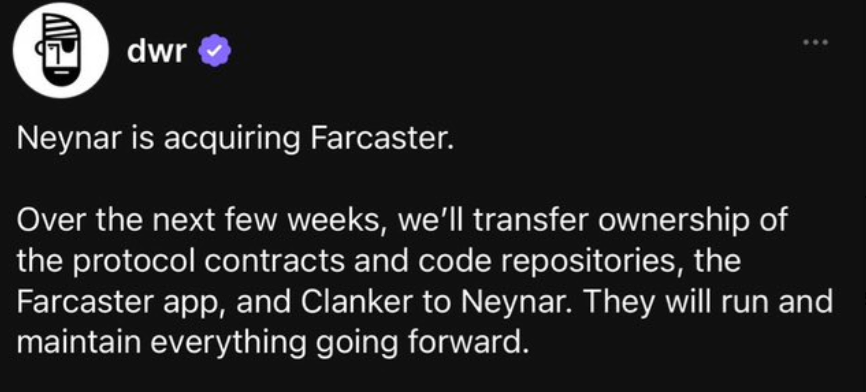
On January 20th, Lens Protocol announced it was being taken over by Mask Network. On January 21st, Farcaster announced it was acquired by Neynar, one of its clients.

These two protocols raised over $200 million combined. Farcaster was valued at $1 billion last year, with investors including a16z and Paradigm. Lens is backed by DeFi giant Aave.

Now, the founders have "stepped back from daily operations to work on new projects."
Including Steem, another well-known project acquired by Tron in 2020, two out of these three phenomenal decentralized social protocols have now been taken over by Chinese teams.

You might have forgotten about Steem. It was the pioneer of "writing to earn" launched in 2016, a benchmark project for the entire Web3 social track at its peak. After being acquired by Justin Sun, the community forked and left, which we'll discuss later.

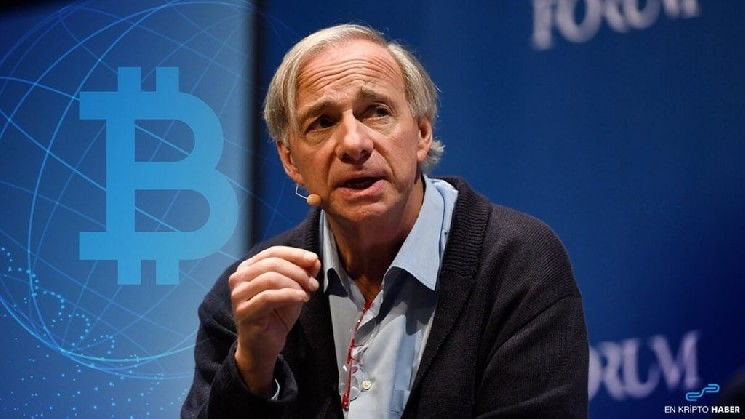
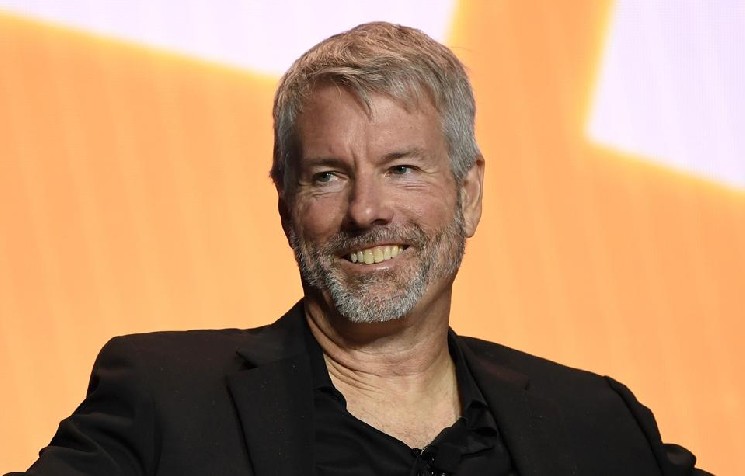
The founder of Mask Network, which took over Lens, is Suji Yan. Chinese, dropped out of UIUC at 20 to start a business, previously wrote articles for Caixin and Jiemian.

Founded Mask in 2017, focusing on overlaying Web3 features on traditional social platforms like Twitter.

Mask has been on an acquisition spree: acquired two large Japanese instances of Mastodon in 2022, bought Orb, the most active client on Lens, last year, and now has taken over Lens itself.

Suji Yan positions himself as the "Tencent of Web3".

On the Farcaster side, the two founders of Neynar, which took it over, are of Indian descent, both former Coinbase employees. But the reality that two out of three protocols were taken over by Chinese teams still holds.

Why the Chinese?

One possible explanation is capability endowment. The two most successful countries globally in making social products are the United States and China. WeChat, Douyin (TikTok), Xiaohongshu (Little Red Book) – Chinese teams have proven they can scale social products to billions of users.

But this explanation has a problem. Building products and acquiring protocols are not the same thing. Protocols are infrastructure, not directly facing users. You can build products on them, but the protocol itself doesn't generate the user experience.

Another reasonable explanation is price.

Looking at Brother Sun's (Justin Sun) acquisition list: bought BitTorrent for $140 million in 2018, Poloniex in 2019, Steemit in 2020, and HTX (formerly Huobi) in 2022.

These targets have a common trait:

They were all once glorious but are on a downward trend. BitTorrent was the pioneer of P2P downloading, Poloniex was once a top US exchange, HTX was once one of China's top three exchanges.

Justin Sun isn't buying the best; he's buying the cheapest good stuff.

Now Farcaster is valued at $1 billion but its monthly revenue has dropped to $10,000, down over 95% year-over-year. Founder Dan Romero admitted last month in a post that "after 4.5 years of trying the social-first approach, it didn't work";

Lens has only 50,000 monthly active users, and the Aave team wants to offload it to focus on its DeFi core business.

The most valuable time for these protocols has passed, but the technical foundation and brand remain. In A-share market terms, this is called:

Fallen out of value (Undervalued).

There's a more subtle line of thought: decentralized social is a belief in the West, but a business in China.

Western founders in this space often carry a degree of idealism. Users should own their data, social graphs should be portable, platforms shouldn't have censorship power... Farcaster's slogan is "sufficiently decentralized", Lens's is "user-owned social".

But after five years, users don't care.

Ordinary people don't care who owns the data, or whether the social graph can be taken away. They care if there are people to chat with, if there is interesting content, if there are associated assets that can skyrocket.

Chinese buyers taking over is, in a way, taking this business from the idealists and handing it to the pragmatists.

Suji Yan says what Mask wants to do is "bring decentralized social from the lab into daily life". Translating that:

Stop talking about ideals, first make people willing to use it.

Of course, the last time a Chinese entity acquired a decentralized social protocol, the outcome wasn't pretty.

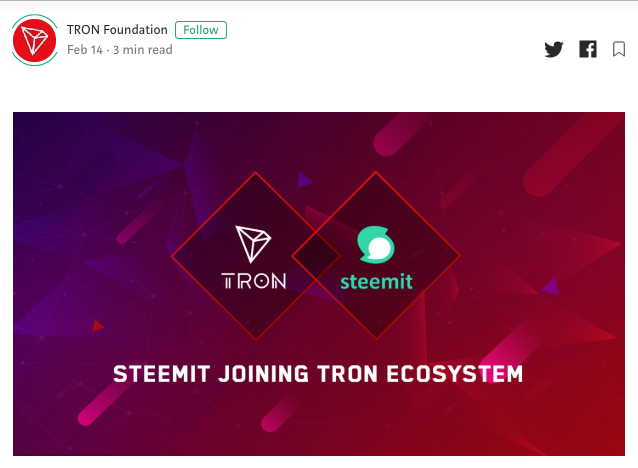
In 2020, Justin Sun bought Steem. After the acquisition, he collaborated with exchanges to take control of Steem's network governance. The original community's reaction was a collective fork to create a new chain, Hive, using code to exclude Justin Sun's wallet.
A fork is the most extreme form of protest in the blockchain world – we're not playing with you anymore, we'll copy everything and leave on our own.

Steemit is still running, but more active users have long since moved to Hive.

So the question is, will it be different this time?

Regarding Mask taking over Lens, the official term is "stewardship", not the word "acquisition". The founders will continue as advisors, and the protocol remains open.

But the fact that a "decentralized protocol" can be acquired itself already says something. Contracts can be transferred, codebases can be transferred, Apps can be transferred. So where is the "decentralization"?

After the disillusionment, decentralization is just a technical architecture, not a business model. Technically decentralized does not prevent someone from having the final say commercially.

After Lens changed leadership, Vitalik posted. He said every post he made in 2026 was through Firefly, which is precisely the multi-platform client under Mask Network.

He also said: "If we want a better society, we need better tools for mass communication."

This is true. But who builds this tool, who operates it, who decides what it looks like – decentralization doesn't answer these questions.

The answer now might be: the Chinese will build it.


Twitter:https://twitter.com/BitpushNewsCN

Bitpush TG Discussion Group:https://t.me/BitPushCommunity

Bitpush TG Subscription: https://t.me/bitpush

Original link:https://www.bitpush.news/articles/7605174

Related Questions

QWhat are the two decentralized social protocols that recently changed ownership, and who acquired them?

ALens Protocol was acquired by Mask Network, and Farcaster was acquired by Neynar, one of its clients.

QWhy are Chinese buyers particularly interested in acquiring these Western-founded decentralized social protocols?

AChinese buyers see these protocols as undervalued assets with strong technical foundations and brand recognition, and they approach them from a pragmatic, business-oriented perspective rather than idealistic beliefs in decentralization.

QWhat was the outcome of the previous acquisition of a decentralized social platform by a Chinese buyer, specifically Tron's acquisition of Steem?

AAfter Tron acquired Steem, the original community forked the chain to create Hive, effectively excluding Tron's wallets and moving most active users away from Steemit.

QHow does the acquisition of decentralized protocols like Lens and Farcaster challenge the notion of 'decentralization'?

AThe ability to acquire these protocols highlights that decentralization is primarily a technical architecture rather than a governance model, as ownership and control can still be centralized in the hands of a few entities.

QWhat is Mask Network's stated goal for Lens Protocol, as mentioned in the article?

AMask Network aims to move decentralized social protocols 'from the laboratory into daily life,' focusing on practicality and user adoption rather than idealistic principles.

Related Reads

Borrowing Money from a Hundred Years Later, Building Incomprehensible AI

Tech giants like Alphabet, Amazon, Meta, and Microsoft are undergoing a radical financial transformation due to AI. Their traditional "light-asset, high-free-cash-flow" model is being dismantled by staggering capital expenditures on AI infrastructure—data centers, GPUs, and power. Combined 2026 guidance exceeds $700 billion, a 4.5x increase from 2022, causing free cash flow to plummet (e.g., Amazon's fell 95%). To fund this, they are borrowing unprecedented sums through long-dated, multi-currency bonds (e.g., Alphabet's 100-year bond). The world's most conservative capital—pensions, insurers—is now funding Silicon Valley's most speculative bet. This shift makes these companies resemble heavy-asset industrials (railroads, utilities) rather than software firms, threatening their premium valuations. Historically, such infrastructure booms (railroads, fiber optics) followed a pattern: genuine technology, overbuilding fueled by competitive frenzy, aggressive debt financing, and a crash triggered by financial conditions—not technology failure. The infrastructure remained, but many original builders and financiers did not survive. The core gamble is a "time arbitrage": using cheap debt today to build scale and lock in customers before AI capabilities commoditize. They are betting that AI revenue will materialize before debt comes due. Their positions vary: Amazon is under immediate cash pressure; Meta's path to monetization is unclear; Alphabet has a robust core business buffer; Microsoft has the shortest path from infrastructure to revenue. The contract is set: the most risk-averse global capital has lent its time to Silicon Valley, awaiting a future that is promised but uncertain.

marsbit30m ago

Borrowing Money from a Hundred Years Later, Building Incomprehensible AI

marsbit30m ago

The 'VVV' Concept Soars 9x in Half a Year, The New AI Narrative on Base Chain

"The article explores the 'VVV' concept as the new AI-focused narrative within the Base ecosystem, centered around the token $VVV of the privacy-focused, uncensored generative AI platform Venice, led by crypto veteran Erik Voorhees. Venice has seen significant growth in 2026, with its API users surging, partly attributed to exposure from OpenClaw. The platform now boasts over 2 million total users and 55,000 paid subscribers. Correspondingly, the $VVV token price has risen over 9x this year. Key to its performance are tokenomics designed for value accrual: reduced annual emissions, subscription revenue used for buyback-and-burn, and a unique staking mechanism. Staking $VVV yields $sVVV, which can be used to mint $DIEM tokens. Each staked $DIEM provides a daily $1 credit for using Venice's API services, creating tangible utility. The article also highlights other tokens associated with the 'VVV' narrative. $POD, the token of distributed AI network Dolphin (which co-developed Venice's default AI model), saw a massive price surge. $cyb3rwr3n, a project for a Venice credit auction market, gained attention due to perceived connections to Venice's team despite official denials. Finally, $SR of robotics platform STRIKEROBOT.AI rose after announcing a partnership with Venice for robot vision-language model development. Overall, the 'VVV' ecosystem combines AI platform growth, deflationary tokenomics, and innovative utility mechanisms, driving significant investor interest and price action in related tokens."

marsbit39m ago

The 'VVV' Concept Soars 9x in Half a Year, The New AI Narrative on Base Chain

marsbit39m ago

Anthropic and OpenAI Have Single-Handedly Severed the Logic of Pre-IPO Stock Tokenization

The pre-IPO stock token market is experiencing significant turmoil following strong statements from AI giants Anthropic and OpenAI. Both companies have updated their official policies, declaring that any transfer of their company shares—including sales, transfers, or assignments of share interests—without prior board approval is "invalid" and will not be recognized in their corporate records. This means buyers in such unauthorized transactions would not be recognized as shareholders and would have no shareholder rights. A major point of contention is the use of Special Purpose Vehicles (SPVs), which are legal entities commonly used by pre-IPO token platforms to pool investor funds and indirectly acquire shares from employees or early investors. The companies explicitly state they do not permit SPVs to acquire their shares, and any such transfer violates their restrictions. They warn that third parties selling shares through SPVs, direct sales, forward contracts, or stock tokens are likely engaged in fraud or are offering worthless investments due to these transfer limits. This stance directly threatens the core model of many pre-IPO token platforms, which rely on SPV structures. The announcement revealed additional risks within this model, such as complex "SPV-within-SPV" layering that obscures legal transparency, increases management fees, and creates a chain reaction risk of invalidation. Following the news, tokens like ANTHROPIC and OPENAI on platforms like PreStocks fell sharply (over 20%). The market reaction highlights a divergence: while asset-backed pre-IPO tokens plummeted, purely speculative pre-IPO futures contracts, which are bilateral bets on future IPO prices with no claim to actual shares, remained relatively stable as they are unaffected by the transfer restrictions. The industry is split on the implications. Some believe the fundamental logic of pre-IPO token trading is broken if leading companies reject SPV-held shares, potentially causing a domino effect. Others, like Rivet founder Nick Abouzeid, argue that buyers of such unofficial tokens always knowingly accepted the risk of non-recognition by the company. The statements serve as a stark risk warning and a corrective measure for a market where valuations for some AI-related pre-IPO tokens had soared to irrational levels, far exceeding recent funding round valuations.

marsbit1h ago

Anthropic and OpenAI Have Single-Handedly Severed the Logic of Pre-IPO Stock Tokenization

marsbit1h ago

Anthropic and OpenAI Personally Sever the Logic of Pre-IPO Crypto-Stocks

The pre-IPO token market has been rocked by strong statements from Anthropic and OpenAI. Both AI giants have updated official warnings, declaring that any sale or transfer of their company shares without explicit board approval is "invalid" and will not be recognized on their corporate records. This directly targets Special Purpose Vehicles (SPVs), the common legal structure used by pre-IPO token platforms. These platforms typically use an SPV to acquire shares from employees or early investors, then issue blockchain-based tokens representing a claim on the SPV's economic benefits. Anthropic and OpenAI's position means that if an SPV's share purchase lacked authorization, the underlying asset could be deemed worthless, nullifying the token's value. Anthropic explicitly warned that any third party selling its shares—via direct sales, forwards, or tokens—is likely fraudulent or offering a valueless investment. The crackdown highlights risks in the popular SPV model, including complex multi-layered "Russian doll" SPV structures that obscure legal ownership, add fees, and concentrate risk. If one layer is invalidated, the entire chain could collapse. Following the announcements, tokens like ANTHROPIC and OPENAI on platforms like PreStocks fell sharply (over 20%). In contrast, purely speculative pre-IPO prediction contracts remained stable, as they involve no actual share ownership. The move is seen as a corrective measure amid a market frenzy where some pre-IPO token valuations (e.g., Anthropic's token hitting a $1.4 trillion implied valuation) far exceeded recent official funding rounds. Opinions are split: some believe this undermines the core logic of pre-IPO token trading if top companies reject SPVs, while others argue buyers always assumed this legal risk when accessing unofficial channels. The statements serve as a stark warning and a potential catalyst for market de-leveraging and clearer boundaries.

Odaily星球日报1h ago

Anthropic and OpenAI Personally Sever the Logic of Pre-IPO Crypto-Stocks

Odaily星球日报1h ago

Trading

Spot
Futures
活动图片