How AI-Forged Group Photos Became a New Gray Market Tool Targeting Changpeng Zhao?

比推Published on 2026-02-05Last updated on 2026-02-05

Abstract

The founder of Binance, Changpeng Zhao (CZ), recently exposed a fake photo circulating on X platform that depicted him alongside a user claiming to be a "long-term supporter of BNB." CZ identified multiple inconsistencies in the image, including an unfamiliar blue-purple shirt, a non-existent event backdrop, and mismatched resolution between the figures, indicating digital manipulation. The original image was in fact a photoshopped version of a legitimate photo of CZ with Aster CEO Leonard. Notably, the account sharing the fake photo, which has over 863,000 followers, had already blocked CZ. On February 4, CZ publicly dissected the image’s flaws and pointed out that the account had an inconsistent history—initially posting non-crypto content before abruptly shifting to focus on BNB-related activities. He suggested this was not a simple prank but potentially a targeted influence operation. CZ confirmed he did not know the account holder and had previously blocked the user, a decision he now considers justified. He also addressed a fabricated "legal letter" that had been circulated and expressed concern that some media outlets had reported on obviously manipulated or AI-generated content without verification. He warned that failure to identify such forgeries could lead to significant consequences.

Author: Nicky, Foresight News

Original Title: Changpeng Zhao Targeted by Gray Market Operations


Binance founder Changpeng Zhao (CZ) recently encountered "trouble" again.

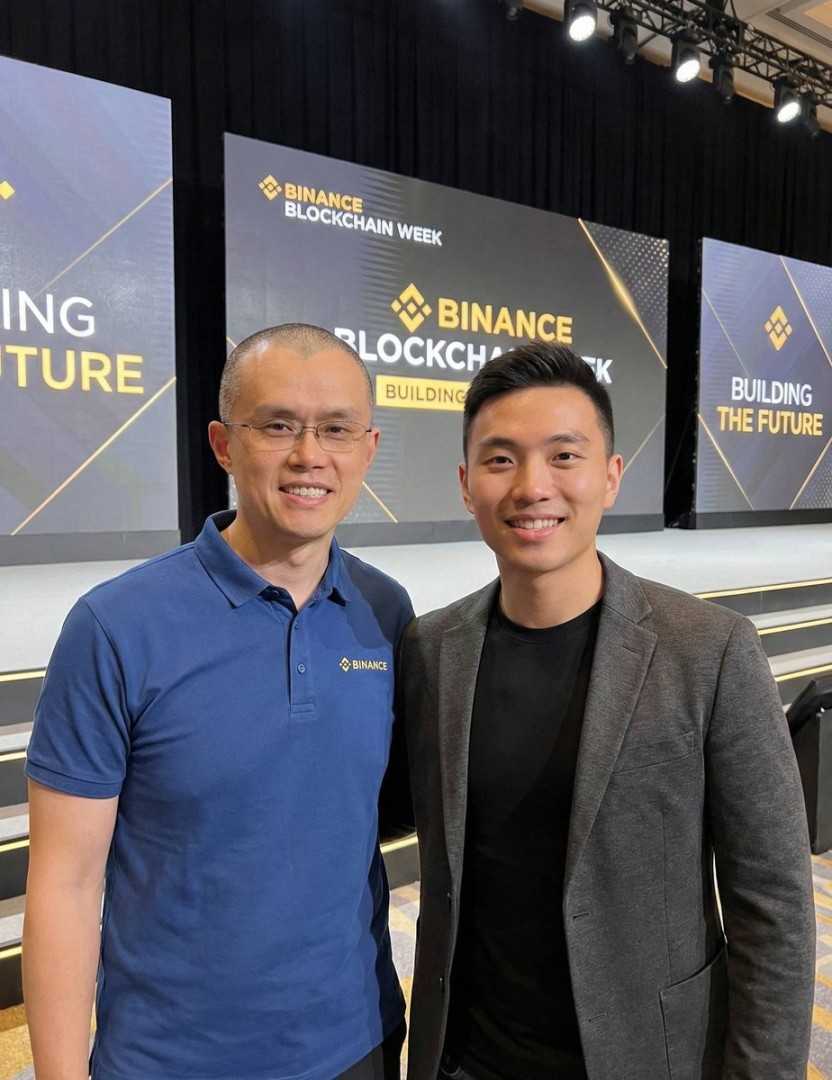
In a photo on the X platform, CZ stands in front of an event backdrop alongside a user who claims to be a "long-term supporter of BNB." However, CZ quickly noticed something unusual—he never owned that blue-purple shirt, the backdrop does not exist, and the resolution of the characters is inconsistent, clearly indicating splicing and editing. Additionally, another photoshopped image was originally a group photo of CZ and Aster CEO Leonard.

What’s even more intriguing is that this account, with 863,000 followers, had already blocked CZ.
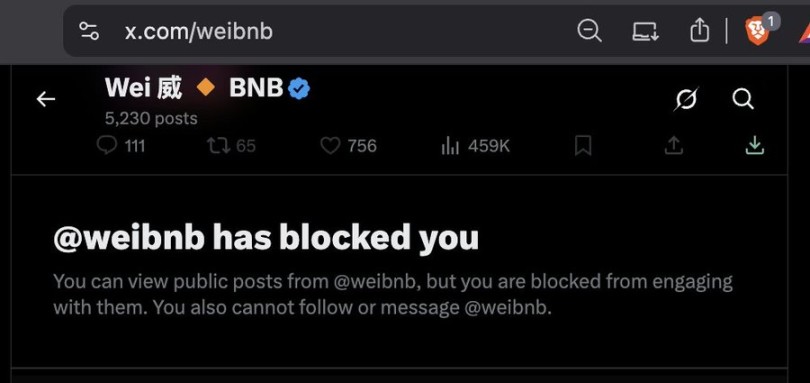
On February 4, CZ publicly dissected the details of the image and pointed out that the account's historical trajectory shows obvious discontinuities: early content had almost nothing to do with cryptocurrency, but later shifted to focus on BNB activities, with an unnatural transition in identity. In his view, such long-standing accounts built on forged materials are not just pranks but more like premeditated image manipulation.

CZ stated that he does not know the account holder and does not remember when he blocked them, but it now seems like the right move. Regarding the previously circulated so-called "lawyer's letter," he initially thought the forgery was too obvious to require clarification, but he noticed some media outlets still reposted and reported on the images. He warned that if even obvious PS or AI-generated content cannot be discerned, one may ultimately pay the price for it.
Meanwhile, some bloggers in the Chinese community have also discovered that a large number of accounts in the English-speaking region, with names or nicknames containing Chinese characters and "


Original link:https://www.bitpush.news/articles/7609077

Related Questions

QWhat was the main issue that Binance founder Changpeng Zhao (CZ) recently encountered on social media?

ACZ encountered a fake AI-generated photo of himself posing with a user claiming to be a long-term BNB supporter, which he identified as fraudulent due to inconsistencies like an unfamiliar shirt and non-existent background.

QHow did CZ identify the image as fake?

ACZ noted that he never owned the blue-purple shirt in the image, the background board did not exist, there were resolution inconsistencies between the subjects, and the image was clearly spliced from an original photo with Aster CEO Leonard.

QWhat suspicious behavior did CZ observe about the account that posted the fake image?

AThe account, which had 863,000 followers, had previously blocked CZ, and its content history showed a sudden shift from non-crypto-related posts to focusing on BNB activities without a logical transition.

QWhat did CZ warn about regarding such fake content?

ACZ warned that if people cannot distinguish obvious PS or AI-generated content, they may end up paying a price for it, emphasizing the risks of falling for manipulated imagery.

QWhat was the original title of the article discussing this incident?

AThe original title of the article was '被灰产盯上的赵长鹏', which translates to 'Changpeng Zhao Targeted by Gray Industry'.

Related Reads

Unlocking $100 Million in Liquidity? Pump.fun's New Policy Tests the 5-Minute Pump Technique

Pump.fun, a popular meme coin launchpad, has introduced a new standard mechanism called BOOST. It aims to address a significant capital efficiency issue: when a newly launched token graduates from its initial bonding curve to a liquidity pool (LP), roughly 20% of its liquidity becomes permanently locked as "dead liquidity," estimated to waste over $100 million annually. Instead of locking these funds permanently, BOOST repurposes them. Upon a token's migration, approximately 20% of the settlement funds (e.g., 17.6 SOL or ~$2516 USDC) are used to buy back the token on the open market over a 5-minute period via a Time-Weighted Average Price (TWAP) mechanism. All purchased tokens are immediately burned. This creates a brief, systematic buy pressure immediately after migration, potentially generating a short-term price surge ("pump") while permanently reducing the token's circulating supply. The goal is to enhance the immediate post-launch trading experience, potentially increasing trader retention and sustainable protocol revenue, which funds ongoing token buybacks. However, concerns exist that this artificial 5-minute boost could lower the barrier for launching low-quality tokens and lead to steeper price crashes once the buy pressure stops, if followed by large sell-offs. The feature automatically applies to tokens migrating after July 21, 2024, but not to previously migrated tokens or those launched via the Mayhem AI Agent lab.

marsbit4m ago

Unlocking $100 Million in Liquidity? Pump.fun's New Policy Tests the 5-Minute Pump Technique

marsbit4m ago

Podcast Notes | Conversation with GSR Asset Management Head: To Determine if This Crypto Rally is Real, Just Watch the Lending Rates on Aave

Podcast Summary: Dialogue with GSR's Head of Asset Management: To Determine if This Crypto Rally is Real, Just Check Lending Rates on Aave Andy Baehr, Managing Director of Asset Management at GSR, discusses the current crypto market, characterizing it as stuck in a state of "ambivalence" with short-lived, unsustainable rallies. He outlines a simple framework: the market moves between "ambivalence" and "conviction" (sustained upward momentum). Currently, every rally resembles a single-stage rocket booster that quickly fizzles out. Baehr identifies three key signals to watch: 1) DeFi lending rates, 2) the potential passage of the CLARITY Act, and 3) the market forming a consensus on the "Fed hawkish peak." He emphasizes that the most immediate indicator for the sustainability of the recent CPI-triggered rally is the USDC borrowing rate on Aave, currently around 3.75%—close to U.S. Treasury yields. The absence of a credit spread indicates low leverage demand and a lack of market energy. He explains that a healthy, sustained rally requires layered buying pressure. Last year's rally progressed from an ETH short squeeze to crypto-native trader influx and finally to ETF inflows. Currently, this structure is missing. Other potential structural buyers like Digital Asset Treasury (DAT) companies are absent, and ETF flows have proven transient. Baehr notes that while small-cap crypto tokens outperformed large caps in Q2—a potential sign of capitation in major assets—capital is also flowing to more exciting opportunities like AI stocks and tech IPOs, leaving crypto sidelined. Regarding DeFi, he highlights that platforms like Aave provide a clear, real-time signal of leverage demand through their supply/demand-driven interest rates. A significant, sustained rate increase would signal genuine market conviction. He also observes the quiet emergence of fixed-income-like products and vaults in DeFi. On regulation, the probability of the CLARITY Act passing before the August 7th deadline has dropped linearly from 75% to below 40% on Polymarket. Baehr suggests its passage would be treated as a bullish surprise, a potent driver for price movement. However, political hurdles, including ethical clause debates and disclosures about the First Family's crypto profits, remain significant obstacles. Ultimately, the market awaits clarity on the Fed's terminal rate under Chair Warsh. Until the "Fed Solstice"—the point where the market collectively understands the peak of hawkish policy—sustained conviction will be difficult to achieve.

marsbit35m ago

Podcast Notes | Conversation with GSR Asset Management Head: To Determine if This Crypto Rally is Real, Just Watch the Lending Rates on Aave

marsbit35m ago

Trading

Spot
活动图片




