Currently, the total market capitalization of cryptocurrencies is $3.22 trillion, with BTC accounting for 59%, which is $1.9 trillion. The market capitalization of stablecoins is $310.6 billion, having increased by 1.01% in the past 7 days, showing significant growth. Among them, USDT accounts for 60.07%.
Among the top 200 projects on CoinMarketCap, most have risen while a few have fallen. Specifically: BTC has a 7-day increase of 5.5%, ETH has a 7-day increase of 6.6%, SOL has a 7-day increase of 3.1%, DASH has a 7-day increase of 141.5%, and XMR has a 7-day increase of 54.9%.
This week, the net inflow for U.S. Bitcoin spot ETFs was $1.417 billion; the net inflow for U.S. Ethereum spot ETFs was $478 million.
Market Forecast (January 19 - January 25):
The current RSI index is 47.38 (neutral range), the Fear & Greed Index is 50 (returning to a neutral level after several months), and the Altcoin Season Index is 33 (neutral, lower than last week).
BTC Core Range: $94,800 - $100,000
ETH Core Range: $3,250 - $3,400
SOL Core Range: $138 - $155
On-chain data shows that profit-taking pressure has eased. Institutions have turned to net buying again through spot ETFs, and bullish bets in the options market are also rising. Risk appetite is recovering. However, BTC has accumulated a large amount of historical trapped positions in the range of $97,000 to $117,400, forming strong selling pressure. We maintain a "cautiously bullish" attitude towards the first half of 2026. Recently, Chinese memes have been quite hot on-chain. While focusing on short-term opportunities, we must be highly vigilant about a consensus risk from mainstream institutions: a significant "risk liquidation event" may occur in the first half of 2026 (possibly at some point after January 26), leading to a substantial correction in asset prices.
Understanding the Present
Review of the Week's Major Events
- January 12: International geopolitical tensions intensified, with gold, silver, and crude oil prices rising across the board. Gold futures reached a record high of $4,600 per ounce for the first time.
- January 12: According to The New York Times, U.S. federal prosecutors have launched a criminal investigation into Federal Reserve Chairman Jerome Powell. The investigation focuses on the renovation of the Fed's Washington headquarters building, marking an escalation in the long-standing conflict between former President Trump and the Fed Chairman.
- January 11: According to CNBC, Walmart and Google announced a new partnership today that will allow shoppers to directly use Gemini to discover and purchase goods from Walmart supermarkets and Sam's Club stores, enabling customers to complete purchases without leaving the AI interface.
- January 13: Former New York City Mayor Eric Adams launched "NYC Token," which surged rapidly upon opening before falling back.
- January 14: The Senate Agriculture Committee plans to release the text of its proposed crypto market structure bill (the "Clarity Act") on January 21 and hold a key hearing on the text on January 27.
- January 14: According to glassnode data, influenced by today's crypto market rebound, total liquidations across the network in the past 24 hours reached $684 million, with short positions accounting for $577 million. This rebound also triggered the largest short squeeze among the Top 500 cryptocurrencies since the "10/11 crash."
- January 15: Several Fed officials emphasized publicly on Wednesday that it is crucial for the central bank to maintain independence in formulating monetary policy. Meanwhile, officials generally signaled that the Fed might pause rate cuts at this month's meeting, citing the resilience of the U.S. economy, high inflation levels, and the need to maintain restrictive monetary policy.
- January 15: X Product Lead and Solana Ecosystem Advisor Nikita Bier stated, "We are revising our developer API policy: we will no longer allow applications that reward users for posting on X (so-called 'InfoFi'). Such mechanisms have already generated a large amount of low-quality AI content and reply spam on the platform."
- January 16: According to a BeInCrypto report, citing multiple sources familiar with the matter, Polygon has conducted significant internal layoffs. Industry insiders indicated that about 30% of employees were laid off this week. This is not the first time Polygon has conducted large-scale layoffs. As early as 2024, the company laid off nearly 20% of its staff.
Macroeconomics
- January 13: U.S. December unadjusted core CPI year-on-year was 2.6%, expected 2.70%, previous 2.60%.
- November 15: U.S. initial jobless claims for the week ending January 10 were 198,000, lower than the expected 215,000, with the previous figure revised from 208,000 to 207,000.
- January 15: According to CME "FedWatch" data, the probability of a 25 basis point rate cut by the Fed in January is 3.4%, and the probability of maintaining the current rate is 96.6%.
ETFs
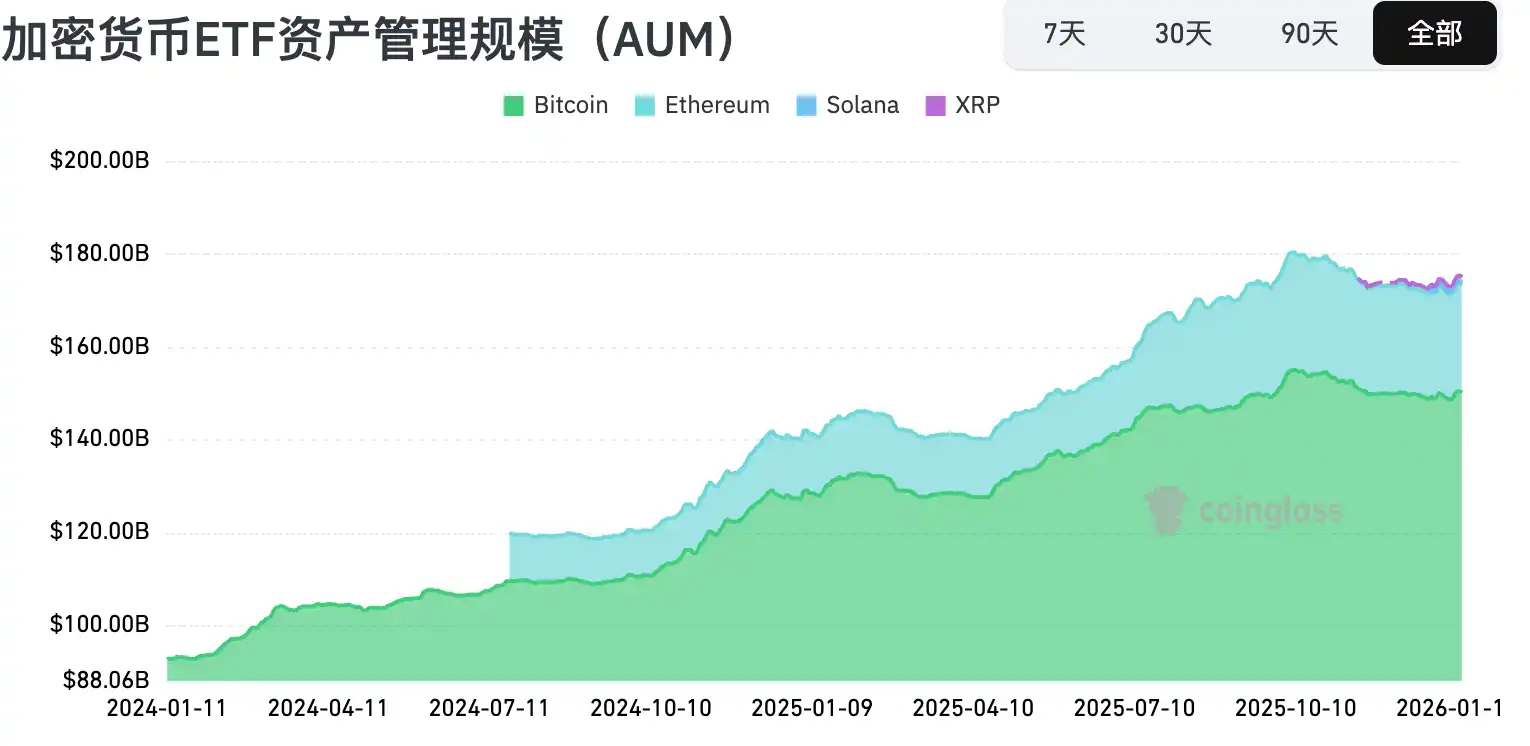
According to statistics, during January 12-16, the net inflow for U.S. Bitcoin spot ETFs was $1.417 billion. As of January 16, GBTC (Grayscale) has seen a total outflow of $25.367 billion and currently holds $15.634 billion. IBIT (BlackRock) currently holds $74.697 billion. The total market capitalization of U.S. Bitcoin spot ETFs is $129.177 billion.
The net inflow for U.S. Ethereum spot ETFs was $478 million.
Foreseeing the Future
Industry Conferences
- Consensus Hong Kong 2026 will be held in Hong Kong, China, from February 11 to 12.
- ETHDenver 2026 will be held in Denver, USA, from February 17 to 21.
- EthCC 9 will be held in Cannes, France, from March 30 to April 2, 2026. The Ethereum Community Conference (EthCC) is one of Europe's largest and longest-running annual Ethereum gatherings, focusing on technology and community development.
Project Progress
- SBF's former girlfriend, Caroline Ellison, may be released on January 21, 2026. Previously, Caroline Ellison testified as a key witness in the 2023 SBF criminal trial. Her "significant cooperation" was recognized by the judge, but she was still sentenced to prison.
- The crypto bug bounty platform Immunefi will launch its token IMU on January 22.
- The MET airdrop claim for Meteora will end on January 23. Unclaimed tokens will be added to the circulating community reserve for future rewards.
- The on-chain film development and funding project Sequel stated that its film THE MUSICAL, funded on Base, has been selected for the Sundance Film Festival competition. The film will premiere in the U.S. Dramatic Competition category on January 25.
Important Events
- January 22, 21:30: U.S. Initial Jobless Claims for the week ending January 17 (in thousands).
- January 23, 23:00: The U.S. will release the final January University of Michigan Consumer Sentiment Index.
Token Unlocks
- Official Trump (TRUMP) will unlock 50 million tokens on January 18, worth approximately $271 million, accounting for 11.95% of the circulating supply.
- Ondo (ONDO) will unlock 1.94 billion tokens on January 18, worth approximately $772 million, accounting for 57.23% of the circulating supply.
- LayerZero (ZRO) will unlock 25.71 million tokens on January 20, worth approximately $42.68 million, accounting for 6.36% of the circulating supply.
- River (RIVER) will unlock 1.5 million tokens on January 22, worth approximately $29.84 million, accounting for 4.32% of the circulating supply.
- Soon (SOON) will unlock 21.88 million tokens on January 23, worth approximately $7.55 million, accounting for 5.63% of the circulating supply.
- Humanity (H) will unlock 105 million tokens on January 25, worth approximately $19.60 million, accounting for 4.57% of the circulating supply.
About Us
Hotcoin Research, as the core investment research institution of Hotcoin Exchange, is dedicated to transforming professional analysis into your practical tool. We analyze market trends for you through "Weekly Insights" and "In-Depth Research Reports"; with our exclusive column "Hotcoin Selection" (dual screening by AI and experts), we help you identify potential assets and reduce trial-and-error costs. Every week, our researchers also engage with you face-to-face through live streams, interpreting hot topics and predicting trends. We believe that warm companionship and professional guidance can help more investors navigate cycles and seize the value opportunities of Web3.
Risk Disclaimer
The cryptocurrency market is highly volatile, and investing itself carries risks. We strongly advise investors to fully understand these risks and invest under a strict risk management framework to ensure the safety of funds.
- Website:https://lite.hotcoingex.cc/r/Hotcoinresearch
- X: x.com/Hotcoin_Academy
- Mail:[email protected]