Hot Interaction Collection | SimpleChain Testnet Activity is Now Live; Giggles Waitlist Application (April 16)

Odaily星球日报Published on 2026-04-16Last updated on 2026-04-16

Abstract

Hot Interactive Projects Digest: SimpleChain Testnet, Giggles Waitlist, and Arc Network Points Program SimpleChain, an RWA-focused Layer 1 blockchain, has launched its testnet campaign. Users can register on the official website, connect their wallets, bind social accounts (X, Telegram, Discord), and complete both social and on-chain tasks. The project recently raised $15 million in seed funding. Giggles, a social app combining prediction markets with content trading, has opened its waitlist for early access (currently iOS only). It recently secured $1.2 million in pre-seed funding. Arc, a new stablecoin-optimized Layer 1 blockchain from Circle, has introduced a points program. Users can earn points by registering with a Google account, completing their profile, reading articles, watching videos, and registering for events. Circle's CEO has hinted at a potential future token for governance and incentives. Early participants are encouraged to reach at least 500 points to achieve the first "Architects" tier.

Original | Odaily Planet Daily (@OdailyChina)

Author | Asher (@Asher_ 0210)

SimpleChain: RWA Sector L1 Project

Project Introduction

SimpleChain is a Layer 1 blockchain specifically designed for RWA, positioned as the "Institutional OS for RWA" (Institutional Operating System for RWA). Its goal is to enable real-world assets (such as credit, energy infrastructure, supply chain logistics, structured financial products, etc.) to be securely, compliantly, and efficiently tokenized on-chain and achieve institutional-level circulation.

On April 10th, SimpleChain announced the completion of a $15 million seed round funding, supported by family offices and institutional investors.

Last night, SimpleChain announced on the X platform that the testnet activity is now live.

Interaction Tutorial

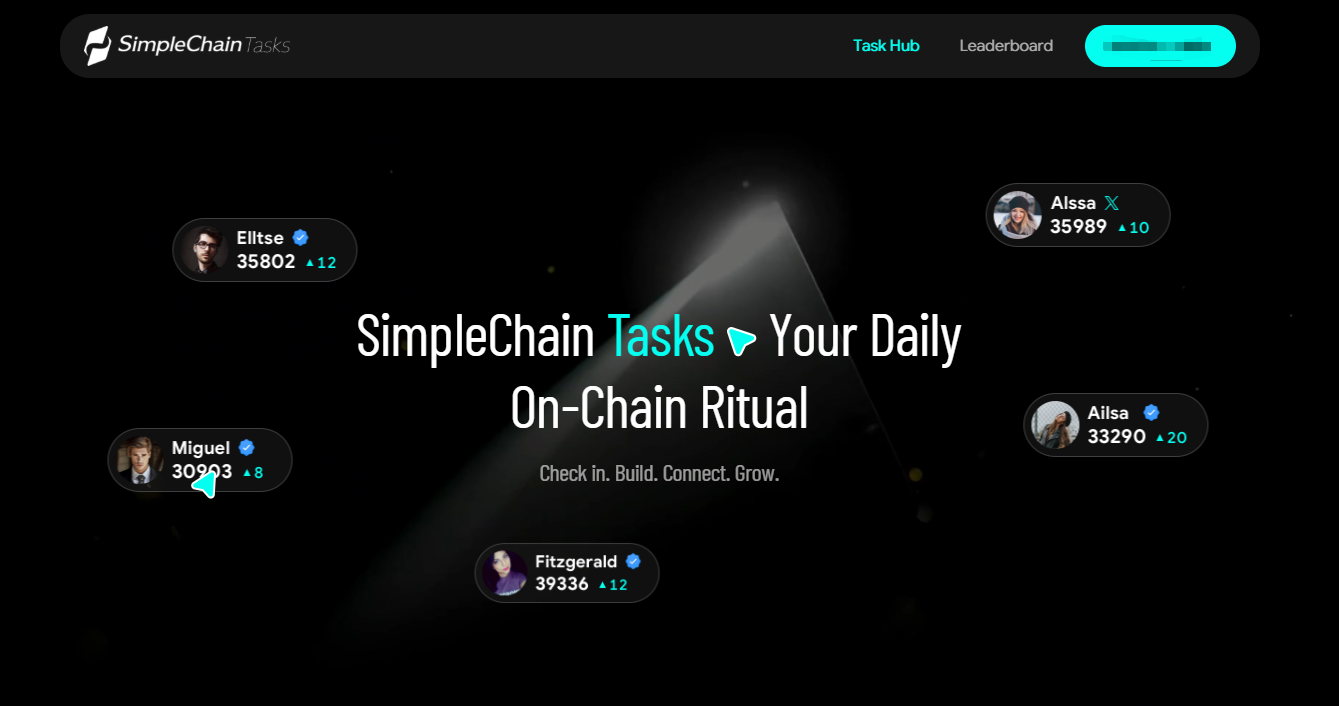
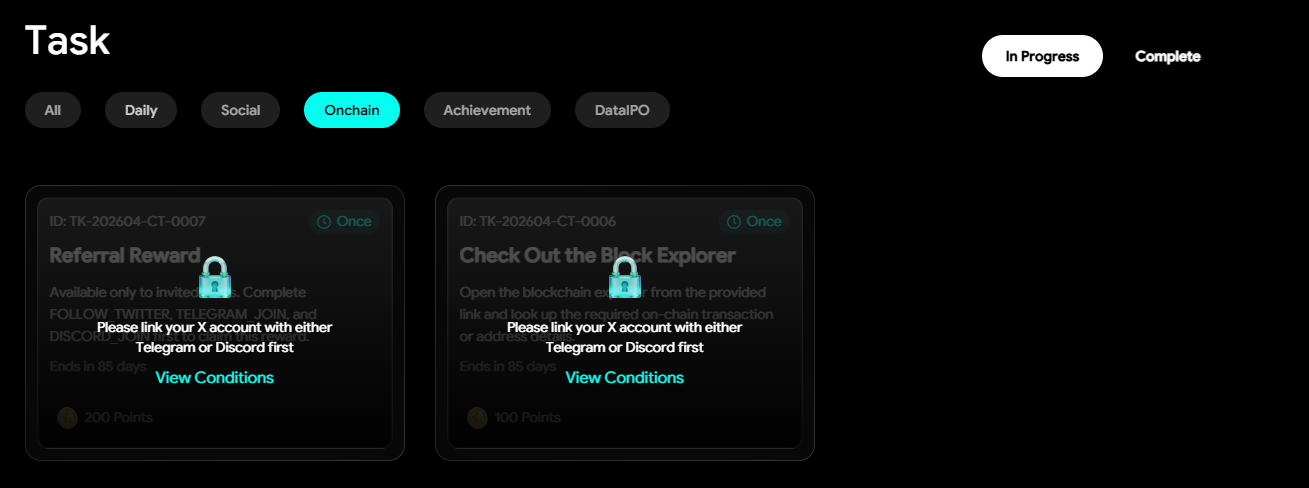
STEP 1. Visit the official website (Link: https://task.simplechain.com/), complete personal account registration via wallet.
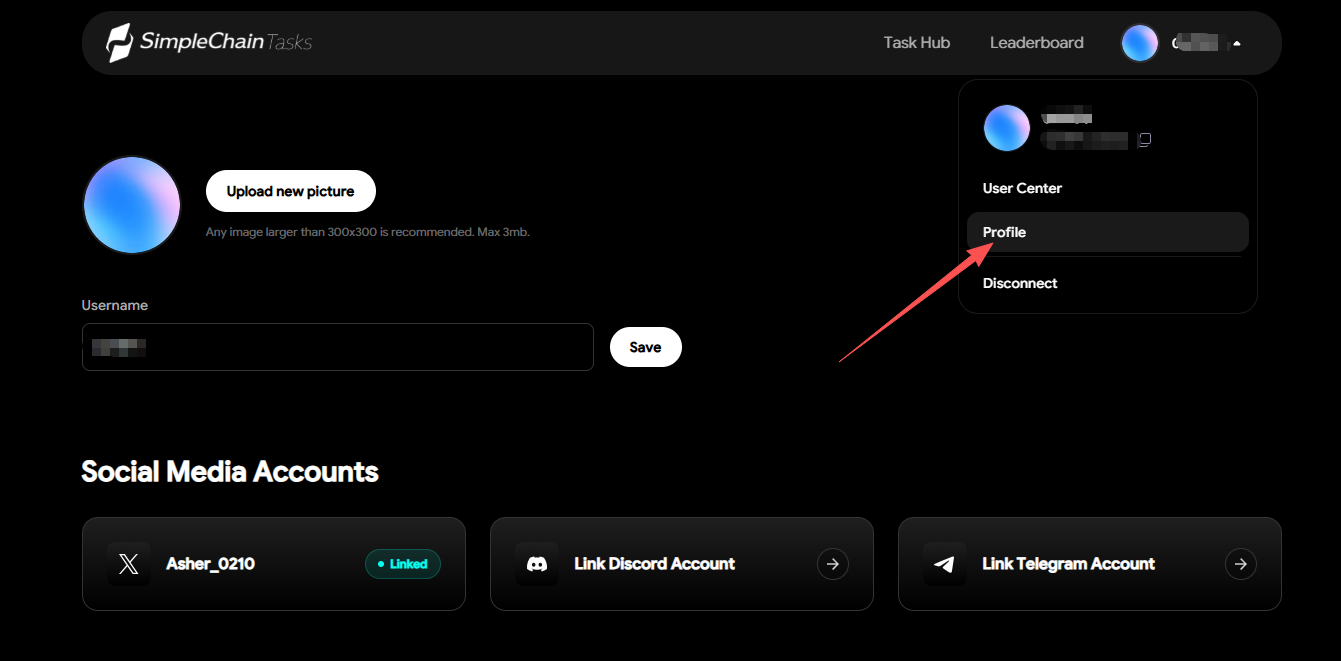
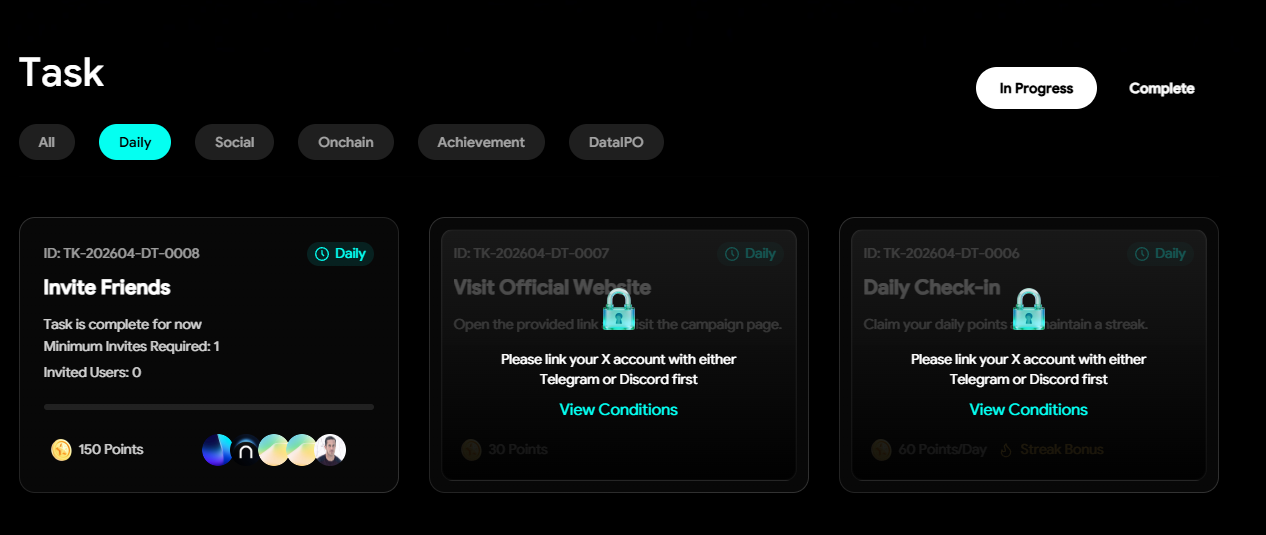
STEP 2. Bind personal social media accounts in the profile to unlock daily tasks.
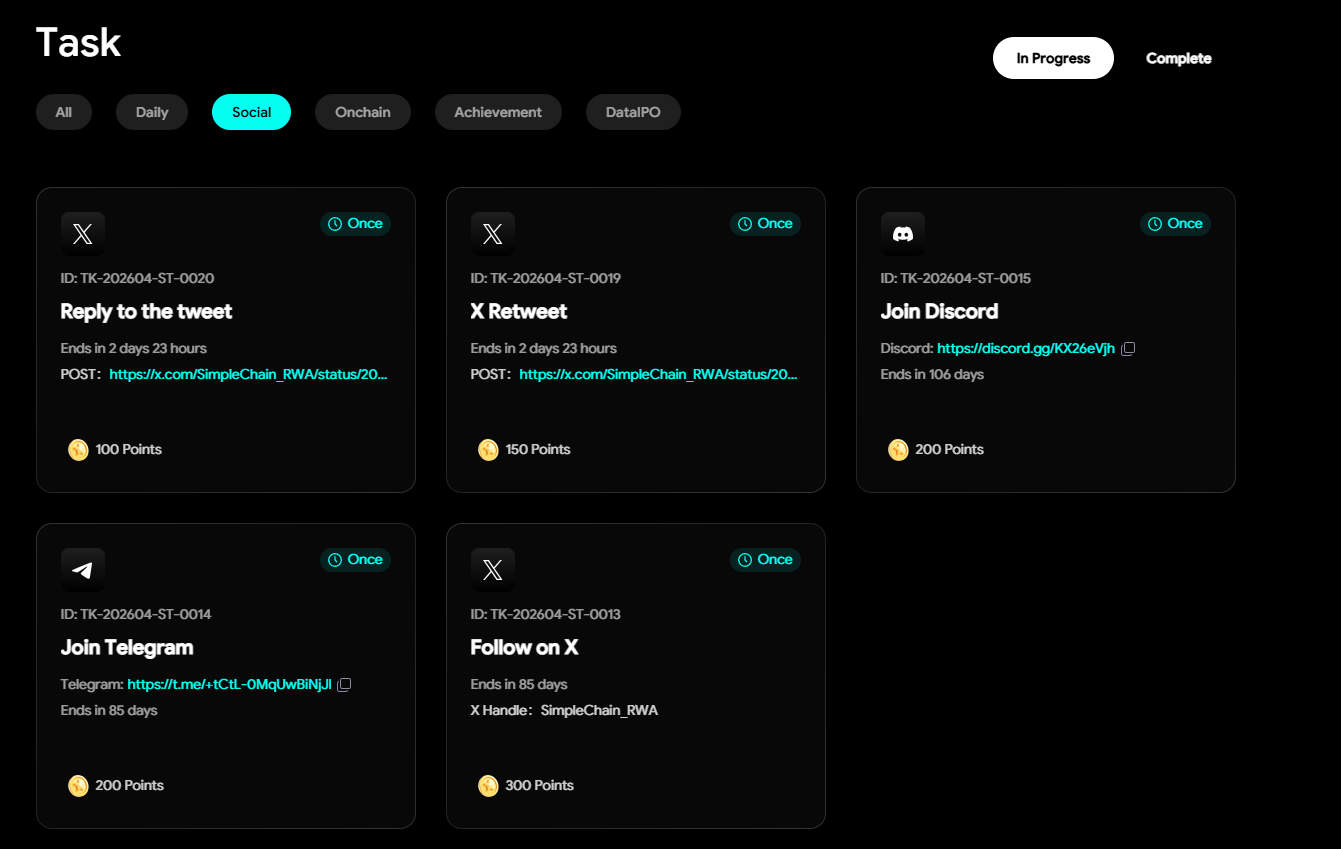
STEP 3. Complete social tasks, including X, Telegram, and Discord tasks.
STEP 4. Complete on-chain tasks (also requires binding personal social accounts first to unlock).
Giggles: Social App Integrating Prediction Market Mechanisms

Project Introduction

Giggles is a social application that integrates prediction market mechanisms, featuring a "tradable content" model. It allows users to "buy in" during the early stages of videos, combining prediction market mechanisms to transform "content discovery" into quantifiable economic behavior.

On April 9th, Giggles announced the completion of a $1.2 million Pre-Seed funding round. Investors included institutions such as 1kx Capital, Virtuals Protocol, Social Graph Ventures, as well as angel investors with backgrounds from OpenAI, Bain Capital, and others.

Interaction Tutorial

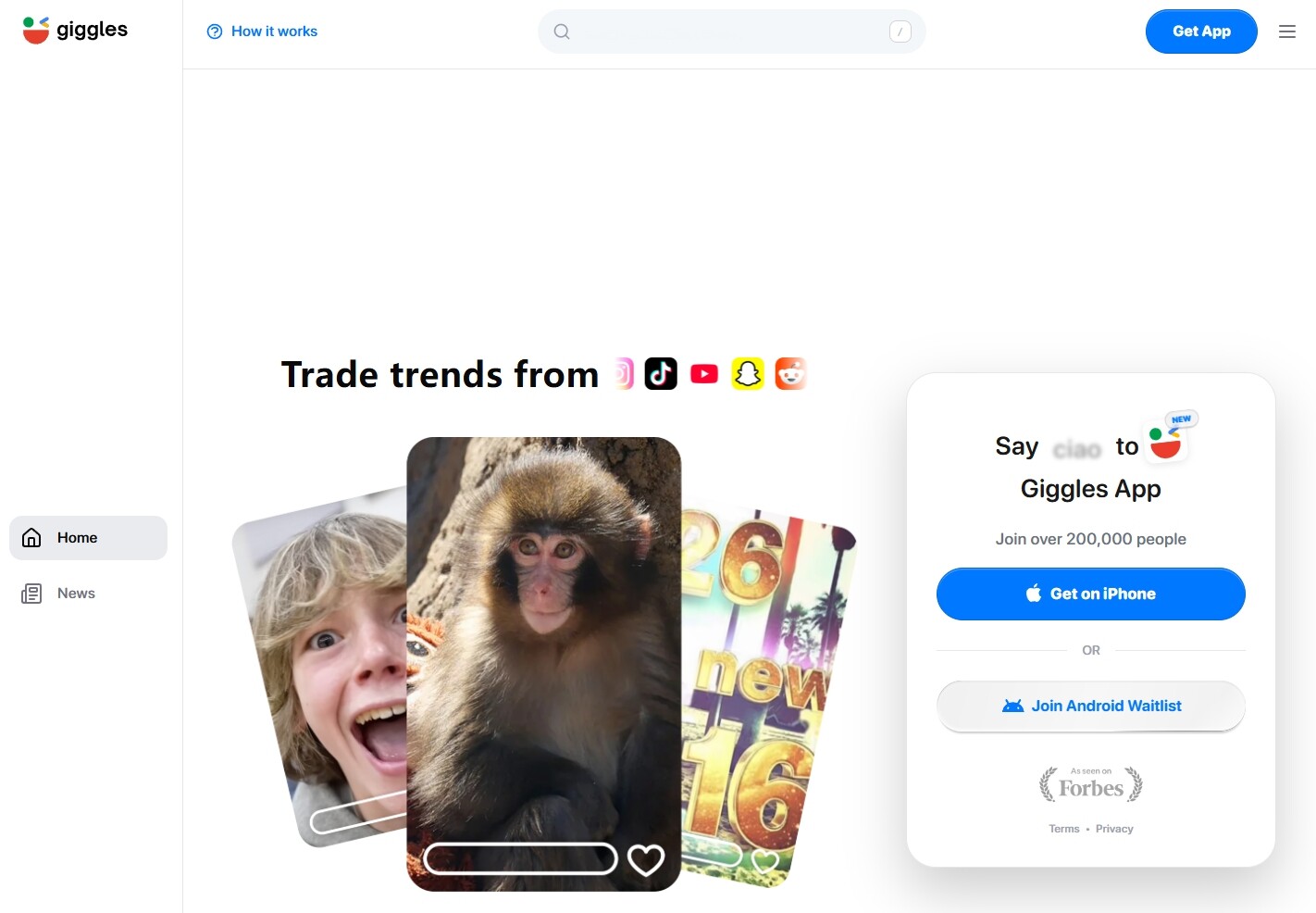
The app is currently available for early experience on the Apple App Store, but the Android version is still pending. You can now apply for the waitlist via the official link: https://giggles.me/home.
Arc: A Layer 1 Dedicated to Stablecoins Launched by Circle

Project Introduction

Arc is a new-generation EVM-compatible Layer 1 blockchain launched by Circle, the "Stablecoin First Stock". It aims to build the economic operating system for the internet, deeply integrating programmable stablecoins with on-chain financial innovation. Arc is specifically designed for financial applications, focusing on global payments, foreign exchange, lending, and capital markets. Its goal is to provide a secure, low-cost, compliant, and scalable foundational settlement layer for the internet's programmable money.

Recently, Jeremy Allaire, Founder and CEO of Circle, stated in a speech at an offline event in Seoul, South Korea: "We are exploring issuing a token for the Arc Network (the stablecoin payment public chain being developed by Circle) to achieve governance, incentives, and economic interest alignment, and gradually transition it to a PoS system. We hope to announce more details in the near future."

According to the official documentation, this points system has five levels with corresponding requirements:

  • Architects Level 1: Over 500 points;
  • Architects Level 2: Over 3500 points;
  • Architects Level 3: Over 15000 points;
  • Architects Level 4: Over 40000 points;
  • Architects Level 5: Over 90000 points.

It is recommended that early participants strive to exceed 500 points to obtain the Architects Level 1 title. Specific ways to earn points are as follows:

Interaction Tutorial

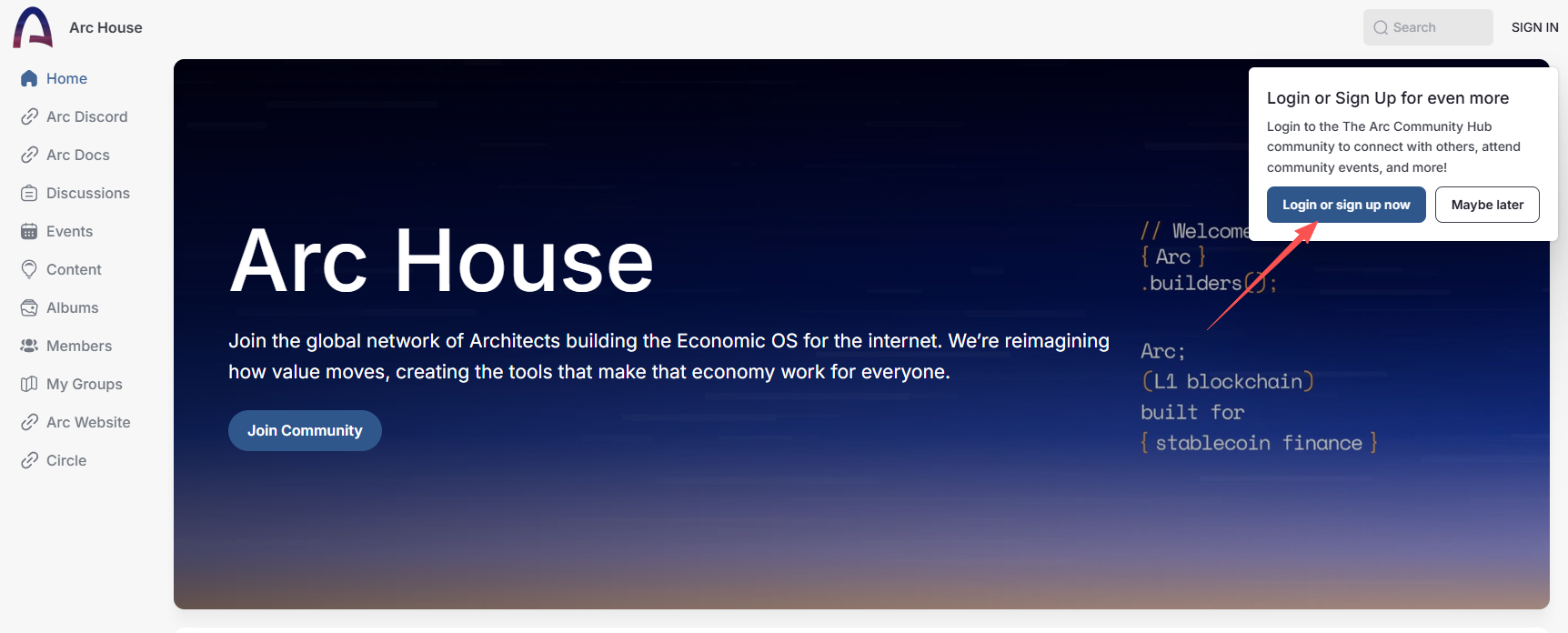
STEP 1. Visit the interaction website (Link: https://community.arc.network/), register an account using a Google email, complete verification, and log in.
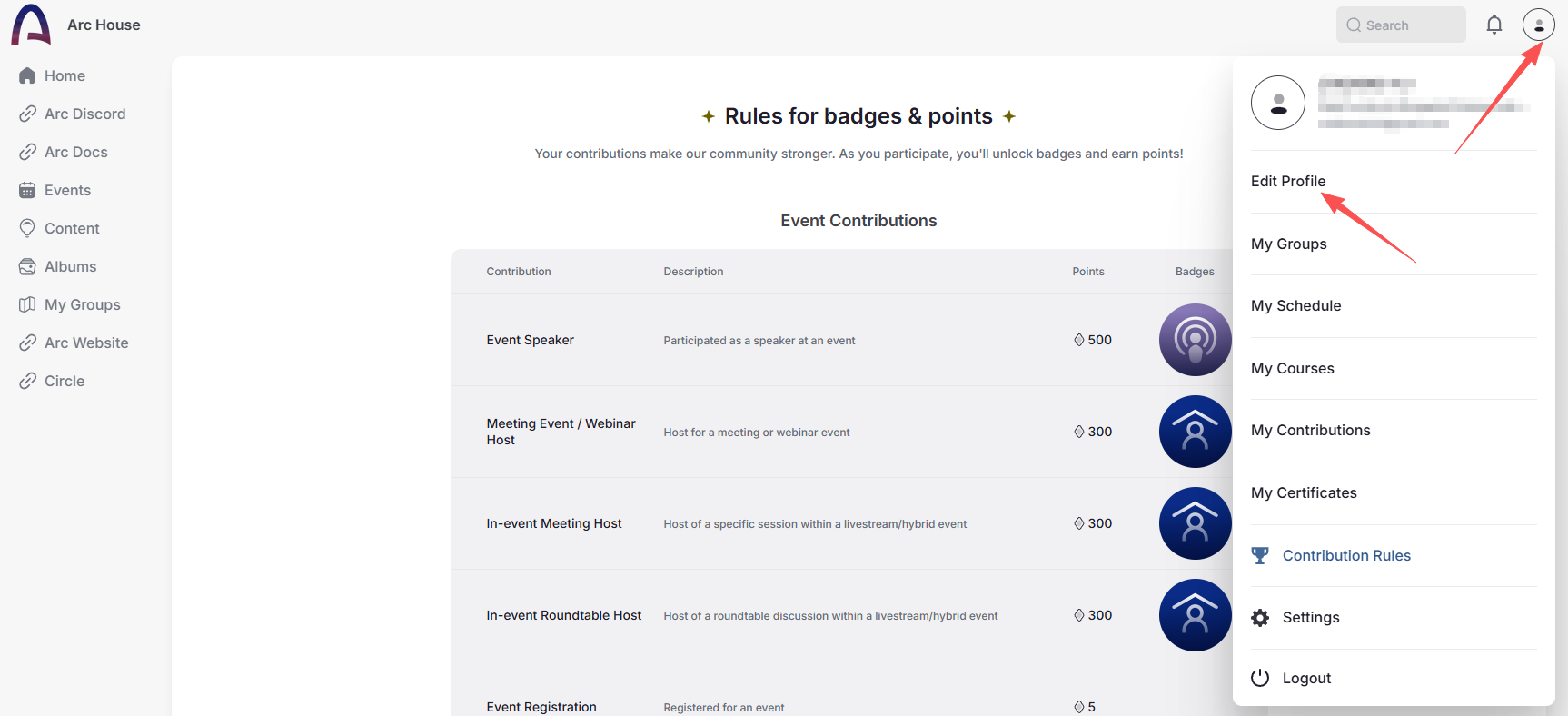
STEP 2. Two community tasks: First, daily login to the website earns 5 points; Click the avatar in the top right corner, select "Edit Profile" to enter the personal information page and complete your profile to earn 100 points.
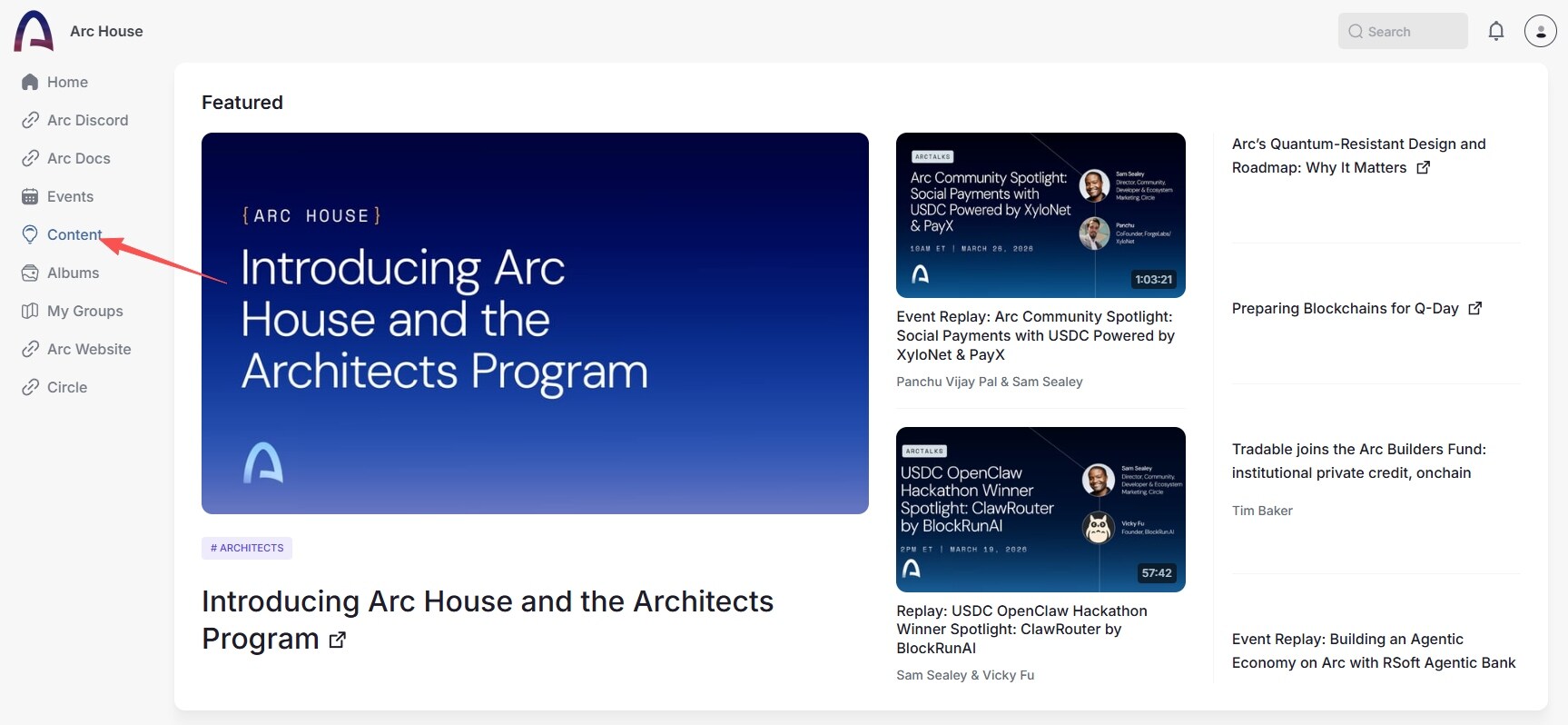
STEP 3. Click "Content", read related articles, each read earns 5 points (maximum 5 articles per day).
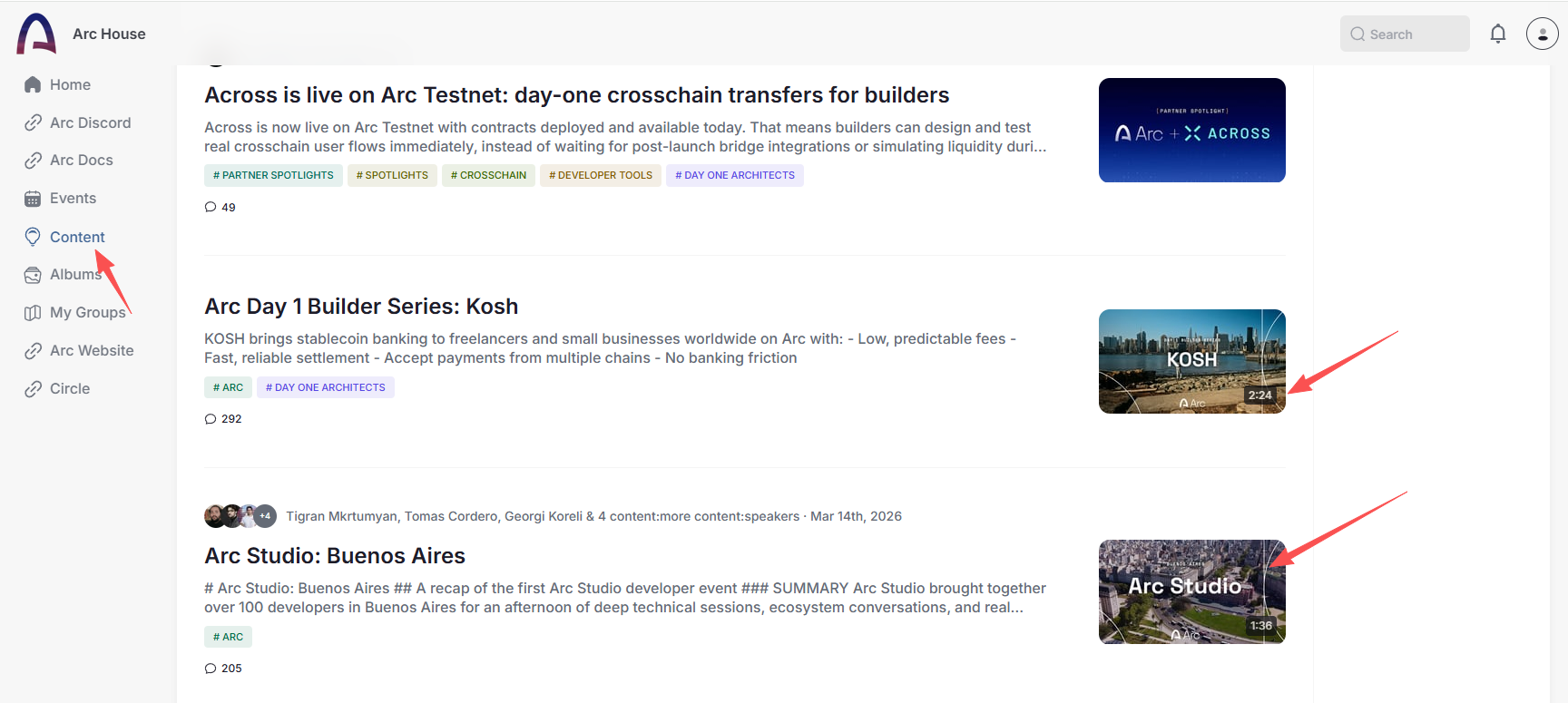
STEP 4. Click "Content", scroll down to find articles with videos, watch a video to earn 5 points (maximum 1 video per day).
STEP 5. Click "Events", participate in events of interest and complete registration, each participation earns 5 points.

STEP 6. Click "My Contributions" to view the points earned.

STEP 7. Join the official Discord and pass verification to enter (difficult to pass), wait for early access roles (Link: https://discord.com/invite/buildonarc).

Related Content

Kraken is also issuing a token? Understand the Ink Season 1 Points Program in One Article

Hot Interaction Collection | Cascade Private Beta is Live; KARPAK SBT Minting (April 10)

Related Questions

QWhat is the main purpose of the SimpleChain blockchain?

ASimpleChain is a Layer 1 blockchain specifically designed for RWA (Real World Assets), aiming to serve as an 'Institutional OS for RWA'. Its goal is to enable the secure, compliant, and efficient tokenization and institutional circulation of real-world assets like credit, energy infrastructure, supply chain logistics, and structured financial products.

QHow much funding did SimpleChain recently raise and from whom?

AOn April 10th, SimpleChain announced it completed a $15 million seed round of funding, which was supported by family offices and institutional investors.

QWhat is the unique concept behind the Giggles social application?

AGiggles is a social application that integrates a prediction market mechanism. It features a 'content is tradable' model, allowing users to 'buy into' videos at an early stage. This combines prediction markets to turn 'content discovery' into a quantifiable economic behavior.

QWhat is Arc and which major company is behind its development?

AArc is a new EVM-compatible Layer 1 blockchain specifically for stablecoins. It is being developed by Circle, the company known as the 'stablecoin first stock' (referring to USDC). Its purpose is to build an economic operating system for the internet by deeply integrating programmable stablecoins with on-chain financial innovation.

QWhat is the minimum积分 (points) required to achieve the first level (Architects一级) in the Arc Network community program?

AThe minimum points required to achieve the first level (Architects一级) in the Arc Network community program is more than 500 points.

Related Reads

a16z: AI's 'Amnesia', Can Continuous Learning Cure It?

The article "a16z: AI's 'Amnesia' – Can Continual Learning Cure It?" explores the limitations of current large language models (LLMs), which, like the protagonist in the film *Memento*, are trapped in a perpetual present—unable to form new memories after training. While methods like in-context learning (ICL), retrieval-augmented generation (RAG), and external scaffolding (e.g., chat history, prompts) provide temporary solutions, they fail to enable true internalization of new knowledge. The authors argue that compression—the core of learning during training—is halted at deployment, preventing models from generalizing, discovering novel solutions (e.g., mathematical proofs), or handling adversarial scenarios. The piece introduces *continual learning* as a critical research direction to address this, categorizing approaches into three paths: 1. **Context**: Scaling external memory via longer context windows, multi-agent systems, and smarter retrieval. 2. **Modules**: Using pluggable adapters or external memory layers for specialization without full retraining. 3. **Weights**: Enabling parameter updates through sparse training, test-time training, meta-learning, distillation, and reinforcement learning from feedback. Challenges include catastrophic forgetting, safety risks, and auditability, but overcoming these could unlock models that learn iteratively from experience. The conclusion emphasizes that while context-based methods are effective, true breakthroughs require models to compress new information into weights post-deployment, moving from mere retrieval to genuine learning.

marsbit35m ago

a16z: AI's 'Amnesia', Can Continuous Learning Cure It?

marsbit35m ago

Can a Hair Dryer Earn $34,000? Deciphering the Reflexivity Paradox in Prediction Markets

An individual manipulated a weather sensor at Paris Charles de Gaulle Airport with a portable heat source, causing a Polymarket weather market to settle at 22°C and earning $34,000. This incident highlights a fundamental issue in prediction markets: when a market aims to reflect reality, it also incentivizes participants to influence that reality. Prediction markets operate on two layers: platform rules (what outcome counts as a win) and data sources (what actually happened). While most focus on rules, the real vulnerability lies in the data source. If reality is recorded through a specific source, influencing that source directly affects market settlement. The article categorizes markets by their vulnerability: 1. **Single-point physical data sources** (e.g., weather stations): Easily manipulated through physical interference. 2. **Insider information markets** (e.g., MrBeast video details): Insiders like team members use non-public information to trade. Kalshi fined a剪辑师 $20,000 for insider trading. 3. **Actor-manipulated markets** (e.g., Andrew Tate’s tweet counts): The subject of the market can control the outcome. Evidence suggests Tate’sociated accounts coordinated to profit. 4. **Individual-action markets** (e.g., WNBA disruptions): A single person can execute an event to profit from their pre-placed bets. Kalshi and Polymarket handle these issues differently. Kalshi enforces strict KYC, publicly penalizes insider trading, and reports to regulators. Polymarket, with its anonymous wallet-based system, has historically been more permissive, arguing that insider information improves market accuracy. However, it cooperated with authorities in the "Van Dyke case," where a user traded on classified government information. The core paradox is reflexivity: prediction markets are designed to discover truth, but their financial incentives can distort reality. The more valuable a prediction becomes, the more likely participants are to influence the event itself. The market ceases to be a mirror of reality and instead shapes it.

marsbit1h ago

Can a Hair Dryer Earn $34,000? Deciphering the Reflexivity Paradox in Prediction Markets

marsbit1h ago

Trading

Spot
Futures
活动图片





