Hoskinson Confirms Midnight Mainnet Launch in March

TheNewsCryptoPublished on 2026-02-12Last updated on 2026-02-12

Abstract

Charles Hoskinson, founder of Input Output Global (IOG), announced that the Midnight privacy-focused blockchain will officially launch in the last week of March. The announcement was made during his keynote at Consensus Hong Kong. Midnight uses zero-knowledge proofs to enable selective data disclosure, allowing users to share specific information while keeping the rest private. It will function as a partner chain to Cardano, balancing privacy and regulatory compliance. Hoskinson also revealed the Midnight City Simulation, an interactive platform demonstrating how the network handles transaction privacy and scalability. The test involves AI-driven agents simulating real-world demand, proving the network’s readiness for mainstream use. Key partners include Google and Telegram.

Charles Hoskinson, the founder of a leading blockchain and research company, Input Output Global, publicised on February 12 that Midnight, the highly anticipated privacy-focused blockchain of the company, will officially roll out in the last week of March.

The announcement came amid the keynote speech of Hoskinson at Consensus Hong Kong, indicating a significant step forward in IOG’s efforts to take data protection and regulatory compliance to decentralised systems.

In the announcement, he stated that, “We have some significant partnerships to help us run it, and Google is one of them, and Telegram is another. We are highly excited there is more that will come.”

The Midnight City Simulation

Midnight leverages zero-knowledge (ZK) proofs to permit selective disclosure. Think of it as a smart curtain for blockchain data, permitting users to share only what they select while keeping the remainder private.

It acts as a partner chain to the smart contract platform Cardano and offers privacy and regulatory compliance for decentralised applications. Along with the mainnet timeline, Hoskinson revealed Midnight City Simulation, an interactive platform providing a glimpse of how Midnight offers scalable privacy via selective disclosure.

Rational privacy makes sure that transaction data is still private by default, while particular information can be shared with authorised parties when needed. This flexibility helps in balancing transparency and confidentiality on the blockchain via different disclosure views, specified as public, auditor, and god, each having a different access level.

The simulation, organised at Midnight City, became functional at 10:00 a.m. Hong Kong time Thursday; however, public access to the simulation stays prohibited until Feb 26, as per the press release.

The simulation, operating on the Midnight network and enrolling AI-driven agents that collaborate to make a steady flow of transactions, indicates how finely the blockchain can perform real-world demand and scales according to it.

IOG mentioned that this test shows the capability of the network to keep generating and processing proofs at scale, a significant step in proving it is ready for real-world use.

Highlighted Crypto News Today:

Human API Launches Platform Enabling Direct AI-to-Human Task Coordination

TagsCharles HoskinsonHong KongMainnet Launch

Related Questions

QWhen is the Midnight mainnet scheduled to launch, according to Charles Hoskinson?

AThe Midnight mainnet is scheduled to officially roll out in the last week of March.

QWhat two major partnerships did Hoskinson announce to help run the Midnight blockchain?

AThe two major partnerships announced are Google and Telegram.

QWhat key technology does Midnight use to enable selective data disclosure?

AMidnight leverages zero-knowledge (ZK) proofs to permit selective disclosure.

QWhat is the name of the interactive platform that provides a glimpse into how Midnight offers scalable privacy?

AThe interactive platform is called the Midnight City Simulation.

QOn what date does the Midnight City Simulation become publicly accessible?

APublic access to the simulation will be available on February 26.

Related Reads

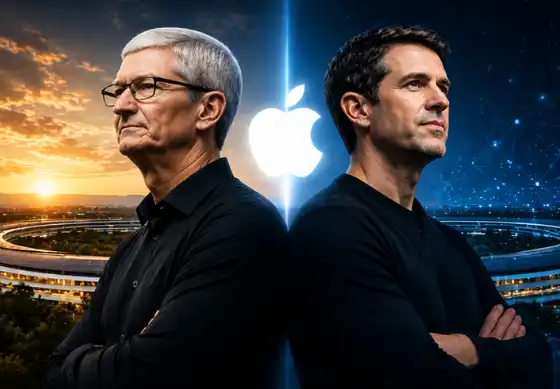
Cook's Curtain Call and Ternus Takes the Helm: The Disruption and Reboot of Apple's 4 Trillion Dollar Empire

Tim Cook has officially announced he will step down as CEO of Apple in September, transitioning to executive chairman after a 15-year tenure during which he grew the company’s market value from around $350 billion to nearly $4 trillion. He will be succeeded by John Ternus, a 50-year-old hardware engineering veteran who has been groomed for the role through increasing public visibility and internal responsibility. Ternus’s appointment signals a strategic shift toward hardware and engineering leadership, with Johny Srouji—head of Apple Silicon—taking on an expanded role as Chief Hardware Officer. This consolidation aims to strengthen Apple’s core technological capabilities. However, Cook’s departure highlights a significant unresolved issue: Apple’s delayed and fragmented approach to artificial intelligence. Despite early efforts, such as hiring John Giannandrea from Google in 2018, Apple’s AI initiatives—particularly around Siri—have struggled with internal restructuring and reliance on external partnerships, including with Google. The transition comes at a critical moment as Apple faces paradigm shifts with the rise of artificial general intelligence (ASI). The company’s closed ecosystem of hardware, software, and services—once a major advantage—now presents challenges in adapting to an AI-centric world where intelligence may matter more than the device itself. Ternus must quickly articulate a clear AI strategy, possibly starting at WWDC, to reassure markets and redefine Apple’s role in a new technological era. His task is not only to maintain Apple’s operational excellence but also to reinvigorate its capacity to innovate and lead in the age of AI.

marsbit2h ago

Cook's Curtain Call and Ternus Takes the Helm: The Disruption and Reboot of Apple's 4 Trillion Dollar Empire

marsbit2h ago

Trading

Spot
Futures
活动图片