If you were to be reborn, which country would you most likely be born in?
What kind of profession, income, values, and even small preferences like the color of an app button would you have?
In the past, calculating this chain of probabilities spanning sociology, behavioral economics, and psychology would have countless social scientists and statisticians working tirelessly.
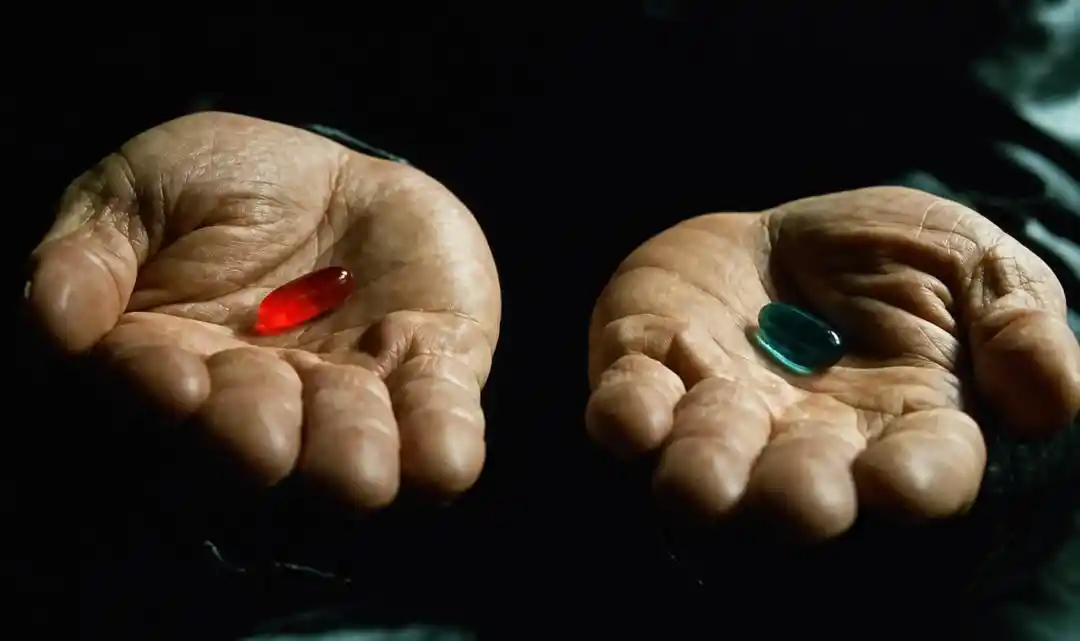
The sci-fi scene from the 1999 movie 'The Matrix' has just become reality!
A team led by Harvard & MIT PhDs, with over 40 participants from OpenAI, Anthropic, Google DeepMind, xAI, and involving more than 200 top scientists, has released MatrAIx. It constructs 8.3 billion AI agents to simulate the real-world behaviors of the global human population.
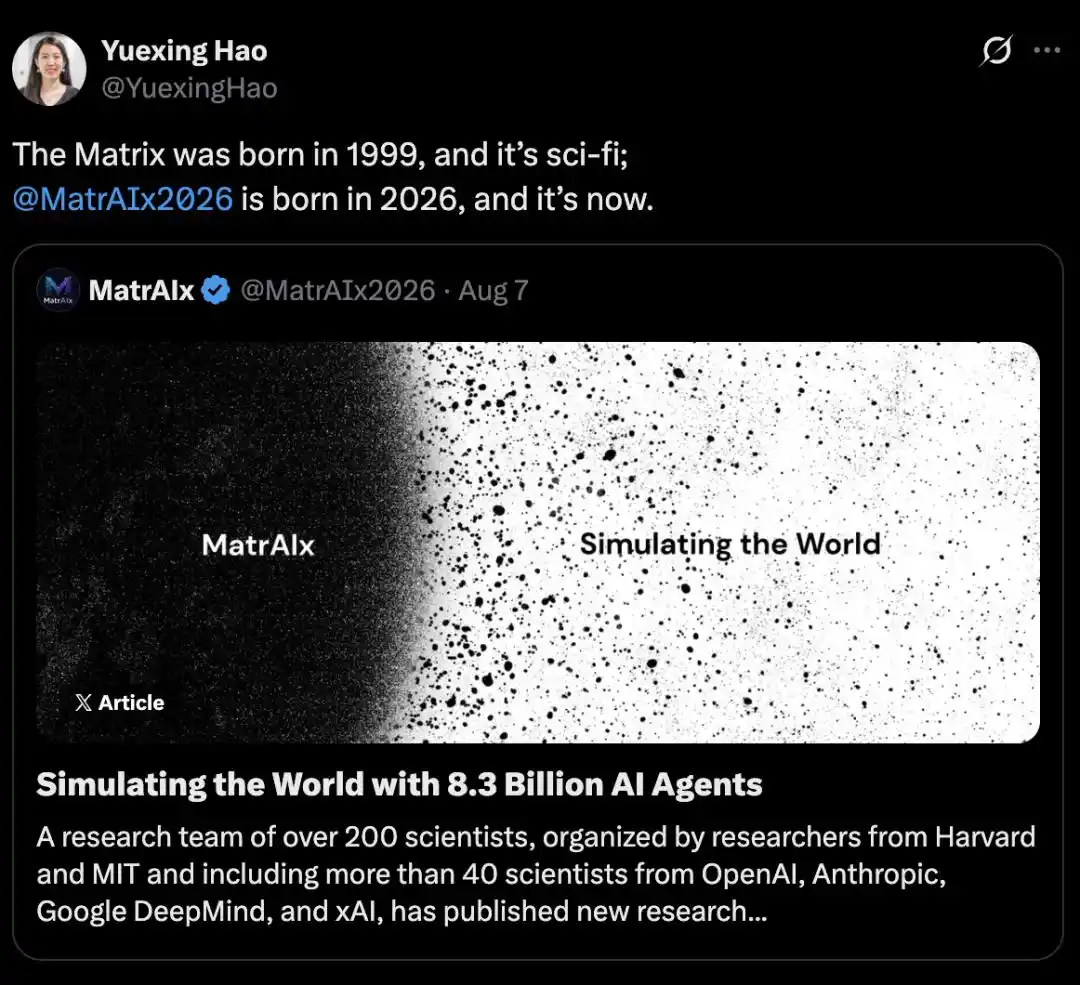
In the fierce battle for the throne of large models, tech giants, who were previously fighting tooth and nail, have now, as if by tacit agreement, joined forces to weave a web—a 'digital veil' that imprisons all human behavior.
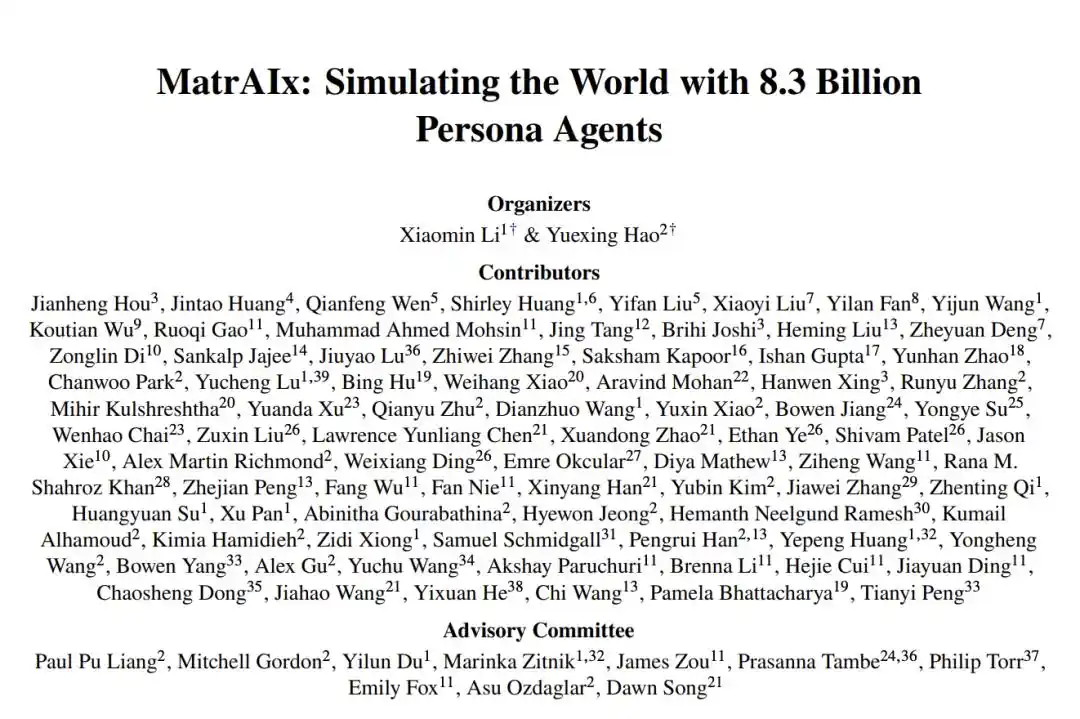
Paper: https://arxiv.org/abs/2608.04205
GitHub Repo: https://github.com/MatrAIx-ai/MatrAIx-Persona-8B
They endowed AI agents with personas:
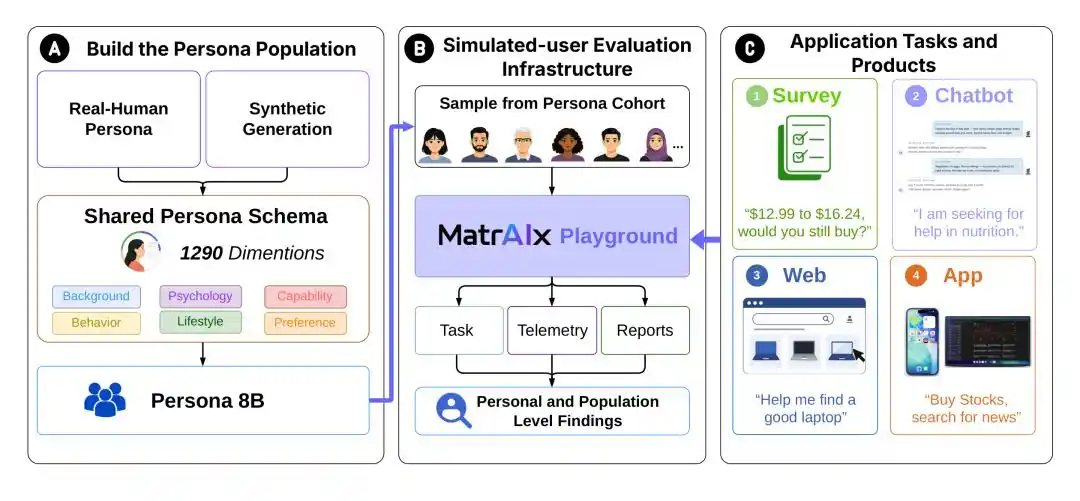
1. Created 8.3 billion persona profile records covering the global population scale, encompassing 1,290 dimensions including background, psychology, capabilities, behavior, and lifestyle.
2. Supports persona agent evaluation in four environment types: surveys, AI chatbots, web pages, and applications.
3. Provides evaluation tasks covering 25+ fields and 1,000+ items, spanning business, software, finance, and healthcare.
The core skills of traditional user researchers and product managers instantly depreciated.
Simultaneously, everyone must confront a question:
When your 'personality' is merely a self-consistent probability distribution in a 1,290-dimensional space, how do you prove you are still the one and only, not entirely simulable?
AI Calculates All Human Personalities!
The 'Oppenheimer Moment' for Product Managers
Traditional User Research experienced its 'Oppenheimer moment' on this day.
In the past, for tech giants to launch a new app or strategy, it required months of effort, recruiting hundreds or thousands of real volunteers of different ethnicities and backgrounds, and conducting countless A/B tests and offline interviews.
In MatrAIx's silicon-based world, this high-barrier, high-latency, high-cost process is compressed into an instant.
The Persona-8B database has a scale of 8.3 billion, achieving a precise one-to-one mirror of the real total population on the physical Earth at this moment.
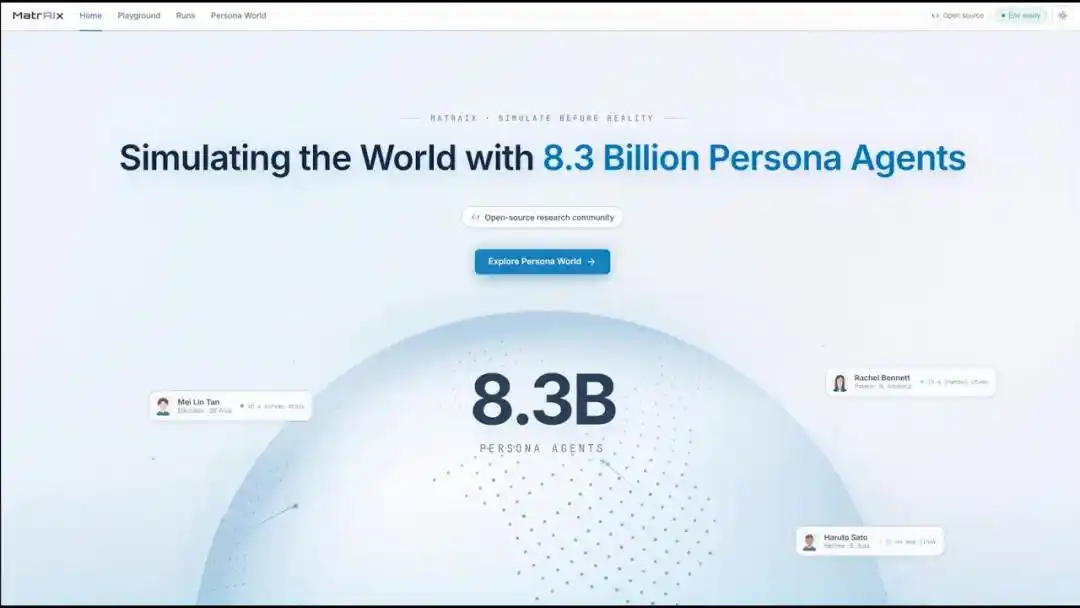
They don't need social security contributions, yet they understand better than you how to elegantly reject a terrible UI design on macOS.
With these 8.3 billion digital natives ready to be deployed at any moment, the next step is to release them into social life.
The MatrAIx team custom-designed four all-access simulated interaction environments for them, called the MatrAIx Playground:

Surveys: Testing concepts, pricing sensitivity, willingness to pay among different groups.
AI Chatbots: Complete conversation trajectories are recorded, tracking virtual users' real emotional fluctuations and questioning habits when AI makes mistakes or talks nonsense [1.1.5].
Websites: Agents search, compare prices, read reviews, and finally make purchasing decisions like ordinary netizens in this sandbox internet.
Applications: This is no longer just a textual exchange. Agents can directly control Linux, macOS, and iOS desktops, performing various complex daily software operations via virtual mice, keyboards, and touch. The system meticulously records every file change, permission shift, and operation trail.
In this sandbox, the research team has already deployed 1,010 complex evaluation tasks across 25 different fields (covering business, software, finance, healthcare, etc.).
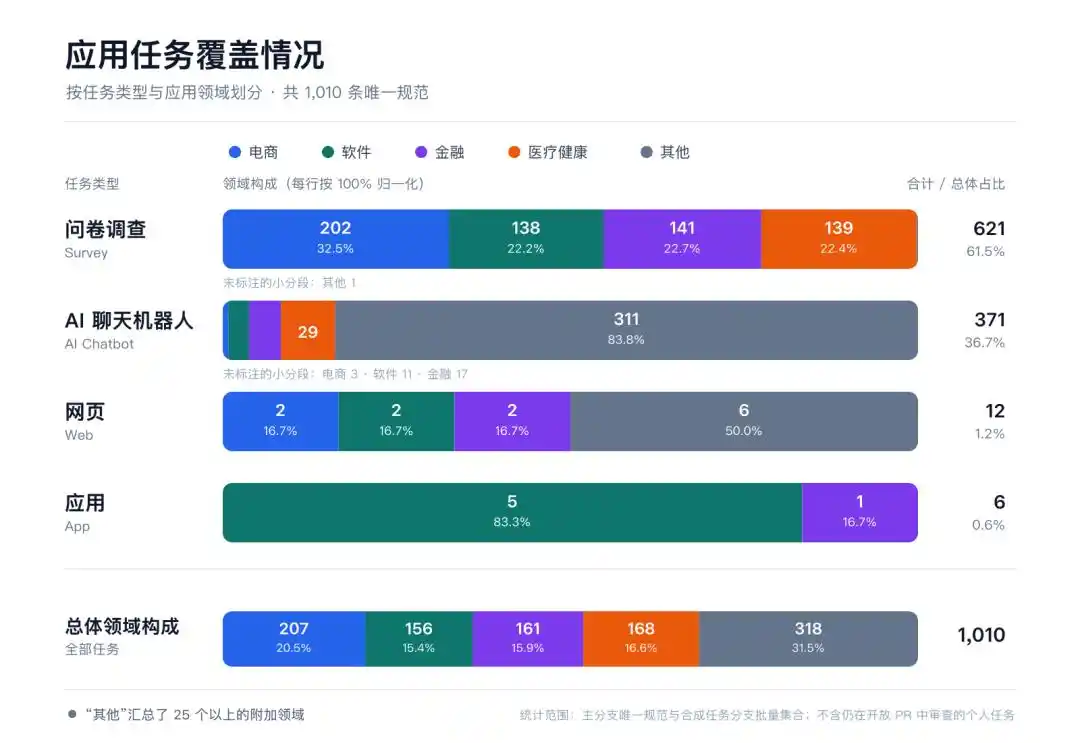
They conducted a total of 18,189 large-scale simulated user interaction experiments.
In 400 extremely stringent controlled experiments, these virtual agents powered by underlying large models achieved an astonishing 91.5% consistency rate in adhering to their specified personas!
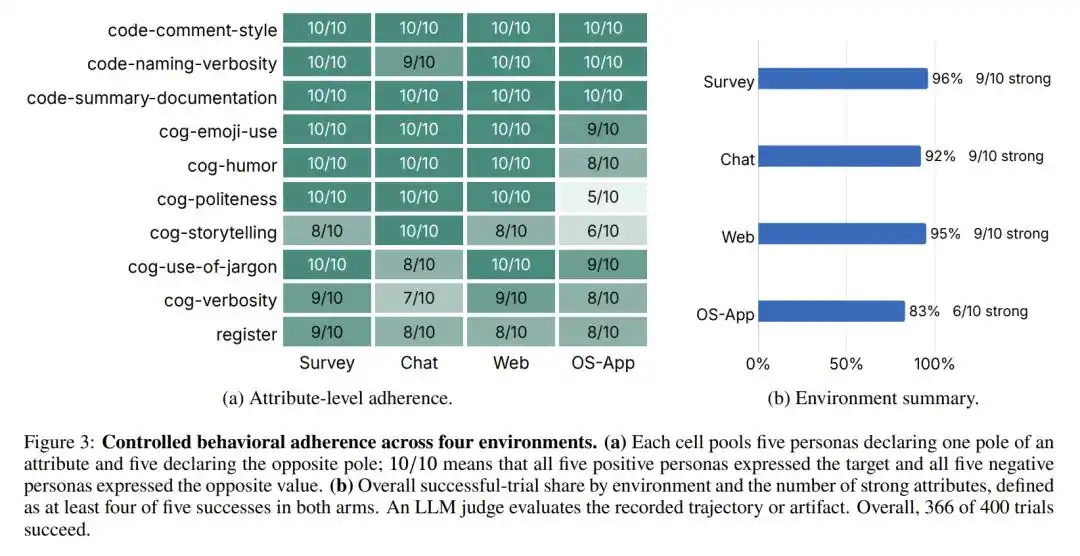
During consistency evaluation of personas extracted from real humans, human experts gave a high score of 4.135 (out of 5).
The performance of the underlying large models driving these virtual humans is now approaching the gold standard set by human evaluators infinitely closely:
Claude Opus 4.8: In 93.8% of cases, its evaluation error was controlled within 1 point of deviation from the human expert scores!
GPT-5.5: In 79.2% of cases, the error was within 1 point.
This indicates that today's top-tier large models have not only mastered logic and common sense but have even mastered the sociological 'empathy simulator'.
They can accurately calculate how a "50-year-old, conservative, introverted middle-class housewife in the US" would exhibit subtle anger and disappointment when facing a tech product bug.
So, how exactly were these 8.3 billion digital ghosts "created"?
Behind each 'person' lies a precise attribute matrix containing 1,290 persona dimensions. These dimensions are divided into five core zones: background information, psychological traits, professional capabilities, behavioral interactions, and daily life.
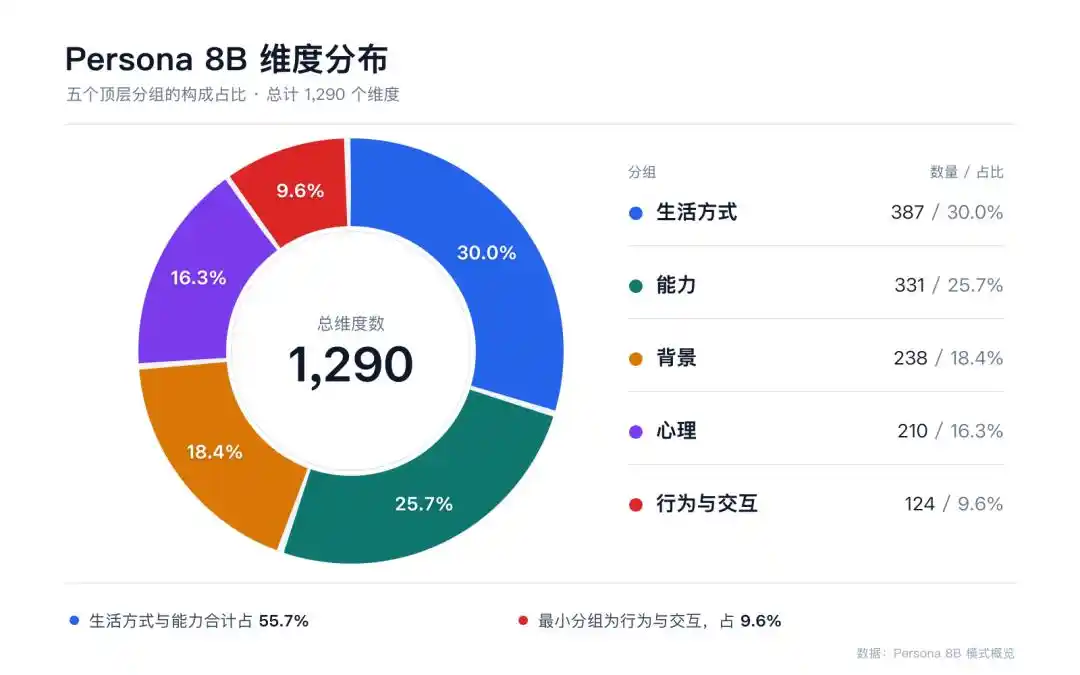
Data sources include UN population statistics, General Social Survey, Wikipedia biographies, Amazon real consumer reviews, Stack Overflow developer surveys...
If attributes were just randomly combined, AI would only create logically flawed 'cyber monsters'. For instance, an entity living in rural Kenya, with only elementary school education, yet only speaking Icelandic, possessing a Harvard PhD, and earning millions a year.
To solve this, the research team constructed a grand Directed Acyclic Graph (DAG). Attributes have strict conditional dependencies between them:
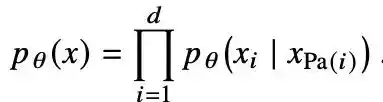
When the system determines a virtual human's 'English proficiency', it must first calculate the joint probability of the two parent nodes: 'primary language' and 'location'.
Then, a harsh compatibility filter is applied: as soon as a parent-child attribute combination exhibits an unreasonable conflict, the judgment is immediately nullified, and that combination is wiped out with one click.

Under the baptism of this formula, the synthesized virtual humans maintain grand diversity while preserving unshakable internal logical self-consistency.
Coupled with hundreds of millions of 'real soul slices' extracted from real human historical remnants like Wikipedia, Amazon purchase history, and Stack Overflow developer surveys, every ghost in the Persona-8B database feels like a real, flesh-and-blood person who has truly lived in a parallel universe.
Have you ever thought: your preference for a certain app color could actually be reduced to the product of parent node probabilities?
When personality is precisely measured by 1,290 scales, what humans call 'unique' is, in AI's eyes, just a self-consistent probability distribution.
The Nihilistic Möbius Strip
This is a technological marvel, but if you strip away the efficiency facade, you'll see a chilling truth.
Large models (like GPT-5.5, Claude Opus 4.8) act as 'consumers' and 'societal members' within MatrAIx to evaluate and test other virtual humans driven by large models.
This is like a person using their left hand to play the customer, buying bread made by their right hand, and then the left hand gives the right hand a five-star review.
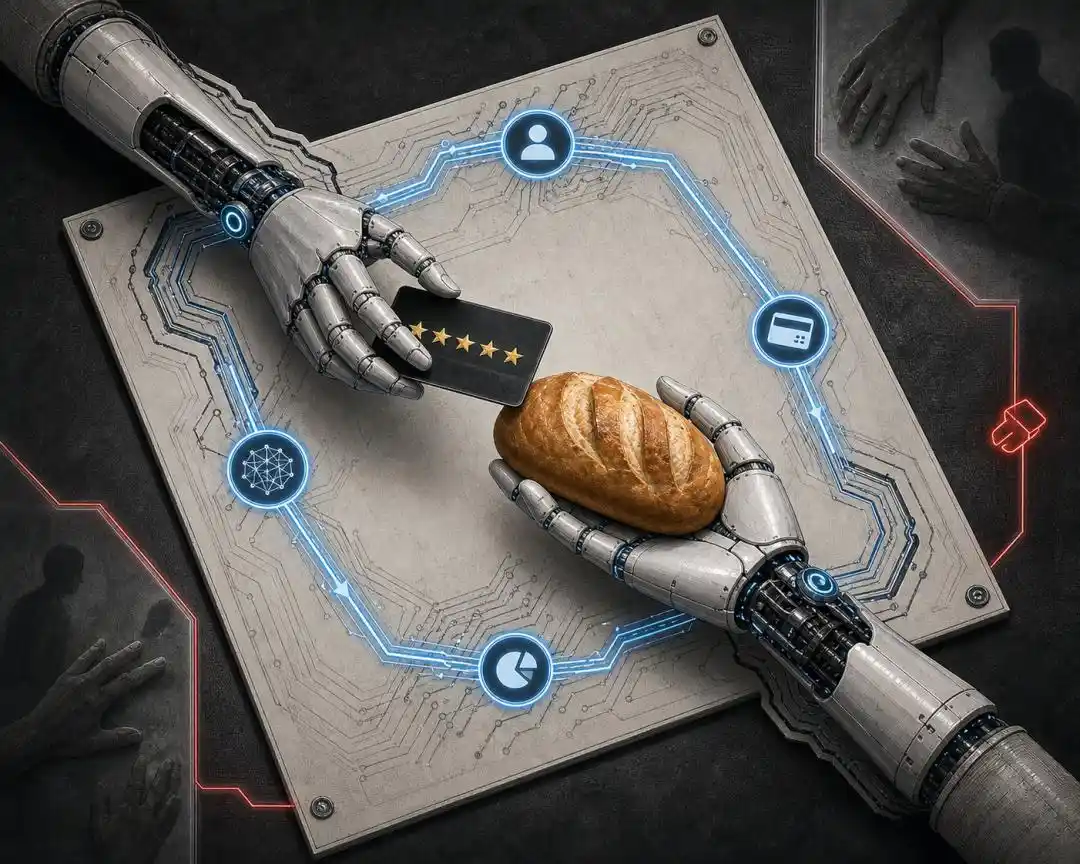
In this closed loop, real humans, are gone.
If virtual users give a new drug or a social app a high score of 91.5% in the sandbox, does it guarantee it will please those flesh-and-blood humans in reality who cry, are unreasonable, and are influenced by weather and hormones?
The most terrifying side effect of this 'self-circulating ecosystem' lies in the complete disappearance of "Black Swans and Souls".
The greatest art, most disruptive business models, and even the most stunning scientific breakthroughs in human history often did not stem from 'self-consistency' calculated by 1,290 probability scales.
They were often born from unreasonable obsessions and occasional logical chaos—those outliers deemed 'incompatible' by the DAG algorithm's filter and wiped out with one click.
If all digital products, policies, and content in the future are tested and optimized by the 'AI-simulated 8.3 billion population', the world would become extremely smooth.
But it would simultaneously become extremely hollow and dull.
This is a bland world tailor-made specifically to cater to the preferences of 'digital ghosts'.
At the end of the paper, the research team maintained the restraint and clarity characteristic of scientists:
Virtual users can never fully replace real humans. For high-stakes decisions concerning societal fate and major scientific conclusions, the direct participation of real users remains irreplaceable.
References:
https://matraix.ai/
https://arxiv.org/abs/2608.04205
https://github.com/MatrAIx-ai/MatrAIx-Persona-8B
https://x.com/MatrAIx2026/status/2085217711781564492
This article is from the WeChat public account "New Zhiyuan", author: ASI Revelation, editor: David