Original Author: Grayscale research team
Compiled by: Peggy, BlockBeats
Editor's Note: After years of high volatility and narrative-driven cycles, crypto assets are entering a distinctly different phase. Rising uncertainty in the fiat system, the gradual formation of regulatory frameworks, and the advancement of spot ETPs, stablecoin legislation, and institutional allocation are reshaping how capital enters the crypto market.
The core thesis of Grayscale's "2026 Digital Asset Outlook" is that the dominant force in the crypto market is shifting from retail cycles to institutional capital. Prices are no longer primarily dependent on emotional, explosive rallies but are increasingly driven by compliant channels, long-term capital, and sustainable fundamentals. The narrative of the "four-year cycle" is weakening.
This article systematically outlines ten potential investment themes that could shape the market in 2026, from value storage and stablecoins to asset tokenization, DeFi, AI, and privacy infrastructure, sketching a picture of a crypto ecosystem gradually integrating into the mainstream financial system. The report also clearly identifies which hot topics are more like "noise" rather than decisive variables in the short term.
The following is the original text:
Key Takeaways
We anticipate that 2026 will accelerate a structural shift in digital asset investment, primarily driven by two overarching themes: increased macro demand for alternative stores of value and significantly improved regulatory clarity. Combined, these are expected to introduce new sources of capital, broaden digital asset adoption (particularly among wealth management advisors and institutional investors), and drive a more comprehensive integration of public blockchains into mainstream financial infrastructure.
Based on these trends, we judge that digital asset valuations will generally trend higher in 2026, while the so-called "four-year cycle" (the theory that crypto market movements follow a fixed four-year rhythm) will come to an end. In our view, Bitcoin's price is highly likely to reach a new all-time high in the first half of the year.
Grayscale expects that bipartisan-supported structural legislation for crypto markets will formally become U.S. law in 2026. This will further deepen the convergence between public blockchains and traditional finance, promote the compliant trading of digital asset securities, and potentially allow startups and established companies to conduct on-chain offerings.
The outlook for the fiat system is becoming increasingly uncertain; in contrast, we can be almost certain that the 20 millionth Bitcoin will be mined in March 2026. Against the backdrop of rising fiat risks, digital currency systems like Bitcoin and Ethereum, which feature transparent, programmable, and ultimately scarce supply characteristics, are expected to see stronger demand.
We expect that more crypto assets will become available to investors through Exchange-Traded Products (ETPs) in 2026. These products have had a strong start, but many platforms are still conducting due diligence and integrating crypto assets into their asset allocation processes. As this process matures, slower-moving but substantial institutional capital is expected to continue entering the market throughout 2026.
We have also compiled ten key crypto investment themes for 2026, reflecting the emerging wide range of applications for public blockchain technology. Each theme corresponds to relevant crypto assets:
1. Dollar devaluation risks drive demand for monetary alternatives
2. Improved regulatory clarity supports digital asset adoption
3. Stablecoin influence continues post-GENIUS Act passage
4. Asset tokenization reaches a critical inflection point
5. Blockchain goes mainstream, increasing demand for privacy solutions
6. AI centralization calls for blockchain-based solutions
7. DeFi accelerates, led by lending
8. Mainstream adoption forces next-gen infrastructure upgrades
9. Increased focus on sustainable revenue models
10. Investors will "default" to seeking staking yields
Finally, we also point out two topics that are not expected to substantially impact crypto markets in 2026:
Quantum Computing: We believe research and preparation for post-quantum cryptography will continue, but it is unlikely to impact market valuations within the next year.
Digital Asset Treasuries (DATs): Despite significant media attention, we judge they will not be a key variable determining digital asset market trends in 2026.
2026 Digital Asset Outlook: The Dawn of the Institutional Era
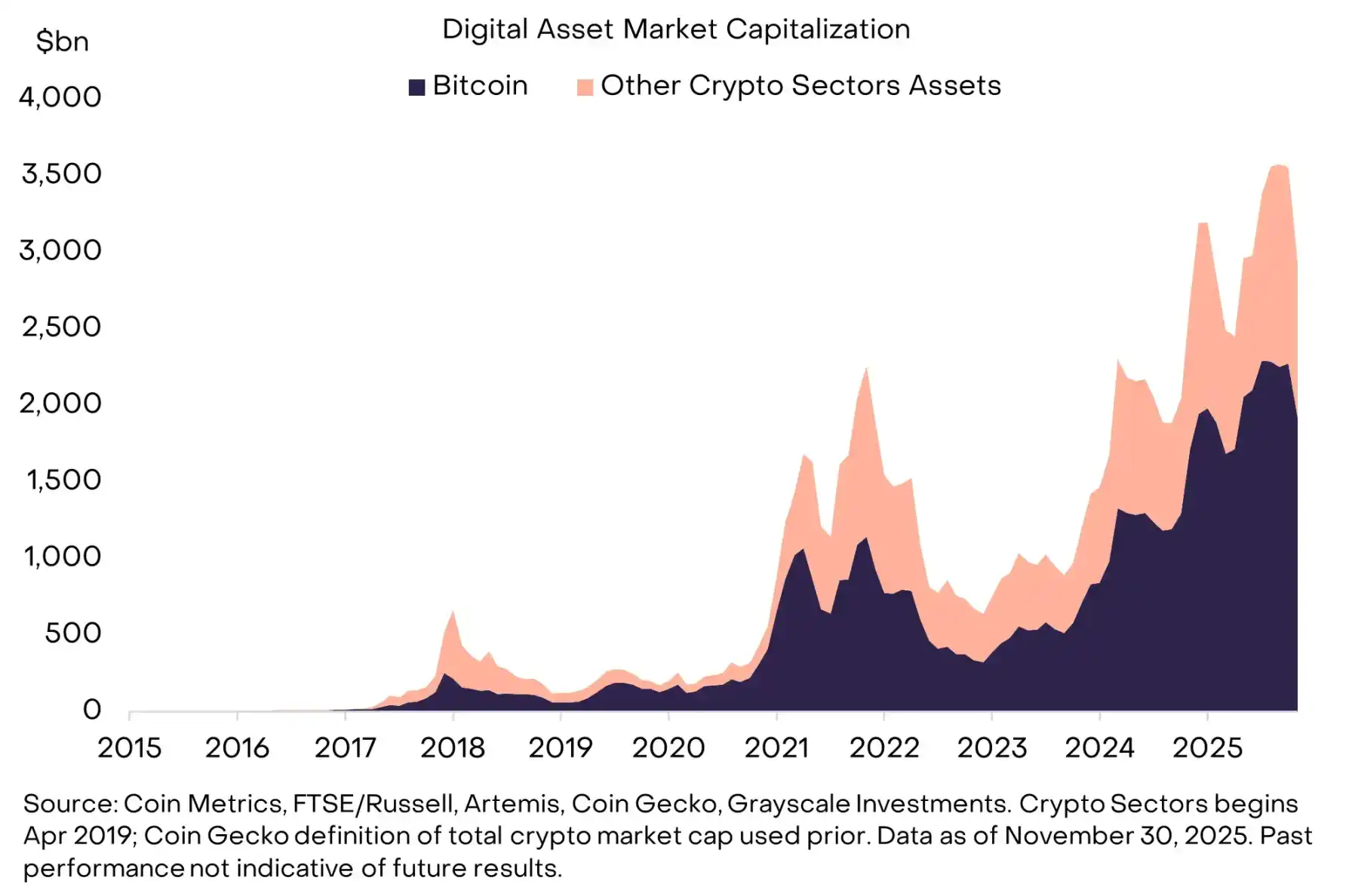
Fifteen years ago, cryptocurrency was still an experimental endeavor: there was only one asset, Bitcoin, with a market cap of approximately $1 million. Today, cryptocurrency has developed into a nascent industry and grown into a medium-sized alternative asset class, consisting of millions of tokens with a total market cap of around $3 trillion (see Chart 1).
As major economies gradually establish more complete regulatory architectures, the integration of public blockchains with the traditional financial system is deepening, continuously attracting long-term oriented capital into this market.
Chart 1: Crypto assets have grown into a medium-sized alternative asset class
Throughout the development of crypto assets, token valuations have experienced four major cyclical drawdowns, roughly following a four-year rhythm (see Chart 2). In three of these cases, the cyclical peaks occurred approximately 1 to 1.5 years after Bitcoin halving events; Bitcoin halvings themselves also occur on a four-year cycle.
The current bull market has lasted over three years, with the most recent Bitcoin halving occurring in April 2024, more than 1.5 years ago. Therefore, some market participants, based on historical patterns, judge that Bitcoin's price may have peaked in October, and 2026 could be a challenging year for crypto asset returns.
Chart 2: Rising valuations in 2026 would mark the end of the "four-year cycle" theory
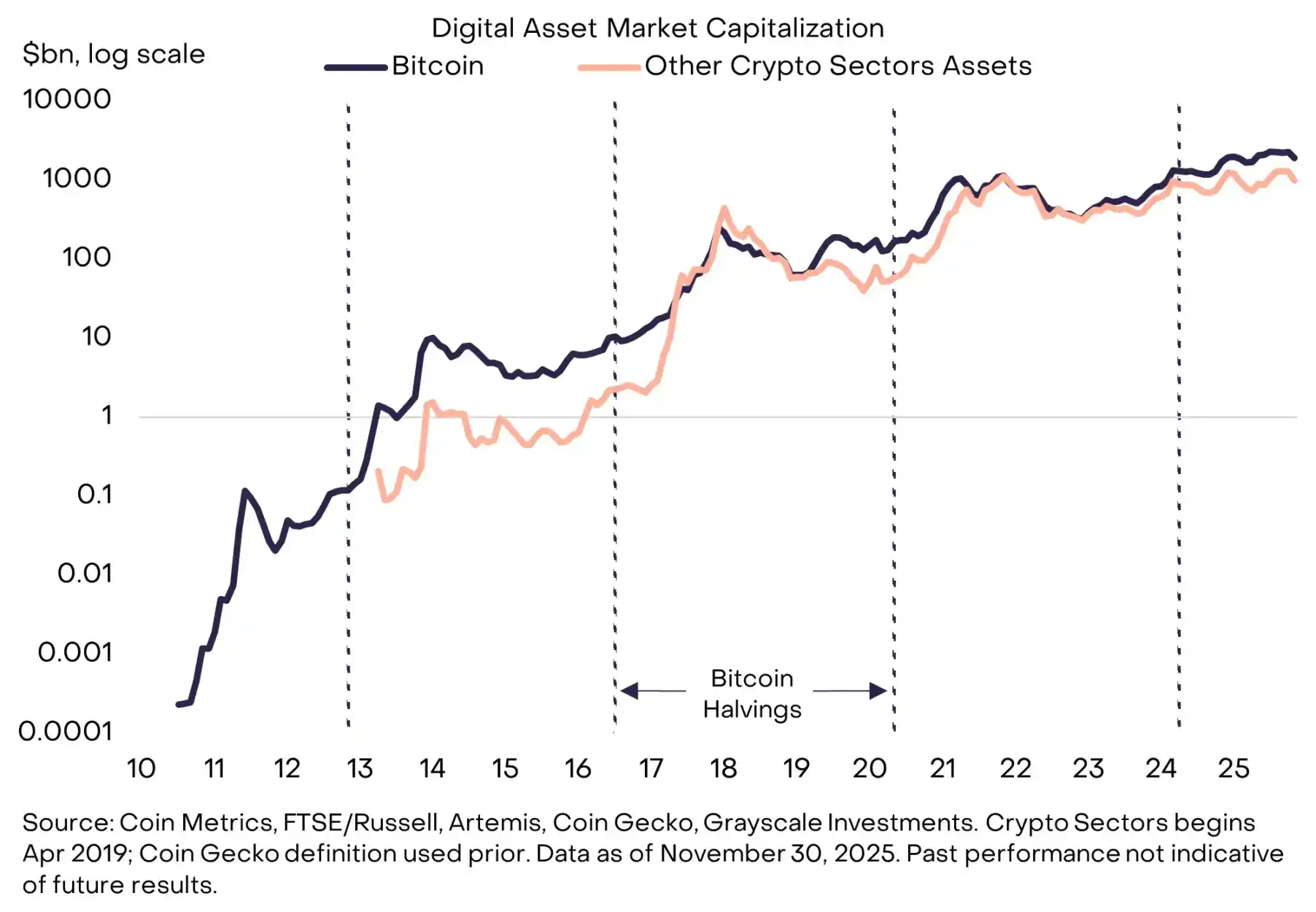
Grayscale believes the crypto asset class is in a sustained bull market, and 2026 will be a key year marking the end of the so-called "four-year cycle." We expect valuations across six major crypto asset sectors to rise overall in 2026 and judge that Bitcoin's price is likely to break its previous all-time high in the first half of the year.
Our optimism is primarily based on two core pillars:
First, macro demand for alternative stores of value will persist.
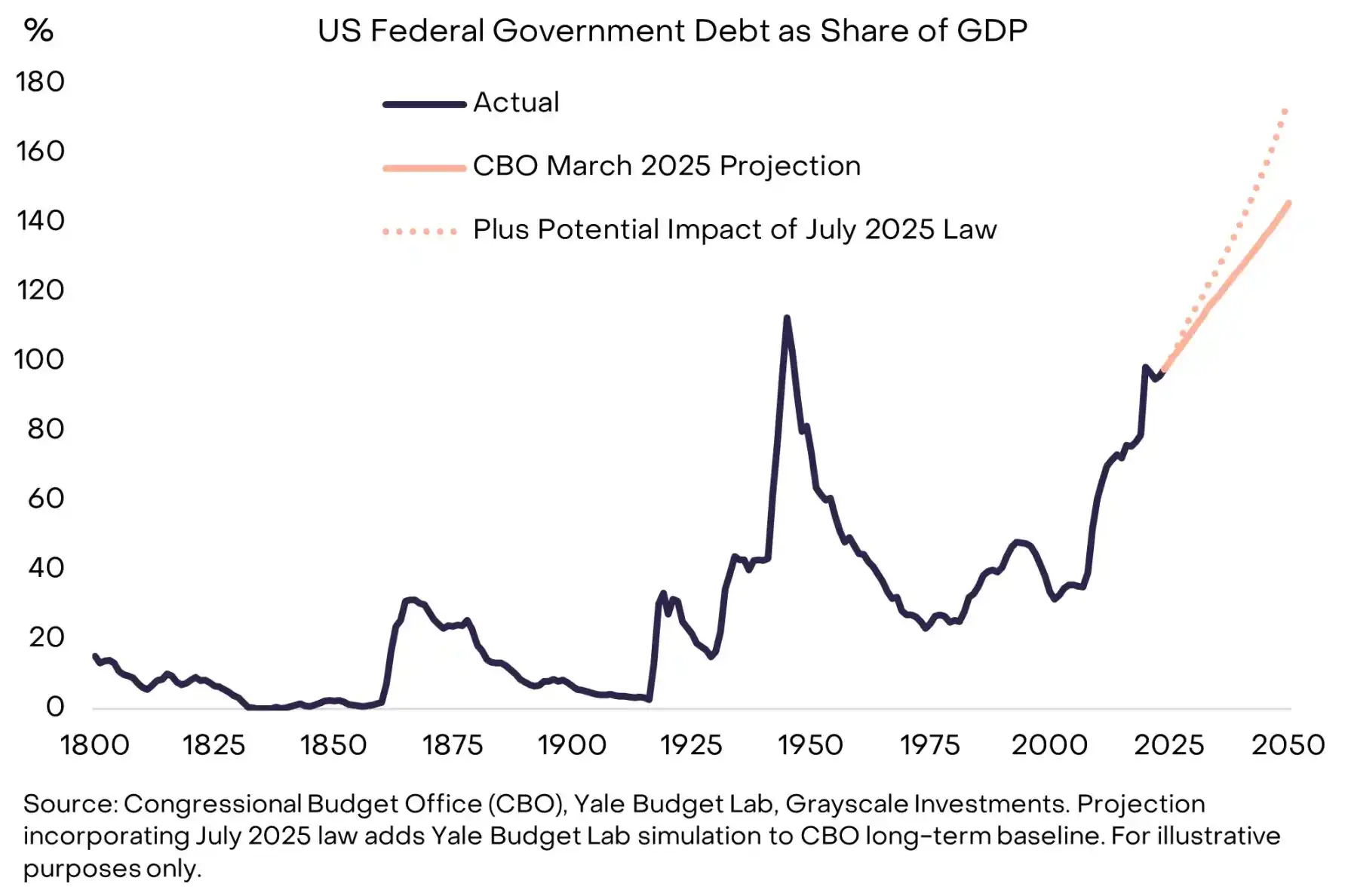
By market capitalization, Bitcoin and Ethereum are the two largest crypto assets today and can be viewed as scarce digital commodities and alternative monetary assets. Meanwhile, the fiat system (and assets denominated in fiat) face additional risks, as high and rising public sector debt could create inflationary pressures over the medium to long term (see Chart 3).
In this context, scarce commodities, whether physical like gold and silver or digital like Bitcoin and Ethereum, can act as "ballast" in portfolios hedging against fiat risk. In our view, as long as the risk of fiat devaluation continues to rise, portfolio demand for Bitcoin and Ethereum is likely to strengthen concurrently.
Chart 3: U.S. debt issues undermine the credibility of low inflation expectations
Second, regulatory clarity is driving institutional capital into the public blockchain space.
This is easily overlooked, but until this year, the U.S. government was still investigating and/or litigating against several leading crypto industry entities, including Coinbase, Ripple, Binance, Robinhood, Consensys, Uniswap, and OpenSea. Even today, exchanges and other crypto intermediaries still lack clear, unified regulatory guidance at the spot market level.
However, the situation is slowly but decidedly shifting.
In 2023, Grayscale won its lawsuit against the U.S. Securities and Exchange Commission (SEC), paving the way for crypto spot exchange-traded products (ETPs);
In 2024, Bitcoin and Ethereum spot ETPs officially entered the market;
In 2025, the U.S. Congress passed the GENIUS Act for stablecoins, and regulators began adjusting their stance towards the crypto industry, emphasizing consumer protection and financial stability while collaborating with the industry to provide clearer guidance;
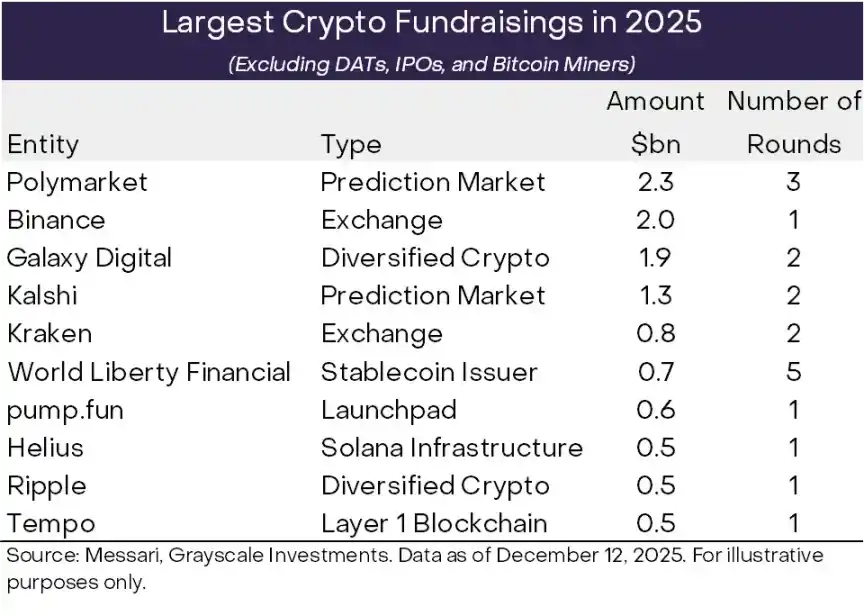
In 2026, Grayscale expects Congress to pass bipartisan crypto market structure legislation, which could institutionally solidify the role of blockchain finance in U.S. capital markets and further drive sustained inflows of institutional investment (see Chart 4).
Chart 4: Rising financing scale may reflect growing institutional confidence
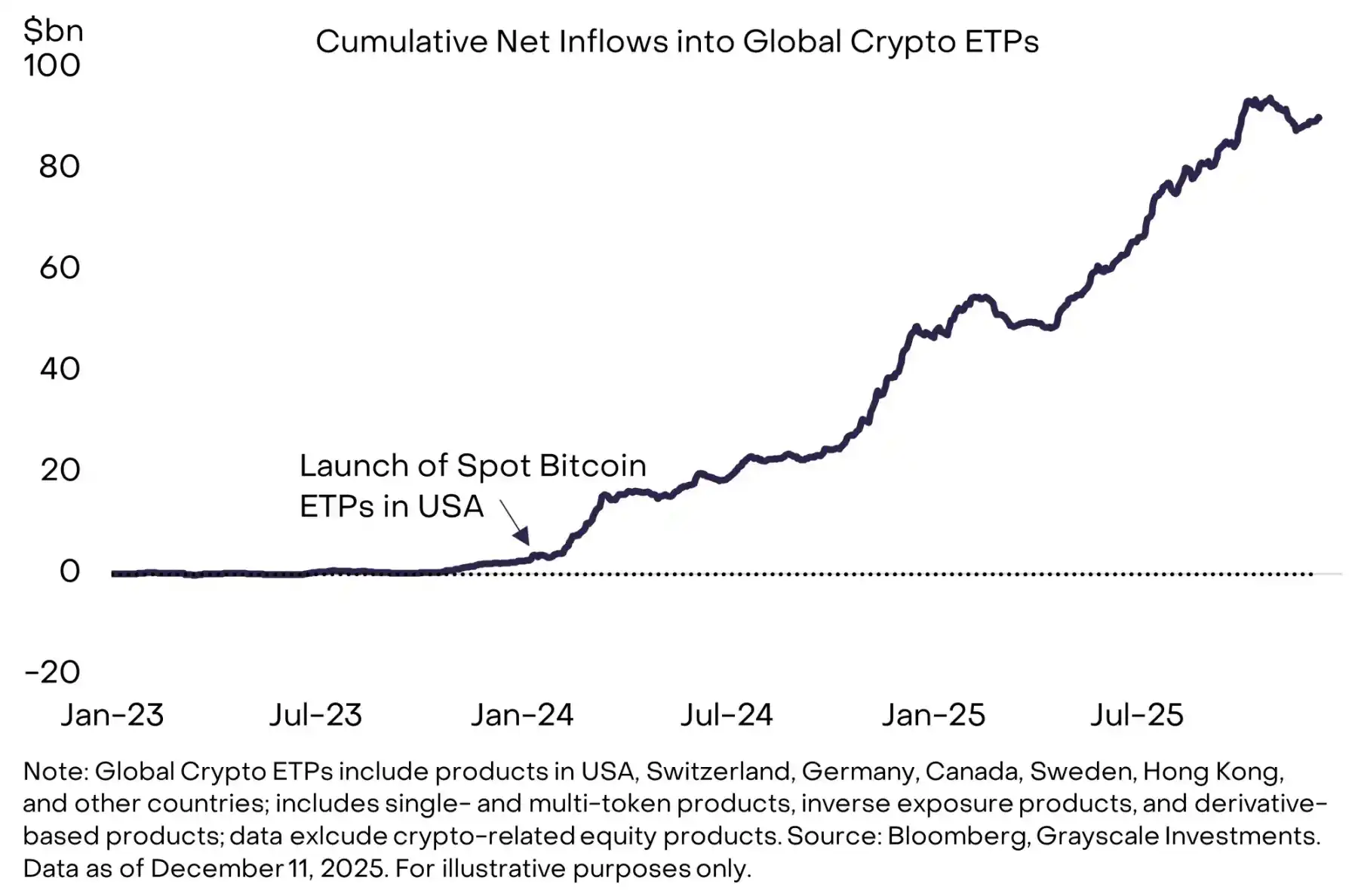
In our view, new capital entering the crypto ecosystem will primarily flow in through spot ETPs. Since Bitcoin spot ETPs launched in the U.S. in January 2024, global crypto ETPs have recorded approximately $87 billion in net inflows (see Chart 5).
Although these products achieved significant success upon launch, the process of integrating crypto assets into mainstream investment portfolios is still in its early stages. Grayscale estimates that less than 0.5% of U.S. trustee/advisor-managed wealth is currently allocated to crypto assets. As more investment platforms complete due diligence, establish corresponding capital market assumptions, and include crypto assets in model portfolios, this percentage is expected to rise steadily.
Beyond wealth management channels, some pioneering institutions have already allocated crypto ETPs in their institutional portfolios, including Harvard Management Company and Mubadala (one of Abu Dhabi's sovereign wealth funds). We expect this list of institutions to expand significantly by 2026.
Chart 5: Crypto spot ETPs continue to attract net inflows
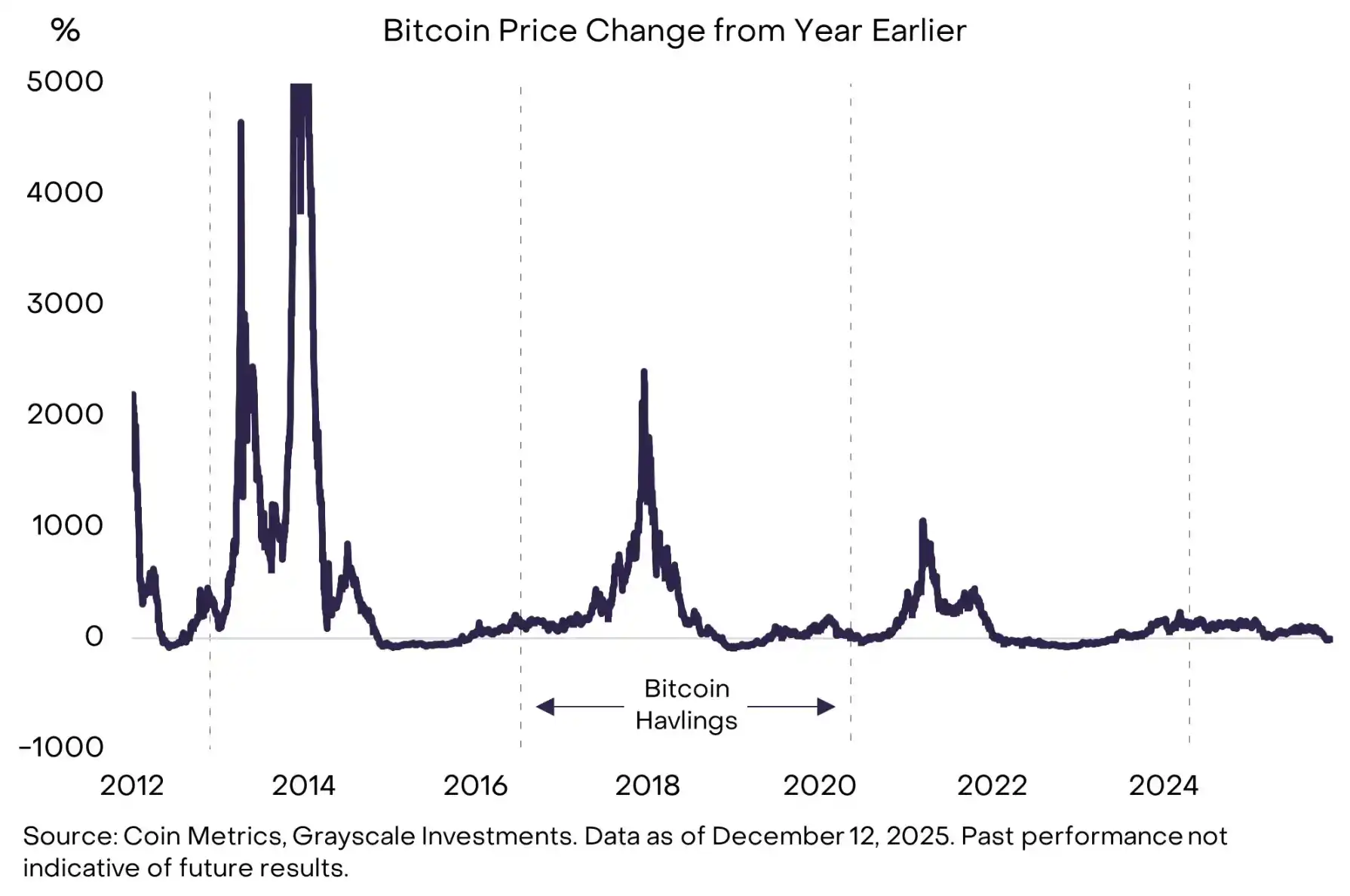
As crypto markets are increasingly driven by institutional capital inflows, the characteristics of price performance have also changed. In each previous bull market, Bitcoin's price rose by at least 1000% within a year (see Chart 6). In the current cycle, the peak year-over-year increase was approximately 240% (as of the period ending March 2024).
We believe this difference reflects more robust, sustained institutional buying behavior recently, rather than the retail sentiment-driven FOMO patterns of past cycles. Although crypto asset investment still carries significant risks, at the time of writing this report, we judge the probability of a deep and prolonged cyclical drawdown is relatively low. In contrast, the possibility of more平稳, gradual price appreciation, driven by sustained institutional inflows, is greater and likely to dominate the trend next year.
Chart 6: Bitcoin's price has not experienced a sharp spike this cycle
A relatively friendly macro market environment may also provide some buffer against downside risks for token prices in 2026.
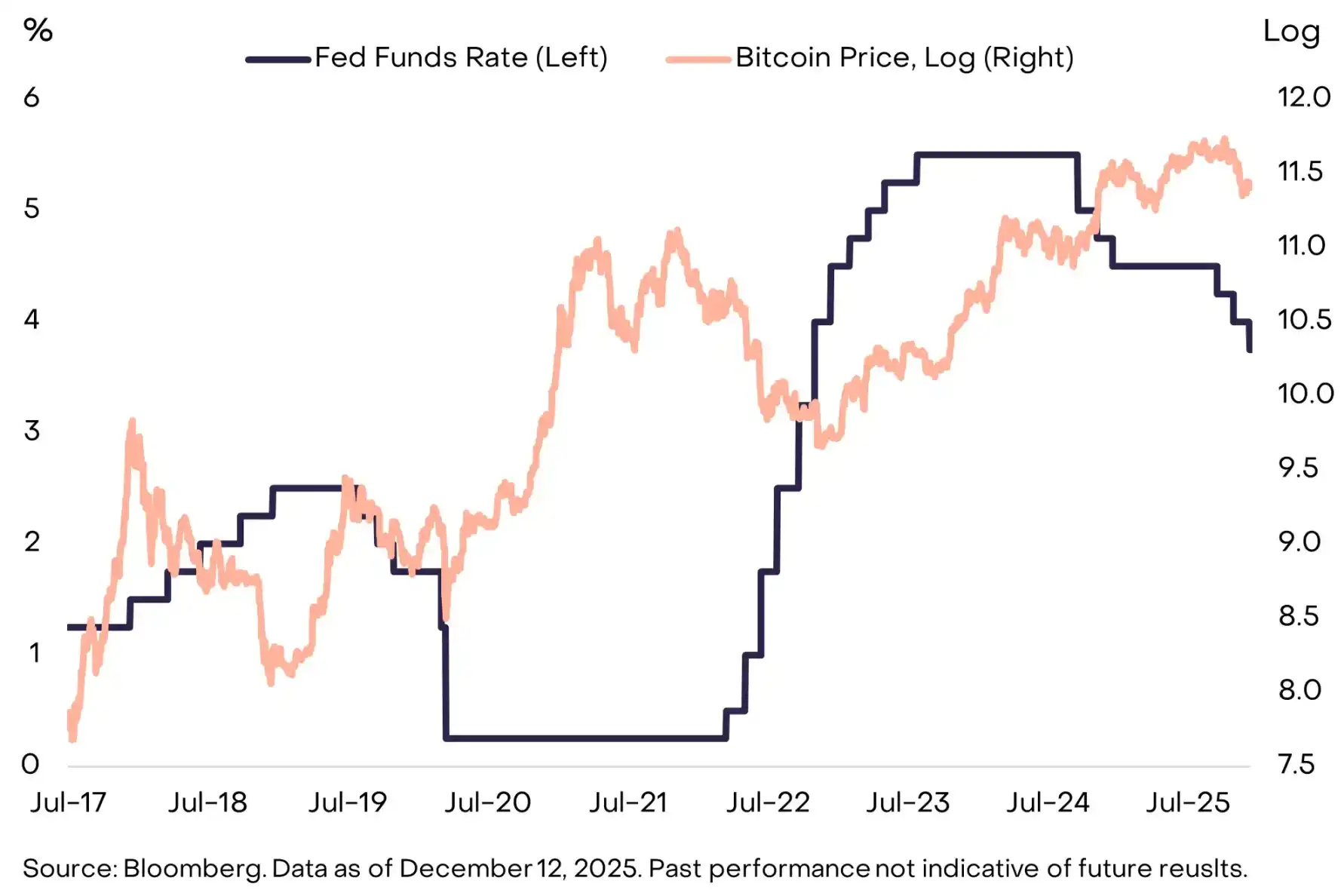
Historically, the previous two cyclical peaks occurred during Federal Reserve rate hiking phases (see Chart 7). In contrast, the Fed has cut rates three times in 2025 and is expected to continue lowering rates next year.
Kevin Hassett, seen as a potential successor to Jerome Powell as Fed Chair, recently stated on "Face the Nation": "The American people can expect that President Trump will choose someone who will help them get cheaper car loans and get a mortgage more easily at lower rates."
Overall, economic growth combined with a accommodative Fed policy environment typically favors increased risk appetite among investors and creates potential upside for risk assets, including crypto assets.
Chart 7: Previous cyclical peaks often coincided with Fed rate hikes
Like other asset classes, crypto asset prices are driven by both fundamentals and capital flows. Commodity markets are cyclical, and crypto assets may also experience prolonged cyclical drawdowns at some future stages. However, we do not believe 2026 presents such conditions.
From a fundamental perspective, the supporting factors remain solid: sustained macro demand for alternative stores of value and institutional capital entry facilitated by improved regulatory clarity are laying a long-term foundation for public blockchain technology. Meanwhile, new capital continues to enter the market. By the end of next year, crypto ETPs are likely to be present in more investment portfolios. This cycle has not seen a single, concentrated wave of retail capital; instead, it has been characterized by sustained, stable allocation demand for crypto ETPs from various portfolios. In an overall friendly macro environment, we believe this is the key condition for the crypto asset class to reach new highs in 2026.
Top 10 Crypto Investment Themes for 2026
Crypto assets are a highly diversified asset class, reflecting the multitude of applications covered by public blockchain technology. The following section outlines Grayscale's assessment of the ten most important crypto investment themes for 2026, plus two additional "red herrings." For each theme, we list the tokens we view as most relevant. For a classification of investable digital asset types, refer to our Crypto Sectors framework.
Theme 1: Dollar Devaluation Risks Drive Demand for Monetary Alternatives
Relevant Crypto Assets: BTC, ETH, ZEC
The U.S. economy faces structural debt issues (refer back to Chart 3), which could pressure the U.S. dollar's status as a store of value over the medium to long term. Other countries face similar challenges, but as the dollar remains the world's most important international currency today, the credibility of U.S. policy is particularly critical for potential cross-border capital flows.
In our view, only a small subset of digital assets are viable as stores of value, requiring sufficient adoption, highly decentralized network structures, and constrained supply growth. The most typical representatives are the two largest crypto assets by market cap—Bitcoin and Ethereum. Similar to physical gold, their value stems partly from their scarcity and autonomy.
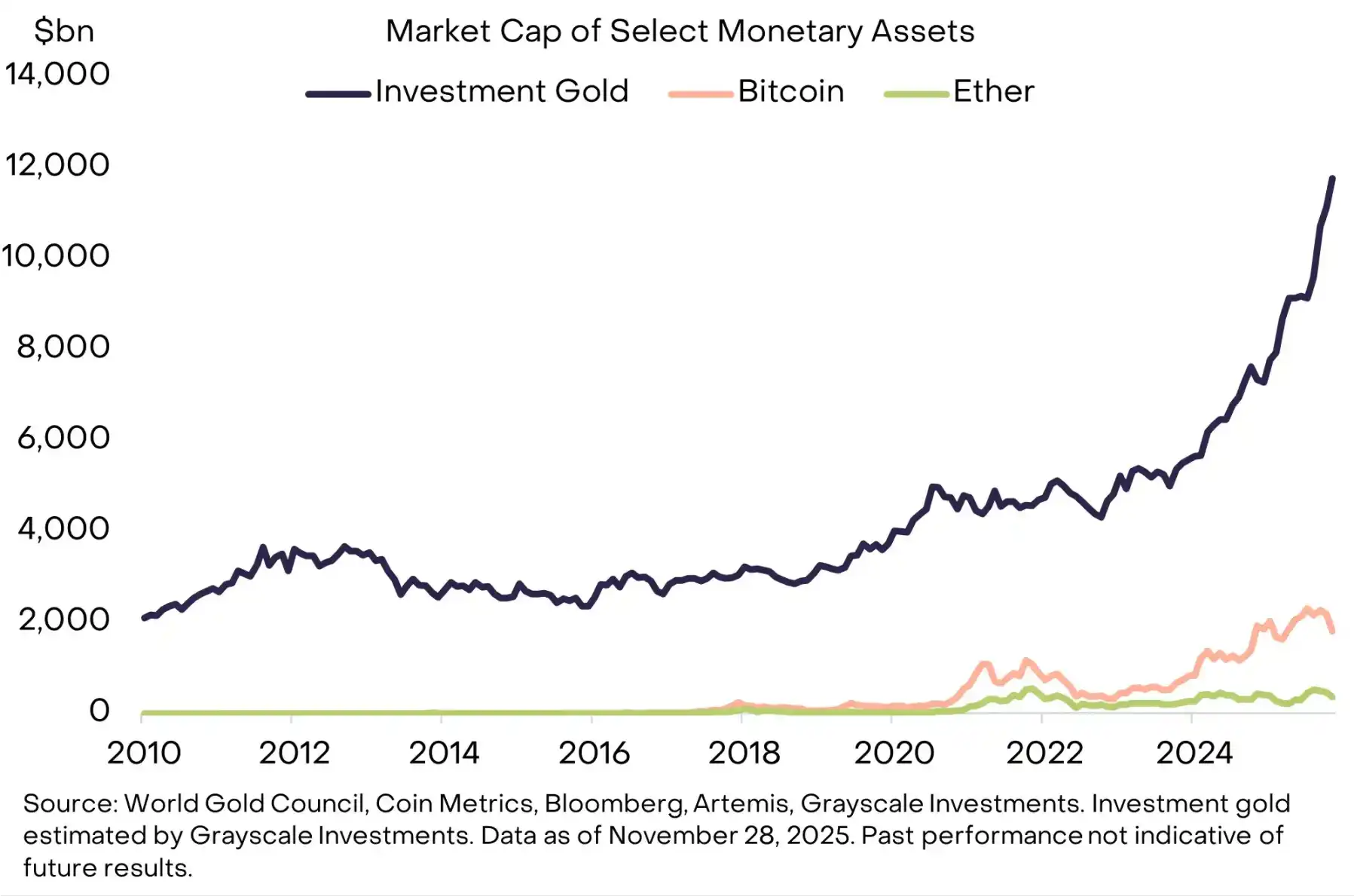
Bitcoin's total supply is permanently capped at 21 million coins, determined entirely by programmatic rules. For example, we can be highly certain that the 20 millionth Bitcoin will be mined in March 2026. This transparent, predictable, and ultimately scarce digital currency system is conceptually simple, but its appeal is growing in the current environment where the fiat system faces tail risks. As long as the macro imbalances causing fiat risks continue to worsen, portfolio demand for alternative store-of-value assets is likely to keep increasing (see Chart 8).
Additionally, Zcash, a smaller, privacy-focused decentralized digital currency, may also be suitable for portfolio allocations hedging dollar devaluation risk (see Theme 5 for details).
Chart 8: Macro imbalances may drive increased demand for alternative stores of value
Theme 2: Improved Regulatory Clarity Supports Broader Digital Asset Adoption
Relevant Crypto Assets: Nearly All
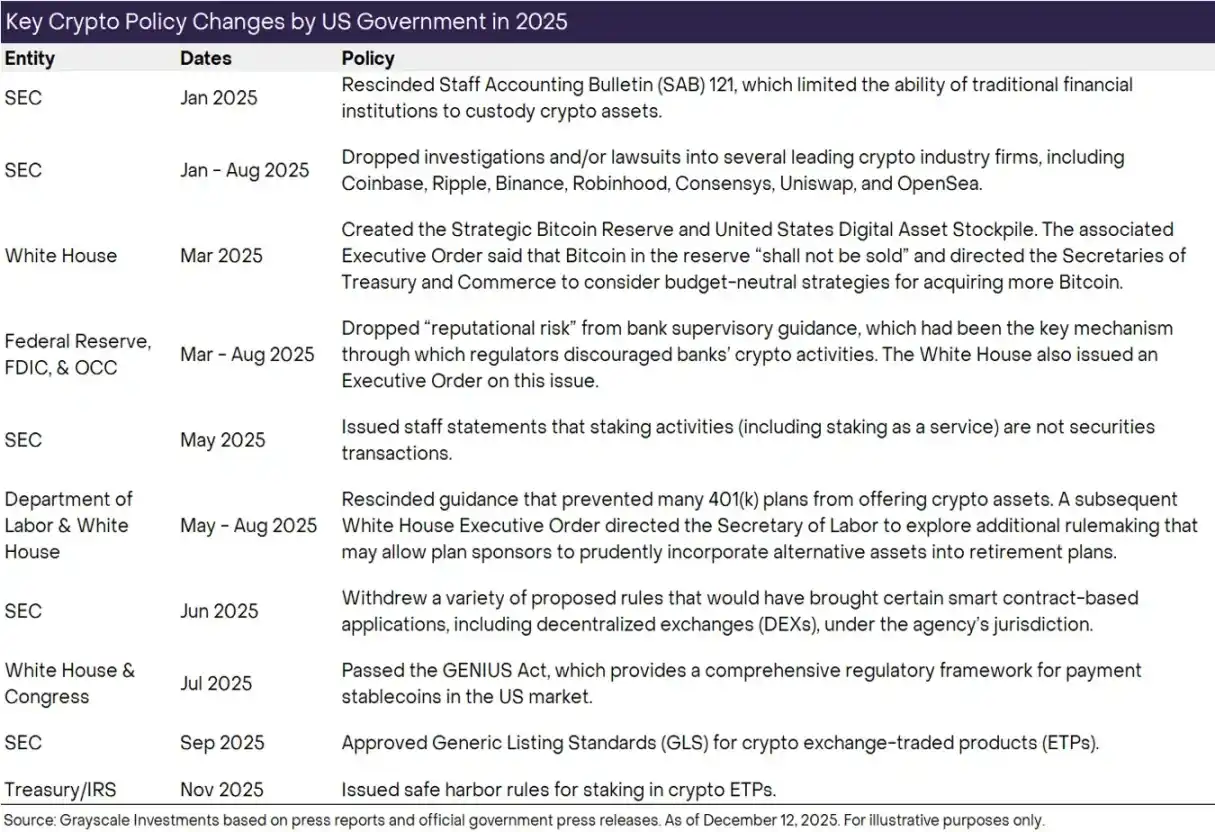
The U.S. took key steps towards crypto regulatory clarity in 2025, including: passing the GENIUS Act for stablecoins, repealing the SEC's Staff Accounting Bulletin No. 121 (SAB 121, related to custody accounting), introducing universal listing standards for crypto ETPs, and addressing crypto industry access to the traditional banking system (see Chart 9).
Looking ahead to 2026, we expect an even more decisive step—the passage of bipartisan crypto market structure legislation. The U.S. House of Representatives passed its version of the bill, the Clarity Act, in July, and the Senate subsequently initiated its own legislative process. Although specific provisions require further negotiation, the overall framework suggests this legislation will provide a rule set for crypto capital markets analogous to traditional finance, covering registration and disclosure requirements, classification standards for crypto assets, and rules governing insider conduct.
Practically, a more complete regulatory framework taking shape in the U.S. and other major economies means regulated financial services institutions may formally incorporate digital assets onto their balance sheets and begin transacting on blockchains. This could also facilitate on-chain capital formation—both startups and established companies might issue compliant on-chain tokens. By further unlocking the potential of blockchain technology, regulatory clarity could lift the value anchor of the crypto asset class overall.
Given the potential importance of regulatory clarity for driving crypto asset development in 2026, we believe significant partisan disagreement or breakdown in the relevant legislative process should be viewed as a material downside risk.
Chart 9: The U.S. significantly advanced crypto regulatory clarity in 2025
Theme 3: Stablecoin Influence Expands Post-GENIUS Act Passage
Relevant Crypto Assets: ETH, TRX, BNB, SOL, XPL, LINK
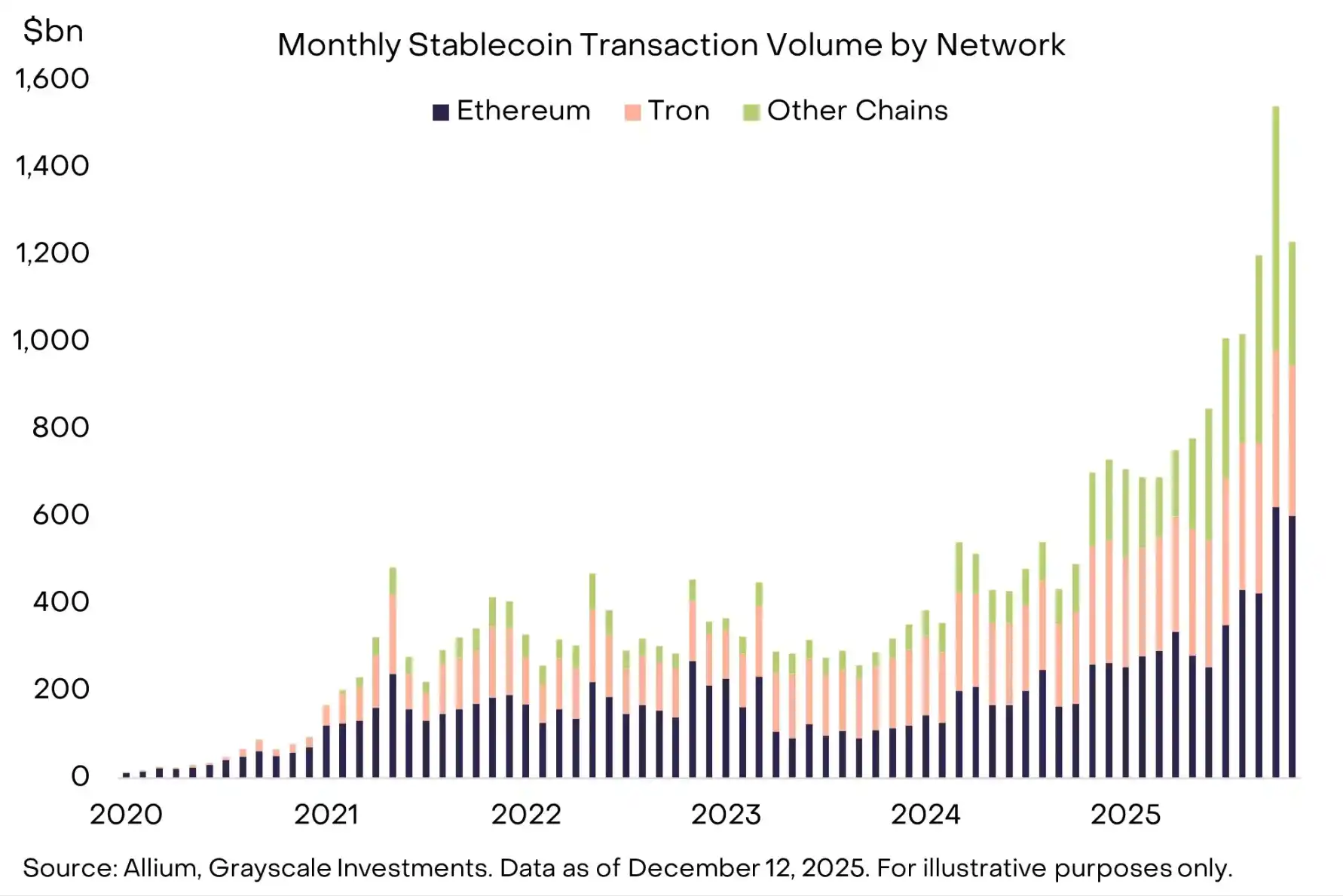
Stablecoins had a true "breakout moment" in 2025: their outstanding supply grew to approximately $300 billion, with average monthly trading volume around $1.1 trillion over the past six months through November; meanwhile, the U.S. Congress passed the GENIUS Act, and substantial institutional capital began accelerating into this space (see Chart 10).
Looking to 2026, we expect these changes to translate into practical applications: stablecoins will be more widely embedded in cross-border payment services; used as collateral on derivative exchanges; appear on corporate balance sheets; and serve as an alternative to credit cards in online consumer payments. Concurrently, the continued heating up of prediction markets may further generate new demand for stablecoins.
Sustained growth in stablecoin trading volume will directly benefit the blockchain networks that host these transactions (e.g., ETH, TRX, BNB, SOL, etc.), while also driving the development of supporting infrastructure (like LINK) and decentralized finance (DeFi) applications (see Theme 7 for details).
Chart 10: Stablecoins reach a critical breakout period
Theme 4: Asset Tokenization Reaches a Critical Inflection Point
Relevant Crypto Assets: LINK, ETH, SOL, AVAX, BNB, CC
From a current scale perspective, tokenized assets remain negligible: they account for only about 0.01% of the total global stock and bond market capitalization (see Chart 11). Grayscale expects asset tokenization to experience accelerated growth in the coming years as blockchain technology matures and regulatory clarity improves.
In our view, it is not unimaginable for the scale of tokenized assets to grow approximately 1000-fold by 2030. This expansion process is likely to create significant value for blockchain networks processing tokenized asset transactions and various supporting applications.
Currently, leading public chains in the tokenized asset space include Ethereum (ETH), BNB Chain (BNB), and Solana (SOL), but this landscape could still change in the future. Among supporting applications, Chainlink (LINK) is seen as having a particularly strong competitive advantage due to its unique and comprehensive software technology stack.
Chart 11: Tokenized assets have enormous room for growth

Theme 5: Blockchain Goes Mainstream, Increasing Demand for Privacy Solutions
Relevant Crypto Assets: ZEC, AZTEC, RAIL
Privacy is a fundamental component of the financial system. Most people assume their salary, tax information, asset size, and spending habits should not be publicly displayed on a public ledger. However, most blockchains are designed by default to be highly transparent. If public blockchains are to integrate more deeply into the financial system, they must be accompanied by more mature and robust privacy infrastructure—and this is becoming increasingly evident as regulation drives the convergence of blockchain and traditional finance.
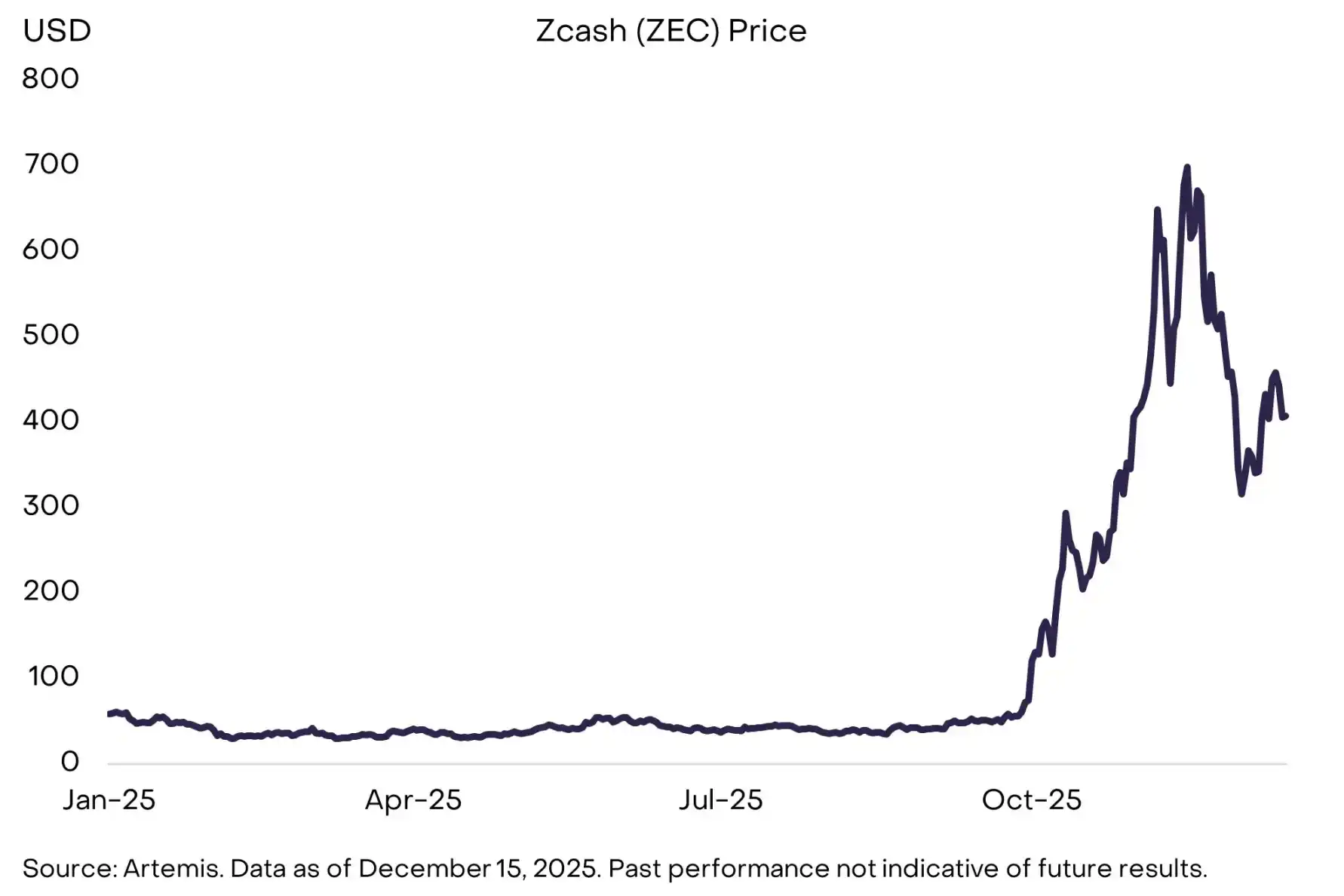
Amid rising investor focus on privacy issues, one potential beneficiary is Zcash (ZEC): a decentralized digital currency structurally similar to Bitcoin but with built-in privacy features. Zcash saw significant gains in Q4 2025 (see Chart 12). Other important projects include Aztec (a privacy-focused Ethereum Layer 2) and Railgun (privacy middleware for DeFi).
Additionally, we may see mainstream smart contract platforms more widely adopt "confidential transaction" mechanisms, such as Ethereum's ERC-7984 standard and Solana's Confidential Transfers token extension. Meanwhile, the improvement of privacy tools may also force simultaneous upgrades in identity verification and compliance infrastructure within the DeFi space.
Chart 12: Crypto investors' attention to privacy features is increasing
Theme 6: AI Centralization Calls for Blockchain-Based Solutions
Relevant Crypto Assets: TAO, IP, NEAR, WORLD
The underlying fit between crypto technology and artificial intelligence has never been clearer or stronger. Currently, AI systems are increasingly centralizing around a few leading companies, raising concerns about trust, bias, and ownership; crypto technology offers a set of primitives that directly address these risks.
For example, decentralized AI development platforms like Bittensor aim to reduce reliance on centralized AI technology; World's verifiable "Proof of Personhood" attempts to distinguish real humans from AI agents in an environment flooded with synthetic activity; and networks like Story Protocol provide transparent, traceable on-chain expression for intellectual property in an era where the origin of digital content is becoming harder to identify. Meanwhile, tools like X402, a zero-fee stablecoin payment open layer running on Base and Solana, provide the low-cost, instant micropayment capability needed for economic interaction between agents or between machines and humans.
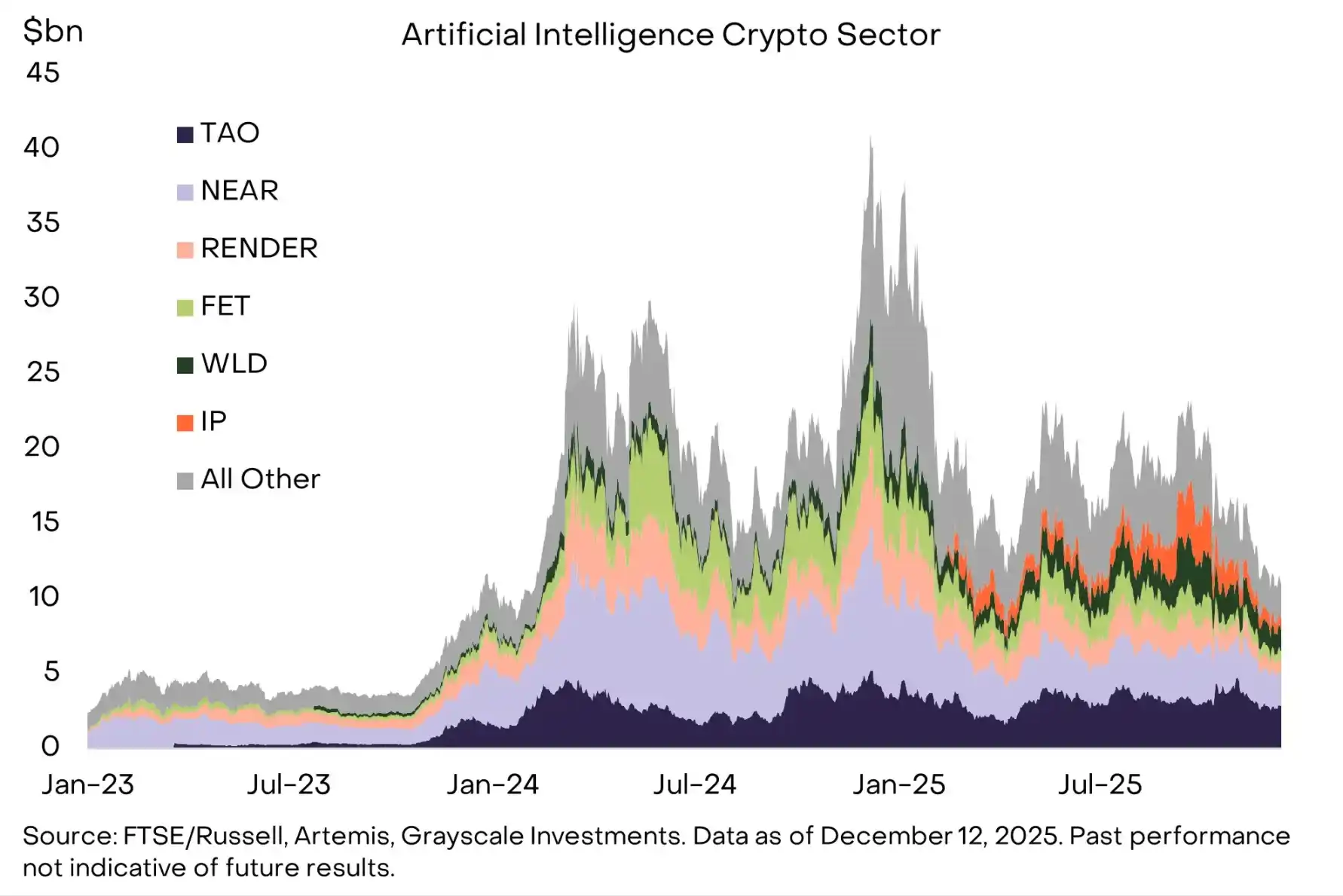
These elements collectively form the early infrastructure of the so-called "agent economy": a system where identity, computing power, data, and payments must be verifiable, programmable, and censorship-resistant. Although this ecosystem is still early and unevenly developed, the intersection of crypto and AI remains one of the most imaginative long-term application directions in the entire industry. As AI becomes more decentralized, autonomous, and economically capable, protocols building real infrastructure are poised to be potential beneficiaries (see Chart 13).
Chart 13: Blockchain offers solutions to key risks posed by AI
Theme 7: DeFi Accelerates, Led by the Lending Track
Relevant Crypto Assets: AAVE, MORPHO, MAPLE, KMNO, UNI, AERO, RAY, JUP, HYPE, LINK
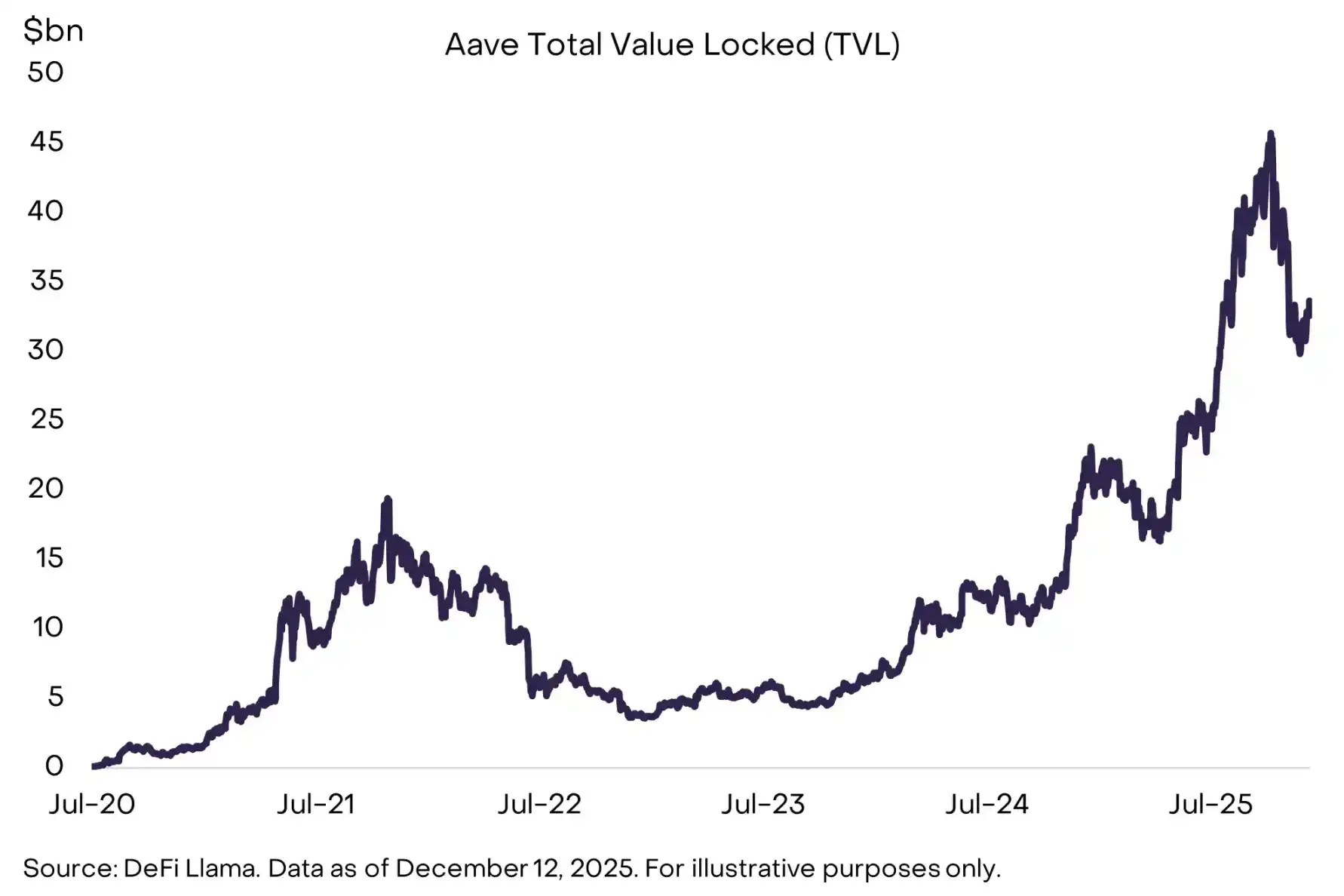
Driven by both improved technological maturity and a better regulatory environment, DeFi applications significantly accelerated in 2025. The growth of stablecoins and tokenized assets are the most prominent success stories, but meanwhile, the DeFi lending space also achieved substantial expansion, led by protocols like Aave, Morpho, and Maple Finance (see Chart 14).
Concurrently, decentralized perpetual futures exchanges (like Hyperliquid) have consistently approached, and even rivaled, some large centralized derivative exchanges in metrics like open interest and daily trading volume. Looking ahead, as liquidity improves, cross-protocol interoperability strengthens, and connections with real-world price systems become tighter, DeFi is gradually becoming a credible alternative for users wishing to conduct financial activities directly on-chain.
We expect more DeFi protocols to partner with traditional fintech companies to leverage their mature infrastructure and existing user bases. In this process, core DeFi protocols are likely to continue benefiting—including lending platforms (e.g., AAVE), decentralized exchanges (e.g., UNI, HYPE), and related infrastructure protocols (e.g., LINK); simultaneously, the public chain networks hosting most DeFi activity (e.g., ETH, SOL, BASE) will also benefit.
Chart 14: DeFi scale and forms continue to expand, ecosystem increasingly diverse
Theme 8: Mainstream Adoption Forces Next-Generation Infrastructure Upgrades
Relevant Crypto Assets: SUI, MON, NEAR, MEGA
New generations of blockchains are constantly pushing the technological boundaries forward. However, some investors believe that more block space is not needed currently because demand on existing public chains has not been fully absorbed. Solana was once a classic case of this: an extremely fast but underutilized public chain, it was seen as "excess block space" until subsequent application waves arrived, transforming it into one of the industry's most successful examples.
Not all current high-performance public chains will replicate Solana's path, but we believe a few projects among them have the potential to break through. Superior technology does not necessarily lead to adoption, but the architecture of these next-generation networks gives them unique advantages in emerging application scenarios, such as: AI micropayments, real-time gaming loops, high-frequency on-chain trading, and intent-based systems.
In this tier, we expect Sui to be particularly prominent, benefiting from clear technical leadership and a highly integrated development strategy (see Chart 15). Other projects worth watching include Monad (parallelized EVM architecture), MegaETH (ultra-fast Ethereum Layer 2), and Near (a blockchain focused on AI and making progress on its Intents product).
Chart 15: Next-gen blockchains like Sui enable faster, lower-cost transactions

Theme 9: Increased Focus on Sustainable Revenue Capability
Relevant Crypto Assets: SOL, ETH, BNB, HYPE, PUMP, TRX
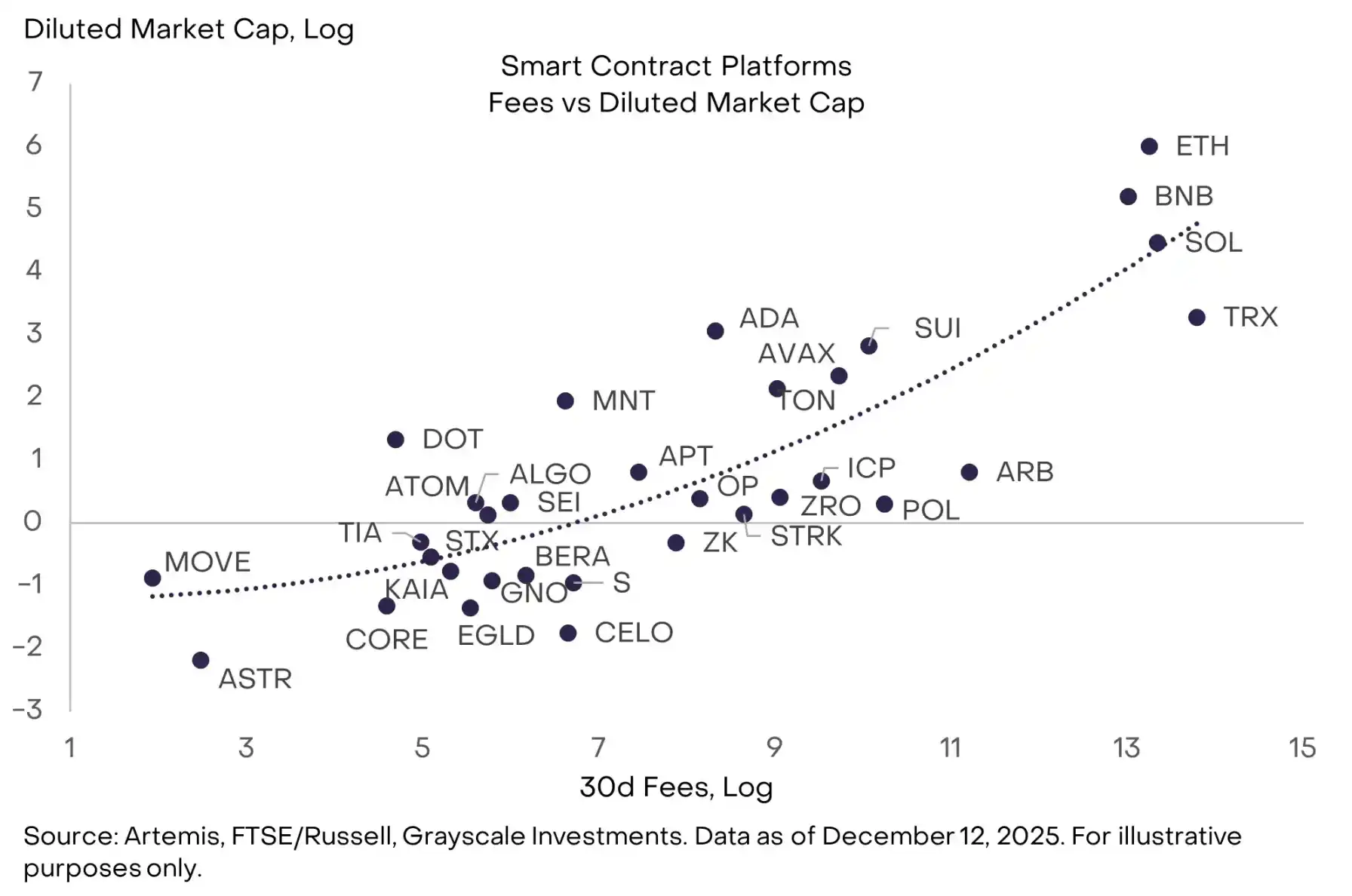
Blockchains are not traditional companies, but they do have quantifiable fundamental metrics, including: user count, number of transactions, fees, total value locked (TVL), developer size, and application ecosystem. Among these metrics, Grayscale believes transaction fees are the most valuable single fundamental metric, as they are the most difficult to manipulate artificially and offer higher comparability across different blockchains (while also showing the best empirical fit).
From a traditional corporate finance perspective, transaction fees can be analogized to "revenue." For blockchain applications, a further distinction is needed between protocol-layer fees/revenue and "supply-side" fees/revenue. As institutional investors begin systematically allocating to crypto assets, we expect they will pay more attention to blockchains and applications with high or clearly growing fee revenue levels (Bitcoin excepted).
Currently, among smart contract platforms, those with relatively high fee revenue include TRX, SOL, ETH, and BNB (see Chart 16); among application-layer assets, those with high revenue performance include HYPE, PUMP, and others.
Chart 16: Institutional investors may scrutinize blockchain fundamentals more strictly
Theme 10: Investors Will "Default" to Staking
Relevant Crypto Assets: LDO, JTO
U.S. policymakers made two key adjustments regarding staking mechanism in 2025, paving the way for more token holders to participate in staking activities:
The U.S. Securities and Exchange Commission (SEC) clearly stated that liquid staking activities do not constitute securities transactions;
The Internal Revenue Service (IRS) and Treasury Department confirmed that investment trusts and exchange-traded products (ETPs) can stake digital assets.
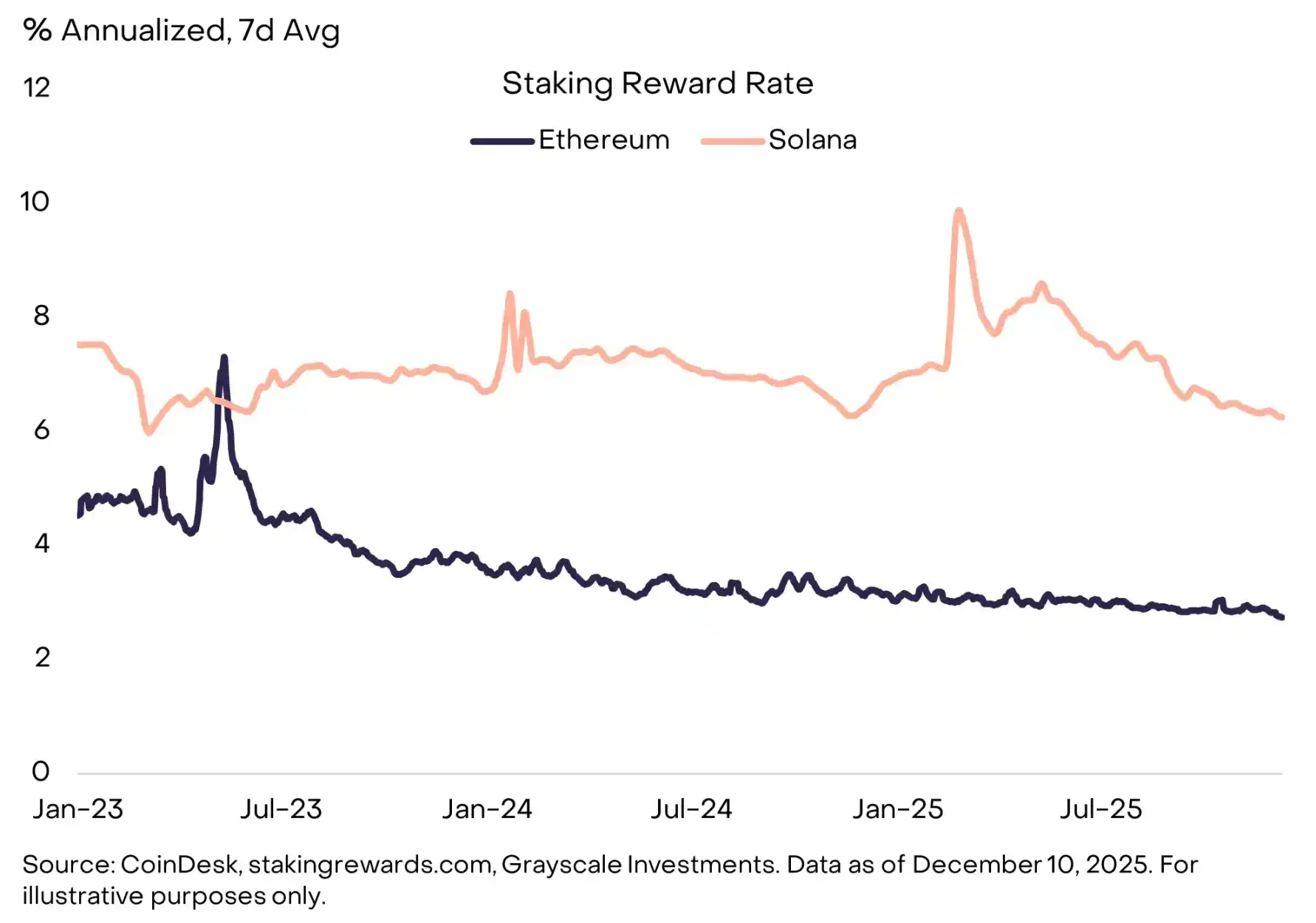
Regulatory guidance around liquid staking services is expected to directly benefit Lido and Jito—the leading liquid staking protocols by TVL (Total Value Locked) in the Ethereum and Solana ecosystems, respectively. From a broader perspective, the ability of crypto ETPs to participate in staking will likely make "staking as the default holding method" the standard structure for Proof-of-Stake (PoS) token investments, thereby pushing up the overall staking ratio and exerting some downward pressure on staking yields (see Chart 17).
In an environment where staking is more widely adopted, custodial staking through ETPs will provide investors with a convenient way to obtain staking yields; while on-chain, non-custodial liquid staking has unique advantages in terms of composability within the DeFi ecosystem. We expect this dual-track structure to persist for quite some time.
Chart 17: Proof-of-Stake (PoS) tokens inherently have a staking yield mechanism
2026's "Red Herrings"
We expect all the investment themes above to have a practical impact on crypto market development in 2026. But there are also two topics, despite high discussion volume, that we do not believe will substantially influence crypto market trends next year: the potential threat of quantum computing to cryptography, and the evolution of Digital Asset Treasuries (DATs). Significant ink will be spilled围绕 these two issues, but in our view, they are not core variables determining the market outlook.
On Quantum Computing
If quantum computing technology continues to advance, most blockchains will eventually need to upgrade their cryptographic systems. Theoretically, a sufficiently powerful quantum computer could reverse-engineer a private key from a public key, thereby generating a valid digital signature and transferring user funds. Therefore, Bitcoin and the vast majority of blockchains,乃至 the entire modern economy reliant on cryptography, will need to transition to post-quantum cryptographic tools in the long term. However, experts generally believe that quantum computers capable of breaking Bitcoin's cryptography are unlikely to appear before 2030 at the earliest. We expect research into quantum risk and community-level preparation work will accelerate in 2026, but this theme is unlikely to have a material impact on prices in the short term.
On Digital Asset Treasuries (DATs)
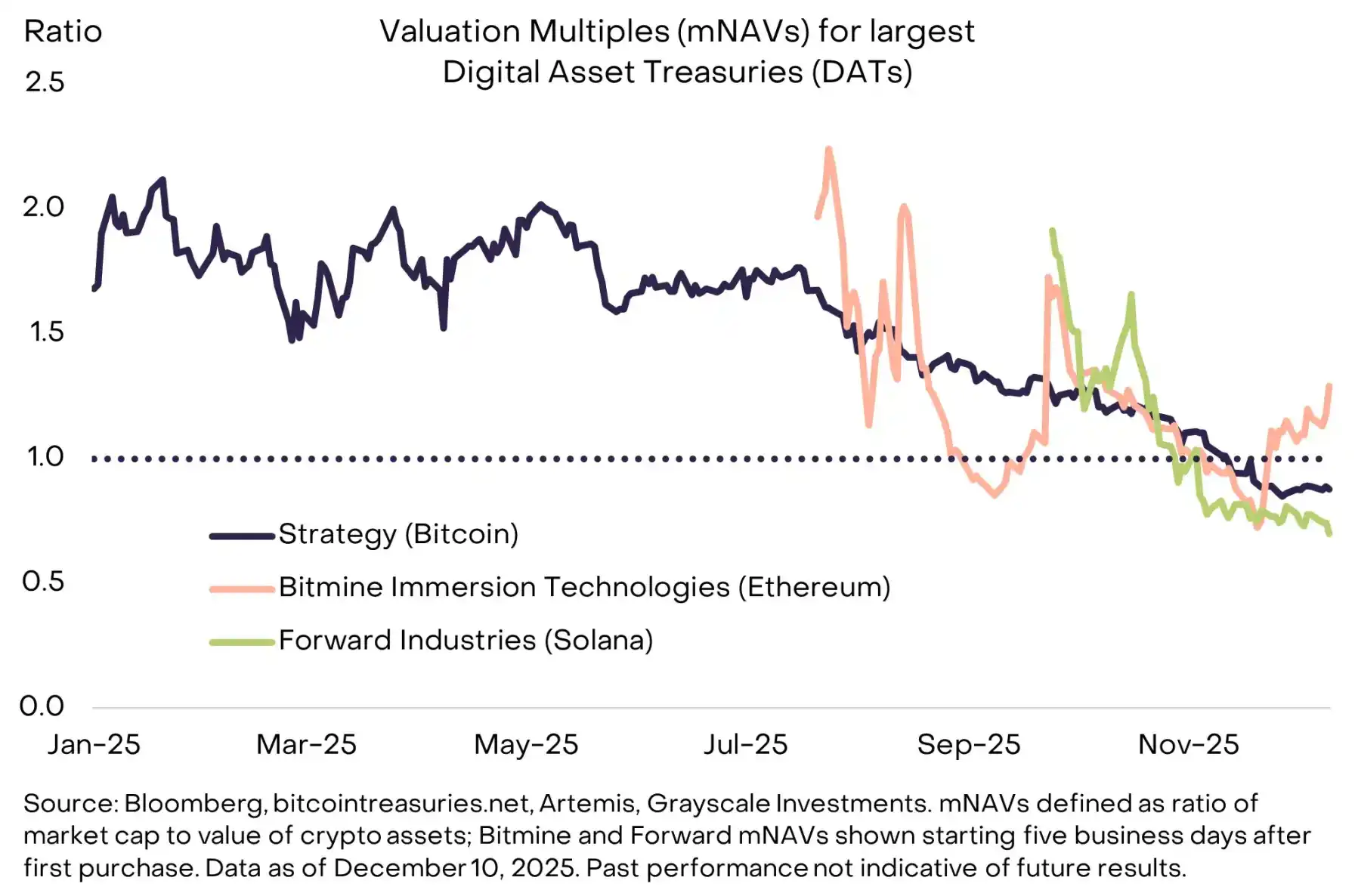
The strategy of "incorporating digital assets into corporate balance sheets," pioneered by Michael Saylor, spawned dozens of imitators in 2025. By our estimates, DATs currently hold 3.7% of Bitcoin's total supply, 4.6% of Ethereum's, and 2.5% of Solana's. However, demand for such instruments has cooled since the peak in mid-2025: the largest DATs now see their mNAV (market price to Net Asset Value) fall back to near 1.0 levels (see Chart 18).
It is important to note that most DATs do not employ excessive leverage (or are completely unleveraged), so they are unlikely to be forced to sell assets in a market downturn. The largest DAT by market cap, Strategy, recently established a USD reserve fund to ensure it can continue paying preferred stock dividends even if Bitcoin's price falls. We expect most DATs will behave more like closed-end funds: trading within a range around their NAV, occasionally at a premium or discount, but rarely actively liquidating assets.
Overall, these instruments are likely to become a permanent part of the crypto investment landscape, but in our view, they are neither likely to be a major source of new token demand in 2026 nor a significant source of selling pressure.
Chart 18: DAT premiums have significantly收敛, but large-scale asset sales are unlikely
Conclusion
We hold a positive view on the prospects for digital assets in 2026, primarily supported by the resonance of two forces: sustained macro demand for alternative stores of value and continuously improving regulatory clarity. Next year's key themes will likely involve further deepening the connectivity between blockchain finance and traditional finance, alongside sustained institutional capital inflows. Tokens gaining institutional adoption often have clear use cases, sustainable revenue models, and access to compliant trading venues and application systems. Investors can also expect the range of crypto assets investable through ETPs to continue expanding, with staking mechanisms enabled by default where conditions allow.
Concurrently, the processes of regulatory clarification and institutionalization will also raise the bar for mainstream success. For example, crypto projects seeking entry into regulated exchanges may need to meet new registration and disclosure requirements. Institutional investors are also more likely to ignore crypto assets lacking clear use cases—even if those assets currently have relatively high market capitalizations. The GENIUS Act legally distinguishes regulated payment stablecoins (which enjoy corresponding rights and obligations under U.S. law) from other stablecoins (which do not have equivalent rights). Similarly, we expect the institutional era for crypto assets will further widen the gap between assets that can access compliant channels and institutional capital and those that cannot.
The crypto industry is entering a全新的 phase, and not every token will successfully transition from the old era to the new one.
Trending Cryptos










Related Questions
QWhat are the two core pillars supporting Grayscale's optimistic outlook for the crypto market in 2026?
AThe two core pillars are: 1) Sustained macro demand for alternative stores of value due to fiat currency risks, and 2) Improved regulatory clarity driving institutional capital inflows.
QAccording to the report, which major event is expected to mark the end of the 'four-year cycle' theory in crypto?
AThe report states that a broad-based valuation increase across six crypto sectors in 2026, with Bitcoin potentially reaching a new all-time high in the first half of the year, will mark the end of the 'four-year cycle' theory.
QName three of the ten key investment themes for 2026 outlined in the Grayscale report.
AThree of the ten themes are: 1) Dollar devaluation risk driving demand for monetary alternatives, 2) Regulatory clarity supporting digital asset adoption, and 3) The continued expansion of stablecoin influence post-GENIUS Act.
QWhat two topics does the report identify as 'red herrings' that are unlikely to substantially impact the market in 2026?
AThe two 'red herrings' are: 1) Quantum computing's threat to cryptography, and 2) Digital Asset Treasuries (DATs).
QHow does the report characterize the nature of capital inflows in the current cycle compared to previous ones?
AThe report characterizes the current inflows as more steady and sustained institutional buying, driven by factors like ETPs and regulatory clarity, rather than the retail-driven, sentiment-fueled surges that defined previous cycles.
Related Reads


Trading
Hot Articles
What is SONIC
Sonic: Pioneering the Future of Gaming in Web3 Introduction to Sonic In the ever-evolving landscape of Web3, the gaming industry stands out as one of the most dynamic and promising sectors. At the forefront of this revolution is Sonic, a project designed to amplify the gaming ecosystem on the Solana blockchain. Leveraging cutting-edge technology, Sonic aims to deliver an unparalleled gaming experience by efficiently processing millions of requests per second, ensuring that players enjoy seamless gameplay while maintaining low transaction costs. This article delves into the intricate details of Sonic, exploring its creators, funding sources, operational mechanics, and the timeline of significant events that have shaped its journey. What is Sonic? Sonic is an innovative layer-2 network that operates atop the Solana blockchain, specifically tailored to enhance the existing Solana gaming ecosystem. It accomplishes this through a customised, VM-agnostic game engine paired with a HyperGrid interpreter, facilitating sovereign game economies that roll up back to the Solana platform. The primary goals of Sonic include: Enhanced Gaming Experiences: Sonic is committed to offering lightning-fast on-chain gameplay, allowing players and developers to engage with games at previously unattainable speeds. Atomic Interoperability: This feature enables transactions to be executed within Sonic without the need to redeploy Solana programmes and accounts. This makes the process more efficient and directly benefits from Solana Layer1 services and liquidity. Seamless Deployment: Sonic allows developers to write for Ethereum Virtual Machine (EVM) based systems and execute them on Solana’s SVM infrastructure. This interoperability is crucial for attracting a broader range of dApps and decentralised applications to the platform. Support for Developers: By offering native composable gaming primitives and extensible data types - dining within the Entity-Component-System (ECS) framework - game creators can craft intricate business logic with ease. Overall, Sonic's unique approach not only caters to players but also provides an accessible and low-cost environment for developers to innovate and thrive. Creator of Sonic The information regarding the creator of Sonic is somewhat ambiguous. However, it is known that Sonic's SVM is owned by the company Mirror World. The absence of detailed information about the individuals behind Sonic reflects a common trend in several Web3 projects, where collective efforts and partnerships often overshadow individual contributions. Investors of Sonic Sonic has garnered considerable attention and support from various investors within the crypto and gaming sectors. Notably, the project raised an impressive $12 million during its Series A funding round. The round was led by BITKRAFT Ventures, with other notable investors including Galaxy, Okx Ventures, Interactive, Big Brain Holdings, and Mirana. This financial backing signifies the confidence that investment foundations have in Sonic’s potential to revolutionise the Web3 gaming landscape, further validating its innovative approaches and technologies. How Does Sonic Work? Sonic utilises the HyperGrid framework, a sophisticated parallel processing mechanism that enhances its scalability and customisability. Here are the core features that set Sonic apart: Lightning Speed at Low Costs: Sonic offers one of the fastest on-chain gaming experiences compared to other Layer-1 solutions, powered by the scalability of Solana’s virtual machine (SVM). Atomic Interoperability: Sonic enables transaction execution without redeployment of Solana programmes and accounts, effectively streamlining the interaction between users and the blockchain. EVM Compatibility: Developers can effortlessly migrate decentralised applications from EVM chains to the Solana environment using Sonic’s HyperGrid interpreter, increasing the accessibility and integration of various dApps. Ecosystem Support for Developers: By exposing native composable gaming primitives, Sonic facilitates a sandbox-like environment where developers can experiment and implement business logic, greatly enhancing the overall development experience. Monetisation Infrastructure: Sonic natively supports growth and monetisation efforts, providing frameworks for traffic generation, payments, and settlements, thereby ensuring that gaming projects are not only viable but also sustainable financially. Timeline of Sonic The evolution of Sonic has been marked by several key milestones. Below is a brief timeline highlighting critical events in the project's history: 2022: The Sonic cryptocurrency was officially launched, marking the beginning of its journey in the Web3 gaming arena. 2024: June: Sonic SVM successfully raised $12 million in a Series A funding round. This investment allowed Sonic to further develop its platform and expand its offerings. August: The launch of the Sonic Odyssey testnet provided users with the first opportunity to engage with the platform, offering interactive activities such as collecting rings—a nod to gaming nostalgia. October: SonicX, an innovative crypto game integrated with Solana, made its debut on TikTok, capturing the attention of over 120,000 users within a short span. This integration illustrated Sonic’s commitment to reaching a broader, global audience and showcased the potential of blockchain gaming. Key Points Sonic SVM is a revolutionary layer-2 network on Solana explicitly designed to enhance the GameFi landscape, demonstrating great potential for future development. HyperGrid Framework empowers Sonic by introducing horizontal scaling capabilities, ensuring that the network can handle the demands of Web3 gaming. Integration with Social Platforms: The successful launch of SonicX on TikTok displays Sonic’s strategy to leverage social media platforms to engage users, exponentially increasing the exposure and reach of its projects. Investment Confidence: The substantial funding from BITKRAFT Ventures, among others, emphasizes the robust backing Sonic has, paving the way for its ambitious future. In conclusion, Sonic encapsulates the essence of Web3 gaming innovation, striking a balance between cutting-edge technology, developer-centric tools, and community engagement. As the project continues to evolve, it is poised to redefine the gaming landscape, making it a notable entity for gamers and developers alike. As Sonic moves forward, it will undoubtedly attract greater interest and participation, solidifying its place within the broader narrative of blockchain gaming.
2.3k Total ViewsPublished 2024.04.04Updated 2024.12.03

What is $S$
Understanding SPERO: A Comprehensive Overview Introduction to SPERO As the landscape of innovation continues to evolve, the emergence of web3 technologies and cryptocurrency projects plays a pivotal role in shaping the digital future. One project that has garnered attention in this dynamic field is SPERO, denoted as SPERO,$$s$. This article aims to gather and present detailed information about SPERO, to help enthusiasts and investors understand its foundations, objectives, and innovations within the web3 and crypto domains. What is SPERO,$$s$? SPERO,$$s$ is a unique project within the crypto space that seeks to leverage the principles of decentralisation and blockchain technology to create an ecosystem that promotes engagement, utility, and financial inclusion. The project is tailored to facilitate peer-to-peer interactions in new ways, providing users with innovative financial solutions and services. At its core, SPERO,$$s$ aims to empower individuals by providing tools and platforms that enhance user experience in the cryptocurrency space. This includes enabling more flexible transaction methods, fostering community-driven initiatives, and creating pathways for financial opportunities through decentralised applications (dApps). The underlying vision of SPERO,$$s$ revolves around inclusiveness, aiming to bridge gaps within traditional finance while harnessing the benefits of blockchain technology. Who is the Creator of SPERO,$$s$? The identity of the creator of SPERO,$$s$ remains somewhat obscure, as there are limited publicly available resources providing detailed background information on its founder(s). This lack of transparency can stem from the project's commitment to decentralisation—an ethos that many web3 projects share, prioritising collective contributions over individual recognition. By centring discussions around the community and its collective goals, SPERO,$$s$ embodies the essence of empowerment without singling out specific individuals. As such, understanding the ethos and mission of SPERO remains more important than identifying a singular creator. Who are the Investors of SPERO,$$s$? SPERO,$$s$ is supported by a diverse array of investors ranging from venture capitalists to angel investors dedicated to fostering innovation in the crypto sector. The focus of these investors generally aligns with SPERO's mission—prioritising projects that promise societal technological advancement, financial inclusivity, and decentralised governance. These investor foundations are typically interested in projects that not only offer innovative products but also contribute positively to the blockchain community and its ecosystems. The backing from these investors reinforces SPERO,$$s$ as a noteworthy contender in the rapidly evolving domain of crypto projects. How Does SPERO,$$s$ Work? SPERO,$$s$ employs a multi-faceted framework that distinguishes it from conventional cryptocurrency projects. Here are some of the key features that underline its uniqueness and innovation: Decentralised Governance: SPERO,$$s$ integrates decentralised governance models, empowering users to participate actively in decision-making processes regarding the project’s future. This approach fosters a sense of ownership and accountability among community members. Token Utility: SPERO,$$s$ utilises its own cryptocurrency token, designed to serve various functions within the ecosystem. These tokens enable transactions, rewards, and the facilitation of services offered on the platform, enhancing overall engagement and utility. Layered Architecture: The technical architecture of SPERO,$$s$ supports modularity and scalability, allowing for seamless integration of additional features and applications as the project evolves. This adaptability is paramount for sustaining relevance in the ever-changing crypto landscape. Community Engagement: The project emphasises community-driven initiatives, employing mechanisms that incentivise collaboration and feedback. By nurturing a strong community, SPERO,$$s$ can better address user needs and adapt to market trends. Focus on Inclusion: By offering low transaction fees and user-friendly interfaces, SPERO,$$s$ aims to attract a diverse user base, including individuals who may not previously have engaged in the crypto space. This commitment to inclusion aligns with its overarching mission of empowerment through accessibility. Timeline of SPERO,$$s$ Understanding a project's history provides crucial insights into its development trajectory and milestones. Below is a suggested timeline mapping significant events in the evolution of SPERO,$$s$: Conceptualisation and Ideation Phase: The initial ideas forming the basis of SPERO,$$s$ were conceived, aligning closely with the principles of decentralisation and community focus within the blockchain industry. Launch of Project Whitepaper: Following the conceptual phase, a comprehensive whitepaper detailing the vision, goals, and technological infrastructure of SPERO,$$s$ was released to garner community interest and feedback. Community Building and Early Engagements: Active outreach efforts were made to build a community of early adopters and potential investors, facilitating discussions around the project’s goals and garnering support. Token Generation Event: SPERO,$$s$ conducted a token generation event (TGE) to distribute its native tokens to early supporters and establish initial liquidity within the ecosystem. Launch of Initial dApp: The first decentralised application (dApp) associated with SPERO,$$s$ went live, allowing users to engage with the platform's core functionalities. Ongoing Development and Partnerships: Continuous updates and enhancements to the project's offerings, including strategic partnerships with other players in the blockchain space, have shaped SPERO,$$s$ into a competitive and evolving player in the crypto market. Conclusion SPERO,$$s$ stands as a testament to the potential of web3 and cryptocurrency to revolutionise financial systems and empower individuals. With a commitment to decentralised governance, community engagement, and innovatively designed functionalities, it paves the way toward a more inclusive financial landscape. As with any investment in the rapidly evolving crypto space, potential investors and users are encouraged to research thoroughly and engage thoughtfully with the ongoing developments within SPERO,$$s$. The project showcases the innovative spirit of the crypto industry, inviting further exploration into its myriad possibilities. While the journey of SPERO,$$s$ is still unfolding, its foundational principles may indeed influence the future of how we interact with technology, finance, and each other in interconnected digital ecosystems.
355 Total ViewsPublished 2024.12.17Updated 2024.12.17
What is AGENT S
Agent S: The Future of Autonomous Interaction in Web3 Introduction In the ever-evolving landscape of Web3 and cryptocurrency, innovations are constantly redefining how individuals interact with digital platforms. One such pioneering project, Agent S, promises to revolutionise human-computer interaction through its open agentic framework. By paving the way for autonomous interactions, Agent S aims to simplify complex tasks, offering transformative applications in artificial intelligence (AI). This detailed exploration will delve into the project's intricacies, its unique features, and the implications for the cryptocurrency domain. What is Agent S? Agent S stands as a groundbreaking open agentic framework, specifically designed to tackle three fundamental challenges in the automation of computer tasks: Acquiring Domain-Specific Knowledge: The framework intelligently learns from various external knowledge sources and internal experiences. This dual approach empowers it to build a rich repository of domain-specific knowledge, enhancing its performance in task execution. Planning Over Long Task Horizons: Agent S employs experience-augmented hierarchical planning, a strategic approach that facilitates efficient breakdown and execution of intricate tasks. This feature significantly enhances its ability to manage multiple subtasks efficiently and effectively. Handling Dynamic, Non-Uniform Interfaces: The project introduces the Agent-Computer Interface (ACI), an innovative solution that enhances the interaction between agents and users. Utilizing Multimodal Large Language Models (MLLMs), Agent S can navigate and manipulate diverse graphical user interfaces seamlessly. Through these pioneering features, Agent S provides a robust framework that addresses the complexities involved in automating human interaction with machines, setting the stage for myriad applications in AI and beyond. Who is the Creator of Agent S? While the concept of Agent S is fundamentally innovative, specific information about its creator remains elusive. The creator is currently unknown, which highlights either the nascent stage of the project or the strategic choice to keep founding members under wraps. Regardless of anonymity, the focus remains on the framework's capabilities and potential. Who are the Investors of Agent S? As Agent S is relatively new in the cryptographic ecosystem, detailed information regarding its investors and financial backers is not explicitly documented. The lack of publicly available insights into the investment foundations or organisations supporting the project raises questions about its funding structure and development roadmap. Understanding the backing is crucial for gauging the project's sustainability and potential market impact. How Does Agent S Work? At the core of Agent S lies cutting-edge technology that enables it to function effectively in diverse settings. Its operational model is built around several key features: Human-like Computer Interaction: The framework offers advanced AI planning, striving to make interactions with computers more intuitive. By mimicking human behaviour in tasks execution, it promises to elevate user experiences. Narrative Memory: Employed to leverage high-level experiences, Agent S utilises narrative memory to keep track of task histories, thereby enhancing its decision-making processes. Episodic Memory: This feature provides users with step-by-step guidance, allowing the framework to offer contextual support as tasks unfold. Support for OpenACI: With the ability to run locally, Agent S allows users to maintain control over their interactions and workflows, aligning with the decentralised ethos of Web3. Easy Integration with External APIs: Its versatility and compatibility with various AI platforms ensure that Agent S can fit seamlessly into existing technological ecosystems, making it an appealing choice for developers and organisations. These functionalities collectively contribute to Agent S's unique position within the crypto space, as it automates complex, multi-step tasks with minimal human intervention. As the project evolves, its potential applications in Web3 could redefine how digital interactions unfold. Timeline of Agent S The development and milestones of Agent S can be encapsulated in a timeline that highlights its significant events: September 27, 2024: The concept of Agent S was launched in a comprehensive research paper titled “An Open Agentic Framework that Uses Computers Like a Human,” showcasing the groundwork for the project. October 10, 2024: The research paper was made publicly available on arXiv, offering an in-depth exploration of the framework and its performance evaluation based on the OSWorld benchmark. October 12, 2024: A video presentation was released, providing a visual insight into the capabilities and features of Agent S, further engaging potential users and investors. These markers in the timeline not only illustrate the progress of Agent S but also indicate its commitment to transparency and community engagement. Key Points About Agent S As the Agent S framework continues to evolve, several key attributes stand out, underscoring its innovative nature and potential: Innovative Framework: Designed to provide an intuitive use of computers akin to human interaction, Agent S brings a novel approach to task automation. Autonomous Interaction: The ability to interact autonomously with computers through GUI signifies a leap towards more intelligent and efficient computing solutions. Complex Task Automation: With its robust methodology, it can automate complex, multi-step tasks, making processes faster and less error-prone. Continuous Improvement: The learning mechanisms enable Agent S to improve from past experiences, continually enhancing its performance and efficacy. Versatility: Its adaptability across different operating environments like OSWorld and WindowsAgentArena ensures that it can serve a broad range of applications. As Agent S positions itself in the Web3 and crypto landscape, its potential to enhance interaction capabilities and automate processes signifies a significant advancement in AI technologies. Through its innovative framework, Agent S exemplifies the future of digital interactions, promising a more seamless and efficient experience for users across various industries. Conclusion Agent S represents a bold leap forward in the marriage of AI and Web3, with the capacity to redefine how we interact with technology. While still in its early stages, the possibilities for its application are vast and compelling. Through its comprehensive framework addressing critical challenges, Agent S aims to bring autonomous interactions to the forefront of the digital experience. As we move deeper into the realms of cryptocurrency and decentralisation, projects like Agent S will undoubtedly play a crucial role in shaping the future of technology and human-computer collaboration.
1.0k Total ViewsPublished 2025.01.14Updated 2025.01.14
