Glassnode spinout Cense raises €6.5 million seed round to transform crypto compliance for banks

insights.glassnodePublished on 2026-06-03Last updated on 2026-06-03

Abstract

Cense, a crypto compliance platform spun out from Glassnode in 2023, has raised a €6.5 million seed round co-led by G+D Ventures and Rabo Investments. The funding will support its European expansion. The company addresses a critical gap between crypto-native activity and traditional banking by automating compliance due diligence. It analyzes on-chain data to produce standardized, auditable documentation for financial institutions, helping them manage digital asset exposure and meet regulatory requirements where conventional systems fall short. The investment underscores the growing need for trusted infrastructure as institutional adoption of crypto accelerates.

G+D Ventures and Rabo Investments have co-led a €6.5 million seed round in Cense, the crypto compliance and evidence platform for financial institutions and a 2023 spinout of Glassnode. The round was joined by a group of angel investors and will support the continued European expansion of the Cense platform.

This is a notable moment for Glassnode. Cense is the first venture to be spun out of the company. The decision reflected a clear conviction: one of the largest unmet needs in digital asset markets is the operational gap between crypto-native activity and the traditional banking system. That problem required a dedicated company, led by the same founders and powered by the same on-chain analytics foundations that Glassnode has spent years developing.

“When we founded Glassnode, our mission was to make on-chain data understandable and useful for anyone serious about digital asset markets. Cense extends that mission into the regulated banking layer, applying the same analytical rigor to one of the most consequential workflows in finance. Spinning Cense out as an independent company was the right way to give that mission the focus and pace it deserves, and this funding round confirms that the market sees the opportunity as clearly as we do,” says Jan Happel, co-founder and CEO of Glassnode.

The funding comes at a structural inflection point for digital assets. Capital is increasingly moving between crypto and traditional finance, whether through long-held positions being realized, stablecoin liquidity moving across venues, or institutional allocators repositioning at scale. Banks are now being asked to engage with clients and transactions that their existing infrastructure was not designed to assess. The operational layer that connects on-chain activity to bank-grade compliance documentation has become one of the clearest unmet needs in the market.

The Cense platform addresses this gap. By collecting and analyzing wallet, exchange and transaction data, it automates crypto compliance due diligence and produces standardized, auditable documentation that banks can act on. Conventional AML systems were not built for digital assets, while pure crypto analytics platforms often fail to reflect the regulatory and decision-making realities of financial institutions. Cense bridges that gap by translating complex on-chain activity into structured, bank-usable evidence.

“What stands out most is the team behind Cense: the founders have already built two successful companies, including Glassnode, and are early pioneers in the space. They combine strong product expertise with proven entrepreneurial experience. The market opportunity is equally compelling, driven by accelerating institutional adoption of digital assets and an increasingly complex regulatory environment that demands precisely such solutions,” says Andreas Barthelmes, Principal at G+D Ventures.

“Banks need trusted infrastructure to manage digital asset exposure with the same confidence they apply to financial crime and compliance,” says Dennis Wohlfarth, CEO of Cense. “This investment validates Cense’s position as that infrastructure layer. G+D Ventures and Rabo Investments bring deep expertise, strong banking networks and operational experience, giving us a strong foundation for the continued expansion of Cense.”

“What I find compelling about Cense is that the team understands both the complexity of digital assets and the operational realities of financial institutions. That combination is rare, and it is exactly what is needed when building infrastructure for banks,” says Sander ten Hagen, Investor at Cense.

Pascal Deck, Investor at Rabo Investments, adds: “Cense addresses a critical blind spot in crypto compliance by combining on-chain and off-chain insights, enabling institutions to onboard clients with greater speed, confidence and regulatory clarity, positioning it as a key enabler for scaling into digital assets. As more investors incorporate crypto into their portfolios, solutions like Cense are essential to turn a traditionally complex onboarding process into a seamless and scalable experience.”

With the new funding, Cense will accelerate the technological development of its platform and expand its market presence across Europe.


About Cense

Cense is a Swiss crypto intelligence specialist, founded in 2023 as a spinout of Glassnode. The Cense platform helps banks and financial institutions gain visibility into customers’ digital asset activity and provides the infrastructure to assess, document, and manage that activity at scale while meeting increasing regulatory requirements.


Related Questions

QWhat is Cense and how much seed funding did it recently raise?

ACense is a crypto compliance and evidence platform for financial institutions, spun out of Glassnode in 2023. It recently raised €6.5 million in a seed funding round.

QWhich companies co-led the seed investment round in Cense?

AThe €6.5 million seed round in Cense was co-led by G+D Ventures and Rabo Investments.

QAccording to the article, what is the main problem that Cense aims to solve?

ACense aims to solve the operational gap between crypto-native activity and the traditional banking system. It addresses the unmet need for an infrastructure layer that translates complex on-chain activity into structured, bank-usable compliance documentation that existing systems were not designed to handle.

QWhat will Cense use the new funding for?

ACense will use the new funding to accelerate the technological development of its platform and expand its market presence across Europe.

QWho is Dennis Wohlfarth and what did he say the investment validates?

ADennis Wohlfarth is the CEO of Cense. He stated that the investment validates Cense's position as the trusted infrastructure layer that banks need to manage digital asset exposure with the same confidence they apply to financial crime and compliance.

Related Reads

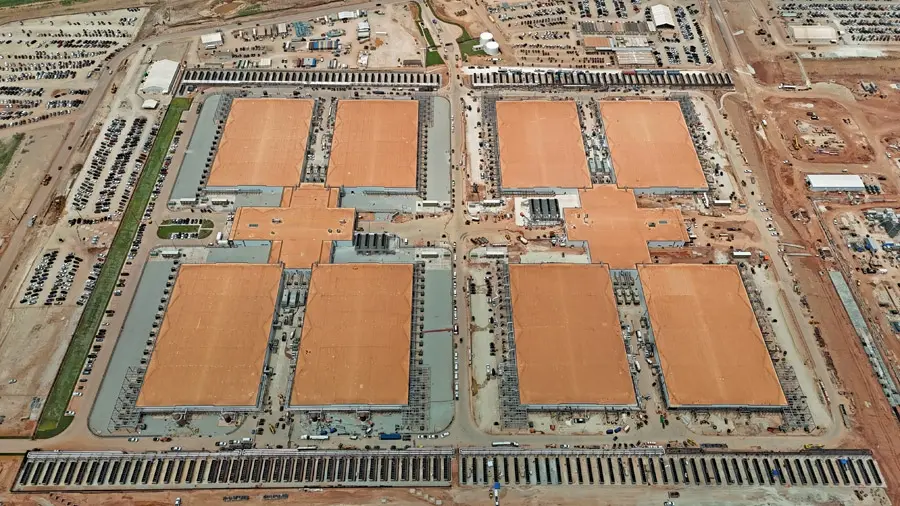
Bitcoin Mining Farms Are Becoming AI Factories

Bitcoin mines are transforming into AI factories. This shift is driven by the convergence of three key assets from the previous crypto cycle: infrastructure, talent, and capital. Crypto mining companies like Crusoe, CoreWeave, and Bitdeer are repurposing their core competency—securing power, land, and grid connections in remote locations—to build data centers for AI clients. These firms are signing multi-billion dollar, long-term contracts with companies like Anthropic, AWS, and Microsoft, as AI's demand for reliable, high-capacity compute surpasses the profitability of Bitcoin mining. Simultaneously, crypto entrepreneurs and engineers are applying their skills to new AI ventures. Examples include OpenSea's co-founder launching OpenRouter (an AI model aggregator), and former Coinbase engineers building Fal.ai (a generative media infrastructure platform). Their experience in building scalable, global software networks translates effectively to the AI space. Furthermore, capital accumulated during the crypto boom is now fueling AI. Figures like Jed McCaleb (co-founder of Ripple) funded Voltage Park, a large-scale GPU cloud provider. Notably, some crypto investments, like FTX's early bets on Anthropic and Cursor, have generated astronomical paper returns, demonstrating how high-risk crypto capital flowed into AI before it became mainstream. The transition is not just about repurposing hardware, but about redirecting critical resources—power infrastructure, distributed systems expertise, and venture funding—to the next technological frontier: artificial intelligence.

链捕手57m ago

Bitcoin Mining Farms Are Becoming AI Factories

链捕手57m ago

Morpho Launches Fixed-Rate Product Midnight: Lenders and Borrowers Set Their Own Rates, Ending the Era of Interest Rate Models

Morpho Launches Fixed-Rate Product Midnight: Lenders and Borrowers Set Their Own Rates, Ending the Era of Algorithmic Interest Models On-chain lending has grown to $60 billion but remains minuscule compared to traditional finance's $200 trillion annual credit volume. Morpho identifies the lack of fixed rates and maturity dates as key bottlenecks. Institutions need predictability, not the passive floating rates set by algorithmic models. Midnight allows lenders and borrowers to directly quote rates, set terms, and become price makers, not takers. Fixed-rate lending is now viable due to cheaper, faster blockchains and the entry of institutions demanding control and certainty over returns, costs, and duration. Morpho Blue previously gave users control over risk; Midnight adds control over interest rates. Past attempts at on-chain fixed-rate lending failed primarily because they were built on top of floating-rate pools (creating unpredictability) or lacked sufficient active participants. Midnight avoids these pitfalls as a standalone primitive with fixed rates at its core, built upon Morpho Blue's existing large and active user base. Midnight offers distinct value: institutions gain predictable term structures and full control; fintech companies can offer tailored fixed-rate products; lenders/borrowers achieve predictability and efficiency; and curators can now differentiate by configuring both risk and interest rates. Morpho Midnight is not a replacement for Morpho Blue. The Morpho network will now feature two complementary market structures: floating-rate/open-term (Blue) for flexibility and fixed-rate/fixed-term (Midnight) for predictability. Liquidity can flow between them. The launch will be gradual, prioritizing security. Initially, it will support direct lending on Base network with one trading pair (cbBTC/USDC) and limited maturity dates. Advanced features like auto-rollovers will be introduced later.

marsbit58m ago

Morpho Launches Fixed-Rate Product Midnight: Lenders and Borrowers Set Their Own Rates, Ending the Era of Interest Rate Models

marsbit58m ago

Trading

Spot
活动图片