Gemini 3.5 Pro Top Secret Leak, Front-end Capabilities Surpass Fable 5

marsbitPublished on 2026-07-06Last updated on 2026-07-06

Abstract

"Gemini 3.5 Pro Leak: Frontend Surpasses Fable 5, Official Launch Expected July 17th. After a two-month silence, Google's Gemini 3.5 Pro appears poised for release. Leaks highlight its significant leap in frontend and visual code generation, reportedly surpassing competitor Fable 5. Key improvements include better design aesthetics, cleaner UI, enhanced SVG generation, and higher completion rates for full-page generation from single prompts. Tests show capabilities like creating detailed SVG portraits, complex UI elements, and 3D scenes with Three.js. However, the model reportedly still lags behind Fable 5 and GPT-5.6 in hardcore reasoning, agentic tasks, and long-range software engineering. The delay is attributed to Google reportedly conducting a new pre-training run with a fresh base model, rather than simply scaling up Gemini 3.5 Flash. Rumors also suggest this new base is being used for an image model, 'Nano Banana Pro,' targeting GPT-Image 2. The AI race intensifies as the industry awaits the potential July 17th reveal."

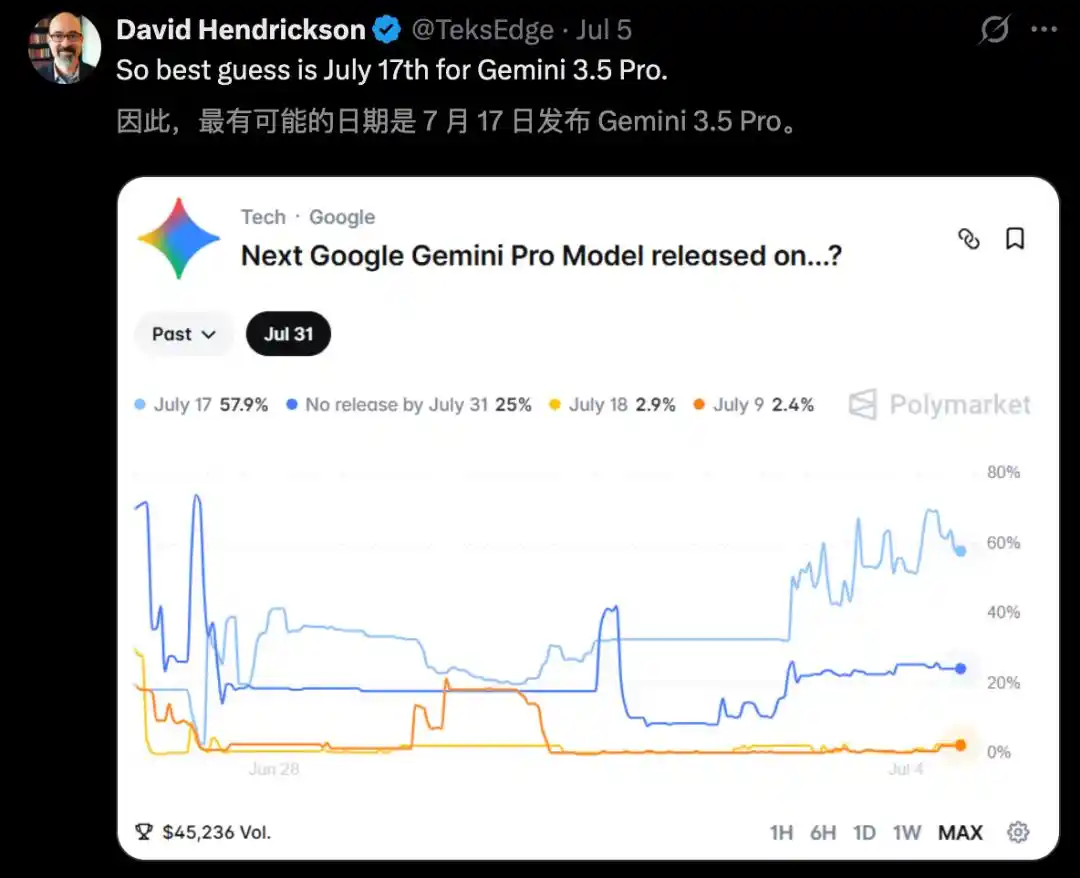
【Guide】After a full two months of anticipation, Gemini 3.5 Pro is finally coming! Front-end code generated in one go, rumored to officially debut on July 17th.

What might overturn Fable 5 could be Google's trump card!

Today, the internet was flooded with leaks about Gemini 3.5 Pro. Rumored to be officially released on July 17th.
What truly makes people sit up is its performance in front-end generation: one-shot generation, pixel-perfect accuracy, zero errors.

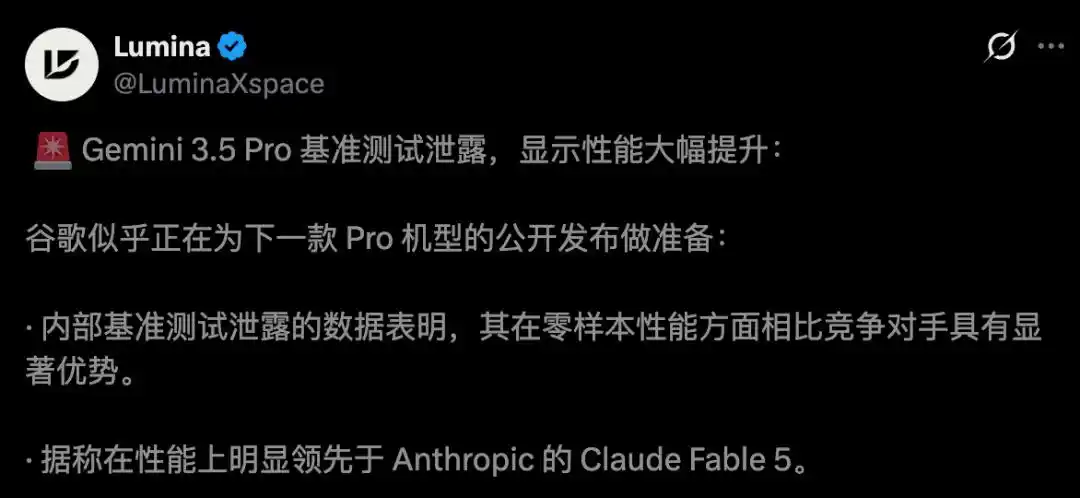
Most crucially, leaked performance data shows Gemini 3.5 Pro has surpassed Fable 5.
Gemini 3.5 Pro's Front-end Prowess Surpasses Fable 5

After a full two months of holding back, Google's ace card, which they've been reluctant to release, is finally about to be born.

At the I/O conference, they unveiled the Gemini 3.5 series in one go:

But on the day itself, only the lightweight Gemini 3.5 Flash went live; the "premium" Pro was kept in the background.

Sundar Pichai promised on stage, "Give us another month."
June passed, and Pro didn't arrive; now Google has changed their timeline to "July," but still hasn't given a specific calendar date.

Thus, during this information vacuum of official silence, leaks became the sole source of information.

And the Gemini 3.5 Pro pieced together from these fragments presents a rather distinct and somewhat "specialized" picture.

Let's start with the conclusion, which is the strongest and most consistent signal in this round of leaks:

Gemini 3.5 Pro has shown a clear capability leap in "front-end and visual code generation."
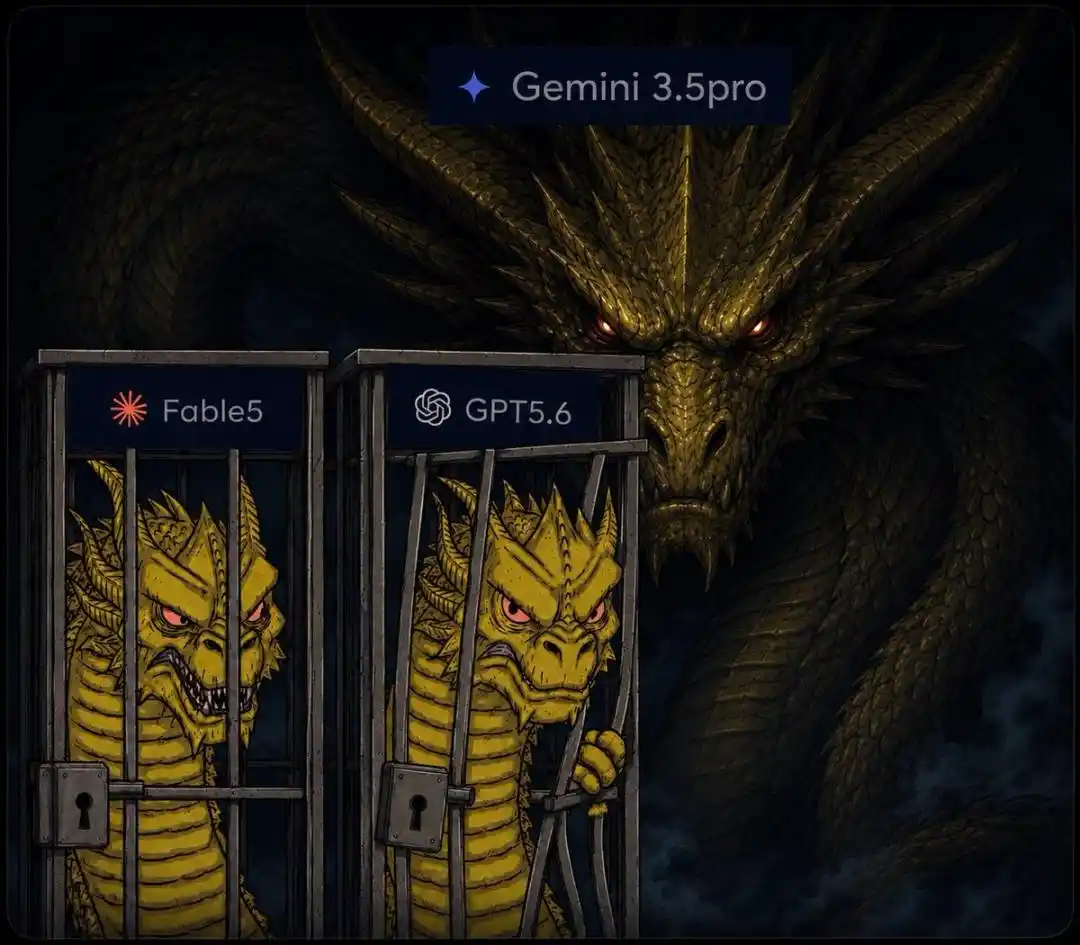
Based on feedback from multiple developers on X, the leaked version has visibly improved in these areas—

  • Better Design Taste: Generated interfaces are no longer "programmer aesthetic"; color schemes, whitespace, and hierarchy are closer to a professional designer's touch;
  • Cleaner UI: One-shot generated front-end pages have clearer structures and less redundancy;
  • Significant Enhancement in SVG Generation: This is a repeatedly highlighted area of improvement; complex vector graphics can be drawn correctly in one go with fewer missing pixels;
  • Higher "Completion Degree" for Front-end: A single prompt can generate a decent-looking page, not a half-finished product.

During testing, developer QASIM-livelifewithai couldn't help but exclaim:

Gemini 3.5 Pro actually generated an SVG image identical to Gemini lead Logan Kilpatrick himself!

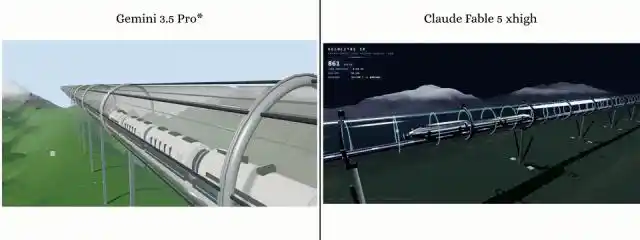
A comparison image between Gemini 3.5 Pro and Fable 5 shows the former slightly superior in artistic conception and atmosphere.


For example, generating a UI with just one sentence.

A hand-drawn SVG mechanical orrery was also achieved by Gemini 3.5 Pro with just one prompt.

Gemini 3.5 Pro can also use Three.js to generate a floating steampunk island.
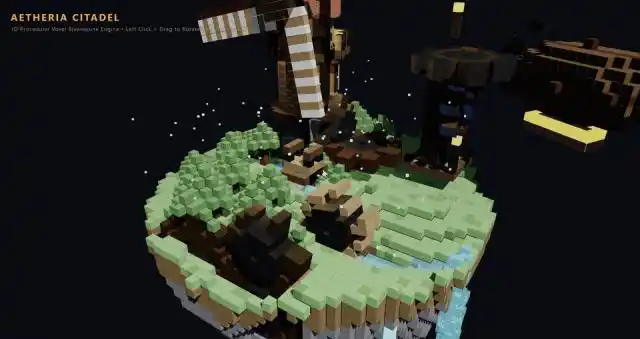
In developer circles, a slightly jesting term has even started circulating to describe Gemini 3.5 Pro's front-end performance—

"mogging" (completely dominating).

Hardcore Reasoning: Inferior to Fable 5, GPT-5.6

Dominating in front-end doesn't mean dominating in all areas.

In LM Arena's stealth testing, Gemini 3.5 Pro indeed suppressed a host of opponents on these tasks.

However, on the hardest Agent tasks, repository-level software engineering, and long-range tasks, 3.5 Pro still can't beat Fable 5, nor catch up to GPT-5.6.

Fable 5 is an absolute beast on heavy engineering tasks like "repository-level, deep debugging, high-ceiling architectural refactoring," scoring quite well on benchmarks like SWE-Bench Pro;

GPT-5.6 similarly holds a steady lead on the most challenging multi-step reasoning tasks.

And what level is Gemini 3.5 Pro on this line?

Even the leaker themselves stated frankly that even with a new foundation, it "still can't beat Fable 5 or GPT-5.6 on the hardest agent and long-chain tasks."

Earlier last month, a leaked benchmark was even less polite, directly ranking it behind Fable 5 and GPT-5.6.

Its weaknesses are concentrated in reasoning, coding, and long-term task execution.

Old Foundation Swapped, Retrained from Scratch

More intriguing than the front-end performance is why Gemini 3.5 Pro is delayed.

According to the leak, the reason Google is dragging into July is not that they spent the extra time on "parameter tuning and fine-tuning," but rather on doing something much heavier—

Conducting another round of "pre-training," no longer relying on the older foundation.

In other words, Pro is not a simple scaled-up version of Flash, but a rebuild on a new foundation.

Apart from the model itself, the leak also contains an easter egg:

Google is preparing an image model called Nano Banana Pro based on this new Gemini 3.5 Pro foundation, aiming to directly compete with OpenAI's GPT-Image 2.

If true, this means Google wants to strengthen simultaneously on both the "text + image" fronts.

One round of retraining, feeding two product lines: one to tackle front-end code, one to tackle image generation.

Google's plan is quite clever—using the same foundation to open fire on two battlefields at once. Now, the entire internet is waiting for July 17th.

And this is precisely the reality of the 2026 large model arms race. Everyone is desperately accelerating, yet no one has managed to completely overturn their opponent in one go.

Looking back at the past six months, the buzz in the AI circle has had little to do with Google, with OpenAI and Anthropic taking turns stealing the spotlight.
But those familiar with Google know they love to hold back, accumulate a wave, and then release everything in one go.

This time with Gemini 3.5 Pro, it's likely the same strategy: using a flagship model retrained on a new foundation to reclaim lost ground in one fell swoop.

Whether July 17th will actually happen, and if it does, whether it will be as the leaks say, the answer can only come from Google itself.

But one thing is already certain: in this war of the gods, no one dares to stop to catch their breath.

References:

https://x.com/ggg78g89/status/2073783990646149488?s=20

https://x.com/HarshithLucky3/status/2073767413494284754?s=20

https://x.com/ggg78g89/status/2073852747049517231?s=20

This article is from WeChat public account "New Zhiyuan" (新智元), author: ASI Apocalypse; Editor: Peach (桃子)


Related Questions

QWhat is the main topic of the leaked information about Gemini 3.5 Pro?

AThe main topic is Gemini 3.5 Pro's significant leap in front-end and visual code generation capabilities, reportedly surpassing Fable 5 in this area. It is also mentioned to be scheduled for release on July 17th.

QAccording to the article, in which specific area does Gemini 3.5 Pro outperform Fable 5?

AAccording to the article, Gemini 3.5 Pro outperforms Fable 5 specifically in front-end and visual code generation, including generating cleaner UI, better design aesthetics, improved SVG generation, and higher completion rates for front-end pages.

QWhat are the key weaknesses or areas where Gemini 3.5 Pro is said to still lag behind competitors like Fable 5 and GPT-5.6?

AGemini 3.5 Pro's key weaknesses are in hardcore reasoning, long-context task execution, agent tasks, and large-scale, complex software engineering tasks. It reportedly still cannot beat Fable 5 or GPT-5.6 in these areas.

QWhat major change did Google reportedly make to Gemini 3.5 Pro that caused its delayed release?

AGoogle reportedly conducted a new 'pre-training' run for Gemini 3.5 Pro, rebuilding it on a new base foundation instead of just scaling up the Gemini 3.5 Flash model. This fundamental retraining is cited as the reason for the delay.

QWhat future model based on the Gemini 3.5 Pro base is mentioned in the leaks, and what is its target?

AThe leaks mention a future model called 'Nano Banana Pro,' an image model based on the new Gemini 3.5 Pro foundation. Its target is to more directly compete with OpenAI's GPT-Image 2.

Related Reads

Treasury Secretary's Move to Suppress Treasury Yields Ignites 'Currency Debasement Trade'! Gold Hits Three-Month High, Bitcoin Surges Over 25% in a Single Week

US Treasury Secretary Besant's efforts to lower long-term Treasury yields by announcing expanded buybacks had only a brief market impact. However, this move fueled a "currency devaluation trade," weakening the US dollar while boosting both gold (to a three-month high) and Bitcoin (up over 25% for the week). Analysts attribute this reaction to deepening market concerns over the massive US fiscal deficit and structural pressures keeping long-term rates elevated, including fierce competition for capital from global government borrowing and massive AI sector financing. Despite the Treasury's actions, fundamental forces like growth, inflation, and capital demand are seen as limiting its ability to sustainably suppress yields. Bitcoin's strong positive correlation with gold has reinforced its narrative as a hedge against devaluation. While equity markets have shown resilience, some strategists warn that Treasury yields nearing 5% increase pressure on the dollar and high-leverage assets. Figures like Ray Dalio have advised reducing bond exposure in favor of gold and some Bitcoin, citing US debt risks. Market opinions are divided on the sustainability of the devaluation trade, with some noting the lack of a near-term catalyst for its next leg higher. The underlying tension between the Treasury's desire for lower borrowing costs and the Federal Reserve's focus on inflation and reducing market intervention remains a key theme. Upcoming events like Nvidia's earnings and the Jackson Hole symposium will test whether AI profits can continue supporting stocks and if the Fed aligns more with Washington's preference for easier financial conditions.

华尔街日报2h ago

Treasury Secretary's Move to Suppress Treasury Yields Ignites 'Currency Debasement Trade'! Gold Hits Three-Month High, Bitcoin Surges Over 25% in a Single Week

华尔街日报2h ago

Alexander Shokhin: Business Needs an Interest Rate Below 10% and the Dollar at 90-95 Rubles

Alexander Shokhin, head of the Russian Union of Industrialists and Entrepreneurs (RSPP), has advocated for potentially using "non-market" tools to keep the ruble within a target exchange rate corridor. This, he argues on August 21, would help avoid excessive volatility, though he called the topic a separate discussion. Shokhin had previously raised the idea of a currency corridor in late May, noting the ruble's current exchange rate is not fully market-driven due to a limited currency segment and reduced foreign currency demand. He stated that many business community colleagues propose fixing a corridor, even through non-market methods, to ensure predictability. The business community's key targets, as outlined by Shokhin in late December 2025, are a Central Bank key rate of 12%, inflation of 4–5%, and a US dollar exchange rate of 90–95 rubles by the end of 2026. A turning point for investment, he said, would be lowering the rate to 12% with 6% inflation, though truly comfortable business conditions would require a rate below 10%. He stressed the critical importance of currency predictability for corporate investment decisions. From a data analysis perspective, the idea of a ruble corridor is not new. A similar mechanism was used in Russia from 1995 to 1998, where the central bank held the dollar within fixed boundaries through regular interventions. This regime lasted three years before ending abruptly during the 1998 default, illustrating the fragility of rigid targets under external shocks. The macro-economic link is clear: stricter corridors require more reserves to defend against currency pressure. The key unresolved technical aspect is the specific sources and volume of such interventions given the current market's limited liquidity. Whether this discussion remains theoretical or leads to concrete corridor parameters will be seen in the coming months.

cryptonews.ru3h ago

Alexander Shokhin: Business Needs an Interest Rate Below 10% and the Dollar at 90-95 Rubles

cryptonews.ru3h ago

Trading

Spot
活动图片