Gemini 3.5 is Here! Tonight, Google Overtakes Google

链捕手Published on 2026-05-20Last updated on 2026-05-20

Abstract

Gemini 3.5 Launches: Google Renders Itself Obsolete at I/O 2026 At Google I/O 2026, the company unveiled a transformative suite of AI advancements headlined by three major releases. First, **Gemini Omni**, a true "omnimodal" model, can generate high-quality, coherent videos from any combination of text, image, audio, or video inputs, maintaining character consistency and physical logic across iterative edits. Second, the new flagship **Gemini 3.5 Flash** was introduced, decisively outperforming the previous Gemini 3.1 Pro on key benchmarks for coding, agent tasks, and multimodal reasoning. It is also significantly faster than competitors. This model powers the upgraded **Antigravity 2.0**, an independent Agent development platform that demonstrated the ability to orchestrate 93 sub-agents to build a functional operating system from scratch in just 12 hours. Third, **Gemini Spark** debuted as a personal, always-on AI agent. Running 24/7 in the cloud and integrated with Google Workspace, it can autonomously execute complex multi-step tasks like drafting emails, managing schedules, and planning events by accessing apps like Gmail, Docs, and Sheets. These releases collectively mark a significant leap, moving AI beyond simple generation towards autonomous understanding, decision-making, and task execution, signaling rapid progress on the path toward more advanced AI systems.

Author: XinZhiYuan


Google I/O 2026 goes all out!

Just now, Pichai and Demis Hassabis took the stage together, unveiling all the major releases they've been accumulating for half a year in one go.

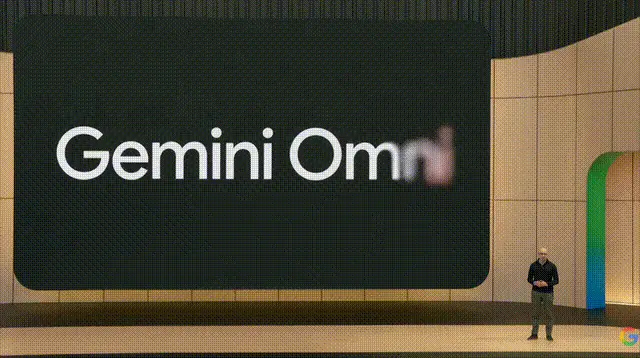
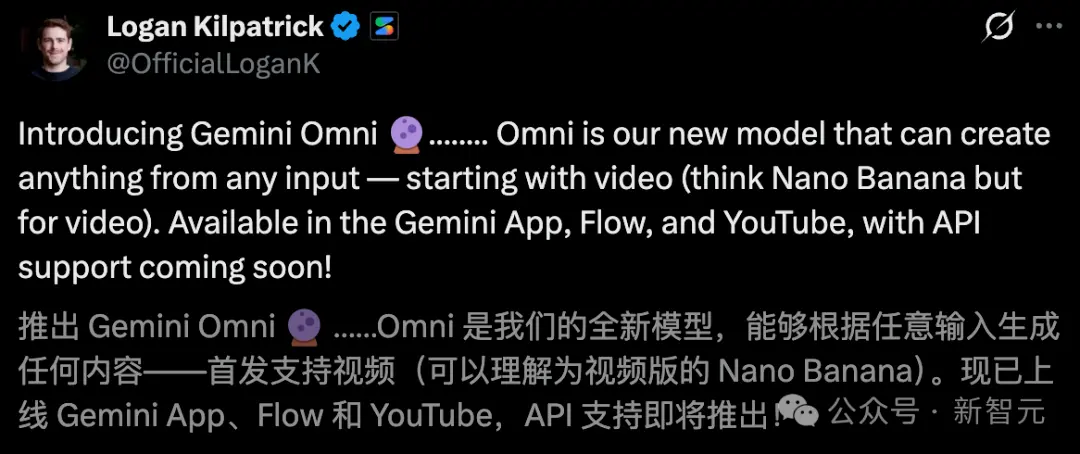
Without any suspense, the biggest star of the night, Gemini Omni, officially debuted!

As a truly "omni" model, Omni can accept any form of input and generate any content. It debuts with video output support, making it the "video version of Nano Banana".
Another highlight of the night belongs to Gemini 3.5 Flash.

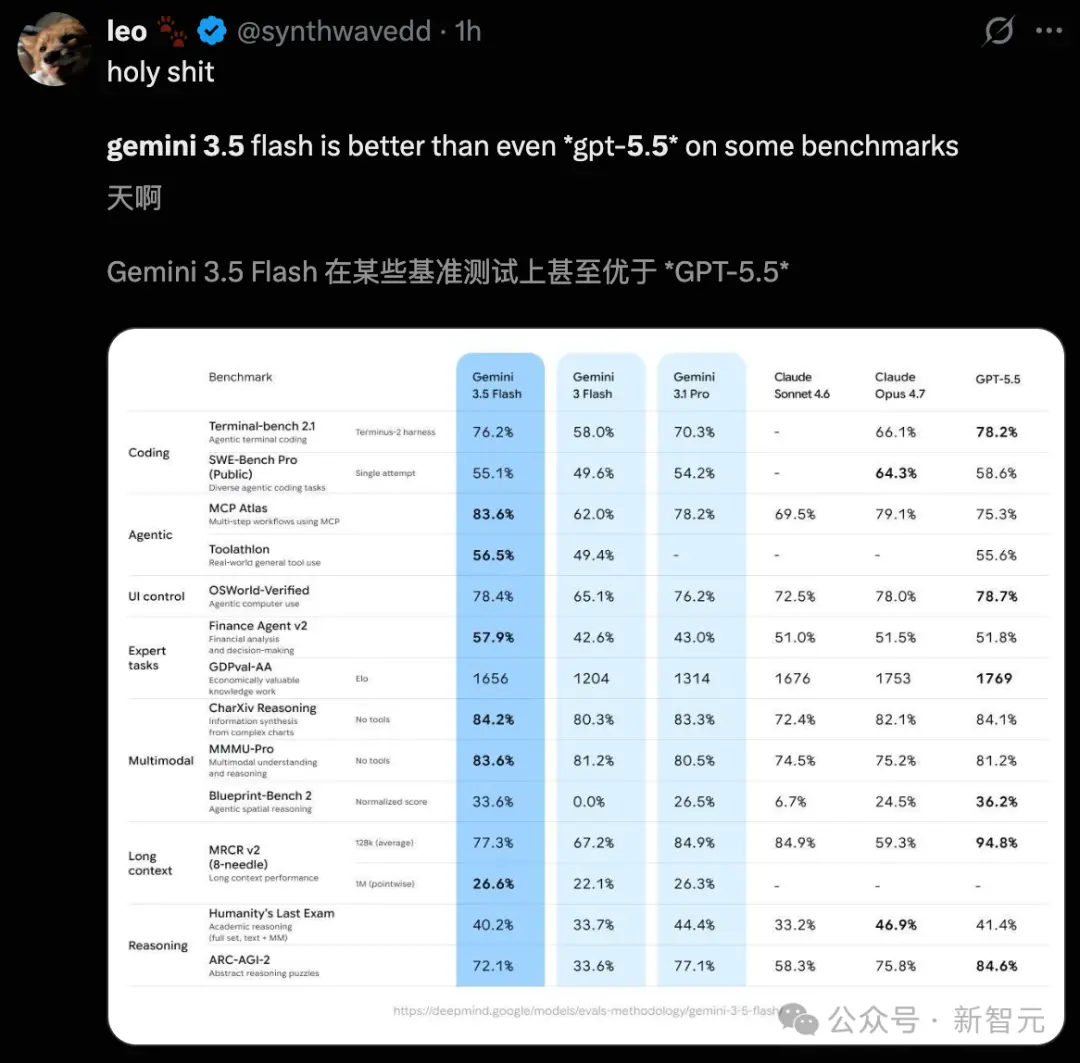
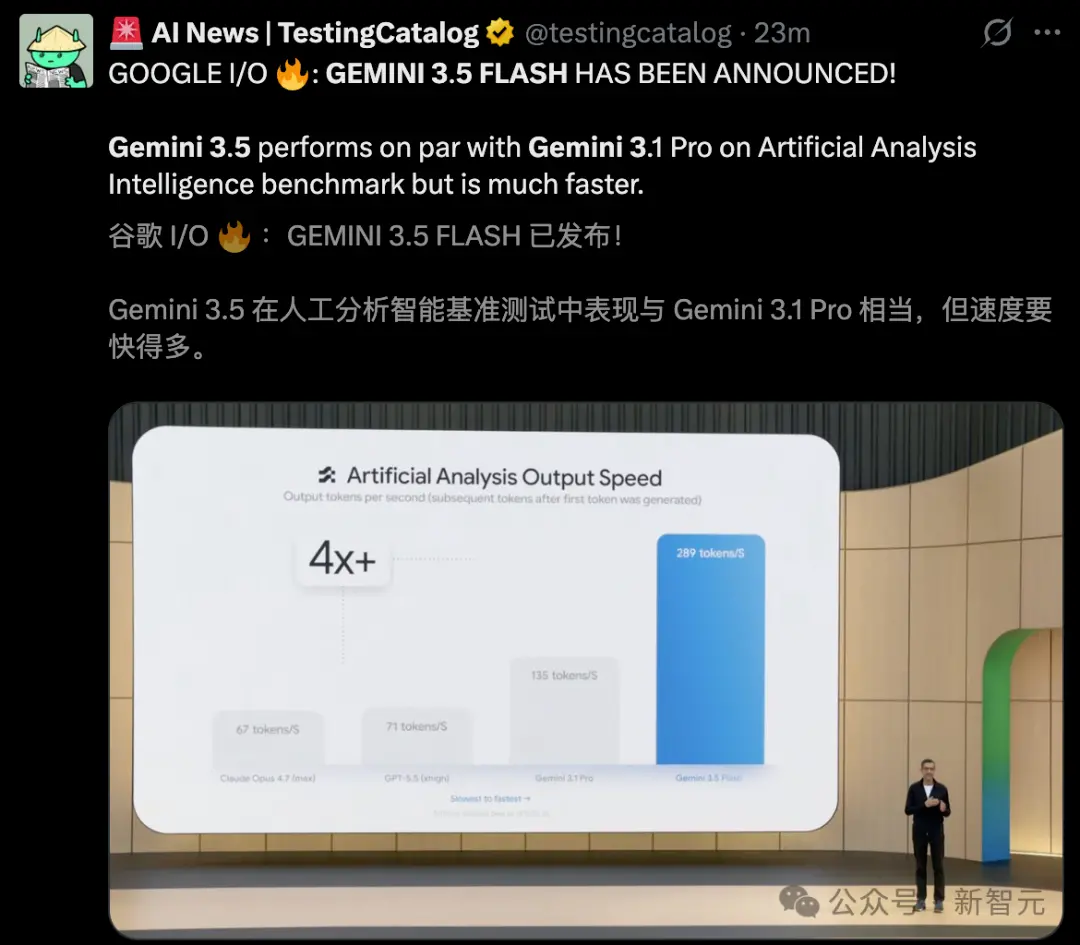
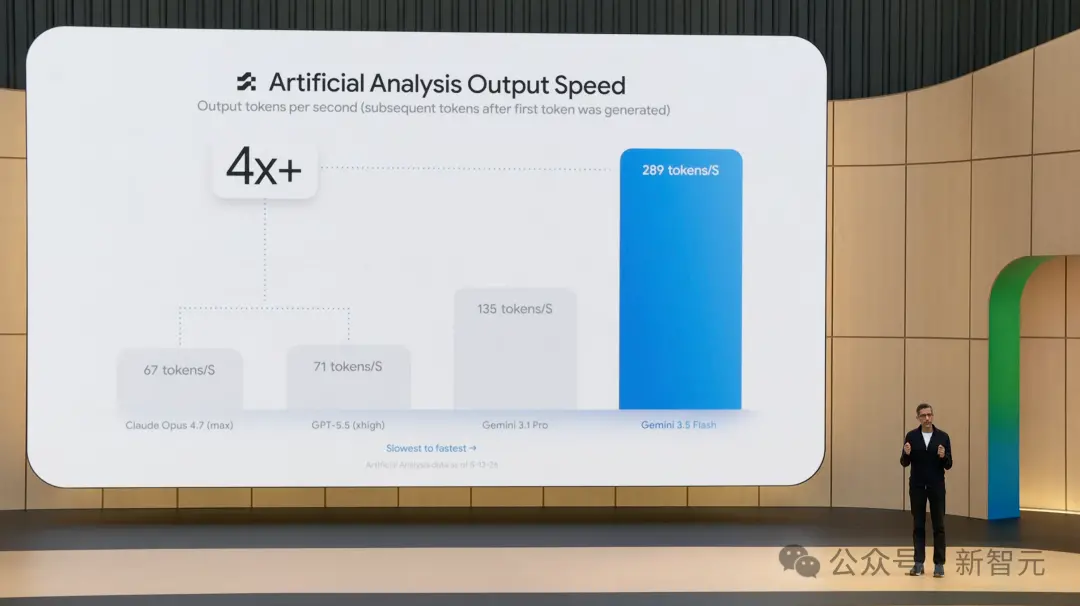
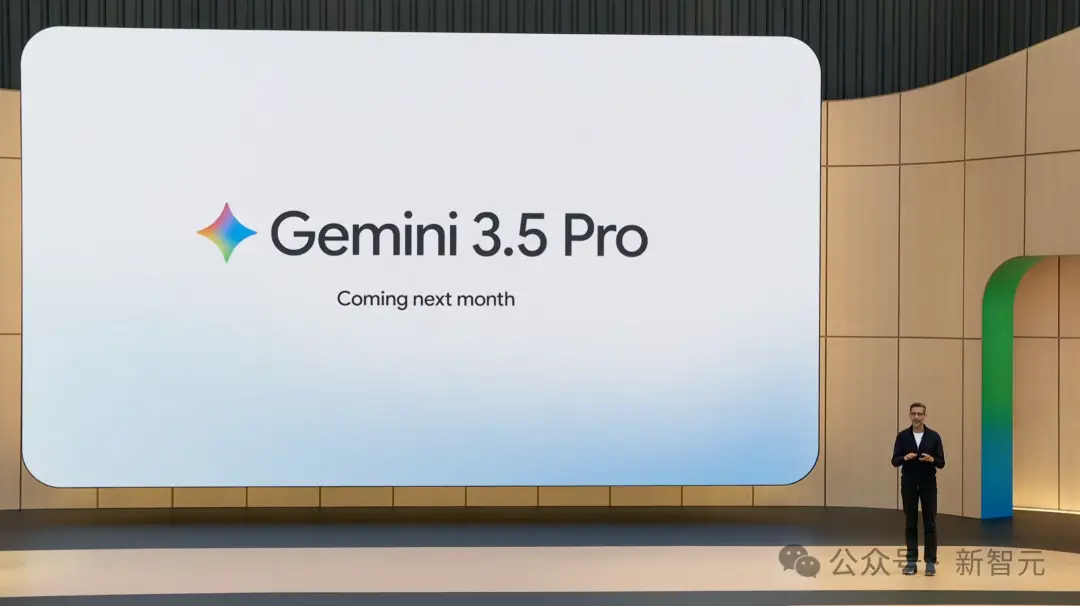
In almost all benchmarks, 3.5 Flash has achieved a crushing victory over its predecessor flagship, Gemini 3.1 Pro. Its output speed has also doubled, and it is over 4 times faster than GPT-5.5 and Opus 4.7. The more powerful 3.5 Pro will be released next month.
In addition, a slew of other major new products were unveiled:

  • Antigravity 2.0: A brand-new standalone desktop application, evolving from an IDE to an Agent development platform.

  • Gemini Spark: A personal AI agent, running 24/7 in the cloud.

  • Gemini App Redesign: Code-named "Neural Expressive," switching to compute-based billing.

  • AI Ultra Subscription Plan: Adds a new $100 tier; highest tier reduced from $250 to $200.

  • Google Search's Biggest Upgrade in 25 Years: Integrated with 3.5 Flash, adds intelligent search box, automatic mini-app generation, etc.

    ......

Without exaggeration, the density of substantive announcements at this I/O is the highest in years.

Gemini Omni Debut: The Birth of an 'Omni' AI

As hinted by the teaser video, the highly anticipated Gemini Omni has finally arrived. Hassabis personally took the stage to announce, "We are taking the next important step—Gemini Omni, a new model that can create content from any input."
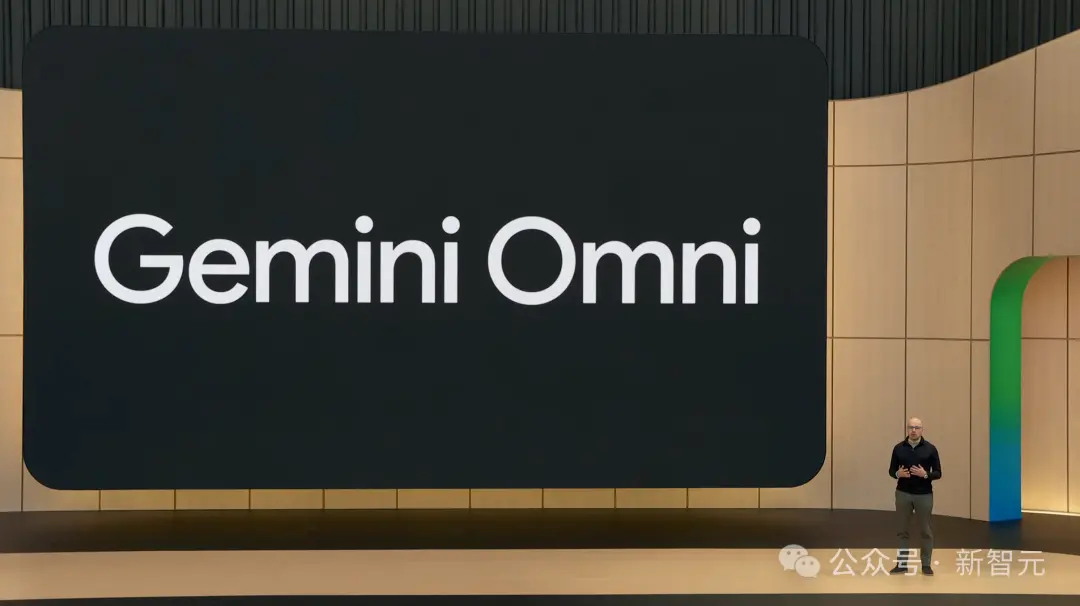
This prominence says it all. What Google aims to build this time is an "omni" AI creation engine. It integrates Gemini's intelligence with the strongest generative AI, fully maximizing capabilities in world understanding, multimodality, and editing. Put simply, given any combination of images, audio, video, and text, it can generate a high-quality video. Moreover, you can edit videos through conversation.
More crucially, Omni doesn't just "look like it"; it truly understands the physical world. Hassabis stated, "Previous systems often stumbled when simulating concepts like gravity and momentum, but Omni achieves a 'step change.'" It injects Gemini's "world knowledge" and "reasoning ability" into video generation.

  • Given the prompt "Explain protein folding using clay animation," the generated video accurately depicts amino acid chains folding into α-helices and β-sheets at every step, visually presented as exquisite stop-motion animation.
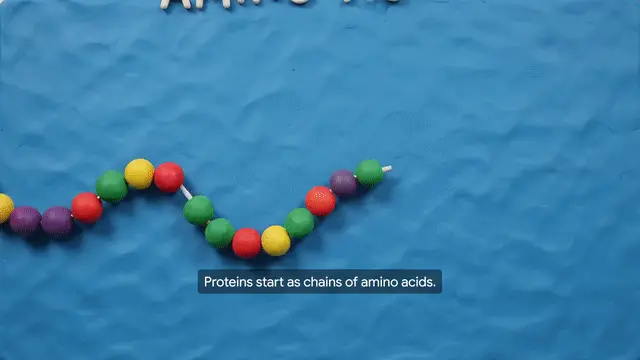
  • Another example: assigning corresponding objects to the 26 letters of the English alphabet. C for Capybara, D for Disco Ball, L for Lava Lamp. Omni isn't just pasting assets; it's genuinely connecting language, images, and semantics.

It has to be said, the leap from realism to meaningfulness is enormous.

On stage, Hassabis pulled out a selfie video and began live editing. A circle drawn on a palm turned into a black hole; an evening street stroll transformed into a cyberpunk scene. Rewrite the scene with a sentence, change the world with another. Anything can become a canvas for creating new realities. For instance, conjuring fire in your palm from a selfie, or a circle drawn on paper instantly becoming a black hole—all sorts of imaginative possibilities are now achievable.
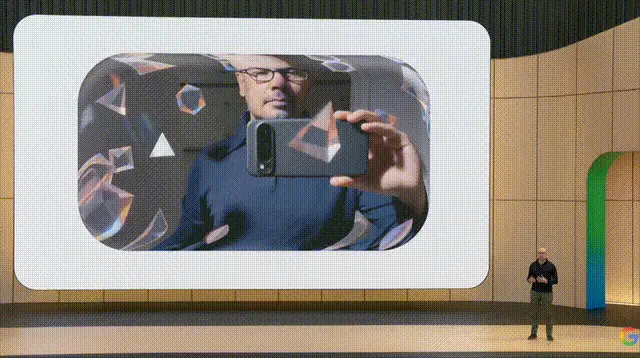

Moreover, this isn't a one-time generation. You can continue the conversation. Characters remain consistent in Gemini Omni's video output, physical logic holds, and scene memory is coherent.

  • Starting from an original performance clip. Round two: "Teleport the violinist into the environment of this picture," attaching a reference image of snowy mountains and meadows. The scene instantly switches, with actions and lighting fully adapting to the new environment.

  • Round three: "Cut the shot to behind the violinist's shoulder." The perspective rotates, but the performance actions and music remain completely continuous.

No matter how the scene changes, the main subjects in the video do not break.

What's even more thought-provoking is Omni's input flexibility. Images, text, video, audio—any references can be mixed as input to generate a coherent output. You can even create your own avatar, allowing an AI version of you to appear in any scene, speaking with your voice and doing things you haven't done.

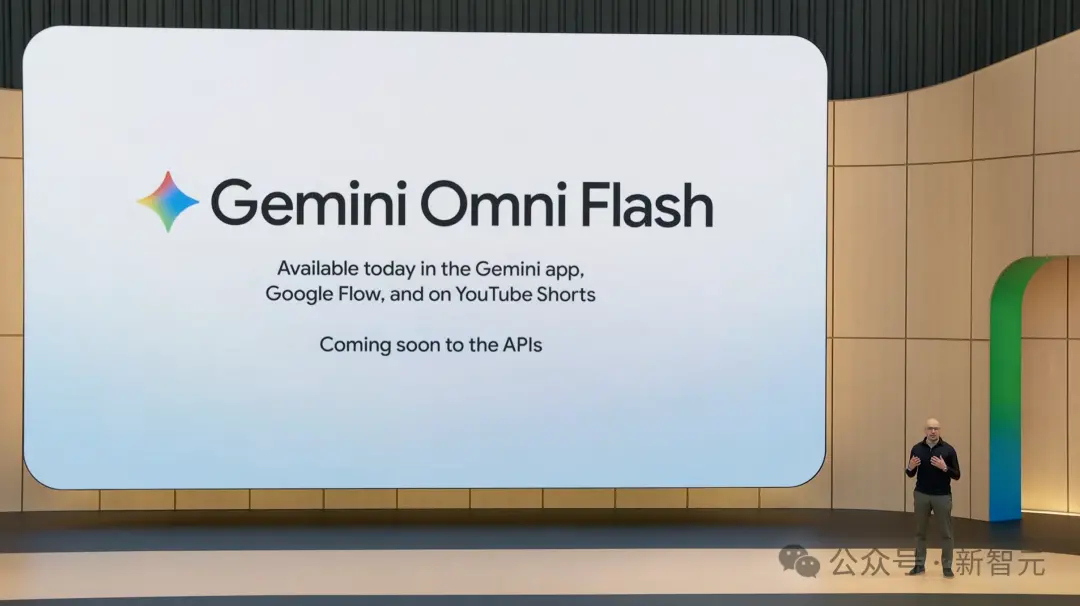
Currently, Omni Flash is officially launched, with the API version opening in the coming weeks. The more powerful Omni Pro is also on the way. Leveraging Google's powerful integration capabilities, Omni is integrated at launch with Gemini App, Google Flow, and YouTube Shorts, and even free for YouTube Shorts users.
Flash Overtakes Pro: 3.5 Redefines 'Flagship'

Following Gemini Omni, another major highlight of this I/O is the release of the new flagship, Gemini 3.5 Flash. Google defines it as the strongest coding and agent model to date.
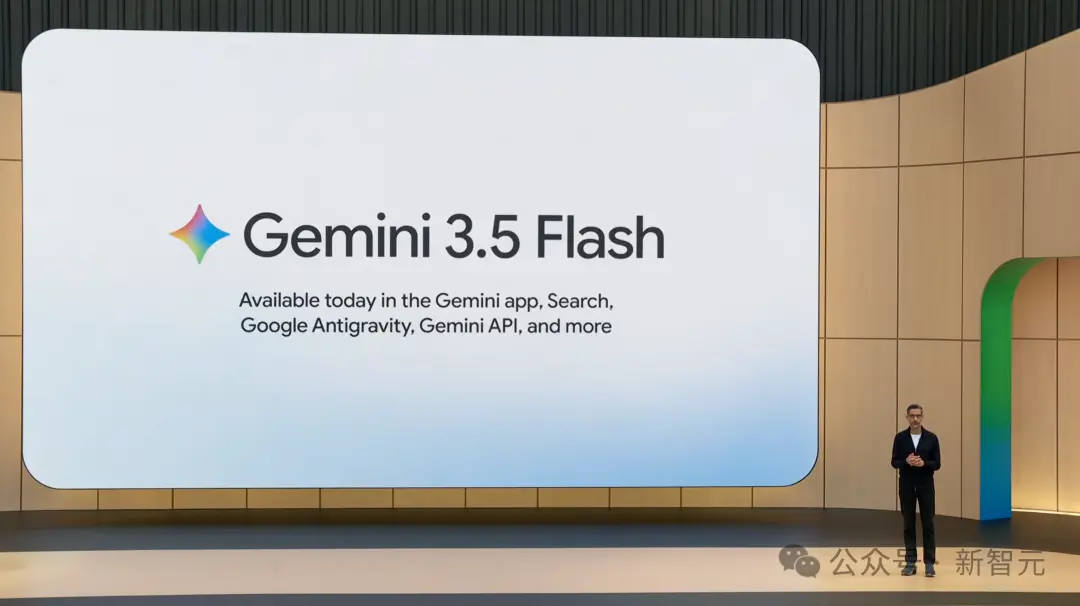
On stage, Pichai personally announced, "3.5 Flash outperforms Gemini 3.1 Pro across virtually all benchmarks!" Remember, 3.1 Pro was the flagship model Google launched just three months ago. Now, a Flash-tier model is crushing it.
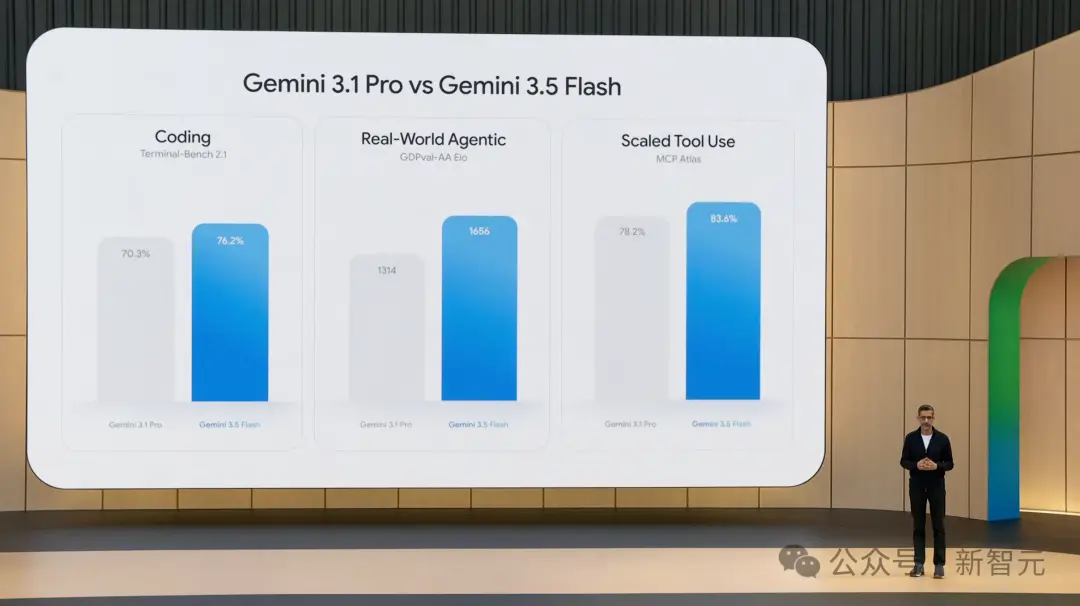
Unexpectedly, Google delivered such impressive results in such a short time:

  • Terminal-Bench 2.1 (Coding): 76.2%

  • GDPval-AA (Real-world Agent Tasks): 1656 Elo

  • MCP Atlas (Large-scale Tool Usage): 83.6%

  • CharXiv Reasoning (Multimodal Understanding): 84.2%

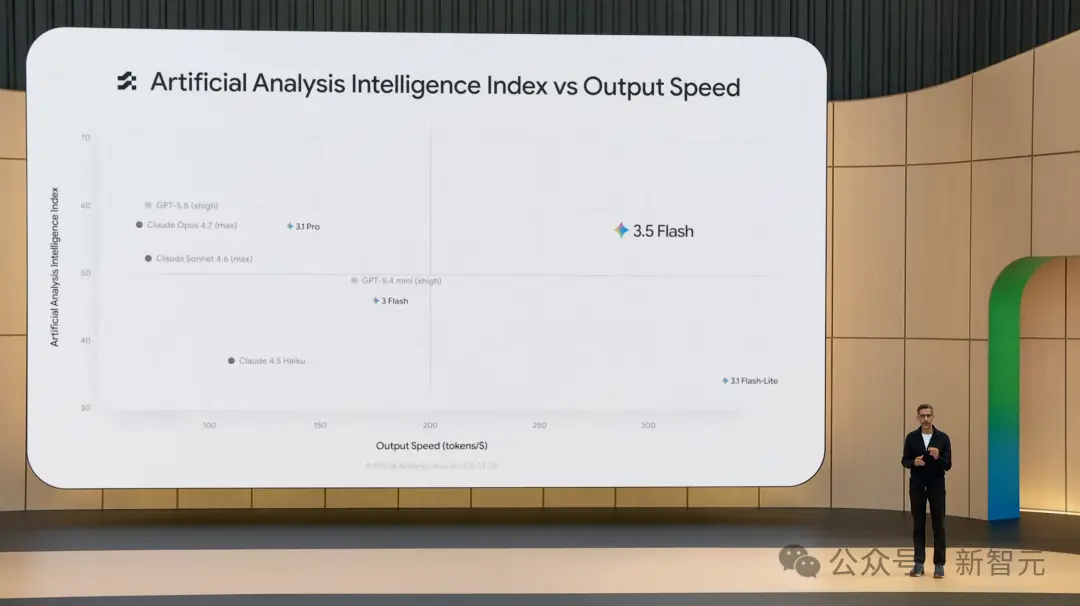
In the four major benchmarks above, compared to Gemini 3.1 Pro, 3.5 Flash represents a massive leap forward. In terms of speed, 3.5 Flash occupies its own quadrant at 289 tokens/second, over 4 times faster than other frontier models. Additionally, 3.5 Flash matches or even surpasses GPT-5.5 and Claude Opus 4.7 in some benchmarks. It must be said, 3.5 Flash is both fast and powerful, with virtually no rivals.
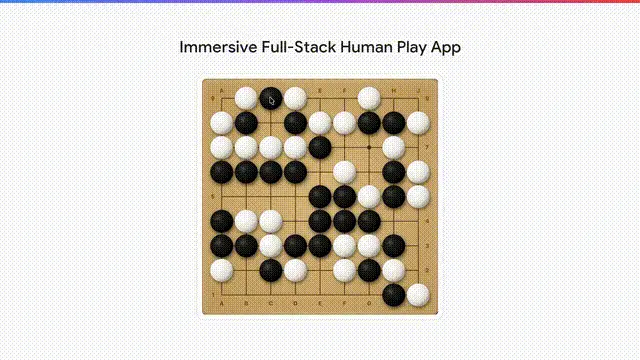
Numbers are abstract; let's look at real demonstrations. In an instant, 3.5 Flash can digest an abstruse academic paper and write a fully interactive, visual website. In agent tasks, via Antigravity, it can complete multi-step workflows, automatically categorizing and naming sprawling assets. Or, using two agents, it reproduced the AlphaZero paper in just six hours and coded a fully playable game.

93 Agents Build an OS in Just 12 Hours

It's evident that all these capabilities of 3.5 Flash are enabled by the new Antigravity 2.0. Today, Google's agent development platform, Antigravity, has been upgraded to version 2.0, evolving from an IDE to a standalone desktop application, fully embracing an Agent-first design.
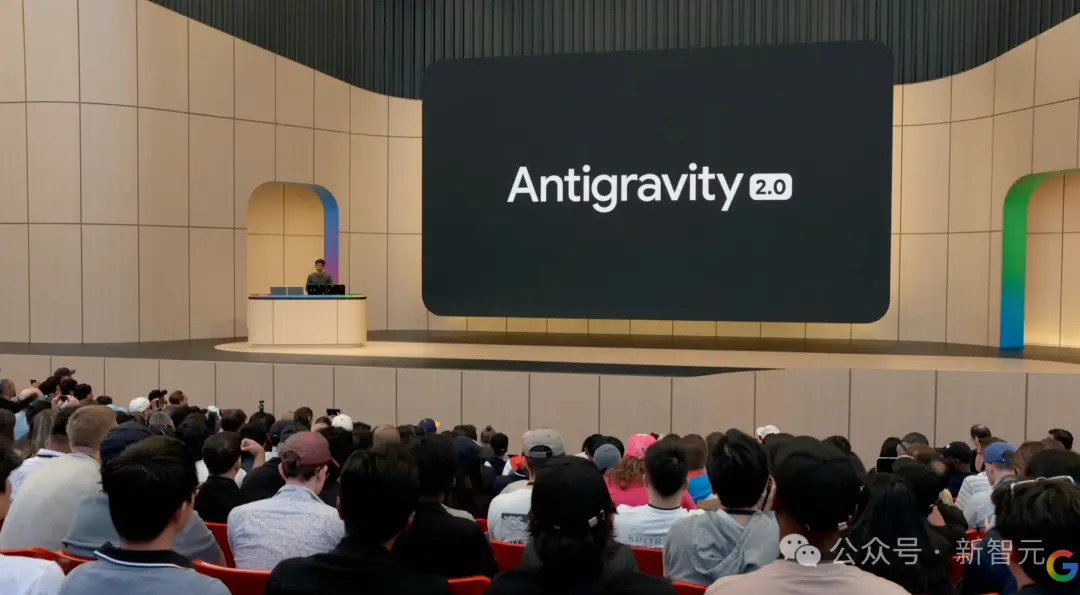
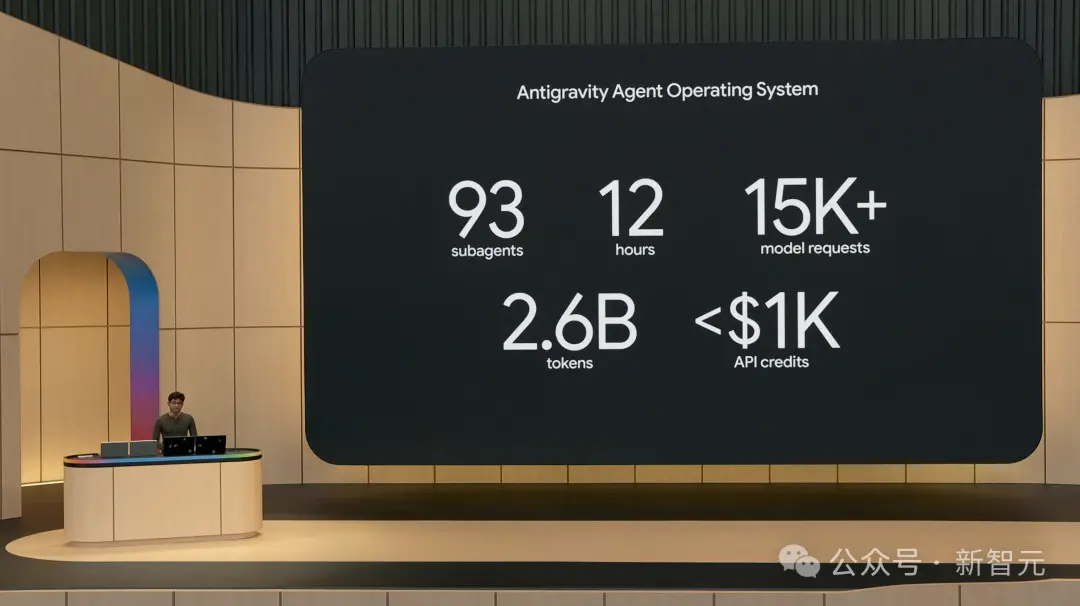
Varun took the stage and gave a demo that left the audience breathless. He tasked Antigravity powered by 3.5 Flash with building an operating system from scratch. 93 sub-agents worked in parallel, making over 15,000 model calls, processing 2.6 billion tokens. Twelve hours later, a completely blank project transformed into a fully functional OS kernel. Scheduler, memory management, file system—every line of code was written by agents, tested by agents, and audited by agents. The API cost was under $1,000.
Then, he attempted to run DOOM on this AI-written operating system. The first attempt failed, lacking video and keyboard drivers. So he immediately entered a fix command in Antigravity 2.0, and the agents began automatically writing the driver code. After a moment, the DOOM screen appeared, and the venue erupted.
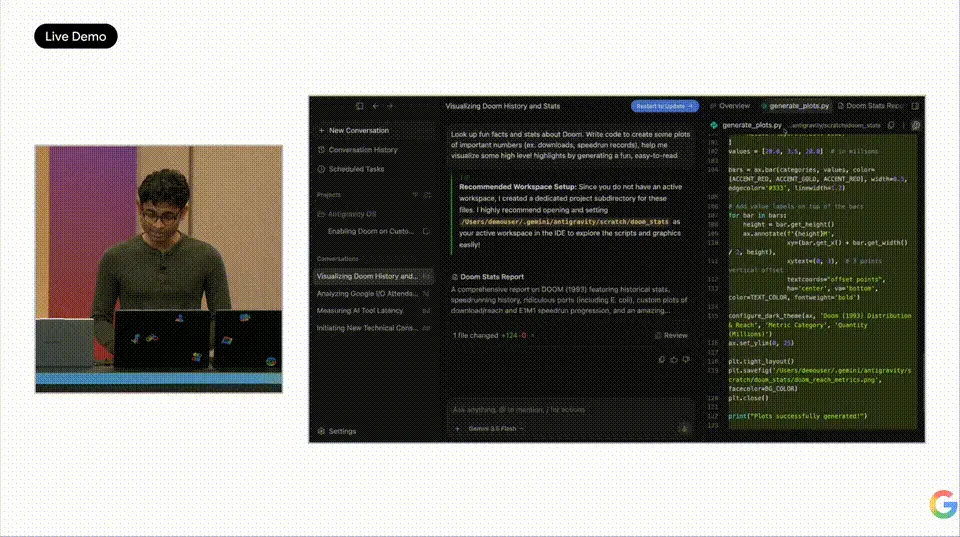
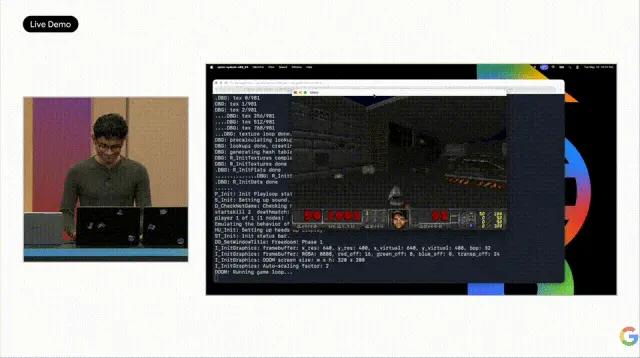
To summarize, Antigravity 2.0's core upgrades include:

  • Sub-agents can be dynamically generated; the main agent splits tasks into subtasks and assigns them out, running in parallel without interference.

  • Asynchronous task management prevents long-running operations from blocking the main thread.

  • Scheduled Tasks allow setting "timed tasks" for agents to execute automatically, like checking PR status once a day or running a health check script every hour.

  • New slash commands: /goal lets the agent run to completion; /grill-me makes the agent clarify requirements before acting; /browser explicitly controls browser usage.

However, these are capabilities already proven internally. The token processing speed using Antigravity internally at Google was 500 billion per day in March. Now, it's roaring at 3 trillion per day. Moreover, this 12x accelerated Flash is available in Antigravity starting today.
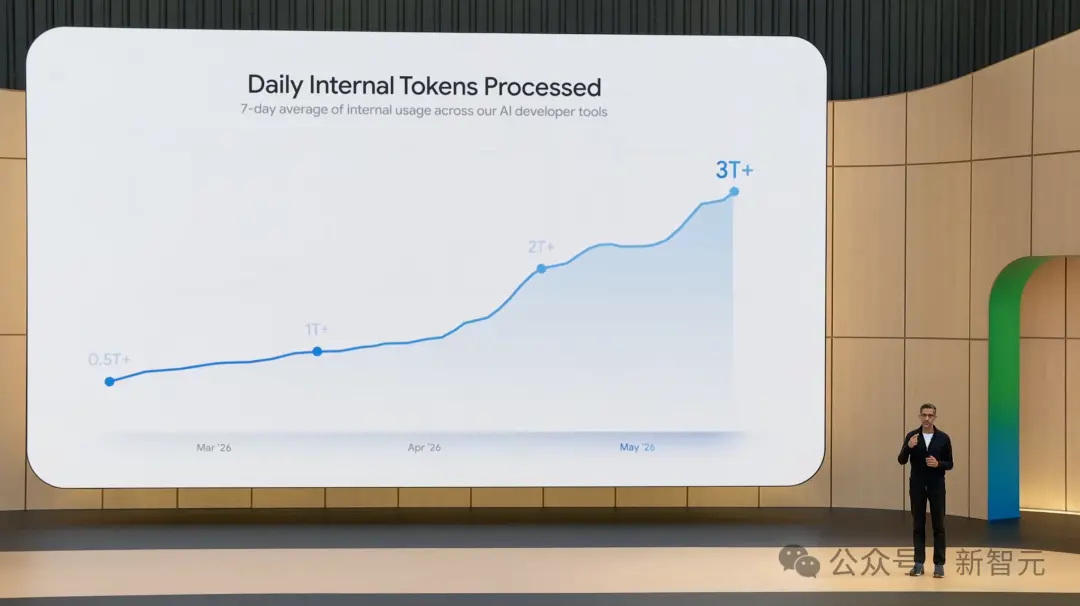
3.5 Flash is now the default model for both the Gemini App and Google Search AI Mode, available to all users worldwide. Developers can access it via Antigravity 2.0, Gemini API, and Google AI Studio. Enterprise users can onboard via Gemini Enterprise Agent Platform. Even more explosive, 3.5 Pro is currently in internal testing and will be released next month.
24/7 Personal Assistant: Google Spark Finally Arrives

The third major announcement tonight is undoubtedly Gemini Spark! Pichai's positioning for it is very clear: your personal AI agent. It doesn't stop even when you close your laptop. It runs on a dedicated virtual machine in the cloud, enabling 24/7 availability.
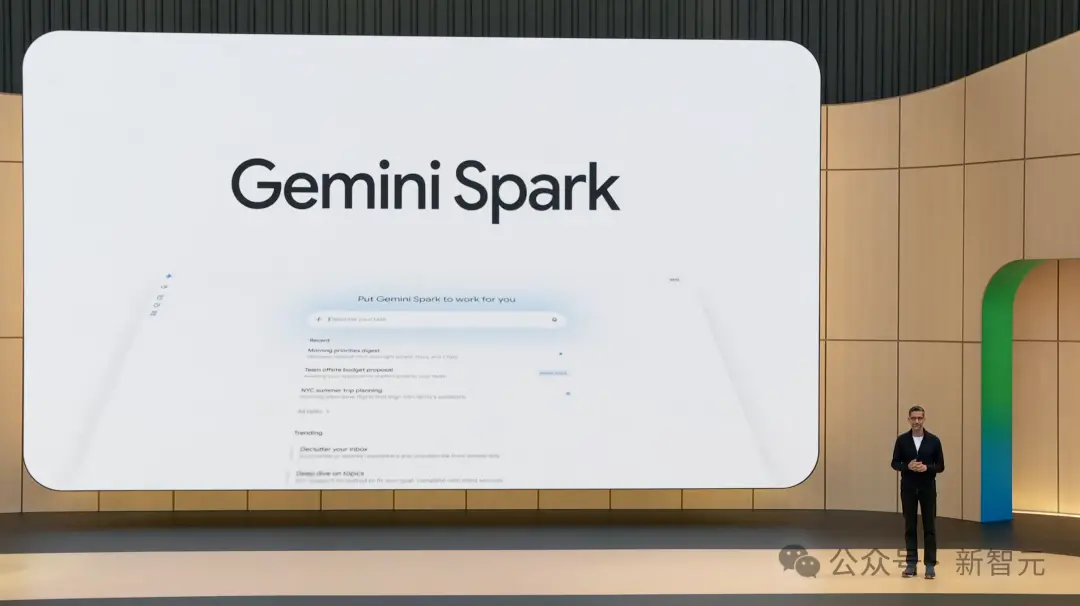
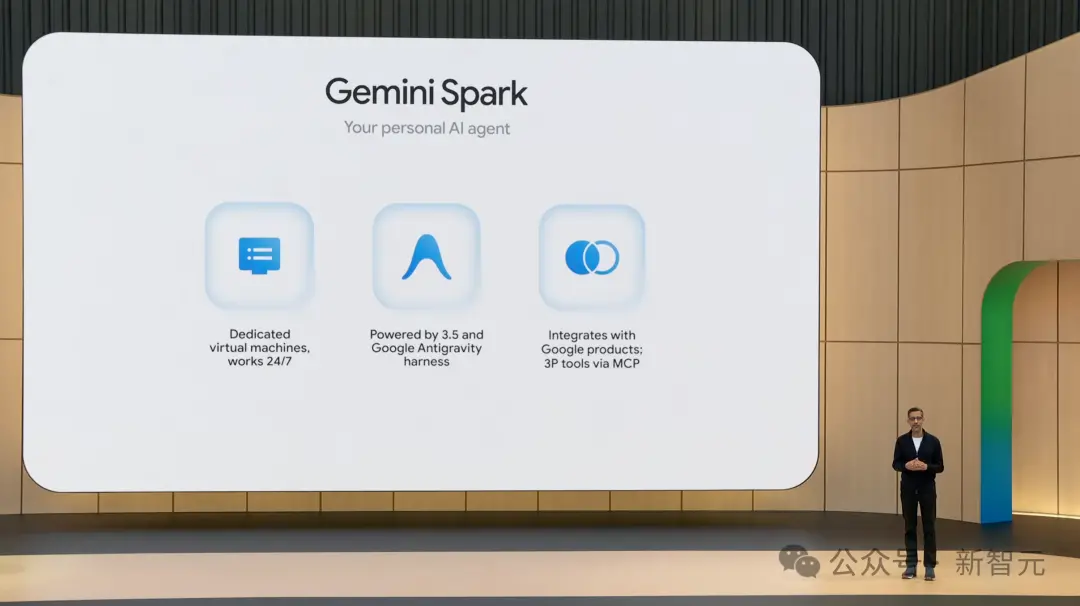
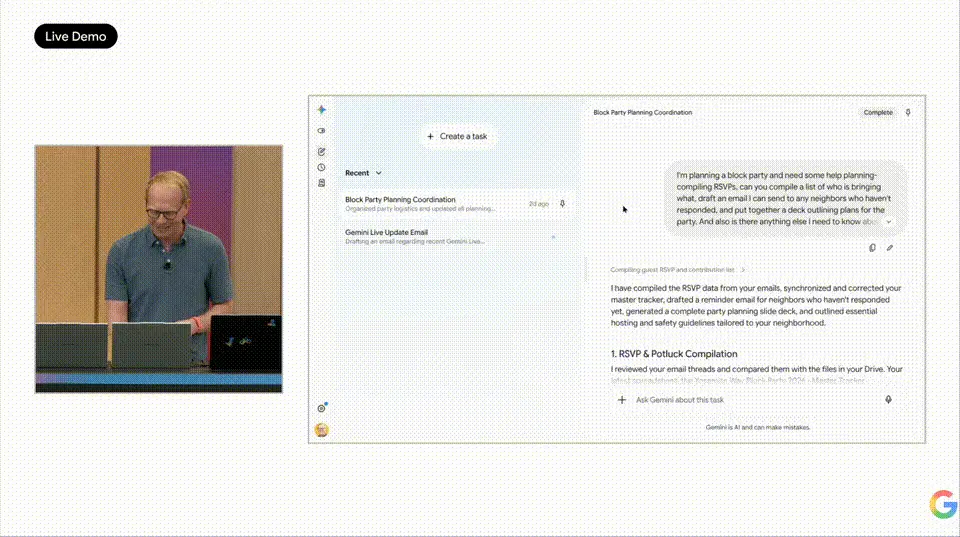
Gemini Spark is powered by Gemini 3.5 + the Antigravity framework, deeply integrated with Google's "Workspace suite." Product VP Josh Woodward took the stage to demonstrate two scenarios that drove the audience wild.

  • The first is a work scenario: Input an instruction, "Draft an email for the team summarizing all information from the past week about the Gemini Live launch." Spark automatically pulls information across Gmail, Docs, and chat logs, and also invokes a "ghostwriter" skill Woodward wrote himself, making the email automatically match his personal tone. The entire process is done in the background; a human only needs to review and send. Yes, Spark supports custom skills, allowing it to learn your voice, your preferences, and your work style.
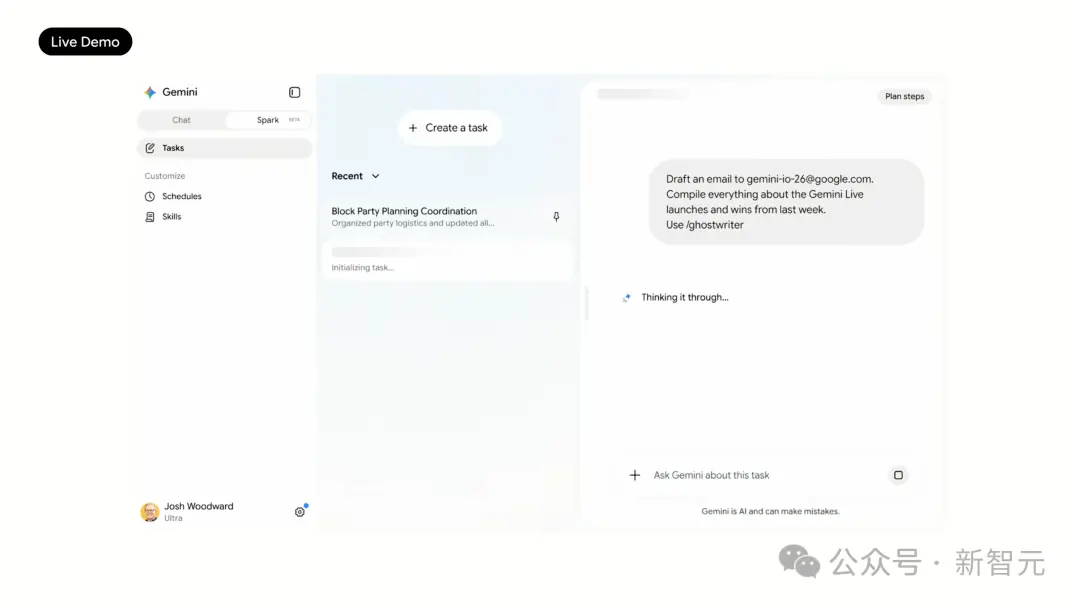
  • The second is a life scenario: Planning a neighborhood block party. Upon receiving the task, Spark executes step by step. It creates an RSVP tracking sheet in Google Sheets, directly linked to Gmail, updating automatically as people reply. For neighbors who haven't signed up, Spark automatically drafts reminder emails, creating drafts for confirmation before sending. Then, it also generates a promotional deck in Google Slides, even including information about placing an inflatable castle in the neighborhood. The entire process didn't involve opening a single app.
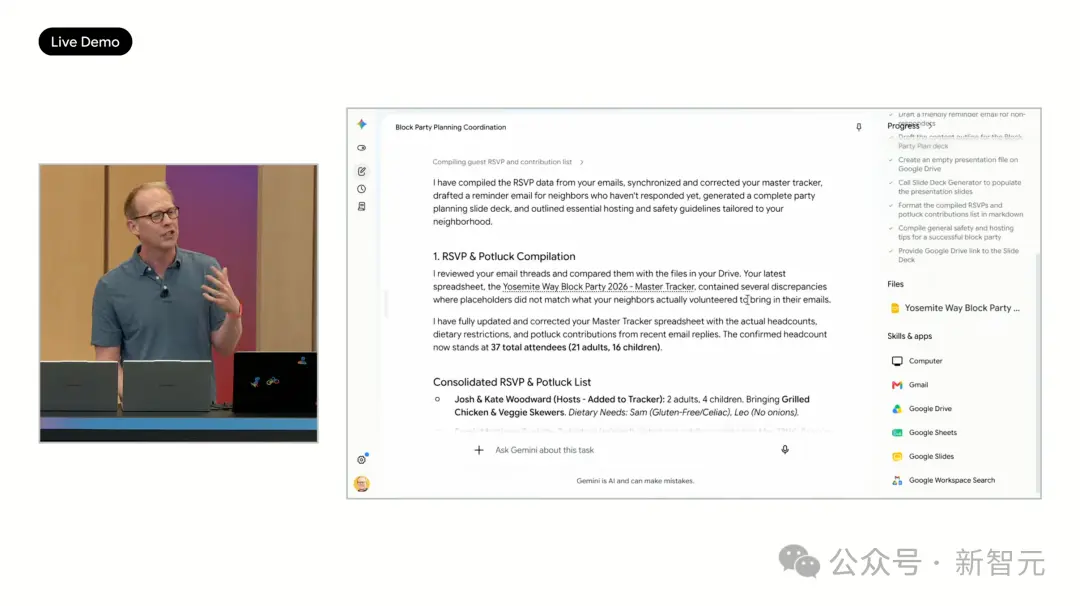
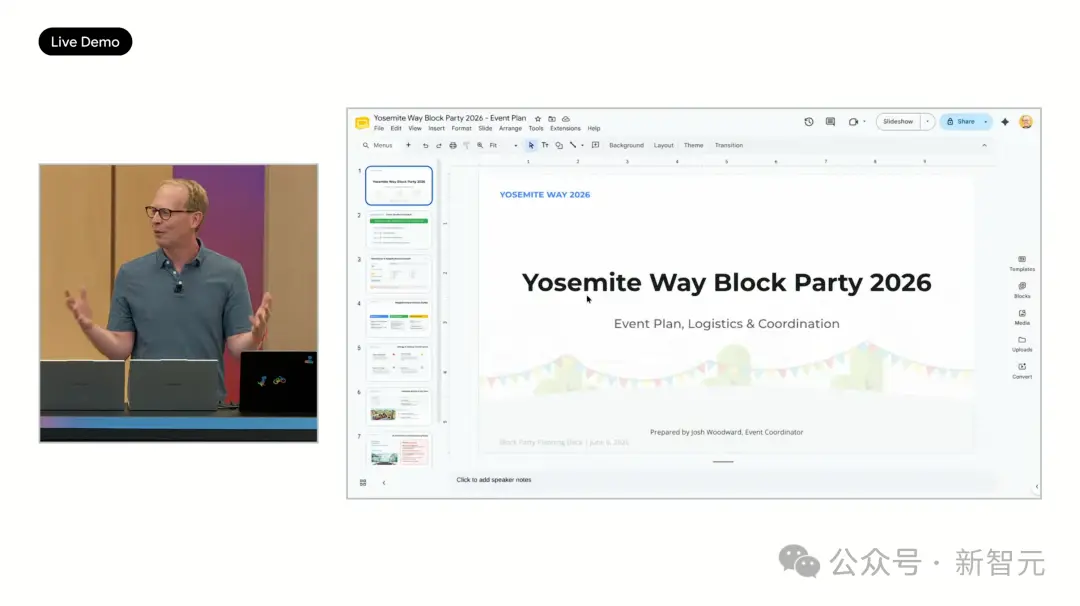
Moreover, Spark possesses powerful voice input capabilities. Live on stage, Woodward pulled out his phone and directly issued three tasks via voice: "Find all meetings with Sundar and mark them bright pink," "Write an invitation for new neighbor John to join the block party list," "Create a doc listing things to do for the kids before the school year ends, sorted by deadline."

The voice directly converted into text instructions, and Spark automatically split the continuous voice input into three independent task threads, executing them in parallel in the background.
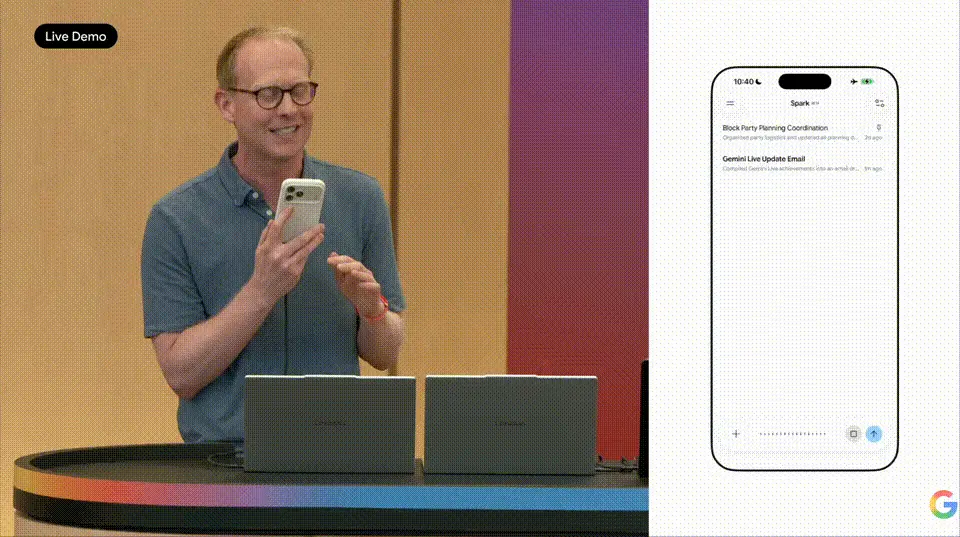
Regarding pricing, the $100/month AI Ultra subscription provides access to the Spark Beta. The highest-tier Ultra plan has been reduced from $250 to $200. Spark will be available as a Beta next week, initially for U.S. AI Ultra subscribers.

Tonight, Google Unveils the Gateway to ASI

Looking back at this I/O, what's truly chilling isn't any single product. It's that all these capabilities arrived simultaneously.

Full multimodal understanding, full multimodal generation, and 24/7 online Agents—these three puzzle pieces were all put in place by Google in one night. Omni turns a sentence into a world without humans providing any assets; 93 agents create an operating system from scratch without humans writing a single line of code; Spark works for you 24/7 without humans opening an app.

When AI no longer needs humans to "feed it," but understands, decides, executes, and iterates on its own—the end of this road is called ASI (Artificial Superintelligence).

No one can give a definitive timeline. But tonight's Google I/O made everyone realize one thing: On the path to superintelligence, the obstacle of "technically impossible" no longer exists. What remains is merely the speed of engineering deployment. Half a year ago, we were debating whether AGI was a bubble. Half a year later, Google is already writing operating systems with agents. The acceleration in this industry has already surpassed what human intuition can perceive.

References:

  • https://youtu.be/wYSncx9zLIU

  • https://blog.google/innovation-and-ai/models-and-research/gemini-models/gemini-3-5/

  • https://blog.google/innovation-and-ai/models-and-research/gemini-models/gemini-omni/

  • https://antigravity.google/blog/introducing-google-antigravity-2-0

  • https://antigravity.google/blog/google-io-2026-feature-deep-dive

Edited by: Peach Moses


Related Questions

QWhat are the three major announcements made at Google I/O 2026 according to the article?

AThe three major announcements at Google I/O 2026 were: 1) The debut of Gemini Omni, a 'truly all-around' model capable of video output from any input. 2) The launch of the new flagship model Gemini 3.5 Flash, which significantly outperforms its predecessor. 3) The introduction of the personal AI Agent, Gemini Spark, which runs 24/7 in the cloud.

QWhat is the core capability of Gemini Omni as described in the article?

AThe core capability of Gemini Omni is that it is a 'truly all-around' AI creation engine. It can receive any combination of inputs (images, audio, video, text) and generate high-quality, meaningful videos. Key features include its understanding of the physical world, conversational video editing, and maintaining character and scene consistency across edits.

QHow does the Gemini 3.5 Flash model compare to the Gemini 3.1 Pro according to Google's presentation?

AAccording to Google CEO Sundar Pichai, Gemini 3.5 Flash outperforms the previous flagship model, Gemini 3.1 Pro, in almost all benchmark tests. It is described as achieving a 'fault leap forward' in areas like coding, real-world agent tasks, and multimodal understanding, while also being over 4 times faster than competing models like GPT-5.5 and Claude Opus 4.7.

QWhat impressive feat did the upgraded Antigravity 2.0 platform with Gemini 3.5 Flash accomplish in the demonstration?

AIn a demonstration, the Antigravity 2.0 platform, powered by Gemini 3.5 Flash, coordinated 93 sub-agents to build a fully functional operating system kernel from scratch in just 12 hours. The agents autonomously wrote over 26 billion tokens of code to create components like a scheduler, memory manager, and file system, and later successfully ran the classic game DOOM on this AI-built OS after a fix.

QWhat is the primary function of Gemini Spark, and what makes it unique?

AGemini Spark is a personal AI Agent designed to perform tasks autonomously on behalf of the user. Its primary function is to act as a 7x24 personal assistant that runs continuously on a dedicated cloud VM. It is unique because it can operate even when the user's device is off, deeply integrate with Google Workspace apps to perform complex, multi-step workflows, and execute multiple tasks parsed from a single voice command in parallel.

Related Reads

DAT Failing? Listed Companies Betting on HYPE Have Floating Profits of $12.5 Billion

Facing a potential need to sell Bitcoin to pay dividends amid a $12.5B quarterly net loss, the crypto treasury strategy pioneered by Strategy appears strained. In contrast, public companies that adopted a similar strategy by betting on the HYPE token are seeing massive gains, with collective unrealized profits exceeding $1.25 billion. Three key HYPE treasury companies are highlighted: 1. **Hyperliquid Strategies Inc. (PURR):** The largest holder, with approximately 22.3 million HYPE tokens valued at ~$1.636 billion, resulting in ~$1.22 billion in unrealized gains. It has fully transitioned from a biotech firm to a native crypto treasury, focusing on staking and ecosystem participation via validator operations. 2. **Hyperion DeFi (HYPD):** Holds about 2 million HYPE tokens (~$147M value) with ~$49.4M in gains. It is deeply integrated into the Hyperliquid ecosystem, running a top validator node and building DeFi products to generate additional yield. 3. **Lion Group Holding (LGHL):** A smaller player holding ~193,775 HYPE tokens (~$14.14M value), maintaining a long-term holding strategy alongside other crypto assets. The article argues that HYPE treasuries have an advantage over Bitcoin-based ones like Strategy's. Their success stems not just from price appreciation but from active on-chain participation—staking, earning validator rewards, and engaging with ecosystem protocols—creating a compounding "flywheel" effect. With Hyperliquid dominating the on-chain perpetuals market and HYPE's tokenomics encouraging buys and burns, these treasuries are positioned to benefit further if HYPE's price rises as some predict. While the original Bitcoin treasury strategy isn't declared a failure, the current narrative highlights the outsized success of early movers into the HYPE ecosystem.

Odaily星球日报3m ago

DAT Failing? Listed Companies Betting on HYPE Have Floating Profits of $12.5 Billion

Odaily星球日报3m ago

Comics Illustration: Helping You Understand China's New Regulations on Outbound Investment

Summary: Understanding China's New Regulations on Overseas Investment The State Council has announced new regulations on overseas investment, effective July 1, 2026. The core message is not a prohibition on international investment, but a call for both companies and individuals to operate with strong regulatory awareness. Here are the key points: 1. **Scope is Broad:** The rules apply not only to companies but also to other organizations and individual residents. 2. **Definition of Investment is Wide:** It encompasses not just capital transfers but also asset contributions, obtaining equity or rights, financing, providing guarantees, and direct or indirect acquisition of rights related to overseas entities or assets. 3. **Companies Must Plan Comprehensively:** Beyond simple ownership charts, firms need clear plans covering the investing entity, required approvals or filings, fund transfer paths, and compliance with technology, data, and security reviews. 4. **Individuals Should Prioritize Compliance:** Before focusing on returns, individuals must first assess their eligibility, understand legal channels for capital outflow, know what they are acquiring, and identify responsible parties in case of issues. 5. **Penalties are Significant:** Violations can result in fines and potentially restrictions on future overseas investment activities. In essence, overseas investment remains possible, but it must be approached with regulatory compliance as a fundamental priority, not solely based on commercial opportunity. *Note: This is a general informational summary and does not constitute legal advice or investment recommendations.*

marsbit17m ago

Comics Illustration: Helping You Understand China's New Regulations on Outbound Investment

marsbit17m ago

Nvidia Rack Disassembly Reveals New Growth Opportunity, MLCC Value Surges 182%

Supply bottlenecks in AI infrastructure have expanded to fundamental hardware components like multilayer ceramic capacitors (MLCCs), crucial for stabilizing power and filtering noise in AI servers. Both Goldman Sachs and Morgan Stanley highlight MLCCs as entering a historic "volume-price dual increase" supercycle driven by AI. Goldman forecasts the AI server MLCC market to surge over fourfold from ~$1.4B in FY2025 to ~$5.8B in FY2030, a 34% CAGR. The core driver is a structural supply-demand imbalance. While AI server demand is projected to grow ~4.3x by 2030, industry capacity expands at only ~10% annually, constrained by internal production of equipment and materials. This is compounded by strong demand from electric vehicles. The shortage is evident, with lead times for high-end MLCCs exceeding 20 weeks. The price cycle has officially begun. Japanese leaders Murata and Taiyo Yuden have raised prices by 15-35% for AI server and automotive MLCCs since April, citing material costs. Japan's April export data confirms the trend, with MLCC export value up 28% year-over-year. Profit leverage is significant: Goldman estimates a mere 5% price increase could boost Murata's FY2027 operating profit by ~13% and Taiyo Yuden's by up to 37%. Morgan Stanley's teardown of Nvidia's upcoming Vera Rubin AI rack reveals another catalyst: the MLCC value per rack has skyrocketed 182% from the previous generation to ~$4,320, highlighting the component's growing importance. With demand set to massively outstrip constrained supply, and price increases just starting, analysts position MLCCs at the beginning of a major, prolonged upcycle.

marsbit18m ago

Nvidia Rack Disassembly Reveals New Growth Opportunity, MLCC Value Surges 182%

marsbit18m ago

A 134% Surge, 75 P/E Ratio: Why Is the Market Paying Up for Murata's 'Zero Growth'?

Murata Manufacturing, the world's largest passive components maker, saw its stock price surge 134% over the past year and hit a record high on May 28th, despite reporting nearly zero growth in operating profit for its latest fiscal year. This has pushed its valuation to a P/E ratio of approximately 75x. The disconnect is driven by a fundamental market re-rating. The catalyst was a late-May meeting where management upgraded the AI investment cycle outlook to "lasting until around 2030" and noted that demand for its components is roughly double its supply capacity, with customers prioritizing securing volume over price. While Murata's revenue grew only 5.0% and operating profit stagnated at ¥281.8 billion for the fiscal year ending March 2026, its guidance for the current fiscal year projects a 34.8% jump in operating profit to ¥380 billion. This sharp growth is underpinned by expectations that its AI/data center-related revenue will nearly double from ¥170 billion to ¥325 billion, becoming a key pillar of its business. Analysts highlight that this growth stems not from broad price hikes but from a shift towards higher-value, cutting-edge MLCCs for AI servers, where Murata holds over 70% market share. The market is now pricing Murata not as a cyclical component maker but as a critical "AI pick-and-shovel" supplier with structural pricing power. However, the high valuation also carries risk if future AI demand or quarterly guidance falls short of the elevated expectations.

marsbit41m ago

A 134% Surge, 75 P/E Ratio: Why Is the Market Paying Up for Murata's 'Zero Growth'?

marsbit41m ago

a16z: Why Do Prediction Markets Matter?

Prediction markets, which allow users to trade on the outcome of future events, have gained significant traction, especially in the U.S. At their core, these markets function like any other market by aggregating information from all participants and translating it into a price signal—in this case, the perceived probability of a specific event occurring. Unlike polls or surveys that offer static snapshots, prediction markets provide dynamic, quantifiable probability estimates that update in real-time as new information and participants enter. A key advantage is the incentive structure: participants risk their own capital, which encourages serious research and trading based on genuine knowledge. This can surface information that traditional methods might miss. Furthermore, prediction markets can be created for a vast array of specialized questions—from geopolitical events to AI model performance—that aren't covered by traditional financial markets. However, several challenges remain. Infrastructure issues include reliably determining event outcomes and resolving disputes. Market design must ensure participation from well-informed individuals while preventing manipulation, such as insider trading or attempts to sway public perception by artificially moving prices. Addressing these concerns around rules, participation, and contract design is crucial. If these hurdles are overcome, prediction markets could evolve into a powerful, widely-used tool for forecasting and navigating uncertainty.

marsbit51m ago

a16z: Why Do Prediction Markets Matter?

marsbit51m ago

Trading

Spot
Futures
活动图片